
Greensboro sits at 36 degrees 04 minutes north, 79 degrees 49 minutes west, on the Piedmont plateau in central North Carolina, about 200 miles east of the Atlantic coast and about 150 miles west of the Appalachians. The city sits at the junction of two interstates, the geographic basis for its role as a regional distribution center. For importers, three modules matter: the rail landing point and its clarity, the choice among nearby coastal ports, and the air hub and foreign-trade zone tied to the Piedmont Triad's industrial structure. Together they decide delivery paths from China to the southeastern United States.
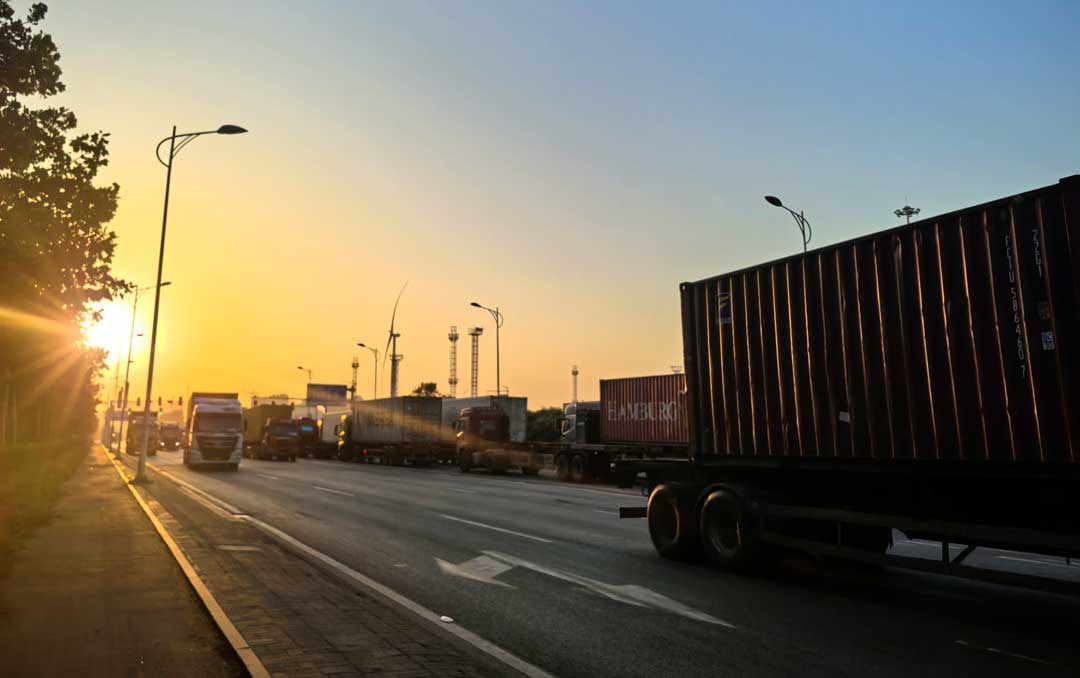
Greensboro sits at 36 degrees 04 minutes north, 79 degrees 49 minutes west, on the Piedmont plateau in central North Carolina, about 200 miles east of the Atlantic coast and about 150 miles west of the Appalachians. The city sits at the junction of two interstates, the geographic basis for its role as a regional distribution center.
Greensboro's spatial structure favors import cargo. I-40 and I-85 converge in the city, the former connecting the southeastern coast with the interior mountains, the latter connecting the Northeast with the southern manufacturing belt; the city's rail main line is likewise north-south. This means containers entering from coastal ports, whether landing at Wilmington, Norfolk, Charleston or Savannah, can reach Greensboro along broadly aligned corridors without crossing metro areas. Compared with some branch-line-end inland points, Greensboro has wider directional choices.
Greensboro is registered as a port of entry in the federal port system with code 1502, under the Atlanta Field Office. The port's registered name covers two cities.
| Port code | 1502 (Greensboro/Winston-Salem, North Carolina) |
| Naming note | CBP's port name is Greensboro/Winston-Salem; local sources also write Greensboro/Winston-Salem/High Point; U.S. Department of Commerce statistics record Winston-Salem |
| Field office | Atlanta; all North Carolina ports fall under this office |
| CBP office address | 532-C North Regional Road, Greensboro, NC 27409 (north side of Piedmont Triad International Airport) |
| Phone and hours | (336) 668-7272, Monday to Friday 08:00 to 16:00 (Eastern Time), closed weekends; outside hours call the same number for the duty officer |
| Port director | Brendan P. Doyle, direct line 336-668-7318 |
| International location code | Bookings and bills of lading use city codes; customs entries and ACE filings use 1502 |
| Nearby ports in state and neighboring states | 1501 Wilmington, 1503 Durham (for Raleigh-Durham airport), 1511 Beaufort-Morehead City, 1512 Charlotte; neighboring states: 1401 Norfolk (Norfolk) and 1601 Charleston (Charleston) |
| Foreign-trade zone | FTZ 230, grantee Piedmont Triad Partnership |
The second row needs special attention. The same port code appears in three writings across sources, because it simultaneously covers the Piedmont Triad's three main cities: CBP's official page writes Greensboro/Winston-Salem, local economic development agencies write Greensboro/Winston-Salem/High Point, and U.S. Department of Commerce statistics record only Winston-Salem. All three writings point to the same port code 1502, and documents should follow CBP's writing. Some sources list Greensboro's port code as 1511 or 1512, which belong to Beaufort-Morehead City and Charlotte respectively, unrelated to Greensboro.
Greensboro's container rail landing point is Norfolk Southern's Merritt Drive yard. This is the only main rail container ramp locally, and the biggest difference between this line and purely road-based inland points.
| Item | Content |
| Yard name | Norfolk Southern Greensboro Intermodal Terminal, usually referred to by Merritt Drive |
| Address and phone | 1105 Merritt Drive, Greensboro, NC 27407, phone 336-370-2484, fax 336-370-2486 |
| Railroad | Norfolk Southern (NS) |
| Line relationship | On Norfolk Southern's north-south main line, which passes through Guilford County and Greensboro, carrying Northeast, Midwest and Atlanta-bound flows |
| Connection directions | North to Virginia-direction Norfolk port and inland points; south to Charlotte, Atlanta and Memphis directions |
| Other railroads in region | CSX operates lines in the region, with a bulk transload facility in Winston-Salem; several shortlines handle end-line distribution |
Having only one main ramp is both Greensboro's feature and its limitation. The benefit is a clear landing point: as long as the bill of lading shows Norfolk Southern as carrier, the container lands at Merritt Drive, with no risk of picking the wrong yard, a common hassle in multi-ramp cities. The limitation is limited choice: if the ocean carrier has no intermodal agreement with Norfolk Southern, cargo must move in by road from the port, with drayage mileage increasing noticeably. The first action at booking stage is therefore to confirm the carrier's intermodal relationship with Norfolk Southern, not to compare rates first. Norfolk Southern's north-south main line carries both Northeast and Midwest flows, and this line's train density is the key variable for local rail feasibility.
Greensboro is not on the coast, so FCL cargo must first discharge at a coastal port. The state and neighboring states offer four main optional ports, each with different distance and cargo positioning.
| Port | Port code | Distance from Greensboro | Positioning |
| Wilmington, NC | 1501 | About 200 miles, about 3.5 hours by road | North Carolina's container deepwater port, the nearest in-state container port of entry |
| Morehead City, NC | 1511 | About 200 miles | Mainly bulk, project and specialized cargo, no regular container liner service |
| Norfolk, VA | 1401 | About 250 miles | Major East Coast container port, with Norfolk Southern rail direct service, same carrier as the local railroad |
| Charleston, SC | 1601 | About 280 miles | Major southeastern container port, with both rail and road connections |
| Savannah, GA | 1703 | About 330 miles | Leading southeastern container port, rail northbound via the Atlanta direction |
The four ports' division of labor can be seen from who shares the railroad with the local ramp. Norfolk port and Greensboro's ramp both belong to Norfolk Southern, so after discharge the container loads onto that company's train for direct arrival, with the same loading party and fewest handover links, the smoothest local combination. Wilmington is the nearest, but terminal scale and service density are below Norfolk and Charleston; its advantage is a road journey of only three and a half hours, and if delivery timing is tight with no time to wait for a train, direct trucking works. Charleston and Savannah have high service density, but the rail leg requires transfer via Atlanta or Charlotte directions, with more links than Norfolk. Morehead City, though in the same state, mainly handles bulk and project cargo, and regular containers do not use this channel.
Greensboro's other channel is air, paired with a foreign-trade zone covering twelve counties. Both relate directly to the Piedmont Triad's industrial structure.
The foreign-trade zone's role in Greensboro fits the local industrial structure. Activated users concentrate in apparel, farm machinery, pharmaceuticals and industrial components, industries that need labeling, packaging or staged processing after import before market entry, matching duty deferral and processing-before-re-export arrangements. The Alternative Site Framework mechanism also merits note: it allows companies within the service area to establish sites on their own premises quickly, without waiting for fixed parks, with shorter approval cycles than traditional methods. Note that cargo in the zone remains under customs supervision, and entry and exit require corresponding procedures, with specific availability to be confirmed case by case with a licensed customs broker. The foreign-trade zone does not change import compliance requirements; classification, origin and safety standards still apply.
Two main lines run from China to Greensboro: entering via southeastern coastal ports then direct by rail, and entering via West Coast ports then across the continent by rail. The two routes trade off ocean and inland leg lengths.
| Route | Port of entry | Onward transport | Features |
| Norfolk direction | Norfolk 1401 | Norfolk Southern rail direct to Merritt Drive yard | Port and railroad under the same carrier, fewest handover links; the smoothest local combination |
| Wilmington direction | Wilmington 1501 | Rail or truck westbound about 200 miles, about 3.5 hours by road | Nearest in-state port; service density below Norfolk and Charleston, suited to time-sensitive cargo |
| Charleston and Savannah directions | Charleston 1601, Savannah 1703 | Rail northbound via Atlanta or Charlotte directions | High service density, more call options; rail leg has more links than Norfolk |
| West Coast direction | Los Angeles 2704, Long Beach 2709 | Rail across the continent via Memphis or Atlanta directions eastbound | Shortest ocean leg but longest rail leg; usually transloads at a hub |
| Air freight | Piedmont Triad International Airport (GSO) | Airport pickup or short-haul delivery | Pharmaceuticals, aircraft parts and other high-value cargo |
Of the two FCL routes, the Norfolk entry combination has the fewest links. Port and local railroad both belong to Norfolk Southern, so after the container clears and is released at Norfolk it loads onto that company's train for direct arrival at Merritt Drive, with no other railroad handover and a clear landing point. The Wilmington entry combination has a road journey of only three and a half hours, and if cargo is unsuitable for trains or schedules do not match, direct trucking is a viable alternative, a practical benefit of the in-state port's proximity. The Charleston or Savannah entry combination offers more service choices and more competitive rates in some periods, but the rail leg requires passing one or two hubs, with relatively greater time variability. The West Coast entry combination has the shortest ocean leg but a continent-spanning rail leg, usually transloading via Memphis or Atlanta directions, with the most links. LCL cargo is generally not arranged on transcontinental rail direct, with deconsolidation at the port of entry then trucking being more common.
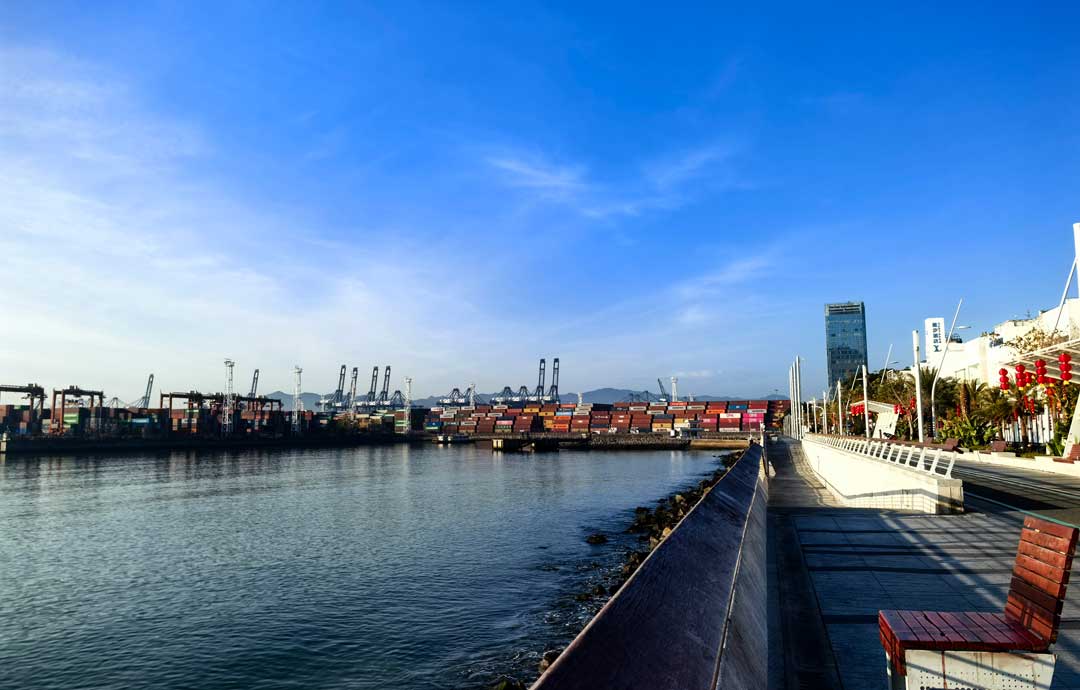
Door-to-door transit time is calculated in segments by route. Greensboro's FCL landing point is clear, and time variables come mainly from the connection between the ocean leg and rail schedules.
| Route | Ocean leg | Inland leg | Door-to-door total |
| Shanghai/Ningbo to Norfolk then Norfolk Southern rail | About 26 to 36 days | About 2 to 3 days | About 28 to 40 days |
| Shenzhen to Savannah then rail | About 30 to 45 days | About 3 to 4 days | About 33 to 50 days |
| Shanghai/Ningbo to Wilmington then truck | About 27 to 38 days | About 1 day | About 28 to 40 days |
| Shanghai/Ningbo to Los Angeles then transcontinental rail | About 11 to 18 days | About 6 to 9 days | About 18 to 29 days |
The totals in the table are estimated ranges from port to receiver's warehouse, excluding origin booking, loading and export customs clearance. Actual transit is affected by vessel type, port rotation, terminal congestion, railcar supply and holidays, and peak season can add a week or more. Three local factors stack onto Greensboro's timing: first, rail schedule connection, with only one main ramp locally and train density below coastal hubs, so if cargo arrival time misses the schedule, waiting for the next train can add over a day; second, hurricane season, when June to November tropical cyclones on the Atlantic coast can delay Norfolk, Wilmington and Charleston directions by three to seven days, while cargo entering via the West Coast is unaffected; third, summer convective weather, with July to September thunderstorms in North Carolina possibly affecting road drayage and airport operations short-term.
Comparing the routes shows the time distribution's features. The West Coast entry combination has the shortest ocean leg but a continent-spanning rail leg, with total time close to the Norfolk entry combination, and the choice depends more on rate windows and train density; the Norfolk entry combination has the fewest links and better controllability; the Wilmington entry combination has the shortest inland leg, suited to cargo with tight arrival requirements that cannot wait for trains. If the receiving warehouse is in central North Carolina, several routes are viable, without needing to pursue one in particular.
Greensboro's customs business is handled by CBP at port 1502, under the Atlanta Field Office. The CBP office is on North Regional Road north of the airport, adjacent to Piedmont Triad International Airport.
Formal import entry requires the receiver to provide a taxpayer identification number (EIN), commercial invoice, packing list and bill of lading. Ocean cargo must complete Importer Security Filing (ISF, commonly called 10+2) before loading, submitted by the importer or its agent 24 hours before the vessel sails. Classification, origin and valuation are handled per the Harmonized Tariff Schedule of the United States (HTSUS). North Carolina levies a sales and use tax, which may apply to imported goods entering circulation and final consumption in the state; the receiver handles this per its business nature and registration status, and should confirm with a local tax advisor before importing. The local foreign-trade zone's activated users concentrate in apparel, farm machinery, pharmaceuticals and industrial components, and these goods' filing requirements are detailed, with commodity codes, compositions and use descriptions needing to match the physical goods; for cargo needing local processing before re-export, in-zone quantities and values should correspond, avoiding book-to-physical mismatches.
After a container arrives at Merritt Drive by rail, the pickup process is completed inside the rail yard, which differs from a seaport terminal. Rail yards run mainly on online systems, and timing starts when the arrival notice is issued.
The process's risk points concentrate in schedule connection and return arrangements. First is the schedule: with only one main ramp locally and train density below coastal hubs, if arrival time misses the schedule, waiting for the next train can add over a day, so pickup appointments should be arranged per the schedule rather than the arrival date. Second is chassis sourcing: local chassis are provided by third-party suppliers and may be tight in peak season, and should be confirmed in advance via the drayage company. Third is the return point: empty containers usually return to Merritt Drive or surrounding locations, with the specific location varying by carrier and railroad, so the pickup and return points should be confirmed together before pickup, avoiding a situation of having picked up a box with nowhere to return it. Fourth is the alternative: if train timing is unsuitable, direct trucking from Wilmington can be evaluated, but this route needs advance arrangement of vehicles and drivers and is not suited to ad hoc decisions.
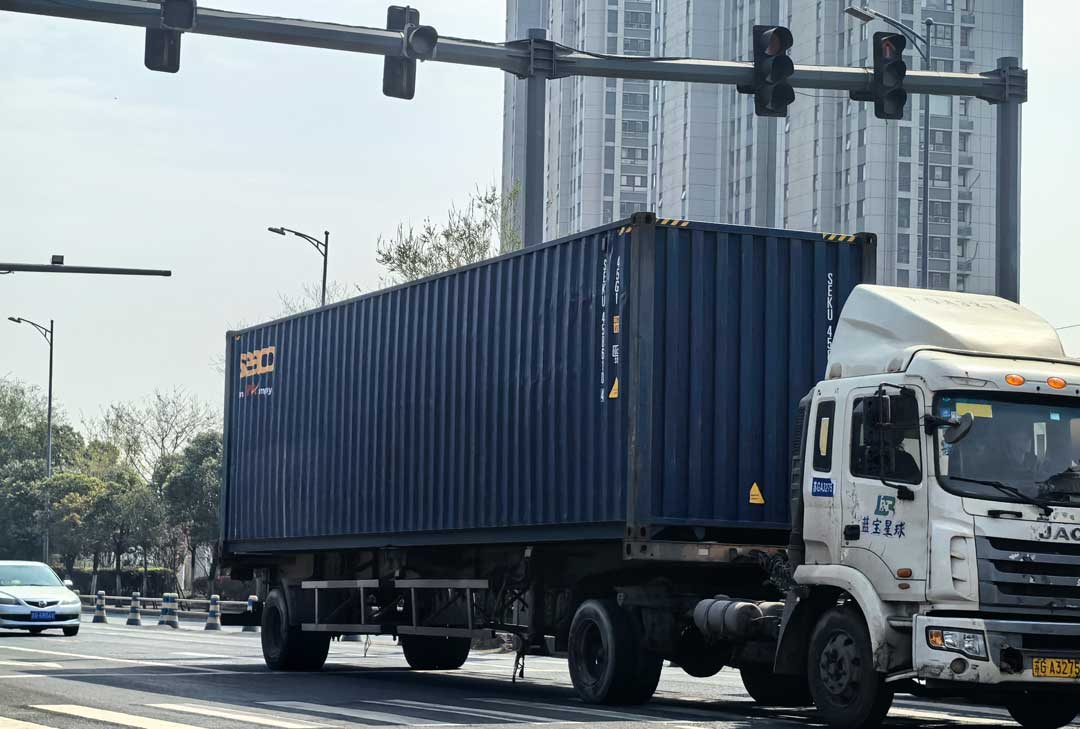
The Last Free Day (LFD) is the cutoff of the free storage period, after which storage fees start accruing. Greensboro's storage fees only occur at the port of entry terminal or rail yard, and the free period length depends on the landing point.
| Item | Clock start | Free period | Charging party |
| Norfolk Southern yard storage | Day the arrival notice is issued | Per Norfolk Southern's published policy | Norfolk Southern |
| Seaport terminal storage | Day of discharge or day container becomes available | Per terminal announcement, dry containers mostly four days | Terminal operator |
| Carrier per diem | Day the container leaves the terminal or yard | Per equipment type and route free time | Ocean carrier |
| Chassis rental | Day the chassis is pulled | Per drayage company agreement | Chassis supplier |
| Port-to-local road drayage | Day the truck leaves the port | Per drayage company agreement | Drayage company |
The five charge items have different clock starts and charging parties, and do not offset each other. Yard storage overage does not automatically extend the carrier's free time, and vice versa. If switching to the direct trucking plan from Wilmington, the port storage and carrier free time clock starts move correspondingly earlier, differing from the rail plan, and should be calculated separately per the actual route. After receiving the arrival notice, the receiver should confirm five things at once: the LFD at the landing yard, the expiry of the carrier's free time, the location and business hours of the empty return point, the chassis source and billing method, and the round-trip mileage from the warehouse to the return point. After all five are clear, set the pickup and return dates, avoiding overage on one while meeting another.
If pickup cannot be completed within the free period for reasons beyond the receiver's control, such as customs examination or document correction, a written extension can be applied for to the railroad, terminal or carrier with supporting documents, submitted before the original expiry date; late applications are generally not retroactive. Approval is handled by each company per its published policy, with no uniform standard. On weight, note that North Carolina's interstate highways allow a maximum gross vehicle weight of 80,000 lbs, and overweight containers need permits from the state department of transportation; if entering via Virginia or South Carolina, the weight rules of each state along the way must also be confirmed. In addition, port closure announcements during hurricane season affect terminal storage and free period start, and summer shipments should allow buffer.
Customs examination (CBP Examination) is a routine step in the import process, sampling declared cargo per its risk score. Examinations usually occur at the port where the container lands, and can also occur at an inland port after in-bond movement, depending on the examination location determined at filing.
| Examination type | Operation | Impact on pickup |
| Document review | Verify invoice, packing list, certificate of origin and filing data | No cargo movement; released after document supplementation |
| X-ray scan (NII) | Whole-container imaging, box not opened | Usually completed same day; container remains at the yard |
| Tailgate exam | Open doors and check cargo at the front of the box | Adds half a day to one day |
| Comprehensive exam (CET) | Move to exam area, count and unload piece by piece | Adds three to seven days, requires restuffing |
Examinations generate exam service fees, drayage round-trip fees, devanning and restuffing labor, and storage during the exam, all borne by the receiver regardless of whether anything is found. If entry is filed with Norfolk, Wilmington, Charleston or Savannah as the customs port, the exam generally occurs at the port of entry, and Greensboro only bears the consequence of delayed arrival; if filed with Greensboro as the customs port, local exam capability must be confirmed, with the CBP office adjacent to the airport and on-site capability related to the airport's hardware, and specific arrangements to be confirmed with a licensed customs broker. After exam release the container can continue inland movement, and this is one of the main sources of timing variability at inland points. Practical ways to lower exam probability: declared descriptions matching the physical goods, prices within common ranges for similar goods, avoiding undervaluation and mixed loading, and maintaining a continuous import record. Apparel, pharmaceutical and industrial component cargo have many detail points in composition, specification and use descriptions, and documents should stay consistent front to back.
When cargo cannot clear U.S. customs or the receiver refuses it, a return shipment can be arranged, on the premise that the goods have not been consumed or delivered in the United States and remain at a terminal, rail yard, bonded warehouse or under customs supervision. Cargo already released and delivered to the receiver's warehouse, having entered domestic circulation, cannot be handled as a return.
Whether to return should usually be decided after comparing with abandonment, resale to another country, or local destruction. Abandonment requires application to customs and bearing destruction costs; resale requires new transport and export arrangements. The Greensboro metro area has relatively complete warehousing and light-processing support, and the foreign-trade zone covers twelve counties, so if cargo is only mismatched in specification, labeling or partial structure, reworking in bond status before re-export is sometimes more economical than a full return, depending on rework cost and the original export country's tariff arrangements. For cargo involving additional tariffs or licensed categories, the destination country's import requirements should be confirmed before disposal.
Greensboro's cargo rhythm is decided by southeastern port service seasonality together with the production cycles of the local textile apparel, furniture and pharmaceutical industries, following the U.S. retail pattern overall.
Three seasonal variables at Greensboro merit separate mention. First is hurricane season: when June to November tropical cyclones appear on the Atlantic coast, Norfolk, Wilmington, Charleston and Savannah directions' ports and rail may all be affected, with delays usually three to seven days, and East Coast entry cargo should allow buffer during this period; cargo entering via the West Coast is unaffected and can serve as a peak-season alternative. Second is summer convective weather: July to September thunderstorms concentrate in the afternoon, possibly affecting road drayage and airport operations short-term, and short-haul delivery should avoid afternoon periods. Third is the rail schedule: with only one main ramp locally, peak-period train bookings and railcar supply are tighter than usual, and pickup appointments should be set early, not waiting until the arrival notice is issued. In addition, Greensboro is a southeastern U.S. road node, and carrier capacity tightness around long weekends directly affects drayage and delivery arrangements.
Using Greensboro as an import landing point concentrates benefits in four areas: a clear rail landing point, many port choices, wide foreign-trade zone coverage and regional distribution conditions.
| Advantage | Specifics |
| Unique and clear landing point | The local container ramp is only Norfolk Southern's Merritt Drive yard, so no wrong-yard risk once the carrier is confirmed on the bill of lading |
| Same railroad as Norfolk port | Port and local ramp both Norfolk Southern, with direct train arrival after discharge and fewest handover links |
| In-state port proximity | Wilmington is about 200 miles away, about 3.5 hours by road, allowing direct trucking when train schedules do not fit |
| Two interstates converge | I-40 and I-85 converge in the city, plus multiple interstates and loops, with balanced delivery distances to the Northeast, South and Atlantic coast |
| Air cargo hub | Piedmont Triad International hosts FedEx's Mid-Atlantic hub, 2025 freight and mail combined about 88,000 tons, with UPS and other carriers operating |
| Foreign-trade zone covering twelve counties | FTZ 230 uses the Alternative Site Framework, covering the Piedmont Triad and twelve surrounding counties, with activated users across apparel, farm machinery, pharmaceuticals and industrial components |
Limitations should be viewed alongside. There is only one main rail ramp locally, with train density below coastal hubs, and waiting for the next train can add over a day when schedules miss; the city is not on the coast, so all ocean cargo must transfer via East Coast or West Coast ports, adding an inland leg; the June to November hurricane season directly affects East Coast entry routes, requiring anticipation in scheduling; port office hours are normal weekday hours, with after-hours business arranged via the duty officer. In addition, Greensboro and Charlotte are both in North Carolina, and if the receiving market concentrates in the state's southwest, using Charlotte directly as the landing point is usually closer; if the market concentrates on the eastern coast or state southeast, Wilmington and Morehead City directions can be evaluated. Greensboro best suits: receiving markets covering central North Carolina and the Piedmont Triad, or cargo owners needing to complete labeling, packaging and staged processing in bond status before distribution.
No. Greensboro is in central North Carolina and is an inland city; all ocean FCL cargo must first discharge at a coastal port, then move in by rail or truck. The nearest in-state container port is Wilmington, about 200 miles away, about 3.5 hours by road; Morehead City mainly handles bulk and project cargo, with no regular container liner service.
1502 (Greensboro/Winston-Salem, North Carolina). The CBP office is at 532-C North Regional Road, Greensboro, NC 27409, phone (336) 668-7272, hours Monday to Friday 08:00 to 16:00 (Eastern Time), port director Brendan P. Doyle. The port is under the Atlanta Field Office. Some sources write the code as 1511 or 1512, both incorrect.
Because the same port code covers the Piedmont Triad's three main cities. CBP's official page writes Greensboro/Winston-Salem, local economic development agencies write Greensboro/Winston-Salem/High Point, and U.S. Department of Commerce statistics record Winston-Salem. All three writings point to the same port code 1502, and documents should follow CBP's writing.
Yes, Norfolk Southern's Greensboro Intermodal Terminal, at 1105 Merritt Drive, Greensboro, NC 27407, phone 336-370-2484. The yard is on Norfolk Southern's north-south main line, which passes through Guilford County and the city. The local container ramp is only this one, with a clear landing point; CSX lines and several shortlines handle distribution in the region.
More common is entering via Norfolk then Norfolk Southern rail direct to the city, with port and railroad under the same carrier, fewest handover links, ocean leg about 26 to 36 days and inland leg about 2 to 3 days. Next is entering via Charleston or Savannah, with more service choices; entry via Wilmington is mainly by truck, with an inland leg of only three and a half hours.
Norfolk and the local ramp both belong to Norfolk Southern, with direct train arrival after discharge and fewest links, the smoothest local combination. Wilmington is the nearest, about 3.5 hours by road, but terminal scale and service density are below Norfolk and Charleston; if cargo cannot wait for trains or schedules do not match, direct trucking is a viable alternative.
FTZ 230 is managed by the Piedmont Triad Partnership under the Alternative Site Framework, covering twelve counties, with activated users including apparel, farm machinery, pharmaceuticals and industrial components companies. Main uses are duty deferral and processing before re-export. The Alternative Site Framework allows companies within the service area to establish sites on their own premises quickly, with shorter approval cycles than traditional methods. Specific availability should be confirmed case by case with a licensed customs broker.
Piedmont Triad International Airport (code GSO, locally PTI) hosts FedEx's Mid-Atlantic hub, opened 2009, about 1 million sq ft of floor area, sorting about 24,000 pieces per hour, with about 20 to 25 flights per weekday. The airport's 2025 freight and mail combined about 194,484,883 lbs, with UPS and Quest Diagnostics Aviation also operating. The airport area has about 1,000 acres of development land plus about 800 acres of parcels, with over 200 manufacturing and aviation companies gathered.
Per Norfolk Southern's published policy, counting from the day the arrival notice is issued. Note there is only one main ramp locally, with train density below coastal hubs, so if arrival time misses the schedule, pickup appointments may be deferred, and the carrier's free time expiry should be checked at the same time to avoid both clocks expiring together.
A written extension can be applied for to the railroad, terminal or carrier, with examination or hold documentation submitted before the original expiry date. Approval is handled by each company per its policy, with no uniform standard, and late applications are generally not retroactive.
Yes, on the premise that the goods have not been consumed or delivered in the U.S. and remain at a yard, bonded warehouse or under customs supervision. Return requires U.S. export entry and Chinese import entry, with tax exemption applicable within the prescribed period for goods returned in original state due to quality or specification reasons. Return boxes must first move back to the port of entry for loading, and if originally entered via Norfolk, the return leg has the same railroad's trains available, with relatively direct connection.
August to October each year is the tightest, with retailers and apparel distributors stocking for year-end holidays, and East Coast ports and rail under simultaneous pressure. A further rush shipment wave runs from late December to early January. Three local variables to anticipate: the June to November Atlantic hurricane season's effect on East Coast entry routes, July to September afternoon thunderstorms' effect on drayage and airport operations, and peak-period rail train and railcar tightness.
Shipping from China to USA
Planning a shipment or just comparing options? Contact our freight experts to get a tailored rate within 24 hours.
