
Hidalgo sits at 26 degrees 06 minutes north and 98 degrees 16 minutes west, at the southern tip of the south Texas plains, right on the Rio Grande with Mexico across the river. McAllen is the largest city in the area, with Hidalgo, Pharr, Mission and Weslaco forming the metro area. Hidalgo is a land port in the customs system, not a seaport: its job is to bring truck freight in from the Mexico side and complete entry filing and exams. For China exporters two things matter most: the Pharr-Reynosa bridge concentrates the northbound trucks, and McAllen Foreign-Trade Zone 12 handles much of the region's transit and re-export cargo.
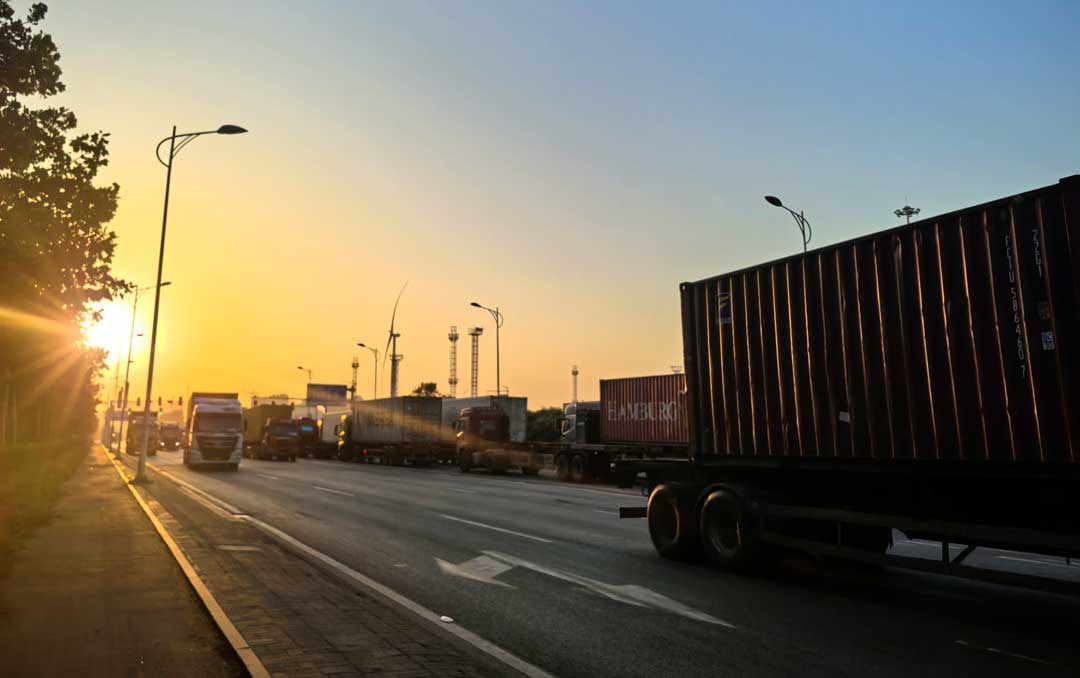
| State | Texas, south; south to Tamaulipas and Nuevo Leon in Mexico, southeast on the Gulf of Mexico |
| Main highways | I-2 (locally Expressway 83) across the valley, US 281 south to the Pharr international bridge, US 77 and I-69E north toward Corpus Christi and Houston |
| Rail | Union Pacific runs north-south through the western valley, with short lines and industrial spurs; there is no container rail ramp in Hidalgo, and the nearest intermodal terminal is further north |
| Airports | McAllen Miller International Airport (MFE) with a customs post; Harlingen Valley International (HRL) |
| City layout | Hidalgo city sits just south of McAllen; Pharr is east of McAllen, about 10 miles away |
Hidalgo is a land port in the customs system, not a seaport. Its function is to bring road freight in from the Mexico side and complete entry filing and exams. Understanding this port means separating three layers: the port code, the physical operations point, and the bridges.
Note that Hidalgo's old bridge stopped taking northbound trucks in September 1996, so northbound trucks can only use Pharr. That change made Pharr the commercial port for the corridor, and maquiladora output on the Reynosa side has since depended largely on crossing at Pharr. The name "Hidalgo" on documents is the port name; the actual pickup and formalities are usually at Pharr.
| Port code | 2305 |
| CBP registered name | Hidalgo, Texas (some sources write Hidalgo/Pharr) |
| Port office address | 9901 S. Cage Boulevard Suite B, Pharr, TX 78577 |
| Phone and fax | Phone +1 956-283-2001, fax +1 956-283-2060 |
| Port director | Carlos Rodriguez |
| Office hours | Monday to Friday 08:00 to 16:00 (Central Time), closed weekends |
| Supervising field office | Laredo |
| Main cross-border facilities | Pharr-Reynosa International Bridge (commercial trucks), Hidalgo old bridge (southbound commercial trucks), Anzalduas bridge (passengers and southbound empty trucks) |
The three bridges in the western valley each have a role, and using the wrong one directly affects clearance efficiency. Passenger cars, empty trucks and loaded trucks face different rules, so confirm per shipment before routing.
| Bridge | Connects | Truck rules | Operating time |
|---|---|---|---|
| Pharr-Reynosa International Bridge | Pharr, TX to the Reynosa industrial district | Both northbound and southbound trucks; the region's main commercial channel | Opened 1994, truck lanes normally open |
| McAllen-Hidalgo-Reynosa International Bridge | Hidalgo, TX to central Reynosa | Commercial trucks southbound only; northbound trucks not allowed | 24 hours; southbound vehicles charged USD 3.50 |
| Anzalduas International Bridge | Mission, TX to west Reynosa | Passengers and southbound empty trucks, no heavy freight | Daily 06:00 to 22:00 |
Cargo shipped from China for a Mexico production step usually enters through a Mexican Pacific port, moves by truck to Reynosa and then crosses into the US at Pharr, or goes the other way through Pharr into Mexico. When the destination is south Texas or a US market further north, the truck crosses northbound and files the entry at Pharr.
The Pharr bridge concentrates the corridor's volume, so its expansion and traffic data show the region's freight intensity. The expansion budget is about USD 120 million, adding a four-lane deck next to the existing bridge, taking the deck from four lanes to eight, with completion planned for January 2026 and matching works on the Mexico side.
| Fiscal month | Northbound trucks |
|---|---|
| FY 2024-2025, October | 57,919 |
| FY 2024-2025, November | 56,594 |
| FY 2024-2025, December | 52,963 |
| FY 2025-2026, January | 63,605 |
| FY 2025-2026, February | 56,855 |
| FY 2025-2026, March | 62,210 |
| FY 2025-2026, May | 59,011 |
| FY 2024-2025 total | 688,876 |
Monthly crossings have long sat between 50,000 and 67,000 trucks, about two thousand a day. From September 2024 to September 2025, southbound volume into Mexico rose 17% and bridge revenue rose about 4.6%, while import and export value each rose about 1%. This shows crossing counts growing faster than cargo value, with average value per truck falling, a shift toward smaller, more frequent shipments.
Port operations cover the day, but different facilities run different hours. When scheduling a crossing and pickup, check each row rather than only the port office's public hours.
| Facility | Phone | Hours |
|---|---|---|
| Port office (Pharr) | (956) 283-2001 | Monday to Friday 08:00 to 16:00 |
| Pharr Cargo Operations | (956) 283-2032 | Monday to Friday 07:00 to 22:00; Saturday and Sunday 08:00 to 16:00 |
| Pharr Export Operations | (956) 283-2016 | Monday to Friday 08:00 to 20:00 |
| Deferred Inspection Site | (956) 682-2331 | Daily 08:00 to 24:00 |
| Hidalgo command center / Hidalgo port | (956) 843-5788 | 24 hours daily |
| Miller International Airport (McAllen) | (956) 682-2331 | Daily 08:00 to 24:00; staff on call 00:00 to 08:00 |
| Pharr passenger processing | (956) 283-2147 | Daily 06:00 to 08:00; Monday to Friday 16:00 to 18:00; Saturday and Sunday 16:00 to 24:00 |
| Anzalduas port | (956) 205-7807 | Daily 06:00 to 22:00 |
Cargo operations shorten on weekends, with no routine cargo exams after 16:00 on Saturday and Sunday, so cargo crossing on a weekend should have the broker confirm whether a work window remains that day. Export exams take place at the Pharr export area on hours that differ from import cargo, and the broker should confirm before filing.
Much of the valley's import and transit business relies on McAllen Foreign-Trade Zone 12. Established in 1973, on the source description it is the 12th foreign-trade zone in the US and the first inland zone not located at a port or airport, and since 2016 it has covered the whole of Hidalgo County under the Alternative Site Framework.
| Number | FTZ 12 (McAllen) |
| Established | 1973; described as the 12th US foreign-trade zone and the first inland US foreign-trade zone |
| Park location | Military Hwy (FM 1016) at Ware Road |
| Distance to key nodes | About 3.3 miles to I-2, about 8.3 miles to the Pharr international bridge (port 2305) |
| Park area | About 775 acres |
| Coverage | Under the Alternative Site Framework covering all of Hidalgo County since 2016 |
| Security | Meets CTPAT counter-terrorism certification, with 24-hour security and park camera monitoring year round |
| Zone benefits available | Duty deferral, inverted tariff, duty-free scrap and waste, weekly entry, local inventory ad valorem tax exemption, duty-free re-export |
| Space options | Logistics suites from 100 square feet; standalone buildings from 8,000 to 120,000 square feet |
| Office hours | Monday to Friday 08:00 to 17:00 |
The park also offers third-party logistics warehouses, standalone buildings, temperature-controlled warehouses and office space, with flexible and fixed-area lease options. The local industry centers on citrus and produce distribution and cross-border manufacturing, with inbound items concentrated on electronic components, auto parts and medical devices, and outbound cargo mostly agricultural products and Mexico-side industrial output.
Hidalgo is not on the coast and has no container rail ramp, so all ocean cargo must first reach a port and then move by truck or rail. The four routes suit different situations.
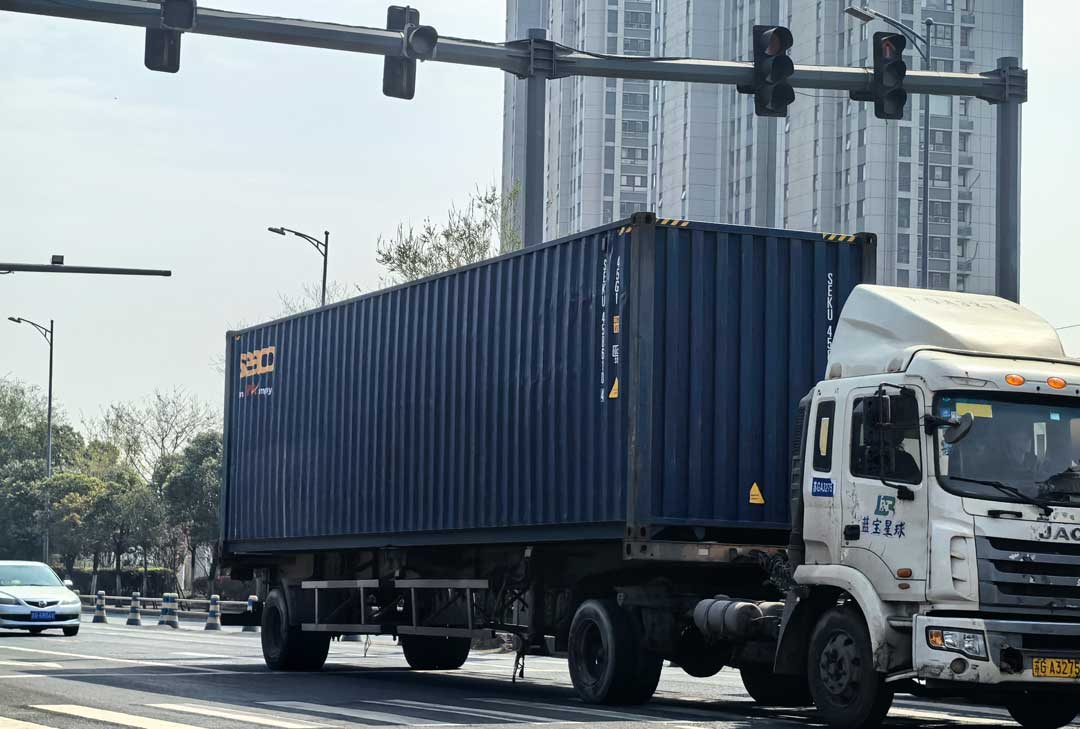
| Route | Ocean leg | Inland leg | When it fits |
|---|---|---|---|
| Gulf port then direct truck | China to a Gulf port such as Houston | South to the valley via US 77 and I-69E, road leg by actual mileage | Routine full-container import for the valley or south Texas |
| US West port plus rail | China to Los Angeles, Long Beach | Transcontinental rail to a Texas hub, then truck south | When US West space is loose and the ocean rate gap is clear |
| Transit via a Mexican Pacific port | China to Manzanillo or Lazaro Cardenas | Road in Mexico to Reynosa, then cross into the US at Pharr | Destination is a Mexico production step, or re-export is needed |
| Air via McAllen | China to a hub airport | Connect via Dallas or Atlanta to Miller International, then a short truck run | High-value items, medical devices and urgent replenishment |
Of the four, the Gulf port plus direct truck route is the routine import option; transit via a Mexican Pacific port suits cargo tied to Mexican plants, usually transloaded in the region before crossing. When choosing, separate two questions: whether title to the cargo changes inside the US, and whether the cargo needs to sit in a foreign-trade zone. If the cargo only transits Mexico, the filing method differs completely from selling inside the US, and this should be confirmed with the broker at booking.
Transit is estimated separately for the ocean leg and the inland leg. The available entry seaports sit on the Gulf, the US West and the Mexican Pacific, with clear differences in sea time.
| Entry seaport | Common sea transit | Note |
|---|---|---|
| Houston (US Gulf) | About 25 to 38 days | From major China ports; most valley volume concentrates here |
| Los Angeles, Long Beach (US West) | About 14 to 22 days | Shorter sea leg, with transcontinental rail time added |
| Manzanillo (Mexican Pacific) | About 18 to 25 days | Fits cargo tied to a Mexico production step |
| Lazaro Cardenas (Mexican Pacific) | About 20 to 26 days | A Pacific coast option alongside Manzanillo |
| Veracruz (Gulf of Mexico) | About 28 to 35 days | On the Gulf, reaching toward Reynosa |
| Step | Usual time |
|---|---|
| Gulf port to the valley by road | By speed and mileage, usually within a day |
| US West port to a Texas hub by rail | About 5 to 8 days |
| Texas hub to the valley by road | Usually within a day |
| Crossing and clearance | Hours with clean documents; extended if an exam is ordered |
| Air to Miller International | About 3 to 7 days from a China airport, including connection and clearance |
Combining both ends, shipment from China to pickup at Hidalgo via a Gulf port is commonly about 30 to 45 days; the US West port plus rail combination is usually close in total time, with its advantage in the sea leg and space flexibility. The route through a Mexican Pacific port is shorter at sea but needs clearance and road transfer in Mexico, so total time depends on Mexican-side formalities. The figures exclude booking, loading and export clearance, so add buffer around peak season and holidays.
Day-to-day port work is handled by a licensed broker in the system, and importers usually do not visit the port office. But land ports differ from seaports, and three points matter.
Rules on additional tariffs, admissibility and duty-free allowances change quickly; the US customs policy section and the US customs import and export duty section carry the working detail, and the US customs information section covers documentation.
"Pickup" at a land port differs from a seaport: the container is not taken from a terminal yard, but released straight into the US once the truck clears its exam. The critical part is the order of filing and exam.
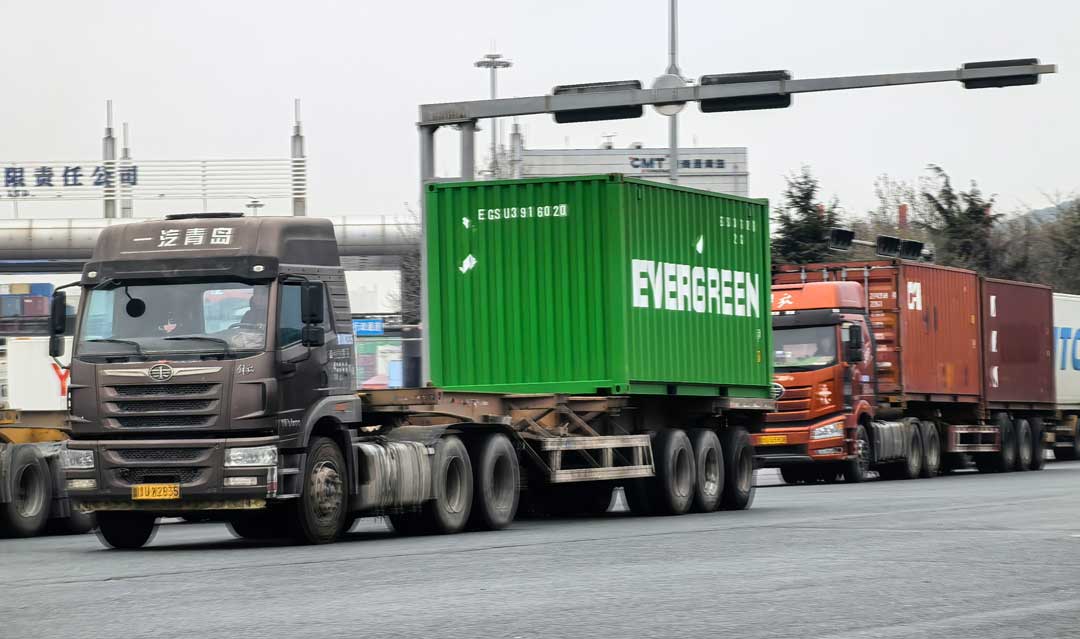
Note that a truck held at the port incurs waiting cost directly, while parking and temporary storage around the port are limited. When documents are incomplete the entry moves to the next day, and the vehicle usually has to return to the Mexico side or find temporary parking, both of which add cost.
Hidalgo cargo has two different "pickup point" logics: for ocean cargo moving by road into the US for sale, the pickup point is a valley warehouse or factory; for cargo transiting Mexico, a delivery point on the Mexico side must be named. Free time and detention rules differ between the two.
For the general rules on free time and detention, the China-to-US cargo shipping section and the China-to-US FCL ocean freight service carry the cost detail.
Land port exams are vehicle based, different in form from seaport container exams. The main variables are declaration consistency, import history and commodity type.
Cargo can be returned, provided it has not been consumed or delivered in the US and remains under customs supervision. Goods returned in their original state for quality or specification reasons may qualify for duty-free treatment within the set period. At a land port there are two forms.
The first is returning by the same route: the truck goes back to the Mexico side without leaving the exam area or being delivered, and the carrier arranges onward handling. This is comparatively simple, but must be decided before release, because once the truck leaves the port into the US the same-route return no longer applies. The second is a formal return: once cargo has entered the US it must be sent back to China, requiring a US export entry and a China import declaration, with the return usually trucked or railed to an export seaport and loaded there, and the cost combining inland return transport, export clearance fees, ocean freight and storage at both ends. Compare the total against processing or reselling in the US before deciding.
Hidalgo volume is shaped by two cycles at once: the US consumer import cycle and Mexican manufacturing schedules and agricultural seasons, so the peak pattern differs from a pure consumer port.
| Period | Volume pattern | Main driver |
|---|---|---|
| January to February | Post-holiday fallback, with a rush before and after Lunar New Year | Chinese factory shutdown and restart |
| March to June | Relatively stable, with manufacturing parts and produce alternating | Mexican plant production schedules |
| July to October | Peak, as retailers build year-end stock | Tight space, higher rates, longer port queues |
| November to December | More winter and spring produce exports, with import replenishment and destocking side by side | Citrus and produce export season, year-end holidays |
Three local variables are worth planning around: the Atlantic hurricane season from June to November and its effect on Gulf ports and inland roads; long Mexican holidays such as around Christmas and New Year and their effect on plant openings and truck supply; and lane reductions during the bridge expansion, planned for completion in January 2026, with passage arrangements during construction following the bridge operator's notices.
As a land port, Hidalgo's value is not in port scale but in its channel characteristics.
Two things need care. First, there is no container rail ramp locally, so ocean full containers must transit another city, lengthening the inland leg. Second, port operations concentrate on a single channel, so queues clearly lengthen at exam peaks or during construction lane reductions, and the delivery plan should carry buffer.
No. Hidalgo is a land port in south Texas, across the river from Reynosa, Mexico. It handles entry filing and exams for road freight and does not run ocean container handling.
They are not the same city but they share one customs port. Port code 2305 is registered as "Hidalgo, Texas", while the port office and commercial truck exam area are actually in Pharr. Since September 1996 northbound trucks can only cross at the Pharr bridge, not the Hidalgo old bridge.
Via a Gulf port is commonly about 30 to 45 days in total, with the sea leg about 25 to 38 days. The US West port plus rail combination is close in total time, with a sea leg of about 14 to 22 days but about 5 to 8 days of rail added. Transit via a Mexican Pacific port has a sea leg of about 18 to 26 days, plus Mexican-side formalities.
Yes, and it is one of this port's common uses. Transit cargo usually must leave the country within a set period and be entered for transit or re-export. Confirm the filing method with the broker at booking, because transit and sale inside the US are filed on completely different logic.
FTZ 12 offers duty deferral, inverted tariff, weekly entry, duty-free re-export and local inventory ad valorem tax exemption, suited to cargo moving several times between the US and Mexico. Since 2016 it has covered all of Hidalgo County under the Alternative Site Framework, so site selection is relatively flexible.
Usually no appointment is needed for the crossing itself, but the truck must arrive within the port cargo hours and be filed before arrival. Weekend cargo operations end at 16:00, so trucks crossing after that should confirm whether a work window remains that day.
Weekday mornings and month-end shipping peaks see longer queues; the cherry and citrus export season and the year-end retail build-up both add southbound and northbound traffic. During the bridge expansion, lanes may be reduced, and passage follows the bridge operator's notices.
Per the carrier's or container owner's notice. Valley return points are limited, and some empties must go to a city further north or back to a seaport, so return mileage and repositioning cost should be counted in advance.
A vehicle exam usually takes hours to a day, and targeted checks or sampling can extend it to several days. The exam support fee, handling and temporary storage are borne by the consignee regardless of the outcome.
Yes. Cargo not yet delivered can be sent back to the Mexico side by the same route before release; cargo already in the US needs a US export entry and a China import declaration, with the return usually moved to an export seaport first and then loaded. An original-state return for quality or specification reasons may qualify for duty-free treatment within the set period.
Yes. McAllen Miller International Airport has a customs post, staffed daily 08:00 to 24:00 with staff on call from 00:00 to 08:00. Air cargo from a China airport usually connects via Dallas or Atlanta to McAllen, about 3 to 7 days in total, with short drives to points across the valley after landing.
Routine documents include the commercial invoice, packing list, bill of lading or air waybill and certificate of origin, plus any admissibility or quarantine certificates the commodity requires. Land imports also need a valid Customs Bond. Document data should match cargo marks line by line, since inconsistency is a common cause of exams and delays.
Shipping from China to USA
Planning a shipment or just comparing options? Contact our freight experts to get a tailored rate within 24 hours.
