
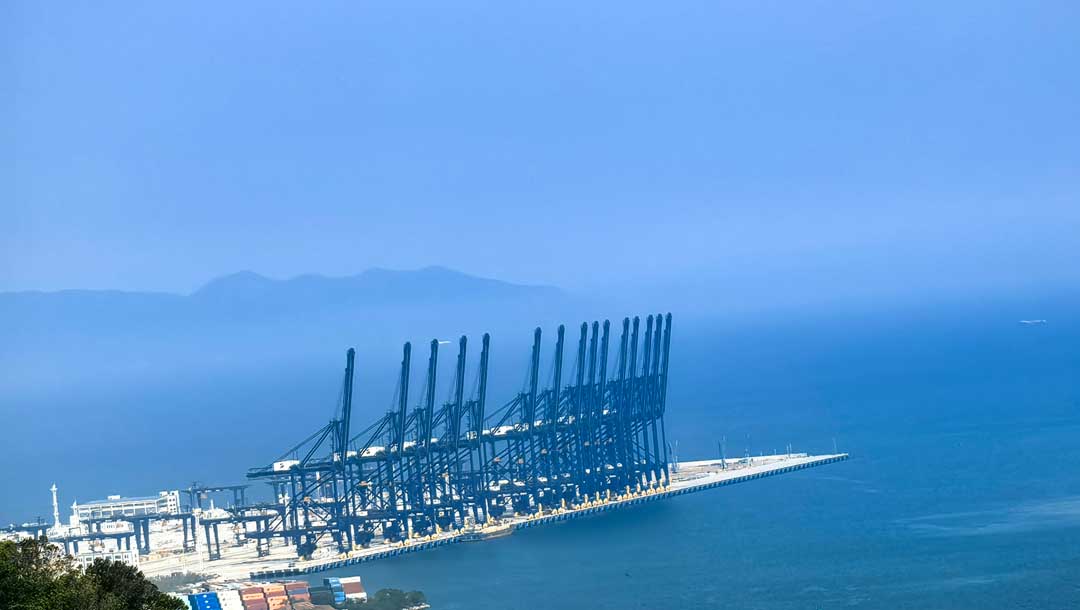
Houston sits in southeast Texas, at 29 degrees 45 minutes north and 95 degrees 21 minutes west, about 50 miles from the Gulf of Mexico. Its port system does not sit on the city shoreline; it lines a dredged channel that starts at Bolivar Roads in Galveston Bay, runs northwest across the bay, passes Morgans Point, continues through La Porte, Deer Park and Pasadena, and ends at the Turning Basin on the east side of central Houston. For China exporters Houston is a Gulf Coast gateway: two public container terminals, a channel being widened for larger ships, and three Class I rail ramps reaching the US South and Midwest.
| State | Texas, south-central US, southeast on the Gulf of Mexico, southwest on the Mexico border |
| Ship channel length | About 52 miles, from the Gulf entrance to the Turning Basin |
| Main highways | I-10 east-west toward Louisiana and San Antonio, I-45 north-south toward Dallas and Galveston, I-69 and US 59 to the northeast, plus beltway and freight corridors linking the terminals |
| Railroads | Union Pacific and BNSF both run intermodal ramps in the Houston area; CPKC serves the southwest |
| Airports | George Bush Intercontinental (IAH) is the main passenger and cargo airport; William P. Hobby (HOU) is mostly domestic |
| Metro area | Houston-The Woodlands-Sugar Land, among the largest in the US, an energy, petrochemical, aerospace and medical cluster |
Houston's geography matters because the port is an inland corridor, not a shoreline strip. Vessels leave the Gulf at Bolivar Roads, then run roughly 52 miles up the channel to the Turning Basin. Along that corridor the terminals are spread out, so the terminal a container is discharged at decides the truck route and the inland ramp it can connect to, not just the sea leg.
The Houston port system has three layers. The first is the ship channel itself, where the Port Authority acts as advocate and coordinator for navigation and infrastructure while most terminals along it are private. The second is the Port Authority's own public facilities, eight of them, handling containers, breakbulk and general cargo. The third is private terminal capacity, more than 200 facilities geared to petrochemical, liquid bulk and commodities, which do not take public container business.
| Category | Main facilities | Cargo type |
|---|---|---|
| Container terminals | Barbours Cut (La Porte), Bayport (toward Pasadena) | Loaded and empty containers, reefer containers |
| Multipurpose and breakbulk | Turning Basin terminal (300 East Loop North) and others | Steel, machinery, project cargo, general cargo |
| Private liquid bulk and petrochemical | More than 200 facilities along the channel | Crude, refined products, chemicals, plastic resin, LPG |
| Other public facilities | Non-container public yards, rail and road connections | Regional consolidation |
For imported full containers, only the two container terminals matter in practice. The multipurpose facilities handle steel, machinery and engineering cargo, while chemical and energy cargo concentrates at private terminals, usually under direct contracts between cargo owners and terminals, a separate process from public container flow.
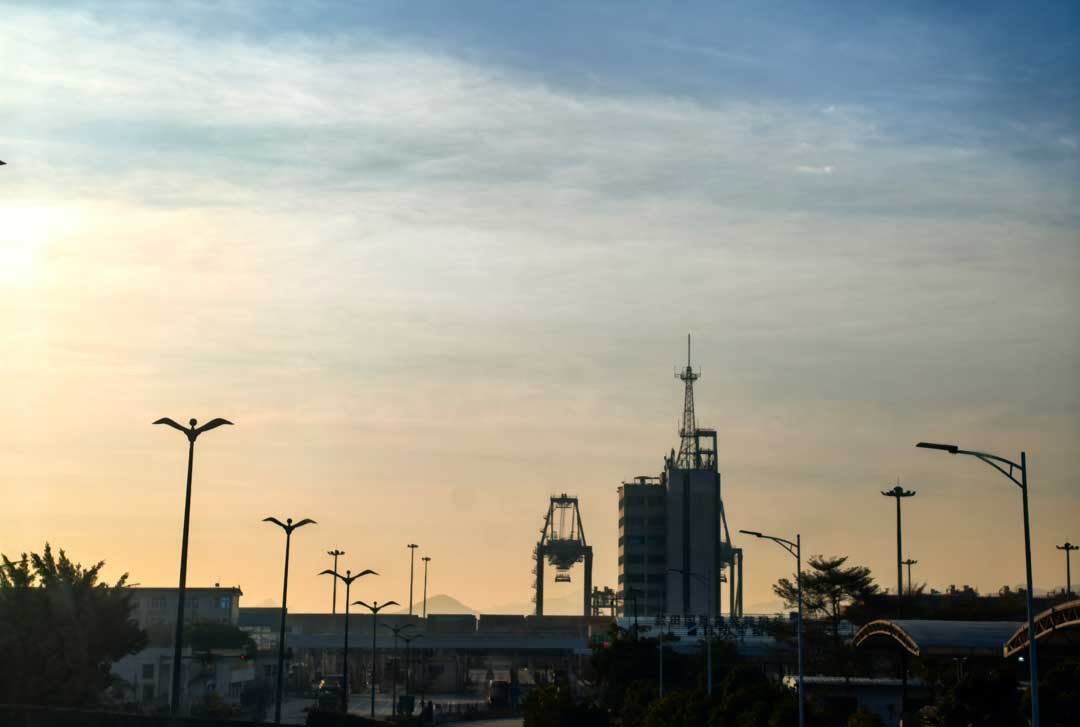
The Houston Ship Channel is one of the busiest waterways in the US by tonnage, and it is the main physical limit on vessel size. To take larger container ships, the Port Authority and the US Army Corps of Engineers are jointly widening and deepening the channel under a program called Project 11, started in 2022. The Port Authority's share of the dredging was announced complete on October 27, 2025.
| Channel length | About 52 miles |
| Widened segment | Galveston Bay segment widened from 530 feet to 700 feet |
| Port Authority dredging | Announced complete October 27, 2025 |
| Remaining work | Carried forward by the US Army Corps of Engineers, planned for completion in 2029 |
| Vessel effect | 15,000 to 17,000 TEU container ships can berth safely at Bayport |
| Navigation window | Vessels under daylight-only restrictions gain about 2.5 more hours per day |
| Environmental package | About 10 acres of bird habitat, 276 acres of wetlands, 324 acres of oyster reef |
| Emissions | Vessel nitrogen oxide emissions projected to fall 3% to 7% |
| Maintenance savings | Federal maintenance over two segments, about USD 380 million net present value saved over 50 years |
Two changes matter to importers. First, the berthable vessel class grows, so slot supply should be more ample over the long run. Second, vessels under daylight-only restrictions get a longer navigation window, so berthing and departure can be scheduled with more flexibility and less waiting. During construction, some segments still have dredging work, so individual sailings may shift.
Barbours Cut is the older of the two container terminals, opened in 1977 on the Barbours Cut channel on the La Porte side, about 27 miles from central Houston. Its advantage over the Turning Basin is proximity to the Gulf, which shortens vessel transit in and out. The terminal is owned by the Port Authority and worked by a joint-venture terminal services company.
| Address | 1515 E. Barbours Cut Boulevard, La Porte, TX 77571 |
| Berths | 6 berths, about 6,000 feet of continuous quay |
| Equipment | Ship-to-shore cranes and rubber-tyred gantries; across the two container terminals the RTG fleet reached 163 units in 2025 |
| Role | One of the main shares of Houston container volume, with a high concentration of reefer and loaded containers |
| Approach roads | Via SH-146 and SH-225; the Port Authority posts live traffic cameras on these routes |
The terminal's position shapes its truck service area: the La Porte, Deer Park and Pasadena industrial belt first, east toward Beaumont, and west into central Houston and the northern industrial band via I-10 and the beltway.
Bayport is the Port Authority's newer container terminal, opened in 2007 in the Bayport industrial district on the west side of Galveston Bay. It was designed to leave room for Gulf Coast container growth, with berths and yard built in phases.
| Gate address | 12621 Port Road (ZIP 77586) |
| Berths | 5 container berths in service; Berth 7 completed in 2025, adding about 1,000 feet of quay |
| Capacity | Berth 7 and supporting works add more than 500,000 TEU of annual capacity |
| Equipment | 5 new rubber-tyred gantries received in 2025, with 6 more arriving the following March to complete a 16-unit order |
| Automation | RTG-O automated gantry dispatch rolled out across both container terminals, lifting productivity by up to about 20% |
| Vessel class | After the channel widening, 15,000 to 17,000 TEU ships can berth safely |
| Item | Barbours Cut | Bayport |
|---|---|---|
| Opened | 1977 | 2007 |
| Location | La Porte, Barbours Cut channel | West side of Galveston Bay, Bayport industrial district |
| Berths | 6, about 6,000 feet of continuous quay | 5 in service, Berth 7 added about 1,000 feet in 2025 |
| New in 2025 | Equipment renewal and automated dispatch | Berth 7, 5 new gantries, more than 500,000 TEU of added capacity |
| Main approach road | SH-146, SH-225 | SH-225 and Bayport area roads |
| Address | 1515 E. Barbours Cut Boulevard, La Porte, TX 77571 | 12621 Port Road (ZIP 77586) |
The two terminals share the Port Authority's customer portal and appointment system, but their gate addresses, approach roads and yards are separate. When booking, state the discharge terminal clearly, because the same service may work both terminals and the choice changes the pickup point and the trucking cost.
2025 was a record year for both containers and total tonnage at the Port of Houston, with growth achieved against a volatile trade backdrop.
| Metric | 2025 | Change |
|---|---|---|
| Total tonnage, public facilities | 54,491,066 short tons | Up 3%, a record |
| Container volume | 4,303,345 TEU | Up 4%, a record |
| Loaded exports | -- | Up 7% |
| Loaded imports | -- | Up 1% |
| Vessel calls in the channel | 8,099 | Down 4% |
| Barge moves | 209,616 | -- |
| Steel at multipurpose terminals | 4,176,166 short tons | Down 8% |
| General cargo | -- | Down 6% |
| Bulk cargo | -- | Up 12% |
| Truck service | About 2.5 million moves | More than 3.3 million gate transactions |
| Average truck turn | About 40 minutes | -- |
Container imports grew more slowly than exports, so part of the 2025 gain came from export cargo such as plastic resin, chemicals and agricultural products. Vessel calls fell while tonnage and container volume rose, a sign of larger average vessel size. Among US container ports Houston ranks fifth, and its import share moved from 7.7% to 7.8%. The Port Authority also announced about USD 2.1 billion of landside capital spending over five years to lift throughput and storage capacity at its public facilities.
Container liner service from China to Houston is mostly all-water routing through the Panama Canal, with additional combinations via the Suez Canal and via transshipment ports. Port rotation varies a lot between services, and the same origin port can differ by more than a week in sea time depending on the service.
| Origin port | Sailing frequency | Main routing |
|---|---|---|
| Shanghai | Daily or near-daily on combined services | Mostly all-water direct to Houston via the Panama Canal |
| Ningbo | Several sailings a week | Combined calls with Shanghai, via the Panama Canal |
| Shenzhen (Yantian, Shekou and others) | Several sailings a week | Direct via the Panama Canal, some services via transshipment |
| Xiamen | One or two sailings a week | Mostly transshipment combinations |
| Qingdao | Two or three sailings a week | Direct, or via Busan and Shanghai transshipment |
| Tianjin | Weekly | Mostly transshipment combinations |
When booking, confirm three things with the forwarder: whether the service is direct or via transshipment, where Houston sits in the port rotation, and whether discharge is at Bayport or Barbours Cut. Rotation affects the arrival date and the discharge terminal affects the pickup point, and both matter more to a delivery plan than the ocean freight rate alone.
The ranges below cover the sea leg only; they exclude booking, loading, export clearance and destination clearance. They reflect forwarder transit tables cross-checked against sailing records, and are reference ranges rather than carrier commitments.
| Origin port | Common sea transit | Note |
|---|---|---|
| Shanghai | About 24 to 35 days | Median about 27 days in sampled sailings, roughly 60% direct |
| Ningbo | About 26 to 36 days | Many services combined with Shanghai |
| Shenzhen | About 26 to 33 days | Higher share of direct services, shorter lower bound |
| Xiamen | About 28 to 36 days | Higher transshipment share |
| Qingdao | About 30 to 38 days | Fewer direct sailings |
| Tianjin | About 33 to 40 days | Mostly transshipment combinations |
Five factors move these numbers: Panama Canal lock capacity and booking windows; the Gulf hurricane season from June to November; vessel queuing inside the channel; where Houston sits in the rotation; and space tightness in peak season. Counting the origin inland leg, the sea leg, discharge, clearance and drayage, the common door-to-door range from a China factory to a Houston pickup point is about 32 to 45 days. Using a US West Coast port plus rail instead shortens the sea leg but adds a rail leg, so total time is usually similar and in some cases longer.
Houston's Asia services are run by several liner companies through alliance slot-sharing, and the service names commonly seen in the market include GME, GME2, GCC1, GCC2, GMXP, EC4, PEX3, ZSL and AC3. Shippers usually book through a forwarder, and the actual carrier depends on the forwarder's slot agreements.
| Service | Common carriers | Routing |
|---|---|---|
| GME / GME2 / GCC1 / GCC2 / GMXP | COSCO, OOCL, CMA CGM, Evergreen | Mostly direct Gulf services via the Panama Canal |
| EC4 | ONE, Evergreen, HMM, Yang Ming | Direct via the Panama Canal |
| PEX3 | CMA CGM group slots | Mostly direct, some sailings via transshipment |
| ZSL / Lone Star Express | MSC, ZIM, Gold Star Line | Direct service |
| AC3 | Maersk | Direct service, less frequent |
| Transshipment via Busan, Shanghai, Singapore and others | Several | Transshipment; longer sea time but more flexible space |
Beyond the ocean freight rate, compare three things when choosing a carrier: the discharge terminal and yard arrangement at Houston, the free-time and detention rates, and the cut-off time at the origin port. Chemicals, plastic resin and palletized cargo also need confirmation of the carrier's rules on pallets, securing and dangerous goods. Related service types are covered in the China-to-US FCL ocean freight service and the China-to-US LCL ocean freight service.
Houston's rail drayage capacity is the main reason it can reach the US South and Midwest. Two Class I railroads run ramps around the city serving different directions, and the discharge point directly changes the inland plan.
| Ramp | Railroad | Address | Operations and notes |
|---|---|---|---|
| Settegast | Union Pacific | 6800 Kirkpatrick Boulevard, Houston, TX 77028 | Open 24 hours, 7 days a week; customer service 800-272-8777; hub for international and domestic intermodal |
| Pearland | BNSF | 214 Brisbane Road, Houston, TX | Open 24 hours, 7 days a week; 48-hour free time; FIRMS code S639 |
| Kendleton area | CPKC | 111 Doris Road, Beasley, TX 77417 | Southwest of the city, serving southwestern markets |
The three ramps sit northeast, southeast and southwest of the city, with different distances and road conditions from the two container terminals. If a rail notice names Settegast but the container is picked up at Bayport, the drayage distance and time run much longer than from Barbours Cut. Importers should fix the pickup point after the rail notice arrives, rather than estimating on one port-wide assumption.
Both container terminals share the same gate rule: entry requires an Express Pass appointment, and out-of-window work needs a separate request. The requirement is firm, and trucks without an appointment are turned away.
| Regular gate hours | Monday to Friday 06:00 to 19:00 |
| Gate close | 18:00 |
| Saturday and Sunday | Closed |
| Appointment | Express Pass required; entry within the booked window |
| Customer portal | Lynx portal, for pre-building truck transactions and checking charges and pickup status |
| Out-of-window work | Late gate request form required, arranged as approved by the Port Authority |
| Average truck turn | Port figure about 40 minutes; longer at peak and when vessels bunch |
| Multipurpose gates | Turning Basin truck gates at 300 East Loop North, 9 gates, hours ranging from Monday to Friday 05:00 to 20:00 to 24 hours, 7 days a week |
The published average truck turn of about 40 minutes is an annual figure. Actual pickup time depends on vessel bunching, appointment windows and yard reshuffles, and can stretch visibly in peak season. When planning a truck fleet, work from the real appointment availability in the target window rather than the average.
The Houston metro area has one of the largest industrial real estate inventories in the US, so warehousing and distribution capacity is broad, with bonded warehouses, third-party logistics and foreign-trade zone facilities clustered around the port. The Port Authority operates Foreign-Trade Zone 84, one of the larger zones in the country.
One caveat: Houston industrial vacancy and rents move with the cargo cycle, and warehouses close to the port tighten in peak season, so long-term storage should be locked in early.
US Customs and Border Protection runs a Houston Seaport port and a Houston Airport port, both under the Houston Field Office. Most Gulf Coast ports and much of north Texas fall under the same field office.
| Port code | Port name | Address |
|---|---|---|
| 5301 | Houston Seaport | 7141 Office City Drive, Houston, TX 77087 |
| 5309 | Houston Airport | 2350 N. Sam Houston Pkwy E. #900, Houston, TX 77032-3100 |
| 5583 | Alliance Airport | 2221 Alliance Blvd, Fort Worth, TX 76177-4300 |
| 5382 | Conroe | 2975 Hawthorne Drive, Conroe, TX 77303 |
| 5311 | Freeport | 801 Navigation, Freeport, TX 77541 |
| 5312 | Corpus Christi | 9149 State Highway 44, Corpus Christi, TX 78406 |
| 2101 | Port Arthur-Beaumont | 4550 Jimmy Johnson Blvd Suite 1, Port Arthur, TX 77642 |
| 5501 | Dallas/Ft. Worth | 7501 Esters Blvd. Suite 160, Irving, TX 75063 |
Day-to-day work on ocean full-container imports is handled by a licensed customs broker inside the Automated Commercial Environment (ACE), covering entry filing, duty payment and release. Rules on additional tariffs, product admissibility and duty-free allowances change quickly; the US customs policy section, the US customs import and export duty section and the US customs information section carry the working detail.
Pickup works the same way at both Houston container terminals, and the critical points are the appointment and settling charges.
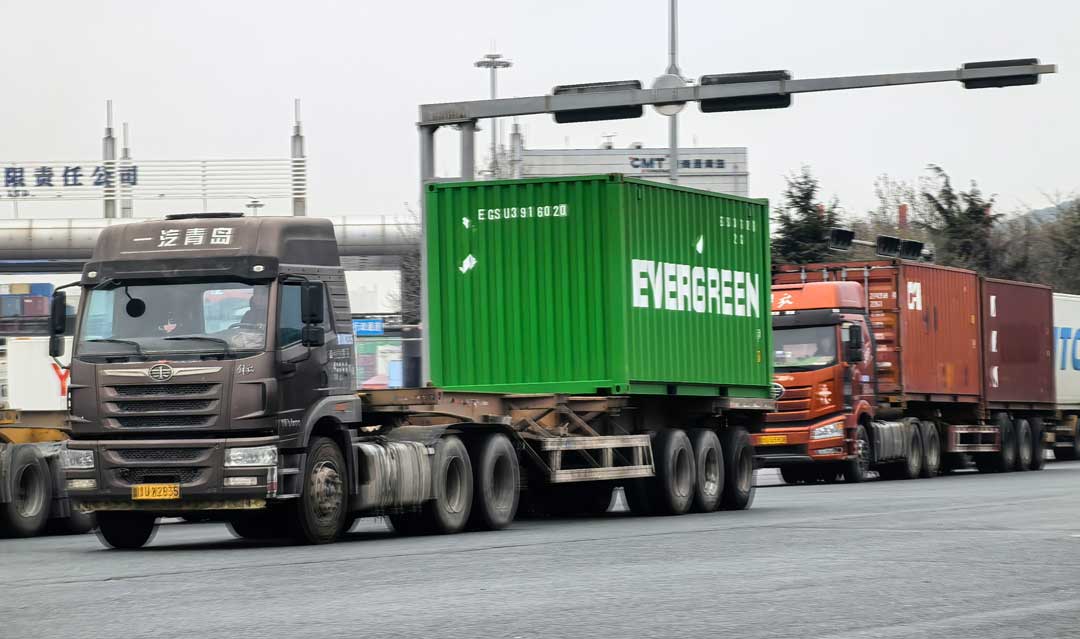
Four causes account for most delays: no appointment, or a gate arrival outside the booked window; unsettled charges creating a system hold; a container at the other terminal while the truck goes to the wrong gate; and an unhandled customs exam notice. All four can be avoided by checking the portal before dispatch.
In Houston the pickup point has two meanings: which terminal the container leaves from, and where the cargo is finally delivered. The drayage and transloading cost between them differs widely, so both should be fixed before dispatch.
The Port of Houston tariff charges storage on imported loaded containers beyond free time, and when the terminal is congested or pickup capacity is tight the Port Authority may use a tiered surcharge. The current tariff governs, and who bears the cost should be confirmed with the forwarder at booking.
CBP decides exams based on declaration compliance, prior records and commodity type. Houston exams take place in the terminal yard or at a designated exam facility, and the container cannot be picked up during an exam.
Release only comes after the exam clears, so exams are one of the main sources of transit variability at Houston. If the cargo moves by rail, also confirm whether the exam affects the rail cut-off and, if needed, ask the railroad to rebook to the next train.
Cargo can be returned, provided it has not been consumed or delivered in the US and remains in a terminal yard, bonded warehouse or under customs supervision. A return needs an export entry in the US and an import declaration in China, and goods returned in their original state for quality or specification reasons may qualify for duty-free treatment within the set period.
Two things are particular in Houston. First, the return container has to go back to the terminal to load, and if the original export port is Houston the return leg is only drayage plus terminal handling, so the handoff is fairly direct; otherwise it is trucked or railed back first. Second, the empty source for the export box may differ from the import box, so the designated empty point has to be confirmed with the carrier. The cost of a return usually combines inland return transport, export clearance fees, ocean freight and storage at both ends, so compare the total against processing or reselling in the US before deciding.
Both container terminals follow one holiday schedule, with the gate closed on most holidays and shortened hours on some. Regular pickup and empty return do not run on those days, and discharge work on arriving vessels may also shift.
| Date (2026) | Holiday | Gate |
|---|---|---|
| January 1 (Thursday) | New Year's Day | Closed |
| January 19 (Monday) | Martin Luther King Jr. Day | 06:00 to 17:00, ingate closes 16:00 |
| February 16 (Monday) | Presidents Day | 06:00 to 17:00, ingate closes 16:00 |
| April 3 (Friday) | Good Friday | Closed |
| May 25 (Monday) | Memorial Day | Closed |
| June 19 (Friday) | Juneteenth | 06:00 to 17:00, ingate closes 16:00 |
| July 3 (Friday) | Independence Day (observed) | 06:00 to 17:00, ingate closes 16:00 |
| September 7 (Monday) | Labor Day | Closed |
| November 26 (Thursday) | Thanksgiving | Closed |
| November 27 (Friday) | Day after Thanksgiving | 06:00 to 17:00, ingate closes 16:00 |
| December 24 (Thursday) | Christmas Eve | 06:00 to 15:00, ingate closes 14:00 |
| December 25 (Friday) | Christmas Day | Closed |
Beyond the Port Authority holidays, the two container terminals do not run regular operations on Saturday and Sunday. Cargo that has to be picked up before a long holiday should have its appointment confirmed the week before, because the shortened gate days fill up first. More US holiday detail sits in the US holidays overview.
Houston volume is made up of both consumer imports and industrial raw material trade, so it is calmer than a pure consumer port, but container business still shows clear seasonality.
| Period | Volume pattern | Main driver |
|---|---|---|
| January to February | Post-holiday trough, with pre-Lunar-New-Year rush shipping | Chinese factory shutdown and restart, booking recovery after the holiday |
| March to June | Relatively stable, steady imports of industrial raw materials and equipment | Chemical and manufacturing schedules, Houston port congestion |
| July to October | Peak, as retailers and e-commerce build year-end stock | Tight space, with rate increases commonly 30% to 50% |
| November to December | Replenishment and destocking side by side, more export cargo | Plastic resin and agricultural export season, year-end holidays |
Four local variables are worth planning around: the Gulf hurricane season from June to November, which can disrupt port work and inland roads at short notice; sustained July-to-September heat, which affects reefer plugging and handling schedules; Panama Canal water levels and lock capacity, which move all-water service schedules; and the remaining Project 11 construction. Peak-season booking is better placed two to three weeks ahead, with one to two weeks of buffer in the delivery plan.
Taken together, Houston's value as a gateway comes down to five points.
Three things need care. First, container storage free time and carrier detention run in parallel, so over-age costs climb quickly. Second, the summer hurricane season can hit the port and inland roads suddenly, so the delivery plan should carry buffer. Third, chemicals, resin and palletized cargo face strict declaration and securing rules, and thin paperwork tends to extend exam time.
Not exactly. The Houston Ship Channel is the roughly 52-mile waterway, lined with 8 public facilities and more than 200 private terminals; the Port of Houston is the overall port system managed and coordinated by the Port Authority, with public container business concentrated at Barbours Cut and Bayport.
Common sea transit ranges are about 24 to 35 days from Shanghai, 26 to 36 days from Ningbo, 26 to 33 days from Shenzhen and 30 to 38 days from Qingdao. Counting clearance and drayage, factory to pickup point runs about 32 to 45 days. Some transshipment services can exceed 40 days.
It may be Barbours Cut (1515 E. Barbours Cut Boulevard, La Porte) or Bayport (gate address 12621 Port Road). The two have separate gates and approach roads, so confirm the discharge terminal before pickup or a truck can go to the wrong facility.
Yes. Entry to both container terminals requires an Express Pass appointment, built through the Lynx portal. Trucks without an appointment, or arriving outside the booked window, are turned away. Out-of-window work needs a separate late gate request.
Both container terminals work Monday to Friday 06:00 to 19:00, with ingate closing at 18:00 and no weekend work. The multipurpose Turning Basin gates run longer, with some gates open 24 hours, 7 days a week, as announced by the Port Authority at the time.
Storage free time is set by the carrier, commonly a number of days after the pickup notice. The Port of Houston also charges storage on over-age imported loaded containers under its tariff, in parallel with carrier detention, and both accrue daily. Check the carrier system, whose date normally sets the last free day.
Three main ones: Union Pacific Settegast (6800 Kirkpatrick Boulevard, 24 hours, 7 days a week), BNSF Pearland (214 Brisbane Road, 24 hours, 7 days a week, 48-hour free time) and a CPKC ramp southwest of the city (111 Doris Road, Beasley). Road conditions differ in all three directions, so confirm the ramp on the rail notice before pickup.
Common services include GME, GME2, GCC1, GCC2 and GMXP (COSCO, OOCL, CMA CGM, Evergreen slot-sharing), EC4 (ONE, Evergreen, HMM, Yang Ming), PEX3, ZSL / Lone Star Express (MSC, ZIM, Gold Star Line) and AC3 (Maersk). Shippers usually book through a forwarder, and the actual carrier follows the forwarder's slot agreements.
First confirm the hold reason and exam type on the Lynx portal, then follow the broker's instructions. The container cannot be picked up during the exam, and service fees, drayage, devanning labour and storage are borne by the consignee regardless of the outcome. If the cargo moves by rail, also confirm whether the rail cut-off is affected.
Yes, provided it has not been consumed or delivered in the US and remains under customs supervision. A return needs a US export entry and a China import declaration, and an original-state return for quality or specification reasons may qualify for duty-free treatment within the set period. Confirm the return empty source with the carrier and factor the return leg cost in early.
The gate is closed on some holidays and shortened to 06:00 to 17:00 or 06:00 to 15:00 on others. In 2026 the gate closes on January 1, April 3, May 25, September 7, November 26 and December 25. Cargo that must be picked up before a holiday should have its appointment confirmed a week ahead.
Houston's industrial ecosystem suits both consumer imports and industrial trade. Inbound cargo commonly includes machinery and equipment parts, chemicals and plastic raw materials, building materials, auto parts, furniture and consumer goods; outbound cargo centers on plastic resin, chemicals, agricultural products and engineering equipment. Palletized and chemical cargo face strict declaration and securing rules, so prepare documents early.
Shipping from China to USA
Planning a shipment or just comparing options? Contact our freight experts to get a tailored rate within 24 hours.
