
Huntsville sits at 34 degrees 43 minutes north, 86 degrees 35 minutes west, in the Tennessee River valley, about 100 miles south of Birmingham and 100 miles north of Nashville, Tennessee. The city is not on the coast, but sits at the junction of north-south and east-west interstates, leading north into the Tennessee Valley and south toward Birmingham and the Gulf. For importers, the key facts are: Huntsville is an inland port of entry with code 1910, its International Intermodal Center and Huntsville International Airport share one site with a 24-hour CBP presence, and the yard offers 10 days of free storage. This structure decides delivery paths from China to northern Alabama and the Tennessee Valley.
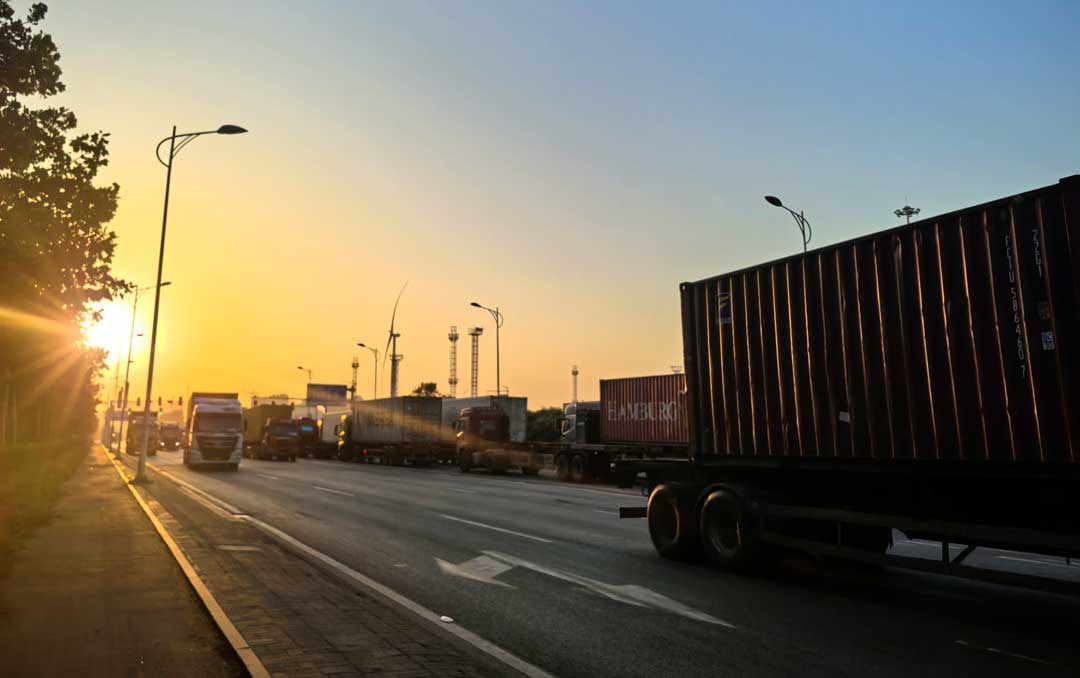
Huntsville sits at 34 degrees 43 minutes north, 86 degrees 35 minutes west, in the Tennessee River valley, about 100 miles south of Birmingham and 100 miles north of Nashville, Tennessee. The city is not on the coast, but sits at the junction of north-south and east-west interstates, leading north into the Tennessee Valley and south toward Birmingham and the Gulf.
Huntsville's identity in the customs system is an inland port, code 1910. Its special feature is two simultaneous import forms: ocean containers move in by rail then complete examination and release locally, while air cargo is handled directly on the airport side. CBP is stationed at the International Intermodal Center 24 hours, with offices in the intermodal building.
| Port code | 1910 |
| Registered name | Huntsville, Alabama |
| Office address | 2850 Wall-Triana Highway, Huntsville, AL 35824 |
| Phone | +1 256-772-3404 |
| Port director | Jessica Drobil |
| Office hours | Monday to Friday 08:00 to 17:00 (Central Time), closed weekends |
| Parent field office | New Orleans |
| On-site arrangement | CBP stationed 24 hours at the International Intermodal Center and on the airport side |
| Facility location | The port office is inside the intermodal building, about 2 miles south on Wall-Triana Highway from I-565 Exit 8 |
Alabama has two other ports: Mobile (code 1901, including Theodore) and Birmingham (code 1904). All three fall under the New Orleans Field Office. Mobile is the Gulf Coast seaport, Birmingham an air port, and Huntsville combines both rail and air forms.
The International Intermodal Center is the container and rail operations core of the Port of Huntsville, in operation since 1986, with the site connected to the airport and industrial park. Its structure: rail loading area inside, stack in the middle, truck gate outside, with the customs station on the same site, and import and export cargo completing examinations in the same place.
| Item | Content |
| Operations start | 1986 |
| Rail access | About 5 miles of rail spur connecting to the Norfolk Southern main line |
| Customs station | CBP stationed 24 hours |
| Foreign-trade zone | Public-use foreign-trade zone 83 |
| Slot capacity | 1,100 wheeled slots, plus over 500 stacking positions |
| Lifting equipment | Two 45-ton gantry cranes, supporting top and bottom lift, with wide-body top lift capability |
| Chassis | Independent chassis pool, providing 20-foot, 40-foot and 45-foot equipment |
| Free storage | Container yard and CFS provide 10 days of free storage |
| Parking | 1,000 wheeled slots |
| Incentive program | Port credit incentive program |
| Partner carriers | 14 |
Ten days of free storage is a standout condition at this yard, suited to cargo needing staged pickup or further local distribution. After the free period ends, storage fees are charged per yard rates, with specific standards to be confirmed with the yard. Because the customs station and stack are on the same site, import FCL completing examination before pickup generates no additional cross-yard drayage, a convenience relative to coastal terminals.
Huntsville's rail services are led by Norfolk Southern, east to two southeastern container ports, west via the Memphis hub connecting Union Pacific and BNSF, thereby covering the West Coast direction.
| Direction | Railroad and connection | Service form |
| East Coast | Norfolk Southern direct to Charleston and Savannah | International intermodal, both directions |
| West Coast | Via Norfolk Southern's Memphis hub connecting Union Pacific | International and domestic intermodal, both directions |
| West Coast (one direction) | BNSF via Norfolk Southern Memphis connection into Huntsville | Inbound from the West Coast only |
| Memphis direction | Norfolk Southern main line | Official figure about 3 days |
For FCL cargo from China, the actual routing is usually: vessels discharge at Charleston or Savannah, rail to Huntsville, with examination and pickup completed locally. When taking the West Coast direction, vessels discharge at Los Angeles or Long Beach, rail to Memphis then transfer onto Norfolk Southern lines into Huntsville. The two routings' total time difference comes mainly from the ocean leg, with the rail leg also slightly different due to distance.
Huntsville International Airport is co-located with the International Intermodal Center, with air cargo and ocean containers sharing one customs office and one yard resource. This layout shortens the landing and delivery chain for high-timeliness cargo.
| Item | Content |
| Runways | Two, 12,600 feet and 10,000 feet |
| Cargo apron | About 1 million sq ft |
| Cargo warehouse | About 436,000 sq ft, including about 35,000 sq ft of cold storage |
| Routes | All-freighter services direct to Europe, Asia and South America, including Boeing 747 freighters |
| Main users | Freight forwarder DSV's North America hub is based here |
| 2025 cargo volume | First three quarters air cargo over 46.5 million lbs |
| 2025 passengers | First three quarters 1.29 million passengers, up 6.9% year on year |
Air cargo after landing can be sent directly to companies in the Jetplex Industrial Park, or distributed in warehouses on the airport side. For cargo needing refrigeration or temperature control, the airport provides about 35,000 sq ft of cold storage, suited to pharmaceuticals and high-performance chemicals.
Huntsville's international trade institutional arrangement concentrates in foreign-trade zone 83. The zone is public-use, located within the Port of Huntsville, and importers can operate directly or through zone companies.
| Item | Content |
| Number | FTZ 83 (within the Port of Huntsville, public-use) |
| Supporting park | Jetplex Industrial Park |
| Park location | Dedicated exit on I-565, immediately adjacent to the International Intermodal Center and airport |
| Developable land | About 2,800 acres |
| Companies in park | Over 70 |
| Regional industries | Aerospace and defense, auto manufacturing, biotechnology and pharmaceuticals, advanced manufacturing |
| Infrastructure | Power supplied by the Tennessee Valley Authority, with supporting water, gas and communications facilities in the park |
The park's about 2,800 acres of developable land make it one of the region's larger contiguous industrial land parcels, with lot sizes from a few acres to several hundred acres. For importers, the direct benefit in the zone is duty deferral and re-export exemption; for companies needing to set up distribution or assembly in the United States, the park offers both plant and warehousing options.
Huntsville is not on the coast, so all ocean cargo must transfer via coastal ports to rail or road. Four optional routings exist, differing in the combination of seaport and rail legs.
| Route | Seaport leg | Inland leg | Applicable situations |
| East Coast port plus rail | China to Charleston or Savannah | Norfolk Southern direct to Huntsville | Conventional FCL imports, landing in northern Alabama or southern Tennessee |
| West Coast port plus transcontinental rail | China to Los Angeles, Long Beach | Via Memphis onto Norfolk Southern lines | When West Coast space is ample or ocean rate differentials are clear |
| Gulf port plus truck | China to Mobile and other Gulf ports | Road northbound via I-65 | Landing points further south, or needing connection with Gulf Coast operations |
| Air freight to Huntsville | China to hub airports | All-freighter direct or via hub transfer to Huntsville | High-timeliness items, pharmaceuticals and precision parts, production-line shortages |
Of the four routings, the Charleston or Savannah plus rail combination balances time and cost, with rail direct and no transshipment; the West Coast port plus transcontinental rail plan usually has a longer total time, but still has adoption value when West Coast space is ample. The air freight plan suits high-value, small-volume and time-sensitive cargo, with direct-to-plant delivery after landing, avoiding inland transfer.
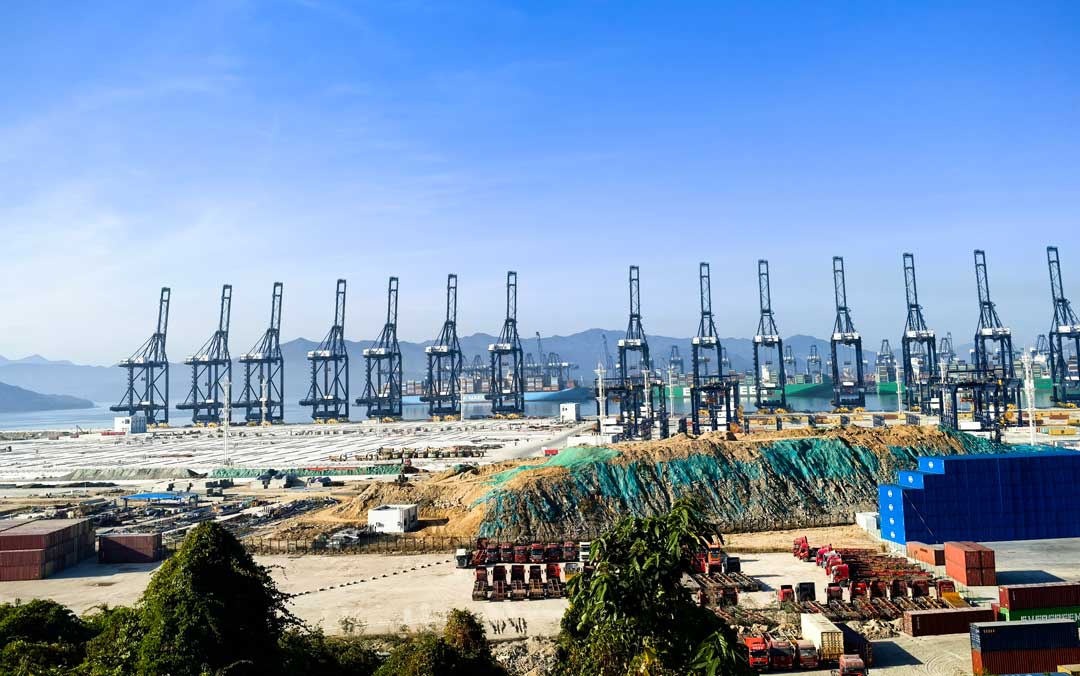
Transit time is estimated separately for the seaport and inland legs, with the seaport leg using the same caliber as other East and West Coast port pages.
| Entry route | Ocean leg common range | Inland leg |
| Via Charleston | About 26 to 38 days (per origin port and routing) | Norfolk Southern direct rail, about 2 to 3 days |
| Via Savannah | About 28 to 38 days (per origin port and routing) | Norfolk Southern direct rail, about 2 to 3 days |
| Via Los Angeles, Long Beach | About 14 to 22 days | Transcontinental rail via Memphis, combined about 8 to 12 days |
| Via Mobile | About 30 to 40 days | Road northbound via I-65, usually same day or next day |
| Air freight | Ex-Chinese airport, whole journey about 3 to 7 days | Short-haul truck delivery after landing |
Combining both ends, the common range from major Chinese ports to the Huntsville pickup point via East Coast ports is about 32 to 45 days; the West Coast port combination's total time is usually close, and longer in some cases. Times in the table exclude booking, loading, export customs clearance and destination clearance. Suez-routed services are affected by Red Sea conditions, with Cape of Good Hope diversions occurring from time to time, and actual ocean time may rise over a week; peak season and holiday periods should have extra buffer.
Huntsville port's routine matters are handled by licensed customs brokers in the Automated Commercial Environment (ACE). Three points merit note.
Rules involving additional tariffs, merchandise admission and exemption quotas change quickly, and specific applicability should be referenced against current policy sources.
Huntsville's pickup process differs from coastal terminals in that containers are picked up after arriving at the yard by rail, and rail arrival status must be confirmed before pickup.
Three common delay causes: rail arrival later than planned, causing pickup date deferral; unpaid fees or hold marks making the container unpickable in the system; and chassis model not matching box type. All three can be confirmed in advance via yard and carrier system queries before dispatching.
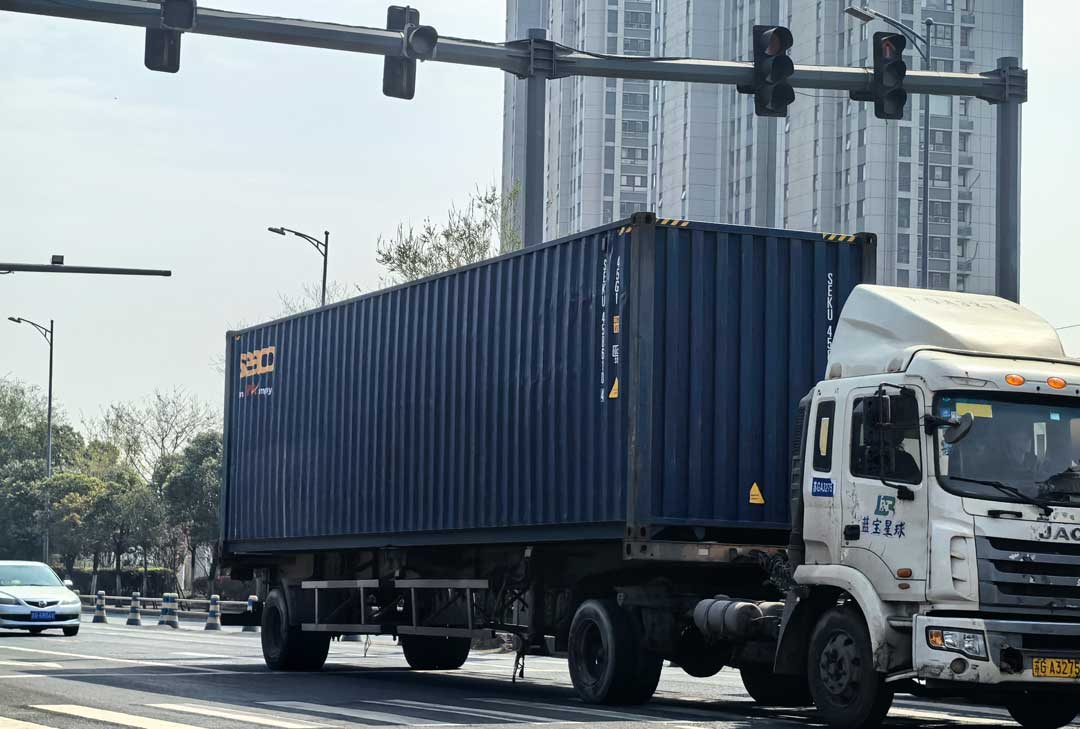
Four things must be confirmed before pickup: whether the container has arrived, when the free period ends, how chassis are arranged, and where to return the empty.
Examinations are decided by CBP, related to filing compliance, history and cargo category. Huntsville's examinations are completed at the local yard or airport cargo facilities, with no need to drag containers to other cities.
Cargo can be returned, on the premise that it has not been consumed or delivered in the United States and remains at a yard, foreign-trade zone or under customs supervision. Return requires U.S. export entry and Chinese import entry, with tax exemption applicable within the prescribed period for goods returned in their original state due to quality or specification reasons.
Huntsville's returns have two operational features. First, the return leg must first move by rail to the export seaport for loading, and if originally entered via Charleston or Savannah, the return leg is carried by the same railroad, with relatively direct connection. Second, air cargo returns usually arrange return flights or hub transfer directly, with return time depending on flight space. Return costs include return rail or air freight, export entry fees, storage at both ends and yard handling fees, and these should be calculated together before deciding, compared with options of handling in the U.S. or resale.
Huntsville's cargo volumes are decided by local manufacturing production rhythms and consumer goods import cycles, so fluctuations are smaller than purely consumer-oriented inland points, but peak periods still see space and railcar tightness.
| Period | Cargo characteristics | Main influencing factors |
| January to February | Post-holiday trough, with a rush shipment wave before Chinese New Year | Chinese factory shutdown and restart rhythm |
| March to June | Relatively stable, with manufacturing parts and project cargo alternating | Auto, aerospace and pharmaceutical procurement cycles |
| July to October | Enters peak season, with retail and e-commerce stocking for year-end | Space tightness, rate increases, railcar tightness |
| November to December | Replenishment and inventory clearance coexist, with air share rising | Year-end holidays, early factory shutdowns, concentrated timeliness demand |
Three local variables to anticipate: the June to November Atlantic hurricane season's effect on East Coast ports and rail; winter extreme weather's effect on rail operations and road delivery; and peak-period railcar and chassis tightness. Peak-season bookings should be made two to three weeks early, with one to two weeks of buffer in the delivery plan.
Combining the above conditions, Huntsville's value as an inland landing point concentrates in four areas.
Two points needing relative attention: first, the city is not on the coast, so ocean FCL must transfer via coastal ports to rail, with a longer inland leg; second, the yard's scale is regional, with slots and railcars relatively tight in peak season and overage storage costs rising quickly.
No. Huntsville is an inland city in northern Alabama with no local marine terminal. Its inland port consists of the international airport, rail and air cargo, spaceport and industrial park, with containers moving in by rail via East Coast or West Coast ports.
Via Charleston or Savannah entry plus rail, the common range is about 32 to 45 days, of which the ocean leg is about 26 to 38 days and the rail leg about 2 to 3 days. The West Coast port plus transcontinental rail combination's total time is usually close, with an ocean leg of about 14 to 22 days plus about 8 to 12 days of rail time.
Mostly discharge at Charleston or Savannah on the East Coast, then Norfolk Southern rail direct to Huntsville; some cargo discharges at Los Angeles or Long Beach on the West Coast, moving by rail to Memphis then onto Norfolk Southern lines. There is also a plan discharging at Gulf ports such as Mobile then trucking north.
The International Intermodal Center's container yard and CFS provide 10 days of free storage, which is the yard-level free period. The carrier's equipment free period is calculated separately, with both per the dates in their respective systems, and the actual constraint is usually the earlier expiring one.
Pickup slots need to be booked, and the chassis source confirmed in advance. The yard has an independent chassis pool providing 20-foot, 40-foot and 45-foot equipment. Containers cannot be picked up while in rail transit, and dispatch should be arranged after the arrival record is generated.
The airport and International Intermodal Center are co-located, with customs station and foreign-trade zone shared, and cargo after landing can be sent directly to companies in the park, avoiding inland transfer. The airport has all-freighter services direct to Europe, Asia and South America, plus about 35,000 sq ft of cold storage, suited to pharmaceuticals and precision parts.
Examinations are completed at the local yard or airport cargo facilities, with no cross-city drayage. Containers cannot be picked up during the exam, and generated service fees, lifting and handling fees, devanning labor and storage fees are borne by the receiver regardless of exam outcome. If rail cutoffs are affected, apply for rebooking with the railroad at the same time.
Yes, on the premise that the goods have not been consumed or delivered in the U.S. and remain under customs supervision. Return requires U.S. export entry and Chinese import entry, with tax exemption applicable within the prescribed period for original-state returns due to quality or specification issues. The return leg must first move by rail to the export seaport or arrange a return flight, and costs should be counted in advance.
Local industry decides import components are mainly auto parts, aerospace and aircraft parts, precision machinery, electronic components and pharmaceutical-related materials, with exports mainly industrial goods and aviation-related products. High-timeliness, high-value cargo suits air freight; conventional FCL suits East Coast port plus rail.
July to October each year is the tightest, with retailers and e-commerce stocking for year-end holidays, ocean space and railcars tightening together. A further rush shipment wave runs from late December to early January. Peak-season bookings should be made two to three weeks early with one to two weeks of buffer.
The yard's rail services are provided by Norfolk Southern, whose main line passes through Huntsville and connects to the International Intermodal Center via an about 5-mile spur. Via Norfolk Southern's Memphis hub, Union Pacific can be reached for major West Coast ports; BNSF provides one-direction inbound service from the West Coast into Huntsville.
Yes. Foreign-trade zone 83 is public-use, located within the Port of Huntsville, integrated with the International Intermodal Center, airport and Jetplex Industrial Park, with the park having about 2,800 acres of developable land.
Shipping from China to USA
Planning a shipment or just comparing options? Contact our freight experts to get a tailored rate within 24 hours.
