
Indianapolis sits at 39 degrees 46 minutes north and 86 degrees 9 minutes west, on the flat ground of central Indiana, where east-west I-70 meets north-south I-65, with I-69 and I-74 running toward Michigan, Ohio and Illinois. The city is not on the coast and not on the Great Lakes, so its freight moves by road and rail. For China exporters the value is a port code with a customs office at the airport and container exams at an inland rail terminal, plus direct CN rail from Canada's West Coast ports that bypasses the Chicago ramp cluster.
| State | Indiana, Midwest; north to Michigan and Lake Michigan, east to Ohio, west to Illinois, south to Kentucky |
| Main highways | I-70 east-west toward Columbus, St. Louis and Denver; I-65 north-south toward Chicago and Louisville and Nashville; I-69 toward Michigan; I-74 toward Cincinnati and Peoria |
| Rail | Indiana Rail Road runs a terminal in the southwest of the city, connecting to Canada's West and East Coast ports over the CN network; the Class I Chicago ramp cluster sits about 180 miles north as a backup |
| Airport | Indianapolis International Airport (IND), co-located with the FedEx express hub, the local air entry point |
| Metro area | About 2.1 million people, the most concentrated area in Indiana; industries include autos and parts, pharmaceuticals and life sciences, logistics and advanced manufacturing |
In the customs system Indianapolis is an inland port, code 4110, under the Chicago Field Office. Its particular feature is that the customs office sits at the airport while container exams and release happen at the rail terminal southwest of downtown: ocean full containers and air express share one port code but two operating locations.
| Port code | 4110 |
| Registered name | Indianapolis, Indiana |
| Office address | 1945 South Banner Avenue, Indianapolis, IN 46241 |
| Phone | +1 317-241-9780 |
| Port director | Brett A. Mueller |
| Office hours | Monday to Friday 08:00 to 16:00 (Eastern Time), closed federal holidays |
| Supervising field office | Chicago |
| Express operations | FedEx express window Monday to Friday 19:00 to 05:00 the next day |
| Container exam location | Bonded yard inside the rail intermodal terminal southwest of downtown |
Indiana has four other ports: Fort Wayne (4183), Gary Chicago International Airport (3905), Evansville and Owensboro, Kentucky (4116) and South Bend International Airport (3986), all under the Chicago Field Office. Gary and East Chicago sit on the south shore of Lake Michigan and offer Great Lakes and inland barge access; Fort Wayne, Evansville and South Bend are mainly air and land ports.
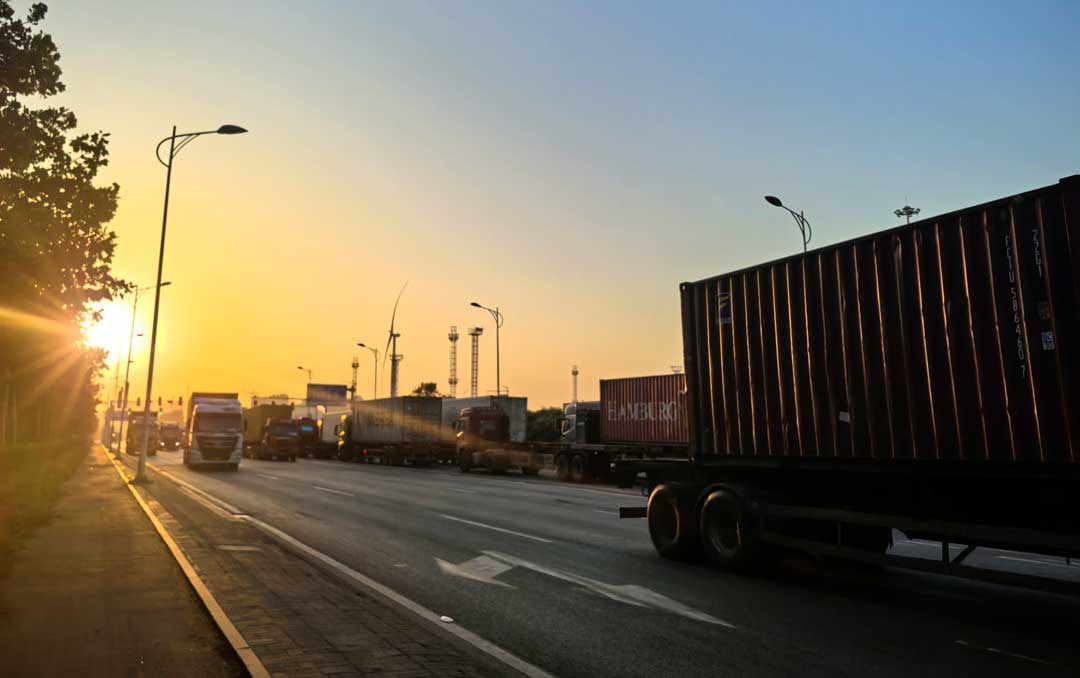
The Senate Avenue intermodal terminal is where Indianapolis handles the bulk of its ocean full containers. Run jointly by Indiana Rail Road and Canadian National, it opened in 2013. Its layout runs rail loading inside, yard in the middle and truck gates outside, with a bonded container yard on site so imported full containers can be examed before pickup.
| Opened | 2013 |
| Mailing address | 1500 S. Senate Ave., Indianapolis, IN 46225 |
| Location | Southwest of downtown, less than 1 mile away; gate on Senate Avenue south of Wisconsin Street |
| Financing and operations | Jointly run by Indiana Rail Road and Canadian National |
| Customs arrangement | On-site US customs bonded container yard |
| Stacking | Supports double-stack container loading |
| Temperature-controlled cargo | Reefer containers supported |
| Chassis | About 450 chassis positions |
| Gate hours | Monday to Friday 06:00 to 18:00; Saturday 08:00 to 12:00; closed holidays |
| Highway access | Next to I-70 and I-65 |
The terminal began a multi-phase expansion in 2021, adding adjoining land and extra in and out gates with self-service kiosks, lifting annual capacity from about 40,000 forty-foot equivalents at start-up to more than 120,000, and handling more than 90,000 TEU in 2024. The main changes after expansion were gate efficiency and yard space, shortening pickup waits, with a published case of an average truck turn of about 16 minutes.
The terminal's rail directions follow Canadian National's network, one line north to Canada's West Coast ports and another east to Canada's East Coast and US East Coast ports. For full containers from China that means two non-overlapping inbound rail channels.
| Linked port | Railroad | Relevance to China |
|---|---|---|
| Prince Rupert, British Columbia | Canadian National | Direct rail after trans-Pacific discharge, without passing the Chicago ramps |
| Vancouver, British Columbia | Canadian National | Another trans-Pacific entry point, train frequency complementary to Prince Rupert |
| Halifax, Nova Scotia | Canadian National | Inbound channel for trans-Atlantic and Suez-direction services |
| Elizabeth Marine Terminal, Port of New York and New Jersey | CN connection | Inbound channel for US East all-water services |
In published case data, door-to-door time from an Asian port via Prince Rupert to this terminal is about 22.6 days; from Asian ports via Long Beach to Indiana, about 25 days from Japan and about 32 days from Thailand. The difference comes mainly from sea-leg distance and port rotation. One side benefit of entering through Canada's West Coast is that the route skips the Chicago ramps, avoiding that hub's peak-season queues and dwell.
Indianapolis International Airport is co-located with the FedEx express hub and is the local air entry point. The customs office sits at the airport, where express and general air cargo are filed in one place, so the landing-to-release step for air cargo is short.
| Customs office | 1945 South Banner Avenue, next to the airport cargo area |
| Express window | Monday to Friday 19:00 to 05:00 the next day (Eastern Time) |
| Express phone | +1 317-481-7079 |
| Main cargo user | FedEx runs an express hub at the airport, with code area 4198 dedicated to its hub operations |
| Cargo that fits | Time-critical items, production line shortages, samples and high-value small pieces |
For cargo that needs air freight, pickup and release at the airport can pass straight to local delivery. Note that express work concentrates at night into the early morning, so cargo arriving by day generally waits until that evening, and pickup times should account for this rhythm.
Indianapolis duty arrangements sit with Foreign-Trade Zone 72. The grantee is the Indianapolis Airport Authority, and the zone was reorganized under the Alternative Site Framework (ASF) in 2011, meaning sites are set up within the designated service area according to actual company needs rather than only in a pre-drawn park.
| Number | FTZ 72 (Indianapolis) |
| Grantee | Indianapolis Airport Authority |
| Approved | September 28, 1981; reorganized under the Alternative Site Framework on March 3, 2011 |
| Service area | 41 Indiana counties including Marion, Hamilton, Hendricks, Johnson, Boone, Hancock, Madison, Delaware, Vigo, Tippecanoe and Monroe |
| Activated land | 699.55 acres |
| Mailing address | P.O. Box 51681, Indianapolis, IN 46251 |
| Types of zone tenants | Distribution and light processing for autos and parts, pharmaceuticals and life sciences, sporting goods and consumer electronics brands |
Indiana has several other foreign-trade zones: Ports of Indiana zones 152 at Burns Harbor, 170 at Jeffersonville and 177 at Mount Vernon, mainly serving industrial projects on Lake Michigan and the Ohio River; and South Bend 125 and Fort Wayne 182, with local airport authorities as grantees. For importers the direct benefits inside a zone are duty deferral and duty-free re-export, plus inverted tariff treatment when the finished product rate is lower than the imported part rate.
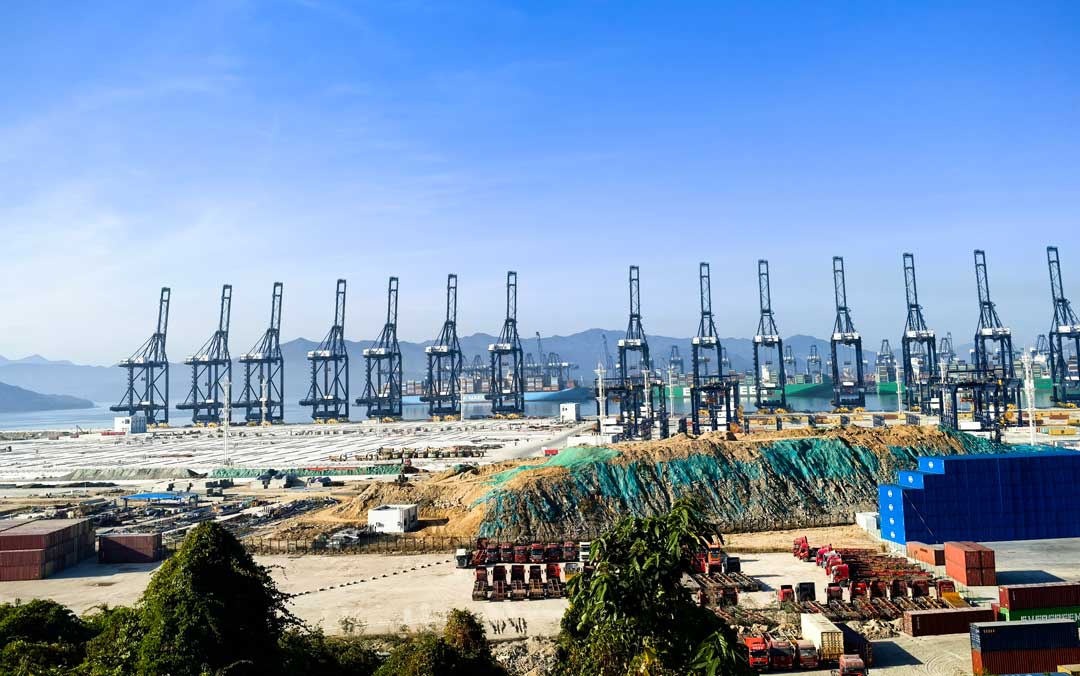
Indianapolis is not on the coast, so all ocean cargo reaches it through a port by rail or road. Four routes are available, differing in the entry port and inland combination.
| Route | Entry leg | Inland leg | When it fits |
|---|---|---|---|
| Canada's West Coast plus rail | China to Prince Rupert or Vancouver | Canadian National direct to the Senate Avenue terminal | Routine full-container import, valuing inland consistency |
| US West port plus transcontinental rail | China to Los Angeles, Long Beach | Rail east to Indianapolis | When US West space is loose and the ocean rate gap is clear |
| US East port plus rail | China to New York New Jersey or Halifax | CN connection to this terminal | When the landing point is further east or US East operations are needed |
| Air to Indianapolis | China to a hub airport | Direct freighter or connection to Indianapolis | Time-critical items, production line shortages, high-value small pieces |
Of the four, the Canada West Coast plus rail combination is the most direct inland, never passing the Chicago ramps; the US West port option has a shorter sea leg but a longer transcontinental rail distance. Air fits high-value, small, time-sensitive cargo, deliverable straight to a plant after landing.
Transit is estimated separately for the entry leg and the inland leg, with the entry leg using the same basis as other US West and US East port pages.
| Entry route | Common sea transit | Inland leg |
|---|---|---|
| Via Prince Rupert | About 15 to 20 days | Canadian National direct, about 22 to 26 days total |
| Via Vancouver | About 15 to 20 days | Canadian National direct, about 22 to 27 days total |
| Via Los Angeles, Long Beach | About 14 to 22 days | Transcontinental rail, about 25 to 32 days total |
| Via New York New Jersey or Halifax | About 26 to 38 days | Rail transfer, about 30 to 42 days total |
| Air | About 3 to 7 days total from a China airport | Short truck delivery or distribution after landing |
Combining both ends, from a major China port to a pickup point at Indianapolis, the common range via Canada's West Coast is about 24 to 32 days and via a US West port about 27 to 36 days. The figures exclude booking, loading, export clearance and destination clearance. Suez Canal services are affected by Red Sea conditions and rerouting around the Cape of Good Hope occurs from time to time, so actual sea time can run more than a week longer; add buffer around peak season and holidays.
Day-to-day work at Indianapolis port is handled by a licensed broker inside the Automated Commercial Environment (ACE). Three points are worth noting.
Rules on additional tariffs, product admissibility and duty-free allowances change quickly; the US customs policy section, the US customs import and export duty section and the US customs information section carry the working detail.
Pickup at Indianapolis differs from a coastal terminal: the container is taken from the rail terminal after arrival, so the rail arrival status must be confirmed first, and the terminal gates keep fixed hours.
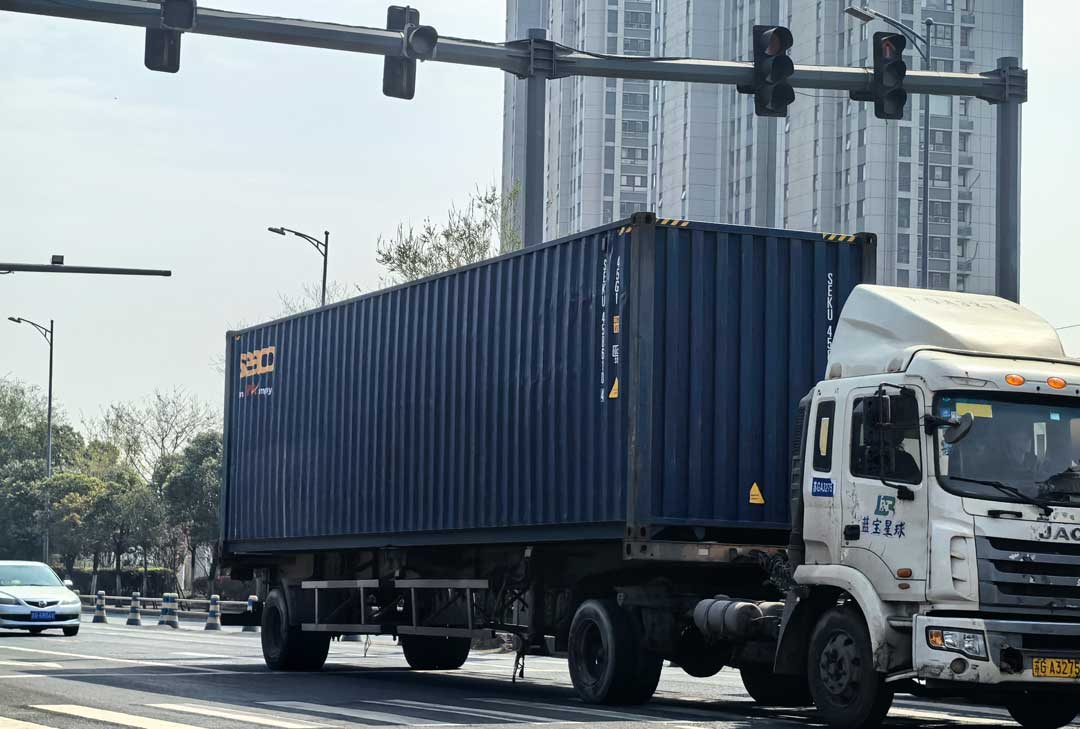
Three causes account for most delays: the rail arriving later than planned, pushing pickup to the next day; unsettled charges or a hold marker leaving the container unavailable in the system; and dispatch timing that falls outside gate hours. All three can be checked in the terminal and carrier systems before dispatch.
Four things need confirming before pickup: whether the container has arrived, when free time ends, how the chassis is arranged, and where the empty goes.
Exams are decided by CBP based on declaration compliance, prior records and commodity type. Indianapolis exams take place in the bonded yard at the terminal southwest of downtown, so the container does not have to be dragged to another city.
Cargo can be returned, provided it has not been consumed or delivered in the US and remains at a terminal, in a foreign-trade zone or under customs supervision. A return needs a US export entry and a China import declaration, and an original-state return for quality or specification reasons may qualify for duty-free treatment within the set period.
Two things are particular to Indianapolis. First, the return must first move by rail to an export port before loading, and if it entered via Prince Rupert or Vancouver the return leg is handled by the same railroad, so the handoff is fairly direct. Second, air cargo returns usually take a return flight or connect via a hub, with timing depending on flight space. Return cost includes return rail or air freight, export clearance fees, storage at both ends and terminal handling, so compare the total against processing or reselling in the US before deciding.
Indianapolis volume is set by local manufacturing schedules and the consumer import cycle together, so it swings less than a pure consumer inland point, but peak season still brings tight space and railcars.
| Period | Volume pattern | Main driver |
|---|---|---|
| January to February | Post-holiday trough, with a rush before Lunar New Year | Chinese factory shutdown and restart |
| March to June | Relatively stable, with manufacturing parts and project cargo alternating | Purchasing cycles in autos, pharmaceuticals and life sciences |
| July to October | Peak, as retail and e-commerce build year-end stock | Tight space, higher rates, tighter railcars |
| November to December | Replenishment and destocking side by side, with a higher share by air | Year-end holidays, early plant shutdowns, concentrated time demand |
Three local variables are worth planning around: January and February blizzards and severe cold can affect rail operations and road delivery; spring flooding in the Mississippi and Ohio river basins indirectly affects Gulf and inland waterway transport; and railcar and chassis tightness at volume peaks. Peak-season booking is better placed two to three weeks ahead, with one to two weeks of buffer in the delivery plan.
Taken together, Indianapolis's value as an inland landing point comes down to four points.
Two things need care. First, the city is not on the coast, so ocean full containers must transfer through a port by rail, lengthening the inland leg. Second, terminal gates work limited hours on weekends and holidays, leaving little flexibility on pickup timing and making over-age storage cost climb quickly.
No. Indianapolis is an inland city in central Indiana with no ocean terminal. Containers move in by rail from Canada's West Coast or a US coastal port and are examed and picked up at the Senate Avenue intermodal terminal southwest of downtown.
Via Prince Rupert or Vancouver the common whole-chain range is about 24 to 32 days, with the sea leg about 15 to 20 days; via Los Angeles or Long Beach about 27 to 36 days, with the sea leg about 14 to 22 days but a longer transcontinental rail distance; via US East ports about 30 to 42 days.
At the Senate Avenue intermodal terminal southwest of downtown, mailing address 1500 S. Senate Ave., Indianapolis, IN 46225, with the gate on Senate Avenue south of Wisconsin Street, next to I-70 and I-65.
Gate hours are Monday to Friday 06:00 to 18:00 and Saturday 08:00 to 12:00, closed holidays. Temporary closures for emergencies or weather are posted by the operator online, so confirm the day's status before dispatch.
Yes, book a pickup window and confirm the chassis source in advance. Pickup cannot happen while the container is still on the rail, so dispatch is arranged after the arrival record is created. The terminal offers about 450 chassis positions.
Carrier free time is separate from the terminal's storage free time, each governed by its own system date, with the earlier expiry normally the real constraint. Confirm the exact days with the carrier or terminal.
The airport and the customs office share one address, shortening filing and release. FedEx runs an express hub at the airport with code area 4198 dedicated to hub operations. Express work concentrates Monday to Friday 19:00 to 05:00, so cargo arriving by day generally waits until that evening.
The exam takes place in the bonded yard at the terminal, without a cross-city drag. The container cannot be picked up during the exam, and service fees, lifting and handling, devanning labour and storage are borne by the consignee regardless of the outcome. If the train cut-off is affected, ask the railroad to rebook.
Yes, provided it has not been consumed or delivered in the US and remains under customs supervision. A return needs a US export entry and a China import declaration, and an original-state return for quality or specification reasons may qualify for duty-free treatment within the set period. The return must first move by rail to an export port or take a return flight, so factor the cost in early.
Yes. Foreign-Trade Zone 72 has the Indianapolis Airport Authority as grantee, approved in 1981 and reorganized under the Alternative Site Framework in 2011, serving 41 Indiana counties with 699.55 acres activated. Indiana also has zones 152 at Burns Harbor, 170 at Jeffersonville, 177 at Mount Vernon, 125 at South Bend and 182 at Fort Wayne.
Local industry makes inbound items mostly autos and parts, pharmaceuticals and life science materials, consumer electronics and sporting goods, and advanced manufacturing equipment. Consumer goods with frequent replenishment and shelf dates fit rail full containers; production line shortages and high-value small pieces fit air.
July to October is the tightest, as retailers and e-commerce build year-end holiday stock, tightening ocean space and railcars at the same time. Late December into early January brings another rush ahead of Lunar New Year. Peak booking is better placed two to three weeks ahead with one to two weeks of buffer.
Shipping from China to USA
Planning a shipment or just comparing options? Contact our freight experts to get a tailored rate within 24 hours.
