
Jacksonville sits at 30 degrees 19 minutes north, 81 degrees 39 minutes west, in the northeastern corner of Florida, bordering Georgia to the north and the Atlantic to the east. The city spreads along both banks of the St. Johns River, which winds about 25 miles west from the ocean inlet through downtown, with the port's terminals distributed along the river and at its mouth. For importers, the key facts are: the port is not a single terminal but a system of three marine terminals plus a cruise terminal, container operations concentrate at the SSA Jacksonville Container Terminal on Blount Island, and the main channel is 47 feet deep with two-way navigation. The 2025 modernization left the port with spare container capacity, and ONE's EC2 service provides weekly direct calls from China.
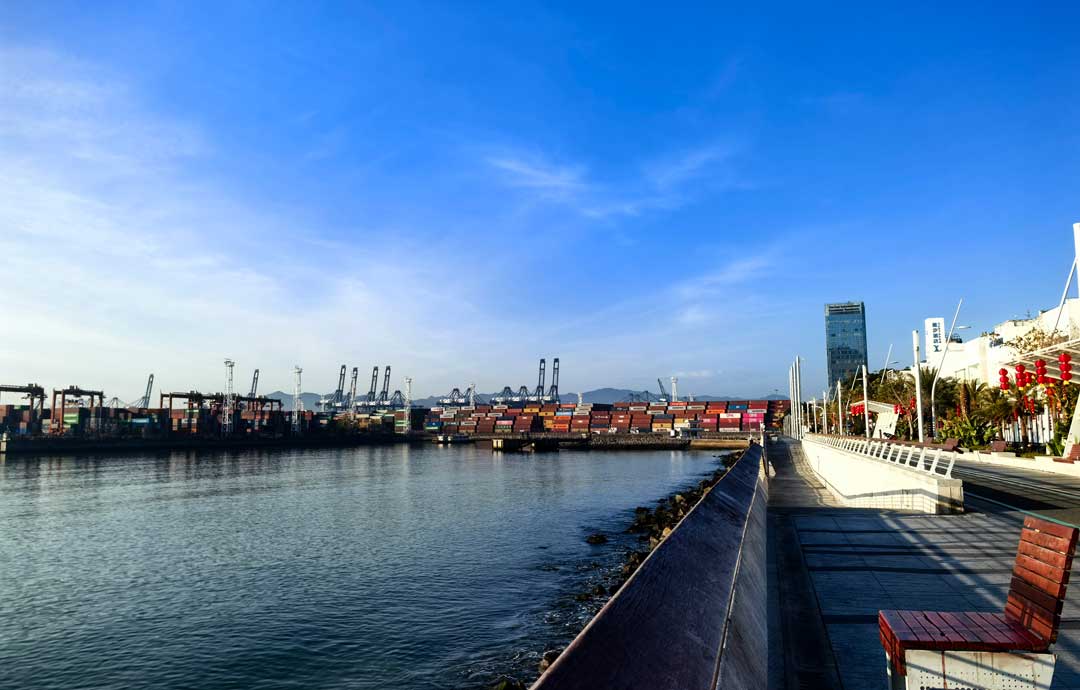
Jacksonville sits at 30 degrees 19 minutes north, 81 degrees 39 minutes west, in the northeastern corner of Florida, bordering Georgia to the north and the Atlantic to the east. The city spreads along both banks of the St. Johns River, which winds about 25 miles west from the ocean inlet through downtown, with the port's terminals distributed along the river and at its mouth.
The Port of Jacksonville is not a single terminal, but a port-area system of three marine terminals plus one cruise terminal. Container operations concentrate at Blount Island, Talleyrand is mainly ro-ro and breakbulk with added container and warehousing functions, and Dames Point is mainly auto ro-ro and breakbulk.
| Terminal | Location | Main cargoes | Key points |
| Blount Island Marine Terminal | East bank, lower St. Johns River | Containers, auto ro-ro | Home of the SSA Jacksonville Container Terminal, 47-ft channel depth, on-dock rail CSX |
| Talleyrand Marine Terminal | West bank, lower city | Ro-ro, breakbulk, containers and warehousing | Enstructure has signed a 79-acre lease, planning new on-dock warehouses |
| Dames Point Marine Terminal | East bank of the river section | Auto ro-ro, breakbulk | Auto handling facilities concentrated, with bulk cargo yards |
| Cruise terminal | Mayport | Passenger cruises | Slightly over 200,000 passengers in the past year since Norwegian Cruise Line's arrival |
For import containers, the landing point is almost always the SSA Jacksonville Container Terminal on Blount Island. Talleyrand takes on some container and warehousing distribution functions after expansion, and Dames Point mainly serves auto and bulk cargo. The specific discharge terminal is decided by the carrier's schedule and berth arrangements, and should be confirmed with the carrier at booking stage.
The port's channel is a dredged section of the St. Johns River, extending inland from the ocean inlet. The port's biggest change in recent years is in channel conditions: while depth is maintained at 47 feet, air draft is being raised to receive vessels with taller superstructures.
| Item | Value |
| Channel depth | 47 feet (14.32 m) |
| Terminal to Atlantic channel distance | 12.5 nautical miles (23.2 km) |
| Navigation mode | Two-way |
| Air draft | Currently 175 feet (53.34 m), being raised to 205 feet (62.48 m), completion planned end of 2026 |
| Supporting works | Cross-river high-voltage lines raised to about 225 feet total height, clearing the way for large vessels |
| Turning basin | 2,672 feet by 1,500 feet, 47 feet deep |
| Apron height | 9 feet above mean sea level |
| Tide | Mean high water +2.2 feet, mean low water -1.3 feet |
| Pilotage | St. Johns Bar Pilots Association, phone (904) 246-6716 |
The air draft raising project's goal is to let more large vessels enter the Blount Island deepwater channel. For importers, the direct effect after completion is improved feasibility of large-vessel calls and wider schedule choices, while the existing 47-foot depth is already sufficient to receive mainstream vessel types on East Coast services. Tide differential is small, so vessel movements are relatively unconstrained by tidal windows.
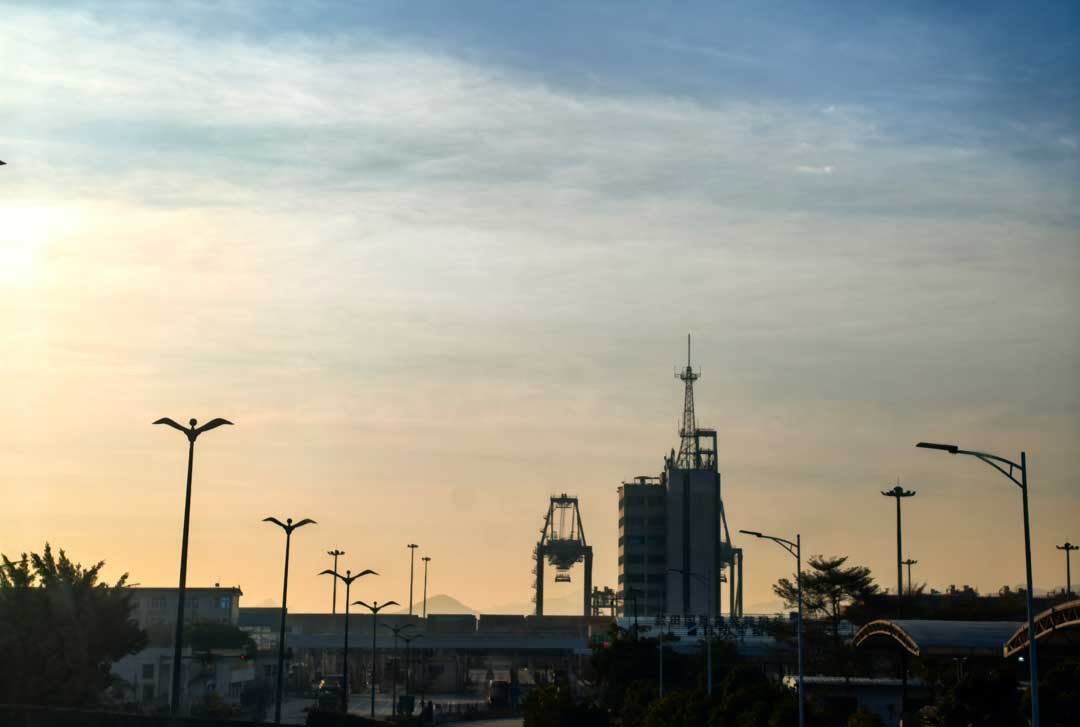
The SSA Jacksonville Container Terminal is the port's container operations core, located at Blount Island Marine Terminal, operated by SSA Marine with stevedoring by SSA Atlantic. The terminal completed a USD 72 million modernization round in 2025, focused on berth reconstruction, yard paving and gate lanes.
| Item | Content |
| Operator | SSA Marine |
| Stevedoring | SSA Atlantic |
| Modernization investment | USD 72 million, completed 2025 |
| Terminal area | 103 acres, with room to expand to 120 acres |
| New yard paving | 97 acres of asphalt paving, supporting higher loaded-box stacking |
| Berth | Rebuilt 3,500 linear feet of berth |
| Ship-to-shore cranes | 9 units: 6 at 100-ft gauge 65-ton, 3 at 50-ft gauge 50-ton |
| Reefer plugs | 250 |
| Gate | 6 new exit lanes and 6 new entry lanes, shortening truck gate time |
| On-dock rail | CSX |
| Highway connection | Minutes from I-295, connecting I-95 and I-10 |
| Annual capacity | Over 650,000 TEU, up 150% from before modernization |
After modernization the terminal's annual capacity exceeds 650,000 TEU, up 150% from before; per the port authority, the Port of Jacksonville's total annual container capacity rose correspondingly to about 2 million TEU. Six of the nine cranes are 100-ft gauge 65-ton machines, a higher specification among East Coast ports, and with the 47-foot depth can handle fully loaded large vessels. The 250 reefer plugs have practical significance for Florida-direction agricultural and food imports, and pharmaceutical and chemical exports.
Talleyrand Marine Terminal is on the lower city's west bank, historically mainly ro-ro and breakbulk. In 2025 Enstructure signed a 79-acre lease for the terminal, which with the existing 35 acres totals 115 acres, with a lease amount of USD 136 million, counting from the end of 2025.
| Item | Content |
| Lessee | Enstructure |
| Lease area | 79 acres, with the existing 35 acres totaling 115 acres |
| Lease amount | USD 136 million |
| Lease start | End of 2025 |
| New warehouses | No less than 200,000 sq ft of on-dock warehouse, raising on-dock capability about 20% |
| Auto business | Enstructure Auto Logistics vehicle processing facility |
This lease's significance for importers is increased on-dock warehousing capability. Previously local container devanning and distribution relied mainly on off-port third-party warehouses; after Talleyrand's on-dock warehouses are built, cargo can complete devanning, labeling and consolidation on the terminal side before entering distribution, with correspondingly shorter drayage mileage.
The Port of Jacksonville's official statistics are published by fiscal year. FY2025 data was disclosed in the February 2026 State of the State address, as below.
| Indicator | FY2025 data |
| Container throughput | Nearly 1.4 million TEU |
| Vehicle throughput | 506,000 units |
| Total cargo | Over 10 million tons |
| Jobs supported | Over 258,800 |
| Annual economic impact | About USD 44 billion |
| In-state status | Florida's main container port by box volume |
| Special status | A leading U.S. port for trade with Puerto Rico and other Caribbean islands |
Compared with the two nearby competing ports, Jacksonville's feature is container and vehicle operations side by side, with higher schedule density toward Caribbean and Latin American markets than other regional ports. Total annual container capacity rose to about 2 million TEU after the SSA terminal modernization, and against FY2025's nearly 1.4 million TEU actual throughput, spare capacity remains, which usually means less peak-season port pressure than ports running at full load.
China to Jacksonville runs on all-water East Coast services: vessels enter the Atlantic via the Panama Canal then head north along the U.S. Southeast coast, usually calling at Jacksonville after Savannah and Charleston in rotation order. Direct China services calling at this port are currently led by Ocean Network Express (ONE).
| Service | Carrier | China ports | Rotation notes |
| EC2 (East Coast 2) | Ocean Network Express (ONE) | Xiamen, Yantian, Ningbo, Shanghai | Calling since February 2025, weekly, with 13,500-TEU owned vessels; via Busan and Manzanillo (Panama), calls Savannah, Charleston, then Jacksonville |
| WIN (West India North America) | Ocean Network Express (ONE) | Via transshipment connection | Toward the Indian subcontinent, complementary to EC2 |
| EC5 / EC3 | THE Alliance members | Via transshipment connection | Covering Southeast Asia and Canada directions, renamed EC3 from February 2025 |
Note that direct-call space from China to Jacksonville is less than at New York/New Jersey and Savannah, with relatively limited schedule choices. Three common practices at actual booking: book EC2's all-water East Coast space directly; book space at Savannah or Charleston, then transfer to Jacksonville by rail or truck, with rail transit between the two usually within three days; or discharge at West Coast ports first then transcontinental rail. The three practices differ in cost and time structure, and need comparison per cargo landing point and delivery date.
Transit times are listed separately for the ocean and inland legs. Ocean leg times are common ranges cross-confirmed from multiple forwarders' published transit tables, not carrier commitments.
| Origin port | Ocean leg common range | Notes |
| Shanghai | About 28 to 34 days | All-water East Coast, via Panama Canal |
| Ningbo | About 28 to 34 days | Same batch rotation as Shanghai, similar timing |
| Yantian (Shenzhen) | About 28 to 35 days | South China origin, fluctuates per call sequence |
| Xiamen | About 29 to 36 days | First port in EC2's rotation, slightly longer routing distance |
| Qingdao | About 30 to 38 days | Northern origin, mostly via transshipment connection |
Combining both ends, the whole-chain common range from major Chinese ports to the Jacksonville pickup point is about 32 to 42 days, with clearance and drayage usually completed one to four days after vessel arrival. Times in the table exclude booking, loading and export customs clearance. Suez-routed services are affected by Red Sea conditions, with Cape of Good Hope diversions occurring from time to time, and actual ocean time may rise over a week; hurricane season and peak periods should have extra buffer.
Carriers calling directly at Jacksonville are mainly Ocean Network Express, with other major carriers mostly connecting via space at Savannah, Charleston or New York/New Jersey plus inland transfer. The table is categorized by service form.
| Carrier | Service form | Key points |
| Ocean Network Express (ONE) | Direct call | EC2 calling since February 2025, with 13,500-TEU owned vessels, calling Xiamen, Yantian, Ningbo and Shanghai in China |
| THE Alliance members | Direct call | EC3 loop covering Southeast Asia and Canada directions |
| Maersk, MSC, CMA CGM, COSCO, Evergreen, HMM, Yang Ming and others | Via neighboring ports | Space mostly lands at Savannah, Charleston or New York/New Jersey, then rail or truck transfer to Jacksonville |
The advantage of direct-call services is a single discharge for the whole journey, with no box transfer, and fewer damage and delay links; the advantage of neighboring-port connection is more schedule choices and looser space, at the cost of an inland leg and corresponding charges. At booking stage the carrier's current direct-call arrangement should be confirmed, as schedules change with alliance adjustments.
Jacksonville's rail distribution is carried by two Class I railroads, with on-dock rail mainly CSX, and Norfolk Southern operating Simpson Yard locally. The two railroads' line directions differ, pointing to the southeastern interior and the East Coast and Midwest respectively.
| Railroad | Local facilities | Main directions |
| CSX | On-dock rail at Blount Island terminal | Southeastern interior, Atlanta, Charleston and Midwest directions |
| Norfolk Southern | Jacksonville Simpson Yard | Southeastern interior, Atlanta, Charlotte and Cincinnati directions, connecting the West Coast via hubs |
For FCL cargo from China, rail distribution is mainly used for cargo landing outside Florida, such as inland points in Georgia and South Carolina like Atlanta and beyond Orlando. When landing inside Florida, drayage by truck is more direct, usually same-day or next-day. Cargo needing rail transfer should be confirmed with the carrier at booking stage as to whether the destination is covered by IPI rates and schedules.
The SSA Jacksonville Container Terminal rebuilt its gate system in the 2025 modernization, adding 6 entry and 6 exit lanes each. Pickup and empty return generally need advance appointments, with operating hours per the terminal's current announcements.
| Item | Content |
| Gate lanes | 6 new entry lanes and 6 new exit lanes after modernization |
| Appointment mode | Handled by the carrier or terminal system, with fleets arriving per booked slots |
| Operating hours | Per terminal and carrier announcements, usually weekday daytime hours |
| Double-drop and overweight | Advance notice to the terminal required; overweight boxes or special box types need equipment condition confirmation |
| Dispatch preparation | Confirm the box is released, fees settled, and chassis source clear |
The increased gate lane count after modernization directly shortens truck gate wait times. Note that lead time and pickup windows are set by the carrier or terminal system, and are interrelated with the container's release status, remaining free days and chassis supply, and all three should be checked together before dispatch.
Jacksonville's warehousing resources are distributed around the port area and along I-95 and I-10. On-port warehousing increased after the lease expansion, with off-port third-party warehouses and distribution centers concentrated in the western and northern industrial belts.
| Type | Location and features | Applicable scenarios |
| On-port warehousing | Talleyrand Terminal, Enstructure plans new warehouses of no less than 200,000 sq ft | Cargo needing terminal-side devanning, labeling and consolidation |
| Third-party warehouses and distribution centers | Western and northern industrial belts around the port area, along I-95 and I-10 | Conventional devanning into warehouse, secondary distribution and e-commerce order processing |
| Foreign-trade zone | A foreign-trade zone within the port authority's jurisdiction, allowing warehousing and light processing in the zone | Cargo needing duty deferral or re-export exemption |
Florida's delivery radius is one of Jacksonville's advantages: from the local starting point, most of Orlando, Tampa, Savannah and Atlanta directions can be covered same-day, with truck distances generally within a few hundred miles. For cargo bound for Caribbean and Latin American markets, the port also has feeder and transshipment arrangements available.
Jacksonville port (code 1803) is under the CBP Tampa Field Office, with routine matters handled by licensed customs brokers in the Automated Commercial Environment (ACE). Three points merit note.
| Item | Content |
| Port code | 1803 |
| Office address | 10426 Alta Drive, Jacksonville, FL 32226 |
| Phone and fax | +1 904-714-3100, fax +1 904-714-3301 |
| Port director | Jennifer Bradshaw |
| Office hours | Monday to Friday 08:00 to 16:00 (Eastern Time), closed weekends |
| Parent field office | Tampa |
| Trade and cargo line | Extension 2; agriculture extension 3 |
| Entry and imports line | Entry extension 5; imports extension 6 |
| Deferred examination | Extension 7, sessions Tuesday and Wednesday 08:00 to 12:00, phone confirmation needed in advance |
| Exports and vehicle exports | Extension 8 |
Rules involving additional tariffs, merchandise admission and exemption quotas change quickly. Florida has additional quarantine requirements for agricultural products, food, and animal and plant product imports, and such cargo should confirm before shipment whether the recipient needs to accept specialized agricultural inspections at the port.
Jacksonville's pickup process is basically consistent with large West Coast container ports, with the difference mainly in terminal operating hour arrangements and arrival date distribution from vessel rotation order.
Four common delay causes: incomplete or incorrect filing documents delaying release; boxes targeted for examination; unpaid fees or hold marks; and chassis supply tightness. All four can be confirmed via carrier and terminal system queries before dispatch, and checking one to two days early usually avoids empty trips.
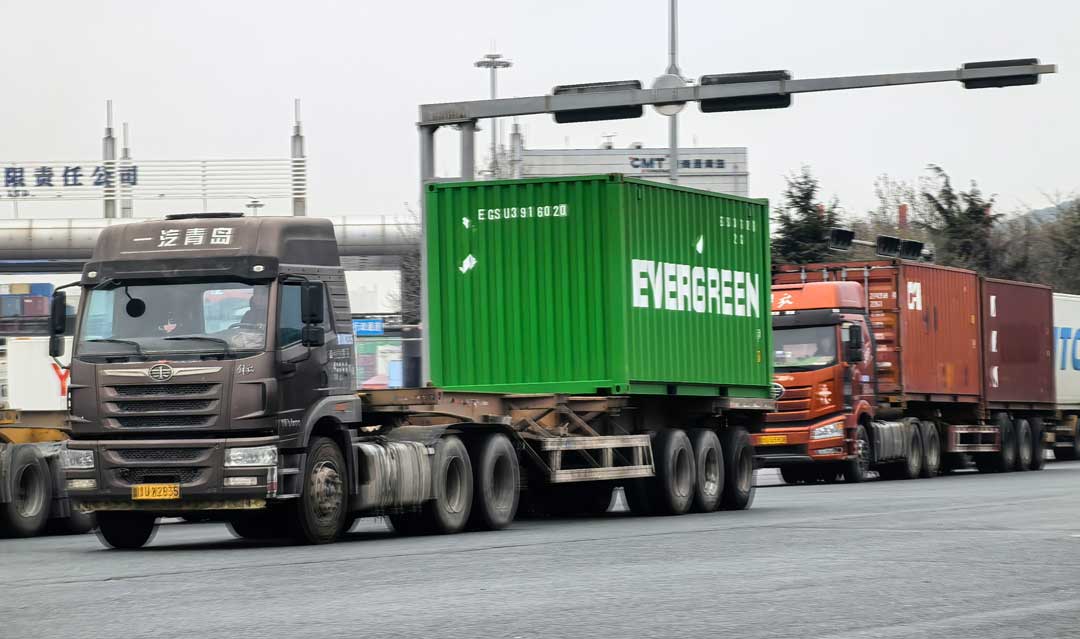
Four things must be confirmed before pickup: whether the box is released, when the free period ends, how chassis are arranged, and where to return the empty.
Examinations are decided by CBP, related to filing compliance, importer history and cargo category. Jacksonville port's examinations are completed inside the terminal, usually without dragging containers to other cities.
Cargo can be returned, on the premise that it has not been consumed or delivered in the United States and remains at a terminal, bonded warehouse or under customs supervision. Return requires U.S. export entry and Chinese import entry, with tax exemption applicable within the prescribed period for goods returned in their original state due to quality or specification reasons.
Jacksonville's returns have two operational features. First, return space and export flights are decided by the port's schedules, related to import service call density, and return space should be booked early. Second, if cargo has already moved into a foreign-trade zone or bonded warehouse, sorting can be completed there first, returning only the non-conforming portion and converting the conforming portion to domestic sale. Return costs include return ocean freight, export entry fees, storage at both ends and terminal handling fees, and these should be calculated together before deciding, compared with options of handling in the U.S. or resale.
Terminals and yards usually stop gate operations on federal statutory holidays, with some holidays seeing limited operations per vessel schedule needs. The table below lists 2026 U.S. federal statutory holidays, with actual shutdown arrangements per terminal and carrier current announcements.
| Date | Holiday | Impact on pickup |
| January 1 | New Year's Day | Gate stops operations, dispatch deferred |
| January 19 | Martin Luther King Jr. Day | Gate stops operations |
| February 16 | Presidents Day | Gate stops operations |
| May 25 | Memorial Day | Gate stops operations |
| June 19 | Juneteenth | Gate stops operations |
| July 3 (July 4 falls on Saturday) | Independence Day observed | Gate stops operations |
| September 7 | Labor Day | Gate stops operations |
| October 12 | Columbus Day | Usually operating, per terminal announcements |
| November 11 | Veterans Day | Usually operating, per terminal announcements |
| November 26 | Thanksgiving | Gate stops operations |
| December 25 | Christmas Day | Gate stops operations |
Free time and per diem calculations usually advance on calendar days, not stopping because the terminal is closed. This means pickup plans near long holiday periods need advance calculation, and if the LFD falls exactly during a gate closure, an extension should be applied for with the carrier to avoid per diem.
Jacksonville's cargo volumes are decided by consumer goods replenishment rhythm together with auto and industrial parts production-line demand, with seasonal changes gentler than purely consumer ports, but fluctuations still occur around year-end stocking and hurricane season.
| Period | Cargo characteristics | Main influencing factors |
| January to February | Post-holiday trough, with a rush shipment wave before Chinese New Year | Chinese factory shutdown and restart rhythm |
| March to June | Relatively stable, with auto and industrial parts share rising | Vehicle plants and parts procurement cycles |
| July to October | Enters peak season, with retail and e-commerce stocking for year-end | Space tightness, rate increases, terminal storage pressure rising |
| November to December | Replenishment and inventory clearance coexist, with air share rising | Year-end holidays, early factory shutdowns, concentrated timeliness demand |
Three local variables to anticipate relate to Florida's characteristics. First, the June to November Atlantic hurricane season may affect port operations and road delivery, and carriers may also temporarily adjust call plans, so extra buffer should be allowed during this period. Second, annual container capacity rose to about 2 million TEU after terminal modernization, and against current throughput there is still spare capacity, so peak-season port congestion risk is below fully loaded ports. Third, factory shutdowns and restarts around Chinese New Year cause cargo volumes to swing sharply within two months, affecting space and inland transport arrangements.
Combining the above conditions, the Port of Jacksonville's value for importers from China concentrates in four areas.
Three points needing relative attention: first, direct-call space from China to this port is less than at New York/New Jersey and Savannah, with limited schedule choices, and some cargo needs neighboring-port transfer; second, the June to November Atlantic hurricane season affects both the port and inland distribution, requiring buffer; third, the air draft raising project is planned for completion at the end of 2026, and until then vessel size entering the port is still limited by existing clearance.
Not entirely. The City of Jacksonville is the city in northeastern Florida, while the Port of Jacksonville (JAXPORT) is the port authority responsible for port-area operations and the terminal system it manages, with terminals distributed along both banks of the St. Johns River and at its mouth, and container operations concentrating at Blount Island.
The ocean leg common range is about 28 to 38 days, per origin port and call sequence, with the Shanghai and Ningbo directions about 28 to 34 days and the Xiamen direction about 29 to 36 days. Counting clearance and drayage, the whole-chain common range is about 32 to 42 days.
Containers mainly discharge at the SSA Jacksonville Container Terminal on Blount Island, operated by SSA Marine with stevedoring by SSA Atlantic. Talleyrand Terminal also takes on some container and warehousing distribution functions after the lease expansion, and Dames Point is mainly auto ro-ro and breakbulk. The specific discharge terminal follows the carrier's berth arrangements.
Channel depth is 47 feet (14.32 m), two-way navigation. The terminal is 12.5 nautical miles from the Atlantic channel. Air draft is currently 175 feet, being raised to 205 feet, with cross-river high-voltage lines raised to about 225 feet, planned for completion at the end of 2026.
Currently mainly Ocean Network Express. The company's EC2 service has called at this port since February 2025, with 13,500-TEU owned vessels, weekly, calling Xiamen, Yantian, Ningbo and Shanghai in China. Other major carriers' space mostly lands at Savannah, Charleston or New York/New Jersey, then rail or truck transfer.
Yes. Pickup slots are handled by the carrier or terminal system, with fleets arriving per booked slots. The SSA terminal added 6 entry lanes and 6 exit lanes after its 2025 modernization, shortening gate wait times.
Terminal storage free time and carrier equipment free time are calculated separately, both per the dates in their respective systems, and the actual constraint is usually the earlier expiring one. Specific days and rates are per the carrier's and terminal's current rate schedules and should be confirmed with the corresponding party.
Both Class I railroads serve this port. CSX provides the on-dock rail connection at Blount Island terminal; Norfolk Southern operates Simpson Yard locally. Main directions are the southeastern interior, Atlanta, Charlotte and the Midwest, connecting the West Coast via hubs.
Examinations are completed inside the terminal, usually without cross-city drayage. Containers cannot be picked up during the exam, and generated service fees, lifting and handling fees, devanning labor and storage fees are borne by the receiver regardless of exam outcome. Food and agricultural products may additionally need agricultural inspections, and electronics and children's products may involve other federal agencies' requirements.
Yes, on the premise that the goods have not been consumed or delivered in the U.S. and remain under customs supervision. Return requires U.S. export entry and Chinese import entry, with tax exemption applicable within the prescribed period for original-state returns due to quality or specification issues. If cargo has already moved into a foreign-trade zone or bonded warehouse, sorting can be completed first, returning only the non-conforming portion.
Terminals and yards usually stop gate operations on federal statutory holidays, with some holidays seeing limited operations per vessel schedule needs. Actual arrangements follow terminal and carrier current announcements. Free time and per diem generally count on calendar days, not stopping because the terminal is closed.
The local consumer market is mainly retail goods, food and beverages, electronics and intermediate goods, and the port also has large-scale auto ro-ro operations. FCL cargo landing inside Florida, southern Georgia or in the Caribbean re-export direction suits this port; for inland points further north or west, compare total costs of entering via Savannah or Charleston then rail.
Shipping from China to USA
Planning a shipment or just comparing options? Contact our freight experts to get a tailored rate within 24 hours.
