
Kansas City is an inland city in the American Midwest, straddling Missouri and Kansas. Its logistics identity comes from rail: five Class I railroads meet here, and four container-focused intermodal ramps sit around the metro area, with block trains running directly to ports on the West Coast, the East Coast and toward Mexico. For full-container cargo from China, the value is a single discharge and a single loading to reach the geographic center of the United States, entering Midwestern markets by rail from a West Coast port without long-distance trucking.
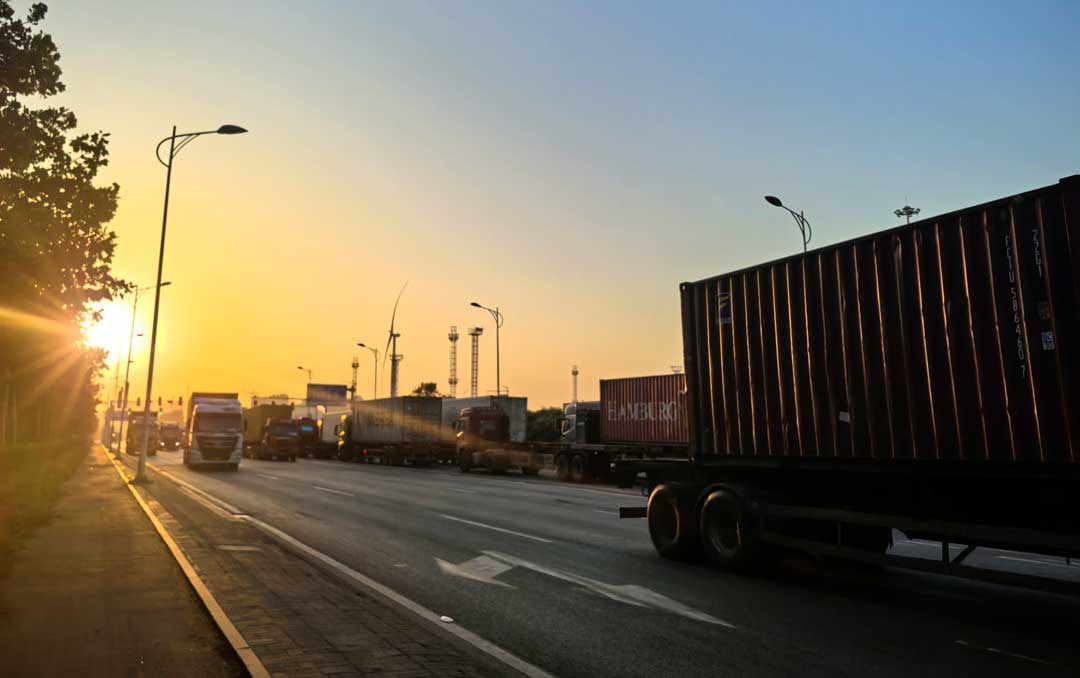
Kansas City sits at 39 degrees 6 minutes north and 94 degrees 35 minutes west, near the confluence of the Missouri and Kansas rivers, at the crossing point of the east-west and north-south US highway mainlines. The city spans two states: the Missouri side is the administrative and cultural center, the Kansas side is the industrial and warehousing concentration, and the two are divided by State Line Road.
In the customs system Kansas City is an inland port, code 4501, reporting to the Chicago Field Office. Its operating structure: the port office and the airport federal inspection facility sit on the Kansas City International Airport side, while ocean container inspection and release are completed inside the four rail intermodal ramps around the metro area.
| Item | Content |
| Port code | 4501 |
| Registered name | Kansas City, Missouri |
| Office address | 1 Kansas City Boulevard Suite 30, Kansas City, MO 64153 |
| Telephone | +1 816-780-6100 |
| Port Director | Steven Ellis |
| Administrative and trade office hours | Monday to Friday 08:00-16:00 (Central Time) |
| Airport federal inspection facility | Daily 11:00-20:00 (Central Time) |
| Deferred inspection and I-94 correction | Monday to Friday 12:00-16:00 |
| Global Entry interview center | Same address, Monday, Tuesday, Thursday and Friday 12:00-16:00 |
| Parent field office | Chicago |
Missouri has three other ports, St. Louis (4503), Springfield (4505) and St. Louis Spirit Airport (4506), all reporting to the Chicago Field Office. St. Louis is a Mississippi River port with barge capability, while Springfield and St. Louis Spirit Airport are mainly air-oriented. Full-container customs clearance in Kansas City is normally completed at the inland ramps, meaning cargo moves from the port of arrival under bond and is entered and released locally.
Container operations in Kansas City are spread across four intermodal ramps belonging to four railroads. Their locations, operating hours and chassis policies differ, so which ramp cargo lands at depends on the final destination of the import and the intermodal arrangement booked with the carrier.
| Ramp | Railroad | Location | Opened |
| Logistics Park Kansas City (LPKC) | BNSF | Edgerton, Kansas | Not published |
| Kansas City Intermodal Facility (KCIT) | Union Pacific | Bayard Avenue, Kansas City, Kansas | July 2025 |
| Voltz Yard | Norfolk Southern | N Kimball Drive, Kansas City, Missouri | 1994 |
| International Freight Gateway | CPKC (CSX also works here) | East 147th Street, Kansas City, Missouri | 2008 |
The locational differences between the four ramps are worth noting. The BNSF and Union Pacific ramps sit on the Kansas side, west and south, suited to destinations in Kansas, Oklahoma and Nebraska. Norfolk Southern's Voltz Yard sits on the northern Missouri side, suited to northern Missouri and Iowa. CPKC's International Freight Gateway sits in the southeast near I-49, convenient for connections toward Arkansas and Louisiana.
The BNSF Logistics Park Kansas City ramp sits in Edgerton, Kansas, about 30 miles southwest of downtown Kansas City. Of the four ramps it is the larger and more modern one, using wide-span electric cranes and an automated gate.
| Item | Content |
| Address | 32880 W. 191st Street, Edgerton, KS |
| FIRMS code | J177 |
| Ramp area | 443 acres |
| Working track length | 64,000 feet |
| Wheeled parking spaces | 1,810 |
| Ground stack positions | 4,300 |
| Lifting equipment | 8 wide-span electric cranes |
| Gate | Automated gate with unit auto-recognition and chassis damage inspection |
| Park setting | 1,700-acre master-planned distribution and warehousing development, 17 million square feet of planned building area, with a foreign-trade zone site inside the park |
| Operating hours | 24 hours, 7 days |
The main feature of this ramp is round-the-clock operation, which with the automated gate makes pickup scheduling flexible and avoids the night-shift restrictions of some other ramps. The park also contains a foreign-trade zone site and distribution warehouses, so imported cargo can be devanned, labeled and redistributed at the same location.
Union Pacific moved Kansas City intermodal operations to a new ramp in July 2025. The former ramp sat on Gardner Avenue on the Missouri side, and operations merged into the new site after commissioning, closing on July 21, 2025.
| Item | Content |
| Address | 1810 Bayard Avenue, Kansas City, KS 66105 |
| Commissioned | July 15, 2025 |
| Former ramp | 4801 Gardner Ave, Kansas City, MO 64120, closed from 16:00 on July 21, 2025 |
| Capacity change | Throughput lifting capacity up 30 percent, with room to double on demand |
| Gate | Automation through precision gate technology |
| Tracks | Additional working tracks, improving peak-period handling efficiency |
| Main directions | Los Angeles, Long Beach, Oakland and Houston |
| Operating hours | 24 hours, 7 days |
The direct effects of the new ramp are higher throughput lifting capacity and improved highway access. One practical point: the open working window at this ramp is relatively concentrated, which matters for long-distance dispatch and loaded-container pickup, so current gate hours should be confirmed with Union Pacific or its agent before dispatch.
These two ramps sit on the Missouri side and serve East Coast and Mexico directions respectively. They share a more pronounced set of facility and operating-window constraints than the two Kansas-side ramps, so more details need confirming before dispatch.
| Item | Norfolk Southern Voltz Yard | CPKC International Freight Gateway |
| Address | 4800 N Kimball Drive, Kansas City, MO 64161 | 3301 East 147th Street, Kansas City, MO 64147 |
| Opened | 1994 | 2008 |
| Area | Not published | Intermodal ramp 370 acres, supporting industrial park 970 acres |
| Highway access | I-435 and I-35 | I-49 |
| Operating hours | Sunday 06:00-18:00; Monday from 06:00 through Saturday full 24 hours | 24 hours, 7 days, with lifting operations Monday to Friday 08:00-15:00 |
| Chassis | No spare chassis on site; trucks must bring an empty chassis in | Chassis available on site |
| Main directions | Atlanta, New York and New Jersey, Savannah, Philadelphia, Harrisburg, Louisville and other East Coast and Southeast inland points | Mexico direction: Dallas, Laredo, Monterrey, Queretaro, Lazaro Cardenas and others; CSX lines cover the East Coast and Midwest |
The Voltz Yard chassis rule needs to be built into the booking stage. With no spare chassis on site, trucks must bring an empty chassis in to load, which means the fleet has to secure equipment outside the national chassis pool and can face extra waiting in peak season. Lifting hours at the CPKC gateway run 08:00-15:00 on weekdays; entry and exit remain possible afterward, but lifting waits until the next day, so pickup timing should account for that limit.
The four ramps differ in which carriers they serve and which ports they connect, so the same shipment landing at a different ramp has different carrier and port-of-entry options.
| Ramp | Main carriers served | Main ports served |
| BNSF Logistics Park Kansas City | Yang Ming, CMA CGM, COSCO, MSC, ONE, OOCL, ZIM, Maersk | Los Angeles and Long Beach, Seattle and Tacoma |
| Union Pacific Kansas City Intermodal Facility | ONE, CMA CGM, Hapag-Lloyd, Evergreen | Los Angeles and Long Beach, Oakland, Houston |
| Norfolk Southern Voltz Yard | Yang Ming, Hapag-Lloyd, Hamburg Sud | New York and New Jersey (via Port Newark) |
| CPKC International Freight Gateway | Maersk, MSC, ONE | New York, Norfolk, Charleston, Savannah, Lazaro Cardenas |
The carrier lists come from third-party ramp directories and are reference points rather than carrier commitments; actual intermodal arrangements should follow the IPI routing confirmed by the carrier at booking. The general pattern: from Asia through West Coast ports, use the BNSF or Union Pacific ramps; from Asia all-water through East Coast ports, use the Norfolk Southern or CPKC ramps; Mexico-bound cargo concentrates at the CPKC gateway.
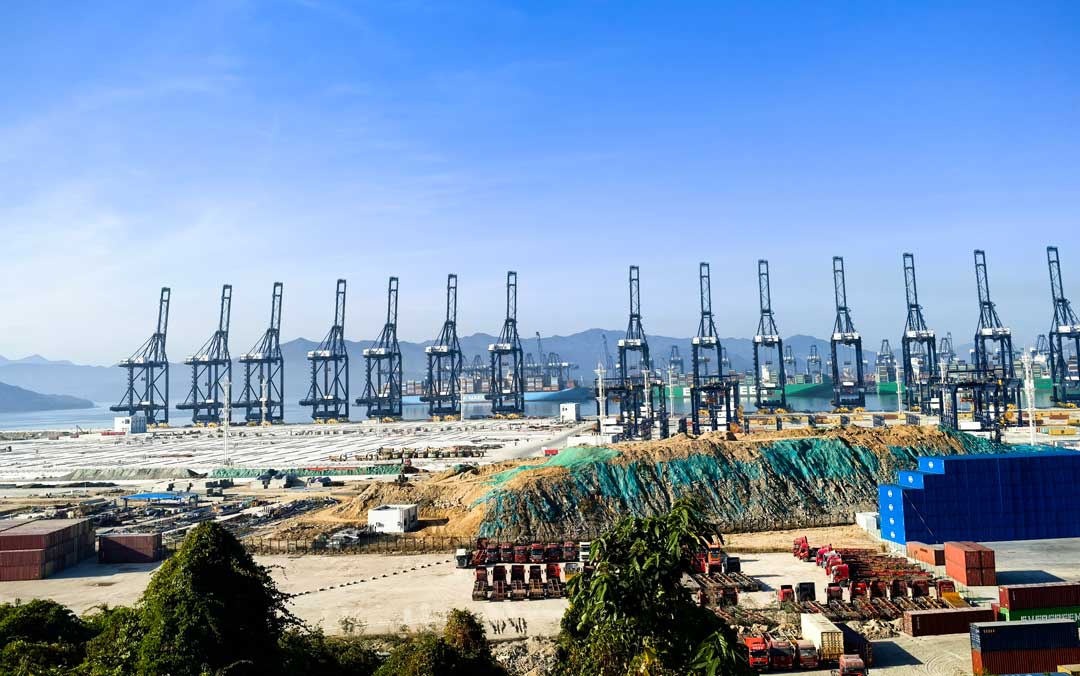
Kansas City is not on the coast, so all ocean cargo moves by rail or truck through a coastal port. As the geographic center of the United States, it has many routing options, differing in the combination of port of entry and rail carrier.
| Route | Entry leg | Inland leg | Suited to |
| West Coast port plus rail (IPI) | China to Los Angeles, Long Beach, Seattle or Tacoma | BNSF or Union Pacific transcontinental rail direct to the local ramp | Standard full-container imports where transit time and train frequency matter |
| East Coast port plus reverse rail (RIPI) | China to New York and New Jersey, Savannah or Charleston | Norfolk Southern or CPKC rail westbound to the local ramp | When East Coast space is loose or the destination lies east |
| Gulf port plus rail or truck | China to Houston | Union Pacific rail north, or direct trucking | Linking with Gulf Coast operations, or heavy equipment moves |
| Air freight to Kansas City | China to a hub airport | Transfer via a US hub to Kansas City International Airport | High-urgency parts, line-down shortages, small high-value shipments |
Of the four, the West Coast port plus transcontinental rail combination is the most balanced on transit time and train frequency, and rail transit into Kansas City is shorter than continuing east to Chicago. The reverse westbound route via East Coast ports has a longer ocean leg but an equally direct rail connection into Midwestern markets. Air freight suits cargo that is high-value, small in volume and time-sensitive.
Transit times are estimated by ocean and inland legs separately, with the ocean leg using the same basis as the other West Coast and East Coast port pages.
| Entry route | Common ocean range | Inland leg and total |
| Via Los Angeles or Long Beach | About 14 to 22 days | Transcontinental rail about 5 to 8 days, total about 22 to 30 days |
| Via Seattle or Tacoma | About 12 to 18 days | Rail landbridge eastbound, total about 21 to 28 days |
| Via Oakland | About 14 to 20 days | Rail eastbound, total about 22 to 29 days |
| Via New York and New Jersey or Savannah (reverse) | About 26 to 38 days | Rail westbound, total about 35 to 45 days |
| Via Houston | About 28 to 36 days | Rail north or road, total about 32 to 42 days |
| Air freight | About 3 to 7 days from a China airport door to door | Short-haul truck delivery after arrival |
Combining both ends, the common range from a major China port to the Kansas City pickup point is about 24 to 33 days via West Coast ports and about 37 to 48 days via East Coast ports. The figures exclude booking, loading, export clearance and destination clearance time. Suez routings are affected by conditions in the Red Sea and Cape of Good Hope diversions occur from time to time, so actual ocean time may rise by more than a week; the Midwest winter, the period around Lunar New Year and the year-end holiday season should each carry extra buffer.
Day-to-day business at the Kansas City port is handled by licensed customs brokers inside the Automated Commercial Environment (ACE). Three points deserve attention.
Rules on additional tariffs, merchandise admission and exemption quotas change quickly. Current guidance can be found in the US customs import and export policy, customs duties and customs information sections.
Kansas City duty and warehousing arrangements concentrate in two foreign-trade zones, one covering western Missouri and the other the Kansas side.
| Item | FTZ 15 | FTZ 17 |
| State | Missouri | Kansas |
| Approved | March 23, 1973 | Not published |
| Service area | 23 counties in western Missouri, including Jackson, Clay, Platte, Cass, Johnson, Buchanan and Pettis | 9 counties on the Kansas side of the Kansas City metro area, including Johnson County |
| Grantee | Greater Kansas City Foreign-Trade Zone Company | Greater Kansas City Foreign-Trade Zone Company |
| Day-to-day operation | KC SmartPort since January 2023 | Same |
| Office address | 30 West Pershing Road Suite 200, Kansas City, MO 64108 | Same |
The two zones cover both sides of the Kansas City metro area, so importers can apply for sites according to their own premises inside the service area rather than moving into a pre-designated park. The direct benefits inside the zone are duty deferral, duty-free re-export, and inverted tariff treatment when the finished-goods rate is lower than the component rate. Beyond the two zones, the BNSF Logistics Park also contains a foreign-trade zone site where warehousing and redistribution can be completed at the same location.
Kansas City pickup differs from coastal terminals: containers arrive by rail and are pulled from the ramp, so rail arrival status must be confirmed before pickup, and each ramp has different operating hours and chassis policies.
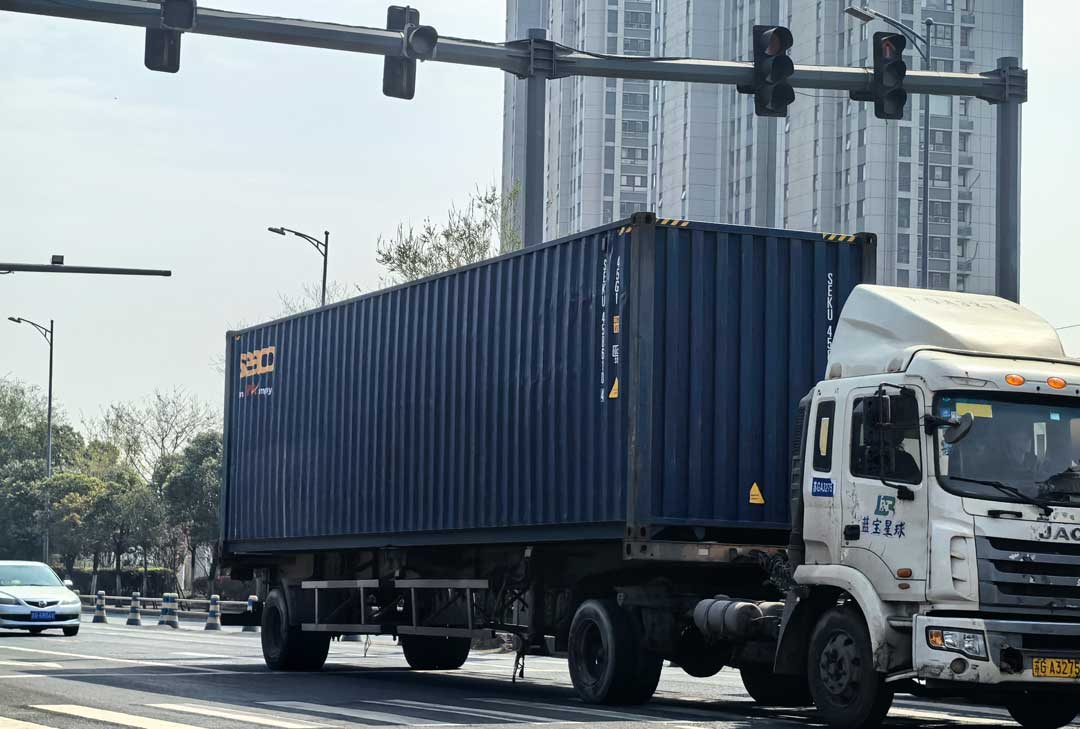
Four common causes of delay: rail arrival later than planned, pushing the pickup day back; charges unsettled or a lien flag, leaving the container unpickable in the system; a chosen ramp with no chassis while the fleet has not brought an empty chassis; and dispatch falling outside that ramp's lifting window. All four can be checked through ramp and carrier systems before dispatch.
Four things need confirming before pickup: whether the container has arrived, when the free period ends, how chassis are arranged, and where empties are returned.
Inspections are decided by Customs and Border Protection and relate to entry compliance, history and cargo type. Inspections in Kansas City are completed inside the chosen ramp, with no need to dray the container to another city.
Cargo can be returned, provided it has not been consumed or delivered in the United States and remains in a ramp, foreign-trade zone or customs control. Return requires an export entry in the United States and an import declaration in China, and duty-free treatment can be applied for within the prescribed period for returns in the original condition on quality or specification grounds.
Return operations in Kansas City have two features. First, the return leg moves by rail to an export port before loading, and if the cargo originally entered through a West Coast port the return leg is handled by the same railroad, making the connection relatively direct. Second, if the cargo has already moved into a foreign-trade zone or park warehouse, sorting can be done there and only the non-conforming portion returned, with the conforming portion converted to domestic sale. Return costs include return rail, export clearance, storage at both ends and ramp handling, so these should be combined before deciding against handling or resale in the United States.
Kansas City volumes are driven by the Midwest agriculture and food processing cycle, auto and industrial parts purchasing rhythms, and consumer goods import cycles. Seasonality is flatter than at coastal ports, but peak periods still see tight space and railcar availability.
| Period | Volume character | Main drivers |
| January to February | Post-holiday trough, with a pre-Lunar New Year shipping rush | China factory shutdown and restart rhythm |
| March to June | Relatively stable, with agricultural and construction machinery cargo rising | Spring stocking and construction season start |
| July to October | Peak season, with retail and e-commerce stocking for year-end | Tight space, rising freight rates, tight railcars |
| November to December | Replenishment and inventory clearance together, with a higher air share | Year-end holidays, early factory closures, concentrated urgency |
Three local variables to anticipate: January and February blizzards and severe cold can affect rail operations and road delivery; spring flooding in the Mississippi basin has indirect effects on routings via the Gulf or inland waterways; and railcar and chassis tightness at volume peaks. Peak-season bookings are best placed two to three weeks ahead, with one to two weeks of buffer in the delivery plan.
Taken together, the value of Kansas City as an inland destination concentrates in four areas.
Three points need attention. First, the city is not on the coast, so ocean full containers must move by rail through a port, with a longer inland leg and a more pronounced winter weather effect on rail than coastal areas. Second, ramp conditions differ widely, with Voltz Yard carrying no chassis and CPKC lifting hours narrow, so each item must be confirmed before dispatch. Third, ramp scale in Kansas City is regional, so at peak season box and railcar availability is comparatively tight and overstay storage costs rise quickly.
No. Kansas City is an inland city in the American Midwest, straddling Missouri and Kansas, with no local marine terminal. Containers arrive by rail via West Coast, East Coast or Gulf ports and are inspected and picked up at the four intermodal ramps around the metro area.
The common range for rail intermodal via West Coast ports is about 22 to 30 days, with an ocean leg of about 14 to 22 days and transcontinental rail of about 5 to 8 days; reverse westbound via East Coast ports runs about 35 to 45 days. Including clearance and drayage, the common full-chain range via the West Coast is about 24 to 33 days.
Four: BNSF's Logistics Park Kansas City in Edgerton, Kansas (FIRMS J177), Union Pacific's Kansas City Intermodal Facility at 1810 Bayard Avenue opened in July 2025, Norfolk Southern's Voltz Yard at 4800 N Kimball Drive, and CPKC's International Freight Gateway at 3301 East 147th Street, where CSX also works.
Norfolk Southern's Voltz Yard carries no spare chassis on site, and trucks must bring an empty chassis in to load. The other three ramps hold chassis, but supply may be limited and should be confirmed at booking and dispatch.
BNSF Logistics Park and the Union Pacific Kansas City ramp run 24 hours, 7 days. Voltz Yard runs Sunday 06:00-18:00 and Monday from 06:00 through Saturday full 24 hours. The CPKC International Freight Gateway is open for entry and exit around the clock, but lifting operations run Monday to Friday 08:00-15:00.
A pickup slot must be booked and the chassis source confirmed in advance. Containers in rail transit cannot be picked up, so dispatch should wait until the arrival record is generated. Booking systems and lead times differ by ramp, following current ramp rules.
The equipment free period is set by the carrier and calculated separately from ramp storage free time, each following the date in its own system, with the earlier date normally the effective constraint. Specific days and rates should be confirmed with the carrier or ramp.
Port administrative and trade offices run Monday to Friday 08:00-16:00 Central Time. The Kansas City International Airport federal inspection facility runs daily 11:00-20:00. Deferred inspection and I-94 correction run Monday to Friday 12:00-16:00. When arrival falls outside these windows, arrangements should be confirmed with the broker in advance.
Inspection is completed inside the chosen ramp with no cross-city drayage. The container cannot be pulled during the inspection, and the resulting service, lifting and handling, devanning labor and storage charges are borne by the consignee regardless of the outcome. If a train cut-off is affected, a re-routing request should also be filed with the railroad.
Yes, provided it has not been consumed or delivered in the United States and remains under customs control. Return requires an export entry in the United States and an import declaration in China, and duty-free treatment can be applied for within the prescribed period for returns in the original condition on quality or specification grounds. If the cargo has moved into a foreign-trade zone, it can be sorted first and only the non-conforming portion returned.
Yes. FTZ 15 covers 23 counties in western Missouri and FTZ 17 covers 9 counties on the Kansas side of the Kansas City metro area, with both zones granted to the Greater Kansas City Foreign-Trade Zone Company and day-to-day operation by KC SmartPort since January 2023.
Local industry makes for import volume led by auto parts, construction machinery, agricultural and food processing equipment, consumer goods and electronics. Full-container cargo destined for the Kansas City metro area and surrounding states suits the local ramps; cargo also serving the Mexican market can prioritize CPKC's International Freight Gateway.
Shipping from China to USA
Planning a shipment or just comparing options? Contact our freight experts to get a tailored rate within 24 hours.
