
Laredo, Texas sits in the southernmost interior of Texas on the north bank of the Rio Grande, directly across from Nuevo Laredo, Tamaulipas. Unlike a seaport, it has no ocean berths: what crosses here are truck trailers and railcars, and the flow is dominated by two-way overland trade between the United States and Mexico. For exporters from China, Laredo matters on two levels: it is a common route for Chinese goods assembled in Mexico before entering the US market, and it is a destination for distributing cargo that enters through West Coast or Gulf seaports toward the northern Mexican industrial belt.
Laredo sits at 27 degrees 30 minutes north and 99 degrees 30 minutes west, in the southernmost interior of Texas, bordered on the south by Mexico across the Rio Grande. The city faces Nuevo Laredo, and several international bridges link the two into what is effectively a single cross-border metropolitan area.
In the US customs system Laredo is a land port of entry, code 2304. Its parent field office is the Laredo Field Office itself, so the city is both the execution point and the regional management location, meaning complex entries and seizure matters are handled locally rather than escalated to another city.
| Item | Content |
| Port code | 2304 |
| Registered name | Laredo, Texas |
| Office address | Lincoln/Juarez Bridge, Administrative Bldg. #2, Laredo, TX 78040 |
| Mailing address | P.O. Box 3130, Laredo, TX 78044-3130 |
| Telephone | +1 956-523-7300 |
| Port Director | Alberto A. Flores |
| Office hours | Monday to Friday 08:00-17:00 Central Time, closed Saturday and Sunday |
| Parent field office | Laredo Field Office |
| Crossing points | Five international bridges with separate crossing points, covering commercial truck, passenger, pedestrian and rail channels |
Having the field office in the city is a practical convenience for importers handling origin determinations, additional tariff applicability, seizures and appeals: documents do not need to be sent across state lines and can be dealt with locally. General rules on merchandise admission and rate applicability are covered in the US customs import and export policy and customs duty sections.
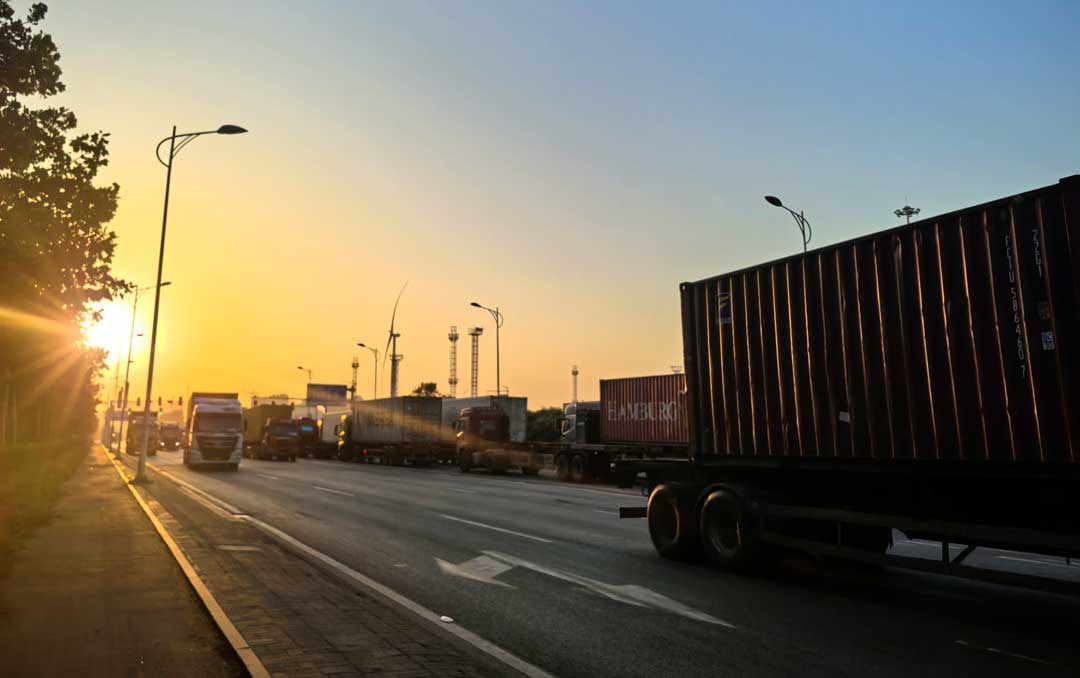
Laredo has five international bridges, three of which can carry commercial freight and two reserved for passenger vehicles and pedestrians. For freight, the usable entries are only the World Trade Bridge and the Colombia Solidarity Bridge, with rail cargo using the Laredo International Railway Bridge. The three commercial channels have separate crossing points and operating hours, and the choice depends on cargo type, time of day and port congestion.
| Bridge | Traffic | CBP crossing point telephone | Operating hours (Central Time) |
| World Trade Bridge | Commercial trucks only | (956) 794-9419 | Weekdays 07:00-24:00, weekends 08:00-16:00 |
| Colombia Solidarity Bridge | Commercial trucks and passenger vehicles | (956) 417-7806 commercial / (956) 417-7850 passenger | Commercial: weekdays 08:00-24:00, weekends 08:00-16:00. Passenger: daily 08:00-24:00 |
| Laredo International Railway Bridge | Freight trains | (956) 718-8995 | Daily, 24 hours |
| Juarez-Lincoln Bridge | Passenger vehicles and buses | (956) 718-8899 | Daily, 24 hours |
| Gateway to the Americas Bridge | Pedestrians and SENTRI lanes | (956) 718-8940 | Daily, 24 hours |
The World Trade Bridge is the main commercial truck channel, carrying trucks only, which by design avoids the queuing that mixed passenger traffic creates. It carries one of the highest truck volumes among truck-only bridges, with a morning and an afternoon peak. The Colombia Solidarity Bridge serves as relief and backup: when the World Trade Bridge is congested or temporarily closed for maintenance, trucks divert there, which is why Laredo holds up better than ports with a single commercial bridge. The Colombia Solidarity Bridge opened on July 31, 1991, with truck lanes open until midnight on weekdays and shorter weekend hours, so weekend crossings should be planned against the 08:00-16:00 window. The Juarez-Lincoln Bridge was built in 1976 to divert truck traffic from the Gateway to the Americas Bridge and today carries only passenger vehicles and buses.
Laredo's rail position between the United States and Mexico is a hub role: it is a principal international rail crossing into Mexico. Two rail bridges carry cross-border traffic, and a second span added in February 2025 converted a single-track crossing into a channel capable of simultaneous two-way crossings, the largest capacity expansion on this corridor in a decade.
| Item | Content |
| US railroads | Union Pacific and Kansas City Southern (KCS, now part of CPKC) |
| Mexican railroad | KCSM (Kansas City Southern de Mexico) handles the handoff at Laredo and Nuevo Laredo |
| Bridge ownership | The Laredo International Railway Bridge is owned by KCS, is single-track, and is shared by UP and KCS |
| Second span opened | Patrick J. Ottentsmeyer International Railway Bridge second span, opened by CPKC in February 2025 |
| Investment and scope | About USD 100 million, adding 1,170 feet of bridge and about 4,500 feet of new track, plus inspection and monitoring equipment |
| New span position | About 35 feet from the original bridge, allowing simultaneous two-way crossings |
| 2025 cross-border railcars | 213,008 railcars entering the United States from Mexico |
| US yards | UP operates two yards in Laredo and provides intermodal service within 8 miles of most industrial parks, dispatching toward Dallas and the Midwest |
| Network interchange | KCS interchanges with BNSF and UP; KCSM serves Veracruz, Tampico, Lazaro Cardenas, Toluca and Monterrey in Mexico |
A further role of the second span is to support inspection: the new bridge carries inspection and monitoring equipment, so the checking step during a crossing can be completed on one side of the bridge rather than being pushed back to the yards. For full-container cargo picked up in the northern Mexican industrial belt and moved to the US Midwest, the value of this channel lies in the rail rate differential against trucking and the fit of single-train capacity for large volumes. US-Mexico freight totaled about USD 872.8 billion in 2025, of which rail carried about USD 95 billion, or 10.9 percent by value, with Laredo holding a major share of it.
Road is the main channel at Laredo. By crossing counts, about one in four cross-border commercial trucks passes through Laredo, which is the direct reason for the density of local logistics services: carriers are willing to commit capacity here, and broker and warehouse inventory concentrates with it.
| Item | Content |
| Daily commercial truck crossings | Close to 19,800 trucks |
| Ten-year growth | 54 percent |
| Last 12 months of crossings | 2.97 million commercial trucks, 5.32 million passenger vehicles, 3.04 million pedestrians |
| Two commercial bridges combined | About 14,000 commercial trucks per day |
| Expedited lanes | FAST dedicated lanes at both the World Trade Bridge and the Colombia Solidarity Bridge |
| Supporting operations | Automated toll booths and automated truck scales, reducing time spent in weighing |
| Northbound artery | I-35 north through six Midwestern states to Duluth, Minnesota |
The practical meaning of the FAST lane is a faster crossing path for carriers and importers that have completed compliance filings. Using it requires advance registration, with carrier vehicles, drivers and the importer all on file and cargo accompanied by conforming documents. For exporters from China with a fixed monthly volume, fixing the carrier and completing the filing usually shortens crossing queue time noticeably. Automated scales let a vehicle complete weighing as it passes, so vehicles over axle load limits do not need separate handling at the bridgehead.
Laredo's air port of entry status is unusual on the US-Mexico border: the airport has both US customs operations and Mexican customs pre-clearance facilities, and operates 24 hours. This lets high-value or time-critical cargo complete both countries' entry procedures at the same location.
| Item | Content |
| Airport | Laredo International Airport (code LRD), operated by the City of Laredo |
| Customs facilities | Both US customs operations and Mexican customs pre-clearance, operating 24 hours |
| 2025 air cargo | 616,478,325 pounds landed through the port |
| Resident carriers | FedEx and UPS operate here |
| Charter services | More than 30 freight charter companies provide on-demand service |
| Main air cargo types | Aerospace parts, auto parts and electronics |
| Facility investment | More than USD 230 million of airport infrastructure investment over the past decade |
The operational value of dual customs operations is that a single shipment can complete both countries' import formalities on the Laredo side, avoiding a second clearance further inland. This channel mainly serves high value density and time-sensitive cargo, such as automotive electronics, aerospace parts and repair returns. For exporters from China, the applicable scenarios are high-value orders with short delivery windows, or replenishment that must align tightly with the production schedule of a plant on the Mexican side.
Measured by trade value, Laredo stands at the top of the US-Mexico border ports and near the top of all US ports. The practical meaning of this scale for importers is route density and carrier count: volume determines how many trucking companies will run the lane and how quickly problems get resolved.
| Item | Content |
| 2025 total trade | USD 353.94 billion |
| Year-on-year change | Up 4.4 percent, a fifth consecutive record year |
| Export and import split | Exports USD 126.83 billion, imports USD 227.11 billion |
| Ten-year growth | 72.9 percent, against 49.09 percent for total US trade over the same period |
| Statistical coverage | Measured across the 450-plus airports, seaports and land ports in the national trade statistics |
| Share of Mexico trade | Trade with Mexico is more than three times that of any other port |
Laredo's cargo mix differs from a purely consumer-oriented port: imports are led by auto parts, computers and consumer electronics, and exports are also led by auto parts, with substantial round-trip movement within the same supply chain on both sides. That means local volume is clearly driven by auto and electronics production schedules and does not track retail stocking cycles exactly. When judging how tight local operations are, auto plant production schedules are usually a better reference than retail peak season.
Laredo's main cargo types concentrate in autos, electronics and machinery. Its category concentration is high among US ports, with a large number of categories leading US imports or exports, which is directly related to the auto and appliance manufacturing belt in northern Mexico.
| Main imports | 2025 value | Main exports | 2025 value |
| Auto parts | USD 15.19 billion | Auto parts | USD 8.41 billion |
| Computers | USD 14.21 billion (up 178 percent year on year) | Gasoline and fuel | USD 2.90 billion |
| Passenger vehicles | USD 9.84 billion | Diesel engines | USD 1.79 billion |
| Mobile phones | USD 5.17 billion | Civil aircraft parts | USD 1.71 billion (up 117 percent year on year) |
| Commercial vehicles | USD 4.98 billion | Storage batteries | USD 1.49 billion |
Under the US customs and census accounting, Laredo leads national imports in 13 of the top 20 import categories and national exports in 10 of the top 20 export categories, with leading categories including auto parts, insulated wire and cable, tractors, air conditioners, electrical switch panels, refrigerators and freezers, vehicle engines, seats, catalytic converters, silver, electric motors and generators, and spirits such as tequila. About 96 percent of Laredo imports come from Mexico, with most cleared under USMCA preferential rates. Worth noting is that agreement preferences are not automatic: origin certification must be provided at entry and the classification and regional value content rules met, otherwise normal rates apply.
Laredo's warehousing and transfer capacity is a basic condition of the port. Local warehousing investment over the past three years has exceeded USD 1 billion, more than the previous 15 years combined, reflecting real demand for intermediate steps from cross-border volume.
| Item | Content |
| Warehousing investment | More than USD 1 billion over the past three years, more than the previous 15 years combined |
| Service provider density | More than 500 freight forwarders, more than 100 customs brokers, about 200 trucking companies |
| Rail intermodal coverage | UP provides intermodal service within 8 miles of most industrial parks |
| Main cargo types | Auto parts, electronics, appliances, machinery and building materials |
| Northbound export markets | The US Midwest and Southeast, and more than 60 countries via seaports |
The practical value of warehousing and transfer capacity for importers is as a place to deconsolidate, re-document and rework. When a shipment needs to be split between the US and Mexican sides, or labels and packaging need to be reorganized before crossing, local warehouses absorb that work and avoid longer round trips for rework. The high concentration of brokers and forwarders also means clearance, inspection, crossing and delivery for the same shipment can be handled by one or two local providers, reducing handoffs.
Inspections are decided by Customs and Border Protection and relate to entry compliance, history and cargo type. Inspections in Laredo are completed at the bridge crossing points and inside the yards, with seizure and penalty matters handled by a dedicated local window.
| Item | Contact or detail |
| Penalty, seizure and appeal window | (956) 523-7367, weekdays 08:00-17:00 Central Time, closed weekends |
| Dedicated mailbox | 2304-laredo-fpf@cbp.dhs.gov |
| Food and agricultural inspections | US Food and Drug Administration resident at the World Trade Bridge, 715 Bob Bullock Loop, Laredo, TX 78045, weekdays 08:00-16:30 Central Time |
| Inspection types | Document review, non-intrusive scanning, devanning inspection, and specialized checks for specific cargo categories |
| Common specialized checks | Food and agricultural products, auto parts and tires, children's products, chemicals, and intellectual property goods |
| Time impact | Document review usually one to two days; devanning inspection commonly three to seven working days, longer when sampling or testing is involved |
| Cost components | Inspection service fees, yard lifting and handling, devanning and restuffing labor, and storage during inspection, borne by the consignee regardless of outcome |
The practices for reducing inspection probability are the same at land ports as at seaports: declared description matching the goods, prices consistent with the common range for comparable goods, avoiding undervaluation and mixed loads, maintaining continuous import records, and aligning document information with container marks and labels. Land ports add one specific requirement: consignor and consignee names and addresses on the commercial invoice, packing list and waybill must correspond exactly, and mismatched parties, a common issue in cross-border transport, is a frequent inspection trigger.
Laredo's duty arrangements sit in Foreign-Trade Zone 94. The grantee is the City of Laredo, and the coverage includes the airport and the industrial belt. For companies that need to store, sort or reprocess imported components before deciding on domestic sale or re-export, this arrangement can defer or avoid duty payment.
| Item | Content |
| Zone number | FTZ 94 |
| Grantee | City of Laredo |
| Main benefits | Duty deferral, duty-free re-export, and inverted tariff treatment when the finished-goods rate is lower than the component rate |
| Suited to | Components processed or sorted locally before the destination is decided; cargo where the domestic sale or re-export decision needs to be deferred |
| Other conveniences | Weekly consolidated entries and direct delivery may be applied for where conditions are met |
| Standard controls | Cargo inside the zone must meet customs security, inventory record and zone entry and exit declaration requirements |
Unlike the Alternative Site Framework used at inland points, Laredo's foreign-trade zone is mainly designated sites, with usable space on the airport side and along the industrial belt. The main benefits inside the zone are duty deferral and duty-free re-export; when the component rate is higher than the finished-goods rate, domestic sale can also be cleared at the finished-goods rate, which is inverted tariff treatment. Applicability requires prior approval.
Chinese cargo moves through Laredo in four ways, differing in the port of entry, whether there is processing on the Mexican side, and whether truck or rail completes the domestic leg.
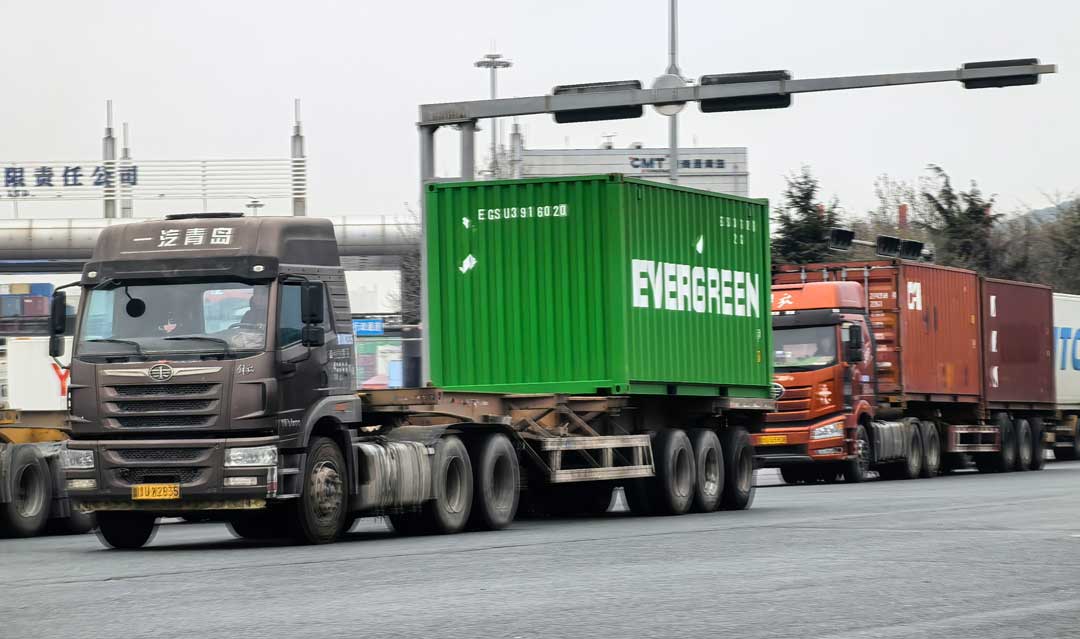
| Route | Core steps | Suited to |
| Via West Coast seaport, then south | Discharge at Los Angeles or Long Beach, rail or truck south along the I-35 corridor to Laredo, then delivery into the northern Mexican industrial belt | Delivery points around Monterrey and Saltillo, Mexico, when ocean rate differentials are significant |
| Via Gulf seaport, then west | Discharge at Houston, road or rail through Texas to Laredo | Cargo needing both Texas local delivery and a Mexican direction |
| Via Mexican Pacific ports | Discharge at Manzanillo or Lazaro Cardenas, north by Mexican rail or road to Nuevo Laredo, then crossing into the United States | Trade terms led by a Mexican-side consignee, or cargo flow whose destination is Mexico itself |
| Via Mexican assembly, then back to the US | Components enter Mexico by land for processing, with finished goods re-entering the US through an import entry at Laredo | Cross-border assembly of auto parts, appliances and electronics, usually claiming USMCA preferential rates |
The first and second types differ mainly in domestic distance and ocean freight. The third enters at a node inside Mexico, requiring Mexican-side clearance and transport arrangements, and suits flows whose destination is mainly the Mexican market. The fourth accounts for a high share of Laredo volume, consistent with the structure where auto parts lead both imports and exports. The key variable in choosing among them is the final delivery point, not the prominence of the port of entry.
Transit times are estimated by seaport leg and domestic leg separately, with the seaport leg using the same common ranges as the other US port pages.
| Route | Common ocean range | Domestic leg and total |
| Via Los Angeles or Long Beach | About 14 to 22 days | Rail or truck south about 3 to 5 days, total about 18 to 28 days |
| Via Houston | About 30 to 40 days | Domestic leg about 1 to 2 days, total about 32 to 43 days |
| Via Manzanillo or Lazaro Cardenas, Mexico | About 18 to 26 days | Northbound Mexican rail or road about 3 to 5 days plus a Mexican import entry, total about 24 to 35 days |
| Air freight via Laredo International Airport | About 3 to 7 days from a China airport door to door | Both customs operations at the same point, very short domestic leg |
These figures exclude booking, loading, export clearance and destination clearance time. The Mexican Pacific port option has a shorter ocean leg but requires a Mexican import entry before northbound movement, and once the two ends' formalities and land transport are stacked the total time is close to the West Coast southbound route. Suez routings are affected by conditions in the Red Sea and Cape of Good Hope diversions occur from time to time, so actual ocean time may rise by more than a week.
One key difference from seaports is that crossing hours are affected by holidays on both sides at once. When the US side closes, trucks cannot cross, and when Mexican customs are on holiday, northbound trucks cannot complete the handoff either, so scheduling needs both countries' calendars.
| Period | Operating arrangement |
| Monday to Friday | World Trade Bridge 07:00-24:00, Colombia Solidarity Bridge 08:00-24:00, rail bridge round the clock |
| Saturday and Sunday | Both commercial bridges work shortened hours of 08:00-16:00; passenger and rail channels run round the clock |
| US federal holidays | Port offices close or shorten hours, affecting entry and release, so trucks are advised to avoid them |
| Mexican holidays | Mexican customs and brokers close, interrupting northbound handoffs; dates as published by the Mexican side |
| Year-end holidays | Overlapping holidays on both sides, with a clear drop in crossing efficiency around the New Year |
In practice, the periods to avoid are around US Thanksgiving, Christmas and New Year, and the Mexican national holiday and year-end break. The full US holiday list is in the US holidays overview. If a delivery plan contains fixed deadlines, two to three working days of buffer on either side of major holidays is advisable.
Laredo's volume rhythm is set by auto and electronics production schedules, the Mexican agricultural export season, and retail stocking cycles. Its swings do not track purely consumer-oriented ports exactly, and auto plant production plans should be the main reference.
| Period | Volume character | Main drivers |
| January to February | Post-holiday trough, with a pre-Lunar New Year shipping rush | China factory shutdown and restart rhythm, auto plant early-year scheduling |
| March to June | Relatively stable, with auto and electronics parts alternating | Purchasing cycles at vehicle and appliance plants |
| July to October | Peak season, with retail and e-commerce stocking for year-end | Tight seaport space, rising freight rates, rising crossing traffic |
| November to December | Replenishment and inventory clearance together, with a higher share of urgent shipments | Year-end holidays, shutdown arrangements on both sides, concentrated delivery deadlines |
Three local variables to anticipate: the June to November Gulf hurricane season affecting Houston-direction ports and domestic road legs; overlapping US year-end and Mexican holidays causing crossing interruptions; and the short volume dip from annual auto industry maintenance shutdowns. Peak-season bookings are best placed two to three weeks ahead, with one to two weeks of buffer in the delivery plan.
Pickup at Laredo means pulling a container or trailer from a yard or customs-controlled area. The steps are similar to a seaport terminal, with the difference that crossing requires complete formalities on both sides.
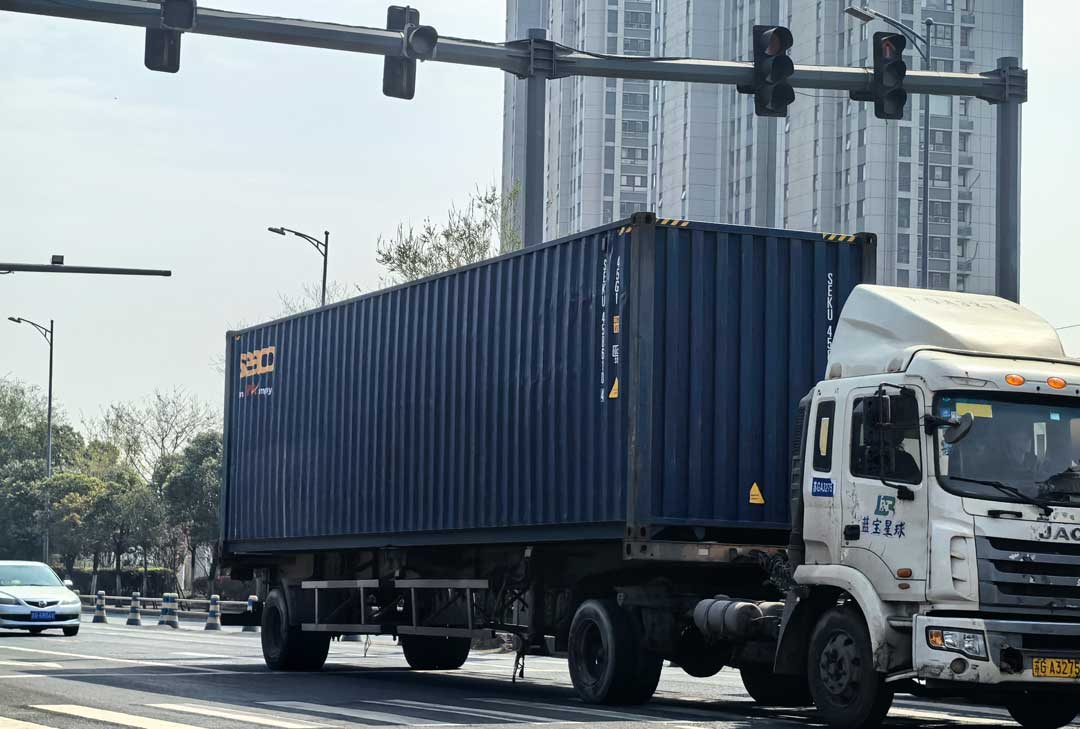
Four common causes of delay: crossing documents inconsistent with the actual load, leading to rework after inspection; charges unsettled or a lien flag leaving cargo unpickable in the system; cross-border tractor and chassis arrangements not in place; and dispatch falling outside bridge operating hours. All four can be checked through yard and broker systems before dispatch.
Taken together, the value of Laredo as a US-Mexico land destination concentrates in four areas.
Three points need attention. First, the city is not on the coast, so the international ocean leg must be completed at another port and the domestic leg has a real effect on delivery deadlines. Second, the cargo mix is closely tied to the auto and electronics industries, and changes in industry production schedules transmit directly into crossing traffic. Third, crossing hours are affected by both US and Mexican holidays at once, so scheduling needs both calendars checked.
No. Laredo is a land port of entry in southern Texas on the north bank of the Rio Grande, across from Nuevo Laredo, Mexico. There are no ocean berths; what crosses is truck trailers and railcars, and the international ocean leg is completed at Los Angeles, Long Beach, Houston or another seaport.
One, code 2304, registered as Laredo, Texas. The office address is Lincoln/Juarez Bridge, Administrative Bldg. #2, Laredo, TX 78040, telephone +1 956-523-7300, with Alberto A. Flores as Port Director. Port Laredo, used by the city and its economic development bodies, is the public-facing brand name for this port of entry.
Two road bridges plus one rail bridge. The World Trade Bridge is for commercial trucks only; the Colombia Solidarity Bridge carries commercial trucks and passenger vehicles; the Laredo International Railway Bridge carries cross-border trains. The Juarez-Lincoln Bridge and the Gateway to the Americas Bridge carry only passenger vehicles and pedestrians.
Use the World Trade Bridge as the main channel, with truck hours of weekdays 07:00-24:00 and weekends 08:00-16:00 Central Time. When it is congested or closed for maintenance, divert to the Colombia Solidarity Bridge, whose commercial channel runs weekdays 08:00-24:00 and weekends 08:00-16:00. Both bridges have FAST dedicated lanes.
USD 353.94 billion, up 4.4 percent year on year and a fifth consecutive record year, with exports of USD 126.83 billion and imports of USD 227.11 billion. It stands at the top of the US-Mexico border ports and near the top of all US ports by trade value, measured across the 450-plus airports, seaports and land ports in the national statistics.
Local commercial truck crossings run close to 19,800 per day, with about 14,000 across the two commercial bridges combined. Weekday mornings and afternoons each have a peak, and registered carriers can use the FAST dedicated lane to shorten queuing. Actual waiting time can be checked on the US customs border wait time system for the day of crossing.
Yes. In February 2025 CPKC opened the second span of the Patrick J. Ottentsmeyer International Railway Bridge, with about USD 100 million invested, adding 1,170 feet of bridge and about 4,500 feet of track. The new span sits about 35 feet from the original and allows simultaneous two-way crossings, more than doubling theoretical rail channel capacity. Railcars entering the United States from Mexico through Laredo numbered 213,008 in 2025.
On the US side, Union Pacific and Kansas City Southern (KCS, now part of CPKC) provide service, with KCSM handling the handoff between Laredo and Nuevo Laredo. The Laredo International Railway Bridge is owned by KCS, is single-track, and is shared by UP and KCS. UP operates two yards in Laredo and provides intermodal service within 8 miles of most industrial parks.
The common range via Los Angeles or Long Beach is about 18 to 28 days, with an ocean leg of about 14 to 22 days; via Houston about 32 to 43 days; via Manzanillo or Lazaro Cardenas in Mexico about 24 to 35 days. Air freight via Laredo International Airport runs about 3 to 7 days door to door.
Port office hours are Monday to Friday 08:00-17:00 Central Time, closed Saturday and Sunday. Individual channels have their own hours: the World Trade Bridge commercial channel runs weekdays 07:00-24:00 and weekends 08:00-16:00; the Colombia Solidarity Bridge commercial channel runs weekdays 08:00-24:00 and weekends 08:00-16:00; rail and airport channels operate 24 hours.
Inspection is completed at the bridge crossing point or inside a yard, with no cross-city drayage. Penalty and seizure matters are handled by the local window at (956) 523-7367, weekdays 08:00-17:00. Service, lifting and handling, devanning labor and storage charges during the inspection are borne by the consignee regardless of outcome. Food and agricultural cargo is handled by the US Food and Drug Administration resident office at the World Trade Bridge.
Yes, provided it has not been consumed or delivered in the United States and remains under customs control. Return requires an export entry in the United States and an import declaration in China, and duty-free treatment can be applied for within the prescribed period for returns in the original condition on quality or specification grounds. Cargo entering through Laredo must move to an export seaport before loading, and that cost should be calculated in advance.
Yes. Foreign-Trade Zone 94 was granted by the City of Laredo, with usable space on the airport side and along the industrial belt. The main benefits inside the zone are duty deferral and duty-free re-export, plus inverted tariff treatment allowing domestic sale at the finished-goods rate when that rate is lower than the component rate. Related guidance is in the US customs information section.
Shipping from China to USA
Planning a shipment or just comparing options? Contact our freight experts to get a tailored rate within 24 hours.
