
Las Vegas, Nevada sits in the southern part of the state in the Mojave Desert, about 270 miles from the nearest Pacific coastline. It is not a seaport city and has no ocean terminals, and it is not a concentration point for rail intermodal ramps either. Its logistics identity is that of a distribution market: part of the full-container volume discharged at the two big Southern California ports moves east along the I-15 corridor to land here before distributing to surrounding states. The key to understanding Las Vegas is the radius condition: two-day coverage west of the Mississippi River and one-day connection to the Southern California ports.
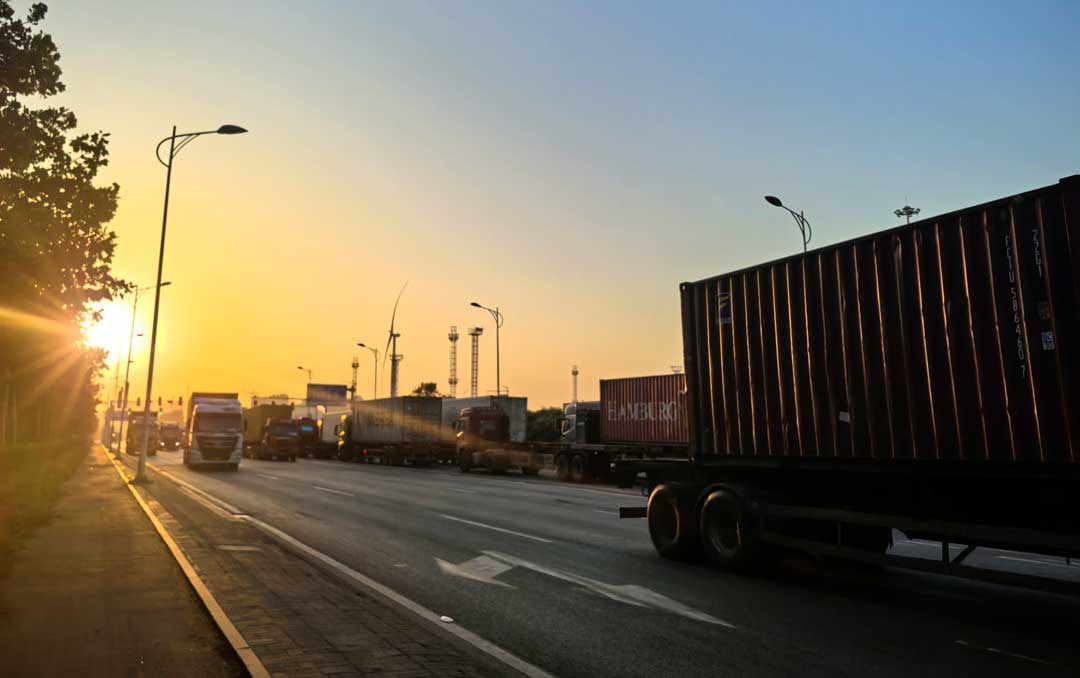
Las Vegas sits at 36 degrees 10 minutes north and 115 degrees 8 minutes west, in Clark County at the southern end of Nevada, about 270 miles west of Los Angeles, about 280 miles southwest of the Port of Long Beach, about 120 miles east of St. George, Utah, and about 300 miles south of Phoenix, Arizona.
In the customs system Las Vegas is an air port of entry, code 2722, reporting to the Los Angeles Field Office. Its operating structure: the cargo office sits on the general aviation side of Harry Reid International Airport and mainly handles import entries for air cargo and express shipments, while ocean full containers are entered and released at Southern California ports.
| Item | Content |
| Port code | 2722 |
| Registered name | Las Vegas, Nevada |
| Registered address | 5757 Wayne Newton Blvd, Las Vegas, NV 89119 |
| Cargo office address | 49 East Dewey Drive, Las Vegas, NV 89119 (inside the airport general aviation facility) |
| Mailing address | PO Box 11049, Las Vegas, NV 89119 |
| Cargo office telephone | (702) 261-3340 |
| Office hours | Monday to Friday 08:00-16:00 Pacific Time, closed Saturday and Sunday |
| Parent field office | Los Angeles |
| Customs region center | Clark County |
Nevada has one other customs port, at Reno (code 2833), reporting to the San Francisco Field Office. Both ports are inland with no ocean operations; the difference is that Reno is closer to northern California and the Pacific Northwest, while Las Vegas is closer to Southern California.
The port's public counters are split by business type, with cargo matters and traveler matters on different telephone lines. For importers, the day-to-day contacts are the cargo office and the deferred inspection window.
| Counter | Telephone | Hours |
| Cargo office | (702) 261-3340 | Monday to Friday 08:00-16:00 Pacific Time |
| Deferred inspection and I-94 correction | (702) 730-6075 | Sunday to Thursday 08:00-16:00 |
| Global Entry | (702) 730-6072 | Monday to Friday 09:00-15:00 |
| Main switchboard and general aviation | (702) 730-6071 | Monday to Friday 08:00-16:00, with after-hours coverage |
| Traveler business | (702) 730-6100 | Hours as published by the port for that day |
One point to note: port office hours are not the same as cargo working hours. Ocean full containers are inspected at Southern California ports and move in under bond, so no devanning is repeated locally; only air cargo, express shipments and cargo requiring deferred inspection are handled at this port. For cargo handed over between the two locations, working hours at both ends should be confirmed before dispatch is planned.
Las Vegas distribution capacity is built on road. I-15 is the main channel between it and the Southern California ports and the arterial carrying the largest local cargo volume; US-95 links the markets at the north and south ends of the state.
| Arterial | Direction and role |
| I-15 | Southwest directly to Los Angeles and the Long Beach and Los Angeles port complexes, about 270 miles; northeast toward Salt Lake City, Utah |
| US-95 | North-south through the state, north to Idaho and the Canada direction, south to Arizona and the Mexico direction |
| I-11 | North-south corridor linking Las Vegas with the Phoenix direction, under construction in segments |
| Delivery radius | Per local development agency figures, the one-day delivery radius covers more than 40 million consumers, with two-day delivery possible to all states west of the Mississippi |
| Port connection | The five major US seaports reachable next day within ordering cut-offs include the Port of Long Beach and the Port of Los Angeles |
The practical significance of I-15 is that it compresses the distance between the Southern California ports and local distribution warehouses into a single truck run: after pulling a container from the Los Angeles or Long Beach terminal, a truck can reach Las Vegas the same evening and complete devanning the next day. The route also comes under pressure in peak season, with Southern California road congestion transmitting directly into local warehousing times. Warehousing plans should factor in the condition of the Los Angeles metropolitan road network.
Local rail service is provided by Union Pacific, with Class I connections toward Southern California, Utah and the Midwest. There is currently no large public container intermodal ramp locally, so rail matters at the corridor level rather than in local loading and unloading.
| Item | Content |
| Class I railroad | Union Pacific provides local Class I service |
| Capacity under development | A freight rail connection between Las Vegas and the Reno and Carson City direction is being advanced |
| Industrial park spur | A new rail spur to the Apex industrial park is planned |
| Local container operations | No large public container intermodal ramp; full containers mostly transfer at Southern California yards and move in by truck |
| Suited cargo types | Rail direction is mainly bulk building materials, mineral products and interstate full-vehicle cargo |
The operating advice for full-container imports: put the bill of lading and clearance at the Southern California port and handle the local leg as truck dispatch, and do not plan on the assumption that Las Vegas has a rail ramp to land containers. The two local rail expansion plans address the north-central direction and an industrial park spur, and have limited bearing on the last mile of container imports.
Harry Reid International Airport is the local air gateway. Cargo volume is small relative to passengers, but the airport has real use for time-critical consumer goods and exhibition freight.
| Item | Content |
| Airport | Harry Reid International Airport (code LAS) |
| Annual passengers | More than 40 million |
| Annual air cargo | About 600,000 pounds per local development agency figures |
| Customs operations point | The port cargo office sits inside the airport general aviation facility, weekdays 08:00-16:00 |
| Suited scenarios | Time-critical consumer goods, exhibition freight, repair returns and samples |
Local air cargo volume is modest, which shows that Las Vegas imports are mainly full containers moved in by road from Southern California, with air freight as a supplement. The exhibition business is a local characteristic: Las Vegas has a dense convention calendar year-round, and exhibits often must arrive on schedule and cannot slip, so this cargo suits air freight or same-day road movement via Southern California.
Las Vegas core value is distribution. It sits at the first landing point between the Southern California ports and inland markets, and land and labor costs below California have drawn a group of retail and e-commerce categories to set regional distribution centers here.
| Item | Content |
| One-day delivery radius | Covers more than 40 million consumers |
| Two-day delivery range | All states west of the Mississippi |
| Tax conditions | Nevada has no state personal income tax, no inventory tax and no franchise tax, and is a right-to-work state |
| Distribution categories established | Beauty retail, e-commerce, housewares, supermarket distribution and auto modification parts |
| Representative facilities | Kroger operates a distribution center of nearly 500,000 square feet in the region serving Nevada, New Mexico, Arizona and Utah; Amazon and Sephora also warehouse here |
| Markets covered | Nevada, Arizona, Utah, New Mexico, plus inland Southern California and southern Idaho |
The absence of an inventory tax has the most direct effect on warehousing and fulfillment: inventory inside the state is not taxed for length of holding, lowering the cost of holding stock for availability. For exporters from China this means local warehouses suit longer stocking cycles rather than transit storage only. Worth noting is that state-level tax conditions do not mean there is no federal duty obligation: import duties and federal excise taxes still apply under federal law.
Las Vegas duty arrangements sit in Foreign-Trade Zone 89, covering Clark County and granted to and managed by the local economic development body. For companies that need to store, label or reprocess imported goods before deciding on a destination, this arrangement can defer duty payment.
| Item | Content |
| Zone number | FTZ 89 |
| Coverage | Clark County |
| Grantee | Las Vegas Global Economic Alliance (LVGEA) |
| Contact address | 6720 Via Austi Parkway, Ste. 330, Las Vegas, NV 89119 |
| Contact telephone | (702) 522-3341 |
| Subzone | Subzone 89C |
| Main benefits | Duty deferral, duty-free re-export, and inverted tariff treatment when the finished-goods rate is lower than the component rate |
Nevada's other foreign-trade zone is Zone 126 toward Reno, granted to and managed by the Western Nevada Economic Development Authority. The division of labor between the two zones matches the division between the two ports: the south serves Southern California and the Southwest market, and the north serves northern California and the Pacific Northwest.
Las Vegas is not on the coast, so Chinese cargo has two main routes to the city, differing in whether the domestic leg uses truck or rail and where clearance is done.
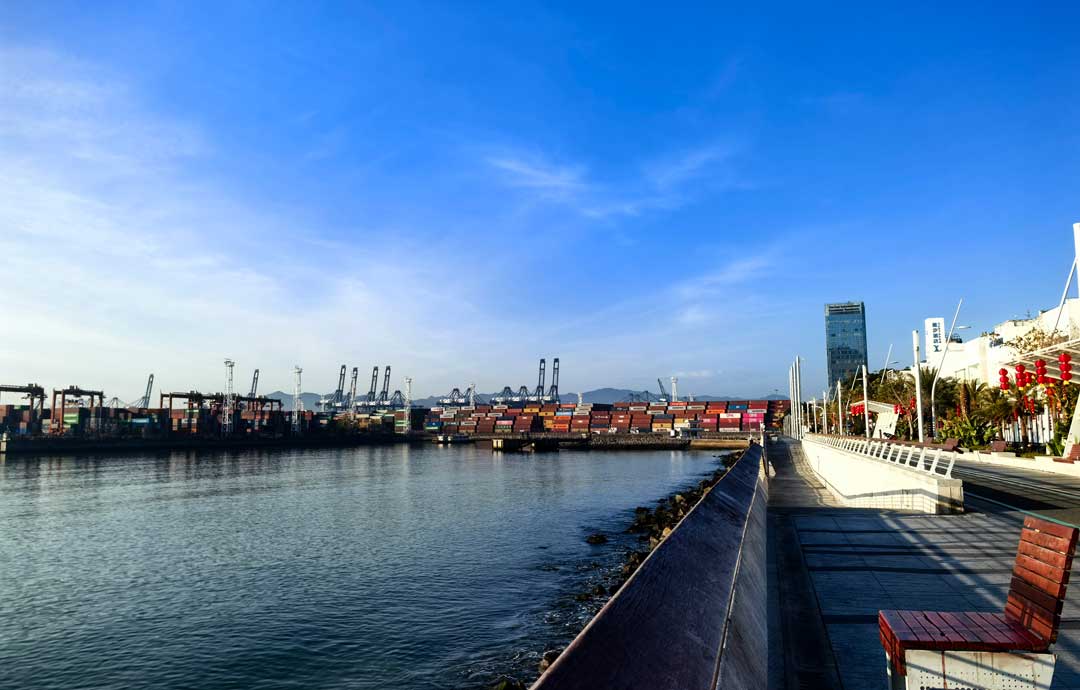
| Route | Core steps | Suited to |
| Southern California port plus direct truck | Discharge at Los Angeles or Long Beach, clear at the port, then truck in via I-15 to the local warehouse, about 270 miles | Full containers, clear warehousing deadlines, single-container direct delivery |
| Southern California port plus rail transfer | Discharge at Los Angeles or Long Beach, rail to an inland yard, then truck transfer to the local address | Larger volumes, or when consolidation with Midwest-direction shipments is needed |
| Via Phoenix or Salt Lake City transfer | Move from the Southern California port first to a regional node warehouse, then distribute locally | One batch of cargo that also needs to cover the Arizona or Utah market |
| Air freight via Harry Reid International Airport | Air from a China airport via a US hub, or delivered by road via a Southern California airport | Exhibition freight, time-critical consumer goods and samples |
Of the four, Southern California port plus direct truck is the most used for full containers, with the fewest steps and the most predictable timing. The rail transfer option suits folding local warehousing into a wider rail distribution network; the Phoenix or Salt Lake City transfer suits one batch covering several states. Air freight costs significantly more than ocean and is used only where timing is critical.
Transit times are estimated by seaport leg and domestic leg separately, with the seaport leg using the same common ranges as the other West Coast port pages.
| Entry route | Common ocean range | Domestic leg |
| Via Los Angeles or Long Beach (direct truck) | About 14 to 22 days | Road about 1 day, including pickup and clearance, total about 17 to 27 days |
| Via Los Angeles or Long Beach (rail transfer) | About 14 to 22 days | Rail plus transfer about 2 to 4 days, total about 18 to 30 days |
| Via Oakland | About 16 to 24 days | Road south through California about 2 days, total about 20 to 31 days |
| Via Houston or other Gulf ports | About 30 to 40 days | Road west via I-10 and I-15 about 4 to 5 days, total about 36 to 48 days |
| Air freight | About 3 to 7 days from a China airport door to door | Transfer via a US hub to Harry Reid International Airport or a nearby airport |
Combining both ends, the common range from a major China port to Las Vegas warehousing via Southern California ports is about 20 to 33 days. These figures exclude booking, loading, export clearance and destination clearance time. Suez routings are affected by conditions in the Red Sea and actual ocean time may rise by more than a week; Southern California port congestion in peak season and the Los Angeles metropolitan road network add directly to the domestic leg.
Full-container pickup in Las Vegas generally does not happen locally but at the Southern California port or rail yard before moving in by road. The local work therefore centers on warehousing and devanning rather than lifting out of a gate.
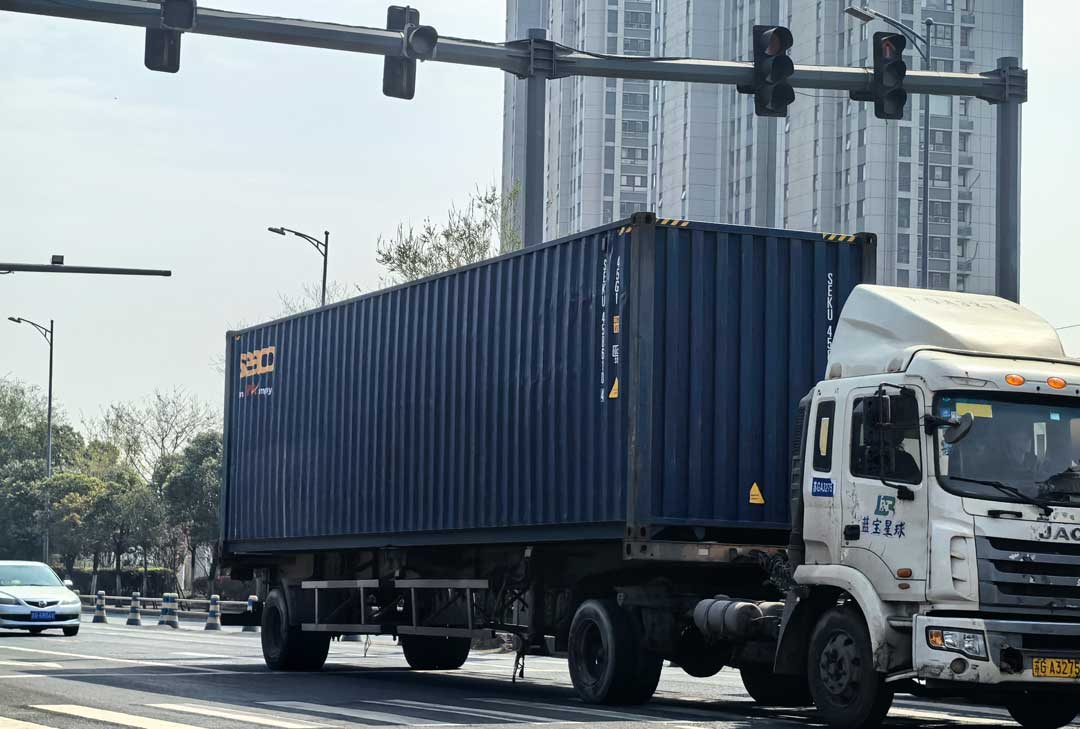
Four common causes of delay: Southern California port arrival later than planned, pushing the pickup day back; terminal or warehouse charges unsettled, leaving the container unpickable in the system; chassis and container type mismatch; and an empty return point too far from the warehousing point, with the return trip consuming a day. The fourth needs particular attention in Las Vegas: empties have to be returned to a Southern California-direction depot, so the distance between the return point and the warehousing point should be built into the plan before dispatch.
Las Vegas volume rhythm is set by tourism and conventions, retail stocking and e-commerce promotions together. It moves in step with the Southern California ports, so peak-season pressure shows up on both the ocean and land legs at once.
| Period | Volume character | Main drivers |
| January to February | Post-holiday trough, with the convention season starting | China factory Lunar New Year shutdown and restart, early-year convention concentration |
| March to June | Relatively stable, with conventions and retail replenishment alternating | Consumer electronics launches and summer stocking |
| July to October | Peak season, with retail and e-commerce stocking for year-end | Tight Southern California port space, rising freight rates, rising local warehouse rents |
| November to December | Replenishment and inventory clearance together, with a higher share of urgent shipments | Year-end promotions, holiday delivery, concentrated repair returns |
Three local variables to anticipate: Southern California port congestion in peak season transmitting along I-15 into local warehousing times; desert summer heat effects on outdoor work and cold-chain cargo; and local warehouse and truck capacity being diverted by exhibit business when convention dates cluster. Peak-season bookings are best placed two to three weeks ahead, with three to five working days of buffer in the warehousing plan.
Taken together, the value of Las Vegas as a distribution destination concentrates in four areas.
Three points need attention. First, the city is not on the coast and has no large public container intermodal ramp, so full containers must transfer via Southern California or the Arizona direction, adding a domestic leg. Second, empties must be returned to a Southern California-direction depot, and the return cost and time should be calculated in advance. Third, Southern California port congestion in peak season transmits directly into the local market, so peak scheduling should carry buffer.
No. Las Vegas sits in the Mojave Desert in southern Nevada, is not on the coast, and has no ocean terminals. It is an inland city with an air port of entry and distribution warehousing functions, and full-container imports usually discharge at Los Angeles or Long Beach and move in by truck on I-15.
Yes. Port code 2722, registered as Las Vegas, Nevada, reporting to the Los Angeles Field Office. The cargo office address is 49 East Dewey Drive, Las Vegas, NV 89119, inside the airport general aviation facility, telephone (702) 261-3340, with office hours Monday to Friday 08:00-16:00 Pacific Time.
The common range via Los Angeles or Long Beach is about 17 to 27 days, with an ocean leg of about 14 to 22 days and a road leg of about 1 day; if rail transfer at a Southern California yard is used, about 18 to 30 days; via Oakland about 20 to 31 days; air freight about 3 to 7 days door to door.
Union Pacific provides local Class I service, but there is no large public container intermodal ramp, so full containers mostly transfer at Southern California yards and move in by truck. A freight rail connection between Las Vegas and the Reno and Carson City direction is being advanced, along with a new rail spur to the Apex industrial park.
Full-container pickup is generally completed at a Southern California port or rail yard, then moved by truck to Las Vegas, with the local steps centered on warehousing, devanning, sorting and labeling. Empties usually have to be returned to a designated Southern California-direction depot, so the distance between the return point and the warehousing point should be calculated before dispatch.
A regional distribution center serving western US states. Per local development agency figures, the one-day delivery radius covers more than 40 million consumers and two-day delivery is possible to all states west of the Mississippi. Nevada has no inventory tax, so the cost of holding stock is relatively low. Categories already warehousing here include beauty retail, e-commerce, housewares and supermarket distribution.
Yes. Foreign-Trade Zone 89 covers Clark County, granted to the Las Vegas Global Economic Alliance, contact address 6720 Via Austi Parkway, Ste. 330, Las Vegas, NV 89119, telephone (702) 522-3341, with Subzone 89C beneath it. The main benefits inside the zone are duty deferral and duty-free re-export.
Ocean full containers are inspected at Southern California ports and are not devanned again locally. Air cargo, express shipments and cargo requiring deferred inspection are handled at this port, and related matters can be taken to the cargo office at (702) 261-3340 or the deferred inspection window at (702) 730-6075. Service, lifting and handling, devanning labor and storage charges during the inspection are borne by the consignee regardless of outcome.
Yes, provided it has not been consumed or delivered in the United States and remains under customs control. Return requires an export entry in the United States and an import declaration in China, and duty-free treatment can be applied for within the prescribed period for returns in the original condition on quality or specification grounds. Cargo must move to an export seaport before loading, and that cost should be calculated in advance.
The cargo office runs Monday to Friday 08:00-16:00 Pacific Time, closed Saturday and Sunday. The deferred inspection and I-94 correction window runs Sunday to Thursday 08:00-16:00, and the Global Entry window Monday to Friday 09:00-15:00. Road trucking does not pass through this port, and ocean full-container clearance is completed at the port of entry.
Harry Reid International Airport (code LAS) handles more than 40 million passengers a year, with annual air cargo of about 600,000 pounds per local development agency figures, small relative to passengers. The local convention calendar is dense, so exhibits and time-critical consumer goods suit air freight, or road delivery via a Southern California airport.
Full containers are generally cleared at the port of entry, that is the Los Angeles or Long Beach port; after moving into Nevada under bond, devanning and distribution are completed at the local warehouse or inside the foreign-trade zone. Air cargo can be entered through the Las Vegas port (code 2722). Applicable duty and admission rules are covered in the US customs import and export policy and customs duty sections.
Shipping from China to USA
Planning a shipment or just comparing options? Contact our freight experts to get a tailored rate within 24 hours.
