
Little Rock, Arkansas is the state capital, in central Arkansas on the south bank of the Arkansas River, an inland city not on the coast. Its logistics identity combines a river port with an inland customs port: a local river port with both rail switching and a river-terminal, and one of Arkansas's two customs ports. For China full-container cargo the value is the same-site rail ramp and river terminal: containers arrive by rail from a US West or East Coast port, while bulk and break-bulk can switch to barges via the Mississippi River system.
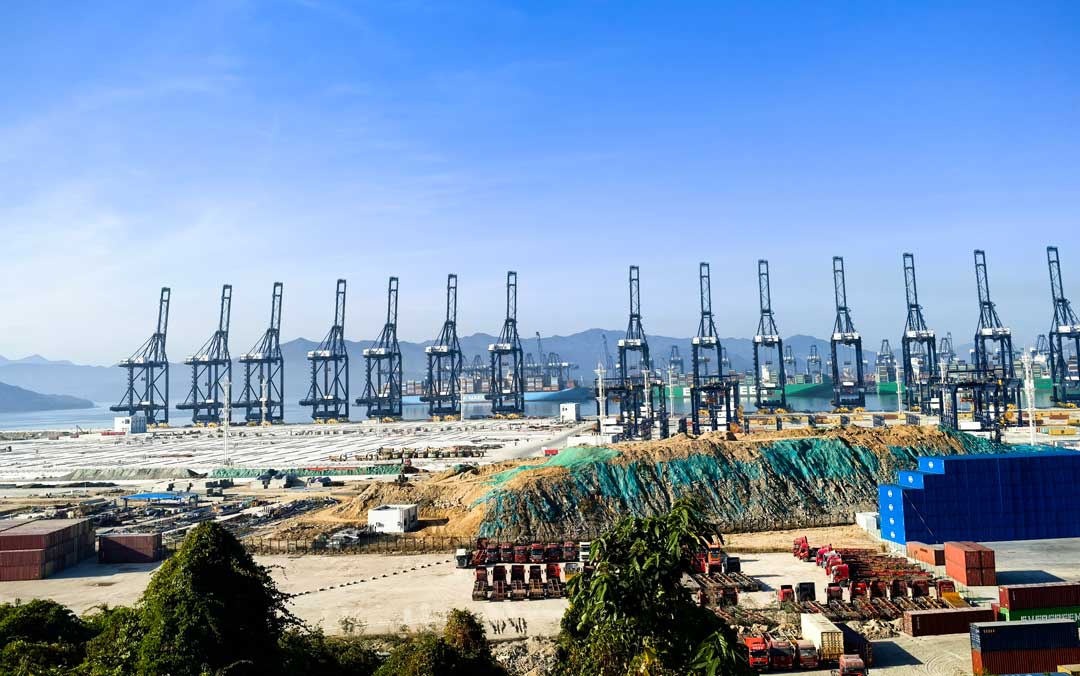
Little Rock sits at about 34 degrees 44 minutes north, 92 degrees 17 minutes west, in central-eastern Arkansas, with the Arkansas River running northwest to southeast through the city. The city is at the junction of Interstate 40 and Interstate 30, and a central node of the Arkansas River navigation system in the state.
Little Rock's identity in the customs system is an inland port, code 2003, registered as Little Rock-North Little Rock, under the New Orleans Field Office. The structure: the port office is on Temple Street in the city, while ocean-container exams are done at the port area or rail yard, the two channels sharing one port number.
| Port code | 2003 |
| Registered name | Little Rock-North Little Rock, Arkansas |
| Office address | 1000 Temple Street, Suite 4, Little Rock, AR 72202 |
| Phone and fax | +1 501-324-4898, fax +1 501-324-4871 |
| Port Director | Matthew Escarciga |
| Office hours | Monday to Friday 08:00 to 17:00 (Central Time), closed weekends |
| Field office | New Orleans |
| Access | From I-440 exit 3, toward the airport air-cargo terminal |
| Other in-state port | 2084 Rogers (Rogers airport), also under New Orleans Field Office |
Arkansas has only two customs ports statewide, one Little Rock and one Rogers airport in the northwest. This means the state's ocean-import business concentrates at Little Rock, and the port-area and rail-yard exam resources concentrate in the same district.
Exams are decided by US Customs and Border Protection, tied to filing compliance, history and commodity type. Little Rock exams can be done at the river terminal or rail yard, within the port area, without draying containers to another city.
| Exam site | River terminal or rail yard, both within the port area |
| Exam types | Document review, non-intrusive scan, physical exam, and commodity-specific checks |
| Common specific checks | Agricultural and food, wood products and wood packaging, chemicals, steel and aluminum, children's products |
| Time impact | Document review usually one to two days; physical exam commonly three to seven business days, longer with sampling or testing |
| Fee structure | Exam service, lift and handling, devanning and reloading labor, storage during exam, borne by the importer regardless of result |
| Document notes | Wood packaging must meet ISPM standards with proper marks; declared name must match the goods |
Arkansas is a large agricultural and wood-product export state; imports center on agricultural processing inputs, machinery and consumer goods. Wood products and wood packaging are a common sensitive item locally; solid-wood-packaged cargo should confirm quarantine treatment and marks before shipment to avoid extra handling cost on arrival. Rules on commodity admission and duty rates are set by the US customs import and export policy and the US customs import and export tariff.
Little Rock port is based on the Arkansas River. The river is part of the McClellan-Kerr Arkansas River Navigation System, locked and dammed for year-round navigation, then linked to the Gulf of Mexico via the Mississippi River, forming an inland-to-ocean path.
| System | McClellan-Kerr Arkansas River Navigation System (MKARNS) |
| In-state length | Over 300 miles, with 12 locks and dams |
| Maintained depth | Minimum 9 feet, year-round |
| Arkansas River annual freight | Over 10 million tons of commodities |
| Outlet to sea | Via Mississippi River to the Gulf; Arkansas segment of the Mississippi over 320 miles, 12-foot maintained depth |
| Capacity compare | A 15-barge tow equals 216 railcars or 1,050 semi-trailers |
| Main cargo | Agricultural and grain, fertilizer, forest products, steel and aluminum, stone and cement, petroleum products, chemicals |
The barge channel has real value for large-volume, low-time-sensitivity bulk and break-bulk: unit rate below road and rail, and a 15-barge tow carries as much as 216 railcars. Its limits are slow speed, water-level dependence, and rare use for full containers. For makers importing raw material then processing locally, this channel is a low-cost way to move material from Gulf ports inland.
The Port of Little Rock runs its own facilities, concentrated on both banks of the Arkansas River, with two river terminals and matched storage and lift capacity as the core.
| River terminals | Two: the main river terminal and the slackwater harbor, annual capacity up to 12 million tons |
| Lift capacity | 50-ton crane |
| Indoor storage | 134,000 square feet |
| Weighing | Truck scale and rail scale |
| Container handling | COFC (container on flatcar) lift capability |
| Cargo handled | Grain and chemicals, plus forest products, bagged cargo, coil steel and pipe, aluminum and bulk |
| Highway access | Adjacent to I-40 and I-30 |
| Park | Port industrial park about 2,600 acres, serving over 40 firms |
The two river terminals divide work: the main river terminal handles routine bulk and break-bulk; the slackwater harbor, with calm water, is less affected by current and suits cargo needing steadier handling. COFC lift is the local link to container business: full containers can load and unload on rail flatcars without a dedicated container yard. This suits modest volume that does not need a standalone container yard.
The port owns a switching railroad, a condition that sets Little Rock apart from other inland river ports: the line runs directly to the river terminal, so rail and barge transfer at the same site without highway dray.
| Operator | Port of Little Rock Railroad, port-owned switching railroad |
| Line length | About 20 miles, with branch lines and a yard in the port area |
| Locomotives | Two: a GATX-leased SW1500 and an owned EMD GP15-1 |
| Class I interchange | With Union Pacific (UP) and BNSF, the latter by trackage rights |
| Switching hours | Five-person crew weekdays 07:00 to 19:00; weekend two-person crew on demand, limited |
| River link | Line from the UP interchange near Clinton National Airport to the port terminal, directly linking the river terminal |
| Yard capacity | North yard track holds six-axle locomotives and heavy trains, up to 110 cars |
| Special load | Heavy-equipment loading ramp loads graders, military vehicles and other heavy wheeled equipment on and off flatcars |
| Certification | STB-certified switching railroad, docket ICC Federal Docket No. 24549 (1967-08-04), opened 1972-06 |
| Tariff | Published tariff, reciprocal switching agreements with UP and BNSF |
The switching railroad separates in-port branch work from the Class I line: the Class I only delivers cuts to the interchange, the port does in-park switching and classification, so interchange cost and wait are controllable. The heavy-equipment ramp is a dedicated capability, loading hard-to-lift wheeled equipment straight onto flatcars, suiting machinery and special-vehicle import and export.
Little Rock's highway base is I-40 and I-30, to the Midwest and Texas directions. On air, Clinton National Airport handles passenger and some cargo, and is an extension point of FTZ 14.
| Interstates | I-40 east-west to Memphis and Oklahoma City; I-30 southwest to Dallas |
| Distribution reach | All Arkansas, plus Tennessee and Mississippi north of the Mississippi River and northern Louisiana |
| Airport | Clinton National Airport (LIT) |
| Airport and zone | Extension point of Foreign-Trade Zone 14 |
| Rail mileage | Arkansas Class I rail mileage 1,683 miles |
| Main industries | Agriculture and food processing, forest products, steel and aluminum, medical devices, distribution logistics |
I-30 to Dallas matters for local distribution: Dallas-Fort Worth is a southern US hub, and from here serving Arkansas, northern Louisiana and southeastern Oklahoma is all within a day's drive. Clinton National as an FTZ extension gives air cargo a landing point that links to bonded arrangements.
Little Rock's duty arrangement is Foreign-Trade Zone 14, run by the port. A feature is that subzones can be applied for at any site in Arkansas, so a firm's chosen site is not bound by the port boundary.
| Zone number | Foreign-Trade Zone 14 (FTZ 14) |
| Operator | Port of Little Rock |
| Contact address | 8400 Lindsey Road, Little Rock, AR 72206 |
| Phone | (501) 490-1468 |
| On-site facilities | 25-acre site with 104,000 square feet of general building; extension at Clinton National Airport |
| Subzone scope | Port can apply for subzones at any site in Arkansas |
| Main benefit | Duty deferral, duty-free re-export, inverted-tariff treatment when finished rate is lower than component rate |
| Other convenience | Weekly entry, direct delivery and other simplified filing by eligibility |
The "subzones anywhere in the state" point matters for firms outside Little Rock: even if the plant is not in the port area, meeting CBP site-security and inventory rules lets a firm bring its own site into Zone 14, gaining the same duty deferral and re-export benefits.
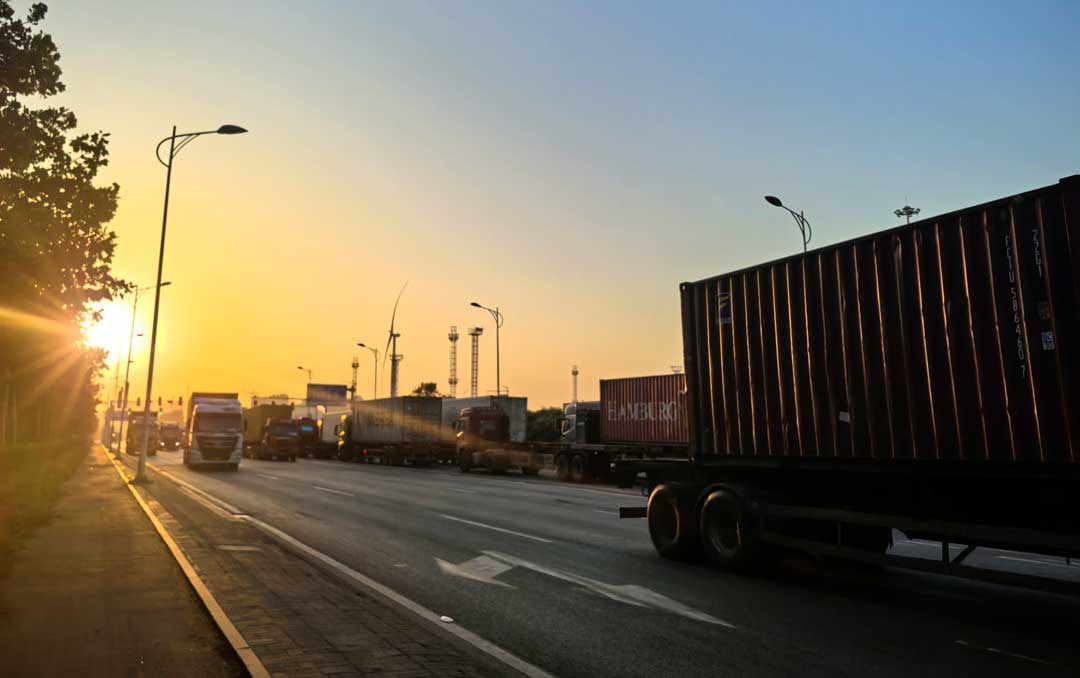
Little Rock is not on the coast, so China cargo must first enter at a coastal port, then move in by rail or road. Four path options differ by entry seaport and inland channel.
| Path | Seaport leg | Inland leg | Best for |
| US West plus transcontinental rail | China to Los Angeles, Long Beach | Rail east via Midwest hub then south to local ramp | FCL import when West Coast space is loose and ocean rate gap is clear |
| US Southeast plus rail | China to Savannah, Charleston or Mobile | Rail west via Memphis or Birmingham into Arkansas | Destination in eastern Arkansas or needing to serve the Southeast market |
| Gulf plus barge or rail | China to Houston or New Orleans | Barge north via Mississippi and MKARNS, or rail west via Northeast Texas | Bulk and raw materials, or needing Gulf Coast operations |
| Via Dallas land | China to Los Angeles, Long Beach or Houston | To Dallas-Fort Worth distribution then I-30 northeast into local | One batch covering both Texas and Arkansas markets |
Of the four, US West plus transcontinental rail balances time and cost; the Gulf barge channel suits bulk and raw materials, rarely full containers, but has real value for makers importing material then processing locally. If one batch must cover both Dallas and Arkansas, placing the distribution hub in Dallas and covering Little Rock by I-30 is also common.
Transit is estimated by seaport leg and inland leg separately; the seaport leg uses the common ranges consistent with other US port pages.
| Entry path | Common ocean range | Inland leg |
| Via Los Angeles, Long Beach | About 14 to 22 days | Transcon rail via Midwest transfer, total about 25 to 35 days |
| Via Savannah | About 28 to 38 days | Rail west via Memphis, total about 32 to 44 days |
| Via Houston (rail) | About 30 to 40 days | Rail via Northeast Texas, total about 34 to 46 days |
| Via New Orleans (barge) | About 30 to 40 days | Barge via MKARNS north, plus several days, mainly bulk |
| Air | From China airports, total about 3 to 7 days | Via US hub to Clinton National or nearby airport |
Combining both ends, door to container pickup at Little Rock from major China ports is commonly about 25 to 35 days via the US West, about 32 to 44 days via the US Southeast. Times exclude booking, stuffing, export declaration and destination clearance. Suez-routed sailings may rise over a week with Red Sea conditions; Gulf hurricane season and Mississippi low-water years need extra buffer.
Little Rock's pickup differs from coastal terminals: containers arrive by rail at the local ramp or port area, so rail arrival status must be confirmed first, and trucking scheduled to the port or railroad's operating window.
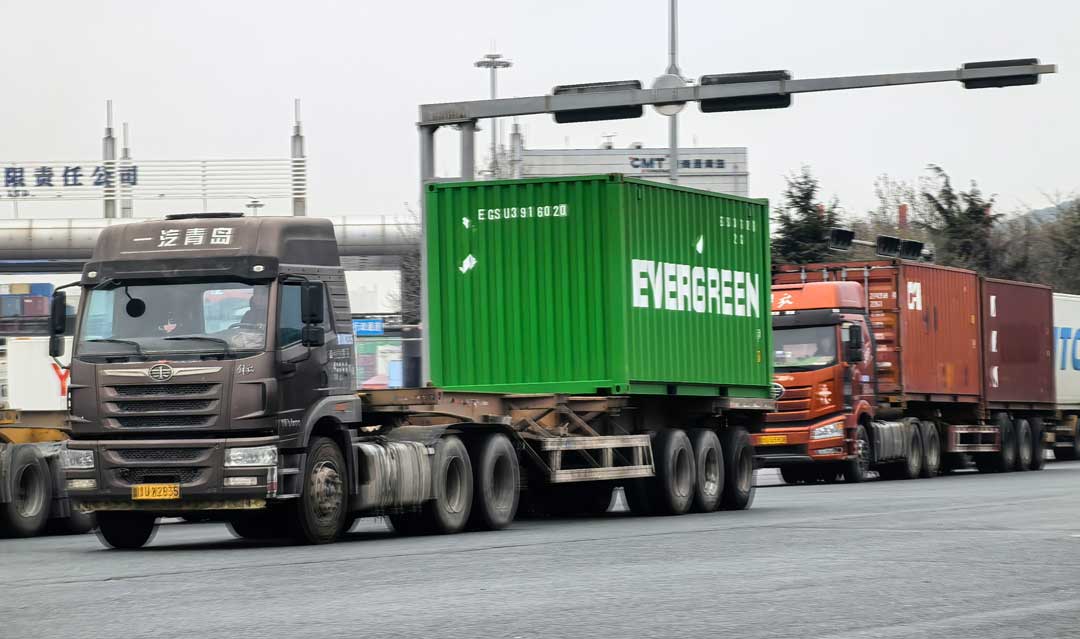
Common delays: rail arrives later than planned, pushing pickup later; fees unsettle or a lien mark blocks pickup in the system; chassis type mismatches the box; and trucking falls outside the port switching window. Port switching runs weekdays 07:00 to 19:00, weekends limited on demand, so weekend arrivals usually defer to a weekday.
Little Rock volume is set by local agriculture and food-processing seasons, forest-product and building cycles, and consumer-import rhythm. Agriculture-linked cargo is strongly seasonal, with clearer swings than a pure consumer inland point.
| Period | Volume feature | Main driver |
| January to February | Post-holiday low, a pre-Spring-Festival rush | China plant shutdown and restart, agriculture input stocking |
| March to June | Rising, more fertilizer and farm-machinery imports | Spring plowing and sowing |
| July to October | Peak, grain and agriculture-linked cargo concentrates | Harvest, retail and e-commerce year-end stocking, tight space |
| November to December | Restock and inventory clear together, air share up | Year-end holidays, Mississippi level, concentrated time needs |
Local variables to predict: Arkansas and Mississippi River level anomalies cut barge load and speed, with light loading in low water; spring-summer Mississippi-basin floods briefly interrupt water channels; the March-to-June tornado season affects regional rail and road. Book peak sailings two to three weeks early, with one to two weeks buffer in the delivery plan.
Combining the above, Little Rock's value as an inland landing centers on four points.
Points to watch: the city is not coastal, so ocean containers must transfer by rail from coastal ports with a long inland leg; port switching is mainly weekday daytime, weekend arrivals usually defer; and the barge channel depends on water level, needing light loading in low water, so the delivery plan needs slack.
No. Little Rock is the Arkansas capital, an inland city in central Arkansas on the south bank of the Arkansas River, with no ocean terminal. It is a river port on the Arkansas River navigation system and one of Arkansas's two customs ports; ocean containers arrive by rail from coastal ports.
Yes. Port code 2003, registered Little Rock-North Little Rock, Arkansas, under the New Orleans Field Office. Office at 1000 Temple Street, Suite 4, Little Rock, AR 72202, phone +1 501-324-4898, Port Director Matthew Escarciga, hours Monday to Friday 08:00 to 17:00 Central Time.
Via Los Angeles or Long Beach plus transcontinental rail, commonly about 25 to 35 days, ocean leg about 14 to 22 days; via Savannah about 32 to 44 days; via Houston plus rail about 34 to 46 days; air about 3 to 7 days.
Two river terminals, the main river terminal and the slackwater harbor, annual capacity up to 12 million tons; a 50-ton crane, 134,000 square feet of indoor storage, truck and rail scales, and COFC (container on flatcar) lift capability for grain, chemicals and similar cargo.
After rail to the local Class I interchange, the port-owned switching railroad moves the cars to the port area or a tenant site in the park. The port has COFC capability, so full containers load and unload on rail flatcars without a dedicated container yard.
It meets Union Pacific (UP) and BNSF, the latter by trackage rights. The port railroad has reciprocal switching agreements with UP and BNSF and a published tariff; the line runs from the UP interchange near Clinton National Airport to the port terminal.
The port switching railroad runs a five-person crew weekdays 07:00 to 19:00, and a two-person crew on weekends on demand with limited switching. Weekend arrivals usually defer to a weekday; count this in scheduling.
Yes. Foreign-Trade Zone 14 is run by the Port of Little Rock; the 25-acre site has 104,000 square feet of general building and an extension at Clinton National Airport. The port can apply for subzones at any site in Arkansas; contact 8400 Lindsey Road, Little Rock, AR 72206, phone (501) 490-1468.
Yes. The Arkansas River is part of MKARNS, over 300 miles in-state with 12 locks and dams, minimum 9-foot maintained depth, year-round; via the Mississippi it reaches the Gulf. The channel serves mainly bulk and raw materials; a 15-barge tow equals 216 railcars or 1,050 trucks.
Yes. The port has a heavy-equipment loading ramp that loads graders, military vehicles and other heavy wheeled equipment straight on and off flatcars; the north yard track holds six-axle locomotives and heavy trains, up to 110 cars, with the crane for machinery and special vehicles.
Exams are done at the river terminal or rail yard, no cross-city dray. Exam service, lift, devanning and storage fees are borne by the importer regardless of result. Solid-wood packaging should confirm quarantine treatment and marks, a common local check.
Yes, if not yet consumed or delivered in the US and still under CBP custody. Return needs a US export declaration and China import entry; original-condition return for quality or spec issues can apply for duty-free within the set period. The backhaul first moves by rail to the export seaport, so count the cost upfront.
Shipping from China to USA
Planning a shipment or just comparing options? Contact our freight experts to get a tailored rate within 24 hours.
