
The Port of Long Beach (UN/LOCODE: USLGB, also written Long Beach in Chinese references as Changdi) sits in the city of Long Beach, Los Angeles County, California, sharing San Pedro Bay with the adjacent Port of Los Angeles. Together the two ports form the largest container gateway on the U.S. West Coast. Long Beach is the main U.S. entry point for transpacific trade, and a significant share of containers shipped from China to the western United States discharges here. After arrival, terminal assignment, gate appointment, free storage time and customs examination directly determine the landed cost of the shipment.
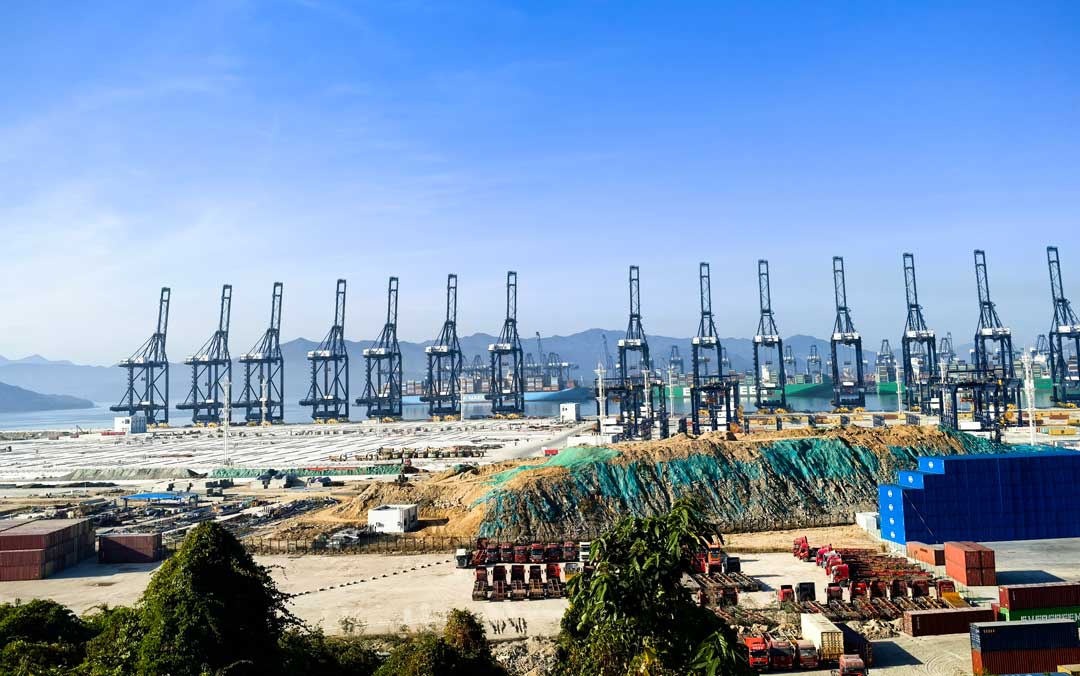
Long Beach sits at 33 degrees 45 minutes north, 118 degrees 12 minutes west, about 32 km south of downtown Los Angeles. The port faces the Pacific, with a main channel depth of 76 feet and container berth depths of 50 to 55 feet, able to take the largest container vessels in service. The port district covers about 3,200 acres of land plus about 4,600 acres of water, with about 31 miles of shoreline, divided into 10 terminal districts with about 80 berths in total.
Long Beach and Los Angeles are adjacent but administratively and commercially two independent ports: separate port authorities, terminals leased to different operators, and tariff schedules, free storage periods and gate rules not interchangeable. Whether a shipment discharges at Long Beach or Los Angeles is decided by the carrier's service arrangement, and the cargo owner cannot designate it at booking; the actual discharge port can only be confirmed from the bill of lading and arrival notice. So at booking, confirming the full name of the discharge port with the forwarder matters more than just knowing the destination is the Los Angeles area. The division of labor between the two port districts can be referenced from the Port of Los Angeles terminal guide.
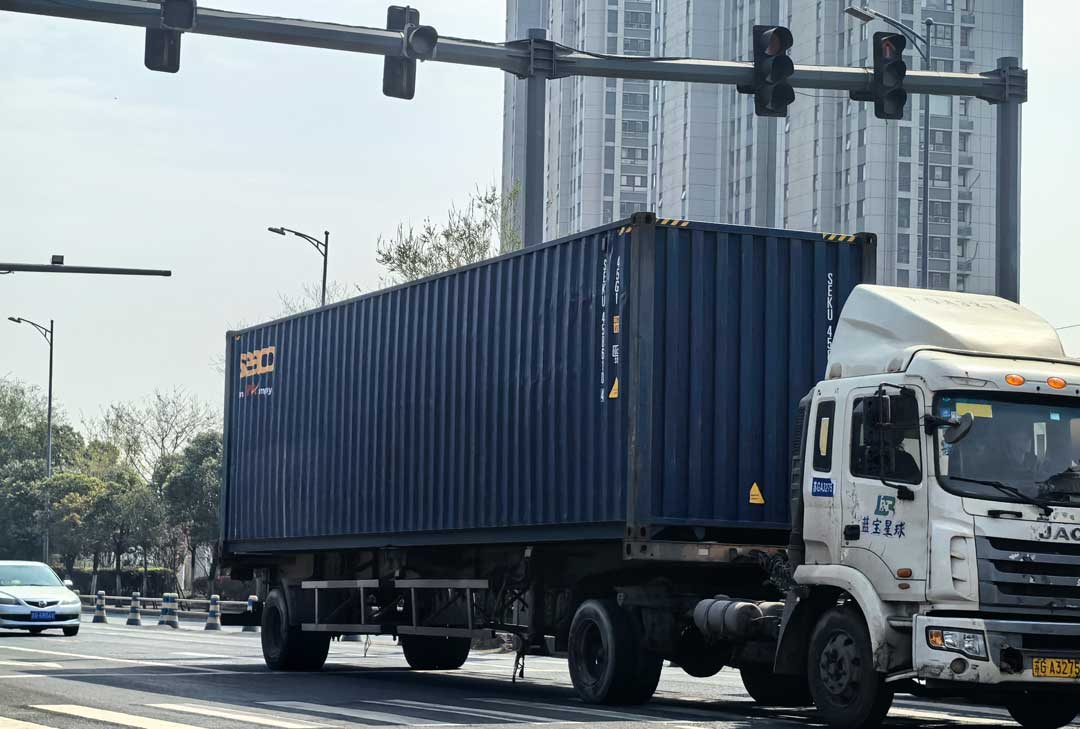
| Chinese name | Port of Long Beach (also written Changdi Port) |
| English name | Port of Long Beach |
| Port code | USLGB (UN/LOCODE); container terminals also have their own SMDG terminal codes |
| Port authority | Harbor Department, City of Long Beach; decision-making body is the Board of Harbor Commissioners |
| Official website | www.polb.com |
| Office address | 415 W. Ocean Blvd., Long Beach, CA 90802 (mail also to P.O. Box 570, Long Beach, CA 90801) |
| Main line | (562) 283-7000 |
| Harbor patrol dispatch | (562) 283-7820 (24 hours) |
| Customs port code | CBP port code 2704 (Los Angeles/Long Beach seaport); Long Beach also has 2709 in the U.S. Census Bureau Schedule D |
The port authority is responsible for port district planning, channel dredging, terminal leases, environmental and safety regulation, and does not participate in individual shipment operations. For specific issues like pickup, storage and examination, cargo owners need to contact the actual carrier, terminal operator or destination agent, not the port authority. Carrier services and contact details for China-U.S. routes can be referenced from the carrier profiles of COSCO Shipping, OOCL, Hapag-Lloyd, ONE, Yang Ming and Wan Hai.
Long Beach has six container terminals. Terminals are leased to different operators, each serving different carrier alliances, with berth numbers, yard areas and equipment configurations all different. Which terminal a vessel berths at is decided by the carrier's service arrangement and is not interchangeable within the same port district.
| Terminal (alias) | Operator | Berths | Yard area | Berth depth | Cranes | Main carriers |
| SSA Terminal Pier A | SSA Terminals (Pier A), LLC | A88-A96 | About 159 acres | 50 feet | 10 | Matson extra loaders, ZIM, MSC |
| SSA Terminal Pier C | SSA Terminals, LLC | C60-C62 | About 70 acres | 42 feet | 3 | Matson CLX regular service |
| LBCT (Pier E) | Long Beach Container Terminal, LLC | E24-E26 | About 305 acres | 55 feet | 14 twin-lift cranes plus about 70 automated stacking cranes | Ocean Alliance: COSCO Shipping, OOCL, CMA CGM, Evergreen |
| ITS (Pier G) | International Transportation Service | G226-G236 | About 246 acres | 42-55 feet | 15 | Hapag-Lloyd, ONE, Yang Ming |
| PCT (Pier J) | Pacific Maritime Services (SSA and COSCO Shipping joint venture) | J243-J247, J266-J270 | About 256 acres | 42-52 feet | 14 | COSCO Shipping, OOCL, CMA CGM |
| TTI (Pier T) | Total Terminals International | T132-T140 | About 385 acres | 55 feet | 16 | Maersk, MSC |
All six terminals have on-dock rail loading lines, so containers can load directly onto rail flatcars in the yard without first trucking to an off-dock rail yard. Pier T is the largest single terminal by area and crane count; Pier E is the most automated container terminal in North America, with the yard worked by automated stacking cranes and automated guided vehicles, giving high pickup efficiency after appointment confirmation, but with no walk-up window.
| Year | Container throughput | Notes |
| 2024 | About 9.6 million TEU | Set a record at the time |
| 2025 | 9,881,595 TEU | All-time high; imports 4.7796 million TEU, exports 1.1411 million TEU, empties 3.9609 million TEU |
| 2026 (forecast) | Above 9 million TEU | Public forecast by port authority management for the year |
One structural change in 2025 was rising concentration: for the first time five of the six container terminals each handled more than 1 million TEU, two of them more than 2 million TEU. That year Long Beach handled 48.9% of total San Pedro Bay volume, roughly splitting the bay with Los Angeles. The port handled about USD 200 billion in trade cargo value over the year, supporting about 2.6 million trade-related jobs nationally, of which about 575,000 in Southern California.
Empties are an important component of Long Beach's throughput: 3.9609 million TEU of empties transited the port in 2025, up 6.7% year on year. The large concentration of empties at discharge ports is the root cause of the position and box-type restrictions importers often encounter when returning empties.
Long Beach is the main U.S. West Coast call on transpacific services. The U.S. West Coast route connects Asia with the U.S. West Coast over about 6,000 nautical miles and is the most mature, highest-volume container liner route between China and the United States. Main origin ports on the China side include Shanghai, Ningbo-Zhoushan, Yantian (Shenzhen), Qingdao, Xiamen and Nansha (Guangzhou).
| China origin port | Common service types | Notes |
| Shanghai | Matson CLX regular, CMA CGM EXX, COSCO Shipping | Main port for East China shipments, widest choice of fast ships |
| Ningbo-Zhoushan | ZIM, COSCO Shipping, Evergreen | Dense weekly services, ample capacity |
| Yantian, Shenzhen | COSCO Shipping SEA3 and other direct services | Main port for South China shipments; voyage about 2 to 4 days longer than East China |
| Nansha, Guangzhou | Multi-carrier joint transpacific services | Usually calls at its own port then adds Yantian or Hong Kong |
| Qingdao | Wan Hai and other northern U.S. West Coast services | Northern port; often transits East China or Kaohsiung first |
| Xiamen | Jointly operated transpacific services | Schedule changes frequently; confirm the current week's call at booking |
The same service may rotate between Long Beach and Los Angeles on different voyages. Carriers adjusting berthing terminals within the same port complex is routine, and the discharge port shown on the bill of lading follows the final arrival notice. For the overall port landscape, the U.S. ports overview can be referenced.
The transit times below are sea legs, counting days from sailing date to vessel arrival at the destination port, excluding handling time at both ends.
| Origin port | Fast ship sea leg | Regular ship sea leg | Notes |
| Shanghai to Long Beach | About 11 days | About 16 days | Q1 2026 industry measured reference |
| Ningbo to Long Beach / Los Angeles | 12-13 days | 15-17 days | East China fast ship direct, few calls |
| Yantian, Shenzhen to Long Beach | 14-16 days | 19-25 days | COSCO Shipping SEA3 about 14 days direct |
| Nansha, Guangzhou to Long Beach | 15-17 days | 20-26 days | Usually via Yantian or Hong Kong add-on then direct |
| Qingdao to Long Beach | 14-16 days | 18-24 days | Northern U.S. West Coast service, fewer frequencies than East China |
Door-to-door total time adds to the sea leg: domestic consolidation and clearance, pre-sailing waiting, destination discharge and terminal availability, clearance, pickup and inland delivery. For East China shipments, fast-ship door-to-door typically runs 18 to 25 days, regular ships 20 to 30 days. In peak season when terminals are crowded, the discharge-and-availability step alone can add 5 to 10 days. For overall transport plans and quotation basis, the China-U.S. cargo transport and FCL service pages can be referenced.
Long Beach's service network covers about 175 carriers connecting about 217 seaports worldwide. Common carriers for cargo exported from China and their service characteristics are as follows.
| Carrier | Main services | Usual terminal | Characteristics |
| Matson | CLX regular, extra loaders | Pier C (regular), Pier A (extra) | Shanghai and Ningbo direct; dedicated terminal with priority discharge and short pickup wait; rates higher among comparable fast ships |
| ZIM | ZEX fast line | Pier A and others | Fast lines in both South and East China; stable time, price between Matson and regular ships |
| CMA CGM | EXX fast line, Ocean Alliance services | Pier E, Pier J | Ocean Alliance member; fast and regular products in parallel |
| COSCO Shipping | SEA3 and other transpacific services | Pier J, Pier E | South China direct with stable schedules; one of the main investors in Pier J |
| OOCL | Ocean Alliance transpacific | Pier E | Original Pier E tenant; automated terminal operations |
| Evergreen | Ocean Alliance transpacific | Pier E | Large fleet; weekly capacity relatively ample |
| Hapag-Lloyd | THE Alliance transpacific | Pier G | European owner; U.S. West Coast berthing structure relatively stable |
| ONE | THE Alliance transpacific | Pier G | Japanese three-way joint venture; good schedule reliability |
| Yang Ming | THE Alliance transpacific | Pier G | Taiwan owner; calls in both East and South China |
| Maersk | Independent transpacific | Pier T | Pier T is operated by an MSC subsidiary; the two often berth at the same terminal |
| MSC | Independent transpacific | Pier T | Largest capacity globally; frequent U.S. West Coast calls |
| Wan Hai | Northern U.S. West Coast services | By voyage | More frequencies at northern ports like Qingdao |
The difference between fast and regular ships is not only speed. Fast ships usually call at fewer ports, have priority discharge at the destination, and some have dedicated terminals or dedicated pickup windows, so destination-side waiting is clearly shorter than regular ships. Fast-ship rates are usually 30% to over double regular ships; the choice depends on inventory turnover and stockout cost. Carrier China-U.S. services and contact details can be referenced from the CMA CGM, Evergreen and MSC pages.
Pickup and empty return at all San Pedro Bay terminals are booked uniformly through the eModal platform. Vehicles without appointments cannot enter most terminal gates, the most common operational obstacle to pickup at Long Beach.
| Appointment platform | eModal (common to all San Pedro Bay terminals); registration required in the name of a trucking company holding a SCAC code |
| Appointment mandatory | Pier E and Pier G require appointments for all pickup and return business; Pier A and Pier J accept walk-ins within published windows, but appointments are recommended in peak season |
| Appointment tolerance | Some terminals allow arrival within about 30 minutes before or after the appointment slot; beyond the window requires rebooking |
| Gate credential | Driver reports the eModal gate code at the gate; paper gate passes no longer used |
| Driver qualification | TWIC card required; mandatory pass for entering marine terminals |
| Operating shifts | Regularly Monday to Friday day shift, Saturday second shift published weekly; some terminals run night off-peak gates |
| Chassis | Chassis provided by the trucking company or chassis pool; confirm availability before pickup; reefer containers also need yard power outlet confirmation |
Gate hours adjust daily and weekly, with shifts around holidays especially prone to change. The day before dispatching, use the current week's gate schedule published on the terminal's website, not last week's times. eModal appointment slots are a scarce resource; dispatch plans should be built around appointment slots rather than setting dispatch time first and then scrambling for appointments.
Long Beach's cargo moves inland mainly by rail and truck: rail handles long-distance trunk distribution, truck handles port-area surroundings and short-haul delivery.
The common mode for inland point delivery is IPI (Inland Point Intermodal): cargo discharges at Long Beach or Los Angeles, moves by rail to the inland rail ramp, then completes clearance and pickup at the inland port. This path is usually 5 to 12 days faster than all-water to the East Coast, but incurs inland rail surcharges, and peak-season rail congestion brings delays. Rail applicability and fee basis need to be confirmed with the front-end service scope at booking.
Long Beach's customs matters are handled by U.S. Customs and Border Protection (CBP). CBP manages the Port of Los Angeles and Port of Long Beach as one seaport of entry.
| Competent authority | U.S. Customs and Border Protection (CBP) |
| Port code | 2704 (Los Angeles/Long Beach seaport); Long Beach also has 2709 in the U.S. Census Bureau Schedule D |
| Port office | 301 E. Ocean Blvd., Suite 1400, Long Beach, CA 90802 |
| Phone | (562) 366-5454 |
| Office hours | Monday to Friday 08:00-16:30 (Pacific Time) |
| Electronic filing system | ACE (Automated Commercial Environment) |
| Advance manifest filing | ISF 10+2, must be filed 24 hours before loading |
| Entry types | Entry Type 01 (formal) or Entry Type 11 (informal) |
| Bond requirement | Single-transaction bond or continuous bond |
Customs entries are submitted in the ACE system against the port of entry where the cargo actually arrives, and the port code must match the actual arrival port; if cargo discharges at Long Beach and moves in-bond to another port for clearance, the entry is submitted at the destination port. For clearance procedures, required documents and common rejection reasons, the U.S. customs information pages can be referenced; for the scope of duty and additional tariff lists, the 2026 U.S. customs policy and additional tariff list can be referenced.
From discharge to loading onto a truck, a container must sequentially complete bill exchange, clearance, terminal release, appointment and pickup; any step lagging extends terminal storage time.
Clearance documents should be prepared in full before the cargo arrives, and the broker can usually accept filings after sailing. Waiting for the arrival notice to start clearance will usually eat directly into the free storage period. The scope of destination transport services can be referenced from the FCL and LCL service pages.
Destination pickup involves two independent time limits with different start dates; confusing them generates charges directly.
| Item | Basis |
| Terminal free storage time (Free Time) | Most Long Beach terminals give 4 days free for standard dry containers and 2 to 3 days for reefers. Free time is set by the terminal operator and is a separate matter from the carrier's equipment free time |
| Last Free Day (LFD) | After this day with the container still not picked up, the terminal starts charging daily storage (Demurrage) |
| Carrier equipment free time and detention | Charges incurred when a container is not returned empty within the prescribed period after leaving the terminal; billing runs from pickup to empty return |
| Free time start | From 03:00 on the day of discharge, not the vessel's berthing time |
| Weekends counted | At Long Beach, Saturday and Sunday count toward free time since September 1, 2022 |
| Storage fee charging party | Charged by the terminal operator per its published tariff, stepped by days overdue |
| Detention charging party | Charged by the carrier per its tariff |
| Relationship between the two fees | Independent; the same shipment can incur both. 8 days in the yard generates storage, and returning the empty 12 days after pickup generates detention |
| Changing free time | Service contracts can stipulate equipment free time longer than the published tariff; when pickup is impossible due to customs hold, an extension can be requested from the terminal with hold documents, submitted in writing |
Beyond storage and detention, Long Beach and Los Angeles also charge the PierPass Traffic Mitigation Fee, which as of August 1, 2026 is USD 40.63 per TEU and USD 81.26 per large box, payable on almost all laden containers regardless of pickup timing. The Alameda Corridor usage fee and Clean Truck Fund fee have separate bases as independent charges. Before dispatching, cross-check the terminal's published gate hours and the carrier's published last free day, and leave margin on both times.
U.S. customs examination of imported containers is risk-based, divided into document examination, X-ray scanning and devanning inspection; examination instructions are issued to the broker through the ACE system, and the broker notifies the cargo owner.
Common triggers for examination include declared name not matching the actual cargo, clearly low declared value, categories requiring FDA or USDA prior approval, unclear origin marking, and random selection. Containers that cannot be picked up within the free period due to customs hold can apply to the terminal for an extension with hold documents per terminal rules, a practice with basis in U.S. maritime regulations, requiring submission before the last free day. For the overall framework of examination and tariff policy, the U.S. customs information and import/export policy pages can be referenced.
When cargo cannot clear customs at the destination port or the receiver abandons pickup, return shipment is one handling option: operationally, moving already-exported cargo back to China or another country.
Beyond return, resale, destruction and abandonment are other options. Resale is usually cheaper than return but requires finding a willing buyer and completing destination change procedures; destruction suits low-value or unsaleable cargo and must be handled per U.S. environmental regulations. The cost differences among the three are large; when clearance fails, calculate the landed cost of each option before deciding.
Long Beach terminal operations stop or reduce shifts on U.S. federal statutory holidays. There are 11 U.S. federal statutory holidays in 2026.
| Date | Day | Holiday |
| January 1, 2026 | Thursday | New Year's Day |
| January 19, 2026 | Monday | Martin Luther King Jr. Day |
| February 16, 2026 | Monday | Washington's Birthday |
| May 25, 2026 | Monday | Memorial Day |
| June 19, 2026 | Friday | Juneteenth |
| July 3, 2026 | Friday | Independence Day observed (July 4 falls on Saturday) |
| September 7, 2026 | Monday | Labor Day |
| October 12, 2026 | Monday | Columbus Day |
| November 11, 2026 | Wednesday | Veterans Day |
| November 26, 2026 | Thursday | Thanksgiving |
| December 25, 2026 | Friday | Christmas |
Terminal gates usually close on the holiday itself, and extra shifts are often arranged before and after holidays to clear backlogs. Beyond federal holidays, terminals may also adjust operations temporarily due to local arrangements; shipping plans need buffer. For the overall U.S. holiday arrangement and shipping planning approach, the U.S. holidays overview can be referenced.
Long Beach's volume shows clear seasonality, directly tied to the U.S. retail cycle.
| Period | Characteristics |
| Peak | August to October each year is the busiest, corresponding to Christmas and year-end promotion stocking; in some years the peak starts as early as June. During peak, average vessel time in port can reach 4 to 7 days, capacity is tight, and rates and destination-side waiting rise together |
| Secondary peak | The rush window before and after the Chinese New Year, and the replenishment period before Amazon Prime Day |
| Low season | January to March each year, post-holiday replenishment ends, port operating pressure is lowest, and U.S. West Coast route times are relatively optimal |
| Disturbance factors | Tariff policy adjustments create short-term concentrated shipments, distorting the traditional peak/low pattern in individual years |
Volume concentration brings two linked effects: capacity and chassis are tight at the same time, with peak-season chassis shortages directly blocking pickup; and terminal yard density rises, pushing back availability time, effectively compressing the free storage period. So peak-season shipping requires not only booking capacity early, but also locking destination pickup and delivery resources in advance.
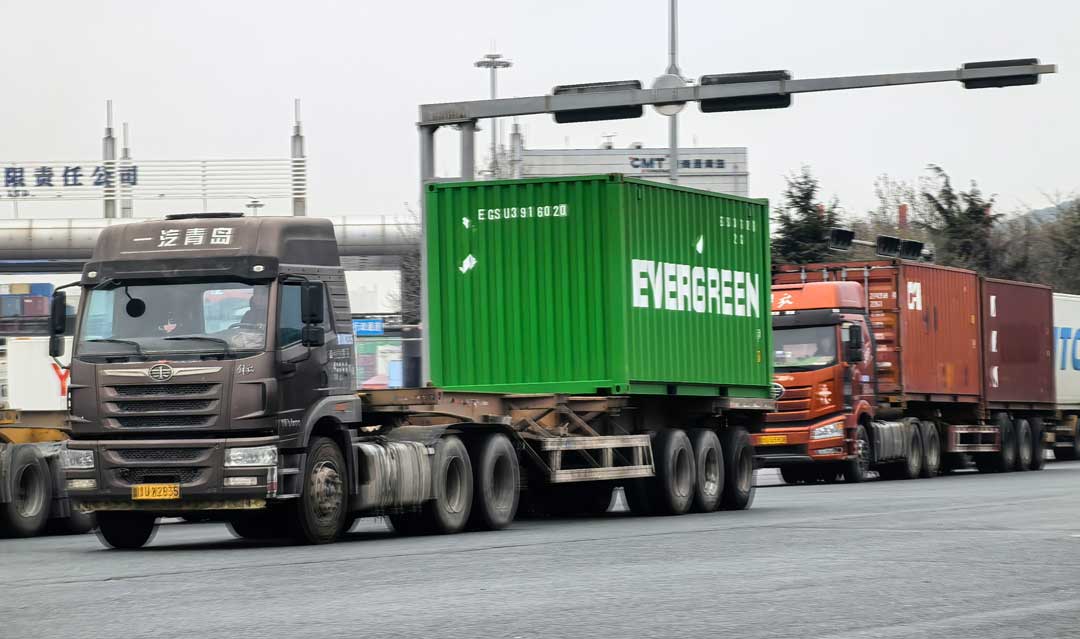
Compared with other U.S. ports, Long Beach's advantages concentrate in a few specific links.
The limitations should also be seen at the same time. Long Beach's empty return pressure is high, with returns often restricted by position and box type; terminal appointments are a rigid constraint, and no appointment means no gate entry; weekends count toward free time, so actual available free time is shorter than the nominal days. These limits must be counted into pickup planning, not judged by voyage length alone.
No. The two ports share San Pedro Bay with connected shorelines, but their port authorities, terminal operators, tariff schedules and free storage periods are all independent. Which port a container discharges at is decided by the carrier's service, and the cargo owner cannot designate it.
The UN/LOCODE is USLGB. The CBP port code for customs is 2704, which also covers the Port of Los Angeles; Long Beach also has 2709 in the U.S. Census Bureau Schedule D.
For sea legs: Shanghai to Long Beach by fast ship about 11 days, by regular ship about 16 days; Ningbo about 12 to 17 days; Yantian about 14 to 25 days. Door-to-door total time also adds domestic consolidation and clearance, destination discharge, clearance and pickup, with fast ships typically 18 to 25 days and regular ships 20 to 30 days.
Most terminals give 4 days free for standard dry containers and 2 to 3 days for reefers. Free time starts at 03:00 on the day of discharge, and at Long Beach weekends also count toward free time since September 1, 2022. Specific days follow the terminal's published tariff.
Storage is charged by the terminal on a stepped basis by days overdue: the longer the overstay, the higher the daily charge, with an industry reference range of about USD 100 to 200 per day in the early overstay period, reaching several hundred dollars per day for long-term storage. Final rates follow the official tariffs of the terminal and carrier.
No. Demurrage (storage) is charged when a container exceeds the free period in the terminal yard, billed from discharge to pickup; Detention is charged when a container is not returned empty on time after leaving the terminal, billed from pickup to empty return. The two are calculated independently and can occur simultaneously.
All San Pedro Bay terminals use the eModal platform for appointments. Pier E and Pier G require appointments for all pickup and return business, and vehicles without appointments cannot enter; Pier A and Pier J accept walk-ins within published windows, but appointments are still recommended in peak season.
A Delivery Order, released customs records, settled destination charges, and the trucking company's completed eModal booking record. Drivers must hold a TWIC card, and chassis availability must be confirmed in advance.
Pier C is dedicated to Matson CLX regular service; Pier A handles Matson extra loaders, ZIM and MSC; Pier E mainly serves Ocean Alliance's COSCO Shipping, OOCL, CMA CGM and Evergreen; Pier G mainly serves Hapag-Lloyd, ONE and Yang Ming; Pier J handles COSCO Shipping, OOCL and CMA CGM; Pier T is mainly Maersk and MSC.
The automated yard picks up quickly and operates stably after appointment confirmation, but has no walk-up window and cannot accommodate ad-hoc insertions. During system maintenance windows, gate operations may pause; confirm the timing on the terminal's website in advance.
An extension can be requested. Containers that cannot be picked up within the free period due to customs hold can apply to the terminal in writing with hold documents; materials must be submitted before the last free day, and late submissions are generally not backdated. Approval is handled by the terminal per its published policy.
Yes. The precondition is that the goods have not been consumed or delivered in the United States and remain at a terminal, bonded warehouse or customs-controlled area. Return requires U.S. export clearance and Chinese import declaration; goods returned in original condition due to quality or specification issues can apply within the prescribed period for exemption from Chinese import duty and import-linked taxes, with the original export declaration and other supporting documents.
Shipping from China to USA
Planning a shipment or just comparing options? Contact our freight experts to get a tailored rate within 24 hours.
