
The Port of Los Angeles (UN/LOCODE: USLAX) sits on San Pedro Bay in Los Angeles, California, and together with the adjacent Port of Long Beach (USLGB) forms the largest port complex on the US West Coast. A substantial share of container cargo exported from China to the western United States discharges here. Terminal ownership, pickup deadlines, customs inspection and peak-season arrangements directly determine the landed cost and delivery rhythm of a shipment.
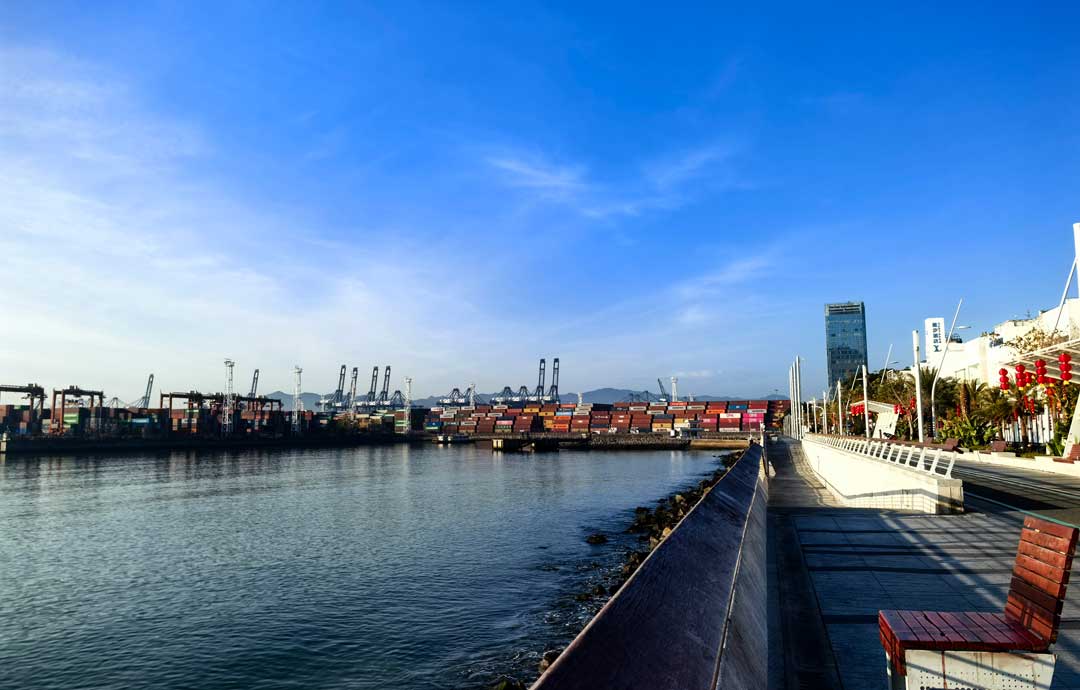
The Port of Los Angeles sits on San Pedro Bay, spanning the San Pedro and Wilmington districts of Los Angeles and Terminal Island, about 32 km south of downtown Los Angeles, at roughly 33.74 degrees north and 118.27 degrees west. From San Pedro, Highway 110 and State Route 47 (Terminal Island Freeway) enter the port area, and the Vincent Thomas Bridge links San Pedro with Terminal Island.
The port is managed by the Los Angeles Harbor Department, a department of the City of Los Angeles, with operating funds coming from charges to shipping companies and port property rental income rather than local taxes. The port covers about 7,500 acres of land and water combined with about 43 miles of shoreline. The adjacent Port of Long Beach is an independently managed port; the two share the channel and some infrastructure, but management, terminals and tariff schedules are separate.
Searching 425 S. Palos Verdes Street, San Pedro, CA 90731 in Google Maps or Apple Maps locates the harbor department and the port area; searching individual container terminal names and berth numbers, for example TraPac Berths 136-147, locates the specific terminal gate.
The port area has six main container terminals, each operated independently. The relationship between carrier and terminal determines which terminal a given service calls, so the same shipment carried by different carriers can have a different pickup location, gate hours and appointment rules.
| Terminal | Operator | Berths | Address | Telephone |
| APM Terminals Pier 400 | APM Terminals | Berths 401-406 | 2500 Navy Way, Terminal Island, CA 90731 | (310) 221-4000 |
| Fenix Marine Services (FMS, formerly Eagle Marine) | Fenix Marine Services | Berths 302-305 | 614 Terminal Way, San Pedro, CA 90731 | (310) 548-8815 |
| TraPac Terminal | TraPac | Berths 136-147 | 630 W. Harry Bridges Blvd, Wilmington, CA 90744 | (310) 830-2000 |
| Yusen Terminals (YTI) | Yusen Terminals | Berths 212-225 | 701 New Dock Street, Terminal Island, CA 90731 | (310) 548-8000 |
| Everport Terminal Services (ETS) | Ports America and Evergreen joint venture | Berths 226-236 | 389 Terminal Island Way, Terminal Island, CA 90731 | (310) 221-0220 |
| West Basin Container Terminal (WBCT, including the China Shipping and LA TiL blocks) | WBCT LLC | Berths 100-126 | 2050 John S. Gibson Blvd, San Pedro, CA 90731 | (310) 732-2486 |
The addresses and telephone numbers above come from published terminal information; actual service acceptance and gate arrangements follow each terminal's website on the day.
Yards involved after arrival fall into three types by location and use, and confusing them sends trucks to the wrong place and extends waiting time.
When the final delivery address is inland, on-dock rail or a near-terminal rail yard is usually chosen for intermodal (IPI); when the consignee is local to Southern California, trucking to a warehouse for devanning is the norm.
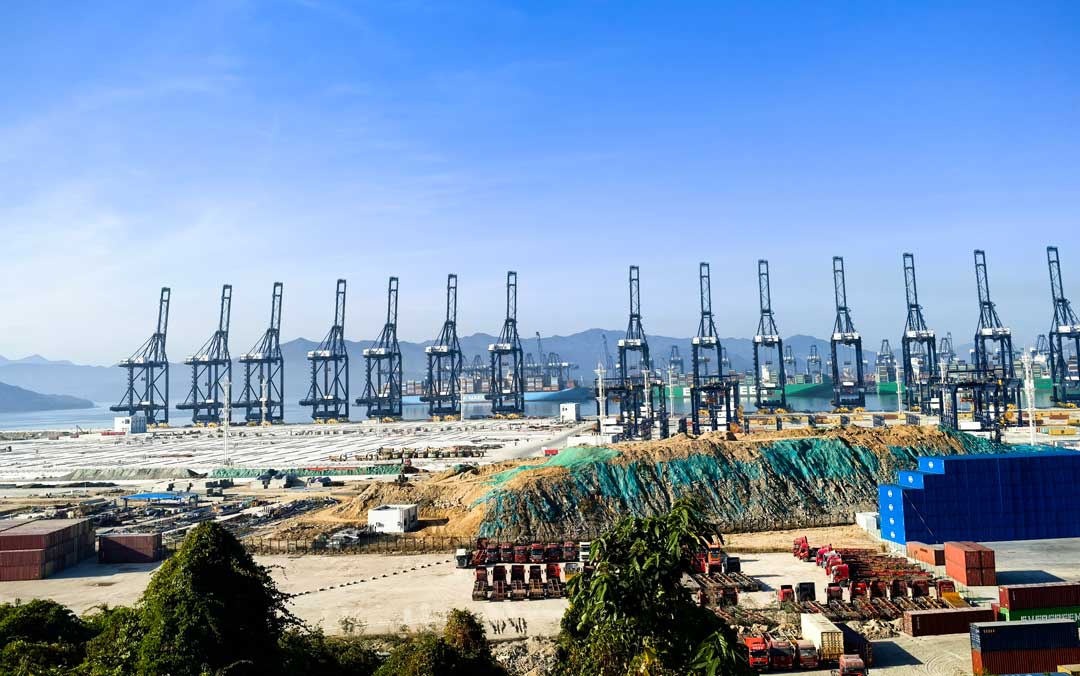
Los Angeles has long been the largest container port in the United States by throughput and the only US port to have sustained annual volume in the 10 million TEU range.
| Year | Container throughput | Notes |
| 2023 | About 8.6297 million TEU | Recovery after supply chains returned to normal |
| 2024 | About 10.2974 million TEU | Highest in the US that year, up about 19 percent year on year |
| 2025 | About 10.2393 million TEU | Third highest on record, 26th consecutive year as the largest US port |
TEU (Twenty-foot Equivalent Unit, standard container) is the standard measure of container throughput, with one 40-foot container counted as 2 TEU. In 2025 the Port of Los Angeles's largest trading partner was mainland China and Hong Kong, China at about USD 82 billion by value, followed by Vietnam, Japan, Korea and Taiwan, China. By cargo structure, Northeast Asia routes account for about 59 percent of total cargo. By commodity, the largest import categories are furniture, auto parts, plastics, apparel and electronics, while exports are mainly waste paper, pet and animal feed and soybeans, with a marked imbalance and US export volume far below import volume.
On the trans-Pacific trade, major Chinese container ports have direct or transshipment sailings to Los Angeles, with East and South China ports the densest.
Service forms divide into direct and transshipment. Direct sailings run from the Chinese port to Los Angeles without changing ships, giving the shortest transit and higher predictability; transshipment requires a ship change at a hub such as Busan or Kaohsiung, usually adding five to ten days and one more connection risk. For the same destination port, different carriers call at different terminals, so the pickup location changes accordingly and must be confirmed at booking.
The table below gives port-to-port ocean transit ranges taken from published industry data. Express services call at fewer ports with tight schedules, while conventional services call at more ports along the way. Actual transit is affected by vessel type, call sequence, weather and port congestion.
| Chinese origin port | Express service ocean transit | Conventional service ocean transit |
| Shanghai (Yangshan) | About 11 to 13 days | About 14 to 18 days |
| Ningbo-Zhoushan | About 12 to 13 days | About 15 to 18 days |
| Yantian or Shekou, Shenzhen | About 13 to 16 days | About 19 to 25 days |
| Qingdao | About 14 to 16 days | About 14 to 18 days |
Ocean transit is only one part of total lead time. What determines the consignee's wait is the sum of ocean transit, origin operations, destination discharge and pickup, US customs release and inland delivery, usually with the following added: booking and loading plus one to two days of export clearance at origin; about one to three days from discharge to container availability after arrival; appointment pickup after clearance, which in peak season can add another three to seven days; one to two days for empty return after devanning; and finally inland truck or rail delivery. Door to door from Shenzhen to Los Angeles typically runs two to four weeks, extending noticeably in peak season.
For cargo with high timing requirements, express products from East China have a clear advantage on the ocean leg; for cost-sensitive cargo, a conventional service plus intermodal to the US Midwest is usually more economical than all-water to the East Coast. Specific sailing schedules, cut-off times and arrival dates must be set against the cargo ready date and the carrier's monthly schedule.
Carriers operating China-US services and calling at Los Angeles fall into three alliances plus several independent operators. Beyond freight rate, choosing a carrier means considering the terminal called, cut-off time, container supply and schedule reliability.
| Carrier | Alliance or operating model | Characteristics |
| Matson | Independent, own terminal | Short US West Coast express transit, stable schedules, suited to time-sensitive e-commerce and seasonal cargo |
| ZIM | Independent | US West Coast express product with a timing edge, calls at fewer terminals |
| Hapag-Lloyd | Gemini Cooperation | Operates jointly with Maersk; publicly reported schedule reliability leads the industry |
| CMA CGM | Ocean Alliance | Largest alliance, broad trans-Pacific port coverage, many schedule options |
| COSCO | Ocean Alliance | Ample owned capacity, strong space assurance on China-US services |
| Evergreen | Ocean Alliance | Ample capacity, relatively flexible pricing |
| OOCL | Ocean Alliance | Well-developed information systems, better schedule trackability |
| ONE | Premier Alliance | Stable Asia-North America network coverage |
| HMM | Premier Alliance | Korean carrier with stable trans-Pacific capacity deployment |
| Yang Ming | Premier Alliance | Carrier based in Taiwan, China, participating in trans-Pacific alliance operations |
| Wan Hai | Independent | Mainly intra-Asia, with some US West Coast expansion in recent years |
| Maersk | Gemini Cooperation | Complete global network, hub-and-spoke model shared with Hapag-Lloyd |
| MSC | Independent east-west services | Among the largest global capacity, complete trans-Pacific product line |
Alliance structures were redrawn from February 2025: the Gemini Cooperation is Maersk and Hapag-Lloyd, with schedule reliability as its main feature; the Ocean Alliance is CMA CGM, COSCO, Evergreen and OOCL, the largest alliance by capacity and widest port coverage; the Premier Alliance is ONE, HMM and Yang Ming, succeeding the former THE Alliance. Within the same alliance, carriers still differ in terminal called, cut-off time and container supply. At booking it is advisable to provide origin, destination ZIP code and cargo volume together so the forwarder can compare rates and present two or three options.
Terminal gates determine when trucks can enter for pickup. Shift arrangements are not uniform, broadly divided into day shift and night shift (off-peak), with most terminals open during the day on Saturday and closed on Sunday. The table below shows published gate arrangements at two terminals as a general reference.
| Terminal | Day shift | Night shift | Weekend |
| Fenix Marine Services (FMS) | Monday to Thursday gate opens 07:00, day shift ends 17:00 | 17:00 to 03:00 the following day | Friday gate closes 15:30, shift ends 17:00; closed Saturday and Sunday |
| TraPac Terminal | Weekdays about 06:00 or 07:00 to 17:00 | 17:00 to 03:00 the following day | Saturday day shift 07:00 to 17:00 open; Sunday limited to some automated import entries |
Gate hours are adjusted daily according to vessel operations and cargo volume, with shifts added or removed on holidays, so the table is a pattern reference only and should not be treated as a fixed timetable. Before pickup, the same-day gate calendar should be checked on the corresponding terminal website: APM Terminals on its Los Angeles page, Fenix Marine Services on its Gate Hours page, TraPac on its Los Angeles gate hours page, Yusen Terminals on its gate schedule page, and Everport and WBCT on their own sites; the Port of Los Angeles website also publishes a consolidated gate calendar.
Beyond gate hours, pickup requires booking an entry slot in advance through the online appointment system. In peak season slots are scarce and bookings often run several days out, which is the main cause of demurrage. Import loaded container pickup is normally scheduled in the day shift; reefers and cargo needing manual handover generally require a separate appointment.
The Port of Los Angeles and the Port of Long Beach share a single CBP seaport of entry, port code 2704, officially the Los Angeles/Long Beach Seaport.
Import entries are filed electronically through CBP's Automated Commercial Environment (ACE); ocean cargo must also submit an Importer Security Filing (ISF, commonly 10+2) before loading. After arrival, the broker files under an entry type such as Entry Type 01 formal or Entry Type 11 informal, and CBP releases the cargo after duties and fees are paid. Clearance procedures, documents and entry types are covered in the US customs information section; duty schedules and rates in the US customs policy and additional tariff section.
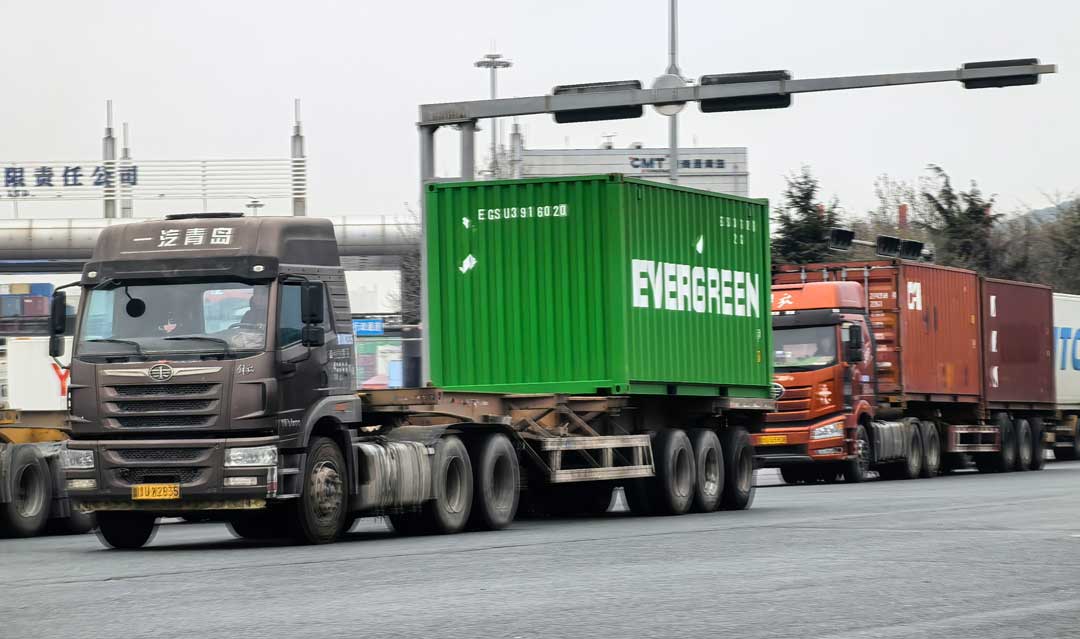
A full container moves from discharge to leaving the terminal by truck through release, clearance, payment, appointment and gate verification, and a delay at any step generates storage charges.
Free time is the number of days a container can be held without pickup or without empty return without charge, with most carriers offering three to seven days on imports, sometimes shortened when the port is busy in peak season. After free time expires, charges accrue daily and usually escalate by tier. The distinction between the two charges is as follows.
| Charge | Where it accrues | Start and end of counting | Common free period |
| Demurrage | Inside the terminal yard | From container discharge and availability until the loaded container leaves the terminal | About 3 to 7 days |
| Detention | Outside the terminal | From the loaded container leaving the gate until the empty is returned to the designated depot | About 3 to 7 days |
The US Federal Maritime Commission (FMC) has specific rules on the assessment and invoicing of demurrage and detention under 46 CFR Part 541, fully effective from May 28, 2024. The rules require invoices to state the container number, bill of lading number, free time days, charge start and end dates and a dispute contact; where an item is missing the billed party may decline to pay. The billing party must issue the invoice within 30 calendar days of charges ceasing to accrue, and the billed party has at least a 30 calendar day dispute window. On receiving a charge notice, these details should be checked and disputes raised through the channel shown on the invoice.
A bill of lading showing Los Angeles as the port of discharge indicates only that the cargo has reached the San Pedro Bay area and does not identify the specific pickup point. Multiple terminals in the same port area have different entrances, appointment systems, free storage periods and empty return locations; treating the Port of Los Angeles as a single address when dispatching trucks leads to wrong-point runs and missed appointments.
Check each item in the following order and hand over to the fleet only once exact information is obtained.
Providing the fleet with a complete set of details in one dispatch reduces repeated confirmation: master and house bill of lading numbers, container number and vessel and voyage, arrival notice and terminal name, clearance and release status, last free day, appointment requirements, warehouse delivery address and empty return location. When details are incomplete, the fleet should not judge the terminal from experience, since a wrong-point run costs at best a wasted appointment and trip and at worst the last free day. Gate, appointment and charge rules at the Los Angeles and Long Beach terminals are coordinated and published by the West Coast MTO Agreement (WCMTOA) and can be queried on its website.
Port access at Los Angeles is mainly by road, and main road works directly affect pickup rhythm. The focus is the Vincent Thomas Bridge linking San Pedro with Terminal Island: under the deck replacement program published by Caltrans, the bridge is fully closed from November 2026 for about 16 months, with reopening expected in March 2028 and project investment of about USD 750 million.
The bridge normally carries about 53,000 vehicles a day, of which port-related container trucks account for about 8 percent, roughly 4,500 a day. The Port of Los Angeles states that all terminals remain in normal operation during the closure, with terminal throughput capacity and port rail unaffected; the impact is concentrated in the Terminal Island road drayage leg, with some routes needing detours. The main planned alternative routes are the Commodore Schuyler F. Heim Bridge to the north and the Long Beach International Gateway Bridge to the east with I-710 access. Under environmental review route modeling, some drayage routes may add a dozen or so minutes one way at peak times.
The project does not interrupt port operations but reduces pickup stability: as traffic concentrates on the alternative routes, truck one-way time and variability rise, daily trips per truck fall, and pickup appointments, empty returns and warehouse receiving appointments are more easily missed, with demurrage and detention risk rising accordingly. The corresponding approach is to allow more slack in delivery timing, confirm detour routes with the fleet in advance, and handle the last free day earlier in peak season.
Customs inspection is CBP's verification of entry accuracy rather than a fixed process applied to a shipment. Published industry data puts the US customs inspection rate for ocean imports at roughly 5 percent, higher for sensitive categories; actual selection is determined by CBP's selectivity system and cannot be predicted in advance.
Common inspection methods include document review, X-ray non-intrusive inspection (NII), intensive exam (devanning), agricultural quarantine inspection (AQI, covering plants, food and wood packaging), and anti-terrorism and contraband inspection (A-TCET). Intensive exams normally take place at a Centralized Examination Station (CES), with CES facilities at the Los Angeles/Long Beach port including FCL Logistics, Price Transfer and Cal Cartage, designated and supervised by CBP.
Waiting times vary by method: document review and scanning are usually completed within a few days, intensive exams often exceed a week, and longer in peak season and around holidays. Inspections bring three extra costs: storage charges that continue to accrue during the inspection, vehicle round trips to the CES, and devanning, restuffing and warehousing charges. The way to reduce inspection probability is accurate declaration: correct HS classification, descriptions matching the goods, truthful quantity and value, clear origin marking, and avoiding repeated undervaluation by the same consignee over a short period.
Return shipment means cargo that cannot complete import clearance at destination and is required or arranged to be re-exported. Common causes include document discrepancies, products not meeting US admission requirements such as FDA, FCC or CPSC rules, duties and charges higher than expected leading the buyer to abandon the cargo, and buyer refusal to pay.
On the legal path, cargo that has not completed import clearance may be re-exported under CBP control; in some cases bonded movement to an export port can be requested, with a corresponding bond arrangement such as a Transportation and Exportation (T&E) bond, to complete departure; for cargo already imported with duty paid, eligibility for drawback can be assessed. Before returning, it is advisable to compare the combined cost of four options: local destruction, local resale, transfer to a bonded warehouse for temporary storage pending disposition, and return shipment. Return shipment bears the return ocean freight and destination storage and handling charges already incurred, which are normally not refunded, and requires the original export clearance documents plus proof that the other party agrees to receive the goods. Air return costs are usually far higher than ocean and generally apply only to high-value, time-critical cargo.
As a US port, Los Angeles generally stops container gate operations on federal legal holidays, with customs port offices closed the same day and most terminals and brokers not working. Some terminals arrange weekend or holiday overtime gates in peak season, subject to terminal announcements. There are 11 US federal legal holidays in 2026:
| Date | Day | Holiday |
| January 1 | Thursday | New Year's Day |
| January 19 | Monday | Martin Luther King Jr. Day |
| February 16 | Monday | Presidents' Day |
| May 25 | Monday | Memorial Day |
| June 19 | Friday | Juneteenth |
| July 3 | Friday | Independence Day (July 4 falls on a Saturday, observed on the preceding Friday) |
| September 7 | Monday | Labor Day |
| October 12 | Monday | Columbus Day |
| November 11 | Wednesday | Veterans Day |
| November 26 | Thursday | Thanksgiving Day |
| December 25 | Friday | Christmas Day |
US holiday timing interacts with Chinese export rhythm. Around Lunar New Year and the October National Day holiday, Chinese factories close and shipments concentrate, with carriers cancelling some sailings (blank sailings) around the holidays and space and schedules tightening; the US Thanksgiving and Christmas holidays coincide with the year-end restocking peak, and delivery and pickup slow in the week either side. Building both ends' holidays into planning reduces delay.
Seasonality on the China-US trade is pronounced, with freight rates, space and port congestion fluctuating by month around US retail stocking rhythm and Chinese long holidays.
| Period | Status | Notes |
| January to March | Off-peak | Demand trough after Lunar New Year, lowest rates of the year, relatively ample space and container supply |
| January to February before Lunar New Year | Minor peak | Concentrated shipments before factory closures, with short-term tight space |
| April to May | Flat season | Rates at low levels with stable transit, suited to routine replenishment |
| June to July | Minor peak | E-commerce promotion stocking starts and rates begin to rise |
| August to October | Peak season | Black Friday and Christmas stocking combined, highest rates of the year, tight space and port congestion |
| November to early December | Late peak | Year-end replenishment, rates stay high |
| Late December to early January | Brief off-peak | Demand falls after Christmas and rates drop quickly |
Peak-season increases come from two surcharges: a General Rate Increase (GRI) on base rates and a Peak Season Surcharge (PSS). Beyond price, peak season also brings more rolled cargo, where confirmed space is deferred to a later sailing, and blank sailings, with clearly increased timing variability. The corresponding approach is to sign contracts and lock rates in the off-peak, book four to six weeks ahead of peak season and obtain written space confirmation, and allow one to two weeks of buffer on delivery commitments.
No. Both sit on San Pedro Bay and share the channel, but they are managed by different bodies: Los Angeles by the Los Angeles Harbor Department and Long Beach by the Long Beach Harbor Department, with separate terminals, berths and tariff schedules. The same service may call at either port or both.
Mainly by carrier schedule and delivery address. Truck distances to local Southern California warehouses are similar for both ports; if the delivery address is a Midwest inland point, whether the terminal has on-dock rail must also be confirmed. The actual choice is usually determined by schedule and freight rate rather than by comparing the ports themselves.
From Shanghai and Ningbo, express services run about 11 to 13 days and conventional services about 14 to 18 days; from Yantian and Shekou in Shenzhen, express about 13 to 16 days and conventional about 19 to 25 days. Adding origin operations, destination pickup and inland delivery, door to door typically runs two to four weeks.
Yes. Container terminals at Los Angeles generally operate an advance appointment system for port entry, and trucking companies must book a slot in the terminal or unified appointment system. In peak season slots are tight and usually need booking several days ahead, so the appointment should be locked around the time of cargo release.
A chassis is the trailer frame that carries a container; the truck tractor does not carry one. Chassis are dispatched through a pool, with trucking companies collecting and returning them at designated yards, and some terminals impose additional rules on chassis collection, return and storage.
It depends on the free time offered by the carrier, normally three to seven days on imports and sometimes shortened in peak season. If the container is not picked up within free time, demurrage accrues daily from expiry; if the loaded container is taken out but the empty is not returned on time, detention accrues.
Demurrage is the charge for a container held inside the terminal yard beyond free time; detention is the charge for a loaded container taken out of the terminal whose empty is not returned on time. Both can arise on the same shipment.
Not always. Inspection selection is determined by the selectivity system, and published industry data puts the ocean import inspection rate at roughly 5 percent, higher for sensitive categories. Which shipment is selected cannot be known in advance; what can be done is accurate declaration to lower the probability.
It depends on the method. Document review and X-ray scanning are usually completed within a few days, intensive exams often exceed a week, and longer in peak season and around holidays. Storage charges continue to accrue during the inspection, and progress should be confirmed with the broker.
To the depot designated by the carrier, not necessarily the original pickup terminal. The return address is stated on the delivery order or carrier notice; returning to the wrong location generates extra charges, and return timing is based on actual return.
Yes. The port has six rail yards, of which on-dock rail lets containers load directly onto trains at the terminal, moving through the Alameda Corridor to connect with BNSF and Union Pacific and onward to Midwest and Eastern inland points, commonly used in intermodal (IPI) solutions.
Yes. Cargo that has not completed import clearance may be re-exported under customs control, but return shipment bears the return freight, and destination storage and handling charges already incurred are normally not refunded. Before deciding, compare the combined cost of destruction, resale, bonded storage and return shipment.
The off-peak months of January to March have the lowest rates of the year and are the window for locking peak-season space; April to May prices are low and stable and suit routine replenishment. Before peak season, book four to six weeks ahead and obtain written space confirmation to avoid rolled cargo.
On each terminal's website for the day, and the Port of Los Angeles website also publishes a consolidated container terminal gate schedule. Gate arrangements are adjusted daily by vessel operations and cargo volume, with shifts added or removed on holidays, so a fixed timetable should not be used.
Not from the port of discharge name on the bill of lading alone. Check vessel, voyage and container number against the arrival notice, obtain the specific terminal name and pickup address, and confirm that Customs Release, Carrier Release and terminal Available are all in place before booking and dispatching.
The Last Free Day (LFD) is the cutoff date the carrier allows for free storage or free use of a container. Past that date without pickup, demurrage begins; without empty return, detention begins. The date is shown on the arrival notice or in the carrier's system.
There is a localized effect. The bridge is closed from November 2026 for about 16 months, but all terminals remain in normal operation and terminal throughput capacity and port rail are unaffected; the impact is concentrated in the Terminal Island road drayage leg, with some routes needing detours and possibly a dozen or so minutes more at peak times. Pickup appointment and empty return stability will decline, so delivery timing should be allowed more slack than usual.
Shipping from China to USA
Planning a shipment or just comparing options? Contact our freight experts to get a tailored rate within 24 hours.
