
Milwaukee sits on the west shore of Lake Michigan at the mouth of three rivers, about 75 miles north of Chicago, midway between the Chicago metro and Minneapolis-St. Paul. It is a Great Lakes port with two waterway outlets: east through the Great Lakes and the St. Lawrence Seaway to the Atlantic, and south through the Illinois and Mississippi rivers to the Gulf of Mexico, with the Seaway closed seasonally from late December to late March. CBP water and land port code 3701 falls under the Chicago field office, and the port has no fixed container liner service, so full containers from China enter at an East or West Coast seaport and move in by rail or truck. The sections below cover the port of entry, facilities, heavy-lift capacity, rail and road, waterway channels, tonnage, FTZ 41, transit times from China, and seasonal constraints.
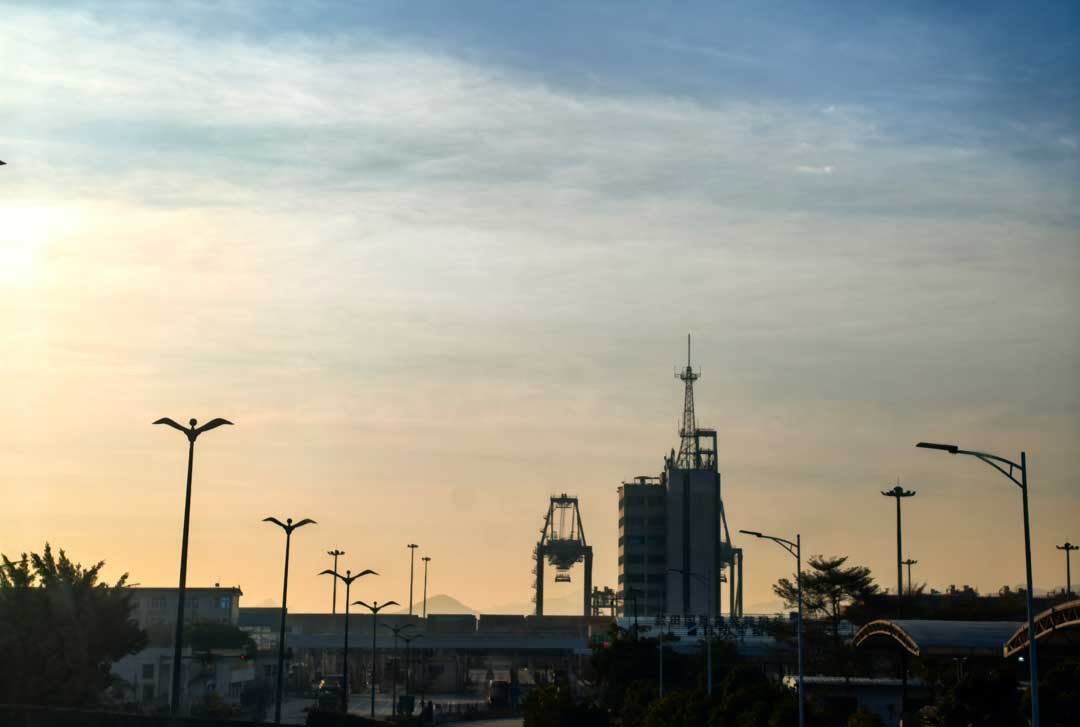
Milwaukee lies at roughly 43 degrees 02 minutes north and 87 degrees 54 minutes west, on the west shore of Lake Michigan, where three rivers meet the lake to form a harbor. The city is about 75 miles from Chicago and sits midway between the Chicago metro and Minneapolis-St. Paul.
Milwaukee's identity in the customs system is a water and land port, code 3701, under the Chicago field office. The port office sits on Howell Avenue in south Milwaukee and covers three business types: Seaway vessel arrivals, general aviation and agricultural quarantine.
| Item | Detail |
| Port code | 3701 |
| Registered name | Milwaukee, Wisconsin |
| Office address | 4915 S. Howell Avenue, Suite 200, Milwaukee, WI 53207 |
| Mailing address | 4915 S. Howell Avenue, Suite 200, Milwaukee, WI 53207 |
| Telephone and fax | +1 414-486-7790; fax +1 414-486-7819 |
| Office hours | Monday to Friday 08:00 to 16:30 Central Time; closed Saturday and Sunday |
| Field office | Chicago |
| Business types | Seaway vessel arrivals, general aviation inspection, commercial air passenger inspection, agricultural quarantine inspection |
| Other Wisconsin ports | Appleton, Green Bay, Kenosha, Manitowoc, Marinette, Racine and Sheboygan, also under Chicago |
The port office keeps short hours, 08:00 to 16:30 on weekdays and closed at weekends. For vessel operations this means Seaway vessel arrival inspections must fall inside office hours, with vessels arriving in the evening usually waiting until the next morning. Agricultural quarantine cargo is handled by a separate window, also on weekdays. Fines and seizures matters can be submitted in writing to the dedicated mailbox 3701-milwaukee-fpf@cbp.dhs.gov.
Milwaukee's infrastructure is configured for breakbulk and liquid cargo, with terminal capacity and storage scale large for a mid-sized lake port. Berths are built to Seaway draft and can take ocean-going vessels that entered the Great Lakes through the St. Lawrence Seaway.
| Item | Detail |
| Terminal area | 467 acres |
| Berths | 16 Seaway-draft berths, plus a dedicated liquid cargo dock and three cruise berths |
| Vessel conditions | At normal water levels can take vessels of about 8 meters draft and 304.8 meters length; 1,000-foot-class vessels can berth |
| Covered storage | 330,000 square feet, of which about 30,000 square feet is heated |
| Open yard | 65 acres |
| Liquid tank capacity | 330,000 barrels, loadable and dischargeable by vessel, pipeline, rail and truck |
| Bulk facilities | More than 50 acres of dry bulk storage and handling, including four storage domes totaling about 50,000 tons |
| Dock connections | Breakbulk docks are paved and rail-served, supporting storage, sorting, transfer, bagging, palletizing and container devanning and stuffing |
One feature of the facility mix is the balance between covered storage and open yard. About 30,000 of the 330,000 square feet of covered storage is heated, a necessary configuration for a north-central lake port: Wisconsin winters are cold and cargo needing frost protection or constant temperature cannot sit in the open yard. The 65-acre open yard mainly handles weather-resistant bulk such as steel, limestone and slag. The 330,000-barrel liquid tank capacity, loadable by vessel, pipeline, rail and truck, suits chemical and petroleum transfers.
Heavy lift is one of Milwaukee's standout conditions. The port owns a full crane fleet and can take overweight and oversized equipment, cargo that locally serves the wind power, construction machinery and power generation equipment industries.
| Equipment | Lift capacity | Operating conditions |
| Stiff leg derrick | 440,000 pounds (about 200 tons) at a 52-foot boom | Fixed heavy-lift equipment in the port area, mainly for overweight single pieces |
| Crawler cranes | Three units, 300 tons each | Can move to any Seaway-draft berth in the port |
| Mobile crane | 90 tons | Auxiliary lifting for mid-sized equipment and breakbulk |
| Gantry crane | 70 tons | Fixed, suited to regular lifts in the yard |
| City heavy-lift dock | Dedicated heavy-lift berth in the port area | Allows heavy-lift work to be scheduled separately when several vessels are alongside |
| Work boat | 60 feet | In-port operations and vessel maintenance |
The mobility of the crawler cranes deserves separate mention: at most lake ports heavy-lift equipment is fixed at one berth and vessels can only berth where the equipment sits. Milwaukee's crawler cranes can move to any Seaway-draft berth on demand, so heavy-lift work can be scheduled separately even with several vessels in port, giving berth scheduling real flexibility. For importers moving large engineering equipment or receiving wind power components, this directly affects how the vessel call is arranged.
Rail and road access at the port is direct. Both Class I railroads can reach the docks, the drive from the interstate to the main docks takes under five minutes, and extra-long cargo has a simplified passage arrangement.
| Item | Detail |
| Class I railroads | Union Pacific (UP) and Canadian Pacific Kansas City (CPKC) |
| Dock access | Both railroads provide direct-to-dock service and switching; railcars can enter the port area for loading and unloading |
| Interstates | I-94 and I-794 have exit ramps direct to port service roads; under five minutes from the interstate to the main docks |
| Oversize cargo | Improved interstate entrances allow extra-long cargo to enter and leave directly without a city oversize permit |
| Delivery radius | Within 350 miles: Chicago, Minneapolis-St. Paul, Peoria, Des Moines, Moline and Indianapolis |
| Suited cargo types | Steel and metal products, construction and agricultural machinery, project cargo, grain and bulk |
Direct-to-dock service means railcars can enter the port area for loading and unloading, so cargo completes one transfer between vessel and rail without a truck drayage to an off-dock yard first. For steel, machinery and project cargo that moves mainly by rail, this removes one drayage and one lift. On the road side, not needing a city oversize permit is a local convenience: most cities require advance application and a designated route for oversize transport, whereas Milwaukee's port channel lets this cargo pass directly.
Milwaukee's waterway conditions come from two channels: east via the Great Lakes and the St. Lawrence Seaway to the Atlantic, and south via the Illinois and Mississippi rivers to the Gulf of Mexico, giving this port a two-way outlet to sea among northern US lake ports.
| Channel | Direction | Navigation conditions |
| St. Lawrence Seaway | Via Lake Michigan, Lake Huron, Lake Erie and Lake Ontario out the St. Lawrence River to the Atlantic | 1,021 nautical miles to Montreal, about 4.5 days by water; the Seaway has a seasonal closure, usually late December to late March |
| Inland system | South via Lake Michigan, down the Illinois River into the Mississippi River to the Gulf of Mexico | Barge transit to the Gulf about 30 days; this is the northernmost certified Great Lakes port connecting to the inland system |
| Europe liner | Fednav's Falline regular service to and from Europe | Sailings arranged by season |
| Berth draft | 16 Seaway-draft berths | At normal water levels can take vessels of about 8 meters draft |
The two channels differ widely by season. The Seaway is closed in winter, usually late December to late March, when ocean vessels cannot enter or leave the Great Lakes; the inland direction is less exposed to ice and is navigable most of the year, though low water restricts barge loading. When planning cross-quarter deliveries, treat the Seaway closure as a fixed constraint rather than a day-to-day weather call. This is a basic difference between this port and year-round coastal ports.
Milwaukee's annual tonnage is about 2.3 million metric tons, led by dry bulk and steel. 2025 volume rose on the prior year, with a marked increase in Seaway-borne tonnage.
| Item | Detail |
| 2025 total tonnage | 2,322,072 metric tons |
| 2024 total tonnage | 2,232,529 metric tons, up about 4 percent year on year |
| Municipal docks | 2025: 1,906,233 metric tons; 2024: 1,851,276 metric tons |
| Harbor tonnage | 2025: 415,839 metric tons; 2024: 381,253 metric tons |
| Commodity trend | Dry bulk the leading commodity, up about 6 percent; steel up about 2 percent; Seaway-borne tonnage up about 78 percent |
| Main cargo types | Breakbulk, cement, salt, liquid bulk, grain, steel, limestone and slag |
| Annual change | 2025 added one carrier and ten first calls, earning the Robert J. Lewis Pacesetter Award from the Great Lakes and St. Lawrence Seaway association |
The commodity mix follows local industry: Wisconsin has substantial metalworking and machinery manufacturing as well as a large food and beverage processing sector, so steel, grain and cement account for a high share of local volume. The small rise in steel tonnage in 2025 reflects customers stocking ahead of expected tariff increases, meaning local steel import rhythm responds directly to trade policy expectations. Note that this port has no fixed container liner service: full containers mostly enter via East or West Coast ports and move in by rail or truck, and the local tonnage figures reflect breakbulk scale and should not be used to infer container throughput.
Milwaukee's tariff arrangement sits in Foreign-Trade Zone 41, administered by the port authority as grantee, with a service area covering 12 counties in southeastern Wisconsin. For companies that need to store, process or repackage imported components before deciding between domestic sale and re-export, this arrangement can defer duty payment.
| Item | Detail |
| Number | Foreign-Trade Zone 41 (FTZ 41) |
| Approved | September 29, 1978 |
| Grantee | Port of Milwaukee |
| Service area | 12 counties: Dodge, Fond du Lac, Jefferson, Kenosha, Milwaukee, Ozaukee, Racine, Rock, Sheboygan, Walworth, Washington and Waukesha |
| Activation cap | 2,000 acres, with 132.46 acres activated |
| Contact and address | Korey Garceau, (414) 286-8133, 2323 S. Lincoln Memorial Dr., Milwaukee, WI 53207 |
| Subzones | Several subzones involving marine engine, construction machinery, home appliance, medical and pharmaceutical companies |
| Main benefits | Duty deferral, duty exemption on re-export, and inverted tariff treatment where the finished product rate is lower than the imported component rate |
Zone 41's service area covers the manufacturing belt of southeastern Wisconsin, and the activated area still has room against the cap. The main benefits are duty deferral and re-export exemption; where the imported component rate exceeds the finished product rate, domestic sale can be processed at the finished product rate, which is the inverted tariff benefit. For local manufacturers that process imported components for re-export, this arrangement can directly reduce tariff cost. Use requires prior authorization plus inventory recordkeeping and entry and exit filing compliance.
Inspection selection is decided by CBP and relates to declaration compliance, history and commodity. Milwaukee's windows are split by business type, with agricultural quarantine on a separate window.
| Window | Detail |
| Port office | 4915 S. Howell Avenue, Suite 200, +1 414-486-7790, weekdays 08:00 to 16:30 Central Time |
| General aviation inspection | Weekdays 08:00 to 16:30, with advance filing as required |
| Commercial air passenger inspection | Handled by Federal Inspection Services, weekdays 08:00 to 16:30 |
| Agricultural quarantine inspection | Weekdays 08:00 to 16:30; applies to grain, feed and animal and plant products |
| Fines and seizures | Dedicated mailbox 3701-milwaukee-fpf@cbp.dhs.gov, fax +1 414-486-7819 |
| Inspection types | Document review, non-intrusive scanning, physical exam, and commodity-specific exams |
| Cost composition | Inspection service fees, dock lifting and handling, devanning and restuffing labor, and storage during inspection, borne by the consignee regardless of the outcome |
Milwaukee's inspection profile follows the commodity mix: grain, feed, animal and plant products and foodstuffs route through the agricultural quarantine window, while steel and machinery are mainly document and physical verification. The way to lower inspection probability is the same as at other ports: declared descriptions matching the goods, values within the normal range for comparable products, no undervaluation or mixed loading, a continuous import record, and documents consistent with marks and labels. General rules on commodity admission and duty rates are covered in the US customs policy and additional tariff section.
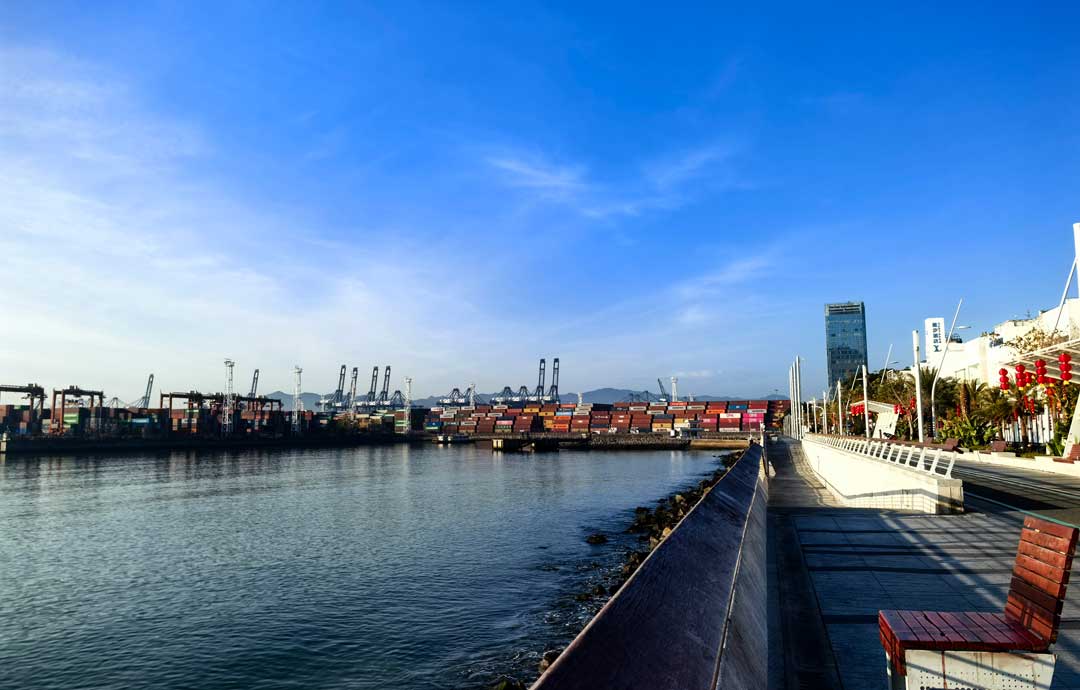
Cargo from China can reach Milwaukee two basic ways: enter via an East or West Coast seaport then move in by rail or truck, or come direct to the port docks on an ocean vessel via the St. Lawrence Seaway. The two differ clearly in time and suited cargo.
| Route | Core steps | Suited to |
| East Coast seaport plus rail | Discharge at New York/New Jersey or Baltimore, then rail north via Chicago to Milwaukee | Full containers; consignees in Wisconsin or the northern Chicago metro |
| West Coast seaport plus rail | Discharge at Los Angeles, Long Beach, Seattle or Tacoma, then rail via Chicago to Milwaukee | Large trans-Pacific volumes, usually at lower freight cost |
| Direct via the St. Lawrence Seaway | Ocean vessel enters the Seaway from the Atlantic and berths directly at the port docks | Bulk and breakbulk, steel and engineering equipment as full vessel cargoes; only within the navigation season |
| Air via Chicago or Milwaukee | Air freight from China to Chicago with truck onward, or direct to Milwaukee Mitchell International Airport | Time-critical samples, warranty returns and emergency parts |
The Seaway direct option only has practical meaning for full vessel cargoes. Seaway navigation is seasonally limited, usually closed late December to late March, and the Seaway has upper limits on vessel dimensions, so routine container cargo does not use this route. The actual practice for full containers is to enter via an East or West Coast port and move in by rail, with local delivery mainly by truck. The port does have container handling conditions with rail and truck direct access, but no fixed container liner service, so full container deliveries should be cleared at the seaport of entry with Milwaukee treated as the inland delivery leg.
Transit times are estimated for the ocean leg and the domestic leg separately, with ocean legs using the same ranges applied on other US port pages.
| Entry route | Ocean transit range | Domestic leg and total |
| Via New York/New Jersey (rail) | About 30 to 40 days | Rail about 3 to 5 days; total about 34 to 46 days |
| Via Baltimore (rail) | About 30 to 40 days | Rail about 3 to 5 days; total about 34 to 46 days |
| Via Los Angeles or Long Beach (rail) | About 14 to 22 days | Rail via Chicago about 5 to 7 days; total about 20 to 30 days |
| Via Seattle or Tacoma (rail) | About 16 to 24 days | Rail via Chicago about 5 to 7 days; total about 22 to 32 days |
| Air | Departs a Chinese airport; about 3 to 7 days end to end | Via Chicago or direct to Mitchell International Airport, trucked on arrival |
Times in the table exclude booking, loading, export clearance and import clearance. Services routing via the Suez Canal are exposed to Red Sea conditions, with Cape of Good Hope diversions occurring from time to time and actual ocean time possibly a week or more longer. Domestic rail timing also needs to account for Chicago hub classification and queues, which can add one to two days in peak season. For winter cargo dates, the Seaway closure and local road snow and ice should both be counted.
Pickup in Milwaukee divides by mode of entry: full containers entering via East or West Coast seaports complete pickup and clearance at the port of entry then move in by rail or truck, while Seaway-direct breakbulk discharges directly at the port docks.
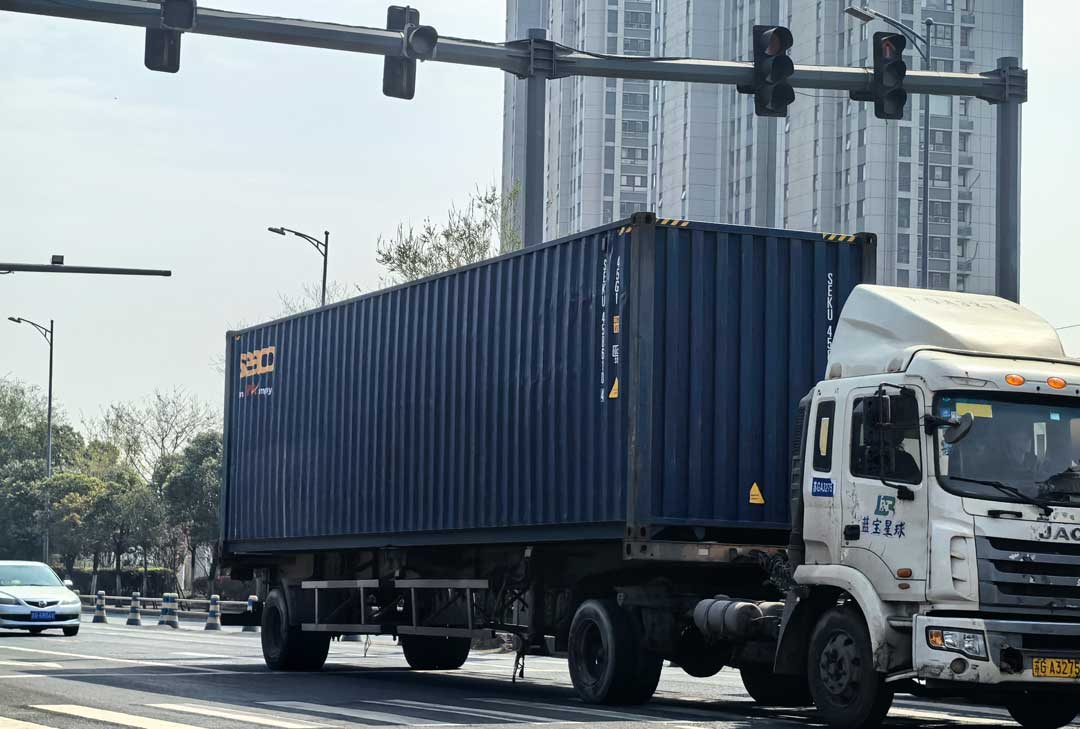
Four delay causes are common: Chicago hub rail classification queues extending the domestic leg; unpaid charges or a hold flag at the port of entry leaving the container unpickable in the system; winter snow and ice delaying road delivery; and breakbulk arrivals conflicting with the port's crane schedule. The first three are predictable, while the fourth needs crane scheduling confirmed with the port before arrival. Winter operations at the port are noticeably weather-dependent, and cargo needing frost protection should go into the heated warehouse.
Milwaukee's operating rhythm is set by three lines: Seaway vessel arrivals, Chicago-direction rail block schedules and the port office's hours. Together they make winter and holiday arrangements more concentrated than in other seasons.
| Period | Arrangement |
| Monday to Friday | Port office 08:00 to 16:30; terminal docks work per berthing plan; rail and road delivery on normal schedules |
| Saturday and Sunday | Port office closed, filings and releases defer to the next working day; docks arrange duty working per vessel arrival needs |
| Federal holidays | Port closed and clearance interrupted; docks may still work vessels but cargo cannot clear |
| Seaway closure | Usually late December to late March; ocean vessels cannot enter or leave the Great Lakes and Seaway-direction business pauses |
| Winter snow and ice | Road delivery and outdoor dock work are weather-dependent and need time allowance |
The periods to avoid most are federal holidays and the Seaway closure. There are 11 US federal legal holidays in total; the full list is in the US holiday section. The Seaway closure is a fixed local constraint, and cross-quarter delivery contracts should write this window into the plan rather than adjusting for weather. Winter road delivery needs separate allowance, and where the delivery plan carries fixed deadlines, two to three working days of buffer should be allowed around holidays and snow advisories.
Milwaukee's volume rhythm is set by the construction season, the agricultural season and the Seaway navigation season together. Its link to the retail peak is weak and its link to temperature and farming calendar is direct.
| Period | Volume pattern | Main drivers |
| January to March | Lowest of the year, Seaway closed, ocean-direction business paused | St. Lawrence Seaway closure; local construction and farming activity dormant |
| April to June | Volumes recover, steel and building materials rise | Seaway reopens, construction season starts, spring fertilizer and machinery purchasing |
| July to September | Annual peak | Construction and infrastructure peak, concentrated grain and agricultural exports, steel restocking |
| October to December | Volumes taper, steel may see advance stocking | Seaway closure approaching, customers completing arrivals before closure; trade policy expectations drive advance stocking |
Three local variables should be planned for: the Seaway closure and reopening dates, which set the annual window for Seaway-direction business; winter temperatures' effect on outdoor dock work and road delivery; and the steel import stocking rhythm, with local volumes responding directly to expected tariff policy changes. Booking rhythm for full containers should follow the seaport of entry's peak season, not the local breakbulk rhythm.
Taken together, Milwaukee's value as a US north-central destination rests on four points.
Three points need attention. First, the port has no fixed container liner service, so full containers must enter via East or West Coast seaports and move in by rail or truck, with Milwaukee covering only delivery and warehousing. Second, the St. Lawrence Seaway has a seasonal closure, usually late December to late March, and Seaway-direction business is arranged within the navigation window. Third, port office hours are short, 08:00 to 16:30 on weekdays, with vessels arriving in the evening waiting until the next morning for arrival inspection.
It is a Great Lakes port with no seacoast. The port area sits on the west shore of Lake Michigan, reaching the Atlantic via the Great Lakes and the St. Lawrence Seaway and the Gulf of Mexico via the Illinois and Mississippi rivers. There are 16 Seaway-draft berths locally, but the Seaway has a seasonal closure, usually late December to late March.
Code 3701, registered name Milwaukee, Wisconsin, office address 4915 S. Howell Avenue, Suite 200, Milwaukee, WI 53207, telephone +1 414-486-7790, fax +1 414-486-7819, open Monday to Friday 08:00 to 16:30 Central Time, closed at weekends. The field office is Chicago.
No fixed container liner service. The port has container handling conditions with rail and truck direct access, but its fixed services are mainly breakbulk and liquid cargo. Full containers normally enter via New York/New Jersey, Baltimore, Los Angeles, Long Beach, Seattle or Tacoma and move in by rail or truck after clearance.
Via New York/New Jersey or Baltimore the usual range is about 34 to 46 days, of which the ocean leg is about 30 to 40 days and domestic rail about 3 to 5 days; via Los Angeles or Long Beach about 20 to 30 days; via Seattle or Tacoma about 22 to 32 days. By air about 3 to 7 days end to end.
The port owns a 220-ton stiff leg derrick (440,000 pounds at a 52-foot boom), three 300-ton crawler cranes, a 90-ton mobile crane and a 70-ton gantry. The crawler cranes can move to any Seaway-draft berth, so heavy-lift work can be scheduled separately with several vessels alongside.
16 Seaway-draft berths; at normal water levels can take vessels of about 8 meters draft and 304.8 meters length, including 1,000-foot-class vessels, plus a dedicated liquid cargo dock and three cruise berths. The terminal area is 467 acres with 330,000 square feet of covered storage, a 65-acre open yard and 330,000 barrels of liquid tank capacity.
Total tonnage 2,322,072 metric tons against 2,232,529 metric tons in 2024, up about 4 percent, of which municipal docks 1,906,233 metric tons and the harbor 415,839 metric tons. Dry bulk was the leading commodity, up about 6 percent; steel up about 2 percent; Seaway-borne tonnage up about 78 percent. The year added one carrier and ten first calls.
Monday to Friday 08:00 to 16:30 Central Time, closed at weekends. General aviation inspection, commercial air passenger inspection and agricultural quarantine inspection all run the same weekday hours. Fines and seizures matters can be submitted to the dedicated mailbox 3701-milwaukee-fpf@cbp.dhs.gov or by fax to +1 414-486-7819.
Inspection selection is decided by CBP and completed at the dock, yard or warehouse. Related matters can be raised with the port office at +1 414-486-7790. Service fees, lifting and handling, devanning labor and storage during the inspection are borne by the consignee regardless of the outcome. Grain, feed and animal and plant products are handled by the agricultural quarantine window.
Yes, provided the goods have not been consumed or delivered in the United States and remain under customs control. A return requires export clearance in the United States and an import filing in China, and duty-free return of goods in their original condition may be claimed within the prescribed period where the cause is a quality or specification issue. Seaway-direct breakbulk can reload on the same route, while cargo that arrived by rail or truck must first move to an export seaport.
Yes. FTZ 41 was approved on September 29, 1978, with the Port of Milwaukee as grantee; the service area covers 12 counties (Dodge, Fond du Lac, Jefferson, Kenosha, Milwaukee, Ozaukee, Racine, Rock, Sheboygan, Walworth, Washington and Waukesha), with a 2,000-acre activation cap and 132.46 acres activated. The main benefits are duty deferral and duty exemption on re-export.
Mainly breakbulk, steel and metal products, construction and agricultural machinery, project cargo, grain and liquid bulk. This cargo suits either full vessel cargoes direct to the port docks via the St. Lawrence Seaway or direct-to-dock rail handling. Overweight and oversized project cargo can be planned around the port's heavy-lift fleet. Full container consumer cargo is better handled as clearance at the seaport of entry plus local delivery.
Three points. First, the Seaway closure runs usually late December to late March, pausing Seaway-direction business. Second, outdoor dock work and road delivery in winter are affected by snow and ice and need time allowance. Third, cargo needing frost protection or constant temperature should go into the port's heated warehouse of about 30,000 square feet rather than the open yard. Overall arrangements are covered in the China-US freight section.
Shipping from China to USA
Planning a shipment or just comparing options? Contact our freight experts to get a tailored rate within 24 hours.
