
Mobile sits on the north shore of the Gulf of Mexico where the Mobile River meets Mobile Bay, about three hours of steaming from open water, giving the port both deepsea and inland waterway conditions at once. The harbor modernization project completed in October 2025 deepened the ship channel to 50 feet, letting fully loaded 12,000 to 16,000 TEU vessels berth without lightening. Container operations concentrate at a single terminal, APM Terminals Mobile, with six ship-to-shore cranes, 325 reefer plugs and an on-dock ICTF that transfers containers to rail within one business day. Nine railroads converge in the same yard, and CBP seaport of entry code 1901 sits under the New Orleans field office. The sections below cover the terminal, channel conditions, throughput, routings and transit times from China, gates and pickup, rail and barge access, FTZ 82, and seasonal planning.
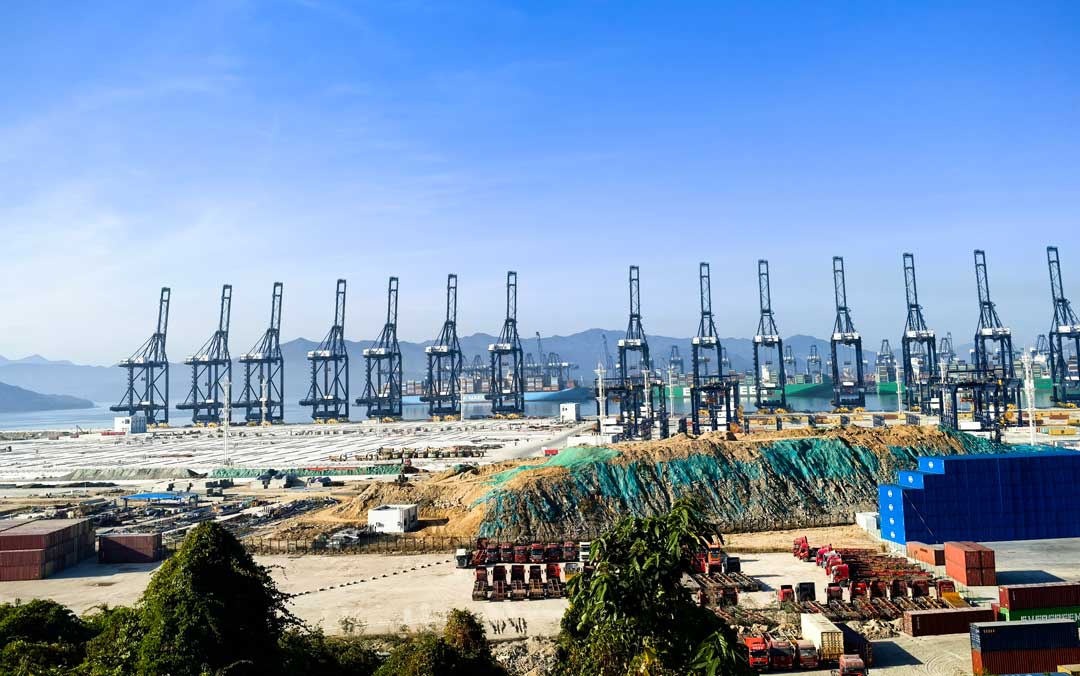
Mobile lies at roughly 30 degrees 41 minutes north and 88 degrees 02 minutes west, on the north shore of the Gulf of Mexico, where the Mobile River runs south through the city into the bay. The location's defining feature is that water and land conditions hold at once: about three hours of steaming south reaches open Gulf water without passing a long bay, while inland the waterway system connects the central US hinterland.
Mobile's identity in the customs system is a seaport of entry, code 1901, registered as Mobile (Including Theodore), Alabama, with jurisdiction including the Theodore industrial canal to the west. The field office is in New Orleans rather than locally.
| Item | Detail |
| Port code | 1901 |
| Registered name | Mobile (Including Theodore), Alabama |
| Registered address | 150 N. Royal Street, Suite 3004, Mobile, AL 36602 |
| Telephone | +1 251-378-7600 |
| Fax | +1 251-378-7680 |
| Port director | Anthony Acrey |
| Office hours | Monday to Friday 08:00 to 16:00 Central Time; closed Saturday and Sunday |
| Field office | New Orleans Field Office |
| Other Alabama ports | 1904 Birmingham and 1910 Huntsville, also under New Orleans |
The field office being out of port means some matters run through New Orleans, such as origin determination disputes, seizure appeals and some trade enforcement cases. Routine import entry, release and inspection are all completed at the Mobile port, so day-to-day operations are unaffected. General rules on commodity admission and duty rates are covered in the US customs policy and additional tariff section.
Mobile's container operations concentrate at a single terminal, APM Terminals Mobile, operated since 2008. The single-terminal structure keeps container flows in one area: port entry, clearance, pickup and rail transfer all complete in the same zone, with no drayage between terminals.
| Item | Detail |
| Terminal | APM Terminals Mobile |
| Operator | APM Terminals, the independent division of A.P. Moller-Maersk, operating since 2008 |
| Terminal nature | Public user container terminal in the Garrows Bend area of the lower port |
| Terminal area | 149 acres |
| Crane configuration | 4 Super Post-Panamax plus 2 Post-Panamax cranes, 6 in total |
| Deepwater berth | 2,400 feet (732 meters) in total length |
| Berth draft | 50 feet (15.2 meters) |
| Vessel capability | 15,000 TEU-class container ships; previously handled 9,000 to 10,000 TEU ships, with 12,000 to 16,000 TEU ships expected under the new channel conditions |
| Reefer capacity | 325 reefer plugs, plus a cold store and reefer stacking area in the port area |
| In-port rail | The terminal has an ICTF (inland container transfer facility); containers can move from ship to rail within one business day |
| Truck efficiency | Round trips average under 45 minutes; in and out under one hour on average |
The single-terminal structure has two direct effects for importers: the same shipment does not land at different terminals on different sailings, so the pickup location is stable, and there is only one set of working windows and appointment rules, simplifying dispatch. Note that APM Terminals Mobile handles both imports and exports with a fairly balanced flow: exports are led by frozen poultry, grain and forest products, imports by metal products, wood products, oversized cargo, consumer goods and chemicals.
Mobile's deepwater condition is the direct result of the 2025 channel project. The work deepened the ship channel from 45 to 50 feet and widened it, so fully loaded large container ships can berth without lightening, a condition at the leading edge among Gulf Coast container terminals.
| Item | Detail |
| Ship channel depth | 50 feet (15.2 meters), reached on October 3, 2025 |
| Previous channel depth | 45 feet |
| Container berth draft | 50 feet; berth total length 2,400 feet |
| Transit mode | Two-way transit after the project, plus nearly 3 miles of new passing channel |
| Second working area | Theodore industrial canal, 40 feet deep, serving oil and gas, chemical and agricultural project cargo |
| First voyage actuals | The first vessel after the new depth, Sakizawa Power, berthed at the McDuffie coal terminal and departed drawing 48.4 feet |
| Remaining work | The turning basin near the container terminal is still under construction, with dredged material used for Dauphin Island shoreline restoration |
Draft matters for vessel type and box count: container liner capacity and draft are directly linked, and every foot of channel depth lets a ship carry another tier. Mobile previously took only 9,000 to 10,000 TEU ships, with some sailings needing lightening before arrival or transfer outside the bay; after deepening, 12,000 to 16,000 TEU ships can enter fully loaded. For importers this changes the space structure and freight rate basis, not just berthing efficiency.
The modernization project is the key to understanding Mobile's changes over the past decade. Authorized by Congress in 2018, dredging began in 2020 and completed in October 2025, seven years in all.
| Item | Detail |
| Project name | Mobile Harbor Modernization Project |
| Implementing bodies | Alabama State Port Authority with the US Army Corps of Engineers |
| Total investment | USD 366 million |
| Timeline | 2018 Congress authorization; 2019 Rebuild Alabama Act with a USD 150 million state match; 2020 dredging start; October 3, 2025 reaching 50 feet; October 13, 2025 ribbon cutting |
| Scope | Ship channel deepening and widening, creating two-way transit and nearly 3 miles of new passing channel |
| Dredged material disposal | Part used for Dauphin Island shoreline restoration; the in-bay disposal plan for long-term maintenance dredging has drawn attention from state environmental groups |
The direct result is that large vessels can berth fully loaded without lightening outside the bay or diverting to other ports. A secondary effect is the port's changing role in the liner network: once vessels can enter fully loaded, carriers are more inclined to list Mobile as a direct port of call rather than a feeder transshipment point. For importers this usually shows up as more direct sailings and fewer transfer legs.
Mobile is a container terminal with marked growth in recent years. In the port's own figures, container throughput has passed 500,000 TEU with a ten-year compound growth rate of 8.5 percent.
| Item | Detail |
| Annual throughput | More than 500,000 TEU |
| Record year | 2024: 629,837 TEU (terminal operator figure) |
| 2025 | 521,431 TEU, down on 2024 |
| Ten-year compound growth | 8.5 percent, up 127 percent on the 2015 baseline and 24 percent above pre-pandemic 2019 |
| Capacity evolution | Current capacity about 500,000 TEU; Phase IV (started October 2024) raises it above 1 million TEU; after Phase V's new berth, berth capacity 1.4 million TEU a year with 7 cranes in total |
| Import commodities | Automotive parts, tires, retail goods, electrical equipment, consumer electronics |
| Export commodities | Coal, frozen poultry, grain, forest products |
The 2025 decline relates to tariff policy changes and the labor negotiation cycle at East and Gulf Coast ports. Importers slowed ordering early in the year on tariff expectations, then concentrated on rush shipments in summer, so the throughput rhythm ran low then high. Note that the port's import and export structure is fairly balanced, with stable export commodities in coal, grain and frozen poultry, so volume swings are generally smaller than at import-dominated ports.
Mobile's service network is led by Asia and Europe directions, extending to Midwest markets by rail. The port's positioning in the liner network is a Gulf Coast direct port of call rather than a feeder port.
| Item | Detail |
| Main route directions | Asia, Europe and Latin America, with Asia most directly linked to Chinese exports |
| Regular carriers | MSC, Maersk, CMA CGM and Hapag-Lloyd all have services covering this port |
| Asia origin ports | Covers Shanghai, Ningbo-Zhoushan and Yantian among main Chinese container ports, entering the Gulf via the Panama Canal |
| Inland extension | Via the in-port ICTF and rail network to Memphis, Chicago, Detroit, Toronto and Montreal |
| Cross-border service | CG Railway runs a Mexico-Mobile rail ferry every four days, linking Coatzacoalcos in both directions |
| Main customer types | Automotive and parts (Hyundai, Mercedes-Benz), retail (Walmart, Amazon), aerospace manufacturing (Airbus) |
For shippers from China, Mobile suits three business types: consignees in Alabama, western Georgia, Tennessee or Mississippi; cargo needing rail distribution to inland hubs such as Memphis and Chicago; and bulky, mid-unit-value goods such as furniture, appliances and auto parts. If the consignee is on the West Coast or in the Northeast, entering via a West or East Coast port is usually more direct, and routing around the Gulf is not economical.
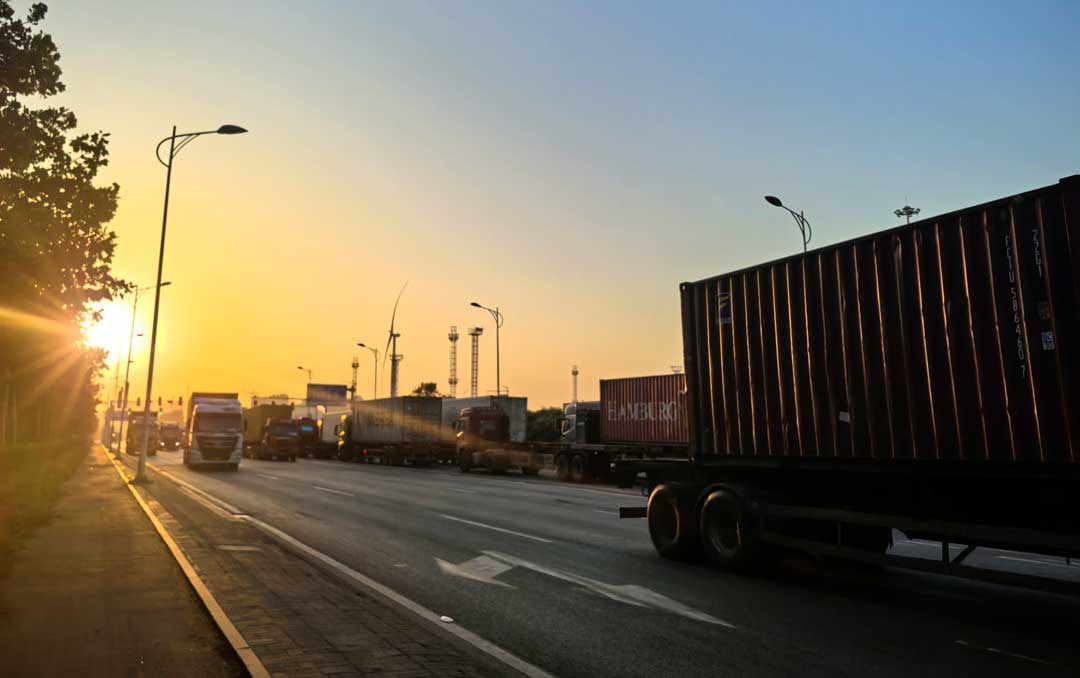
The basic routing from China to Mobile is all-water direct to the Gulf via the Panama Canal; the alternative is a mini-bridge via a West Coast port. The first has lower freight cost, the second shorter transit.
| Chinese origin port | Direct service range | Transshipment range |
| Shanghai | About 25 to 33 days | About 30 to 43 days |
| Ningbo-Zhoushan | About 25 to 33 days | About 30 to 43 days |
| Yantian, Shenzhen | About 26 to 34 days | About 31 to 44 days |
| Xiamen | About 27 to 35 days | About 32 to 45 days |
| Qingdao | About 28 to 36 days | About 33 to 46 days |
| Mini-bridge via a West Coast port | About 22 to 30 days end to end | Discharge at Los Angeles or Long Beach, then rail or truck east |
These ranges are the overlap of multiple forwarders' published transit tables and exclude cut-off, clearance and inland delivery time, and do not constitute a commitment. Three variables affect actual timing: Panama Canal dry-season draft restrictions, more common in El Nino dry seasons, usually adding three to seven days; the June to November hurricane season, when Gulf Coast port areas may close temporarily; and the shipment surge around Lunar New Year, which tightens space and queues port handling. Where the delivery plan falls in these windows, allow an extra one to two weeks beyond the sailing schedule.
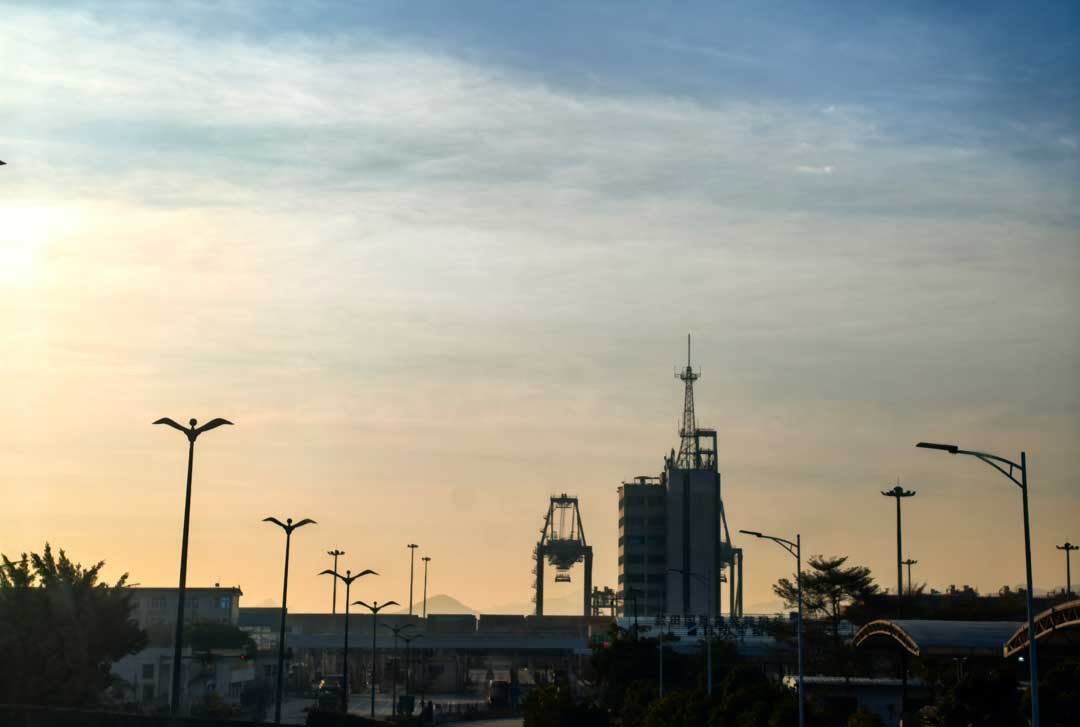
Mobile's pickup flow matches most US container ports, with the difference that operations concentrate at a single terminal and truck turns are fast. The port publishes round-trip times under 45 minutes, clearly shorter than the two to three hour US average.
| Item | Detail |
| Gate operations | Per the terminal's published hours, mainly weekdays; exact hours and Saturday opening per the terminal's same-day publication |
| Appointment requirement | Appointment-based, recommended one to two working days ahead; earlier in peak season |
| Truck turnaround | Round trips average under 45 minutes; in and out under one hour on average |
| Chassis | Collected and returned per carrier and terminal rules; confirm availability at the collection point before dispatch |
| Driver credentials | A valid federal TWIC card is required to enter the port area, with vehicle and driver information registered per terminal requirements |
| Reefer containers | The terminal has 325 reefer plugs; confirm plug-in and temperature records are handed over before pickup |
Three delay causes are common: appointment times that do not match the terminal's working window, requiring rebooking when late; incomplete driver credentials or vehicle registration blocking gate entry; and no chassis available. The last needs attention on the Gulf Coast, since Mobile's total local truck and chassis capacity is smaller than Houston and Miami, with less scheduling slack in peak season, so the collection step should be confirmed separately before dispatch.
Rail is Mobile's most distinctive condition. Nine railroads converge in the same yard, five of them Class I, and containers can complete the ship-to-rail transfer at the in-terminal ICTF.
| Item | Detail |
| Class I railroads | BNSF, Canadian Pacific Kansas City (CPKC), Canadian National (CN), CSX and Norfolk Southern (NS) |
| Short lines | Alabama and Gulf Coast Railway (AGR), CG Railway, Alabama Export, and Terminal Railway Alabama State Docks (TASD) |
| Port switching railroad | TASD is port-owned, with 100 cars, 8 locomotives and 75 miles of track, exchanging cars directly with each Class I railroad at Mobile |
| In-port transfer | The terminal has an ICTF; containers can load directly onto rail at the berth without first exiting the gate to an off-dock yard |
| Inland transit | About 3 days from Mobile to Chicago |
| Inland extension projects | Montgomery ICTF (USD 272 million, 272 acres, CSX as intermodal carrier, operational 2027); Decatur inland intermodal facility under construction |
| Cross-border channel | CG Railway rail ferry every four days, linking Coatzacoalcos, Mexico |
Nine railroads in one yard means line choice. For the Chicago direction, for example, importers can compare schedules and rates across different Class I railroads rather than accepting a single carrier's quote. The port-owned TASD handles in-port placement, linking the terminal, warehouses and industrial sites to each railroad's mainline yard, which is what makes in-port rail work reliably. The practical advice for importers: if the consignee is in the Midwest, price the rail leg at booking, which is usually more economical than finding eastbound trucking after arrival.
Mobile has both deepsea and inland barge conditions. The port area connects directly to the inland waterway system, so breakbulk, liquid bulk and oversized cargo can complete the ocean-to-barge transfer inside the same port area.
| Item | Detail |
| Inland waterway mileage | Reaches nearly 15,000 miles of inland waterway |
| Main waterways | Tennessee-Tombigbee Waterway, Gulf Intracoastal Waterway (GIWW), Mississippi River system |
| Barge operations | The port area has breakbulk and liquid bulk barge transfer facilities with floating cranes and shore-based gantry cranes |
| Suited cargo types | Dry bulk, liquid bulk, breakbulk and project cargo; direct ship-to-barge handling saves one storage step |
| Role | Where the hinterland long haul uses barges instead of short-haul trucks, both cost and emissions on the long leg fall below road |
| Relation to containers | Containers move mainly by rail and truck; barges mainly serve breakbulk and project cargo |
For container-focused importers the barge conditions are usually not used, but they enter consideration in two cases: oversized and overweight equipment, where ship-to-barge direct loading avoids a second lift at the terminal; and bulk raw material or agricultural imports and exports, where barges push the long-haul cost below road. Breakbulk handling and storage arrangements differ from containers, and yard and lifting capacity should be confirmed with the terminal operator in advance.
Road conditions form a cross of two interstate highways. I-10 carries long-haul east-west and I-65 north-south, crossing inside Mobile, with the port area a short distance from both trunk routes.
The Mobile River Bridge under construction is a variable to watch over the next few years. Once work starts, some road sections around the port area will enter construction and traffic lines may adjust in phases. The advice for dispatch planning is to allow extra transit time during the project period and confirm the current detour plan with the fleet.
Mobile's air cargo is handled by two airports, both operated by the Mobile Airport Authority, the same body as the FTZ operator for the port authority's facilities. Both airports' runway conditions can take freighter types.
| Item | Detail |
| Main cargo airport | Mobile Aeroplex at Brookley, runways 9,618 feet and 7,800 feet |
| Second airport | Mobile Regional Airport, runways 8,502 feet and 4,376 feet |
| Cargo flights | Daily FedEx and Amazon freighter arrivals and departures |
| Passenger and cargo | Daily commercial flights to Atlanta, Charlotte, Houston, Dallas and Orlando |
| Under construction | Brookley's new commercial terminal planned to open in 2027, after which the airport becomes Mobile International Airport |
| Industry base | Airbus final assembly line and aerospace parts companies inside the Brookley park, with air cargo demand tied to manufacturing |
Sea and air are handled under the same port code, unlike ports where sea and air belong to separate ports. For importers the practical effect is that the sea and air legs of the same shipment can be filed under one port's rules, with a more unified documentation basis. Mobile's air scale is modest, serving mainly high-priority and high-value cargo plus aerospace manufacturing parts; bulk routine cargo still moves by sea.
Containers are only part of Mobile's business. The port area also handles steel, coal, forest products, finished vehicles and project cargo, with these working areas scheduled separately from the container terminal.
A multi-commodity port area has two effects for importers. First, port-area roads carry container trucks, bulk trucks and project cargo transport at the same time, so dispatch should enter via the terminal's published entrance and avoid straying into other working areas. Second, ro-ro and container berths sit on different shorelines, so vehicle cargo scheduling needs separate confirmation and cannot follow the container sailing schedule. Exports of coal, grain and frozen poultry are Mobile's stable commodities and the reason its import and export structure is fairly balanced.
Inspection selection is decided by CBP and relates to declaration compliance, history and commodity. Mobile's windows are split by business type, with cargo matters separated from agriculture, immigration and seizure desks.
| Window | Telephone | Notes |
| Port switchboard | (251) 378-7600 | Monday to Friday 08:00 to 16:00 Central Time |
| Import specialist | (251) 378-7600 ext. 5 | Import inquiries and documentation |
| Entry and filing | (251) 378-7600 ext. 4 | Fax (251) 378-7681 |
| Inspection | (251) 378-7600 ext. 2 | Fax (251) 378-7680 |
| Agriculture services | (251) 378-7600 ext. 2 | Fax (251) 378-7679 |
| Immigration services | (251) 378-7600 ext. 3 | Crew and personnel matters |
| Seizures and detentions | (251) 378-7600 ext. 6 | Fax (251) 378-7689, Mobile.fpf@cbp.dhs.gov |
| Item | Detail |
| Inspection types | Document review, non-intrusive scanning, physical exam, and commodity-specific exams |
| Common specialized exams | Wood products and wood packaging, pressure vessel equipment, agricultural and food products, chemicals, goods involving intellectual property rights |
| Time impact | Document review usually one to two days; physical exams commonly three to seven business days, longer where sampling or testing is involved |
| Cost composition | Inspection service fees, terminal lifting and handling, devanning and restuffing labor, and storage during inspection, borne by the consignee regardless of the outcome |
| Lowering probability | Declared descriptions matching the goods, values within the normal range for comparable products, no undervaluation or mixed loading, a continuous import record, documents consistent with marks and labels |
Wood products and wood packaging are one category needing advance handling in Mobile imports. Cargo with solid wood packaging must complete heat treatment or fumigation per international plant quarantine standards and bear the mark; untreated or non-compliant packaging is a common cause of inspection and return shipment. Pressure vessels, chemicals and aerospace parts carry additional admission requirements, and any needed registration or certification should be confirmed before shipping.
Mobile's tariff arrangement sits in Foreign-Trade Zone 82. The grantee is the City of Mobile and the operator is the Mobile Airport Authority, a different body from the port authority's deepwater facilities but working in coordination.
| Item | Detail |
| Number | Foreign-Trade Zone 82 (FTZ 82) |
| Grantee | City of Mobile |
| Operator | Mobile Airport Authority, registered address 2062 Old Shell Rd., Mobile, AL 36607 |
| Host port | Mobile seaport of entry (code 1901) |
| Subzone arrangements | Multiple authorized subzones involving Austal shipbuilding, Shell Chemical, Evonik, Syngenta, Sony and Trigeant |
| Main benefits | Duty deferral, duty exemption on re-export, and inverted tariff treatment where the finished product rate is lower than the imported component rate |
Mobile's FTZ is closely tied to local manufacturing. Petrochemical, shipbuilding, paper and aerospace companies around the port area store imported raw materials or components in the zone for processing before domestic sale or re-export, deferring or reducing the duty burden. The main benefits are duty deferral and re-export exemption; where the imported component rate exceeds the finished product rate, domestic sale can be processed at the finished product rate, which is the inverted tariff benefit, with use requiring prior authorization. Related information is covered in the US customs information section.
Mobile's port office and terminal hours should be read separately. The port office works 08:00 to 16:00 on weekdays, while terminal gates and yards work their own published hours, and the two do not fully overlap.
| Period | Arrangement |
| Monday to Friday | Port office 08:00 to 16:00; terminal works published hours, including day shift and some night shift |
| Saturday and Sunday | Port office closed; whether the terminal opens Saturday follows the same-day publication, with Sunday generally not working |
| Federal holidays | Port and terminal follow holiday arrangements; filings, releases and pickup are affected, best avoided |
| Year-end holidays | Holidays overlap the retail peak; terminal storage tightens and gate queues lengthen |
| Hurricane season | June to November; the port area may close temporarily on hurricane warnings and stop work, with arrangements during closure per port authority announcements |
The times to avoid most are federal holidays and the year-end period. There are 11 US federal legal holidays in total; the full list is in the US holiday section. Hurricane season is a Gulf Coast-specific variable: the port area closes on plan during hurricane warnings, stopping gate work and vessel operations, with storage arrangements during closure following port authority announcements. If the delivery plan falls between June and November, allow three to five days of slack in the sailing schedule.
Mobile's volume rhythm is set by three overlapping lines: Asia retail and e-commerce stocking, automotive and manufacturing parts replenishment, and the seasons for export bulk commodities such as coal, grain and frozen poultry. Its swings are smaller than at consumption-import-dominated ports.
| Period | Volume pattern | Main drivers |
| January to February | Post-holiday trough, with a rush of shipments before Lunar New Year | Chinese factory shutdown and restart rhythm; export grain and poultry shipping by season |
| March to June | Relatively flat, with auto parts and manufacturing restocking rising | US southern automotive and manufacturing production cycles |
| July to October | Peak season begins as Asia concentrates year-end stocking shipments | Tight space and rising rates; hurricane season overlaps and the port area may close temporarily |
| November to December | Restocking and clearance together, with concentrated export coal and grain loadings | Year-end promotions and holiday delivery; export bulk annual contracts concentrated at year-end |
Three local variables should be planned for: Panama Canal dry-season draft restrictions adding delay; the June to November hurricane season possibly closing the port area temporarily; and increased large-vessel calls after the new channel, raising berth and yard scheduling density in peak season. Booking in peak season is best placed two to three weeks ahead, with one to two weeks of buffer in the delivery schedule. Overall transport arrangements are covered in the China-US freight section.
Taken together, Mobile's value as a Gulf port of entry rests on four points.
Three points need attention. First, local truck and chassis capacity is smaller than Houston and Miami, with less scheduling slack in peak season, so the collection step should be confirmed separately before dispatch. Second, the port's field office is in New Orleans, so origin disputes and seizure appeals run through New Orleans. Third, export bulk commodities account for a high share, so the import-export box balance shifts with season, and empty return arrangements on some sailings should be confirmed with the carrier in advance.
The port sits in southwestern Alabama between the Mobile River and Mobile Bay on the north shore of the Gulf of Mexico. It is divided into the upper port, main terminal area, lower port and Middle Bay Port, about 3,700 acres of land combined, about three hours of steaming from open Gulf water.
Seaport code 1901, registered name Mobile (Including Theodore), Alabama, registered address 150 N. Royal Street, Suite 3004, Mobile, AL 36602, telephone +1 251-378-7600, port director Anthony Acrey, open Monday to Friday 08:00 to 16:00 Central Time. The field office is in New Orleans.
One. Container operations concentrate at APM Terminals Mobile (operating since 2008), covering 149 acres with 4 Super Post-Panamax and 2 Post-Panamax cranes, a 2,400-foot deepwater berth at 50 feet draft, 325 reefer plugs, and an in-port ICTF for direct ship-to-rail transfer.
The ship channel is 50 feet (15.2 meters), reached on October 3, 2025, up from 45 feet. The project also created two-way transit and nearly 3 miles of new passing channel. The Theodore industrial canal has 40 feet of draft. The turning basin near the container terminal is still under construction, with dredged material used for Dauphin Island shoreline restoration.
All-water via the Panama Canal: Shanghai and Ningbo about 25 to 33 days, Yantian about 26 to 34 days, Xiamen about 27 to 35 days, Qingdao about 28 to 36 days; transshipment routings add five to ten days on that basis. Via a West Coast port on the mini-bridge, about 22 to 30 days end to end. These ranges are the overlap of multiple forwarders' published tables and exclude cut-off, clearance and inland delivery time.
In the port's own figures, annual container throughput has passed 500,000 TEU. The terminal operator reported 2024 as a record year at 629,837 TEU, with 2025 falling to 521,431 TEU. The ten-year compound growth rate is 8.5 percent, up 127 percent on the 2015 baseline and 24 percent above pre-pandemic 2019.
Nine railroads converge in the same yard, five of them Class I: BNSF, Canadian Pacific Kansas City, Canadian National, CSX and Norfolk Southern; and four short lines: Alabama and Gulf Coast Railway, CG Railway, Alabama Export, and the port-owned Terminal Railway Alabama State Docks. The port switching railroad has 100 cars, 8 locomotives and 75 miles of track, with about 3 days from Mobile to Chicago.
Three points. First, an appointment system applies, recommended one to two working days ahead and earlier in peak season. Second, a valid federal TWIC card is required to enter the port area, with vehicle and driver information registered per terminal requirements. Third, local truck and chassis capacity is smaller than Houston and Miami, so confirm availability at the collection point before dispatch. Exact gate and yard hours follow the terminal's same-day publication.
Monday to Friday 08:00 to 16:00 Central Time, closed at weekends. Branch windows: the import specialist and entry windows via (251) 378-7600 ext. 5 and ext. 4; inspection and agriculture services ext. 2; immigration services ext. 3; seizures and detentions ext. 6, Mobile.fpf@cbp.dhs.gov.
Inspections are completed in the terminal yard or a designated warehouse; progress can be checked at (251) 378-7600 ext. 2, fax (251) 378-7680. Service fees, lifting and handling, devanning labor and storage during the inspection are borne by the consignee regardless of the outcome; reefer cargo incurs additional plug-in and temperature control charges.
Yes, provided the goods have not been consumed or delivered in the United States and remain under customs control. A return requires export clearance in the United States and an import filing in China, and duty-free return of goods in their original condition may be claimed within the prescribed period where the cause is a quality or specification issue. Cargo entering via Mobile can reload locally, but confirm first whether the carrier accepts return in the original container.
Yes. FTZ 82 is tied to the Mobile seaport, with the City of Mobile as grantee and the Mobile Airport Authority as operator, registered address 2062 Old Shell Rd., Mobile, AL 36607. The zone has multiple authorized subzones involving shipbuilding, chemicals, agricultural technology and electronics companies. The main benefits are duty deferral and re-export exemption, and domestic sale can be processed at the finished product rate where the imported component rate is higher. Related information is in the US customs information section.
Air cargo is handled by Mobile Aeroplex at Brookley (runways 9,618 and 7,800 feet) and Mobile Regional Airport (runways 8,502 and 4,376 feet), both operated by the Mobile Airport Authority, with daily FedEx and Amazon freighter flights. Sea and air are handled under the same port 1901, with a more unified documentation basis; air from China runs about 3 to 7 days end to end.
Shipping from China to USA
Planning a shipment or just comparing options? Contact our freight experts to get a tailored rate within 24 hours.
