
Nashville sits on the Cumberland River in central Tennessee where three interstate highways meet, a junction that makes the city an inland distribution center between the US Southeast and Midwest, with a day's trucking reach covering a large share of the US population. It is an airport-type CBP port of entry, code 2007 under the New Orleans field office, with the port office inside the main terminal at Nashville International Airport (BNA). Ocean cargo clears at the coastal port of discharge and moves in by rail or truck, with the CSX Nashville intermodal yard at 3086 Sidco Drive (FIRMS P587) handling both domestic and international intermodal traffic. The sections below cover the port of entry, rail and highway conditions, air cargo, FTZ 78, routings and transit times from China, and pickup after arrival.
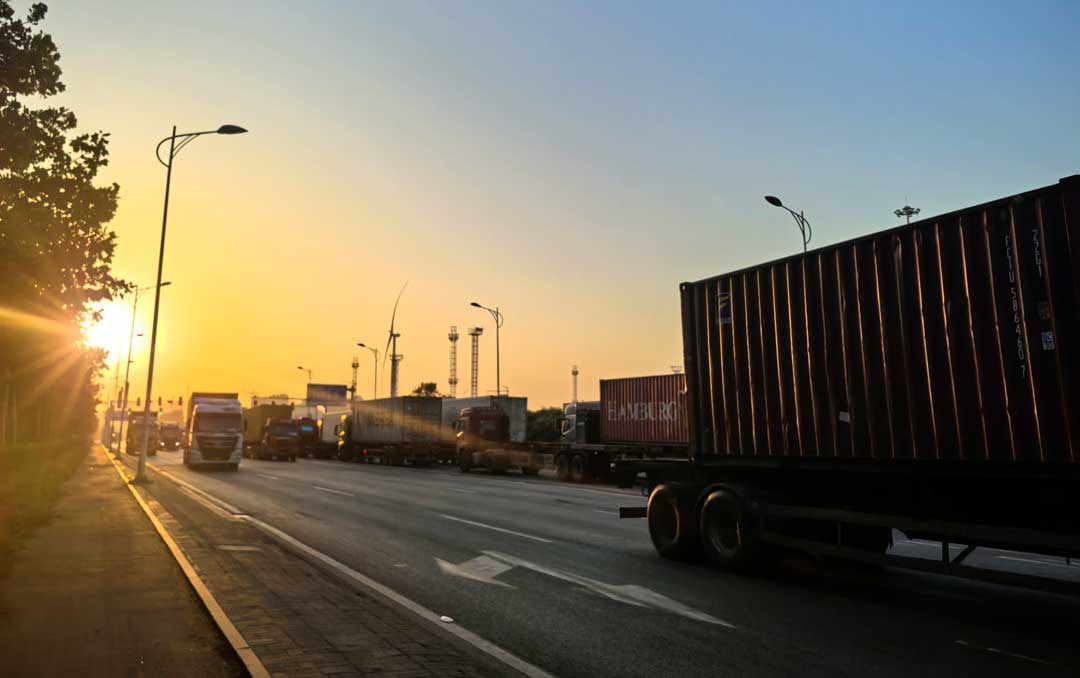
Nashville lies at roughly 36 degrees 10 minutes north and 86 degrees 47 minutes west, on the Cumberland River in central Tennessee. Three interstate highways meet here, and this junction is the geographic basis for the city's role as an inland distribution center.
Nashville's identity in the customs system is a port of entry, code 2007, of the airport type. Its counter hours are long, 08:00 to 22:00 on weekdays and 14:00 to 22:00 at weekends, common for airport-type ports and tied to flight schedules. The field office is in New Orleans.
| Item | Detail |
| Port code | 2007 |
| Registered name | Nashville, Tennessee |
| Port type | Airport-type port; no seaport locally |
| Registered address | 1 Terminal Drive, Nashville, TN 37214 |
| Mailing address | 1 Terminal Drive, Box 406, Nashville, TN 37214 |
| Telephone | +1 615-275-4070 |
| Fax | +1 615-736-7204 |
| Port director | Klaus Werle |
| Office location | First floor of the Nashville International Airport main terminal, opposite the rental car center; vehicle access via I-40 to the Donelson Pike south exit |
| Field office | New Orleans Field Office |
| Other Tennessee ports | 2006 Memphis, 2008 Chattanooga, 2016 Knoxville and 2027 Tri-Cities TN-VA, all also under New Orleans |
The port type settles one thing: cargo imported by sea does not file entry in Nashville, but completes clearance and release at the coastal port where it discharges, then moves to Nashville in bond or released status. The Nashville port mainly handles air cargo entry plus matters relating to local businesses and people. For ocean shipments, the clearance and release port should match the discharge port, a point to settle at booking. General rules on commodity admission and duty rates are covered in the US customs policy and additional tariff section.
Nashville's port office hours are tied to flight schedules, with long weekday counter hours and weekends starting in the afternoon. Air cargo and related matters are handled in these windows, with holidays following federal holiday arrangements.
| Item | Detail |
| Monday to Friday | 08:00 to 22:00 Central Time |
| Saturday and Sunday | 14:00 to 22:00 Central Time |
| Federal holidays | Per federal holiday arrangements; air entry and release affected, best avoided |
| Global Entry enrollment | nashvillettp@cbp.dhs.gov |
| Customs and immigration general inquiries | nashvilleatu@cbp.dhs.gov |
| Flight arrival and departure applications | nashvillecbpflightops@cbp.dhs.gov |
Note the weekend start time. Saturday and Sunday counter hours begin at 14:00, so air cargo arriving in the morning waits until the afternoon for filing and release. Weekday windows run to 22:00, so late-shift flights can connect directly with same-day clearance. Flight arrival and departure applications should be submitted through the dedicated mailbox in advance rather than arranged after the cargo arrives.
Rail is Nashville's core condition as an inland distribution node. Six Class I railroads operate in Tennessee, and local intermodal work concentrates at the CSX Radnor Yard and its attached intermodal terminal.
| Item | Detail |
| Main intermodal yard | CSX Nashville intermodal yard, 3086 Sidco Drive, Nashville, TN 37204 |
| FIRMS code | P587 |
| Operator | CSX Intermodal Terminals, Inc. |
| Cargo handled | Both domestic and international intermodal; available products UMAX, Private Containers and RailPlus |
| Gate hours | Monday to Friday 08:00 to 18:00; Saturday 08:00 to 16:00; closed Sunday |
| Lift hours | Monday to Saturday 08:00 to 16:00 |
| Service line | 800-447-2269 |
| Network | CSX owns 825 route miles in Tennessee plus 160 route miles under trackage rights; the Nashville terminal district is divided into five sections |
| Short lines | Nashville and Eastern Railroad (NERR) and Nashville and Western Railroad (NWR) |
| Class I railroads in state | CSX, Norfolk Southern, Canadian National, BNSF, Union Pacific and Kansas City Southern all operate in Tennessee |
The CSX Nashville intermodal yard handles both domestic and international traffic, which is practical for importers: international containers discharged at a coastal port can move by rail directly to Nashville and be picked up locally, without picking up at the coastal port first and trucking the long haul. Note that gate and lift hours differ: lifting ends at 16:00 while the weekday gate runs to 18:00, so vehicles arriving after 16:00 cannot complete a drop or pickup that day, and dispatch timing should follow the lift hours rather than the gate hours.
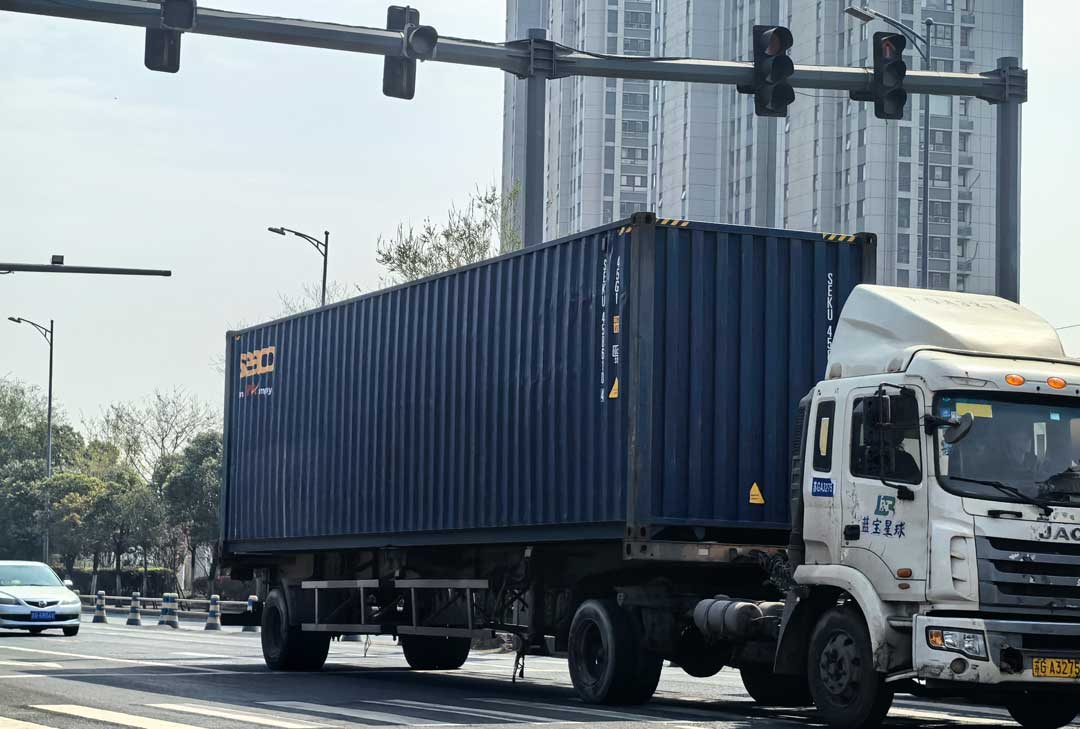
Three interstate highways meet in Nashville, a network structure that makes the city a truck transfer point between the Southeast and Midwest. For importers the practical meaning is that even if cargo is trucked direct after clearance at a coastal port, the transit is predictable.
The value of road conditions shows most directly on full-container delivery. Nashville is not a discharge port, so pickup happens at a coastal port, and after clearance there cargo has two options: rail intermodal to the local yard then pickup, or direct truck from the coastal port to the consignee. The first has lower unit cost and suits full containers and batch cargo; the second is faster and suits scattered and urgent cargo. The dividing line is usually distance, with rail more economical for Midwest and Southeast directions.
Air is one of the Nashville port's main businesses. Nashville International Airport handles both passenger and cargo and has completed two rounds of expansion in recent years, with cargo facilities updated alongside.
| Item | Detail |
| Airport code | BNA (Nashville International Airport, formerly Berry Field) |
| Cargo flights | About 125 domestic and international cargo flights on average daily |
| Expansion project 1 | BNA Vision, investment about USD 1.5 billion, completed at the end of 2023 |
| Expansion project 2 | New Horizon, investment about USD 1.4 billion, expected to complete in 2028 |
| Expansion content | New international arrivals facility, terminal concourse expansion, parking garage and hotel, plus a new air cargo building |
| Port office | First floor of the main terminal, opposite the rental car center |
| Transit positioning | About 3 to 6 days end to end from a Chinese airport, suited to high-priority and high-value cargo |
Air freight suits three situations in Nashville: high-value electronics and medical equipment; automotive and medical manufacturing parts waiting on the production line; and seasonal consumer goods sensitive to time to market. Note that the airport is under expansion, and construction and relocation of the cargo building may affect operating routes in phases, so confirm the current receiving door with the carrier when arranging air shipments.
Nashville has become a concentrated point in the southern US warehousing and fulfillment belt in recent years. The metro area has a cluster of healthcare, automotive, retail and consumer goods regional headquarters or operations centers, with corresponding demand for warehousing and distribution facilities.
For importers from China, Nashville's warehousing conditions affect two business arrangements: first, stocking ahead in an overseas warehouse then distributing to the US Southeast and Midwest; second, delivering to downstream buyers after local labeling, kitting and repackaging. The second can be paired with FTZ 78 for duty deferral, subject to prior authorization. Where cargo needs local processing for re-export, in-zone arrangements can exempt that portion of duty.
Nashville's tariff arrangement sits in Foreign-Trade Zone 78. The grantee is the Metropolitan Government of Nashville and Davidson County, approved in 1982, with a service area covering 14 counties in central Tennessee.
| Item | Detail |
| Number | Foreign-Trade Zone 78 (FTZ 78) |
| Grantee | Metropolitan Government of Nashville and Davidson County |
| Approved | April 2, 1982 |
| Service area | 14 counties: Cannon, Cheatham, Davidson, Dickson, Macon, Maury, Montgomery, Robertson, Rutherford, Smith, Sumner, Trousdale, Williamson and Wilson |
| Magnet sites | Site 6 Nashville International Airport (806 acres) and Site 7 East Gate Business Park |
| Usage-driven sites | Site 13 GAP Inc. (Gallatin), Site 14 DHL Global Forwarding, Site 15 Geodis Logistics |
| Subzone companies | Nissan North America, Toyo Tire, Dorman Products, Lasko Products, CEVA Freight, Petainer Manufacturing USA and Calsonic Kansei, among others |
| Activation cap | 2,000 acres |
| Contact | Mayor's Office of Economic and Community Development, 1 Public Square, Nashville, TN 37201; 615-862-4701 |
Nashville's FTZ has three uses: duty deferral, so imported goods stored in the zone need not pay duty up front; duty exemption on re-export, so goods re-exported from the zone pay no US duty; and inverted tariff treatment, where the imported component rate exceeds the finished product rate, domestic sale can be processed at the finished product rate, subject to prior authorization. Automotive and tire manufacturers already operate in the zone as subzones, showing the arrangement is well established with manufacturing. Related information is covered in the US customs information section.
Cargo from China can reach Nashville three basic ways: a West Coast mini-bridge, an East Coast routing, or a Gulf Coast routing. The three differ in the combination of entry port and inland leg.
| Route | Entry port | Inland leg | Suited to |
| West Coast mini-bridge | Los Angeles, Long Beach and other West Coast ports | Rail east to the Nashville intermodal yard, then pickup | Full-container batch cargo; sensitive to total cost; consignees can accept rail block schedules |
| East Coast routing | Savannah, Charleston, Norfolk and other East Coast ports | Rail or truck north and west | Smaller volumes; shorter inland legs needed; more sailing and service options |
| Gulf Coast routing | Mobile and other Gulf Coast ports | Rail north | Alternative routing; relatively lower port congestion pressure |
| Air routing | Nashville International Airport (BNA) | Direct pickup at the airport, no inland leg | High-priority and high-value cargo; urgent production line parts |
The choice among the three ocean routings comes down to three things: the consignee's state and city, whether the cargo is full-container or LCL, and the acceptable delivery time. If the consignee is in Tennessee, Kentucky, northern Georgia or Alabama, both the East Coast and Gulf Coast directions work; if in the Midwest, the West Coast mini-bridge rail direct is usually smoother. LCL cargo is handled differently, normally devanned at a coastal port and delivered by shared truck, without entering the rail intermodal chain.
Nashville's transit has two legs: ocean from China to the US coastal port, and inland from the coastal port to Nashville. The two are comparable in length, so total transit is directly tied to the choice of discharge port.
| Routing | Usual end-to-end range | Notes |
| Via a West Coast port by rail | About 22 to 30 days | Ocean about 12 to 18 days, rail about 4 to 6 days, including clearance and pickup |
| Via an East Coast port by rail or road | About 30 to 40 days | Ocean about 25 to 35 days, inland leg about 1 to 2 days |
| Via a Gulf Coast port by rail | About 30 to 38 days | Ocean about 25 to 35 days, rail about 1 day |
| Air via Nashville International Airport | About 3 to 6 days | Departs a Chinese airport, including transfer and local clearance |
These ranges are the overlap of multiple forwarders' published transit tables, exclude cut-off and appointment time, and do not constitute a commitment. Two variables need particular attention: inland rail block schedules, since intermodal trains usually run on fixed blocks and missing one can cost several days; and clearance and pickup at the coastal port, where inspections or storage pressure will push the inland leg back. Where delivery time is tight, the East Coast routing's shorter inland leg leaves more room for error.
Pickup in Nashville happens at two places: the local rail intermodal yard, or a coastal port terminal. The two cases have different operating sequences and need to be arranged separately.
| Case | Pickup location | Operating points |
| Rail intermodal arrival | CSX Nashville intermodal yard, 3086 Sidco Drive | Gate weekdays 08:00 to 18:00, Saturday 08:00 to 16:00; lift hours Monday to Saturday 08:00 to 16:00, with vehicles arriving after 16:00 unable to complete work the same day |
| Coastal port pickup then direct delivery | Discharge port terminal yard | Book per that terminal's rules, then truck the long haul to Nashville |
| Air arrival | Nashville International Airport cargo area | Handled per airline and cargo station pickup rules; long port office hours make connections flexible |
| Chassis | Collected and returned per carrier and yard rules | Confirm availability at the collection point before dispatch to avoid trucks waiting empty |
| Credentials | Entering the intermodal yard and airport cargo area | A valid federal TWIC card is required, with vehicle and driver information registered per yard requirements |
| Empty return | Per the carrier's designated location | Some carriers have empty return points in Nashville, others require return at the coastal port; confirm at booking |
Empty return location needs particular attention. A common issue at inland locations is limited return points: if a carrier only accepts returns at the coastal port, empties must be hauled back, and that leg's cost and time should be counted separately. Confirming three things before dispatch avoids most delays: pickup location and appointment window, chassis collection point, and the designated empty return location. Reefers also need confirmation that the port or yard has plug-in capability; if not, inland pickup should not be arranged.
Inspection selection is decided by CBP and relates to declaration compliance, history and commodity. Nashville handles mainly air cargo inspections, while ocean cargo is inspected at the coastal port of discharge.
Air cargo inspections are usually arranged at the airport cargo area or a designated inspection site, working with the airline's cargo station operations. Air cargo storage charges accrue daily, so inspection dwell has a clearer cost impact than at sea, making declaration accuracy for air shipments more worthwhile. If ocean cargo is inspected at a coastal port, the process follows that port's rules and is unrelated to the Nashville port.
Nashville's operating rhythm is the overlap of three sets of hours: the port office's counter hours, the rail intermodal yard's gate and lift hours, and warehouse and consignee receiving times. The gaps between the three are the source of most delays.
| Period | Arrangement |
| Monday to Friday | Port 08:00 to 22:00; intermodal yard gate 08:00 to 18:00, lift 08:00 to 16:00 |
| Saturday | Port 14:00 to 22:00; intermodal yard gate 08:00 to 16:00, lift 08:00 to 16:00 |
| Sunday | Port 14:00 to 22:00; intermodal yard closed, pickup deferred to the next working day |
| Federal holidays | Port and yards follow holiday arrangements; filings, releases and pickup are affected, best avoided |
| Year-end holidays | Holidays overlap the retail peak; local warehouse receiving windows tighten and dispatch needs advance confirmation |
| Winter weather | Central Tennessee sees occasional snow and ice, and road and rail schedules may adjust temporarily |
The periods to avoid most are federal holidays and the year-end period. There are 11 US federal legal holidays in total; the full list is in the US holiday section. Beyond holidays, weekend yard arrangements also matter: lift work ends at 16:00 on Saturday and the yard is closed Sunday, so rail arrivals falling on a weekend defer pickup to the next working day. Winter snow and ice is uncommon locally, but when it occurs road transport reliability drops noticeably, so the delivery plan should carry buffer.
Nashville's volume rhythm is set by three overlapping lines: Asia retail and e-commerce stocking, automotive and manufacturing parts replenishment, and the day-to-day turnover of local distribution business. It fluctuates with coastal port rhythm but by a smaller margin.
| Period | Volume pattern | Main drivers |
| January to February | Post-holiday trough, with a rush of shipments before Lunar New Year | Chinese factory shutdown and restart rhythm; automotive and manufacturing start-of-year production planning |
| March to June | Relatively flat, with manufacturing restocking rising | US southern automotive and manufacturing production cycles; spring retail shelf loading |
| July to October | Peak season begins as Asia concentrates year-end stocking shipments | Tight space and rising rates at coastal ports; inland rail schedules tighten in step |
| November to December | Restocking and clearance together | Year-end promotions and holiday delivery; warehouse and receiving windows tighten |
Three local variables should be planned for: coastal port peak pressure transmitting inland, with rail schedules and pickup appointments tightening together; the shipment surge around Lunar New Year tightening space; and shortened local warehouse receiving windows during year-end holidays, with delivery arrangements needing early coordination. Booking in peak season is best placed two to three weeks ahead, with one to two weeks of buffer in the delivery schedule. Overall transport arrangements are covered in the China-US freight section.
Taken together, Nashville's value as a US Southeast inland distribution destination rests on four points.
Three points need attention. First, Nashville has no seaport, so ocean cargo clears and is released at the coastal port of discharge, and the entry port should be settled at booking. Second, the rail intermodal yard's lift work ends at 16:00 and the yard is closed Sunday, so rail arrivals in those windows defer pickup. Third, inland empty return points are limited, with some carriers requiring empties to be hauled back to the coastal port, and that leg's cost and time should be counted separately.
Nashville sits in central Tennessee on the Cumberland River and is the state capital. The city lies in the transition belt between the Southeast and Midwest, with I-65, I-40 and I-24 meeting downtown. Memphis is about 340 km, Chattanooga about 215 km, Atlanta about 400 km and Chicago about 760 km.
Code 2007, an airport-type port with no local seaport. Registered address 1 Terminal Drive, Nashville, TN 37214, mailing address Box 406 at the same address. Telephone +1 615-275-4070, fax +1 615-736-7204, port director Klaus Werle, under the New Orleans field office.
Monday to Friday 08:00 to 22:00, Saturday and Sunday 14:00 to 22:00 Central Time. The office is on the first floor of the Nashville International Airport main terminal, opposite the rental car center, with vehicle access via I-40 to the Donelson Pike south exit. Global Entry matters can go to nashvillettp@cbp.dhs.gov and general inquiries to nashvilleatu@cbp.dhs.gov.
No. Nashville is an inland city with no seaport or container terminal. Cargo imported by sea completes clearance and release at the coastal port of discharge, then moves to Nashville by rail or truck. The Nashville port mainly handles air cargo entry plus matters relating to local businesses and people.
Via a West Coast port by rail about 22 to 30 days; via an East Coast port by rail or road about 30 to 40 days; via a Gulf Coast port by rail about 30 to 38 days. By air via Nashville International Airport about 3 to 6 days. These ranges are the overlap of multiple forwarders' published tables, exclude cut-off and appointment time, and do not constitute a commitment.
The main intermodal yard is the CSX Nashville intermodal yard at 3086 Sidco Drive, Nashville, TN 37204, FIRMS code P587, operated by CSX Intermodal Terminals, Inc., handling both domestic and international intermodal cargo, service line 800-447-2269. Gate hours are Monday to Friday 08:00 to 18:00, Saturday 08:00 to 16:00, closed Sunday; lift hours are Monday to Saturday 08:00 to 16:00.
Three points. First, lift work ends at 16:00 while the weekday gate runs to 18:00, so dispatch timing should follow the lift hours. Second, the yard is closed Sunday, so rail arrivals over the weekend defer pickup to the next working day. Third, inland empty return points are limited, so confirm at booking whether the carrier accepts local returns. A valid federal TWIC card is required to enter the yard.
Yes. FTZ 78 was approved in 1982, with the Metropolitan Government of Nashville and Davidson County as grantee, covering 14 counties in central Tennessee. Magnet sites include Nashville International Airport and East Gate Business Park, with usage-driven sites including GAP, DHL Global Forwarding and Geodis Logistics. Subzone companies include Nissan North America and Toyo Tire. Related information is in the US customs information section.
Handled by Nashville International Airport (code BNA), with about 125 domestic and international cargo flights on average daily. The airport has expanded through BNA Vision (about USD 1.5 billion, completed at the end of 2023) and New Horizon (about USD 1.4 billion, expected 2028), including a new air cargo building. About 3 to 6 days end to end from a Chinese airport.
Nashville handles mainly air cargo inspections, while ocean cargo is inspected at the coastal port of discharge. The port can be reached at +1 615-275-4070, with general inquiries at nashvilleatu@cbp.dhs.gov. Air cargo storage charges accrue daily, so inspection dwell has a clearer cost impact than at sea. Service fees, lifting and handling, devanning labor and warehousing during the inspection are borne by the consignee.
Yes, provided the goods have not been consumed or delivered in the United States and remain under customs control. A return requires export clearance in the United States and an import filing in China, and duty-free return of goods in their original condition may be claimed within the prescribed period where the cause is a quality or specification issue. Air cargo can be returned directly from Nashville; ocean cargo must load at the coastal port of discharge, and whether the carrier accepts return in the original container should be confirmed at booking.
Shipping from China to USA
Planning a shipment or just comparing options? Contact our freight experts to get a tailored rate within 24 hours.
