
New Jersey's role in the US East Coast port system is the side that binds the Port of New York and New Jersey's deepwater shoreline, port railroad and in-state distribution corridor into one. The container terminals along Newark Bay and the Kill Van Kull are all in New Jersey, and the Exit 8A warehouse belt is in the state too. For China exporters the value is threefold: terminals and rail yards on the New Jersey side, a sizable in-state warehouse and distribution belt, and highway and air links that cover both the New York and Philadelphia metro areas.
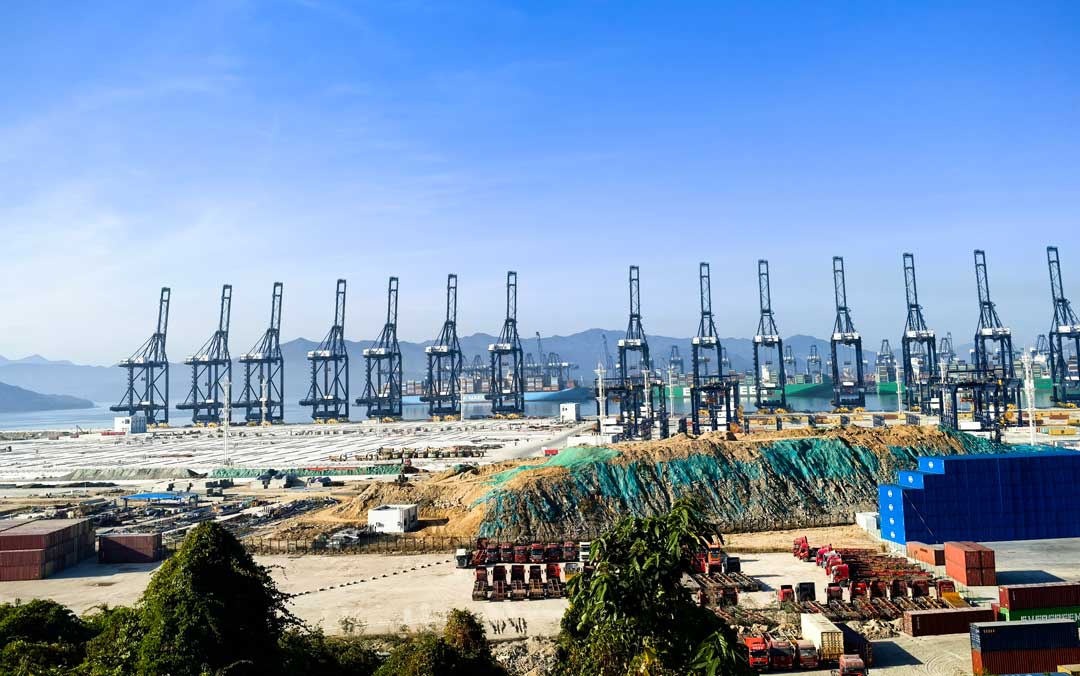
New Jersey is in the mid-Atlantic, north to New York State, west across the Delaware River to Pennsylvania, south to Delaware, east on the Atlantic. Port shoreline concentrates in the northeast corner, along Newark Bay, the Kill Van Kull and the Arthur Kill. The position sits close to two directions: east out via Upper New York Bay, west via the turnpike within about an hour to the Pennsylvania market.
Three modules tie to China business: container terminals, port rail yards, and the in-state warehouse belt. They line a north-south corridor: north Newark and Elizabeth, then south Bayonne, Linden, Carteret, Edison, then the Cranbury Exit 8A belt. This order sets the usual pickup-delivery sequence and common warehouse siting. For the whole port, see the New York-New Jersey port terminal guide.
New Jersey's main customs identity is seaport 4601, registered New York/Newark, New Jersey, with the port office on Corbin Street in Elizabeth. Two more in-state ports cover Perth Amboy and Morristown airport. The supervising field office is in New York.
| Main port code | 4601 |
| Registered name | New York/Newark, New Jersey |
| New Jersey address | 1210 Corbin Street, Elizabeth, NJ 07201 |
| Mailing address | 1100 Raymond Blvd., Newark, NJ 07102 |
| Phone | +1 201-443-0250 |
| Fax | +1 201-443-0550 |
| Port Director | TenaVel T. Thomas |
| Office hours | Monday to Friday 07:00 to 16:00 (Eastern Time), closed weekends |
| Field office | New York Field Office |
| Other in-state ports | 4602 Perth Amboy (205 Jefferson Street, Perth Amboy, NJ 08861); 4681 Morristown airport (15 Airport Road, Morristown, NJ 07960) |
Note the contact flow from 2025: "email first, then phone." Most matters start by email to the matching box; if no reply in 24 hours, call the extension. Container freight station and FTZ have dedicated boxes, as do bonded warehouse and general orders. This means document and storage questions go faster by email than by phone.
| Matter | Contact |
| Port main | +1 201-443-0250, Monday to Friday 07:00 to 16:00 Eastern |
| Import security filing and export | (201) 443-0500 ext 3 (import security and holds) / ext 2 (export) |
| Agriculture | (201) 443-0270 |
| Exam and seizure | (973) 368-6960, newyorkfpf@cbp.dhs.gov |
| Marine cargo problems | NY-NWKPROBRES@cbp.dhs.gov |
| Bonded warehouse | NWKBONDEDWAREHOUSE@cbp.dhs.gov |
| Container freight station | NWKCFS@cbp.dhs.gov |
| Foreign-Trade Zone | NWKFTZ@cbp.dhs.gov |
| General orders | NY-NWKGO@cbp.dhs.gov |
| Vessel entry and exit | NWKEC@cbp.dhs.gov |
Importers rarely feel the field office being out of state. New Jersey-side filing, release and exam all finish within the port; the New York Field Office level handles origin disputes, some trade enforcement and seizure protests. General rules on commodity admission and duty rates follow the US customs import and export policy and the US customs import and export tariff.
New Jersey container work spreads across four terminals, all in the Port of New York and New Jersey but with different owners and operators. The practical point: which terminal a shipment lands at depends on the carrier, not the importer, but the truck route and pickup point differ.
| Terminal | Location | Operator and nature |
| PNCT | Port Newark | Ports America system, public terminal; on-dock rail in the Newark-Elizabeth port area to over 12 US and Canada destinations |
| APM Terminals Elizabeth | Elizabeth (Elizabeth Marine Terminal) | APM Terminals (Maersk independent unit); renewed March 2025 for 33 years to 2062 |
| Maher Terminals | Elizabeth | Largest public terminal in port; serves Ocean Alliance and independents; renewed December 2025 to September 2063 |
| GCT Bayonne | Bayonne (Port Jersey area) | Global Container Terminals; containers, oversize, bulk and ro-ro; closest to the sea |
Three geographic differences: one, sea distance - Bayonne is closer to the sea, less channel; Newark and Elizabeth sit deeper in the bay, slightly longer berth and departure. Two, rail - PNCT has on-dock rail in the terminal, boxes load without exiting gate to an outside yard; Elizabeth's two terminals tie to ExpressRail Elizabeth and ExpressRail Port Jersey. Three, highway exit - Newark and Elizabeth use turnpike exits 13A and 14, Bayonne uses 14A and the port expressway; confirm route by terminal.
The four New Jersey terminals have similar berth conditions, all with 50-foot main berth segments for fully loaded ULCVs. Differences are crane count and yard area.
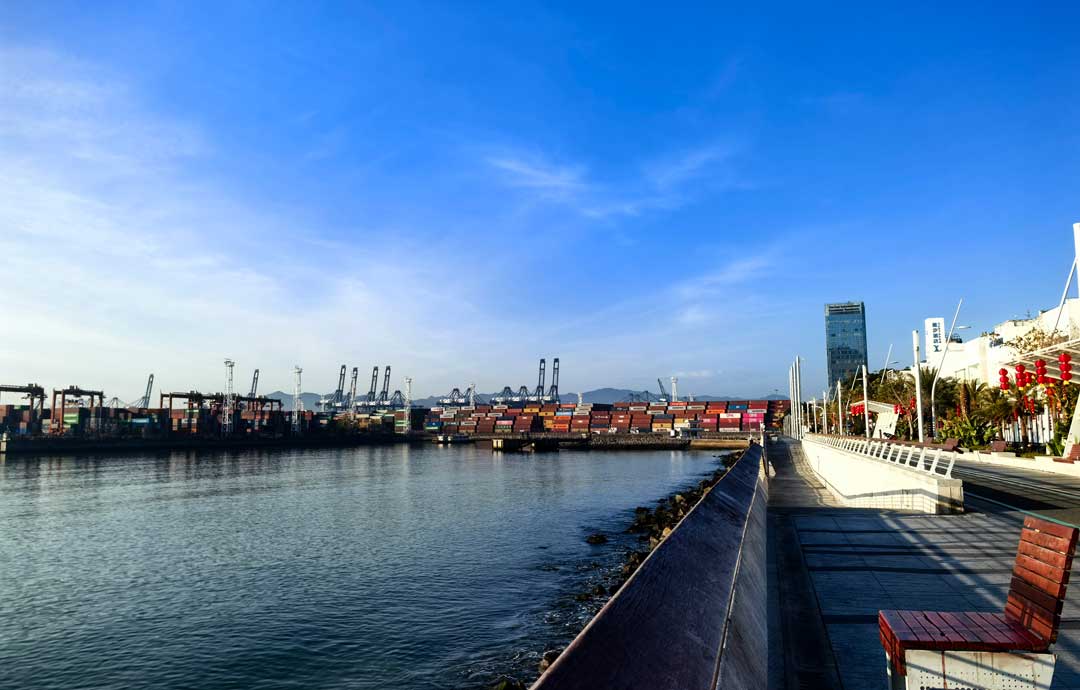
| Terminal | Area | Berth | Cranes | Berth depth |
| PNCT | 272 acres (50-acre yard added) | Port Newark shoreline | Per terminal posting | 50-foot class |
| APM Terminals Elizabeth | 350 acres | 2,678 feet | 14 (4 post-Panamax, 6 Panamax, 4 super-post-Panamax) | 50 ft (3,600 ft) / 45 ft (2,400 ft) |
| Maher Terminals | Per authority lease | Elizabeth shoreline | Per terminal posting | 50-foot class |
| GCT Bayonne | 169 acres | 2,678 feet | 8 (2 Liebherr post-Panamax, 6 ZPMC Panamax) | 50 feet |
Beyond cranes and depth, two configs hit operations more directly. One, reefer plugs: Elizabeth about 1,284 grounded and 680 wheeled, Bayonne 720; confirm plug power in peak ahead. Two, yard height and crane type: PNCT uses automated yard plus 5,000 feet of rail extension; GCT Bayonne mixes rail-mounted and rubber-tired gantries. These set storage location and pickup path per terminal but not the overall flow.
New Jersey rail has two near-dock intermodal yards and one on-dock railroad. The point is to put port boxes straight on line trains, cutting truck dray between port and yard.
| Yard / railroad | Location and scale | Serving railroad |
| ExpressRail Elizabeth (EMT) | Next to APM Elizabeth; 18 working tracks, 43,000 feet; run by Millennium Marine Rail LLC (APM-Maher JV); third-party gate | CSX and Norfolk Southern both |
| ExpressRail Port Jersey | GCT Bayonne near-dock, about 10,000 feet | CSX and Norfolk Southern both |
| PNCT on-dock rail | Newark-Elizabeth port area (rare in-port per operator); to over 12 US and Canada destinations; over 25% of vessel boxes by rail | Per terminal and Class I links |
| Network total | Three yards (Port Newark, Elizabeth, Staten Island NY); over 750,000 boxes per year | To Chicago, Memphis and Ohio; about 1.5 million truck trips saved per year |
Two yards run by one JV and both linked to two Class I railroads - the practical difference is line choice. To Chicago, importers can compare CSX and Norfolk Southern schedules and rates instead of one carrier's quote. Another difference is the gate form: ExpressRail Elizabeth has a third-party gate for rail boxes trucked in, which need not enter the seaport terminal first. For Midwest receivers, quote the rail leg at booking.
New Jersey has a warehouse belt running south along the turnpike from the port through Linden, Carteret and Edison to the Cranbury Exit 8A submarket. This corridor is the common landing for New York metro imports.
| Node | Feature | Asking rent |
| Exits 13A-15 (port) | Next to terminals, cross-dock and short dray | About USD 23.50 |
| Exit 13 (Linden) | South of port, near Arthur Kill | About USD 18.50 |
| Exit 12 (Carteret) | South of port, rail and road | About USD 17.25 |
| Exit 10 (Edison) | Central Middlesex County, near 1,300-plus warehouse buildings | About USD 16.00 |
| Exit 8A (Cranbury, Monroe, South Brunswick) | Largest single industrial submarket in the Northeast; 36-40 ft clear; 60-90 min to New York and Philadelphia | About USD 13.25 |
| Exit 7A (Robbinsville) | Southern end, farthest, lowest rent | About USD 11.75 |
Exit 8A inventory is about 77.14 million square feet, vacancy about 7.8%. This area features large single buildings, 36 to 40 foot clear height, high-turn retail and e-commerce fulfillment, distinct from the cross-dock style near the port. Siting rule: if goods move out in two to three days to Northeast states, near-terminal or Exit 8A both work; if long storage and value-added work, the corridor's south end rent edge is clearer. Asking rents are commercial real-estate statistics, not contract terms.
New Jersey highways are the turnpike and several interstate trunks. Port and warehouse belt sit along the turnpike, so terminal-to-warehouse is usually a short highway run.
The practical effect is dispatch timing. Port-to-Exit 8A drive is short, but turnpike speed drops sharply at rush; pickup-delivery slots usually sit early morning or afternoon. Another variable is bridges and tunnels: cargo to the New York Five Boroughs uses the Lincoln or Holland Tunnel or George Washington Bridge, all with restrictions and time controls, strictest for hazmat and oversize.
Two New Jersey airports are in the CBP port list: Newark Liberty International and Morristown. The former is a major Northeast air hub; the latter handles business jets and charter.
| Main airport | Newark Liberty International (EWR), between Newark and Elizabeth, state's largest |
| Port setup | EWR and port share port 4601; Morristown separate port (4681); plus 4670 UPS Newark and 4671 FedEx (Elizabeth) express ports |
| Construction | New AirTrain Newark, about USD 3.5 billion, about 2.5 miles, expected 2030, linking rail and terminals |
| Cargo base | Airport next to port and Exit 8A belt; air and sea cargo share the same warehouses and distribution |
Sea and air under one port code means uniform document rules: one shipment's ocean and air legs file by the same port rules, no cross-port coordination. The airport next to the port lets one warehouse take both ocean full containers and air break-bulk. Air suits high-time and high-value cargo and production-line parts needing rush; regular volume still goes by sea.
New Jersey duty arrangement centers on Foreign-Trade Zone 49, grantee the Port Authority of New York and New Jersey, spanning several counties, with the main site the New Jersey Newark/Elizabeth Authority marine terminal.
| Zone number | Foreign-Trade Zone 49 (FTZ 49) |
| Grantee | Port Authority of New York and New Jersey |
| Approved | 1979-04-06 |
| Service area | Hudson County, plus parts of Bergen, Essex, Middlesex, Monmouth, Morris, Passaic, Union and Somerset within the port area |
| Main site | Site 001, New Jersey Newark/Elizabeth Authority marine terminal |
| Activated area | About 1,012.74 acres total |
| Subzone firms | GM, Bristol-Myers Squibb, Phillips 66, HP, Firmenich, Movado, Swatch, LVMH, Catalent, Celgene, Kinder Morgan, Getinge, Valbruna and others |
| Main benefit | Duty deferral, duty-free re-export, lower of component or finished rate, weekly entry to cut merchandise processing fee |
FTZ 44 also exists in-state, centered on Morris County, grantee the New Jersey Secretary of State. The two differ: 49 ties to the marine terminal, suiting full-container import, in-zone storage or simple processing then inland sale or re-export; 44 serves in-state manufacturers. The core benefit is duty deferral and re-export; when component duty exceeds finished duty, inland sale can use the finished rate, needing prior authorization. See US customs information.
New Jersey document rules match other US seaports, but a few timing and responsibility points need advance planning; they directly affect release speed in peak.
| Matter | Requirement |
| Import security filing (ISF) | Carrier or agent files within the pre-sail limit; responsibility per US customs rules |
| Manifest pre-filing | Ocean manifest sent ahead per limit; missing blocks discharge and pickup |
| Entry and release | Via ACE; pickup only after release; other agency cargo needs permit or proof |
| In-bond | To another port or bonded warehouse needs bond and filing per in-bond procedure |
| Country of origin marking | Goods marked per rules; bad marking is a common exam and hold cause |
| Wood packaging | Solid-wood packaging must be heat-treated or fumigated with marks |
| Declared value | Transaction value in the normal range for the commodity; under-declaration and split filing raise exam odds |
Worth noting is the ISF. The carrier or agent files it before sail, but data comes from shipper and consignee, so false content hits both carrier and importer. Common ISF problems: vague names, consignee info not matching the actual buyer, and split filing breaking the data match - all turn into exams on arrival. General rules on duty rates and commodity admission follow the US customs import and export tariff.
China cargo to New Jersey has two basic moves: all-water direct via Panama or Suez, and IPI via US West discharge then rail. The trade-off is mainly rate versus time.
| Path | How | Best for |
| All-water to East Coast | China load, via Panama or Suez, direct to New York-New Jersey | Large volume, not extreme time need, fewer transship handoffs |
| US West discharge then rail (IPI) | Discharge at Los Angeles or Long Beach, rail to New Jersey or inland | About a week faster than all-water, accept rail surcharge |
| US West discharge then truck | Discharge at US West then truck east | Smaller volume or tight time, but road cost above rail |
| All-water plus inland rail | Direct to New Jersey then ExpressRail to Midwest inland | Receiver in Chicago, Memphis and Ohio direction |
The Bayonne Bridge was raised in 2017 from 151 to 215 feet, letting fully loaded ULCVs enter Newark Bay and berth New Jersey-side terminals without anchor lightening or transship at another port. For importers this changed the direct-call ship size cap and capacity structure, not just berth efficiency. If the receiver is on the US West Coast or South, entry via a US West or Gulf port is usually more direct; looping to the East Coast is not economic.
China-to-New Jersey ocean transit is graded by load port and ship type. Ranges below are the common overlap of several forwarders' public tables, ocean-leg basis, excluding cut-off, clearance and inland delivery.
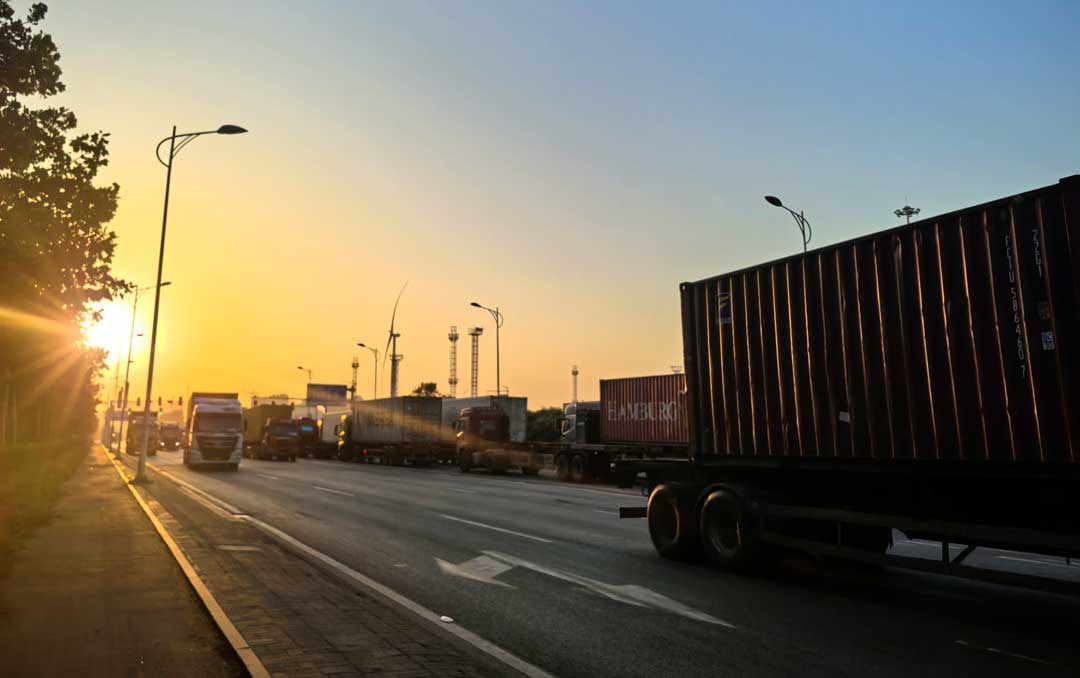
| China load port | All-water common range | US West rail common range |
| Shanghai | About 28 to 35 days | About 24 to 30 days |
| Ningbo-Zhoushan | About 28 to 35 days | About 24 to 30 days |
| Shenzhen Yantian | About 30 to 35 days | About 26 to 32 days |
| Xiamen | About 32 to 37 days | About 27 to 33 days |
| Qingdao | About 30 to 39 days | About 28 to 34 days |
| Few-call express | About 22 to 26 days | Not applicable |
The ranges are ocean-leg; forwarders also give door-to-door 30 to 45 days, the gap from clearance, terminal queue and inland delivery. Main time variables: Panama low-water restrictions, usually three to seven days; US East and Gulf port labor negotiation cycles; and the China Spring-Festival shipping peak. If delivery falls in year-end peak, add one to two weeks beyond sailing.
New Jersey terminal gate flow matches most US container ports, differing in appointment system and third-party gate. The port rail yard has a third-party gate for rail boxes trucked in.
| Gate work | Per terminal posting, mostly weekdays; Saturday per day's posting |
| Appointment | Required; book one to two business days ahead, earlier in peak |
| Chassis | Per carrier and terminal; confirm available chassis before dispatch |
| Driver ID | Valid federal TWIC card; register vehicle and driver per terminal |
| Reefer | Elizabeth about 1,284 grounded and 680 wheeled plugs; Bayonne 720; confirm plug and temperature handoff at pickup |
| Rail yard gate | ExpressRail Elizabeth third-party gate for trucked-in rail boxes |
Common delays: appointment mismatched with terminal window, rebook after late; incomplete driver ID or vehicle registration, blocked at gate; and no chassis. The third needs care at East Coast ports: the New York metro chassis pool turns over fast, tight in peak, so confirm the pickup point before dispatch.
Exams are decided by CBP, tied to filing compliance, import record and commodity. New Jersey exam windows are separate from other matters; marine cargo has a dedicated box.
| Matter | Note |
| Exam types | Document review, non-intrusive scan, physical exam, and commodity-specific checks |
| Common specific checks | Wood products and wood packaging, consumer electronics, textiles and footwear, toys, agri-food, IPR goods, AD/CVD goods |
| Time impact | Document review one to two days; physical exam three to seven business days, longer with sampling |
| Fee structure | Exam service, lift and handling, devanning and reloading labor, storage during exam, borne by importer regardless of result |
| Rail cargo exam | At intermodal yard or designated site; occupies chassis and adds cost during exam |
| Lower probability | Declared name matches goods, value in normal range, no under-declaration or mixed loading, continuous record, document info matches marks and labels |
The cargo mix here links two directions: imports lean to consumer electronics, textiles and home goods; exports to wastepaper, scrap metal and agricultural products. This makes import-export box ratio uneven, with large empty return need. The practical effect is tight empty return points; confirm the carrier's open return site before returning.
New Jersey port and terminal hours differ. Port office is weekdays 07:00 to 16:00; terminal gate and yard run per posting, not fully aligned.
| Period | Work arrangement |
| Monday to Friday | Port 07:00 to 16:00; terminal per posting, some night and early slots |
| Saturday and Sunday | Port closed; terminal per day's posting, Sunday usually no work |
| Federal holidays | Port and terminal per holiday schedule; filing, release and pickup affected, avoid if possible |
| Year-end holidays | Year-end holidays overlap the retail peak; terminal storage tight, gate queue longer |
| Winter weather | December and January blizzards may close port and pause gate; arrangements per port authority notice |
Avoid federal holidays and year-end holidays. The US has eleven federal holidays, in the US holiday overview. Winter weather is local: Northeast blizzards often freeze gates on ice and low visibility, delaying sailings and pickup. If delivery falls in January, add three to five days beyond sailing.
New Jersey volume is led by Asia retail and e-commerce stocking, plus Europe trade. Import-export box gap is large, exports far below imports, setting empty flow direction.
| Period | Volume feature | Main driver |
| January to February | Post-holiday low, a pre-Spring-Festival rush | China plant shutdown and restart; retail digesting year-end stock |
| March to June | Relatively stable, spring restock rises | Retail sales and restock cycle |
| July to October | Peak, Asia year-end stocking concentrates | Tight space, higher rates; mid-September to mid-October annual high |
| November to December | Restock and clear inventory; agri export loads | Year-end promotion and holiday delivery; winter weather may hit port |
Local variables to predict: empty return tightness from import-heavy structure; winter blizzard on gates; and turnpike peak load. Book peak sailings two to three weeks early, with one to two weeks buffer. China-to-US shipping covers ocean and air.
Containers are only part of New Jersey port business. The port also runs ro-ro, dry bulk and liquid bulk in separate areas from container terminals.
| Business | Location and content |
| Ro-ro | Port Jersey auto terminal for finished vehicles; GCT Bayonne also ro-ro |
| Dry bulk | Bayonne dry bulk terminal for coal, salt, aggregate |
| Liquid bulk | Arthur Kill and Linden oil and chemical terminals for refineries and chemical firms |
| Industrial land | Greenville industrial park; Elizabeth industrial park (71 acres) within FTZ 49 |
Multi-cargo affects importers two ways: one, in-port roads mix container trucks, bulk trucks and car carriers, so enter by the terminal's posted gate to avoid wrong areas; two, ro-ro and container berths are different shorelines, vehicle cargo needs its own schedule, not the container sailing. Port auto business fell about 11% year over year in 2025 with vehicle trade shifts; confirm current sailings for finished-vehicle plans.
Combining the above, New Jersey's value as a US East Coast entry port centers on four points.
Points to watch: four operators, carrier decides the terminal, confirm route by sailing; local chassis turn fast and tight in peak, confirm pickup; winter blizzard and turnpike peak swing dispatch time, so buffer the plan.
New Jersey seaport code is 4601, New York/Newark, New Jersey, 1210 Corbin Street, Elizabeth, NJ 07201, phone +1 201-443-0250, hours Monday to Friday 07:00 to 16:00 Eastern. In-state also 4602 Perth Amboy and 4681 Morristown airport; field office is New York.
Four: PNCT at Port Newark (272 acres, over 1.3 million TEU, on-dock rail); APM Terminals Elizabeth (350 acres, 2,678-foot berth, 14 cranes); Maher Terminals (largest public terminal per authority); and GCT Bayonne (169 acres, 2,678-foot berth, 8 cranes).
Two near-dock yards: ExpressRail Elizabeth (18 tracks, 43,000 feet, Millennium Marine Rail JV of APM and Maher) and ExpressRail Port Jersey (about 10,000 feet); both CSX and Norfolk Southern. PNCT adds on-dock rail to over 12 US and Canada destinations. The network of three yards moves over 750,000 boxes per year.
The New Jersey Turnpike exit 8A industrial submarket covering Cranbury, Monroe and South Brunswick, considered the Northeast's largest single industrial submarket. Standard 36 to 40 foot clear height, 60 to 90 minutes to New York and Philadelphia. Q4 2025 asking rent about USD 13.25 per square foot NNN; inventory about 77.14 million square feet.
All-water via Panama or Suez: Shanghai and Ningbo about 28 to 35 days, Shenzhen Yantian about 30 to 35, Xiamen about 32 to 37, Qingdao about 30 to 39; few-call express as short as 22 to 26. US West discharge plus rail total about 24 to 30 days. Ocean-leg basis, excluding cut-off, clearance and inland delivery.
Port authority 2025: total 8,897,531 TEU, laden 5,955,798 up 2.8% year over year, second in the US by laden; inbound laden 4,513,966, outbound 1,441,832; rail volume up 12.4%. Port-related jobs over 580,000 across New York, New Jersey and Pennsylvania.
The Bayonne Bridge is the under-pass channel into Newark Bay. Raised in 2017 from 151 to 215 feet clearance, about USD 1.6 billion, letting fully loaded ULCVs berth New Jersey-side terminals without anchor lightening or transship at another port.
Yes. FTZ 49 grantee the Port Authority of New York and New Jersey, approved 1979-04-06, covering Hudson and eight counties' port-area parts, main site the New Jersey Newark/Elizabeth marine terminal, activated about 1,012.74 acres. Also FTZ 44 centered on Morris County. See US customs information.
Three points: appointment one to two business days ahead, earlier in peak; valid federal TWIC card and vehicle/driver registration per terminal; New York metro chassis turn fast and tight in peak, confirm available chassis before dispatch. Gate per terminal posting.
Imports far exceed exports: 2025 outbound laden about 1.44 million, inbound about 4.51 million TEU; the gap balances by empty return. Empties concentrate at terminals and carrier return points, limited in peak; confirm return site and window with the carrier before returning.
Yes. A dedicated box handles bonded warehouse matters (NWKBONDEDWAREHOUSE@cbp.dhs.gov); FTZ 49 main site is the New Jersey Newark/Elizabeth marine terminal, where goods can be stored, broken up or simply processed before inland sale or re-export. Prior authorization per customs rules.
December and January Northeast blizzards may close gates on ice and low visibility, delaying sailings and pickup; turnpike time stretches in snow. If delivery falls in these two months, add three to five days beyond sailing and confirm terminal operation before dispatch.
Shipping from China to USA
Planning a shipment or just comparing options? Contact our freight experts to get a tailored rate within 24 hours.
