
Nogales, Arizona sits at the southern tip of the state, facing the Mexican city of the same name in Sonora across the border, a land-border entry point on the US-Mexico line. Its role in the US import system is distinctive: commercial truck flow concentrates at one crossing, fresh produce enters the United States here, and maquiladora production on both sides forms a cross-border supply chain. For China exporters the value is threefold: a highly integrated crossing and exam flow, a cold-chain and distribution cluster packed within a few square miles, and access via Tucson and Phoenix to the US Southwest and inland rail network.
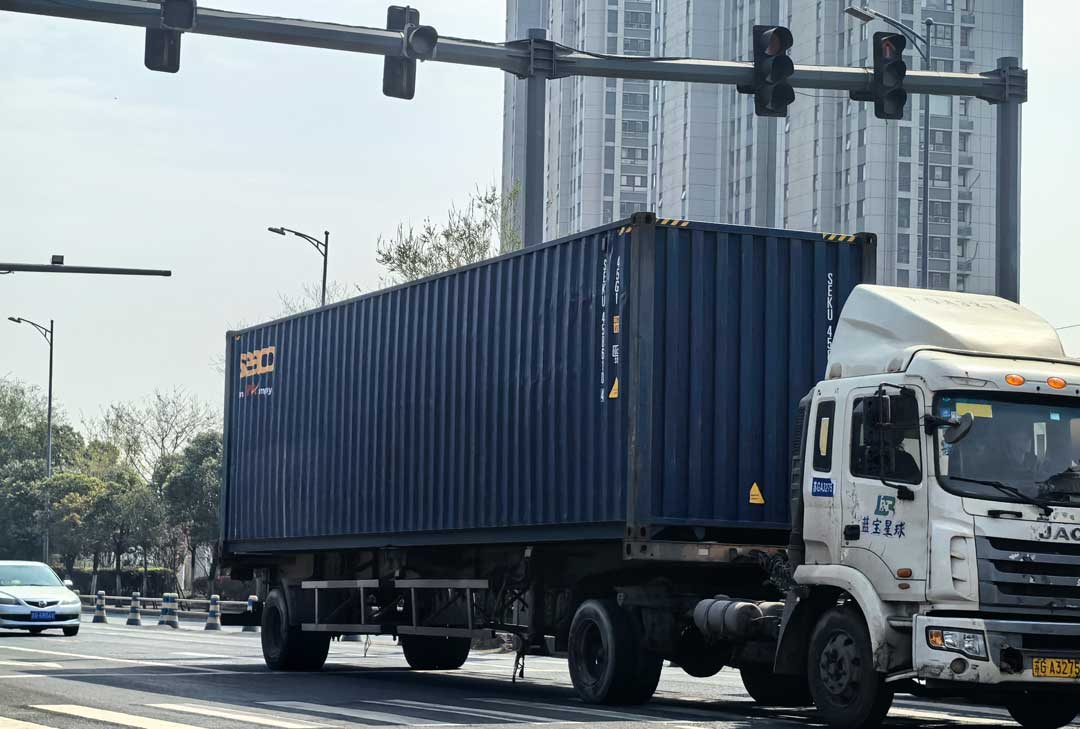
Nogales lies at about 31 degrees 20 minutes north and 110 degrees 56 minutes west, in Santa Cruz County, Arizona, hard against the US-Mexico border. The city sits in the upper Santa Cruz River valley at about 1,200 meters elevation, about 65 miles north of Tucson. The location's trait is a single corridor: northbound land traffic from Mexico enters mainly via the I-19 corridor.
The three modules that matter for China export are one concentrated commercial crossing, a cold-chain and distribution belt clustered at Rio Rico and the industrial park to the west, and the road and rail links through Tucson and Phoenix. They sit within tens of miles, so pickup and delivery timing is relatively controllable. The overall distribution of Southwest US entry points is in the US ports overview section.
In the US customs system Nogales is a land border port, code 2604, registered as Nogales, Arizona. It is a service port with full cargo functions: exam, entry filing, collection and verification. The supervising field office is in Tucson.
| Item | Detail |
| Port code | 2604 |
| Registered name | Nogales, Arizona |
| Port address | 9 North Grand Ave., Nogales, AZ 85621 |
| Broker address | 200 N. Mariposa Rd., Nogales, AZ 85621 |
| Telephone | +1 520-287-1410 |
| Fax | +1 520-287-1420 |
| Port director | Not designated; matters handled by function desk |
| Supervising field office | Tucson Field Office |
| Port type | Land border port, with both cargo and personal exam functions |
One trait is desks split by commodity group. The two import specialist groups differ: group 641 covers plastics, leather, textile and footwear, electronics, machinery, precious metals, toys, art and arms; group 650 covers live animals, food, minerals, chemicals, wood and paper, stone and glass, base metals, vehicles, aircraft and vessels. Confirming the right group before sending usually saves one transfer. General rules on commodity admission and tariff are in the US customs import and export policy section and the US customs import and export tariff section.
| Desk | Contact |
| Port main line | +1 520-287-1410 |
| Import specialist group 641 | (520) 397-2024, plastics, leather, textile and footwear, electronics, machinery, precious metals, toys, art, arms |
| Import specialist group 650 | (520) 397-2026, live animals, food, minerals, chemicals, wood and paper, stone and glass, base metals, vehicles, aircraft, vessels |
| Agriculture | (520) 397-2073 |
| Entry and exam | (520) 397-2050 |
| Export | (520) 397-2138 |
| Seizure and forfeiture | (520) 397-2271, nogalesfpf@cbp.dhs.gov |
| SENTRI / FAST enrollment | (520) 375-5801 |
The port has three channels and one airport. Commercial freight concentrates at one crossing, passengers and pedestrians use the other two, so trucks and personal vehicles do not queue at the same entrance.
| Facility | Road link | Function |
| Mariposa crossing | Arizona State Route 189 to Mexico federal highway 15D | Combined commercial truck and passenger exam; all commercial truck traffic enters here; opened 1973 |
| Dennis DeConcini crossing | Grand Avenue, Nogales | Downtown crossing, part of passenger and retail cargo exam |
| Morley pedestrian crossing | Downtown area | Pedestrians only |
| Nogales International Airport | Northeast side of the city | International flight exam by appointment |
Commercial flow at one crossing is what sets this port apart from most multi-bridge border ports. Concentration brings two results: exam resources and inspection equipment sit at one site, giving strong fresh and refrigerated handling capacity; and trucks can only use one main road, so peak-season queues concentrate at one entrance. The Mariposa crossing completed about USD 250 million of upgrades from 2009 to 2014, mainly to add lanes and exam capacity. About 85 percent of US-Mexico commercial trucks now enter here.
Freight hours shift by season. In winter (usually from mid-to-late October) the truck crossing closes later to match the fresh produce peak. The table shows commonly published hours with the winter notice as reference.
| Channel | Common hours | Winter hours |
| Mariposa freight (northbound main) | Mon-Fri 08:00 to 18:00; Sat 08:00 to 16:00; Sun closed | Mon-Fri 08:00 to 19:00; Sat 08:00 to 17:00 |
| Bonded / southbound export booth | With freight facility hours | Mon-Fri 08:00 to 20:00; Sat 08:00 to 14:00 |
| Rail exam gate | Daily 08:00 to 17:00 | Unchanged |
| Mariposa passenger exam | Daily 06:00 to 22:00 | Unchanged |
| Dennis DeConcini crossing | Daily 00:00 to 12:00 | Unchanged |
| Morley pedestrian | Daily 10:00 to 14:00 | Unchanged |
Note that the port's main table and the seasonal notice do not fully agree on Saturday hours, so the current port notice governs. The practical advice for shippers is to schedule northbound crossing in the early morning, when both exam staffing is fullest and road traffic is lightest. Southbound export and bonded moves have separate hours; Mexico-side in-bond business must be confirmed separately and not by the northbound schedule.
The port has a distinctive exam arrangement: US and Mexican customs jointly examine the same shipment at one site. This started at Nogales to cut double queuing on both sides.
| Arrangement | Detail |
| Unified Cargo Processing | US and Mexican customs officers jointly examine the same shipment at one site; requires the carrier to be C-TPAT certified; CBP reports over three hours saved per exam |
| FAST lane | Dedicated lane at Mariposa for low-risk cargo carried by a C-TPAT carrier, imported by a C-TPAT importer, with a driver holding a valid FAST commercial driver enrollment |
| C-TPAT | Customs-Trade Partnership Against Terrorism; supply-chain security-cleared firms may use the above facilitation |
| Condition | All three parties (carrier, importer, driver) must hold the relevant certification or enrollment; missing any one disables the fast lane |
For importers the meaning is: with a stable supply chain and clean filing, C-TPAT certification opens the fast lane and clearly shortens crossing time; with scattered sources and frequent carrier changes, meeting the three-party condition is hard. Certification itself takes a cycle and internal process work, a medium-term arrangement rather than a temporary clearance trick.
Rail is what separates this port from pure-road border crossings. Union Pacific serves the port and states coverage of all six major US-Mexico crossings; the Mexico side connects via the Ferromex network, meeting at Nogales.
| Item | Detail |
| US side rail | Union Pacific, stating coverage of all six major US-Mexico crossings |
| Mexico side rail | Ferromex network, meeting the US network at Nogales |
| Cross-border intermodal | Supports cross-border intermodal flow, each end carried by its own network |
| Port rail exam gate | CBP rail gate daily 08:00 to 17:00 |
| Inland reach | Via Union Pacific north to Tucson, Phoenix and Midwest hubs |
Rail matters at both ends: southbound it carries Mexican factory finished goods and produce north; northbound it links southern Arizona to West Coast ports and Midwest hubs. Local produce interests are also exploring rail outbound from Nogales to the US East and Midwest as an alternative to long-haul trucking. Rail has less time flexibility than truck but usually lower unit cost, suiting steady volume with non-extreme time needs.
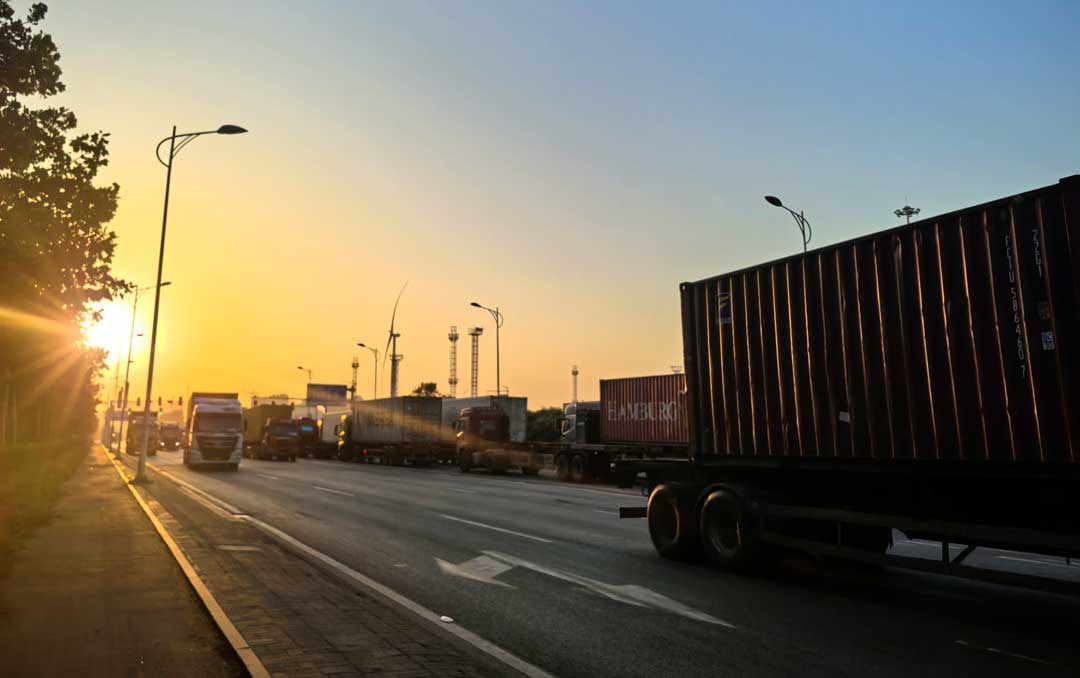
Road access runs on the I-19 corridor as the main axis. Northbound the port has only this one main channel, and traffic queues at the crossing and city streets before reaching the interstate, which directly sets dispatch timing.
The overweight permit has real meaning here. Arizona allows weights above the general limit on designated routes, important for produce because a full box of fruits and vegetables is heavy and often cannot fill under the general limit. The permit is route-specific; portions outside it do not apply, so confirm the permit range for the destination when loading.
Produce is the port's most prominent category. Nogales ranks among the top US ports for Mexico produce tonnage, with about 120,000 produce trucks and some USD 2.5 billion of value entering the United States each year.
| Item | Detail |
| Annual truck volume | About 120,000 produce trucks, about USD 2.5 billion value |
| Peak daily flow | About 300 to 500 produce trucks per day (long-standing industry estimate) |
| Main commodities | Tomatoes, cucumbers, peppers, squash and melons, watermelon, mango, grapes |
| Cold-chain facilities | Over 100 cold-chain and distribution facilities near the port, concentrated at Rio Rico and the Nogales industrial park |
| Distributors | Over 85 produce distributors, mostly family businesses of several generations |
| Industry body | Fresh Produce Association of the Americas headquartered in Nogales, founded 1944, over 100 member firms |
| Facility note | Local cold storage is tight; multi-user barcode warehouses, pre-cooling and forced-air cooling are recent investment focus |
Facilities within a few square miles is a condition of this port: after crossing, goods are usually received, examined, sorted, labeled and reloaded within hours, then moved north by reefer truck. The model also fits non-produce: use Nogales as the first break-bulk point after entry, then do value-added work or transfer to a domestic line-haul vehicle. Local cold storage is tight, so book space ahead in peak season; walk-in space is scarce.
A belt of mostly cold-chain, partly general warehouse has formed around the port. Beyond produce, these facilities also take consumer electronics, medical devices, auto parts and industrial goods.
| Type | Use |
| Cold chain and cold storage | Produce receiving, pre-cooling, grading, labeling and re-shipment; most with forced-air or pre-cool units |
| General storage and cross-dock | Receiving and distribution of consumer goods, industrial parts and retail merchandise |
| Multi-user warehouse | Rented by pallet or zone, monthly billing common, suits first trial shipments |
| Industrial park | Expandable parcels at the Nogales industrial park and Rio Rico |
| Agency service | Some distributors offer integrated in-out and foreign-trade-zone service, suiting importers without their own warehouse |
Versus the warehouse belts around West Coast ports, land and rent here are lower, but individual facilities are smaller and cold storage is tight. The common pattern is: first devanning and distribution near a West Coast port, then move the cold-chain or further-processed part to Nogales. Conversely, if the consignee is in Arizona, New Mexico or northern Mexico, using this port as the entry point is usually simpler.
The port's tariff arrangement sits in Foreign-Trade Zone 60, covering all of Santa Cruz County, grantee the Nogales-Santa Cruz County Economic Development Foundation. The zone hosts industrial and light-manufacturing projects.
| Item | Detail |
| Number | Foreign-Trade Zone 60 (FTZ 60) |
| Grantee | Nogales-Santa Cruz County Economic Development Foundation |
| Registered address | 825 N. Grand Avenue, Suite 200, Nogales, AZ 85621 |
| Coverage | All of Santa Cruz County |
| Representative project | North America Trade Center, 1720 W Calle Plata Rd, about 43 acres and about 700,000 square feet of industrial and light-manufacturing space, about 2 miles from the Mariposa crossing |
| Main benefits | Duty deferral, re-export exemption, and inverted tariff where the finished-product rate is lower than the imported-component rate |
The zone's positioning ties to the cross-border processing chain. Mexican-side factories make finished or semi-finished goods that, on entering the United States, can be staged, inspected or lightly processed in the zone before deciding domestic sale or re-export. Core benefits are duty deferral and re-export exemption; where the imported-component rate exceeds the finished-product rate, domestic sale can use the finished-product rate, subject to prior authorization. Related information is in the US customs information section.
Nogales flow is two-way. Northbound is mainly finished goods and produce; southbound mainly raw materials, parts and packaging. This structure makes in-out traffic more balanced than pure-import ports.
| Direction | Main cargo | Daily trucks |
| Southbound (US to Mexico) | Raw materials, parts, packaging, produce (e.g. in-season apples) | About 200 to 300 |
| Northbound (Mexico to US) | Finished goods, fresh produce, medical devices, consumer electronics | About 500 to 600 |
The two sides form a twin-city structure, Arizona Nogales on the north and Sonora Nogales on the south, with maquiladora manufacturing dominant. For China exporters the direct meaning is that this port is not only an entry point but a gateway into northwest Mexico's manufacturing hinterland; conversely, southbound business (e.g. sending China-made parts to a Mexican factory, or packaging materials for local re-export) uses the same process. Per the local development foundation, the produce sector's direct economic impact exceeds USD 30.3 million and 2,500 jobs, rising to 4,000 jobs and USD 437.7 million with indirect and induced effects; maquiladora-related direct impact exceeds USD 20.68 million and 1,000 jobs, rising to 1,500 jobs and USD 304.9 million with indirect and induced effects.
China cargo to Nogales has two basic routes: discharge at a US West Coast port then road or rail into southern Arizona; or discharge at a Mexico Pacific Coast port, move north by Mexico road, then enter at this port.
| Route | How | When to use |
| West Coast port plus road | Discharge at Los Angeles or Long Beach, south via I-10 and I-19 to Nogales | Flexible volume, tight time; road cost relatively higher |
| West Coast port plus rail | Discharge on the West Coast, rail via Union Pacific to Tucson area, then road | Larger volume, unit-cost sensitive; rail less time-flexible than road |
| Mexico Pacific Coast port entry | Discharge at Manzanillo or Lazaro Cardenas, north via Mexico highway 15, enter at Nogales | Consignee in northwest Mexico, or needs Mexico in-country processing |
| Intermodal to inland point | Enter at this port then onto Union Pacific network to Midwest hubs | Consignee in US Midwest with steady volume |
To note: if the consignee is in the United States, the West Coast port route is more direct; routing via a Mexico port suits consignees actually in Mexico or business needing local processing. Using Mexico only as a transit channel adds Mexico-side entry and bonded transport steps, making the process longer than direct US entry.
The ranges below are the common overlap of several forwarders' published transit tables. Ocean leg counts from China port loading; road and rail count from West Coast port discharge; both exclude cut-off and clearance.
| Leg | Usual range | Note |
| China to US West Coast (ocean) | About 12 to 18 days | By origin port and vessel type; express sailings shorter |
| West Coast to southern Arizona (road) | About 1 to 3 days | Via I-10 and I-19 corridor |
| West Coast to Tucson (rail) | About 2 to 4 days | Per carrier current schedule |
| China to Mexico Pacific Coast (ocean) | About 20 to 28 days | Plus Mexico in-country road time |
| Door to door via West Coast | About 18 to 28 days | Excludes cut-off, clearance and final delivery |
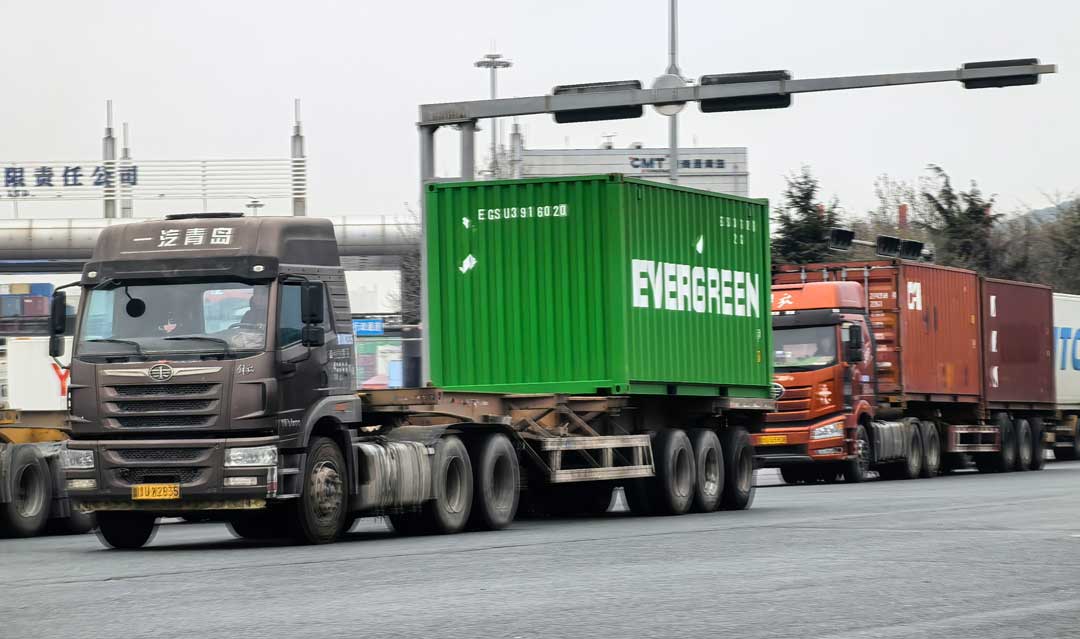
Three variables hit actual time: the fresh-produce peak (winter and spring) concentrates crossing queues; Southwest US summer heat limits road hours, some carriers shift to night driving; and winter snow in Arizona mountains can restrict I-19 and I-10 locally. If delivery falls in the produce peak, add three to five days of buffer beyond the sailing schedule.
This port's pickup flow differs from a seaport: cargo is not picked up at a terminal yard but, after crossing, enters a local warehouse or yard where the parties hand over at the agreed point. This difference sets the order of document and dispatch preparation.
| Item | Detail |
| Crossing window | Per port published freight hours; peak and winter hours differ, governed by current notice |
| Appointment | Warehouse receiving usually needs advance booking, days ahead in produce peak; schedule crossing in early morning |
| Carrier qualification | FAST lane needs a C-TPAT carrier and a driver with a valid FAST enrollment |
| Cold storage space | Local cold storage tight, book ahead in peak season, little walk-in room |
| Overweight transport | Loads above the general limit need an Arizona DOT overweight permit first, on the designated route |
Three common delay causes: treating the port like a seaport pickup point and dispatching to the wrong place; not booking cold storage ahead so arrival has nowhere to go in peak; and not confirming reefer temperature records and power at handoff, making later quality disputes hard to trace. The third is common in produce; list the temperature record separately on each shipment's handoff sheet.
Exams are decided by CBP and relate to filing compliance, import record and commodity. Exam resources concentrate at the Mariposa site, with strong fresh and refrigerated handling capacity.
| Item | Note |
| Exam types | Document review, non-intrusive scan, physical exam, and commodity-specific exams |
| Common specific exams | Fresh produce (plant quarantine and food safety), wood packaging, textile and footwear, electronics and toys, auto parts and medical devices |
| Multi-agency joint exam | Produce examined at Mariposa by agriculture, food safety and customs together at one site, staffed for high-volume reefer flow |
| Time impact | Document review usually one to two days; physical exam commonly three to seven business days, longer with sampling or testing |
| Cost | Exam service, handling and devanning labor, storage during exam, borne by the consignee regardless of outcome |
| Lowering probability | Description matching goods, value within the normal range, no undervaluation or mixed loading, continuous import record, documents matching marks and labels |
Produce exams here focus on plant quarantine and food safety, mostly at one site, cutting multi-location trips but meaning a pick can clash with produce time pressure. The practical move is full product data and quarantine certificates in advance, and arrival in the morning to leave same-day time for possible exam.
Port hours and local warehouse hours must be read separately. The freight crossing extends in winter; warehouse and cold-storage receiving follow their own schedules, not fully overlapping.
| Period | Arrangement |
| Monday to Friday | Freight crossing 08:00 to 18:00 (to 19:00 in winter); warehouse and cold storage receive per own published hours |
| Saturday | Freight crossing 08:00 to 16:00 (to 17:00 in winter); opening per current notice |
| Sunday | Freight facility closed; rail exam gate runs 08:00 to 17:00 |
| US and Mexico holidays | Port and both-side warehouses affected, best avoided |
| Year-end holidays | Thanksgiving market closed (rail unchanged); Christmas Eve and New Year's Eve 08:00 to 16:00 (rail unchanged); Christmas Day and New Year's Day market closed and rail closed |
Avoid federal holidays, Mexico holidays and year-end holidays. There are 11 US federal legal holidays in total, listed in the US holidays overview section. Mexico-side legal holidays also move this port's traffic; when both sides close together, flow drops sharply but cross-border arrangements tighten too. Year-end specifics are usually announced by the field office ahead, e.g. Thanksgiving market closed but rail runs, Christmas Day and New Year's Day rail also closed. For year-end delivery, confirm the current window with the carrier in advance.
The port's volume rhythm overlays two lines: Mexico produce season, and manufacturing production and replenishment. The former is clearly seasonal, the latter relatively steady.
| Period | Volume pattern | Main drivers |
| November to April | Produce peak, concentrated flow | Sonora and Sinaloa winter-spring seasons; tomatoes, cucumbers, peppers, melons concentrated |
| May to October | Produce eases, manufacturing flow steady | Summer heat limits produce transport; manufacturing replenishes by order cycle |
| July to September | Relatively steady overall, heat limits road hours | Southwest US heat; some carriers shift to night driving |
| November to December | Year-end holiday and produce peak onset overlap | Holiday delivery and season start together; both window and space tight |
Three local variables to forecast: produce-peak crossing queues and tight cold storage; summer heat limits on road hours; and winter Arizona mountain snow affecting I-19 and I-10. Book space days ahead in peak season and buffer the plan. Related ocean and air options are in the China-US freight section.
Three points to watch: the port has only I-19 northbound, so peak queues concentrate at one entrance; local cold storage is tight and facilities small, so book ahead in peak; and the crossing hours shift with winter time and the Saturday item differs between the main table and the seasonal notice, so confirm the current port notice before planning.
Nogales is at the southern tip of Santa Cruz County, Arizona, against the US-Mexico border, facing Nogales, Sonora across the line in a twin-city structure. The city lies in the upper Santa Cruz River valley, about 65 miles north of Tucson, at the US southern end of the CANAMEX corridor.
Land border port code 2604, registered as Nogales, Arizona, port address 9 North Grand Ave., Nogales, AZ 85621, broker address 200 N. Mariposa Rd., Nogales, AZ 85621, telephone +1 520-287-1410. The supervising field office is in Tucson. The port has no designated director; matters are handled by function desk.
Three channels and one airport. Mariposa links Arizona State Route 189 and Mexico federal highway 15D and carries all commercial traffic; Dennis DeConcini in downtown handles part of passenger and retail cargo; Morley is pedestrian; Nogales International Airport examines international flights by appointment.
Per the port, Mariposa freight is commonly Mon-Fri 08:00 to 18:00, Sat 08:00 to 16:00, Sun closed. In winter (usually from mid-to-late October) it shifts to Mon-Fri 08:00 to 19:00, Sat 08:00 to 17:00; the rail exam gate runs daily 08:00 to 17:00. The main table and seasonal notice differ on Saturday, so confirm the current port notice before planning.
The main route discharges at a US West Coast port then moves to southern Arizona. Ocean leg about 12 to 18 days, West Coast to southern Arizona road about 1 to 3 days, rail to Tucson about 2 to 4 days, door to door commonly 18 to 28 days. Via a Mexico Pacific Coast port, the ocean leg is about 20 to 28 days plus Mexico in-country road time.
Nogales ranks among the top US ports for Mexico produce tonnage. About 120,000 produce trucks and some USD 2.5 billion of value enter each year, 300 to 500 per day at peak. Main commodities are tomatoes, cucumbers, peppers, squash and melons, watermelon, mango and grapes. Over 100 cold-chain and distribution facilities and over 85 produce distributors cluster near the port.
Unified Cargo Processing is the joint US-Mexico customs exam of the same shipment at one site, first run at Nogales. The US requires a C-TPAT-certified carrier, and CBP reports over three hours saved per exam. Mariposa also has a FAST dedicated lane for low-risk cargo where carrier, importer and driver all hold the relevant certification or enrollment.
Yes. Foreign-Trade Zone 60 covers all of Santa Cruz County, grantee the Nogales-Santa Cruz County Economic Development Foundation, registered at 825 N. Grand Avenue, Suite 200, Nogales, AZ 85621. The representative project is North America Trade Center, about 43 acres and about 700,000 square feet, about 2 miles from Mariposa. Main benefits are duty deferral and re-export exemption. Related information is in the US customs information section.
Union Pacific serves the port and states coverage of all six major US-Mexico crossings; the Mexico side connects via Ferromex, meeting at Nogales. The port rail exam gate runs daily 08:00 to 17:00. Northbound it links Tucson, Phoenix and Midwest hubs via Union Pacific.
The Arizona Department of Transportation can issue overweight permits on designated routes, allowing up to 90,800 pounds within a northern range, 10,800 pounds above the 80,000-pound general limit. The permit is route-specific and the vehicle must stay on the prescribed route; portions outside it do not apply. Permit fees are shared by state and local for maintenance of affected local roads.
Three points. First, this is not a seaport pickup point; goods enter a local warehouse or yard after crossing, so confirm the dispatch location at booking. Second, local cold storage is tight, book space days ahead in peak. Third, list reefer temperature records and power arrangements separately at each handoff for later tracing. Schedule crossing in early morning.
Three types fit well: food and produce needing cold chain; cargo with consignees in Arizona, New Mexico or northwest Mexico; and parts and finished goods needing Mexico-side processing before entering the United States. If the consignee is on the US West Coast or Midwest, direct entry via a West Coast port is usually more direct.
Shipping from China to USA
Planning a shipment or just comparing options? Contact our freight experts to get a tailored rate within 24 hours.
