
The Port of Norfolk, Virginia sits in Hampton Roads at the southeast tip of Virginia, the concentration point for container operations within the Virginia Port Authority system. Its standout condition is depth: the channel was deepened to 55 feet and widened in February 2026, giving two-way ultra-large container vessel transit with no bridge air-draft limit. For China exporters the value is threefold: the deep-water plus no-air-draft combination, direct double-track rail to the US Midwest, and a short about 18-mile import channel to the open ocean.
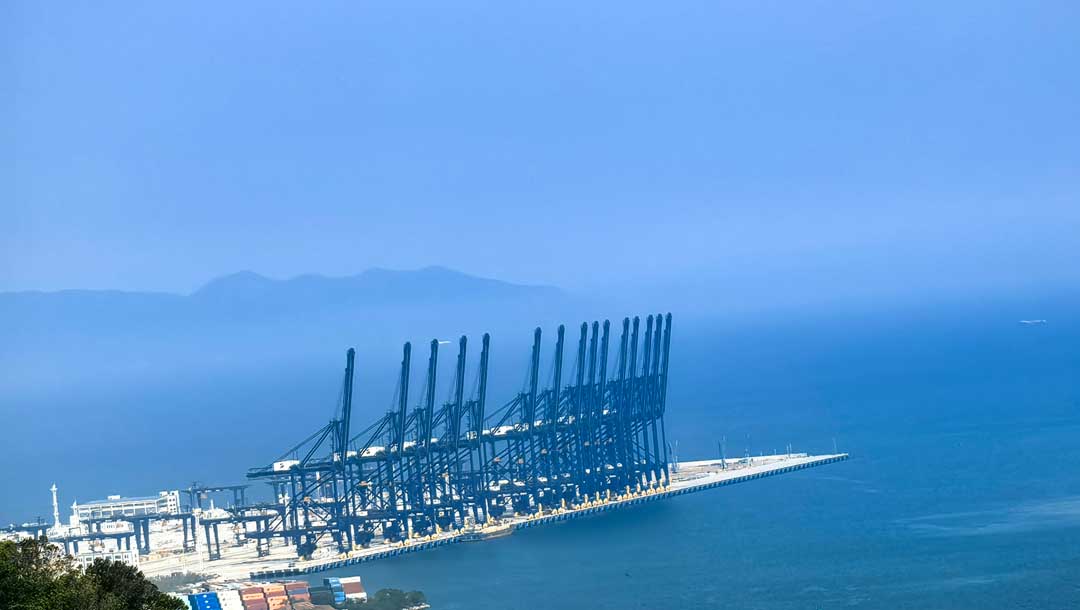
Norfolk lies at about 36 degrees 51 minutes north and 76 degrees 17 minutes west, between the Elizabeth and Lafayette rivers at the south side of the Chesapeake Bay mouth. Hampton Roads is the metro area formed by Norfolk, Portsmouth, Newport News and Virginia Beach, with terminals along the James River, Elizabeth River and Chesapeake Bay shore. The location gives wide waterways and continuous shoreline, and the approach from the open sea needs no narrow bridge passage.
The three modules that matter for China export business are the Norfolk International Terminals container complex, the two Class I railroads' on-dock and inland intermodal network, and the James River barge and inland-port supplement. Together they set the delivery path from China to the US Midwest and Southeast. The overall US Atlantic Coast port distribution is in the US ports overview section.
In the US customs system Norfolk is a seaport of entry, code 1401, registered as Norfolk-Newport News, Virginia, covering the Norfolk, Newport News and Portsmouth harbor areas. The port office is on East Main Street in Norfolk, with the supervising field office in Baltimore.
| Item | Detail |
| Port code | 1401 |
| Registered name | Norfolk-Newport News, Virginia |
| Registered address | 101 E. Main Street, Norfolk, VA 23510 |
| Port director | Keri Brady |
| Office hours | Monday to Friday 08:00 to 16:00 Eastern Time, closed weekends |
| Supervising field office | Baltimore Field Office |
| Other ports in state | 1404 Richmond-Petersburg; 1410 Front Royal (no resident staff, handled via Richmond-Petersburg); 1412 New River Valley Airport (also no resident staff); 5401 Washington-Dulles |
The port's service desks are split by function, most with separate mailboxes. Container exam, export and agriculture share one phone but different mailboxes, so confirming the right mailbox before sending is usually faster than phone transfer. Summary corrections and forfeiture appeals have their own desks. General rules on commodity admission and tariff apply are in the US customs import and export policy section and the US customs import and export tariff section.
| Desk | Contact |
| Import specialist | (757) 441-6242 |
| Trade operations | (757) 523-7063, norfolkCES2@cbp.dhs.gov, Mon-Fri 08:00 to 17:00 |
| Export | (757) 523-7063, norfolkoutbound@cbp.dhs.gov, Mon-Fri 08:00 to 17:00 |
| Agriculture | (757) 523-7063, norfolkagriculture@cbp.dhs.gov, Mon-Fri 08:00 to 17:00 |
| Post summary | (757) 533-4238, NORFOLKPOSTSUMMARY@cbp.dhs.gov |
| Seizure and forfeiture | (757) 533-4221, fpf-norfolk@cbp.dhs.gov |
| Airport cargo exam | (757) 858-6102 / (757) 857-0406, NORPAX@cbp.dhs.gov, Mon-Fri 08:00 to 17:00 |
| Global entry enrollment | (757) 533-4286 |
The key to understanding Norfolk is the split between authority-owned-operated terminals and authority-leased terminals. The former include Norfolk International Terminals, Portsmouth Marine Terminal and Newport News Marine Terminal, plus the inland Virginia Inland Port; the latter include Virginia International Gateway and Richmond Marine Terminal. The practical effect for importers is at filing and dispatch: different terminal names mean different pickup points and gate rules.
| Terminal | Ownership and operation | Main business |
| Norfolk International Terminals (NIT) | Authority-owned, operated by subsidiary VIT | Largest container terminal in the port, with north, south and central rail yard areas |
| Virginia International Gateway (VIG) | Authority-leased, operated by VIT | Container terminal adjacent to I-164 |
| Newport News Marine Terminal (NNMT) | Authority-owned, operated by VIT | Breakbulk and ro-ro, with large open and warehouse area |
| Portsmouth Marine Terminal (PMT) | Authority-owned, operated by VIT | Heavy-lift facility from 2025, serving offshore wind projects |
| Virginia Inland Port (VIP) | Authority-owned, operated by VIT | Inland intermodal facility in Front Royal |
| Richmond Marine Terminal (RMT) | Authority-leased, operated by VIT | River port served by barge |
The authority was formed in 1952 as a Virginia political subdivision, with day-to-day work done by subsidiary Virginia International Terminals. The model's trait is that the deepwater channel is built and maintained by state and federal investment, terminal assets are held by a state entity, and operations are run by a specialized subsidiary. For importers this brings predictability: long investment cycles and public expansion plans, such as the current Gateway Investment Program totaling USD 1.4 billion covering channel, rail, berth and heavy-lift projects, advanced on published schedules.
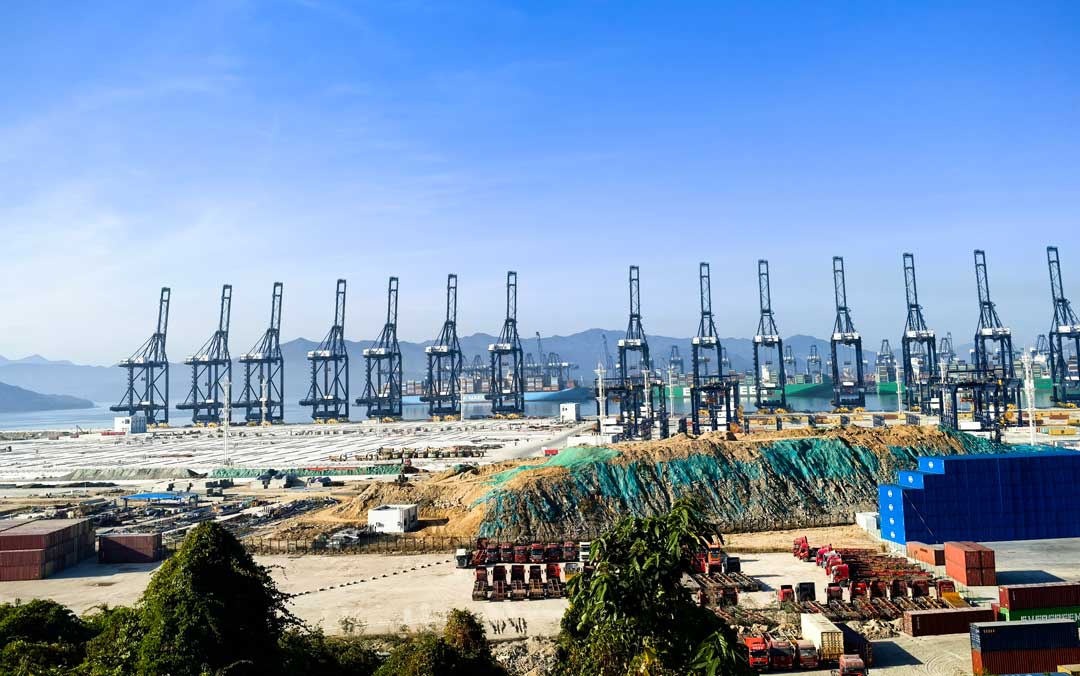
Norfolk International Terminals is the port's largest container terminal and the main object of the expansion program. The table below shows post-expansion specifications.
| Item | Detail |
| Annual design capacity | 3.6 million TEU (after expansion) |
| Area | 378 operating acres, 567 total acres |
| Berth shoreline | 6,630 feet |
| Berth depth | 55 feet |
| Ship-to-shore cranes | 19 post-Panamax, including 4 new low-profile cranes at the south berth |
| Yard cranes | 96 semi-automated rail-mounted gantries, 58 semi-automated stacking blocks after expansion |
| Reefer capacity | Over 800 reefer plugs |
| On-dock rail | 27,416 feet of working track, served directly by CSX and Norfolk Southern |
| Road connection | Via Route 564 and Hampton Boulevard directly to I-64, with two transfer zones inside the terminal |
| Gate system | PRO-PASS truck appointment system |
NIT works in three areas, north, south and central rail yard, and the expansion is split the same way: the central rail yard finished expansion in August 2024, adding 455,000 rail TEU per year; the south berth put four new cranes into use in early 2026, raising ultra-large vessel berths to four; the north berth rebuilds in two phases, phase one in 2025 and phase two in 2027, adding 1.4 million TEU per year and a fifth ultra-large vessel berth. The practical meaning is that terminal and rail capacity expand together rather than yard first then rail later. For importers this keeps peak-season storage and rail-connection pressure relatively controlled.
Virginia International Gateway is the port's second container terminal, authority-leased and subsidiary-operated. Its trait is that both rail and road sit at the terminal edge.
| Item | Detail |
| Annual design capacity | 2.2 million TEU |
| Yard cranes | Over 50 |
| On-dock track | Nearly 30,000 feet, directly linked to Norfolk Southern and CSX |
| Road connection | Adjacent to I-164, no need to cross the city to enter or leave |
| Operating mode | Semi-automated container terminal |
The two main container terminals together approach 5.8 million TEU annual capacity, and after all expansion the port approaches 6 million TEU. The practical meaning for importers is choice of landing terminal for carriers, so sailing and berth plans differ. Confirming the specific terminal at booking makes later dispatch, appointment and pickup steadier.
The other two deepwater terminals in Hampton Roads do not carry main container volume but are specialized in breakbulk, ro-ro and heavy lift.
| Terminal | Area and facilities | Positioning |
| Newport News Marine Terminal (NNMT) | 60 acres open storage, over 1 million square feet of warehouse | Breakbulk and ro-ro; CSX on-dock, can interchange with Norfolk Southern |
| Portsmouth Marine Terminal (PMT) | Former container terminal, USD 220 million upgrade completed in 2025 | Heavy-lift facility for offshore wind; after project ends can add 1.6 million TEU container capacity |
The direct link for China exporters is two business types: oversized and overweight equipment, where NNMT's open and warehouse area suits temporary storage and lifting; and project cargo, where PMT's heavy lift serves large projects like offshore wind, scheduled differently from regular containers and needing advance confirmation of lift capacity and yard. Vehicle cargo has ro-ro at Newport News, scheduled separately and not by container sailing.
The channel is the part of Norfolk that changed most in recent years. The project deepened it to 55 feet and completed widening, giving two-way ultra-large container vessel transit.
| Item | Detail |
| Investment | USD 450 million |
| Channel depth | 55 feet |
| Widening complete | February 2024 |
| Deepening complete | Substantially complete February 28, 2026, with US Army Corps of Engineers maintenance and clearing; charts updated after survey and depth verification |
| Transit condition | Two-way ultra-large vessel transit, no tide limit, no bridge air-draft obstacle |
| Start date | December 2019, about two and a half years ahead of the original plan |
| Distance to sea | About 18 miles from the harbor to open Atlantic water |
The depth-plus-clearance combination is what sets this port apart from most East Coast ports. Baltimore and New York and New Jersey are constrained by bridge air draft or tide, so vessel moves must match water level; Norfolk has no bridge air-draft obstacle and, after deepening, transit is not tide-limited, so fully loaded large container ships move in and out directly. For importers this changes the vessel-size ceiling and liner scheduling, not just berthing efficiency. Per the Port Authority, this is currently the deepest commercial channel on the US East Coast.
On the Virginia Port Authority fiscal-year basis, FY2025 handled 1.9 million boxes and 3.4 million TEU, a small drop from the prior year. The drop was mainly on the export side, tied to that year's agricultural export structure.
| Item | Detail |
| FY2025 volume | 1.9 million boxes / 3.4 million TEU (July 2024 to June 2025) |
| Year on year | Down 61,000 boxes, or 3.1 percent, from FY2024 |
| FY2024 | About 3.5 million TEU, a record year |
| Modal split | Truck 1.1 million boxes, rail 720,000 boxes, barge 75,000 boxes |
| Vessel calls | 1,700 calls in FY2025 |
| Port-related jobs | Over 565,000 (academic study basis) |
| Import cargo | Machinery, pharmaceuticals, autos and parts, furniture, toys |
| Export cargo | Plastics, chemicals, wood and forest products (soybeans, pulp, lumber), medical devices, agriculture |
The port's import-export structure is relatively balanced, with an export share high among East Coast ports, led by forest products, agriculture and chemicals. The benefit is lower empty-repositioning pressure, with import and export box ratios less skewed than pure-import ports; the watch point is that export agriculture and forest products swing with season and trade policy, so annual box volume varies more visibly.
Rail is one of Norfolk's most distinctive conditions. Two Class I railroads have track inside the terminals, double-tracked directly to the Midwest, with no need to exit the gate to an off-dock yard first.
| Item | Detail |
| Class I railroads | Norfolk Southern (NS) and CSX, both with on-dock track |
| Norfolk International Terminals | 27,416 feet of on-dock track, served directly by CSX and Norfolk Southern, double-track to inland |
| Virginia International Gateway | Nearly 30,000 feet of track, linked directly to Norfolk Southern and CSX |
| Newport News Marine Terminal | CSX on-dock, can interchange with Norfolk Southern |
| Shortline partners | Norfolk and Portsmouth Belt Line and Commonwealth Railway |
| Rail expansion | Central rail yard expansion finished August 2024, adding 455,000 rail TEU per year; NIT rail capacity raised to 1.1 million TEU, port rail capacity combined over 1.8 million TEU |
| Inland reach | Double-track to Chicago, Detroit, Kansas City, Columbus; per the authority rail reach ranks high among East Coast ports, covering 75 percent of the US population within two days |
| Rail share | About 37 percent (2020 overview basis), among the higher shares on the East Coast |
Two Class I railroads with on-dock track give a real choice of line: to Chicago, for example, an importer can compare schedules and rates between Norfolk Southern and CSX rather than accept one carrier's quote. The value for delivery planning is reliability: when one railroad congests, the other usually still takes the load. Another arrangement is the RailGreen program: customers can buy certificates to support biofuel use by freight locomotives, offsetting rail-leg emissions, suiting consignees with low-carbon delivery requirements.
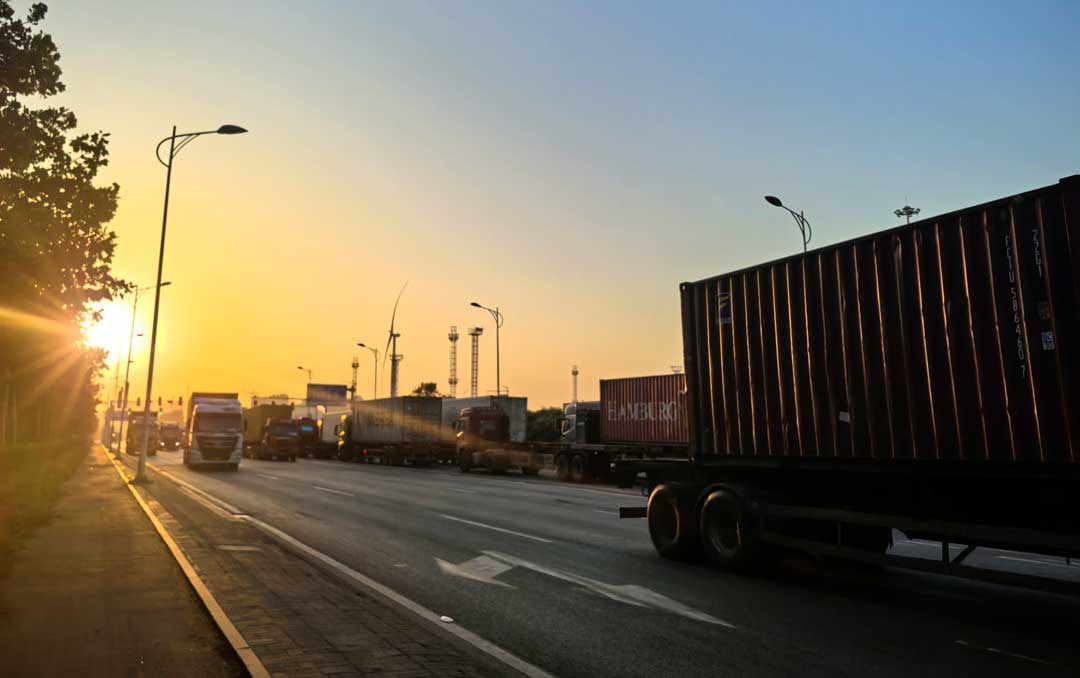
Road access is built on I-64 and several spur routes. Both main container terminals have direct highway links without crossing the city.
The bridge-tunnels are the local variable to watch. Hampton Roads is split by several cross-waterways, and north-south travel depends on bridge-tunnels, with drive time stretching at morning-evening peaks and tourist season. The Hampton Roads Bridge-Tunnel widening is under way; when done capacity rises, but during construction dispatch routes may need phased adjustment. Confirm the current routing plan with the fleet when planning dispatch.
Beyond rail and road, the port has two supplement channels, barge and inland port, that pull part of the flow directly from the terminal to inland, cutting terminal storage and short truck drayage.
| Channel | Detail | Serves |
| Richmond Marine Terminal (RMT) | Barge service with three barges rotating, linking ocean terminals and the river terminal; USD 16 million upgrade to main gate, lighting and drop yard | Richmond and central Virginia |
| Virginia Inland Port (VIP) | In Front Royal, about 200 miles inland; USD 15 million expansion raised on-dock rail capacity by 40 percent | Washington, Baltimore and Pennsylvania, Maryland, West Virginia directions |
| Barge volume | 75,000 boxes moved by barge in FY2025 | Eases terminal storage pressure and regional truck traffic |
The practical use is to delay the entry point: an importer can choose to have the box moved by rail or barge to the inland port after ocean discharge, completing import filing and pickup there instead of at the Norfolk terminal. The benefit is avoiding terminal-area congestion and storage fees while pulling the pickup point closer to the consignee. Confirm the inland port's working window and accepted box types, and whether the carrier supports releasing at that inland port.
Norfolk International Terminals uses the authority's own truck appointment system, with different rules for export and import directions. Another trait is the high rail-share, so rail-bound cargo entered by truck needs a separate handoff flow.
| Item | Detail |
| Appointment system | Authority-owned truck appointment system, import and export rules set separately |
| Gate operation | Per terminal published hours, mainly weekdays; exact hours and Saturday opening per terminal day publication |
| Lead time | Book one to two business days ahead; earlier in peak season |
| Chassis | Pickup and return per carrier and terminal rules; confirm availability at the pickup point before dispatch |
| Driver credential | Valid federal TWIC card required to enter the harbor, with vehicle and driver registration per terminal |
| Reefer | Over 800 terminal reefer plugs; confirm power and temperature record handoff before pickup |
Three common delay causes: first, not following the appointment system's separate import and export channels, so a mismatch blocks work at the gate; second, no chassis picked up, a frequent peak-season bottleneck; third, rail cargo not handled by the in-terminal handoff flow but booked as road pickup, leaving boxes sitting in the yard. The third is common here because of the high rail share, so mark the onward mode clearly in the pickup instruction.
The basic routing from China to Norfolk is all-water direct via the Panama or Suez Canal, or discharge at a West Coast or Gulf Coast port then mini-bridge rail. The former costs less, the latter is faster.
| Chinese origin port | All-water usual range | West Coast rail usual range |
| Shanghai | About 30 to 36 days | About 24 to 30 days |
| Ningbo-Zhoushan | About 30 to 35 days | About 24 to 30 days |
| Shenzhen Yantian | About 30 to 36 days | About 26 to 32 days |
| Qingdao | About 35 to 40 days | About 28 to 34 days |
| Few-call express sailing | About 22 to 26 days | Not applicable |
The ranges above are ocean-leg only, excluding cut-off, clearance and inland delivery; forwarders also quote 39 to 43 days door to door. Three variables hit actual time: Panama Canal dry-season limits, usually three to seven days; the June to November hurricane season, when Atlantic ports may close temporarily; and the pre-Lunar-New-Year shipping peak in China. If delivery falls in the year-end peak, add one to two weeks of buffer beyond the sailing schedule.
Norfolk is a direct call on the East Coast, and most carriers on Asia-East Coast services call here. The port is also export-led, so export-side capacity is relatively loose.
| Item | Detail |
| Trade directions | Asia, Europe, Mediterranean and Latin America; Asia links most directly to China export |
| Call pattern | Most carriers on Asia-East Coast services call here; some carriers keep a regional headquarters or US-flag entity locally |
| Asia calls | Cover Shanghai, Ningbo-Zhoushan, Shenzhen Yantian and other major Chinese container ports, entering the Atlantic via Panama or Suez |
| Inland extension | On-dock rail directly to Chicago, Detroit, Kansas City, Columbus and other Midwest and Southeast hubs |
| Main cargo types | Machinery and equipment, pharma and medical devices, autos and parts, retail general merchandise and furniture |
For China exporters Norfolk suits three businesses: consignees in Virginia, North Carolina, Maryland or Washington; cargo needing rail distribution to Chicago, Columbus, Detroit and other Midwest hubs; and plastics, chemicals, wood products and medical devices, which complement the port's export structure. If the consignee is on the US West Coast or South, entering via a West Coast or Gulf Coast port is usually more direct and rounding the Atlantic is not economical.
The port's tariff arrangement sits in Foreign-Trade Zone 20, grantee Virginia Port Authority. The zone has large area and warehouse resources, directly linked to the port's breakbulk and container operations.
| Item | Detail |
| Number | Foreign-Trade Zone 20 (FTZ 20) |
| Grantee | Virginia Port Authority |
| Scale | Over 1,000 acres total, over 1 million square feet of warehouse |
| Annual received value | Over USD 1.6 billion |
| Host port | Norfolk-Newport News seaport (code 1401) |
| Related zone | City of Norfolk also has FTZ 203 |
| Main benefits | Duty deferral, re-export exemption, and inverted tariff where the finished-product rate is lower than the imported-component rate |
The zone's trait is large warehouse resources next to the port's breakbulk and heavy-lift areas, suiting business that needs local staging, repacking or light processing. Core benefits are duty deferral and re-export exemption; where the imported-component rate exceeds the finished-product rate, domestic sale can use the finished-product rate, subject to prior authorization. Related information is in the US customs information section.
Exams are decided by CBP and relate to filing compliance, import record and commodity. Exams concentrate at designated sites inside the harbor, with a separate desk for agriculture.
| Item | Note |
| Exam types | Document review, non-intrusive scan, physical exam, and commodity-specific exams |
| Common specific exams | Wood products and wood packaging, agriculture and food, pharma and medical devices, machinery and auto parts, anti-dumping and countervailing goods |
| Time impact | Document review usually one to two days; physical exam commonly three to seven business days, longer with sampling or testing |
| Cost | Exam service, terminal lift and handling, devanning and restuffing labor, storage during exam, borne by the consignee regardless of outcome |
| Rail cargo exam | Done at the terminal or designated site; occupies the rail car and adds cost during the exam |
| Lowering probability | Description matching goods, value within the normal range for the commodity, no undervaluation or mixed loading, continuous import record, documents matching marks and labels |
In this port's cargo mix machinery, pharma and medical devices, and auto parts are high-share, with finer filing requirements; goods needing registration, license or labeling must be confirmed in advance. Wood products and wood packaging are a common exam trigger, and solid-wood packaging must be heat-treated or fumigated and marked. Agriculture has a separate desk, and export-side forest and agriculture matters can also go through it.
Port and terminal hours must be read separately. The port's public office is weekdays 08:00 to 16:00, while its service desks (trade, export, agriculture) run weekdays 08:00 to 17:00, and terminal gates and yards follow each terminal's published hours; the three do not fully overlap.
| Period | Arrangement |
| Monday to Friday | Port 08:00 to 16:00; trade, export and agriculture desks 08:00 to 17:00; terminals per published hours |
| Saturday and Sunday | Port closed; terminal Saturday opening per day publication, Sunday generally no work |
| Federal holidays | Port and terminals follow holiday arrangements; filing, release and pickup affected, best avoided |
| Year-end holidays | Holidays overlap the retail peak; terminal storage tightens and gate queues lengthen |
| Hurricane season | June to November; Atlantic ports may close temporarily on hurricane warning and stop work, with arrangements per Port Authority notice |
The times to avoid most are federal holidays and the year-end period. There are 11 US federal legal holidays in total, listed in the US holidays overview section. Hurricane season is a local Atlantic Coast variable: the harbor closes on plan during hurricane warnings, stopping gate work and vessel loading and unloading, with storage arrangements per Port Authority notice. If delivery falls between June and November, allow three to five days of slack in the sailing schedule.
Norfolk's volume rhythm overlays three lines: Asia retail and e-commerce stocking, auto and manufacturing parts replenishment, and export bulk like forest products and agriculture by season. Because the export share is high, its swing is usually smaller than pure-import ports.
| Period | Volume pattern | Main drivers |
| January to February | Post-holiday trough, a pre-Lunar-New-Year rush | China factory shutdown and restart; export forest products ship by season |
| March to June | Relatively flat, auto parts and manufacturing replenishment rise | US Midwest and Southeast manufacturing cycles |
| July to October | Peak season, Asia year-end stocking ships concentrated | Tight space and rising rates; hurricane season overlaps, port may close |
| November to December | Replenishment and clearance together, export agriculture and forest products load concentrated | Year-end promotions and holiday delivery; annual agriculture bulk contracts execute at year end |
Three local variables to forecast: Panama Canal dry-season limits add delay; the June to November hurricane season may close the port; and Hampton Roads bridge-tunnel traffic is heavy at peaks and tourist season. Peak-season booking two to three weeks ahead, with one to two weeks of buffer in the plan. Related ocean and air options are in the China-US freight section.
Three points to watch: the port has two main container terminals and two breakbulk terminals, and which one a shipment lands at depends on the carrier, so dispatch routes follow the sailing; Hampton Roads bridge-tunnels are pressured at peaks and tourist season, with phased adjustments during the widening project; and the June to November hurricane season may close the port, so plan buffer.
The Port of Norfolk is in the Hampton Roads metro area of southeast Virginia, between the Elizabeth and Lafayette rivers at the south side of the Chesapeake Bay mouth. Terminals line the James River, Elizabeth River and Chesapeake Bay shore, about 18 miles from open Atlantic water, with no bridge air-draft obstacle.
Seaport code 1401, registered as Norfolk-Newport News, Virginia, port address 101 E. Main Street, Norfolk, VA 23510, port director Keri Brady, office hours Monday to Friday 08:00 to 16:00 Eastern Time. The supervising field office is in Baltimore. The state also has ports 1404 Richmond-Petersburg, 1410 Front Royal, 1412 New River Valley Airport and 5401 Washington-Dulles.
The channel is 55 feet deep. The USD 450 million project widened it in February 2024 and substantially completed deepening on February 28, 2026, with dredging started in December 2019. After deepening it gives two-way ultra-large vessel transit, no tide limit and no bridge air-draft obstacle. Per the Port Authority, it is currently the deepest commercial channel on the US East Coast.
Two main container terminals: Norfolk International Terminals (authority-owned, 378 operating acres, 6,630 feet of berth, 19 post-Panamax cranes, 96 semi-automated yard gantries, 3.6 million TEU capacity) and Virginia International Gateway (authority-leased, 2.2 million TEU, over 50 yard gantries, nearly 30,000 feet of track). Newport News Marine Terminal and Portsmouth Marine Terminal handle breakbulk, ro-ro and heavy lift.
All-water via Panama or Suez: Shanghai about 30 to 36 days, Ningbo-Zhoushan about 30 to 35, Shenzhen Yantian about 30 to 36, Qingdao about 35 to 40; few-call express about 22 to 26 days. West Coast discharge plus rail is about 24 to 30 days total. These are ocean-leg only, excluding cut-off, clearance and inland delivery.
On the Virginia Port Authority fiscal-year basis, FY2025 (July 2024 to June 2025) handled 1.9 million boxes and 3.4 million TEU, down 61,000 boxes or 3.1 percent from the prior year; FY2024 was about 3.5 million TEU, a record. The same year's modal split was truck 1.1 million, rail 720,000, barge 75,000 boxes, with 1,700 vessel calls.
Norfolk Southern and CSX, both Class I, with on-dock track. NIT has 27,416 feet of on-dock track served by both; VIG nearly 30,000 feet; NNMT CSX on-dock. Shortline partners Norfolk and Portsmouth Belt Line and Commonwealth Railway; double-track to Chicago, Detroit, Kansas City and Columbus.
The Virginia Inland Port is in Front Royal, Virginia, about 200 miles inland, an authority-owned inland intermodal facility where rail and truck meet and cargo can be handed over, serving Washington, Baltimore and Pennsylvania, Maryland, West Virginia markets. The authority invested USD 15 million to expand it, raising on-dock rail capacity by 40 percent.
Yes. Foreign-Trade Zone 20, grantee Virginia Port Authority, over 1,000 acres with over 1 million square feet of warehouse, receiving over USD 1.6 billion of goods a year. The City of Norfolk also has FTZ 203. Main benefits are duty deferral and re-export exemption. Related information is in the US customs information section.
Three points. First, NIT uses the authority's own appointment system with separate import and export rules; misusing them blocks work at the gate. Second, chassis are picked up and returned per carrier and terminal rules, and the pickup step is a peak-season bottleneck, so confirm before dispatch. Third, the port's rail share is high, so rail cargo must follow the in-terminal handoff flow, and the pickup instruction should mark the onward mode clearly.
The harbor is about 18 miles from open Atlantic water, and the approach runs from the sea directly into the Chesapeake Bay without a bridge that must lift or limit height. Baltimore and New York and New Jersey are constrained by bridge air draft and must match tide; Norfolk has no such limit, so fully loaded large container ships move in and out directly after deepening.
Three types fit well: consignees in Virginia, North Carolina, Maryland or Washington; cargo needing rail distribution to Chicago, Columbus, Detroit and other Midwest hubs; and machinery and equipment, pharma and medical devices, auto parts, and plastics and chemicals, which complement the port's import-export structure. If the consignee is on the US West Coast or South, entering via a West Coast or Gulf Coast port is usually more direct.
Shipping from China to USA
Planning a shipment or just comparing options? Contact our freight experts to get a tailored rate within 24 hours.
