
Omaha, Nebraska sits on the U.S. Midwest plains and is the largest city in Nebraska. Its identity in the U.S. logistics system is an inland intermodal and distribution landing point: there is no deep-water seaport locally, but the city sits at the junction of two interstate highways, two Class I railroads operate facilities here, and one Class I railroad has its headquarters and network dispatch center in the city. For importers from China, Omaha's value concentrates in three areas: its position at the crossing of east-west and north-south long-haul corridors, the intermodal and transfer capacity of two Class I railroads, and comparatively low warehousing costs in the American Midwest.
Omaha sits at 41 degrees 15 minutes north, 95 degrees 56 minutes west, in eastern Nebraska, with the urban area built on the gentle west bank of the Missouri River. Across the river is Council Bluffs, Iowa; the two cities functionally belong to the same logistics market. This position is toward the north of the continental United States' geometric center, with balanced distances east and west.
Three modules of this city are directly relevant to import business from China: how the two rail facilities connect and what cargo they handle, the distribution radius formed by the two interstate highways, and the handling capacity of the airport combined with the foreign-trade zone. Together they determine delivery routes from China to Midwest and central-northern U.S. markets.
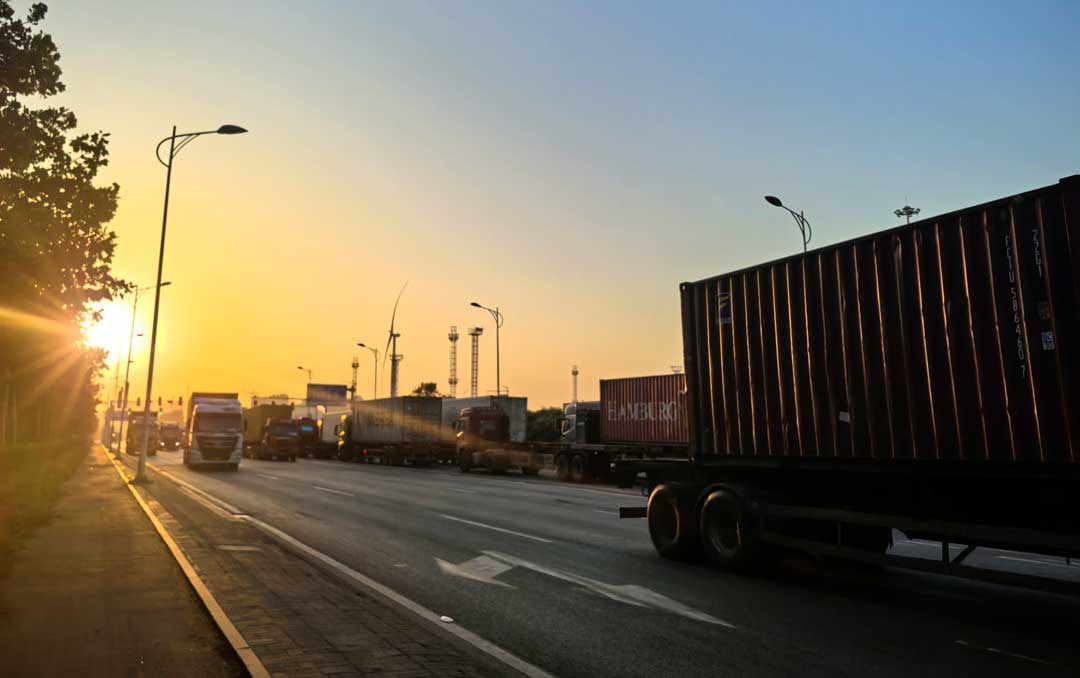
In the U.S. customs system Omaha is a port with code 3512. It is not a seaport but focuses on air and inland intermodal functions, under the Chicago Field Office. It is the only port in Nebraska.
| Port code | 3512 |
| Registered name | Omaha, Nebraska |
| Address | 3737A Orville Plaza, Omaha, NE 68110 |
| Phone | +1 402-341-0240 |
| Fax | +1 402-341-2117 |
| Port director | Steven McKlem |
| Office hours | Monday to Friday 08:00-16:00 (Central Time); closed Saturday and Sunday |
| Parent field office | Chicago Field Office |
| Port email | omaha3512@cbp.dhs.gov |
The port has a deferred examination office handling cases already entered but needing supplementary formalities. For urgent matters outside working hours, a unified duty number can be called for transfer. Eppley Airfield, as a landing rights airport, has separate procedures for business jet and cargo charter arrivals and departures.
| Window | Contact | Hours |
| Deferred examination office | (402) 341-0240 | Monday to Friday 10:00-15:00 (Central Time); closed on holidays |
| After-hours duty | (800) 973-2867 | Transferred when the port is closed |
| Airport entry/exit permits | (402) 341-0240 | Contact before departure, at least 2 hours in advance |
Nebraska has no second port, so all in-state import cargo needing local filing goes through this port.
Rail is Omaha's most distinctive condition. Two Class I railroads operate in the city, and one has its headquarters and network-wide dispatch center here — uncommon for an inland city.
| Facility | Address or notes | Operations |
| BNSF Omaha Intermodal Facility | 4370 Gibson Road, Omaha, NE 68107 (facility code H397) | Container and trailer intermodal loading and unloading |
| Watco Omaha Transfer Facility | 6801 N 9th St, Omaha, NE | Bulk transfer between rail and truck |
| Union Pacific Dispatch Center | In Omaha (Harriman Dispatch Center) | Centralized dispatch of network-wide train operations |
Union Pacific's headquarters is in Omaha, and its dispatch center handles centralized command of network-wide train operations. For import business, the significance of the headquarters and dispatch center shows in the organization and adjustment of block train operations, while actual loading and unloading still take place at specific facilities. BNSF's Omaha intermodal facility is the city's main landing point for intermodal containers, and its facility code can be looked up directly on rail waybills and arrival notices.
One point to note: Nebraska has another large classification yard at North Platte in the center of the state, about 250 miles from Omaha. That yard handles traffic classification, which is a different matter from intermodal arrival and departure at Omaha city facilities; when arranging pickup locations, confirm the facility stated on the waybill.
Highway is the main mode of cargo distribution from Omaha. Two main corridors meet here, forming the city's east-west and north-south distribution structure.
| Corridor | Direction and role |
| I-80 | East-west transcontinental arterial, running 482 miles across the state, west to Denver and the Salt Lake City direction, east to Chicago and the New York direction |
| I-29 | North-south arterial, north to Sioux Falls and Fargo, south to Kansas City |
| I-480 / US-75 | Cross the Missouri River to Council Bluffs, Iowa, linking the logistics parks on the far bank |
| I-680 | Beltway, diverting through-city traffic |
On commercial real estate and logistics research basis, about 85% to 90% of the U.S. population can be reached by truck within two days. From the city: Kansas City about 3 hours, Minneapolis about 6 hours, Chicago about 7 hours, Denver about 8 hours. This structure makes Omaha suitable as a transit warehouse location covering the Midwest and central-northern U.S. markets.
Eppley Airfield is the state's largest airport, handling both passenger and cargo functions. The airport sits about 3 miles northeast of downtown, along the Missouri River.
| Item | Content |
| Airport codes | OMA / KOMA (Eppley Airfield) |
| 2024 passenger throughput | About 5.2 million, up about 5% year on year |
| Passenger airlines | 7 main carriers, with more than 40 direct destinations |
| 2024 cargo and mail | About 120 million pounds handled in total by 7 cargo companies |
| International flights | Landing rights airport; landing permission must be obtained in advance (at least 2 hours before) |
| Fixed-base operators | Two (Atlantic, Signature) |
| General aviation diversion | Millard Airport (MLE) handles general aviation and flight training |
The city's air cargo is mainly passenger belly-hold and express shipments, without regular capability for large freighters. For time-sensitive restocking cargo, air via hubs such as Chicago or Dallas with onward trucking to the city is the more common arrangement.
Omaha has waterfront facilities managed by an inland port authority along the Missouri River, handling barge transfer of bulk cargo. This mode is supplementary in the local logistics structure rather than a backbone.
| Item | Content |
| Managing body | Omaha Inland Port Authority, established under state law LB156 (2021) |
| Industrial land | About 40 acres |
| Dock length | About 2,000 feet |
| Crane capacity | About 250 tons |
| Mooring positions | 67 |
| Warehouse area | About 250,000 square feet |
| Connection mode | Immediately adjacent to I-80 and the Union Pacific line |
The Missouri River's depth and sediment conditions limit regular barge operation, and Nebraska's inland freight volume share is very low nationally. The practical channels for local import business therefore remain rail and highway, with the waterway facilities serving mainly regional transfer of agricultural products, cement and similar bulk cargo.
Omaha's industrial and warehousing market has one clear feature: vacancy has long stayed low with relatively tight supply, while rent levels are below comparable markets. This combination makes it a common distribution warehouse location in the Midwest.
| Item | Content |
| Industrial vacancy | About 2% to 3% (2025 quarterly commercial real estate agency basis: CBRE Q1 2.1%, Lee & Associates Q2 2.6%, Q4 2.8%) |
| Average asking rent | About USD 8.5 per square foot (net lease basis, Q4 2025) |
| Industrial inventory | About 114.5 million square feet (Q4 2025) |
| Area under construction | About 2.83 million square feet (Q4 2025) |
| Rent trend | Q4 2025 up about 1% year on year; up about 11.8% cumulatively over three years |
| Local corporate cluster | Berkshire Hathaway, Union Pacific, Conagra Brands, Kiewit, mutual insurance companies |
Vacancy below 3% for long periods means limited ready-made properties, and new tenants often have to choose between under-construction projects and self-build. For importers from China, this affects the timing of U.S. warehouse siting: if Omaha is planned as a long-term distribution point, warehouse contracting should precede the first container's arrival to avoid a last-minute change of site due to lack of space.
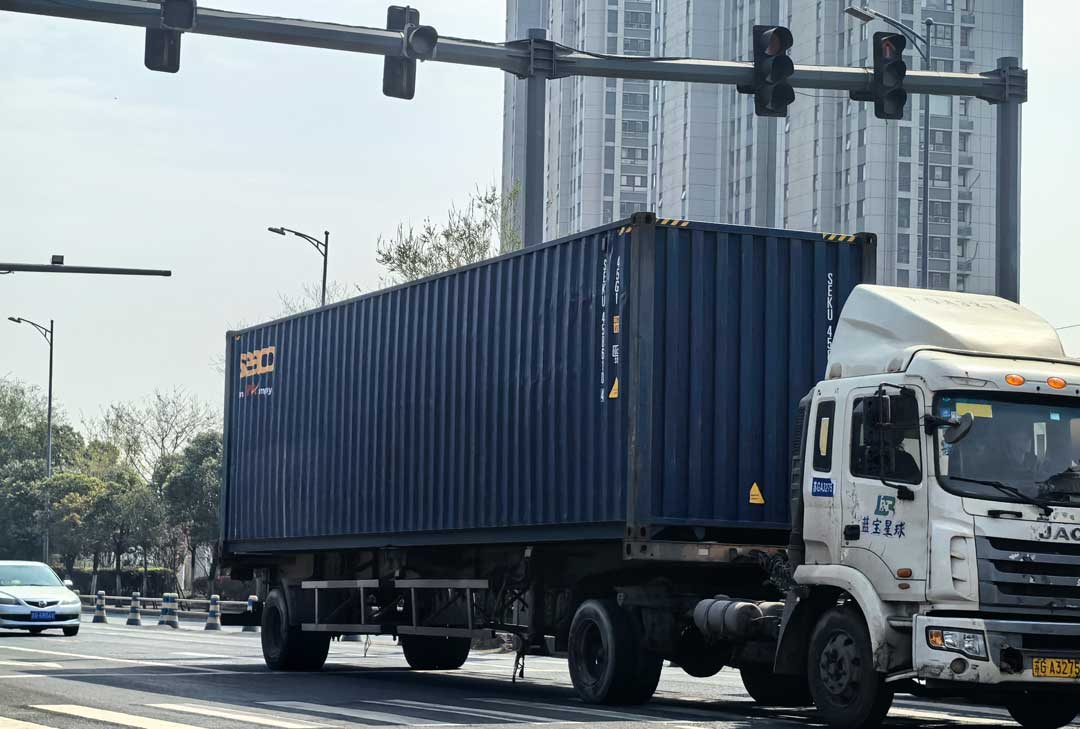
Omaha's tariff arrangements fall under Foreign-Trade Zone 19. The zone's grantee is the Omaha Chamber, with a structure combining general-purpose zone and subzones.
| Item | Content |
| Zone number | 19 |
| Grantee | Omaha Chamber |
| Public warehouse operation | Cargo Zone LLC, providing FTZ services for importers whose volume is insufficient to build their own facility |
| Subzone example | Syngenta Crop Protection has a subzone within the general-purpose zone |
| Reserved land | Land near the airport pre-designated as general-purpose foreign-trade zone |
| Main uses | Duty deferral, import re-export, cargo flow and distribution |
The zone's structure matters for this series of business mainly at the public warehouse level. Importers whose volume is insufficient to build their own facility can use FTZ treatment through the public warehouse operated by Cargo Zone LLC without applying for activation themselves. Applicability must be judged case by case against cargo type, tariff number and expected flow cycle.
Nebraska's rail density is relatively high among U.S. Midwest states, providing hinterland support for Omaha's intermodal business.
| Item | Content |
| Track miles | About 3,140 miles statewide |
| Operating railroads | 10 freight railroads |
| 2023 freight volume | About 294 million tons |
| Main outbound cargo | Mainly agricultural products |
| Main inbound cargo | Coal is the largest inbound category |
| In-state hubs | Omaha (intermodal and dispatch), North Platte (traffic classification) |
The density of the state rail network means local facilities have relatively rich block train choices. Intermodal containers shipped east or west can usually be loaded at Omaha and run direct on mainlines to West Coast ports or the Chicago direction, without multiple transfers en route.
There is no direct ocean leg from China to Omaha; cargo must complete the inland leg by rail or truck after discharge at a port. Three common routes apply.
Route choice depends on three things: the FCL or LCL mode determined by volume, the direction of the receiving market, and whether duty deferral processing is needed inside the United States.
Transit time consists of the ocean leg and the inland leg, which are measured differently and must be calculated separately.
| Leg | Common range | Notes |
| Ocean leg (to a West Coast port) | About 12 to 18 days | Main Chinese ports toward Los Angeles and Long Beach |
| Inland rail leg | Per carrier schedule | West Coast port to Omaha, commonly about 5 to 8 days |
| Door-to-door total | About 25 to 35 days | Common range including ocean, rail, clearance and delivery |
| Air leg | About 3 to 7 days | Via a hub with onward trucking to the city |
The ranges above are the overlap of multiple forwarders' published transit tables, which differ considerably between sources, so they serve only as a common-range reference. Actual voyages are affected by season, schedule adjustments and port congestion, and the inland leg is additionally affected by block train loading rates and weather; specific times follow the carrier's published basis at booking.
Cargo pickup in Omaha takes place at the rail facility rather than a terminal, and the process differs from seaport pickup. Understanding the facility's notice and free-time rules is key to controlling local costs.
One point needs emphasis: rail facilities' free periods are usually counted in hours, shorter than marine terminals' working-day basis, so inland pickup arrangements should be tighter than at seaports. If cargo cannot be removed promptly after arrival, charges accrue quickly.
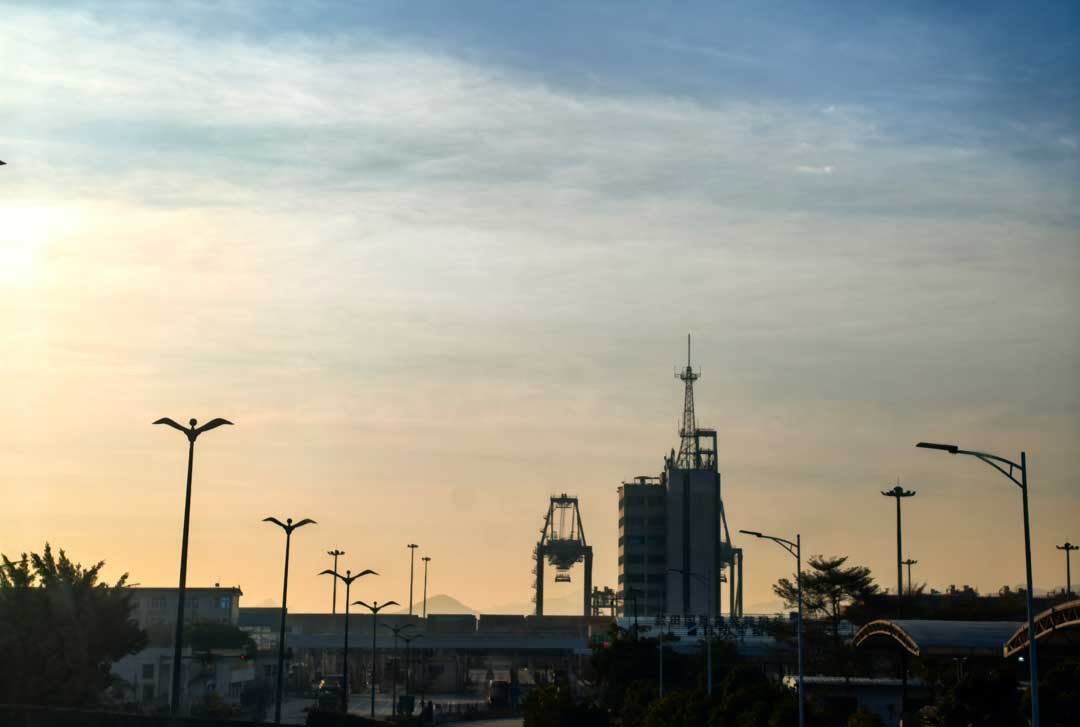
Omaha port can accept import entries and has examination capability, with examinations conducted at designated port locations. For an inland port, the examination step has a large effect on delivery time.
| Item | Explanation |
| Filing method | Filing can be done at the port of entry, or the cargo can move in-bond to this port before filing |
| Exam trigger | After filing, customs risk assessment decides whether to place a hold |
| Exam location | Handled at port-designated locations or a centralized exam site |
| In-bond transport | Movement from the port of entry to this port must follow in-bond transport rules and be sealed |
| Release method | After customs releases in the filing system, the facility can accept pickup |
One feature of inland port examination: cargo can be examined at the port of entry, or moved in-bond to this port and examined afterwards; the two arrangements differ in cost and time structure. When choosing the latter, the in-bond filing and bond must be completed at entry, and the cargo remains sealed in transit.
Port and facility hours differ, and pickup and filing arrangements need to be checked separately.
| Body | Regular hours |
| Customs port | Monday to Friday 08:00-16:00; closed Saturday and Sunday |
| Deferred examination office | Monday to Friday 10:00-15:00; closed on holidays |
| Rail intermodal facility | Per facility-published hours, usually weekdays; gates have their own specific opening times |
| Outside working hours | A unified duty number can be called for transfer |
There are 11 federal holidays in total, including New Year's Day, Martin Luther King Jr. Day, Presidents Day, Memorial Day, Independence Day, Labor Day, Columbus Day, Veterans Day, Thanksgiving, Christmas and Juneteenth. Neither customs nor facilities operate on holidays, and facility gate windows around holidays are usually tight.
Omaha's freight rhythm is mainly influenced by the Midwest agricultural and retail cycles, with seasonality coming from different directions than port cities.
| Period | Characteristic |
| Spring | Agricultural supply cargo enters the pre-planting peak, and rail car demand rises |
| Summer | Container import volume is stable, while bulk transfer volume rises |
| Autumn | Agricultural products ship in concentration, and outbound cars and equipment tighten |
| Winter | Year-end retail restocking brings an import peak, followed by a flat period early in the year |
The period with the clearest effect on import business is autumn. During that period agricultural exports ship in concentration, rail capacity tilts toward the outbound direction, and inland schedules for import containers may fluctuate. For cargo planned to arrive in autumn, the inland leg should allow extra buffer.
Omaha's value for import business from China can be summarized as four verifiable operating conditions.
Correspondingly, Omaha has points that must be planned for in advance: no local seaport, so all import cargo must enter via another port and complete an inland leg; low warehouse vacancy limits the range of ready-made properties; the airport is mainly passenger belly-hold without large freighter capability; and the waterway is a supplementary mode unsuited to container transport. Overall, Omaha suits import business with the Midwest and central-northern U.S. as the receiving market, using rail intermodal, and planning a long-term distribution point.
No. Omaha is an inland port with no deep-water seaport. All international ocean cargo must first discharge at a West Coast, East Coast or Gulf port and complete entry, then move to Omaha by rail or truck. The Missouri River barge facilities mainly serve bulk cargo and do not handle container transport.
On the cross-checked basis of multiple forwarders' published transit tables, the ocean leg to a West Coast port is commonly about 12 to 18 days, the inland rail leg about 5 to 8 days, and the door-to-door total about 25 to 35 days. Air via a hub with onward trucking is commonly about 3 to 7 days. Specific times follow the carrier's basis at booking.
Pickup is completed at the rail facility, mainly the BNSF Omaha intermodal facility (4370 Gibson Road). The arrival notice is issued by the facility or carrier, and the trucking company books a window with the facility against customs release and the carrier's container release authorization. Facility free time is usually counted in hours, shorter than marine terminals' working-day basis.
Local industrial vacancy has long stayed in the 2% to 3% low range; Q4 2025 industrial inventory was about 114.5 million square feet, with about 2.83 million square feet under construction and average asking rent about USD 8.5 per square foot. Low vacancy means a limited range of ready-made properties, and long-term use is best contracted early.
Yes. Omaha's port code is 3512, with filing and examination capability. Cargo can be filed and examined at the port of entry before moving in, or moved in-bond and sealed to this port before filing. In-bond transport requires filing and bond formalities at entry.
All three are U.S. Midwest inland hubs, with differences mainly in railroads and warehousing conditions. Omaha is served mainly by the two Class I railroads Union Pacific and BNSF, with low warehouse vacancy and rent below the national average; Kansas City and Chicago have more railroads and higher train density, with more ample warehousing supply. Selection should follow the direction of the receiving market and the required railroad.
FTZ 19 has the Omaha Chamber as grantee, with Cargo Zone LLC operating the public warehouse; importers whose volume is insufficient to build their own facility can use duty deferral treatment through that public warehouse. Syngenta Crop Protection has a subzone in the zone. Applicability must be judged case by case against cargo type and tariff number.
Local intermodal facilities are mainly operated by BNSF and Watco. The BNSF Omaha intermodal facility is at 4370 Gibson Road, facility code H397; the Watco transfer facility is at 6801 N 9th St. Union Pacific's headquarters and Harriman Dispatch Center are in the city, but its main classification yard is at North Platte, Nebraska, outside the city.
Eppley Airfield is the city's main airport and a landing rights airport; international cargo arrivals must be applied for at least two hours in advance, with a tolerance of 60 minutes either side. Airport cargo is mainly passenger belly-hold, without regular large freighter capability; full charter or out-of-gauge cargo usually must be arranged via another hub airport.
Shipping from China to USA
Planning a shipment or just comparing options? Contact our freight experts to get a tailored rate within 24 hours.
