
Orlando, Florida sits in the center of the state and is the county seat of Orange County. Its identity in the U.S. logistics system is an airport-type port and regional distribution landing point: there is no seaport locally, but there is an international airport handling about 220,000 tons of cargo a year, a highway network spreading in four directions across the state, and rail connecting Jacksonville and the state's container ports. For importers from China, Orlando's value concentrates in three areas: air cargo handling and customs clearance completed in the same facility, short overland distances to Port Canaveral and other state ports, and distribution demand from Central Florida e-commerce and tourism retail.
Orlando sits at 28 degrees 32 minutes north, 81 degrees 23 minutes west, in the middle of the Florida peninsula, with the urban area surrounded by flat sandy plateau and dense lakes. This location is close to ports on both the state's coasts and does not directly border the sea.
Three modules of this city are directly relevant to import business from China: airport cargo facilities and clearance conditions, the state ports reached by the highway network, and the combination of the foreign-trade zone with warehousing and distribution. Together they determine delivery routes from China to the Central Florida market.
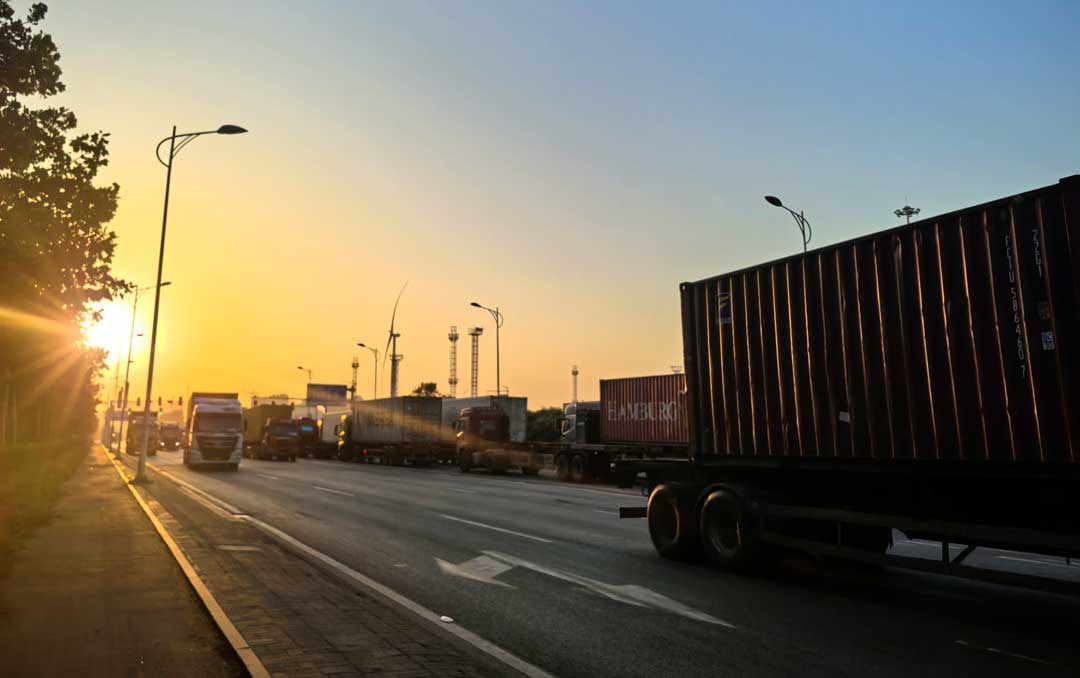
In the U.S. customs system Orlando is a port with code 1808, registered as Orlando International Airport, Florida. It is an airport-type port, handling both passenger and cargo clearance functions, under the Area Port of Tampa.
| Port code | 1808 |
| Registered name | Orlando International Airport, Florida |
| Address | 9043 Tradeport Drive, Orlando, FL 32827 |
| Phone | +1 407-240-4462 |
| Fax | +1 407-240-7918 |
| Port director (acting) | Melissa Armijo |
| Office hours | Monday to Friday 08:00-16:00 (Eastern Time); closed Saturday and Sunday |
| Parent authority | Area Port of Tampa |
| Port classification | Class A port for all foreign nationals |
Unlike the port's passenger functions, cargo business is handled within weekday working hours, and holiday and weekend clearance must be arranged through appointment or duty-officer channels. The windows and contacts are as follows.
| Window | Contact | Hours |
| Commercial (cargo) operations | (407) 240-4462 | Monday to Friday 08:00-16:00 |
| Deferred examination | (407) 240-4462 ext. 241, advance appointment required | Monday to Friday 08:00-12:00 |
| Terminal A Airside 4 | (407) 825-4360 | Daily 10:00-22:00 |
| Terminal C | (407) 825-4881 | Daily 10:00-24:00 |
| Tactical operations | (407) 825-4340 | All hours |
| Aircraft arrival | (407) 825-4360 | 24 hours |
Three other Florida entry points also belong to the Area Port of Tampa: 1809 Orlando Sanford International Airport, 1888 Orlando Executive Airport, and 1816 Port Canaveral. Sanford Airport takes some charter and low-cost services, while Port Canaveral handles cruise and breakbulk clearance.
Orlando International Airport's cargo facilities are distributed around the airport business center, set apart from the passenger terminals. Cargo enters and leaves via dedicated airport roads and connects to the interstate network via the SR 528 expressway.
| Item | Content |
| Operating body | Greater Orlando Aviation Authority (GOAA) |
| Airport codes | MCO / KMCO |
| Airport area | 11,605 acres |
| Runways | Four parallel north-south runways |
| Total building area | About 7 million square feet |
| On-airport cargo companies | More than 20 |
| Large aircraft capability | Capable of handling Group VI aircraft |
| Ground handlers | Swissport (general, special cargo and pharma cargo center), Air General |
| Cargo building location | Airport business center along Tradeport Drive |
| Highway connection | Connects to I-4 via the SR 528 expressway |
The airport's cargo capacity centers on cargo building warehousing area and ground handler processing capability. The airport's existing cargo handling building area has not shown bottlenecks in recent years, and expansion projects concentrate on the passenger side, namely new concourse gates at Terminal C, which has limited effect on cargo business.
Orlando International Airport's cargo structure has one clear feature: cargo moves mainly in the belly hold of passenger flights, with dedicated freighter services accounting for a low share. This structure defines the cargo types and size range that can be carried.
| Item | Content |
| 2025 cargo volume | About 220,000 tons |
| 2025 passenger throughput | 57.67 million passengers |
| 2025 aircraft movements | 386,904 |
| Daily flights | More than 1,000 |
| Airlines | More than 40, serving more than 170 destinations |
| Common cargo types | Seafood and fresh produce, pharmaceuticals, express shipments |
| Pharmaceutical cargo conditions | An on-airport pharma cargo center; temperature-controlled handover times must be confirmed with the handler in advance |
Because capacity is mainly belly hold, cargo beyond conventional dimensions or requiring full charter is usually arranged via Miami or Orlando Sanford Airport instead. The practical effect for shippers: general cargo and express shipments move smoothly via Orlando, while air plans for large equipment or out-of-gauge cargo need separate arrangement.
Orlando's rail conditions center on intermodal, with CSX operating locally and connecting north to the Jacksonville-direction network. Rail's role in this city is to receive containers transferred from state ports.
| Item | Content |
| Main railroad | CSX |
| Intermodal facility | CSX Orlando Intermodal Center |
| Northbound connection | Via the main network to Jacksonville, then to the U.S. Southeast and Northeast |
| State rail | Regional railroad companies also handle branch line operations |
| Port connection | Containers discharged at Jacksonville, Tampa Bay and other ports can arrive by rail or truck |
Local rail does not connect directly to Asian ocean mainline services; its role is to link the state's container ports with Central Florida distribution points. For import business, the choice between rail and truck depends on volume and arrival timing; for larger volumes with flexible timing, rail's cost structure is more stable.
Highway is the main mode of cargo distribution from Orlando. The city sits in central Florida, with the highway network spreading in four directions across the state, covering the state's main consumer markets.
| Corridor | Direction and role |
| I-4 | State mainline, west to Tampa, northeast to Daytona Beach and the Jacksonville direction |
| SR 528 | East to Port Canaveral, west connecting I-4 and the airport |
| SR 408 | East-west city route, linking I-4 and the 417 beltway |
| SR 417 and SR 429 | Beltways, diverting through-city traffic and connecting the airport and industrial parks |
| Florida's Turnpike | South to Miami and the South Florida market |
| US 441 and US 27 | Secondary state arterials, covering central and northern small and mid-size cities |
The city's highway structure suits radiating across Florida and southern Georgia. The state's main consumer markets are all within a single truck shift, with Tampa about 1 hour, Daytona Beach about 45 minutes and Miami about 3.5 hours. Two local highway variables are the tourism peak season and hurricane season: tourism peak reduces traffic efficiency on city sections, while hurricane season can bring temporary port and highway closures.
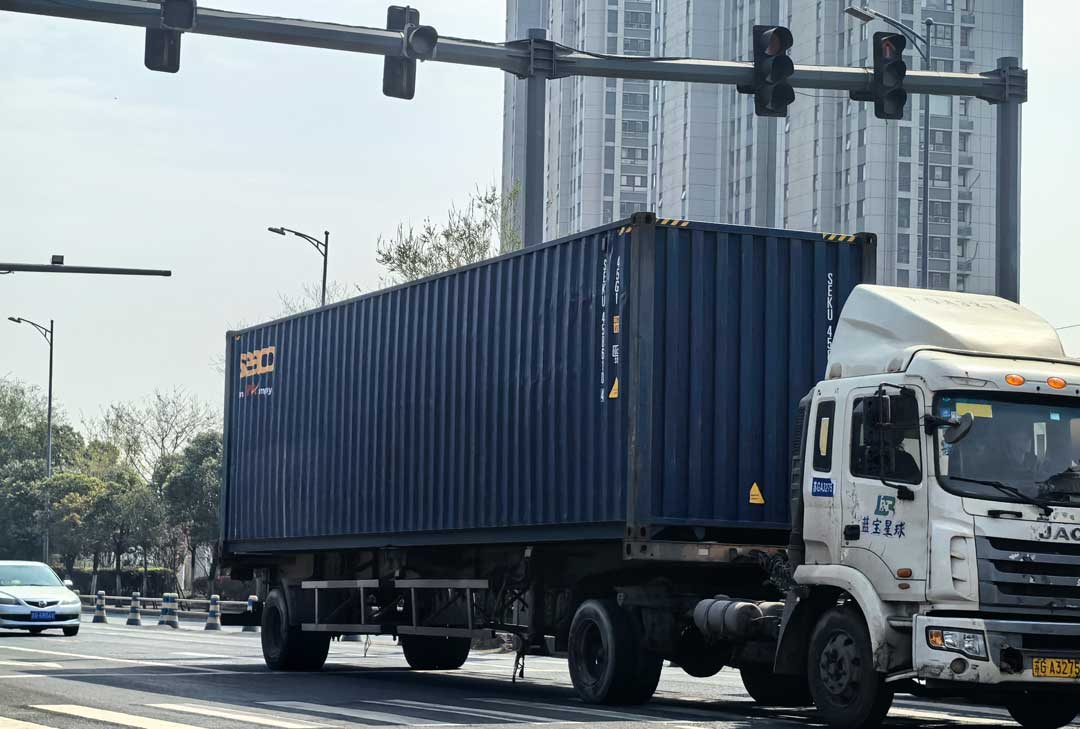
Orlando itself has no seaport; import containers must enter via a state port and move inland. The usable ports around the city sit on the eastern and western sides, each with different conditions.
| Port | Distance from Orlando | Features |
| Port Canaveral | About 45 miles, direct via SR 528 | Mainly cruise and breakbulk, with Foreign-Trade Zone 136 and on-site clearance; does not handle Asian-direction container mainline services |
| Jacksonville (JAXPORT) | About 2.5 hours | Containers, autos and breakbulk, with on-dock rail and three railroad connections |
| Tampa Bay | About 1.5 hours | Gulf Coast port, with bulk and containers in balance |
| Miami | About 3.5 hours | South Florida container and air port, dense Latin America-direction services |
| Savannah | About 4.5 hours | Major U.S. Southeast container port with many Asian-direction mainline calls |
Which port import containers enter through depends on the combination of carrier services and the final receiving market. For Central Florida destinations, entry via Jacksonville or Savannah with onward trucking is the more common arrangement; Port Canaveral's advantage is the short overland distance, but container liner services are limited.
Central Florida's warehousing and distribution demand is driven by two lines: consumer demand from local residents and tourism retail, and e-commerce fulfillment demand for regional distribution centers. Warehousing facilities concentrate in southern and northwestern Orlando.
| Item | Content |
| Main warehousing belts | Southern and northwestern Orlando, near the airport and the I-4 corridor |
| Demand sources | E-commerce fulfillment, tourism retail, regional distribution |
| On-site service providers | Multiple third-party logistics companies covering general, cold-chain and dangerous goods warehousing |
| Site selection considerations | Preferably near the airport cargo area or the I-4 / SR 528 interchange, balancing air connection with in-state distribution |
| Seasonal factor | Hurricane season requires evaluating properties' wind and flood resistance and contingency plans |
The city's warehousing is structurally fulfillment-oriented — medium single-building area with frequent turnover — which does not fully match long-term FCL storage demand. If the business pattern is FCL delivery to warehouse followed by batch shipping per order, confirm whether the selected property's slot depth and dock count meet requirements.
Orlando's tariff arrangements fall under Foreign-Trade Zone 42. The Greater Orlando Aviation Authority is the grantee, the service area covers Orange County, and the zone is managed under the Alternative Site Framework.
| Item | Content |
| Zone number | 42 |
| Grantee | Greater Orlando Aviation Authority (GOAA) |
| Approval date | September 29, 1978 |
| Service area | Orange County |
| Activation cap | 2,000 acres |
| Activated area | 35.79 acres in total |
| Main sites | 001 Orlando International Airport (15.35 acres); 002 Lincoln International Corporate Park (1.28 acres); 003 Total Logistics Services, Inc. (1.42 acres) |
| Subzone | 42A Mitsubishi Power Americas |
| Grantee address | 5855 Cargo Road, Orlando, FL 32827 |
The zone's activated area is small relative to the 2,000-acre cap, meaning there is still considerable site quota available for application. The airport site connects directly with the airport cargo area and suits cargo types needing air linkage. Applicability must be judged case by case against cargo type, tariff number and expected flow cycle.
Cargo from China to Orlando moves by air and ocean, with substantially different route structures.
Route choice depends on three things: transport mode determined by cargo value and timing requirements, volume scale, and the direction of the receiving market.
Transit time is determined jointly by transport mode and port of entry, and must be calculated separately by mode.
| Mode | Common range | Notes |
| Air via Orlando | About 5 to 8 days | Including transit and clearance, with belly-hold capacity as the base |
| Ocean via an East Coast port | About 30 to 40 days | Ocean leg to Jacksonville, Savannah or Miami |
| Door-to-door total | About 30 to 45 days | Including ocean, clearance and inland delivery |
| Ocean via West Coast rail transfer | Per train schedule | Inland leg affected by block train loading rates |
The ranges above are the overlap of multiple forwarders' published transit tables, which differ considerably between sources, so they serve only as a common-range reference. Hurricane season is a local variable: from June to November, ports and highways may close temporarily due to weather, and delivery plans in this period should allow extra buffer.
How cargo is picked up in Orlando depends on the port of entry and transport mode. Air cargo is picked up in the airport cargo area; ocean cargo is picked up at the container port and trucked in.
One point needs emphasis: airport cargo stations' free storage period is usually short, charged by the day, unlike marine terminals' working-day basis. Air cargo pickup arrangements after arrival should be tighter than ocean to control warehousing costs.
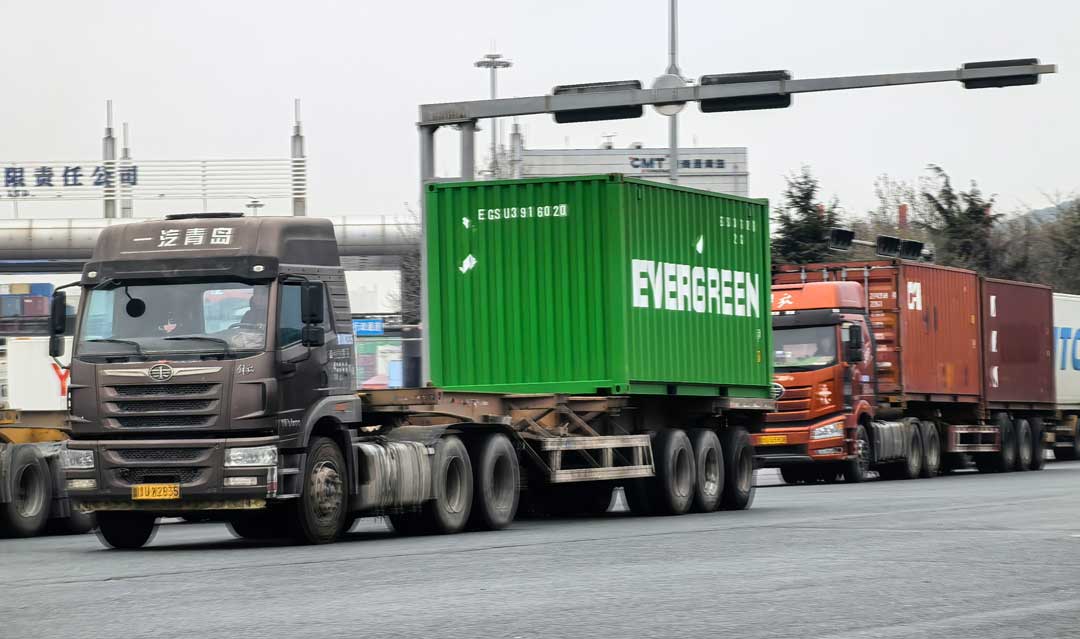
Orlando port can accept import entries and has examination capability, with examinations conducted at designated airport locations. As an airport-type port, its examination arrangements differ from marine terminals.
| Item | Explanation |
| Filing method | Air cargo is filed directly at the port; ocean cargo can be filed at the port of entry and then moved in |
| Exam trigger | After filing, customs risk assessment decides whether to place a hold |
| Exam location | Designated locations in the airport cargo area or a centralized exam site |
| Agricultural exam | The port handles quarantine functions for agricultural, animal and plant products |
| Deferred examination | Advance phone appointment required, Monday to Friday 08:00-12:00 |
| Release method | After customs releases in the filing system, the cargo station can deliver the cargo |
Florida ports pay additional quarantine attention to fresh and animal and plant products. For shipments involving seafood, fresh fruit, flowers or wood, the agricultural examination step must be counted into delivery time, and the relevant documents should be prepared at filing.
Port and cargo station hours differ, and pickup and filing arrangements need to be checked separately.
| Body | Regular hours |
| Customs port | Monday to Friday 08:00-16:00; closed Saturday and Sunday |
| Commercial (cargo) operations | Monday to Friday 08:00-16:00 |
| Deferred examination | Monday to Friday 08:00-12:00, advance appointment required |
| Aircraft arrival | 24-hour duty phone handling |
| Cargo stations | Per the hours published by each airline and ground handler |
There are 11 federal holidays in total, including New Year's Day, Martin Luther King Jr. Day, Presidents Day, Memorial Day, Independence Day, Labor Day, Columbus Day, Veterans Day, Thanksgiving, Christmas and Juneteenth. Customs does not handle routine business on holidays, and air cargo needing pickup during holidays should be arranged in advance with the cargo station and handler.
Orlando's freight rhythm is influenced by the tourism and retail cycles, with seasonal characteristics different from port cities.
| Period | Characteristic |
| January to March | Tourism peak season, consumer goods and retail restocking demand rises, airport passenger and cargo flow move up together |
| April to June | Freight enters a flat period, with ocean FCL arrivals relatively concentrated |
| July to September | E-commerce stocking begins, coinciding with hurricane season; weather has a large effect on ports and highways |
| October to December | Year-end retail and e-commerce peak, with express shipment volumes rising noticeably |
The most notable local seasonal feature is hurricane season. From June to November, Florida's ports, airports and highways may close temporarily due to storms, extending both in-transit and on-site time. Delivery plans in this period should add buffer beyond standard transit times, and warehouse contingency plans should be confirmed in advance.
Orlando's value for import business from China can be summarized as four verifiable operating conditions.
Correspondingly, Orlando has points that must be planned for in advance: no local seaport, so all ocean cargo must enter via another port and move inland; airport capacity is mainly belly hold, so out-of-gauge and full-charter cargo needs separate arrangement; airport cargo stations have short free storage periods charged by the day; and hurricane season's effect on ports and highways cannot be ignored. Overall, Orlando suits import business with Florida and the U.S. Southeast as the receiving market and cargo types favoring belly-hold transport such as general cargo, fresh produce and pharmaceuticals.
No. Orlando is an inland city with no seaport. Import containers usually arrive via Jacksonville, Savannah, Miami or Tampa Bay with onward trucking. Port Canaveral, about 45 miles away, is mainly cruise and breakbulk and does not handle Asian-direction container mainline services.
On the cross-checked basis of multiple forwarders' published transit tables, the common range for air via Orlando International Airport is about 5 to 8 days, including transit and clearance. Because capacity is mainly passenger-flight belly hold, cargo dimensions and weight are limited by available space, and out-of-gauge cargo must be arranged via another airport.
The airport is capable of handling Group VI large aircraft, with four parallel north-south runways. However, actual cargo operations are mainly belly-hold on passenger flights, with dedicated freighters accounting for a low share, so full-charter business usually needs separate coordination with the airline and handler.
Air cargo is picked up at each airline's cargo station or ground handler warehouse in the airport cargo area, against the arrival notice and release documents, with a window appointment. Ocean cargo is picked up at the container terminal of the port of entry and trucked in. Airport cargo stations' free storage is usually charged by the day, shorter than marine terminals' working-day basis.
Examinations are conducted at designated locations in the airport cargo area or at a centralized exam site, initiated by customs or partner government agencies. Florida pays additional quarantine attention to fresh and animal and plant products; for shipments involving seafood, fresh fruit, flowers or wood, the agricultural examination step should be counted into delivery time.
FTZ 42 has the Greater Orlando Aviation Authority as grantee, serves Orange County, with a 2,000-acre activation cap and about 35.79 acres activated. Main sites include the airport parcel and two business parks, plus a subzone for Mitsubishi Power Americas. Applicability must be judged case by case against cargo type and tariff number.
Florida's hurricane season runs from June to November. During this period, ports, airports and highways may close temporarily due to storms, extending both in-transit and on-site time, and terminals and cargo stations may suspend operations. Delivery plans in this period should add buffer beyond standard transit times, and warehouse contingency plans should be confirmed in advance.
Orlando's port code is 1808, with the office at 9043 Tradeport Drive, under the Area Port of Tampa. The port office works Monday to Friday 08:00 to 16:00; cargo operations and deferred examination require advance appointment. Two additional airside examination points are located at Airside 4 and Terminal C, working into the night.
Orlando has no local seaport; ocean cargo usually discharges at Jacksonville, Savannah, Miami or Tampa Bay and arrives by truck. The nearest port, Port Canaveral, is about 45 miles away and is mainly cruise and breakbulk, so container cargo mostly enters through the four ports above.
Shipping from China to USA
Planning a shipment or just comparing options? Contact our freight experts to get a tailored rate within 24 hours.
