
Philadelphia sits at the southeastern corner of Pennsylvania, with the city's eastern boundary formed by the Delaware River. The river splits here, with the main stream flowing south into Delaware Bay and the Atlantic, and the Schuylkill River joining downtown from the northwest. The port's position is characteristic: it does not front the open ocean, but extends upstream along a navigable river. For importers, three modules matter: the channel's depth and tidal conditions, the division of labor among its main terminals, and its two dedicated capabilities in refrigerated and auto cargo. Together they decide delivery paths from China to Pennsylvania and U.S. Northeast inland markets.
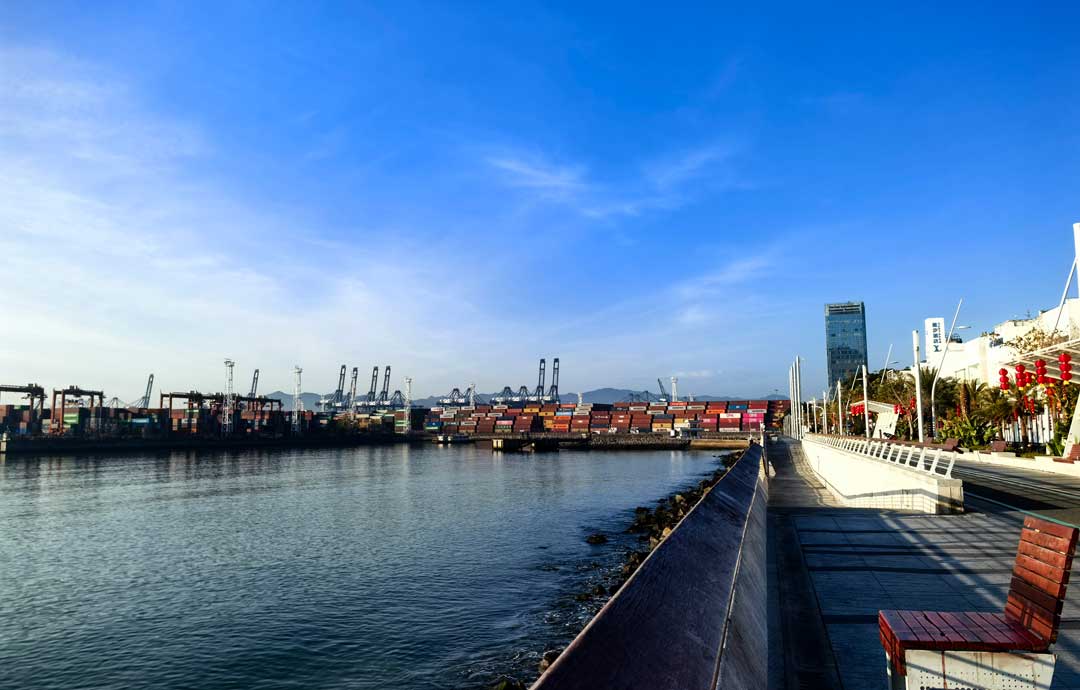
Philadelphia sits at 39 degrees 57 minutes north, 75 degrees 10 minutes west, in the southeastern corner of Pennsylvania, with the city's eastern boundary formed by the Delaware River. The river splits here, with the main stream flowing south into Delaware Bay and the Atlantic, and the Schuylkill River joining downtown from the northwest. The port's position is characteristic: it does not front the open ocean, but extends upstream along a navigable river.
Directly relevant to business shipping from China are this port's three modules: the channel's depth and tidal conditions, the division of labor among its main terminals, and its two dedicated capabilities in refrigerated and auto cargo. Together they decide delivery paths from China to Pennsylvania and U.S. Northeast inland markets.
Philadelphia's identity in the U.S. customs system is a port of entry with code 1101. The port is a full-service port with examination, entry, collection and verification functions, with its parent field office in Baltimore.
| Port code | 1101 |
| Registered name | Philadelphia, Pennsylvania |
| Address | 200 Chestnut Street, Philadelphia, PA 19106 |
| Phone | +1 215-717-5800 (no fax number listed) |
| Port director | Cleatus P. Hunt, Jr. |
| Office hours | Monday to Friday 08:00 to 16:00 (Eastern Time), closed weekends |
| Parent field office | Baltimore Field Office |
| Marine business email | cbpaiphila@cbp.dhs.gov |
| Air cargo business email | cbpaiairphila@cbp.dhs.gov |
The port operates several service windows, of which those directly related to container ocean business are the Vessel Central window and the Centralized Examination Station. The former receives vessel arrival and departure filings; the latter handles devanning examinations of targeted cargo. Service hours and contact details for each window are below.
| Window | Contact | Hours |
| Vessel Central | (215) 717-5874; VESSELCENTRALPHL@cbp.dhs.gov | Monday to Friday 07:00 to 21:00; Saturday and Sunday 07:00 to 16:00, by appointment |
| Entry | (215) 717-5800; fax (215) 597-4570 | Monday to Friday 08:00 to 16:00 |
| Fines, penalties and seizures | (215) 717-5800; fax (215) 597-0924 | Monday to Friday 08:00 to 16:00 |
| Centralized Examination Station (CES) | (215) 717-5800; fax (215) 755-2608 | Monday to Friday 08:00 to 17:00 |
| Airport deferred inspection point | (215) 863-4247 | Monday to Friday 12:00 to 20:00 |
Pennsylvania has three other ports: 1104 Pittsburgh International Airport, 1109 Harrisburg, and 4106 Erie. Pittsburgh and Harrisburg fall under the Baltimore Field Office, Erie under the Chicago Field Office.
Philadelphia's port authority is the Philadelphia Regional Port Authority, which has used the PhilaPort name externally since 2017. The authority is an independent Commonwealth of Pennsylvania agency responsible for managing, maintaining and promoting the public port facilities along the Delaware River and preparing port-area plans.
The port operates as a landlord port: the port authority holds the land and shoreline but does not operate terminals directly, with loading and unloading handled by tenant terminal operators. This structure means shippers in practice deal with terminal operators and carriers, not the port authority itself.
| Terminal | Main cargoes | Notes |
| Packer Avenue Marine Terminal | Containers (including reefers), breakbulk | The port's main container terminal, 160 acres, 6 berths |
| Tioga Marine Terminal | Steel, forest products, project cargo, few containers | In the Port Richmond area, multipurpose |
| Southport Auto Terminal | Vehicle imports | 155 acres, with vehicle processing center |
| Pennsylvania Terminals | Containers and breakbulk | Lower Delaware River, independent operator |
| Girard Point | Petroleum and chemicals | Dedicated liquid bulk |
The port area extends along about 22 miles of Delaware River shoreline, totaling over 3,000 acres, spanning Philadelphia and Camden, New Jersey on the opposite bank. The port authority released a 15-year master plan in 2024, oriented toward expanding container and cold chain capacity and electrifying terminal equipment. The plan's long-term annual container throughput target is about 1.57 million TEU.
Packer Avenue Marine Terminal concentrates the port's container operations and is the main landing point for reefer cargo. The terminal is in South Philadelphia, facing the Delaware River main channel directly, with city arterials and rail yards immediately behind.
| Item | Parameter |
| Land area | 160 acres |
| Berths | 6 |
| Depth | 45 feet (mean lower low water) |
| Ship-to-shore cranes | 5 post-Panamax, 2 Panamax |
| Reefer plugs | 4,000 |
| On-dock cold storage | 157,000 sq ft |
| On-dock examination building | 44,000 sq ft |
| Hinterland rail | Two rail yards, accessed by CSX, Norfolk Southern and CN |
| Highway access | Direct connections to I-95 and I-76 |
| Operator | Greenwich Terminals LLC (Holt Logistics group) |
The terminal's crane configuration was expanded under a port investment program launched in 2016, with new post-Panamax cranes working alongside existing equipment and berth-side depth simultaneously deepened to 45 feet to match the channel. The on-dock examination building and Philadelphia's CES mean targeted cargo need not be transported long distances to off-terminal exam points, which matters especially for time-sensitive reefer cargo.
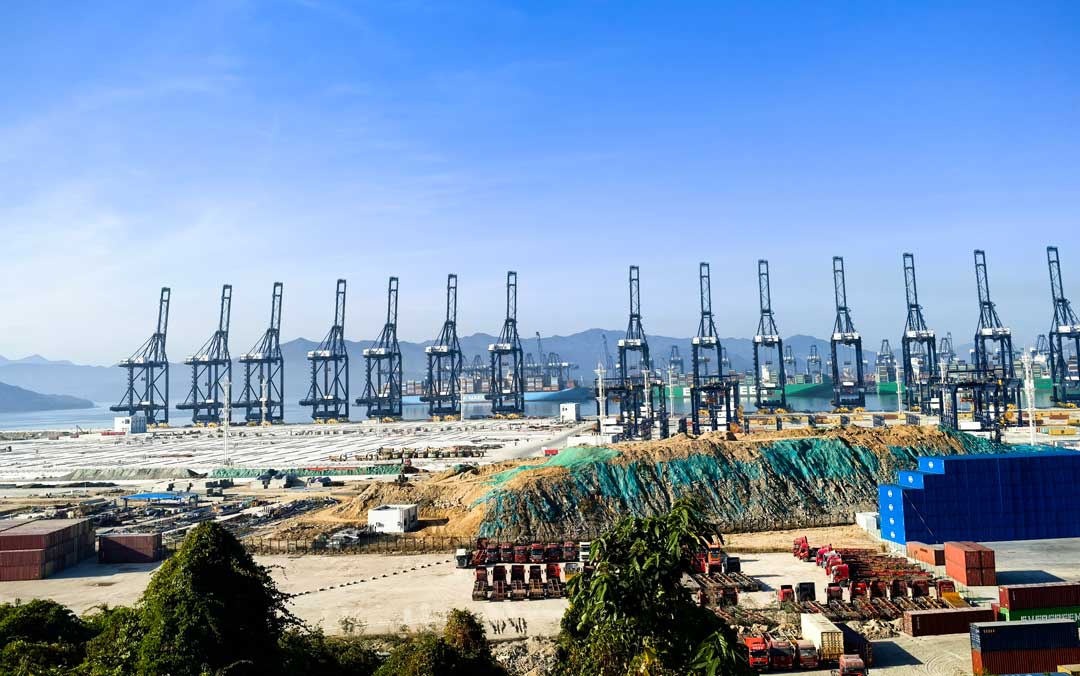
Tioga Marine Terminal, in the Port Richmond area on the upper Delaware River, is a multipurpose terminal handling containers, breakbulk and project cargo. In the port's division of labor it takes on steel and forest product imports, and is also a landing point for some ro-ro and project cargo.
For import businesses centered on steel, lumber or large equipment, Tioga's handling differs from a conventional container terminal, and before pickup it must be confirmed whether cargo is discharged onto the terminal stack or enters the warehouse directly, which affects subsequent truck arrangements and exam location.
Southport Terminal is the port's vehicle import base, put into use in 2019 with investment of about USD 110 million, on 155 acres, with a vehicle processing center. The terminal handles vehicles shipped by Hyundai and Kia from Korea and Mexico, distributed onward to U.S. Northeast markets.
| Item | Content |
| Commissioned | 2019 |
| Investment | About USD 110 million |
| Land area | 155 acres |
| Daily processing capacity | About 1,000 vehicles |
| Main cargo owners | Hyundai, Kia (carried by ro-ro operators) |
| Berths | Berths 1 and 2 are the first new berths on the Delaware River in over 55 years |
| Rail | Norfolk Southern rail ramp service in progress |
Part of the terminal's construction funding came from federal infrastructure grants. For shippers of non-auto cargo, Southport's significance is mainly that it absorbs berth pressure in the port area, reducing container terminal queue times in peak season.
Deepening the Delaware River main channel is the port's most important project of the past two decades. The channel was deepened from 40 feet to 45 feet, led by the U.S. Army Corps of Engineers with Pennsylvania as local sponsor, starting in 2010, covering about 103 to 105 miles of river.
| Item | Content |
| Depth before and after | 40 feet to 45 feet |
| Lead agency | U.S. Army Corps of Engineers; Pennsylvania as local sponsor |
| Start year | 2010 |
| Project river section | About 103 to 105 miles |
| Tidal condition | 45 feet is the reference depth, with an additional tidal window of about 6 feet |
| Terminal-side support | Main berths simultaneously deepened to 45 feet |
Depth conditions directly affect available vessel types. After the channel's completion, the port received a 16,200 TEU container ship in 2024, the largest vessel type ever to call at the port. Note that 45 feet is the reference depth at mean lower low water, actual available draft varies with the day's tide, and deep-draft vessel movements are usually planned around tidal windows.
The Port of Philadelphia's container volume has grown continuously over the past decade. Per the port's public figures, 2025 container volume was 889,268 TEU, up about 6% year on year and about 39% above 2020.
| Item | Content |
| 2025 container volume | 889,268 TEU, up about 6% year on year |
| 2024 container volume | About 840,000 TEU, up about 13% year on year, a record year |
| 2024 vehicle imports | 281,819 units, up about 9% year on year |
| 2024 forest products | 871,309 (measurement unit per cargo type), up about 3% year on year |
| 2024 total tonnage | Up about 8% year on year |
| Import cargoes | Refrigerated and fresh, pharmaceutical and chemicals, machinery, consumer goods |
| Export cargoes | Forest products, chemicals, steel-related manufactured goods |
One clear feature of the port's cargo mix: reefer cargo accounts for about 60% of container imports, which makes the port's sourcing highly season-correlated, with arrivals rising noticeably in fresh produce seasons. The impact on shippers is that reefer box slots and plugs are tight during produce seasons, and both booking and pickup arrangements need to be made early.
Refrigerated and fresh cargo is the port's most distinctive category. The port has deployed cold chain facilities at three levels: on-terminal, terminal-adjacent and regional, forming a continuous chain from ship plug to distribution warehouse.
| Level | Facilities and parameters |
| Terminal plugs | Packer Avenue Marine Terminal reefer plugs: 4,000 |
| On-dock cold storage | 157,000 sq ft, immediately adjacent to the stack |
| Cold storage under construction | 165,500 sq ft, the final phase of the port distribution center, completing 2026 |
| Regional wholesale facilities | Philadelphia Wholesale Produce Market, 686,000 sq ft floor area, fully refrigerated design |
| Connection mode | Reefer boxes dray short distances from the terminal into the regional cold storage cluster |
| Exam support | On-dock examination building and CES shorten the exam path for reefer cargo |
For reefer importers, plug counts and cold storage locations decide two things: whether the container can be powered immediately on discharge, and whether cargo can be devanned at its original temperature during exam. The facility density at these two points distinguishes Philadelphia from other East Coast ports, and is the main reason reefer cargo chooses to enter here.
The port's rail conditions concentrate behind Packer Avenue Marine Terminal, where two rail yards are accessed by three railroad companies, covering both dry and reefer transport.
Rail conditions matter for the port's inland distribution. Compared with all-truck, the cost structure to the Midwest and Canada by rail is more stable, but yard operating time and train schedules must be counted into the delivery plan.
Highways are the main mode for the port's cargo distribution. The port area connects directly to the interstate network, with inland corridors covering both U.S. Northeast and Midwest markets.
| Corridor | Direction and role |
| I-95 | Northeast Corridor main line, immediately adjacent to the main container terminal, north to New York and New England, south to Baltimore and Washington |
| I-76 | West from Philadelphia to central Pennsylvania and the Ohio direction |
| I-476 | Bypass, connecting I-95 and I-78 |
| I-78 / I-81 / I-80 / I-84 | Lehigh Valley corridor, to New York upstate, Ohio and the Midwest |
| Across the Delaware River | Via bridges to southern New Jersey, able to split traffic to markets south of Philadelphia |
Eastern Pennsylvania's industrial corridor centers on the Lehigh Valley, which has an independent manufacturing base and warehousing supply. On the warehousing market, eastern Pennsylvania and southern New Jersey had industrial vacancy of about 9.4% in late 2025, Philadelphia's industrial market about 11.0% in Q1 2026, and the Lehigh Valley about 10.9%. These levels are above the norm for the Midwest inland markets in this series, and are for reference when selecting sites.
Beyond containers and vehicles, the port's breakbulk business is dominated by steel and forest products, concentrated at Tioga Marine Terminal and specialized downstream berths.
| Cargo | Operating features |
| Steel | Mainly slabs, coils and sections, with mobile harbor cranes and covered warehouses |
| Forest products | Lumber, pulp and paper, mostly via specialized berths and warehouses in the Tioga area |
| Packaging | Mostly shipped in bulk or bundles, not entering the container stack |
| Pickup mode | Picked up in batches per delivery order, with loading and truck slots by appointment |
Breakbulk and containers differ significantly in pickup process: breakbulk is usually stored in covered warehouses, picked up in batches per bill of lading, and requires terminal loading assistance. If cargo is steel or lumber, booking and pickup arrangements should be confirmed separately with the terminal operator.
The port's tariff arrangement falls under foreign-trade zone 35 (FTZ 35). The zone covers the port area and surrounding industrial belt, allowing imported goods to be stored, sorted, repackaged or re-exported without duty payment.
| Item | Content |
| Zone number | 35 |
| Coverage | Philadelphia port area and surrounding industrial belt |
| Subzone case | A pharmaceutical packaging company holds a subzone, with production activity approved from March 2025 |
| Main uses | Duty deferral, import re-export, cargo flow and distribution |
The foreign-trade zone's role is to move the duty payment point later, suited to businesses needing to sort, label or kit-assemble within the United States before entering the market. Applicability must be judged case by case based on cargo type, tariff number and expected flow cycle.
There is no direct ocean leg from China to Philadelphia; cargo usually transships via East Coast or West Coast trunk ports, then moves by rail or truck to Philadelphia. When calling direct on the East Coast, vessels proceed north along the Atlantic, then enter Delaware Bay and up the Delaware River.
| Chinese origin port | Ocean leg common range | Notes |
| Shanghai | 30 to 35 days | Mainly via East Coast port transshipment |
| Ningbo | 30 to 35 days | Including Yangtze River Delta feeder ports |
| Shenzhen | 30 to 35 days | Including Pearl River Delta feeder ports |
| Qingdao | 35 to 40 days | Northern port, longer voyage |
The ranges above are cross-results of multiple forwarders' published transit tables, on an ocean-leg basis. A second category is door-to-door quotes, which add customs clearance and inland delivery, usually 35 to 45 days; the two cannot be compared directly. Voyages are affected by season, schedule adjustments and port congestion, and specific schedules are per the carrier's publication at booking time.
The port's liner services are mainly East Coast route feeders and trunk extensions, with most carriers extending to Philadelphia after trunk calls at New York/New Jersey or Baltimore. Services calling at this port fall into three types.
| Service type | Features |
| East Coast trunk direct calls | Call at Philadelphia after arriving on the East Coast from Asia via Suez or Panama directions, with relatively concentrated volumes |
| Regional feeders | Short-haul transshipment from New York/New Jersey or Baltimore, with denser schedules |
| Reefer specialty services | Call at Philadelphia to take fresh and reefer cargo, with obvious seasonality |
| Ro-ro services | Vehicle carriers call at Packer Avenue or Southport, handling vehicle imports and exports |
Specific vessel names, voyages and call sequences adjust with the season, and booking should follow the carrier's current schedule. The port's reefer distribution attribute creates short-term slot concentration during fresh produce seasons, and cold chain cargo is advised to lock slots early.
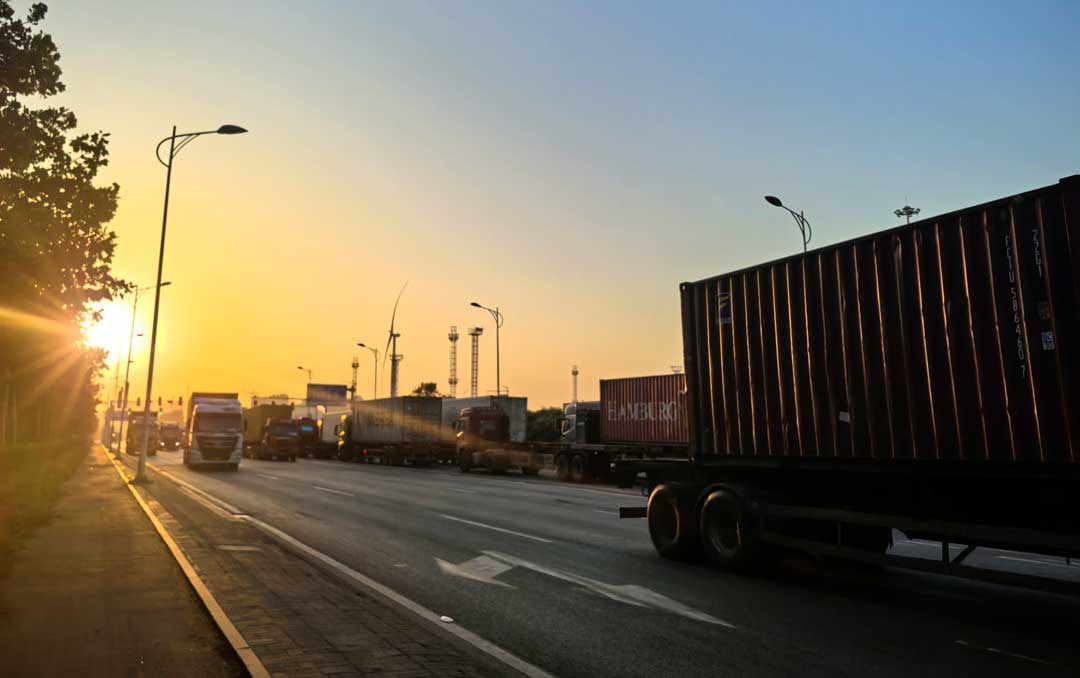
Container pickup at Philadelphia concentrates at Packer Avenue Marine Terminal, with gates operating on an appointment basis. Understanding appointment rules and free time is key to controlling local costs.
Pickup timing is especially critical for reefer cargo. While plugged in at the terminal, the terminal supplies power; after pickup, power shifts to the chassis genset, creating one power handover. The shorter the handover window, the lower the temperature fluctuation risk, so reefer pickup is usually advised for the earlier part of the free period rather than the end.
Examinations at Philadelphia occur in the terminal's examination building and the Philadelphia CES. Exams are initiated by customs or partner government agencies, and cargo owners and brokers must cooperate per notice.
| Step | Notes |
| Exam initiation | Decided by customs risk assessment after entry filing |
| Exam location | Packer Avenue Marine Terminal examination building; Philadelphia Centralized Examination Station (CES) |
| Common types | Machine exam, devanning exam, agricultural and food exams |
| Exam fees | Charged by the exam station per published rates, including movement and devanning fees |
| Release mode | After customs releases in the filing system, the terminal can accept pickup |
Exams affect reefer and fresh cargo most. The on-dock examination building and CES mean cargo need not be transported long distances to off-station exam points, shortening wait times during exams, but the exam itself still occupies the delivery window, and cargo with short shelf life should have buffer in the pickup plan.
Port operating hours are published by terminal operators, with holidays adjusted per federal holiday arrangements. Actual available hours for loading and pickup are below.
| Entity | Regular hours |
| Customs port | Monday to Friday 08:00 to 16:00; closed weekends |
| Vessel Central | Monday to Friday 07:00 to 21:00; Saturday and Sunday 07:00 to 16:00, by appointment |
| Centralized Examination Station | Monday to Friday 08:00 to 17:00 |
| Terminal gates | Per terminal operator's published hours, with some terminals running early and night windows |
There are 11 federal holidays in total: New Year's Day, Martin Luther King Jr. Day, Presidents Day, Memorial Day, Independence Day, Labor Day, Columbus Day, Veterans Day, Thanksgiving and Christmas, plus Juneteenth. Customs and terminals do not operate on holidays, and gate queue times are usually longer around holidays.
The port's peak season relates directly to its cargo mix, with reefer fresh produce seasons and container export agricultural seasons together forming the year's rhythm.
| Period | Features |
| Winter to early spring | Concentrated arrivals of southern hemisphere fruit and counter-season fresh produce, with high reefer plug and cold storage utilization |
| Spring | Fresh arrivals continue, container volumes stable overall |
| Summer to early autumn | Container imports enter the year's high, with vehicle imports and consumer goods rising in step |
| Late autumn | Forest product and agricultural exports peak, with relatively ample export box supply |
Note that winter weather interferes significantly with Delaware River navigation. Ice conditions or high winds can extend vessel waiting times, in turn affecting subsequent pickup plans. Winter reefer pickup arrangements should allow extra buffer.
The Port of Philadelphia's value for business shipping from China can be summarized as four verifiable operating conditions.
Correspondingly, the port also has points to count into plans in advance: the channel is tide-affected, with deep-draft vessels needing tidal windows; the shoreline is river-laid with limited berths, and peak-season queues exceed ocean-front ports; reefer plugs and box supply are relatively tight during fresh produce seasons. Overall, the Port of Philadelphia suits import businesses with receiving locations in Pennsylvania and the U.S. Northeast inland, and cargo types leaning toward reefer fresh or needing duty deferral arrangements.
There is no direct ocean leg. Ocean shipping from China to Philadelphia usually transships via an East Coast trunk port (such as New York/New Jersey or Baltimore), or moves by rail via a West Coast port of entry. Actual call and transshipment arrangements follow the carrier's schedule at booking time.
Packer Avenue Marine Terminal has 4,000 reefer plugs total, plus 157,000 sq ft of on-dock cold storage and a 44,000 sq ft on-dock examination building for local reefer exams. The final phase of the port distribution center includes a new 165,500 sq ft cold storage facility, scheduled for completion in 2026.
Pickup concentrates at Packer Avenue Marine Terminal, where trucking companies must first register the slot through the terminal appointment system, carrying the arrival notice, released bill of lading, customs release receipt and pickup authorization. Free time and overage rates are published by the terminal or carrier, with reefer boxes additionally charged plug fees.
Targeted cargo is examined in the examination building inside Packer Avenue Marine Terminal, or at the Philadelphia Centralized Examination Station (CES). The exam station charges movement and devanning fees per published rates, and after the exam completes customs releases in the filing system before the terminal can accept pickup.
The two ports' markets overlap and differ. When the receiving location is in Pennsylvania, Delaware or southern New Jersey, Philadelphia's overland distance is usually shorter; when in the New York metro area or New England direction, New York/New Jersey has denser schedules. Reefer and fresh cargo types can also compare the two ports' plug and cold storage conditions.
Per the cross-caliber of multiple forwarders' published transit tables, the ocean leg from Shanghai, Ningbo and Shenzhen is commonly 30 to 35 days, and from Qingdao 35 to 40 days. Door-to-door quotes add customs clearance and delivery on this basis, usually 35 to 45 days. Schedules are affected by season and port congestion.
The port's tariff arrangement falls under foreign-trade zone 35. Imported goods can be stored, sorted, repackaged or re-exported without duty payment, suited to businesses needing value-added processing within the United States before market entry or re-export. Applicability must be judged case by case based on cargo type and tariff number.
The Delaware River main channel reaches 45 feet after dredging, with main berth depths at 45 feet, able to receive post-Panamax container ships. Channel draft is tide-affected, with an additional tidal window of about 6 feet at high water, and deep-draft vessels need to plan movements around tidal windows.
The port authority is the Philadelphia Regional Port Authority (PRPA), which has used PhilaPort as its external brand name since 2017. The authority is a landlord port authority, responsible for port-area shoreline, terminal and supporting facility planning and lease management, with daily terminal operations handled by tenant terminal operators. The port area extends along the Delaware River with about 22 miles of shoreline.
Shipping from China to USA
Planning a shipment or just comparing options? Contact our freight experts to get a tailored rate within 24 hours.
