
Phoenix sits at 33 degrees 26 minutes north, 112 degrees 04 minutes west, in south-central Arizona, on a desert basin along the Salt River. The metro area's population is about 5.26 million, the state's largest city. Its position is between the West Coast and the U.S.-Mexico border: west to California's ports, south to the Mexican border. The city has no seaport, with Los Angeles and Long Beach about 600 km away by road. For importers, three modules matter: the distribution of rail facilities and the progress of the hub under construction, the highway network's channels toward West Coast ports and the border, and the combined handling capability of its airport and foreign-trade zone. Together they decide delivery paths from China to U.S. Southwest markets.
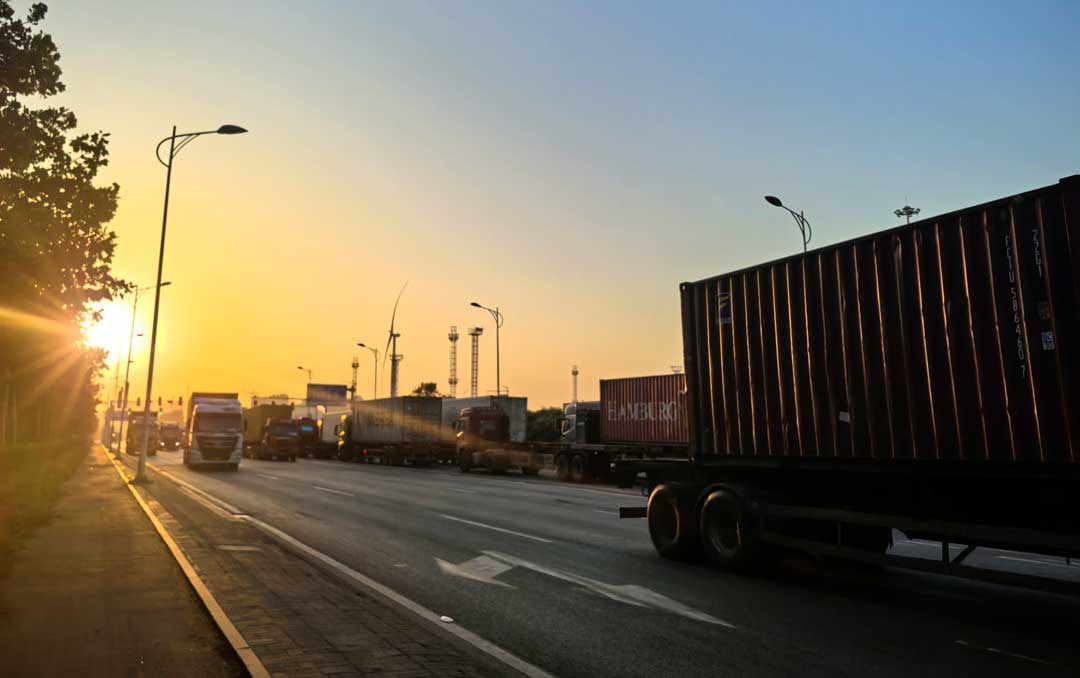
Phoenix sits at 33 degrees 26 minutes north, 112 degrees 04 minutes west, in south-central Arizona, with the city built on a desert basin along the Salt River. Its position is between the West Coast and the U.S.-Mexico border: west to California's ports, south to the Mexican border.
Directly relevant to business shipping from China are this city's three modules: the distribution of rail facilities and the progress of the hub under construction, the highway network's channels toward West Coast ports and the border, and the combined handling capability of its airport and foreign-trade zone. Together they decide delivery paths from China to U.S. Southwest markets.
Phoenix's identity in the U.S. customs system is a port of entry with code 2605. The port is not a seaport, but is oriented to air and inland intermodal functions. The gateway page lists no direct port-level phone number; business contact is handled through sub-windows.
| Port code | 2605 |
| Registered name | Phoenix, Arizona |
| Address | 3002 E. Old Tower Road, Suite 400, Phoenix, AZ 85034 |
| Port director | Maricela Perez |
| Entry matters | (602) 914-1400; fax (602) 914-1409 |
| Cargo hours | Monday to Friday 08:30 to 16:30 (Mountain Time) |
| Passenger processing | (602) 392-4440; fax (602) 286-0844; daily 08:00 to 21:00 |
The port's cargo and passenger functions are located in separate areas, with movement between them restricted by security. The gateway page notes that before going to the Terminal 4 passenger processing area, an escort must be obtained at the cargo facility. For import business, the practical contact is the cargo side, whose hours are normal weekday office hours.
Southern Arizona has several other border ports, including 2604 Nogales, 2602 Lukeville and 2603 Douglas. These ports handle Mexico-direction land transport, a different step from Phoenix's air and inland intermodal functions.
Phoenix's rail conditions are provided by one Class I railroad, with the yard in Glendale to the city's southwest, handling local container and trailer intermodal loading.
| Item | Content |
| Railroad | BNSF |
| Yard address | 5281 Tom Murray Road, Glendale, AZ 85301 |
| Yard code | Y386 |
| Distance from downtown | About 10 rail miles |
| Operations | Container and trailer intermodal loading |
| Capacity status | Not yet at capacity limit |
| Service adjustment | Announced August 2026: increased and faster intermodal service toward Dallas-Fort Worth |
This yard is the main landing point on the Southwest rail network for Phoenix. Import containers discharge at West Coast ports, move by trunk rail to here for unloading, then trucks complete local delivery. The yard is not yet at capacity, which has practical significance for peak-season pickup arrangements.
BNSF is building a large logistics hub in northwest Phoenix, clearly larger in scale than the existing yard. The project's three components differ in function.
| Component | Area | Function |
| Intermodal facility | 1,770 acres | Rail and truck transfer for containers and trailers |
| Logistics park | 1,420 acres | Warehouse and distribution facility land for intermodal customers |
| Logistics center | 1,131 acres | Industrial land with rail spurs |
| Total area | 4,321 acres | In the Wittmann area of northwestern Maricopa County |
| Investment scale | About USD 3.2 billion | BNSF's published total project cost |
| Timeline | Construction started 2025, opens 2028 | Per public reporting |
| Distance from downtown | About 36 rail miles | Northwest of the existing Glendale yard |
Placing warehouses and distribution facilities next to the intermodal yard reduces drayage distance between the yard and warehouses, which is the project's design starting point. The hub is planned to connect inland ports toward Southern California and Dallas. For import business, the project's impact is long-term: after completion, local intermodal handling capacity will rise noticeably and the range of warehouse site choices will expand correspondingly. As of now, the only usable local intermodal landing point remains the Glendale yard.
Highways are the main mode for Phoenix's cargo distribution. The city sits at the junction of two interstates, west to California ports, south to the Mexican border, east to New Mexico and the Texas direction.
| Corridor | Direction and role |
| I-10 | East-west trunk, west to the Los Angeles direction, southeast to Tucson and El Paso |
| I-17 | North-south trunk, north to Flagstaff then the Las Vegas direction |
| I-19 | South from Tucson to the Nogales border crossing |
| Loop 101 / 202 / 303 | City loops, splitting through-city traffic and connecting industrial areas |
| To West Coast ports | About 600 km road miles to Los Angeles and Long Beach |
| To the border | About 290 km to Nogales |
The city's highway structure suits radiating across all of Arizona and connecting Southern California and West Texas. The road distance west to California ports is short among U.S. inland cities, which makes long-haul trucking an option alongside rail; but road transport costs and weather factors (summer high temperatures restrict some cargo types) need to be considered together.
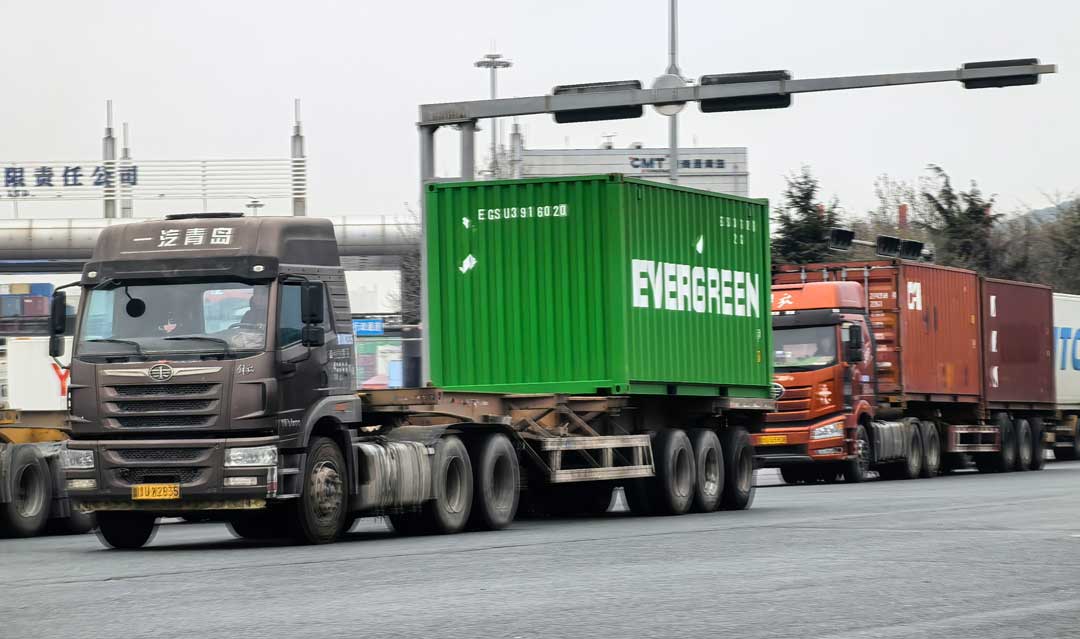
Phoenix Sky Harbor International Airport is owned and operated by the city, about 3 miles east of downtown. The airport is the customs port for the city's international air passenger and cargo, with cargo facilities in two dedicated cargo areas.
| Item | Content |
| Airport code | PHX / KPHX |
| Ownership and operation | City of Phoenix |
| 2025 passenger throughput | 51,620,420 passengers |
| 2025 aircraft movements | 487,143 |
| 2025 cargo volume | 322,741 tons (airport figure); FAA statistical combined freight and mail 362,702 tons (including 35,685 tons of mail) |
| Runways | 3, longest 11,489 feet |
| Gates | 114 |
| Average daily cargo handled | About 1,000 tons |
| Cargo areas | South cargo area and West cargo area, two locations |
| On-site agents and carriers | Swissport (with cargo warehouse); American Airlines Cargo, United Cargo, Southwest Cargo, IAG Cargo |
| Main cargoes | Semiconductor equipment and wafers, aircraft parts, medical devices, e-commerce parcels |
The airport's cargo structure combines freighter and passenger belly cargo. In January 2025, the federal government announced about USD 843 million in airport expansion grants, oriented toward raising overall capability. A gateway airport about 35 km east handles charter and freighter operations.
Phoenix's land channel south to Mexico is mainly the Nogales crossing, direct via I-19, the main commercial crossing point in southern Arizona.
| Item | Content |
| Main crossing | Nogales, Arizona |
| Distance | About 290 km south |
| Channel | I-19 south from Tucson, connecting Mexican Highway 15D |
| Applicable scenarios | Cross-border flow of Mexican processing and assembly, return cargo, and vehicle parts |
This direction's significance for import business lies in the cross-border link of supply chains. Some electronics and auto parts cargo is processed in Mexico before entering the United States, and the short road distance between Phoenix and the border suits taking on the U.S.-side distribution and warehousing function.
Phoenix's industrial warehousing market was in a phase of increasing supply and rising vacancy in 2025, but the demand side still shows net absorption. This structure is relatively favorable to tenants.
| Item | Content |
| Industrial vacancy | About 12.4% in Q4 2025 (commercial real estate firm figure); in Q1 the same year, different firms' figures ranged 13% to 16% |
| Average asking rent | About USD 12.99 per sq ft (Q4 2025) |
| Area under construction | About 17.7 million sq ft |
| Delivered in the past three years | About 87 million sq ft |
| Demand side | Q4 2025 net absorption about 4.4 million sq ft; full-year net absorption about 18.9 million sq ft |
| Supply structure | Recent new projects mainly large boxes over 100,000 sq ft |
| Site selection considerations | Preferably near the I-10 and Loop 202/303 junctions or the airport area, balancing rail yard and air connections |
Rising vacancy means tenants have a wider range of site choices and relatively ample rent negotiation room. One structural issue to note: supply is mainly large boxes, so if the business needs small-area or specially equipped properties, the range is actually limited. The full-container-to-warehouse, order-based dispatch model is fairly common in this city.
One feature of local import demand is the high share of electronics and semiconductor-related cargo. TSMC is expanding its fab campus locally, driving packaging, R&D and supplier projects, and forming local demand for high-value cargo.
| Item | Content |
| Core industries | Semiconductor manufacturing and packaging, electronic components, aircraft parts, medical devices |
| Typical import cargoes | Semiconductor equipment and wafers, precision components, cleanroom consumables, testing instruments |
| Transport features | High cargo value, time-sensitive, with air and temperature-controlled truckload used frequently |
| Warehousing requirements | Some cargoes need constant temperature, shock protection and clean conditions; property selection needs separate assessment |
| Compliance matters | Categories involving export controls and technology goods need classification and licensing confirmation before filing |
For this type of cargo, air and air-land intermodal shares are usually higher than other cargo types, and customs accuracy matters more than transport cost. Controlled cargo must complete classification and licensing confirmation before filing, which is beyond the scope of routine customs procedures.
Phoenix's tariff arrangement falls under foreign-trade zone 75. The zone is granted to the City of Phoenix, using a structure of general-purpose zones and subzones in parallel.
| Item | Content |
| Zone number | 75 |
| Grantee | City of Phoenix |
| Authorization basis | FTZ Board Order No. 185, March 25, 1982 |
| 2024 in-zone employment | Over 56,000 |
| 2024 goods flowing through | Over USD 18 billion |
| 2024 exports | Over USD 2.3 billion |
| Main uses | Duty deferral, import re-export, cargo flow and distribution |
Beyond the foreign-trade zone, Arizona has also made property tax arrangements for in-zone projects. Per Arizona Revised Statutes Title 42, Section 42-12006, Class 6 property located within an activated foreign-trade zone or subzone boundary is assessed at 5% of assessed value for property tax. This treatment usually applies only to new improvements and new movable property, requires case-by-case determination, and consent letters from each taxing jurisdiction must be submitted at application.
There is no direct ocean leg from China to Phoenix; cargo must complete an inland leg after discharge at a port or airport. Three common routings exist.
Routing choice depends mainly on three things: cargo value and timing requirements, volume scale, and the direction of the receiving market.
Transit time comprises the ocean or air leg and the inland leg; the two have different calibers and need separate calculation.
| Leg | Common range | Notes |
| Ocean leg (to West Coast port) | About 12 to 18 days | Major Chinese ports to the Los Angeles and Long Beach direction |
| Inland rail leg | Per carrier schedule | West Coast port to Glendale, commonly about 2 to 5 days |
| Door-to-door total | About 25 to 35 days | Including ocean, rail or truck, customs clearance and delivery |
| Air freight | About 4 to 7 days | Direct or via transit then onward to Sky Harbor |
The ranges above are overlapping results of multiple forwarders' published transit tables, with significant differences between sources, so they serve only as common-range reference. Actual voyages are affected by season, schedule adjustments and port congestion, and the inland leg is additionally affected by train loading rates and high-temperature season operating restrictions; specific times follow the carrier's published caliber at booking time.
Cargo pickup in Phoenix happens at the rail yard, and the process differs from seaport pickup. Understanding the yard's notice and free-period rules is key to controlling local costs.
One reminder: local summer high temperatures impose operating restrictions on some cargo types. Cargo needing constant temperature or heat protection should confirm vehicle and warehouse temperature-control conditions at pickup and delivery, and avoid prolonged outdoor exposure during daytime high-temperature periods.
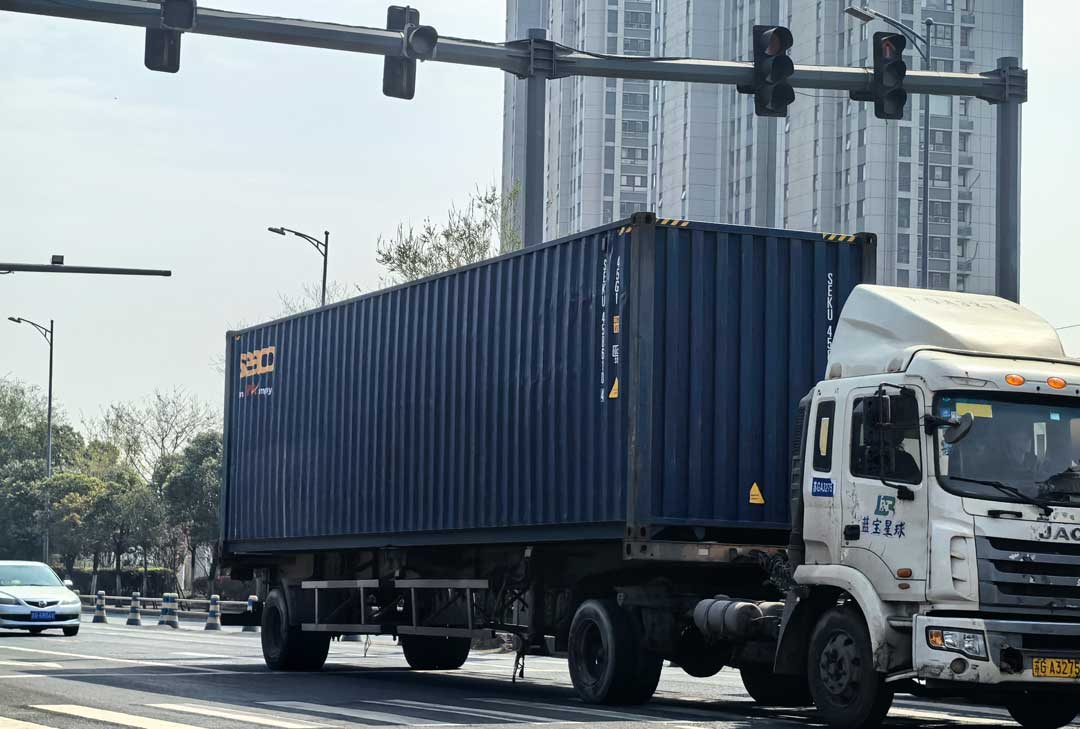
The Phoenix port can accept import entries and has examination capability, with exams conducted at designated locations. As an inland port, its hours concentrate on working days.
| Step | Notes |
| Filing mode | Can file at the port of entry, or move in bond to this port then file |
| Exam initiation | Decided by customs risk assessment after filing |
| Exam location | Designated location inside the port's cargo facility or a location designated by the port |
| Hours | Monday to Friday 08:30 to 16:30 (Mountain Time) |
| In-bond movement | Movement from the port of entry to this port must follow in-bond rules and be sealed |
| Release mode | After customs releases in the filing system, the yard can accept pickup |
Exams involving semiconductor and electronics cargo often require additional classification verification. This cargo type's tariff classification significantly affects duty rates and compliance requirements, and filing documents should match physical specifications, avoiding subsequent adjustments from classification differences.
Port and yard hours differ, and should be checked separately when arranging pickup and filing.
| Entity | Regular hours |
| Customs cargo | Monday to Friday 08:30 to 16:30 (Mountain Time) |
| Customs passenger processing | Daily 08:00 to 21:00 |
| Rail intermodal yard | Per the yard's published hours, usually working days; gates have specific opening times |
| Passenger area access | An escort must be obtained at the cargo facility before going to the Terminal 4 passenger processing area |
There are 11 federal holidays in total: New Year's Day, Martin Luther King Jr. Day, Presidents Day, Memorial Day, Independence Day, Labor Day, Columbus Day, Veterans Day, Thanksgiving and Christmas, plus Juneteenth. Customs and yards do not operate on holidays, and yard gate hours are usually tighter around holidays.
Phoenix's cargo rhythm is influenced by retail cycles and local manufacturing, with seasonal characteristics different from port cities.
| Period | Features |
| January to March | Year-start replenishment and manufacturing stock-up demand rises, with relatively high air cargo volumes |
| April to June | Ocean FCL arrivals stable; before temperatures rise, a suitable period for project cargo transport |
| July to September | High-temperature period, with outdoor work restricted for some cargo types, operations mostly scheduled early morning |
| October to December | Year-end retail and e-commerce peak, with import container and air cargo volumes rising in step |
The most notable local seasonal feature is summer high temperatures. July to September sees high temperatures, and some cargo types' loading and transport must avoid daytime high-temperature periods, with operating windows correspondingly narrowed. In addition, typhoon season does not directly affect Arizona, but weather events at West Coast ports indirectly affect inland leg schedules.
Phoenix's value for business shipping from China can be summarized as four verifiable operating conditions.
Correspondingly, Phoenix also has points to count into plans in advance: no local seaport, so all ocean cargo must enter via West Coast ports then complete the inland leg; rail intermodal currently has only one company at one yard, with limited choice, and the new hub opens only in 2028; airport cargo runs mixed belly and freighter operations, with out-of-gauge cargo needing separate arrangements; summer high temperatures impose practical restrictions on some cargo types' operating hours. Overall, Phoenix suits import businesses with receiving markets in Arizona and the U.S. Southwest, and cargo types leaning toward electronics and semiconductor-related categories.
No. Phoenix is an inland city with no local seaport. Import containers usually discharge at Los Angeles or Long Beach, then move by rail to the Glendale intermodal yard, or truck directly via I-10. The city is about 600 km road miles from the two West Coast ports.
Per the cross-caliber of multiple forwarders' published transit tables, ocean to West Coast ports is commonly about 12 to 18 days, the inland rail leg commonly about 2 to 5 days, and door-to-door total commonly about 25 to 35 days. Air freight is commonly about 4 to 7 days. Specific times follow the carrier's caliber at booking time.
Pickup is completed at the BNSF Glendale intermodal yard (5281 Tom Murray Road, Glendale, AZ 85301, yard code Y386). Arrival notices are issued by the yard or carrier, and trucking companies book slots with customs release and the carrier's release permission. The yard is not yet at capacity.
The hub is in the Wittmann area of northwestern Maricopa County, covering 4,321 acres with investment of about USD 3.2 billion, comprising 1,770 acres of intermodal facility, 1,420 acres of logistics park and 1,131 acres of logistics center, with construction scheduled to start in 2025 and open in 2028. The only usable local intermodal landing point remains the Glendale yard.
Local import demand is mainly electronics and semiconductor-related cargo, including semiconductor equipment and wafers, precision components, cleanroom consumables and testing instruments, plus aircraft parts and medical devices. This cargo type is high-value and time-sensitive, with additional requirements for constant-temperature, shock-protected and clean warehousing, so property selection needs separate assessment.
Nogales is the border crossing in southern Arizona, about 290 km south of Phoenix, direct via I-19, handling Mexico-direction land transport. Phoenix's function is inland intermodal and distribution; the two belong to different steps.
Foreign-trade zone 75 is granted to the City of Phoenix, authorized by Order No. 185 of March 25, 1982. In 2024, in-zone employment was over 56,000, goods flowing through over USD 18 billion, and exports from the zone over USD 2.3 billion. State law also provides a property tax arrangement for activated in-zone projects, subject to case-by-case determination.
Phoenix's port code is 2605, office address 3002 E. Old Tower Road, Suite 400. Cargo clearance external hours are Monday to Friday 08:30 to 16:30; passenger inspection is at airport Terminal 4, daily 08:00 to 21:00. An escort must be obtained before going to the Terminal 4 passenger inspection area.
Local industrial warehousing demand continues to grow with manufacturing expansion. Q4 2025 industrial vacancy was about 12.4%, average asking rent about USD 12.99 per sq ft, area under construction about 17.7 million sq ft, and cumulative deliveries over the past three years about 87 million sq ft. Vacancy and rent vary by quarter and statistical firm, and current data should be checked before signing.
Shipping from China to USA
Planning a shipment or just comparing options? Contact our freight experts to get a tailored rate within 24 hours.
