
Pittsburgh, Pennsylvania sits in the western part of the state, where the Allegheny and Monongahela rivers meet in the city center to form the Ohio River. In the US logistics system its identity is an inland river and rail intermodal landing point: there is no deepwater seaport locally, but three rivers form a navigable network, two Class I railroads run yards here, and the airport hosts a foreign-trade zone. For China exporters the value concentrates in three places: a transit position between the US Northeast and Midwest, a sizable inland barge network, and a duty-deferral arrangement.
| State | Pennsylvania |
| County | Allegheny County |
| Rivers | Allegheny and Monongahela rivers meet downtown to form the Ohio River |
| Time zone | Eastern Time (EST / EDT) |
| Distance to New York | About 370 miles (road) |
| Distance to Chicago | About 460 miles (road) |
| Local port nature | Inland river port, no deepwater seaport |
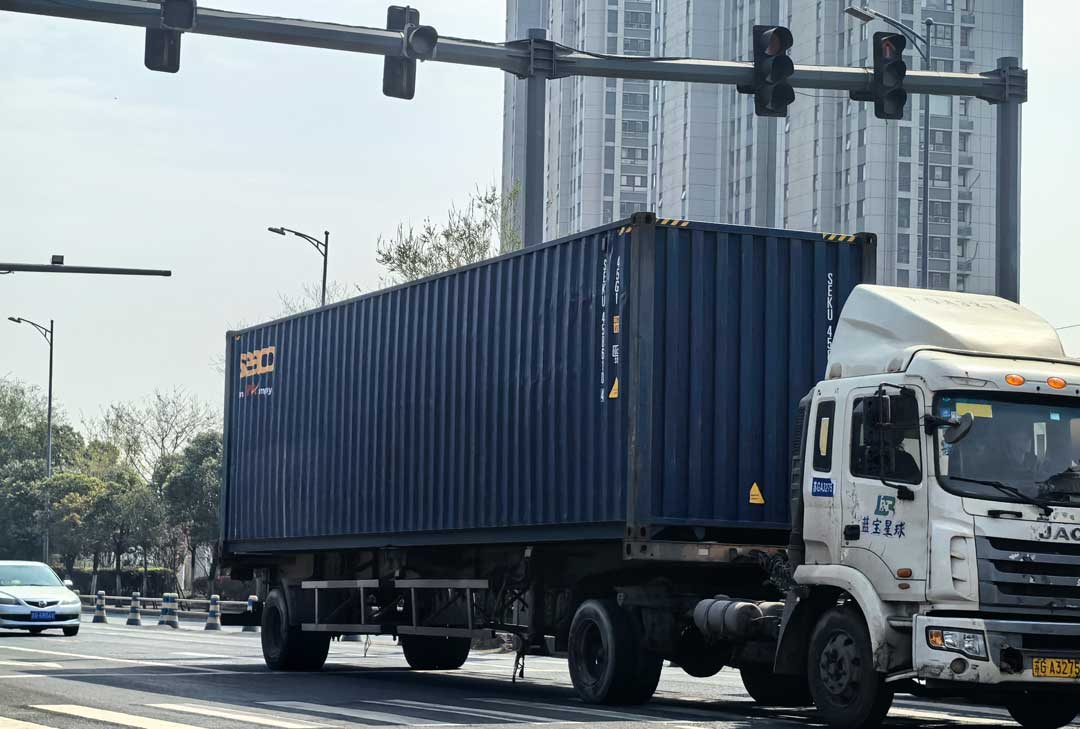
Pittsburgh sits at the midpoint between New York and Chicago, where east-west long-haul flows meet north-south regional flows. Per the port's published figures, a 500-mile radius around the city covers about 50% of US population and 54% of purchasing power, and about 8.8 million residents live within a two-hour drive. This position gives Pittsburgh distribution reach in both directions, not just as a one-way transit point.
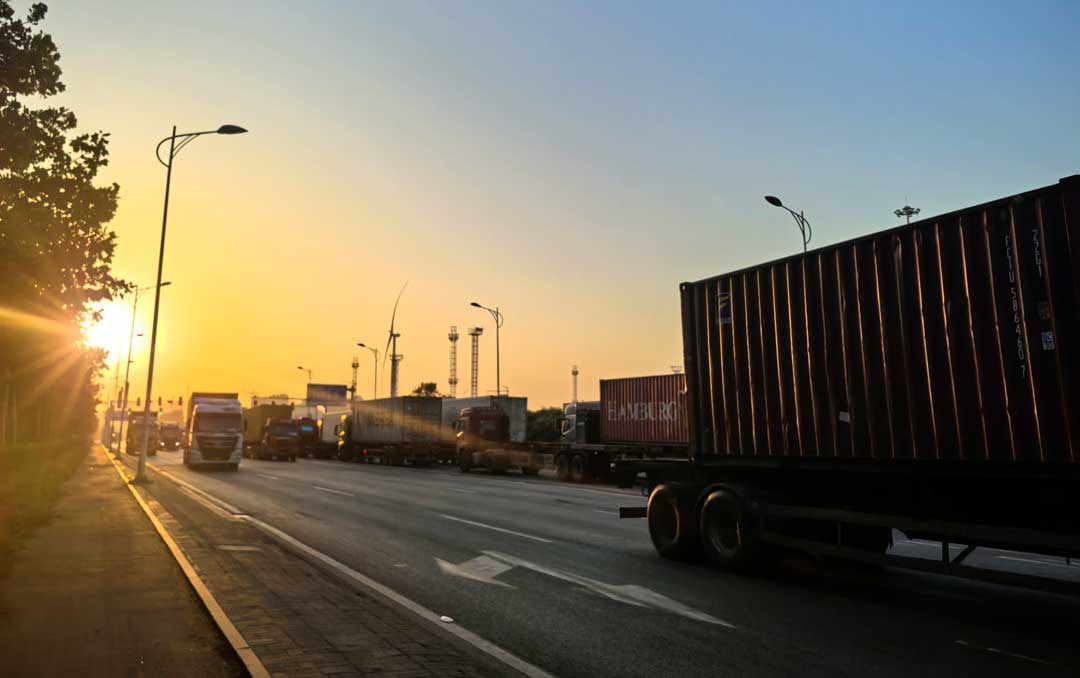
Pittsburgh's customs port is at Pittsburgh International Airport, handling local and surrounding-area import filing, exam and release. The port's public hours follow Eastern Time and align with the airport cargo area's operating schedule.
| Port code | 1104 |
| Registered name | Pittsburgh, Pennsylvania |
| Registered address | Pittsburgh International Airport, 1000 Airport Blvd, Pittsburgh, PA 15231 |
| Telephone | +1 412-472-0804 |
| Port director | Jason Hamilton |
| Office hours | Monday to Friday 09:00 to 17:00 (Eastern Time); closed Saturday and Sunday |
| Supervising field office | Baltimore Field Office |
| Mailing address (FedEx / UPS) | 300 Horizon Drive, Moon Township, PA 15108 |
| Desk | Telephone |
| Airport main line | (412) 472-3252 |
| Duty desk and passenger | (412) 472-0808 extension 0 |
| Agriculture exam | (412) 472-0804 extension 0 |
| Air clearance | (412) 472-0808 extension 0 |
| Entry | (412) 472-0808 extension 2116 |
| Deferred exam | (412) 472-0808, daily 09:00 to 17:00 |
Trade and public service hours are 13:00 to 17:00 daily, at the trusted-traveler enrollment center at the airport. Consignees needing a deferred exam should confirm by phone in advance to avoid arriving outside service hours. Pennsylvania also has Philadelphia, Harrisburg and Erie ports; Philadelphia and Harrisburg are under the Baltimore field office, and Erie is under the Chicago field office.
The three rivers are the most locally distinctive part of Pittsburgh's logistics. The Allegheny flows in from the northeast, the Monongahela from the south, and they join downtown to become the Ohio River, running west to the Mississippi system.
| Segment | Course and trait |
| Allegheny | Drains most of western Pennsylvania; 8 locks and dams along the channel |
| Monongahela | Historic Pittsburgh steel belt, from West Virginia into Pennsylvania |
| Ohio | Formed by the two rivers joining downtown; connects west to the Mississippi system |
All 200 miles of commercial navigable waterways in southwestern Pennsylvania fall within the Pittsburgh port district, maintained by 17 locks and dams. The district has over 200 riverfront docks and barge service providers, and each lock on the Monongahela and Ohio sees about 9,000 barges a year. The cost structure of inland barge is the core value of this water network: per the port's published figures, barge ton-mile cost is about one-tenth of rail and one-twentieth of truck.
| Mode | Published cost (USD / ton-mile) |
| Inland barge | About 0.005 to 0.01 |
| Rail | About 0.05 |
| Truck | About 0.10 |
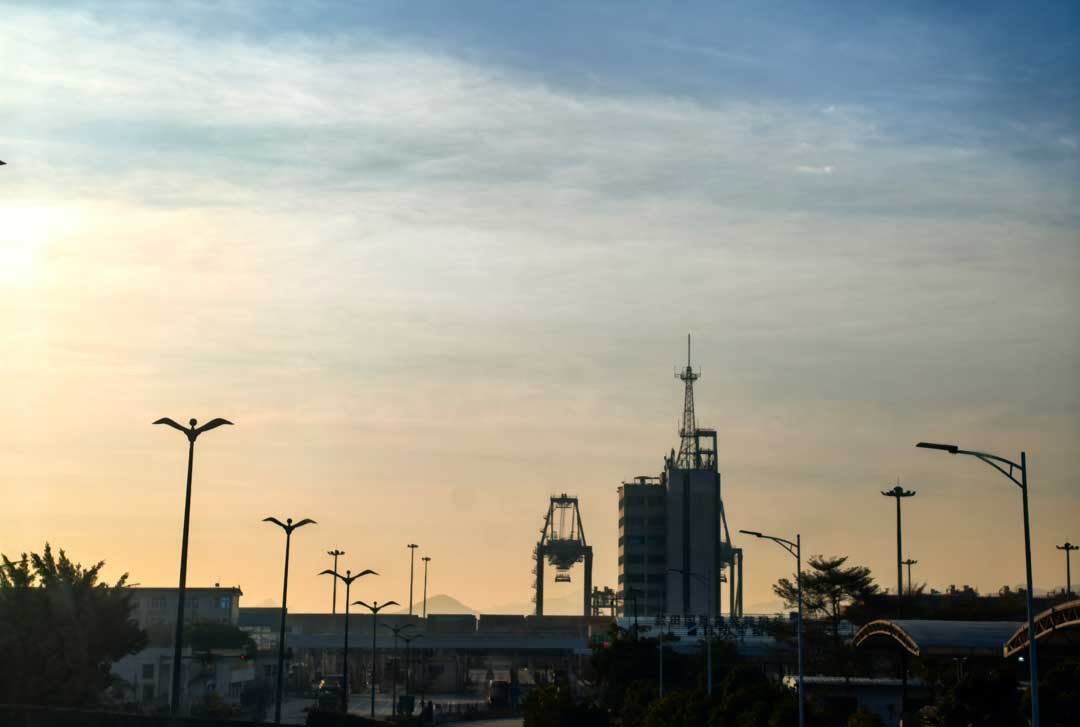
To note, this barge cost advantage mainly serves bulk and break-bulk cargo; international containers do not use inland barge as the primary mode. China-export container cargo arriving in Pittsburgh still moves mainly by rail and truck on the inland leg.
| Item | Detail |
| Port authority | Port of Pittsburgh Commission |
| Port district | 13 counties: Allegheny, Armstrong, Beaver, Blair, Butler, Cambria, Clarion, Fayette, Greene, Indiana, Lawrence, Washington, Westmoreland |
| Navigable waterways | All 200 miles of commercial navigable waterways in southwestern Pennsylvania |
| Locks and dams | 17 |
| Riverfront docks and providers | Over 200 |
| Interstates | Four converge locally |
| Marine Highway role | Start of a federal Marine Highway extending to Kansas City, linking the Mississippi River and the coastal inland waterway |
The Port of Pittsburgh Commission is a promotion and coordination body and does not itself operate docks; daily loading and unloading are run by the private dock operators. Per the US Army Corps of Engineers 2020 statistics, the Pittsburgh port district handled about 15.5 million tons that year, ranking among the top inland ports. That figure is from an official statistic covering only up to 2020; recent years have not been updated in public channels.
Two Class I railroads run lines within the Pittsburgh port district, linking directly to riverfront docks and industrial customers and forming the basis of water-rail intermodal.
| Railroad | Local presence |
| CSX Transportation | Runs lines in the port district, serving riverfront docks and industrial customers |
| Norfolk Southern | Runs lines in the port district; the Ambridge transfer yard is connected by this railroad |
Take the Ambridge transfer yard as an example: it sits on the right bank at Ohio River mile 16.5, connected to Norfolk Southern, with a 450-foot barge unloading berth, storage tracks for 150 railcars, and three large-span warehouses totaling about 450,000 square feet of covered storage and about 30 acres of open yard. Typical cargo at such yards is steel, lumber, machinery and palletized goods.
| Highway | Course |
| I-79 | North-south; north to Erie, south to West Virginia |
| I-76 (Pennsylvania Turnpike) | East-west; east to Harrisburg and Philadelphia, west to Ohio |
| I-70 | Southward, to Washington County and West Virginia |
| I-376 | Links downtown, the airport and the Pennsylvania Turnpike |
Four interstates converge locally, so Pittsburgh reaches regional markets by road in both east-west and north-south directions. Via I-79 and I-76, trucks cover Cleveland, Columbus and Cincinnati within hours; eastward, the turnpike reaches Harrisburg and Philadelphia.
| Item | Data |
| Airport | Pittsburgh International Airport (PIT / KPIT) |
| Operator | Allegheny County Airport Authority |
| Location | About 20 miles west of downtown |
| 2025 cargo volume | About 86,800 tons (191 million pounds) |
| Change vs 2016 | Up about 20% |
| Main cargo carriers | FedEx Express, UPS Airlines, Amazon Air |
| Cargo terminals | Three, about 183,000 square feet of warehouse space |
| New cargo facility | Cargo 4, 77,800 square feet, opened June 2025 |
The airport's cargo business is mainly express and e-commerce parcels, with FedEx, UPS and Amazon carrying the main volume. Cargo 4, opened in June 2025, can handle freighters up to the Boeing 747 class; tenant Skyport signed a ten-year lease with a ten-year renewal option. Because the Pittsburgh port itself has international arrival clearance capability, imported cargo can complete entry formalities locally without first clearing at another port and transferring.
| Metric | Value |
| Industrial storage inventory | About 177.8 million square feet |
| Vacancy (2025) | About 5% to 7% per various sources |
| Average asking rent | About USD 7.4 to 8.5 per square foot per year |
| Under construction | About 400,000 square feet |
Pittsburgh's industrial storage market was in relatively balanced supply and demand in 2025. Research bodies differ on vacancy and rent: the former between 5% and 7%, the latter between 7.4 and 8.5 dollars; confirm against current data before signing. With limited new supply, few large available properties exist, so importers planning a long-term site should lock space early.
| Item | Detail |
| Number | Foreign-Trade Zone 33 |
| Grantee | Regional Industrial Development Corporation of Southwestern Pennsylvania (RIDC) |
| Authorized | November 9, 1977 |
| Operating model | Alternative Site Framework (ASF) |
| Service area | 11 counties in southwestern Pennsylvania |
| Coverage | All 8,800 acres of Pittsburgh International Airport and all air-cargo facilities |
| Duty treatment | Duty deferral, reduction or exemption |
The zone's duty treatment lets imported cargo be stored, sorted, repackaged or re-exported without duty paid, and lets duty be assessed at the lower rate of component or finished product. For businesses that assemble or process locally before entering the US market, this lowers the tax burden; for pure storage-and-distribution, the main gain is deferred capital occupation. Applicability needs a case-by-case check against commodity and HS code.
| Route | Detail |
| Via US East Coast port | Ocean to New York-New Jersey or Philadelphia, clear, then rail or truck to Pittsburgh |
| Via Gulf port | Ocean to Houston and other ports, then rail north |
| Via US West Coast port | Ocean to Los Angeles or Long Beach, rail to the Midwest, then truck or short rail |
| Air | Via Chicago, New York and other hubs to Pittsburgh International Airport |
The four routes each trade off. The East Coast route has the longest ocean leg but shortest inland leg and stable overall time; the Gulf route is an alternative when East Coast ports are congested; the West Coast route has the densest sailings but a longer rail leg. The actual choice follows the delivery-time requirement and current freight rates.
| Mode | Common range |
| Ocean to US East Coast port | About 30 to 35 days |
| Plus inland leg, door to door | About 35 to 45 days |
| Air via hub transfer | About 5 to 9 days |
The above ranges are compiled from the cross-checked published transit tables of several forwarders; they exclude cut-off waiting and exam time and are not a commitment. Sailings are affected by season, space and port congestion; actual time follows the carrier's basis at booking.
Pittsburgh has no seaport, so containers are not discharged here; pickup and delivery happen on the inland leg. Rail-arrived cargo is picked up at the rail intermodal yard, and truck-direct cargo at the carrier's inland yard. At pickup the trucking company must carry the arrival notice, released bill of lading, customs release receipt and pickup authorization, and book a time slot per the yard's requirement.
| Step | Key point |
| Pickup location | Rail intermodal yard or carrier inland yard |
| Documents needed | Arrival notice, released bill of lading, customs release receipt, pickup authorization |
| Time booking | Register in the yard system; some yards count free time by the hour |
| Dispatch radius | City and surrounding counties, and eastern Ohio line |
| Empty return | At the carrier-designated yard; overdue incurs extra charges |
Rail-yard free storage is usually counted by the hour or by workday, shorter than the seaport workday basis, so arrange pickup soon after the arrival notice. The empty-return point after devanning is carrier-designated and may differ from the pickup point; include it in route planning.
Cargo flagged by customs is examined at the Pittsburgh port exam site, initiated by CBP or a partner government agency. After exam, CBP releases in the filing system, and only then does the yard accept pickup. Exam incurs move and opening fees at published rates.
| Case | Handling |
| Routine release | Automatic or manual release in the system when filing data is clean |
| Document exam | Review invoice, packing list, certificate of origin and other documents |
| Physical exam | Open and verify at a designated site; move and opening fees apply |
| Agriculture exam | For animal and plant products, handled at the agriculture exam window, (412) 472-0804 |
| Deferred exam | Daily 09:00 to 17:00; book by phone in advance |
Exam duration depends on exam type and on-site queue. Document exams usually finish in one to two business days; physical exams can take three to five business days. Consistent filing elements and documents shorten exam time.
| Function | Hours |
| Port office | Monday to Friday 09:00 to 17:00 (Eastern Time) |
| Trade and public service | Monday to Friday 13:00 to 17:00 |
| Deferred exam | Daily 09:00 to 17:00 |
| Airport cargo area | Per carrier and ground-handler published hours |
| Rail yard | Per yard published hours; some yards reduce weekend service |
There are 11 US federal legal holidays in total; the port and yards usually stop regular work on holidays, with emergency handled by duty arrangement. Around Thanksgiving and Christmas at year-end, and New Year at the start, add buffer to pickup and delivery plans. Specific holidays are in the US holidays overview section.
Pittsburgh's volume rhythm follows two threads: the consumer-goods stocking cycle and local industrial customers' raw-material procurement cycle. The former makes August to October an import peak, in sync with the West Coast port peak; the latter keeps steel, aluminum, machinery and chemical arrivals relatively even.
| Period | Feature |
| January to February | Post-holiday low; space loose; winter weather may affect road transport |
| March to May | Volume recovers; sailings stabilize |
| June to July | Stocking starts; rates begin to rise |
| August to October | Annual import peak; space and inland capacity tight |
| November to December | Fall after pre-holiday rush; shortened holiday hours |
In peak, inland-leg pressure often exceeds the ocean leg, and rail-yard pickup queues lengthen noticeably. Scheduling pickup three to five days ahead and keeping backup truck capacity is the safer play in peak. Winter lake-effect snow can affect I-79 and I-76; January-to-February delivery plans should leave weather buffer.
Pittsburgh's value to China-export business can be summed up as four verifiable operating conditions.
Correspondingly, Pittsburgh also has points to build into the plan in advance: no seaport, so all ocean cargo must enter via another port then complete the inland leg; limited rail intermodal yards make peak pickup queues longer than at coastal ports; and the barge cost advantage mainly serves bulk, not international containers. Overall, Pittsburgh suits import business with the US Northeast and Midwest as the receiving market, rail or truck as the inland mode, and a planned regional distribution point.
No. Pittsburgh is an inland city with no deepwater seaport. International container cargo is usually discharged and entered at ports such as New York-New Jersey, Philadelphia, Houston or Los Angeles-Long Beach, then moved to Pittsburgh by rail or truck.
Per the cross-checked published transit tables of several forwarders, ocean to a US East Coast port is commonly about 30 to 35 days, and door to door after adding the inland leg about 35 to 45 days. Air via hub transfer is commonly about 5 to 9 days. Actual time follows the carrier's basis at booking.
Yes. Pittsburgh port code 1104 has filing, exam and release capability. Cargo can be entered and released at the port of entry then moved in, or moved in-bond sealed to this port and filed here; in-bond movement requires filing and bond formalities at entry.
Pickup is at the rail intermodal yard or the carrier's inland yard, depending on the port of entry and carrier arrangement. The trucking company books a slot with the arrival notice, released bill of lading, customs release receipt and pickup authorization. Inland-yard free storage is usually counted by the hour or workday.
Inland barge in this district is mainly coal, aggregate, steel and chemicals as bulk and break-bulk, with a cost structure for large-volume cargo. International containers do not use barge as the primary mode; China-export container cargo arriving in Pittsburgh still moves mainly by rail and truck.
Two Class I railroads run lines in the district: CSX Transportation and Norfolk Southern. The Ambridge transfer yard is connected by Norfolk Southern, with a 450-foot barge unloading berth and storage for 150 railcars. Rail reaches the main East Coast and Midwest hubs directly.
FTZ 33 has the Regional Industrial Development Corporation of Southwestern Pennsylvania as grantee, operates under the Alternative Site Framework, serves 11 southwestern Pennsylvania counties, and covers all 8,800 acres of Pittsburgh International Airport and all air-cargo facilities. Imported cargo can be stored, sorted or re-exported without duty paid. Applicability needs a case-by-case check against commodity and HS code.
Local industrial storage inventory is about 177.8 million square feet. 2025 vacancy per various sources is between 5% and 7%, average asking rent about USD 7.4 to 8.5 per square foot per year, under construction about 400,000 square feet. New supply is limited and few large properties are available, so sign early for long-term use.
Yes. The airport has three cargo terminals with about 183,000 square feet of warehouse space. Cargo 4, 77,800 square feet opened in June 2025, can handle Boeing 747 freighters. The airport's 2025 cargo volume was about 86,800 tons, mainly carried by FedEx Express, UPS Airlines and Amazon Air.
The import peak is usually August to October, in sync with the West Coast port peak, when space and inland capacity are both tight. November and December are a fall after the pre-holiday rush. January to February is low season, but winter snow may affect road access. In peak, schedule pickup three to five days ahead.
Shipping from China to USA
Planning a shipment or just comparing options? Contact our freight experts to get a tailored rate within 24 hours.
