
Portland, Oregon sits on the Columbia River about 100 river miles from the Pacific, the largest deep-water port in Oregon and a specialized West Coast gateway for autos, grain and bulk cargo. Container operations concentrate at Terminal 6 in the Rivergate industrial district north of downtown, operated by Harbor Industrial Services under a long-term lease and branded the Oregon Container Terminal from January 2026. The port's position in the freight system is decided by two things: a 43-foot channel that caps vessel size, and a Columbia and Snake River barge system reaching 465 river miles inland to Lewiston, Idaho. For cargo shipped from China to Oregon and the Pacific Northwest, Portland is usually reached via transload at Seattle-Tacoma or Los Angeles/Long Beach.
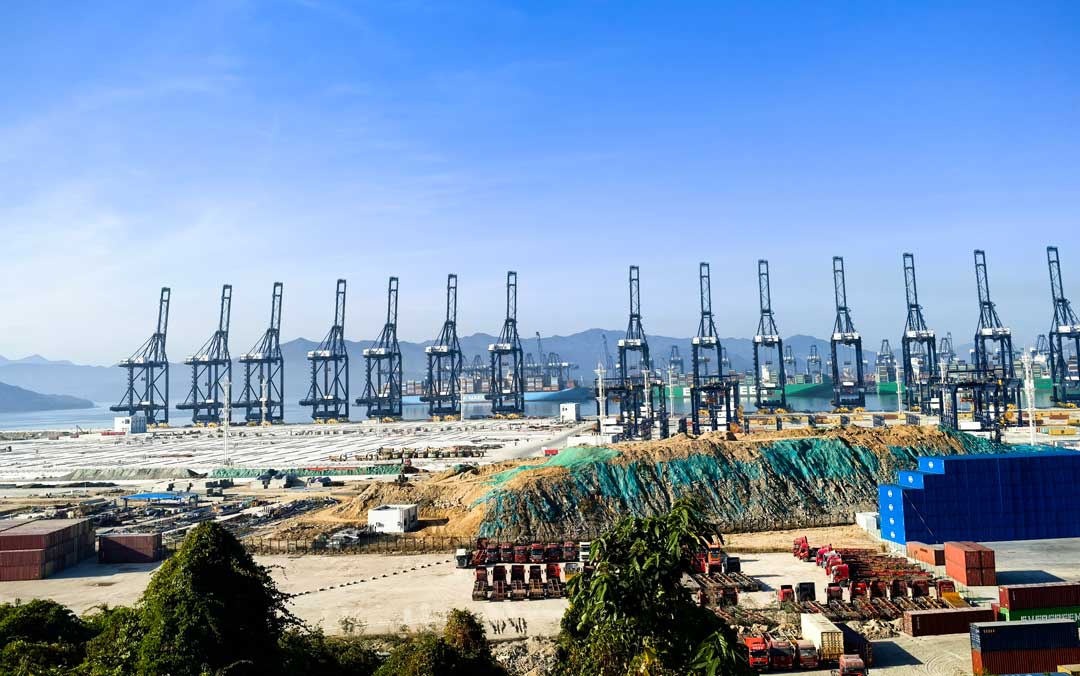
Portland sits on the south bank of the Columbia River in northwest Oregon, where the Columbia meets the Willamette. The port district spreads along both banks of the Columbia and Willamette, with the main marine terminals concentrated at Rivergate, north of downtown. This position gives the port two access conditions at once: west down the Columbia to the Pacific, and east up the Columbia and Snake River barge system into the interior. Its hinterland covers Oregon, southwest Washington and Idaho.
Portland's road network connects the Pacific Northwest's main markets: north on I-5 to Seattle, south to Sacramento and California; east on I-84 along the Columbia gorge to Idaho and the interior. I-84 through the Columbia gorge is exposed to winter ice and snow and summer wildfire closures, so delivery plans eastbound should carry buffer.
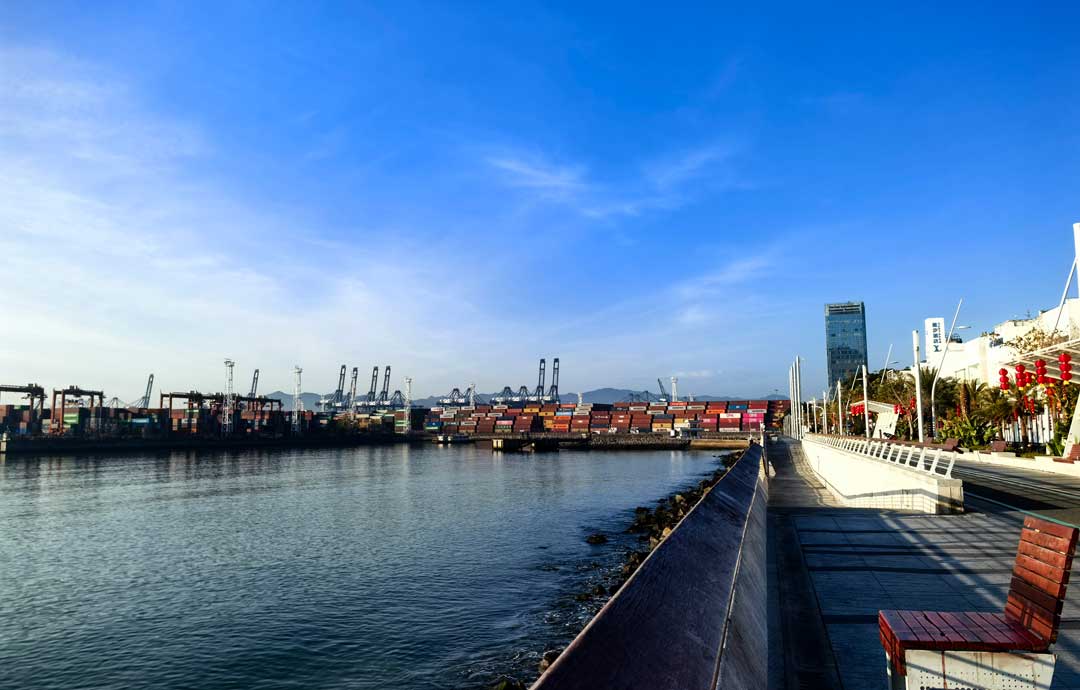
Portland's CBP port office sits on Alderwood Road in northeast Portland, while marine cargo examination functions are based around Terminal 6. The two locations handle different business and must be visited separately.
| Port code | 2904 (Portland, Oregon) |
| Registered name | Portland, Oregon |
| Office address | 8337 NE Alderwood Road, Portland, OR 97220 |
| Phone | +1 503-335-2900 |
| Fax | +1 503-335-2982 |
| Office hours | Monday to Friday 08:00-16:30 (Pacific Time), closed Saturday and Sunday |
| Parent field office | Portland |
| Weekend service | By appointment; call the duty officer at (503) 335-2910 before Friday close |
| Marine operations / Terminal 6 window | (503) 240-6700 |
| Agricultural holds and dunnage | (503) 326-2721 or (503) 335-2911 |
Marine-facing hours are Monday to Friday 08:00 to 16:30. Formal vessel entry, commercial vessel business, sea cargo clearance and law-enforcement contact all go through the Terminal 6 marine operations window. Weekend and after-hours service requires advance appointment; unannounced attendance may not be accepted.
The Port of Portland is a landlord port authority, managing terminal assets and leases while day-to-day cargo handling is done by tenants. The division of labor among the three marine terminals is clear: Terminal 4 for autos and bulk, Terminal 5 for grain and mineral bulk, Terminal 6 for containers and some autos. By the port authority's own account, Portland is the largest deep-water port in Oregon.
| Terminal | Area | Main business |
| Terminal 4 (T4) | 262 acres | Autos, soda ash, liquid bulk, breakbulk and heavy-lift cargo |
| Terminal 5 (T5) | 159 acres | Dry bulk, grain and mineral bulk |
| Terminal 6 (T6) | 419 acres | Containers, autos and breakbulk |
Terminal 6 is the container core, carrying container operations plus part of the auto business. Terminals 4 and 5 form the port's bulk and auto specialization; the three together make Portland a bulk-dominant port in tonnage terms, with containers at feeder scale.
Terminal 6 has both container handling and on-dock rail capability, with an intermodal yard of 8 tracks that can connect directly with vessel operations. Berth depth differences matter in stowage planning: the 43-foot berths 604 and 605 take larger vessels, while the 35-foot berths 601 and 607 suit mid-size vessels or barges.
| Berths | 5, including auto berths |
| Total berth length | 3,713 feet (1,132 m) |
| Berth 604, 605 depth | 43 feet |
| Berth 603 depth | 40 feet |
| Berth 601, 607 depth | 35 feet |
| Terminal area | 419 acres |
| Intermodal yard | 52.5 acres |
| Rail tracks | 8 multi-purpose tracks, total length 20,185 feet |
| Cranes | 7 general-purpose and container cranes, of which 4 post-Panamax |
| Double-stack railcar capacity | 82 |
Container yard operations use a ground-level stack method with reach stackers, with 620 reefer plugs providing temperature control for agricultural and food cargo. Reefer cargo booked to Portland should confirm plug availability and plug-in charges with the carrier in advance.
Terminal 4 is Portland's auto import processing base: Toyota has operated there since 1971, processing more than 10,000 vehicles per month, with vehicles discharged and processed inside the terminal before distribution to the dealer network. The same terminal hosts chemical and fertilizer facilities, with soda ash and fertilizer transferring directly between rail and vessel.
| Terminal | Facilities |
| Terminal 4 | Toyota import processing facility (since 1971, 10,000+ vehicles per month); Kinder Morgan soda ash facility; International Raw Materials fertilizer facility |
| Terminal 5 | Columbia Grain International export silos (berths 501-503); Columbia Export Terminal; Portland Bulk Minerals |
Terminal 5's grain export silos at berths 501 to 503 are one of the main loading points for Columbia River basin grain exports. Soda ash and potash from interior mines move by rail to the terminal and load directly for export, a flow that makes Terminals 4 and 5 the port's tonnage backbone.
The 43-foot channel depth sets Portland's vessel size ceiling. Mainline transpacific vessels in service today generally draw more than this, so vessels calling at Portland are mostly mid-size, or cargo is transshipped from mainline ports by feeder. This condition also explains the port's feeder-scale container operations and its structural difference from mainline ports such as Los Angeles and Long Beach.
| Channel depth | 43 feet |
| Vessel size limit | Cannot take the largest post-Panamax class |
| Access route | Via the Columbia River to the Pacific, about 100 river miles |
| Navigation limits | Affected by river depth and tide; tidal windows must be planned |
For importers, the practical consequence is that direct mainline calls from Asia are not available: cargo from China reaches Portland via Seattle-Tacoma or Los Angeles/Long Beach transload, or by occasional feeder services that call directly. Total time to Portland therefore includes the transload leg, which must be counted into the landed cost comparison against routing direct to Seattle-Tacoma.
Container operations concentrate at Terminal 6, the Oregon Container Terminal, operated by Harbor Industrial Services under a long-term lease; operations transferred at the end of 2025 and the terminal has used the Oregon Container Terminal name since January 2026. The yard covers 125 acres with 7 cranes and 620 reefer plugs; throughput in recent years has ranged about 80,000 to 100,000 TEU.
| Container terminal | Terminal 6 (Oregon Container Terminal) |
| Operator | Harbor Industrial Services (long-term lease) |
| Container yard | 125 acres |
| Cranes | 7 |
| Reefer plugs | 620 |
| Recent throughput | About 80,000 to 100,000 TEU |
Portland's container business is small by West Coast standards, fluctuating between 80,000 and 100,000 TEU in recent years. The operator transition at the end of 2025 means carrier service plans may adjust; importers should confirm the current calling plan at booking rather than relying on historical schedules.
Two Class I railroads are based in the same port district, a favorable condition on the West Coast: BNSF runs along the north bank of the Columbia (Washington side) and Union Pacific along the south bank (Oregon side), both terminating in the Rivergate area. Terminal 6 has 8 on-dock tracks, so containers can be loaded directly after discharge without truck drayage.
| BNSF Railway | Along the north bank of the Columbia (Washington side), terminating at Rivergate |
| Union Pacific | Along the south bank of the Columbia (Oregon side), terminating at Rivergate |
| UP IPI services | To Chicago, Kansas City and Memphis |
| On-dock rail | 8 tracks at Terminal 6, direct loading after discharge |
| Double-stack capacity | 82 railcars |
By rail, cargo can reach Midwest hubs such as Chicago, Kansas City and Memphis, then transfer into the U.S. inland distribution network. On-dock rail avoids the truck drayage leg, an advantage over ports without on-dock access; for importers shipping to the Midwest, Portland's rail condition can offset part of the transload time added by the channel limit.
The barge channel is one condition that distinguishes Portland from other West Coast ports. The Columbia and Snake River barge system extends east to Lewiston, Idaho, the westernmost inland seaport in the United States, about 465 river miles from Portland.
| Barge system extent | Columbia and Snake Rivers, extending to Lewiston, Idaho |
| Distance to Portland | About 465 river miles |
| Main cargo | Grain, mineral bulk and other bulk cargo |
| Function | Inland collection and distribution, connecting with terminal loading |
The barge channel mainly serves inland collection of grain and mineral bulk: about 90% of Oregon wheat moves by barge down the Columbia to load for export, with barges carrying the origin-to-terminal leg. International containers do not use barges as a main mode; the inland leg of container cargo remains rail and truck.
The port district is close to I-5 and I-84, giving good drayage conditions for intermodal transfer yards. In the Rivergate industrial district, for example, the yard is a few miles from I-5 and within short distance of I-84.
| I-5 | North-south mainline, north to Seattle, south to Sacramento |
| I-84 | East-west, along the Columbia to Idaho |
| I-205 | East-side loop, connecting the airport and both banks of the Columbia |
| US-30 | West along the Willamette to the northwest coast |
One caveat: I-84 runs through the Columbia River gorge, where winter ice and snow and summer wildfires can cause temporary closures. Eastbound delivery plans via this corridor should carry buffer, especially January to February.
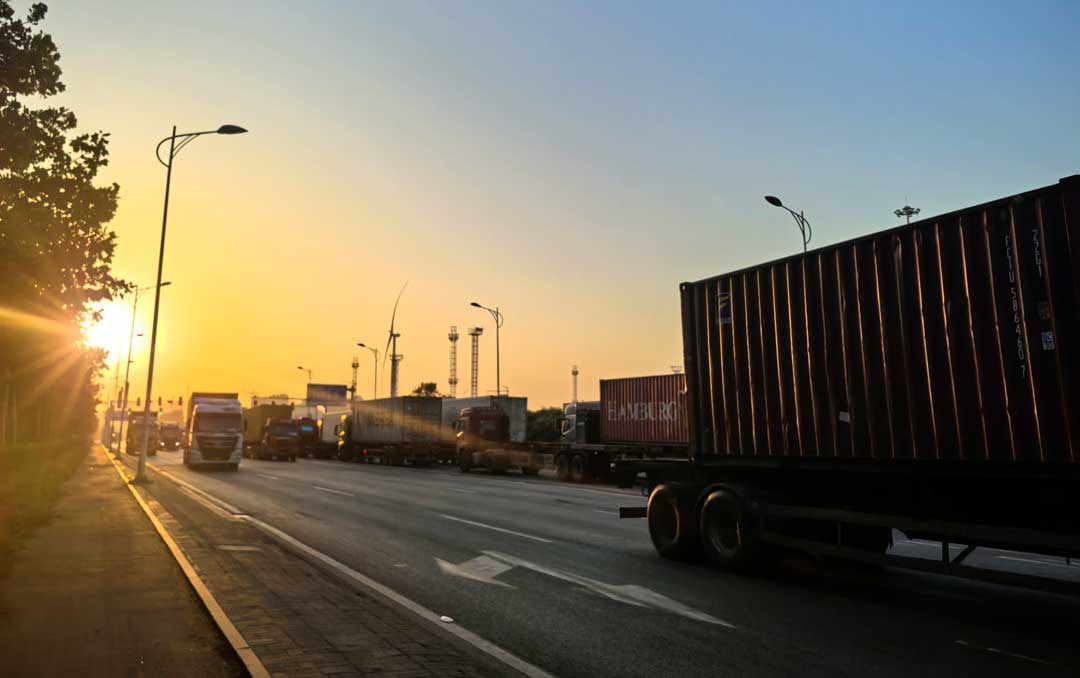
In tonnage terms, bulk is the port's mainstay: mineral bulk and grain together account for the overwhelming majority of the port's tonnage. Soda ash, potash and grain are the main export categories, with soda ash and potash moved by rail from interior mines to the terminal for direct loading.
| Category | 2024 volume |
| Mineral bulk | About 7,590,151 metric tons |
| Grain | About 3,078,755 metric tons |
| Breakbulk | About 5,755 metric tons |
| Autos | 381,485 units |
| Total cargo | About 12,432,989 metric tons |
In 2024 the port recorded 504 vessel calls, with the auto business reaching 381,485 units. This tonnage structure means Portland's yard and gate resources lean toward bulk and autos, and container yard scale is limited; importers booking containers should plan pickup capacity against actual yard conditions rather than assuming mainline-port scale.
Foreign-Trade Zone 45 is granted to the Port of Portland, serving Clackamas, Multnomah and Washington counties. The main site sits in the Rivergate Industrial Park, in the same district as Terminals 5 and 6, with subzones including electronics and semiconductor manufacturers, indicating that the zone's duty-deferral arrangements mainly serve technology manufacturers' material imports.
| Zone | Foreign-Trade Zone 45 |
| Grantee | Port of Portland |
| Approval date | December 18, 1978 |
| Service area | Clackamas, Multnomah and Washington counties |
| Activation cap | 2,000 acres |
| Activated area | 225.21 acres |
| Main site | 001 Rivergate Industrial Park (225.21 acres) |
| Representative subzones | Epson Portland, Lam Research, Allied Technologies, Intel Foundry |
For importers, using duty-deferral treatment through a public warehouse inside the zone is a common practice; whether it applies needs to be judged against the cargo category and tariff number individually. Imported cargo can be stored, sorted or re-exported in the zone without duty paid.
Shipping from China to Portland usually transits a West Coast mainline port: some forwarders offer transload via Seattle-Tacoma or Los Angeles/Long Beach, with occasional feeder services calling Portland directly. Because of the channel depth limit, transpacific mainline vessels do not call at Portland directly.
| Mode | Common range |
| Sea, door to door | About 25 to 35 days |
| Air, door to door | About 5 to 10 days |
| Sea leg to US West Coast | Commonly about 12 to 18 days; the rest is inland and clearance time |
The ranges above are cross-checked from multiple forwarders' published transit-time tables, excluding customs cutoff waiting and examination time; actual booking follows the carrier's schedule at the time. Because of the transload leg, total time to Portland runs a few days longer than direct discharge at Seattle-Tacoma; for urgent cargo, comparing routing direct to Seattle-Tacoma with drayage south against transload to Portland is needed.
Portland International Airport (PDX / KPDX) has limited cargo volume; air import and export mostly transit hubs such as Seattle, San Francisco or Los Angeles. The airport's customs examination function is handled by the Portland port office, with the office on Alderwood Road west of the airport; the freight office phone is (503) 335-2900.
| Airport | Portland International Airport (PDX / KPDX) |
| Cross-border examination | Handled by the Portland port office, on Alderwood Road west of the airport |
| Private aircraft | KPDX and KHIO, (503) 326-3409, Monday to Saturday 08:00-21:00 |
| Cargo profile | High-value, time-sensitive cargo |
Local air cargo is mainly electronic components, medical devices and high-value consumer goods. For high-value or urgent cargo from China, PDX can serve as the destination with hub transit in Seattle or Los Angeles; where volume is large, comparing direct booking to Seattle is usually more economical.
Portland's warehousing supply concentrates in the Rivergate industrial district, covering 2,800 acres with more than 14 million square feet of building area, with tenants including Columbia Sportswear, Amazon and Georgia-Pacific. In 2025 the market was in a new-supply absorption phase, vacancy rose to recent highs, and tenants gained some room on rent and lease terms.
| Rivergate industrial district area | 2,800 acres |
| Building area | More than 14 million square feet |
| Industrial vacancy (2025) | About 6% to 7.5%, varying by source |
| Average asking rent | About USD 9.5 to 11.8 per square foot per year |
| Under construction | About 2.9 million to 4.5 million square feet |
Different institutions give different vacancy and rent figures; before signing, check against current-period data. In the new-supply absorption phase, importers needing warehouse space in the Portland area have relatively more room to negotiate on rent and term.
Pickup concentrates at the Terminal 6 container yard or the on-dock rail yard. Trucking companies must first register a time slot through the terminal appointment system, and bring the arrival notice, released bill of lading, customs release receipt and pickup authorization to the terminal.
| Pickup location | Terminal 6 container yard or on-dock rail yard |
| Required documents | Arrival notice, released bill of lading, customs release receipt, pickup authorization |
| Gate appointment | Registered time slot in the terminal system; vehicles must meet port entry requirements |
| Free time | Per the terminal or carrier's published terms; overage charged separately |
| Reefer containers | Plug-in fee charged separately; yard has 620 reefer plugs |
Free time and overage rates are published by the terminal or carrier and the two versions differ; confirm with the carrier before pickup. Reefer containers incur plug-in charges while in the yard, making time cost higher; booking reefer cargo requires advance coordination of pickup and cold-chain delivery.
Cargo selected for examination is inspected at designated facilities near the terminal; agricultural examinations have a separate window. Oregon has quarantine requirements for wood, plants and agricultural products, and cargo involving solid wood packaging, wood products or agricultural products should count the agricultural examination step into delivery time.
| Situation | Handling |
| Regular release | Released in the system when declaration data is correct |
| Documentary examination | Review of invoice, packing list, certificate of origin and other documents |
| Physical examination | Devanned inspection at designated facility, incurring handling and devanning fees |
| Agricultural examination | (503) 326-2721 or (503) 335-2911 |
| Wood and dunnage | Quarantine handled by the agricultural window when solid wood packaging is involved |
After examination is complete, customs releases in the declaration system and the terminal then accepts pickup. Examination selection is done by CBP's risk system and cannot be controlled by the importer or broker; preparing documents truthfully and in detail before shipping is the most effective way to shorten examination time.
The port office and Terminal 6 marine operations both run Monday to Friday 08:00-16:30 Pacific Time. Weekend operations are by appointment, requiring a call to (503) 335-2910 before Friday close. There are 11 U.S. federal holidays, on which the port office and terminal usually stop regular operations.
| Port office | Monday to Friday 08:00-16:30 (Pacific Time) |
| Marine operations / Terminal 6 | Monday to Friday 08:00-16:30 |
| Weekend operations | By appointment; call (503) 335-2910 before Friday close |
| Terminal yard | Per the terminal's published hours; some shifts reduced on weekends |
| Federal holidays | 11 days; regular operations usually stop |
Unappointed weekend pickup requests may be deferred to the next working day. Around Thanksgiving and Christmas at year-end and New Year at the start of the year, pickup and delivery plans should carry extra buffer.
Portland's cargo follows two rhythms: container cargo tracks the consumer stocking cycle, peaking from August to October; grain and mineral bulk follow the harvest season and mine shipping plans, fluctuating more widely.
| Period | Characteristics |
| January to February | Low season, loose capacity, Columbia River gorge may close for ice and snow |
| March to May | Steady volume, grain exports fluctuate around the harvest season |
| June to July | Container volume rises, bulk exports enter the active period |
| August to October | Annual import peak, tight capacity and inland transport |
| November to December | Falls back after pre-holiday rush, shorter operating hours during holidays |
Because container operations have been adjusting in recent years, schedule density has changed noticeably; confirm the current calling plan before booking. Winter delivery plans in January and February should add buffer to the standard transit time.
Portland's value for importers shipping from China can be summed up in four verifiable operating conditions.
Portland's limitations should also be planned for: the 43-foot channel cannot take the largest post-Panamax vessels, container operations run at feeder scale with lower schedule density than mainline ports; container operations are in an adjustment phase after the operator transition at the end of 2025, and carrier calling plans may change; bulk dominates tonnage and container yard scale is limited. Overall, Portland suits importers whose receiving market is Oregon and the Pacific Northwest and whose cargo leans toward autos, grain, bulk, or duty-deferral needs; for volume container cargo, comparing with Seattle-Tacoma is needed.
Mainline transpacific vessels do not call at Portland directly. Because the channel is 43 feet, mainline vessels drawing more than that cannot enter, so containers from China usually transload via Seattle-Tacoma or Los Angeles/Long Beach. Actual calling and transload arrangements follow the carrier's schedule at booking.
43 feet. Berth depths inside the port are 43 feet (berths 604, 605), 40 feet (berth 603) and 35 feet (berths 601, 607). This depth cannot take the largest post-Panamax class, one reason the port's container business runs at feeder scale.
Yes. Container operations concentrate at Terminal 6, operated by Harbor Industrial Services under a long-term lease and branded the Oregon Container Terminal from January 2026. The terminal has a 125-acre container yard, 7 cranes and 620 reefer plugs, with recent throughput about 80,000 to 100,000 TEU.
By cross-checked forwarder transit-time tables, sea door-to-door commonly runs about 25 to 35 days, of which the sea leg to a US West Coast port is about 12 to 18 days, the rest inland and clearance time. Air door-to-door is about 5 to 10 days. Schedules are affected by season and port congestion.
Pickup concentrates at the Terminal 6 container yard. Trucking companies must first register a time slot through the terminal appointment system, and bring the arrival notice, released bill of lading, customs release receipt and pickup authorization. Free time and overage rates are published by the terminal or carrier; reefer containers incur plug-in fees separately, with 620 reefer plugs in the yard.
BNSF and Union Pacific, two Class I railroads, are based in the same port district: BNSF on the north bank of the Columbia and Union Pacific on the south bank, both terminating at Rivergate. Terminal 6 has 8 on-dock tracks totaling 20,185 feet, with double-stack capacity for 82 railcars, allowing direct loading after discharge.
The two ports' markets overlap and differ. Seattle-Tacoma has a deeper channel and higher schedule density, suited to volume containers; Portland has more concentrated facilities for specialized cargo such as autos, grain, soda ash and potash, plus the Columbia River barge channel and duty-deferral arrangements. Choose by cargo type and inland destination.
FTZ 45 is granted to the Port of Portland, serving Clackamas, Multnomah and Washington counties, with an activation cap of 2,000 acres and 225.21 acres activated. The main site is in the Rivergate Industrial Park, in the same district as Terminals 5 and 6. Imported cargo can be stored, sorted or re-exported without duty paid. Whether it applies needs to be judged against cargo category and tariff number individually.
Warehousing supply concentrates in the Rivergate industrial district, covering 2,800 acres with more than 14 million square feet of building area. In 2025, vacancy statistics from various institutions ranged 6% to 7.5%, with average asking rent about USD 9.5 to 11.8 per square foot per year, and about 2.9 million to 4.5 million square feet under construction. In the new-supply absorption phase, tenants have gained some room on rent and term.
Winter can affect both channel and land routes. I-84 through the Columbia River gorge may close temporarily for ice and snow, affecting eastbound delivery; the river can see low water or poor visibility, affecting vessel berthing. Delivery plans for January and February should add buffer to the standard transit time.
Shipping from China to USA
Planning a shipment or just comparing options? Contact our freight experts to get a tailored rate within 24 hours.
