
San Antonio, Texas sits in south-central Texas, at the midpoint between the Mexico border and the Gulf of Mexico coast. In the US logistics system its identity is an inland intermodal port of entry: it has no seaport, but has a rail park with two Class I railroads, an industrial airport that can handle heavy and out-of-gauge cargo, and a Foreign-Trade Zone covering the whole district. For China exporters the value concentrates in three places: the position reaching both Gulf seaports and the Mexico border, two heavy-cargo channels of rail and air, and large-scale warehouse and manufacturing land inside the district.
| State | Texas, Bexar County |
| Time zone | Central Time (CST / CDT) |
| Distance to Houston | About 200 miles (about 3 hours by road) |
| Distance to Laredo | About 155 miles (toward the largest US-Mexico land freight crossing) |
| Distance to Gulf of Mexico | Within about 3 hours by road |
| Distance to Dallas | About 275 miles by road |
| Local port nature | Inland intermodal port of entry, no seaport |
South-central Texas puts San Antonio north to Dallas and the Midwest, southeast to Houston and the Gulf, and southwest to the Laredo border. This triangle faces three cargo flows: distribution to the US inland market, cross-border trade with Mexico, and international cargo in and out via Houston or Corpus Christi.
San Antonio's customs port is at San Antonio International Airport, handling local and south-central Texas import filing, exam and release. The port's supervisory unit is the Dallas/Fort Worth Field Office.
| Port name | San Antonio, Texas |
| Port code | 5507 |
| Office address | 9800 Airport Blvd, Suite 1101, San Antonio, TX 78216 |
| Port director | Ronald Stanley |
| Office hours | Monday to Friday 08:00 to 16:00 |
| Supervising field office | Dallas / Fort Worth |
| Cargo and agriculture | (210) 278-1352 / 1353 |
The port's portal page does not list a public phone and fax; daily contact is usually through the two cargo and agriculture lines, or via the broker and district operator. Office hours are Central Time weekdays 08:00 to 16:00, shorter than coastal ports, so exam and pickup plans need extra buffer.
| Window | Hours | Contact |
| Deferred exam | 12:00 to 14:00, Tuesday and Thursday only | (210) 278-1352 / 1353 |
| Cargo and agriculture | Per office hours | (210) 278-1352 / 1353 |
| Exam site | SW Freight, 242 NW W. White Road | (210) 333-2759 |
Deferred exam is taken only at midday Tuesday and Thursday; parties needing entry-record correction or deferred exam should plan travel accordingly. Ocean cargo filing and exam do not use that window; cargo can be entered and released at the port of entry then moved in, or moved in-bond sealed to this port and filed here.
The Port of San Antonio is a large local industrial district, about 1,900 acres, formerly an Air Force base then converted to civil aviation and industrial use, managed by a state political-subdivision port body.
| District area | About 1,900 acres |
| Facility area | About 10 million square feet (plant, warehouse, office) |
| Distance to downtown | About 5 minutes by road |
| Developable land | Over 500 acres, of which about 360 acres aviation-services land |
| Rail-served land | About 235 acres of rail-served warehouse and industrial land |
| Public warehouse | Port customers run over 1 million square feet of public warehouse |
| District duty | (210) 362-7875, 24 hours |
The district was converted from former Air Force plant and grounds; the span and height suit aerospace MRO, equipment assembly and large-equipment storage, unlike standard logistics warehouses. Public warehouse exceeds 1 million square feet for import staging and distribution. Several third-party logistics and brokerage providers in the district offer transfer, devanning, labeling and repackaging.
San Antonio's rail condition comes from two facilities: the in-district rail park for switching and short haul, and the Union Pacific intermodal terminal for long-haul container trains.
| Facility | Operator | Condition |
| East Kelly Railport (about 350 acres) | Port side; switching by Watco | Union Pacific and BNSF direct access; about 15,000 feet new track added to original about 20,000 feet |
| San Antonio Intermodal Terminal (SAIT) | Union Pacific | 13001 IH-35 South, Von Ormy; yard and gate 24 hours, 7 days; CBP FIRMS code S518 |
The rail park's value is sending rail cars directly to tenant loading points, cutting the truck short-haul from yard to plant. For auto parts, industrial materials and large equipment needing full trains or block loads, this access compresses handling. The intermodal terminal handles container trains from West Coast or Gulf ports, with all-weather service; pickup and empty return follow the railroad's rules.
| Channel | Seaport | Inland mode and distance |
| Gulf north | Port of Houston | About 3 hours by road; dense sailings, broad cargo coverage |
| Gulf south | Port of Corpus Christi | Within about 3 hours by road; more bulk and energy cargo |
| US West | Los Angeles, Long Beach, Oakland | Rail mini-land-bridge; shortest ocean leg, longest total distance |
| US East | Savannah, other East Coast ports besides Houston | Rail or road; longer total distance |
Entry via Gulf ports is the local common choice: Houston has dense sailings, an ocean leg close to the Panama-Canal East Coast route, and a clearly shorter inland leg. The West Coast route has the shortest ocean leg, suited to cargo time-sensitive on the ocean leg yet able to accept a longer land leg.
| Highway | Course and role |
| I-35 | North-south trunk; north to Austin and Dallas, southwest to the Laredo border |
| I-10 | East-west trunk; east to Houston, west to El Paso |
| I-37 | Southeast trunk to Corpus Christi |
| Loop 1604 | Metro outer loop, diverting through cargo and industrial traffic |
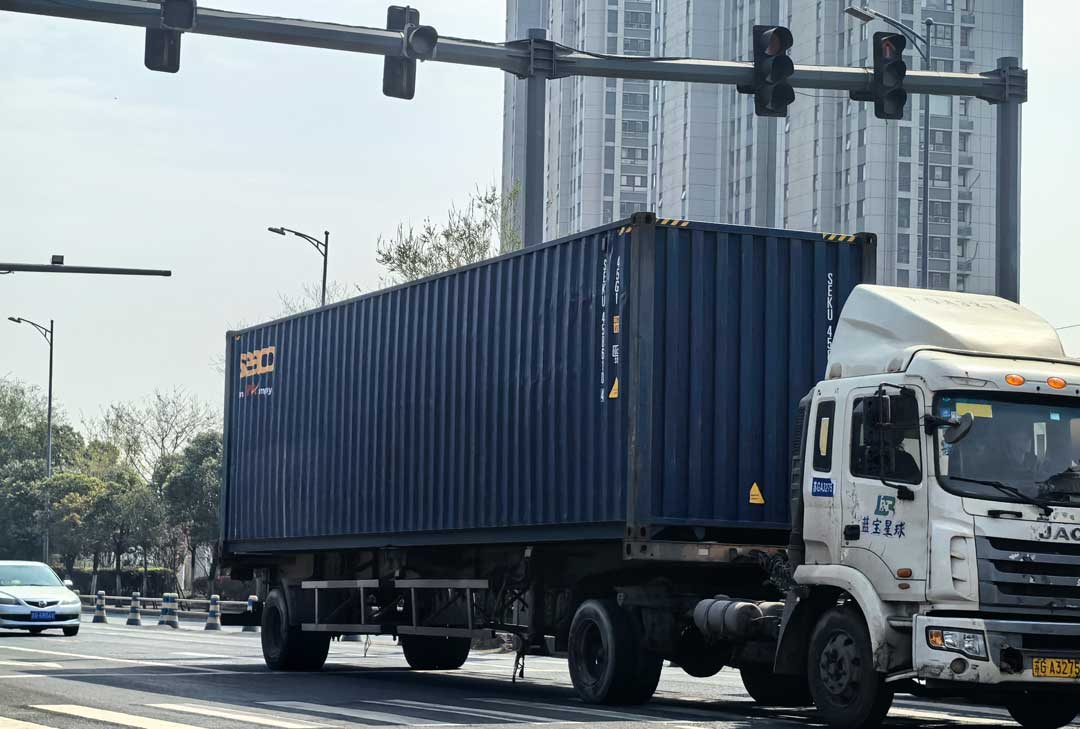
Three interstates meet in the metro, north to the US Midwest, east to the Gulf coast, southwest to the Mexico border. From San Antonio, a two-day drive covers about 100 million consumers in the US and Mexico combined, the base for its cross-border and regional distribution role. Trucks reach the three interstates within minutes from the district, keeping short-haul cost low.
| Item | Detail |
| Civil airport | San Antonio International Airport (SAT) |
| 2025 mail and cargo | About 274,847,470 pounds (about 125,000 tons), up 15.7% year on year, an airport record |
| 2025 passengers | 10,740,694 (down about 3.2% year on year) |
| Main cargo carriers | FedEx and DHL have freight stations on Wetmore Road by the airport |
| Route coverage | About 14 airlines, over 50 nonstop destinations, including Mexico points |
| New facility | About USD 55 million ground-loading facility opened March 2026, with 3 gates and new federal inspection |
| Industrial airport (in district) | Kelly Field (SKF), 11,500-foot runway, 24 hours 7 days, A-class cargo terminal and 14-acre apron |
Local air cargo is shared by two facilities: the civil airport takes express and belly cargo, with 2025 volume an airport record; the in-district industrial airport takes project and heavy-lift cargo, its 11,500-foot runway handling large freighters, with a cargo terminal and apron for out-of-gauge goods. Transcontinental palletized cargo usually transfers via Dallas or Houston hubs, then trucks in, making San Antonio air cargo directly compete with land transport in the cross-border direction.
| Industry | Related cargo |
| Vehicle and auto parts | Stampings, engines and electronic controls, tooling; over 20 just-in-time suppliers locally |
| Aerospace MRO | Airframe parts, avionics, ground support equipment |
| Data centers and cyber | Server racks, network gear, cooling equipment |
| Solar module manufacturing | Cells, busbars, frames and glass, some equipment imported |
| Oil, gas and energy equipment | Pipe, compressors, drilling and production parts |
Local imports are mainly auto parts, industrial equipment and electronics, matching common FCL combinations. Auto supply chains widely run just-in-time, with tight arrival windows, so pickup and delivery must align with production cadence. In-district aerospace business has extra packaging and exam needs; airworthiness parts need documents per the relevant rules.
| Metric | Condition |
| Industrial inventory | Q2 2025 about 143.7 million square feet; Q3 2025 another basis about 168 million square feet |
| Vacancy | About 11.5% to 11.8% (2025 basis) |
| Average asking rent | About USD 7.80 to 9.12 per square foot per year (two bases differ) |
| Under construction | About 3.5 million square feet |
| Main submarkets | Northeast, South, along Loop 1604 |
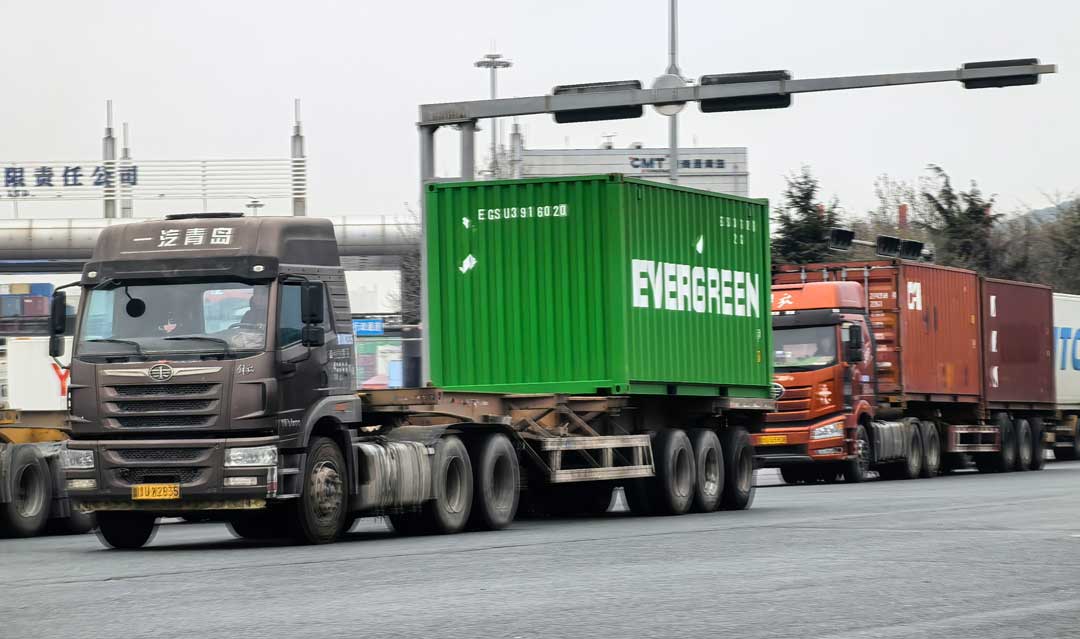
Local vacancy rose above 11% in 2025, above the national same-period level, so choice is ample. Vacant area concentrates in large warehouses and distribution buildings over 450,000 square feet; smaller-space property is less tight. Rent is below the US West Coast and Northeast coastal markets, and slightly below Dallas/Fort Worth within Texas. New supply gives tenants more room when negotiating; for long-term use, compare two or three properties before deciding.
| Zone number | FTZ 80 (district subzone 80-10) |
| Coverage | All Port of San Antonio district land |
| Operation | In-district firms activate on demand; services by in-district providers |
| Main use | Storage, distribution, light processing and re-export |
The whole district is zoned as an FTZ subzone; goods in the zone are stored, sorted, labeled, inspected or re-exported without duty paid, deferring duty to when they leave the zone into the US market. For goods needing simple processing before entering the US market, the lower rate of finished or component can be chosen. Applicability and any rate-choice benefit need a per-shipment check against commodity and HS code.
| Route | Port of entry | Inland mode |
| Gulf entry, direct by road | Port of Houston | About 3 hours by road, all-day available |
| Gulf entry, by rail | Port of Houston | Rail intermodal per schedule |
| US West entry, east by rail | Los Angeles, Long Beach | Rail mini-land-bridge, about 4 to 6 days |
| Air via hub | Dallas/Fort Worth, Houston and other hubs | Delivery same or next day after arrival |
Most importers choose Houston entry then road, for dense sailings and only hours of inland leg. Larger volume or inland-freight-sensitive cargo can switch to rail, shipped from the port straight to the local intermodal terminal. The West entry has a shorter ocean leg but longer land mileage, with total transit tied to East-bound rail scheduling. Air cargo usually transfers via Dallas or Houston hubs, then trucks in.
| Mode | Common range | Note |
| Ocean via Houston port, then road delivery | About 24 to 30 days | Excludes cut-off and clearance |
| Ocean via US West port, then rail or road | About 28 to 35 days | Includes rail box train or long-haul truck |
| Door to door (ocean plus inland) | About 28 to 38 days | Includes clearance and short haul |
| Ocean LCL | About 35 to 45 days | Includes consolidation and devanning |
| Air | About 5 to 9 days | Via hub, includes ground delivery |
The above ranges are the common overlap after cross-checking several forwarders' transit tables; they exclude peak queue and exam time and are not a delivery commitment. In peak, both Gulf and West Coast port berthing queue, and local yard unloading and pickup queue too, so total transit usually runs three to five days longer than the table.
| Step | How |
| Pickup location | Union Pacific San Antonio Intermodal Terminal, or carrier-designated yard |
| Documents needed | Arrival notice, released bill of lading, customs release receipt, pickup authorization |
| Booking | Book entry slot per yard rules; yard runs all-weather service |
| In-district short haul | Rail park can send cars directly to tenant loading points |
| Final delivery | Truck to warehouse, plant or commercial address |
| Empty return | Per carrier instruction to the designated yard |
The intermodal terminal gives all-weather gate service, so pickup booking slots are more flexible than other inland yards' weekday windows. Rail intermodal free storage is usually by hour or business day; overdue incurs storage. In-district firms already on the rail-park line can take the box straight to the plant, cutting one short haul and storage.
The San Antonio port can file, exam and release. Imported cargo can be entered and released at the port of entry then moved in, or moved in-bond sealed to this port and filed here. In-bond needs filing and bond at entry and arrival at the destination port within the set period.
| Step | Note |
| Filing method | File at port of entry, or in-bond sealed to this port then file |
| Exam site | Local exam site at SW Freight (242 NW W. White Road) |
| Exam types | Document review, NII scan and physical exam, by risk rating |
| Deferred exam | Tuesday and Thursday 12:00 to 14:00 |
| Pickup after release | By release receipt |
Exam ratio follows risk rating; consistency of name, value and origin affects selection. Wood-packaged goods need IPPC fumigation marks; food, agriculture and animal-plant products have extra quarantine needs. Inconsistent documents between papers are a common delay; commercial invoice, packing list and bill of lading names, quantities and amounts need line-by-line check.
| Party | Hours |
| Port administration | Monday to Friday 08:00 to 16:00 |
| Deferred exam window | Tuesday and Thursday 12:00 to 14:00 |
| Union Pacific intermodal | Yard and gate 24 hours, 7 days |
| District industrial airport | 24 hours, 7 days |
| Warehouses and yards | Mostly Monday to Friday; per-yard schedule |
US federal holidays affect port and warehouse work; New Year, Independence Day, Thanksgiving and Christmas are usually full-day closures; MLK Day, Presidents Day, Memorial Day, Labor Day and Columbus Day follow federal holiday scheduling. Texas has some state holiday arrangements. The Friday after Thanksgiving and the days around Christmas see some warehouses shorten hours or rotate; count this in year-end planning. The district rail yard and industrial airport are open all day, but holiday staffing still changes; confirm ahead.
The import peak usually lands August to October, in sync with Gulf and West Coast ports. Houston berthing queues lengthen, and local yard unloading and pickup queue too. November and December are a fall after the pre-holiday rush; January to February is low season with lower volume. March to June is a relatively steady window, with March arrivals more concentrated.
Local auto and industrial cargo is less affected by the consumer peak, with arrivals more tied to production plans; solar and data-center cargo concentrates at project start. Peak affects San Antonio in two directions: Gulf-entry cargo also queues in peak, and West-entry rail scheduling tightens. In peak, submit pickup booking three to five days ahead and buffer just-in-time cargo.
Together, San Antonio suits two needs: distribution to the south-central Texas and Mexico-border market, and importers needing to choose between Gulf and West entry while having heavy and project cargo to move. For very time-sensitive, small-batch cargo, still arrange air from Dallas or Houston hub airports.
No. San Antonio is an inland city with no seaport. International container cargo discharges and enters at Houston, Corpus Christi or West Coast Los Angeles, Long Beach, Oakland, then moves to San Antonio by rail or truck.
Per the cross-checked published transit tables of several forwarders, Houston entry then road is about 24 to 30 days; West port then rail or road about 28 to 35 days; door to door about 28 to 38 days. Air via hub is about 5 to 9 days. Actual time follows the carrier's basis at booking.
Yes. San Antonio port code 5507 can file, exam and release. Cargo can be entered and released at the port of entry then moved in, or moved in-bond sealed to this port and filed here; the local exam site is at SW Freight.
No. The Port of San Antonio is an about 1,900-acre industrial district, formerly an Air Force base, with a rail park and industrial airport and warehouse and manufacturing land. It does inland intermodal; it is not on the sea, and cargo moves via Houston and other seaports.
Pickup is at the Union Pacific San Antonio Intermodal Terminal or the carrier-designated yard. The terminal gives 24-hour gate service, with more flexible pickup booking. In-district firms already on the rail-park line can take the box straight to the plant.
Two. The about 350-acre in-district rail park has Union Pacific and BNSF direct access, with switching and track maintenance by Watco; Union Pacific also runs the San Antonio Intermodal Terminal for long-haul container trains.
The whole Port of San Antonio district is zoned FTZ 80 subzone (number 80-10). Goods in the zone can be stored, sorted, labeled and re-exported without duty paid, deferring duty to when they enter the US market. Applicability needs a per-commodity, per-HS-code check.
2025 local industrial vacancy was 11.5% to 11.8%, average asking rent about USD 7.80 to 9.12 per square foot per year, with about 3.5 million square feet under construction. Vacant area concentrates in large warehouses over 450,000 square feet; smaller-space property is less tight.
The civil airport's 2025 cargo was about 125,000 tons, up 15.7% to an airport record, with FedEx and DHL freight stations by the airport. The in-district industrial airport has an 11,500-foot runway, open 24 hours, handling large freighters and heavy cargo; transcontinental palletized cargo usually transfers via Dallas or Houston hubs.
The import peak is usually August to October, in sync with Gulf and West Coast ports; Houston berthing queues lengthen and local yard unloading and pickup queue too. November and December are a fall; January to February is low season. In peak, submit pickup booking three to five days ahead.
Shipping from China to USA
Planning a shipment or just comparing options? Contact our freight experts to get a tailored rate within 24 hours.
