
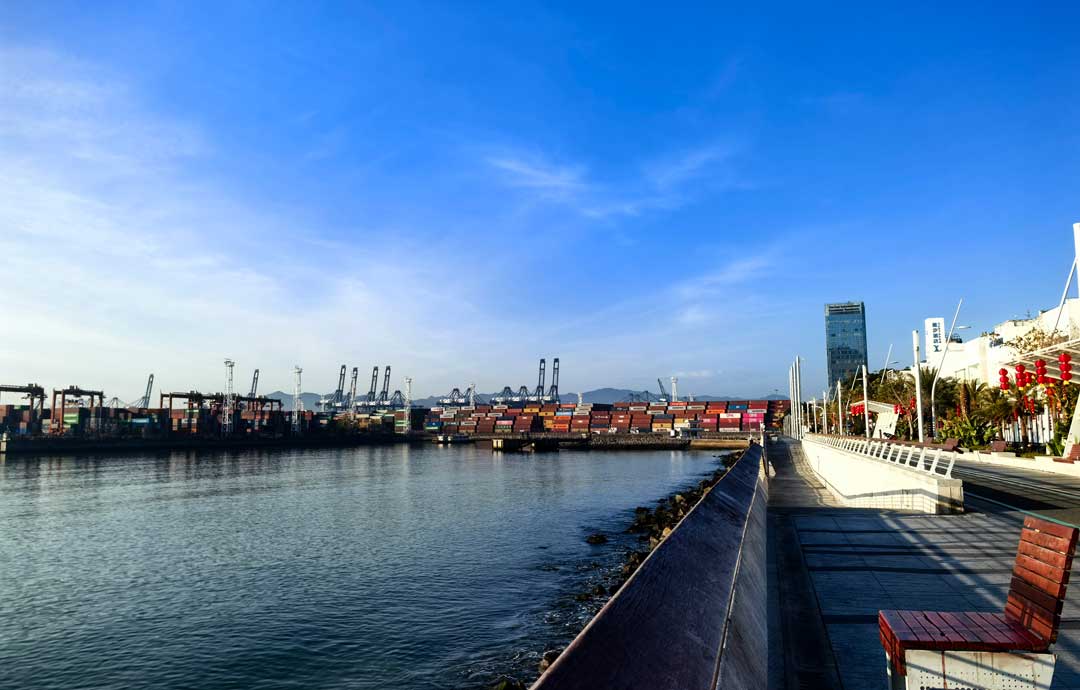
San Francisco, California sits on the west shore of San Francisco Bay, between the bay and the Pacific Ocean. Within the US port system the port functions as a city-front cargo terminal and customs service point: local terminals handle auto ro-ro, breakbulk and construction materials, while container mainline calls are handled by the other Bay Area seaport. For importers, the value of San Francisco concentrates in three areas: dedicated facilities for project cargo and ro-ro, connections to the Asia air hub at San Francisco International Airport, and Bay Area warehousing for high-end distribution.
| Item | Detail |
| State | California |
| Water | West shore of San Francisco Bay, reaching the Pacific through the Golden Gate |
| Time zone | Pacific Time (PST / PDT) |
| Distance to Oakland | About 15 km via the Bay Bridge, roughly 30 to 40 minutes by truck |
| Distance to San Francisco International Airport | About 21 km by road |
| Main highways | US-101, I-80, I-280, I-380 |
| Local port character | City-front cargo terminals, mainly auto ro-ro, breakbulk and construction materials |
San Francisco occupies the northern end of the peninsula, with San Francisco Bay on the east and the Pacific on the west, adjoining San Mateo County to the south. The Golden Gate is the main deepwater channel out of the bay, and the deepwater fairways and berths line the eastern shore. This geography means San Francisco shares the same water resources with the other ports in the Bay Area, and it also pushed the cargo terminals to the industrial district on the south side of the city.
The customs port code for San Francisco is 2809. The office sits in the customhouse on Battery Street downtown and handles import entries, inspections and releases for the region. The port reports to the San Francisco Field Office, with ocean cargo business handled through the service window in Oakland and air cargo business handled through the cargo station at San Francisco International Airport.
| Item | Content |
| Port name | San Francisco, California |
| Port code | 2809 |
| Office address | 555 Battery Street, Room 319, San Francisco, CA 94111 |
| Telephone | +1 415-782-9200 |
| Fax | +1 415-782-9222 |
| Port Director | Clint Lamm |
| Parent field office | San Francisco Field Office |
| Seizures | (415) 782-9220 |
| Air cargo station | 648 West Field Road, San Francisco, CA 94128 |
The ocean cargo service window sits on the Oakland side on Maritime Street and handles ocean trade and agricultural inspections Monday to Friday from 08:00 to 16:00. The air cargo station sits inside San Francisco International Airport and handles air freight Monday to Friday from 08:00 to 23:30. Importers filing at the San Francisco port can select the matching service window according to how the cargo enters the United States.
The port area is operated by the city-owned port agency of San Francisco, governed by the Board of Port Commissioners. The port frontage runs along the eastern shoreline of the city, with cargo terminals concentrated in the industrial district to the south and cruise piers, ferries and leisure facilities to the north.
| Item | Content |
| Operator | Port of San Francisco, a city-owned agency |
| Governing body | San Francisco Port Commission |
| Cargo terminal area | Both sides of Islais Creek, Bayview-Hunters Point |
| Deepwater berths | About six across the port |
| Covered storage | About 394,000 square feet |
| Gantry cranes | About five in total |
| On-dock rail | Yes, connecting to the regional rail network |
The northern waterfront carries passenger and civic functions, including the cruise terminal, ferries and port services. The Islais Creek area to the south carries the cargo functions, with breakbulk, dry bulk and ro-ro terminals. A buffer separates the cargo area from residential neighborhoods, and heavy vehicles use dedicated access roads to limit impact on city traffic. Cargo business centers on project cargo, breakbulk and automobiles, with container operations at a limited scale.
Cargo terminals line both sides of the Islais Creek channel. From north to south they are Pier 80, Pier 92 and Piers 94 to 96. The three groups handle different cargo types and are equipped with different handling gear.
| Terminal | Main cargoes | Footprint and berths |
| Pier 80 | Auto ro-ro, breakbulk and project cargo | 69 acres, 3 berths, 40-foot depth |
| Pier 92 | Sand, stone and aggregate | Dry bulk berth |
| Piers 94 to 96 | Dry bulk and neo-bulk | 76 acres, 3 berths, 40-foot depth |
The division of labor follows cargo characteristics: auto ro-ro needs open yard space and ramp operations, so it concentrates at Pier 80; sand and aggregate are heavy and low-value, so they concentrate at Pier 92 next to the batch plants; dry bulk and neo-bulk sit between the two and concentrate at Piers 94 to 96. Grouping by cargo type keeps different operations from interfering with each other and allows dedicated equipment for each.
Pier 80 is the main breakbulk and ro-ro terminal in San Francisco, located around Cesar Chavez Street and Maryland Street across 69 acres. The terminal is managed by Pasha Automotive Services and used for vehicle import and export and vehicle processing.
| Item | Content |
| Footprint | About 69 acres |
| Berths | 3 |
| Depth | About 40 feet (MLLW) |
| Total berth length | About 2,700 feet |
| Deck load | 1,000 pounds per square foot |
| Covered storage | Warehouse A 224,000 square feet, Warehouse D 170,000 square feet |
| Gates | 4 inbound lanes, 2 outbound lanes, 1 bypass lane |
| Truck scales | 4 units, 70 by 10 feet, 60 tons |
| Operator | Pasha Automotive Services |
Auto ro-ro is the most distinctive business at this terminal. Under ro-ro, vehicles are carried by specialized ro-ro vessels and driven directly on or off through the stern ramp, with no containers or cranes involved. The terminal has vehicle processing facilities and yard space to complete loading and unloading, inspection and temporary storage, before onward rail or road movement according to dealer distribution. A radiation portal monitor is installed at the gate so vehicles and large breakbulk can complete the necessary checks before leaving.
Piers 94 to 96 are the dry bulk and neo-bulk terminals in San Francisco, located on the Cargo Way side across 76 acres. The terminals have on-dock rail running directly to the inland container transfer facility.
| Item | Content |
| Footprint | About 76 acres |
| Berths | 3 |
| Depth | About 40 feet (MLLW) |
| Total berth length | About 2,450 linear feet |
| Deck load | 800 pounds per square foot |
| Repair shop | About 24,000 square feet |
| Rail | On-dock rail running directly to the inland container transfer facility |
| Lifting equipment | Two Straporters, 40 long tons each (twin 20-foot lifting) |
These terminals share a focus on out-of-gauge cargo: large machinery, wind turbine components, steel structures and heavy equipment cannot travel in standard containers and are handled as breakbulk or neo-bulk. The high deck load rating and large-reach cranes are configured for exactly this cargo mix. Pier 96 also has a deepwater berth and about 30 acres of terminal land available for project cargo staging and temporary storage.
| Item | Content |
| Main cargoes | Sand, stone and aggregate |
| Use | Concrete feedstock for the San Francisco and Bay Area construction industry |
| Adjacent facilities | Two concrete batch plants next door |
| Transport mode | Raw material arrives by vessel, reducing truck trips |
Sand and aggregate are heavy and low-value, so long-distance trucking is uneconomical and vessel delivery dominates. Two concrete batch plants sit next to Pier 92, so material discharged from vessels can move straight into production, cutting truck distance and emissions. The arrangement matters in a dense urban construction market: moving concrete feedstock by road would put heavy pressure on city traffic and air quality.
| Item | Content |
| Navigable water | San Francisco Bay, reaching the Pacific through the Golden Gate |
| Cargo terminal depth | About 40 feet (MLLW) |
| Main vessel types | Ro-ro vessels, dry bulk carriers, breakbulk and project cargo vessels |
| Asia mainline container services | Not handled at this port |
| Nearest mainline seaport | The other Bay Area seaport handles container mainline business |
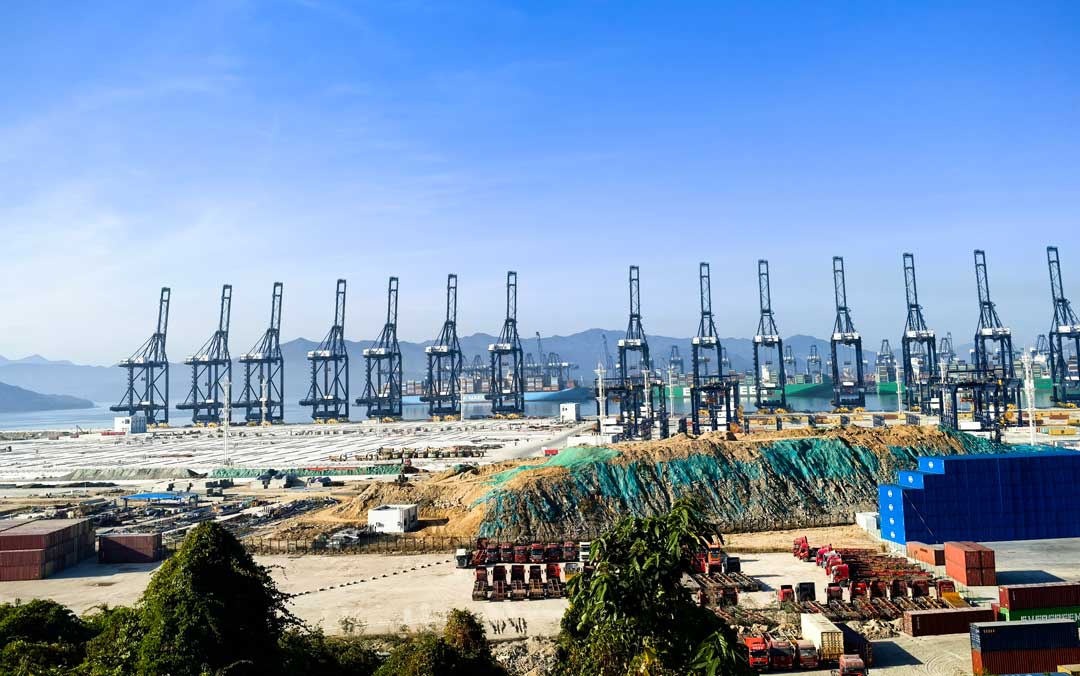
San Francisco Bay has the depth to take ro-ro vessels, bulk carriers and project cargo vessels, but the yard scale and quay length of the city-front terminals do not suit continuous working of large container mainline vessels. Container cargo from China therefore usually enters through the other Bay Area seaport and moves inland by road or rail, while breakbulk, project cargo and auto ro-ro can berth directly in San Francisco. This division of labor is the core structural feature of the port.
Cargo terminals connect to the regional rail network through on-dock rail, with service provided by Union Pacific and the San Francisco Bay Railroad. Rail yards in the cargo district share track with commuter rail, so freight movements follow a fixed timetable.
| Railroad | Access method |
| Union Pacific | Class I rail service provider for the region |
| San Francisco Bay Railroad | Local rail service provider |
| On-dock rail | Pier 80 connects via the Illinois Street bridge; Piers 94 to 96 have on-dock rail |
| Regional connection | Freight yards share track with commuter rail and follow fixed schedules |
Rail serves two functions locally: moving breakbulk and project cargo from the terminals inland, and long-distance distribution toward the US Midwest. San Francisco and Oakland face each other across the bay, and the inland rail route runs through the peninsula corridor into the mainline network. For container cargo moving by landbridge, the common approach is to discharge at the other Bay Area seaport, transfer to rail, and move into San Francisco.
| Highway | Direction and role |
| US-101 | North-south arterial, north over the Golden Gate Bridge and south toward San Jose |
| I-80 | Over the Bay Bridge to Oakland, east to the transcontinental mainline |
| I-280 | Southern arterial toward the peninsula and San Jose |
| I-380 | Connects I-280 with San Francisco International Airport |
San Francisco sits at the northern end of the peninsula, with the highway network built around US-101 and I-80. The Bay Bridge reaches Oakland and the East Bay, and US-101 reaches San Jose and points south. Cargo terminals concentrate on the south side of the city, with heavy vehicles using dedicated access roads to avoid crossing the urban core. From San Francisco, one day of driving covers the whole Bay Area and the Sacramento direction, and a two-day range extends further.
San Francisco hosts Foreign-Trade Zone 3, with the Board of Port Commissioners as grantee. The service area covers the City and County of San Francisco and San Mateo County, and imported goods may be stored, sorted and processed in a non-dutiable state inside the zone.
| Item | Content |
| Zone number | FTZ 3 |
| Grantee | San Francisco Port Commission |
| Operating framework | Alternative Site Framework since 2010-10-07 (Order No. 1718) |
| Service area | City and County of San Francisco and San Mateo County |
| Site management | Usage-driven site management; eligible companies may apply as needed |
Under the Alternative Site Framework, eligible companies inside an approved service area can apply for usage-driven sites without waiting for a boundary expansion approval. Goods inside the zone may be stored, sorted, labeled or re-exported without duty paid, and the duty payment point is deferred until the goods leave the zone for the US market. Whether the framework applies, and whether inverted tariff benefits are available, must be judged shipment by shipment against the commodity and the tariff number.
Container cargo exported from China to San Francisco usually enters through the other Bay Area seaport and moves in by road or rail, while breakbulk, project cargo and auto ro-ro can berth directly at the San Francisco terminals. For air freight, San Francisco International Airport is a major Asia hub with many direct services.
| Route | Ocean leg | Inland leg | Door-to-door range |
| Major China ports to the Bay Area seaport, then truck or rail into San Francisco | About 13 to 20 days | About 1 to 3 days | About 18 to 26 days |
| Major China ports direct to San Francisco terminals (breakbulk and ro-ro) | About 15 to 22 days | About 2 to 4 days | About 20 to 28 days |
| Ocean LCL (including consolidation and deconsolidation) | About 16 to 24 days | About 4 to 7 days | About 26 to 34 days |
| Air freight to San Francisco International Airport | N/A | N/A | About 4 to 8 days |
These ranges are the common span after cross-checking multiple forwarder transit tables. They exclude cut-off, customs clearance and peak-season queuing time and do not constitute a delivery commitment. Container cargo through the Bay Area seaport and breakbulk business at the San Francisco terminals complement each other, with the former carrying full-container mainline volume and the latter carrying project and ro-ro cargo. During peak season, space and inland capacity at the Bay Area seaport are both tight, and the local terminals can also be affected by upstream nodes.
San Francisco International Airport is the local air port of entry and a major Asia hub. The air cargo station sits inside the airport, and air cargo business is handled separately from ocean cargo business at the port.
| Item | Content |
| Airport | San Francisco International Airport (SFO) |
| Air cargo station | 648 West Field Road, inside the airport |
| FY2025 passengers | 54,118,814 |
| FY2025 cargo and mail | 541,998 metric tons, of which 368,582 metric tons international |
| All-cargo carriers | About 6 |
| Deferred inspection | International Terminal, Level 2, (650) 742-4470 |
Cargo and mail at San Francisco International Airport are mainly international, with dense Asia services and ample direct capacity to mainland China, Hong Kong and Taiwan, China. High-value cargo needing air speed can clear customs in San Francisco first and then move onward, or travel under bond to the local port for entry. The air cargo station accepts freight until 23:30 on weekdays, which gives night-arriving flights a long handling window.
| Indicator | Situation |
| South Bay submarket inventory | About 76.8 million square feet |
| Vacancy rate | About 5.5 percent (Q2 2025, third-party research estimate) |
| Average asking rent | About USD 18.14 per square foot per year |
| Main submarkets | Bayview-Hunters Point, South San Francisco, San Mateo, and the San Jose direction |
| Market character | Limited land supply and rent levels in the higher range of US markets |
Bay Area industrial vacancy sits at a low level, and new supply is constrained by limited land. Rent levels sit in the higher range of US markets, consistent with the high-end positioning of the California coastal market. Rentable space near the port is limited, and larger single-building assets lease quickly once listed. Tenants planning long-term use typically lock down space months in advance, and availability thins further around peak season. For cargo sensitive to warehousing cost, alternatives can be sought inland within the Bay Area or in the Central Valley.
| Step | Handling method |
| Pickup location | Terminal yard, or the depot designated by the carrier |
| Acceptance hours | Gate hours published by the terminal for that day; advance appointment required |
| Required documents | Arrival notice, released bill of lading, customs release receipt, pickup authorization |
| Chassis | Provided as arranged by the carrier and the yard |
| Empty return | Handled at the depot designated by the carrier |
| Late charges | Charges beyond the free storage period calculated under carrier and depot rules |
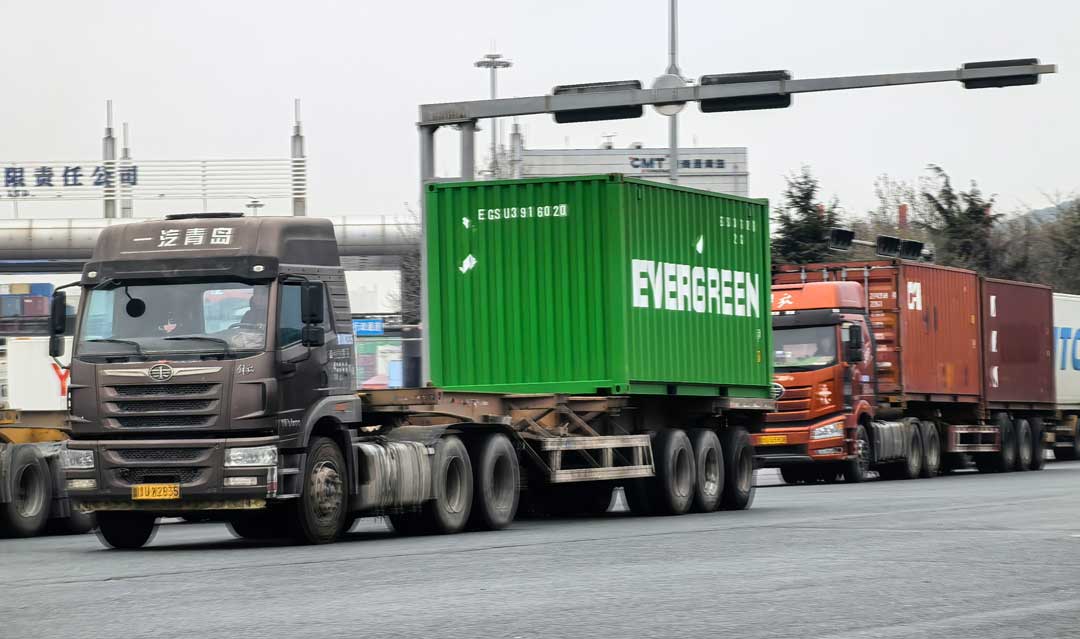
Pickup requires an advance appointment and the authorization documents requested by the carrier. Free storage time in the yard is calculated under carrier and depot rules, and overruns generate storage charges. The empty return point may differ from the pickup point, so the handover must be confirmed against carrier instructions. Project cargo and ro-ro pickup arrangements differ from containers and need separate confirmation against the terminal and operator working plan.
The San Francisco port has entry, inspection and release capability. Imported cargo may be entered and released at the port of arrival and then moved in, or travel under bond to this port for entry. Bonded movement requires entry and security formalities at the time of arrival and arrival at the destination port within the prescribed period.
| Step | Detail |
| Entry method | Entry at the port of arrival, or bonded movement to this port for entry |
| Inspection location | Designated by the port, arranged against terminal, depot and bonded warehouse conditions |
| Inspection types | Document review, X-ray scan and physical inspection, set by risk rating |
| Ocean cargo window | Maritime Street, Oakland, Monday to Friday 08:00 to 16:00 |
| Air cargo window | Airport cargo station, Monday to Friday 08:00 to 23:30 |
| Pickup after release | Container or cargo pickup against the release receipt |
Inspection rates are set by risk rating, and consistency among cargo description, declared value and origin information affects the chance of selection. Inconsistency between documents is a common cause of delay, so description, quantity and value on the commercial invoice, packing list and bill of lading need to be checked item by item. Cargo with wood packaging must carry the IPPC treatment mark, and agricultural and food cargo must also meet the quarantine requirements of the agriculture authorities.
| Counter | Hours |
| Field office | Monday to Friday 08:00 to 17:00 |
| Ocean cargo trade window | Monday to Friday 08:00 to 16:00 |
| Air cargo station | Monday to Friday 08:00 to 23:30 |
| Terminal gates | As published by the terminal for that day |
| Deferred inspection | International Terminal Level 2, by appointment |
Administrative office hours and cargo counter hours are set separately, and the air cargo station accepts freight until 23:30 on weekdays. US federal holidays affect office and terminal operations, with New Year's Day, Independence Day, Thanksgiving and Christmas normally full-day closures, and Martin Luther King Jr. Day, Presidents Day, Memorial Day, Labor Day and Columbus Day following federal holiday arrangements. The Friday after Thanksgiving and the working days around Christmas see some warehouses and yards shorten hours or rotate staff, which should be factored into year-end production planning.
Import peaks usually appear from August to October, in step with the US West Coast ports, when space and inland capacity are both tight. November and December form the post-holiday pullback, January and February enter the off-peak with lower volumes, and cargo volumes start to recover in March. April to June is a relatively stable window. Project cargo and ro-ro scheduling is comparatively independent and driven more by infrastructure and manufacturing project timelines.
Peak and off-peak effects on San Francisco show up mainly at upstream nodes and in warehousing: ocean freight rate swings are driven by carrier capacity deployment, while space and inland capacity at the Bay Area seaport tighten in peak season. During peak season it is advisable to submit pickup appointments three to five days ahead and reserve one to two days of buffer. Project cargo should lock down terminal windows and transport resources ahead of the project schedule.
Taken together, these conditions suit two kinds of demand: vehicle ro-ro and project cargo import and export, and high-value cargo distribution leaning on the Asia air hub. For importers needing large volumes of full containers, container cargo has to be arranged inland from the Bay Area seaport, and San Francisco's local role is a specialized complement.
It has cargo terminals, but they focus on auto ro-ro, breakbulk and construction materials. Cargo business concentrates at Piers 80, 92 and 94 to 96 along Islais Creek, and the port does not handle Asia mainline container services. Container cargo usually enters through the other Bay Area seaport and moves in afterward.
Based on cross-checked public forwarder transit tables, ocean transit to the Bay Area seaport commonly runs about 13 to 20 days, with door-to-door of about 18 to 26 days after the inland leg; direct to the San Francisco terminals for breakbulk and ro-ro runs about 20 to 28 days. Air freight commonly runs about 4 to 8 days. Actual timing follows the carrier's schedule at the time of booking.
Vehicle business concentrates at Pier 80, managed by Pasha Automotive Services. After a ro-ro vessel berths, vehicles drive directly on or off through the stern ramp with no containers or cranes. The terminal has vehicle processing facilities and yard space to complete loading and unloading, inspection and temporary storage, before onward rail or road movement according to dealer distribution.
Yes. The San Francisco port code is 2809 and the port has entry, inspection and release capability. Ocean cargo business is handled at the Maritime Street office in Oakland and air cargo business at the station inside San Francisco International Airport. Cargo may be entered and released at the port of arrival before moving in, or travel under bond to this port for entry.
The port area is operated by the city-owned port agency of San Francisco, governed by the Board of Port Commissioners. The northern waterfront carries cruise, ferry and leisure functions, while the Islais Creek area to the south carries breakbulk, dry bulk and ro-ro cargo functions, with day-to-day terminal operations run by tenants or operators.
Pickup can be completed at the terminal yard or at the depot designated by the carrier. Trucking companies book a gate slot against the arrival notice, released bill of lading, customs release receipt and pickup authorization, with gate hours as published by the terminal for that day. Project cargo and ro-ro pickup arrangements differ from containers and need separate confirmation against the terminal and operator working plan.
Yes. Pier 80 connects to on-dock rail via the Illinois Street bridge, and Piers 94 to 96 have on-dock rail running directly to the inland container transfer facility. Rail service is provided by Union Pacific and the San Francisco Bay Railroad, with freight yards sharing track with commuter rail and following fixed schedules.
FTZ 3 has the San Francisco Port Commission as grantee and has operated under the Alternative Site Framework since 2010, covering the City and County of San Francisco and San Mateo County. Goods inside the zone may be stored, sorted and re-exported without duty paid, with the duty payment point deferred until the goods enter the US market. Applicability must be judged against the commodity and tariff number shipment by shipment.
South Bay submarket inventory is about 76.8 million square feet with vacancy of about 5.5 percent and average asking rent of about USD 18.14 per square foot per year. Land supply is limited and new development is modest, with limited rentable space near the port. For cargo sensitive to warehousing cost, alternatives can be sought inland within the Bay Area or in the Central Valley.
Import peaks usually fall from August to October, when space and inland capacity are both tight. November and December form the pullback and January and February the off-peak. During peak season it is advisable to submit pickup appointments three to five days ahead and reserve one to two days of buffer, and project cargo should lock down terminal windows and transport resources ahead of the project schedule.
Shipping from China to USA
Planning a shipment or just comparing options? Contact our freight experts to get a tailored rate within 24 hours.
