
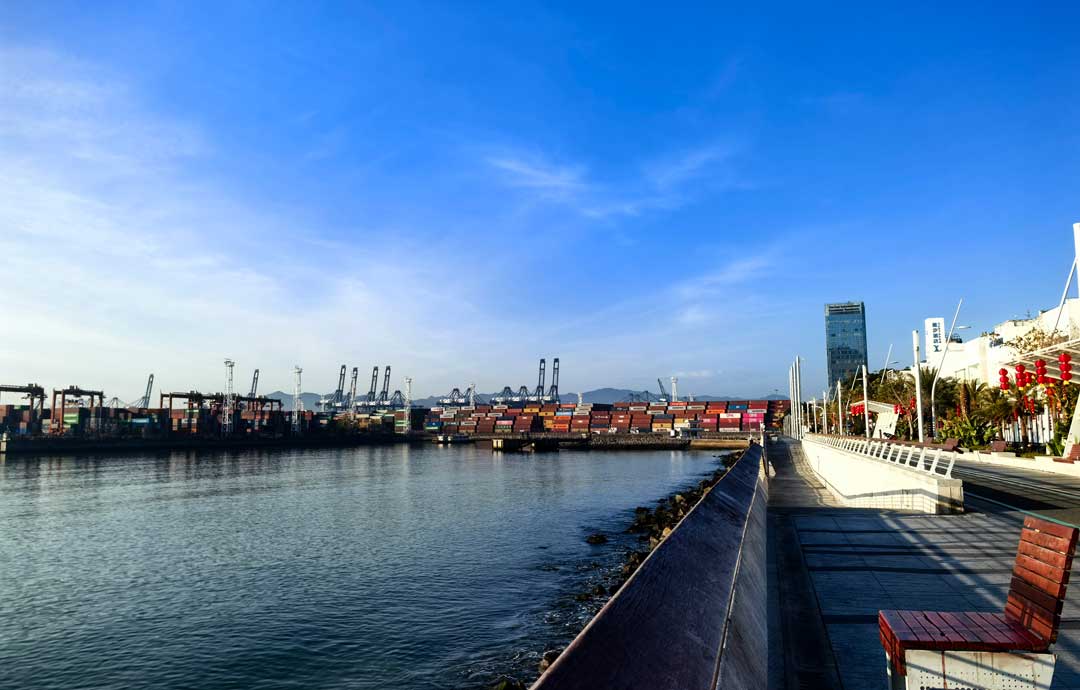
Savannah, Georgia sits on the state's southeastern coast, where the Savannah River meets the sea. In the US port system its identity is an East Coast trunk-line container gateway: two deepwater terminals are run by the Georgia Ports Authority, and Garden City Terminal is the largest single container terminal in North America. For China exporters the value concentrates in three places: the dual Class I rail corridor to the US Southeast and Midwest, a highway and inland-port network covering several southeastern states, and local manufacturing and warehousing support.
| State | Georgia |
| River | Savannah River, meeting the sea here |
| Time zone | Eastern Time (EST / EDT) |
| Distance to Atlanta | About 4 hours by road |
| Distance to Charleston | About 170 km by road |
| Main highways | I-16, I-95, US-80 |
| Local port nature | East Coast trunk-line container gateway, two deepwater terminals |
Savannah sits midway along Georgia's coastline, South Carolina to the north and Florida to the south. The Savannah River runs southeast to the sea, forming a deepwater shoreline on the city's south side where both deepwater terminals sit. I-16 joins I-95 west of the city and runs east straight to the terminal, the main corridor between port and inland. This position lets Savannah serve the US Southeast and reach the Midwest by rail.
Savannah's customs port code is 1703, with the office on Southern Boulevard handling local import filing, exam and release. The port's supervisory unit is the Atlanta Field Office, and the operations center runs seven days a week.
| Port name | Savannah, Georgia |
| Port code | 1703 |
| Registered address | 139 Southern Blvd, Savannah, GA 31405 |
| Mailing address | 1 East Bay Street, Savannah, GA 31401 |
| Telephone | +1 912-721-4840 |
| Fax | +1 912-508-0962 |
| Port director | Joshua Nutzhorn |
| Supervising field office | Atlanta Field Office |
| Administrative hours | Monday to Friday 08:00 to 16:00 |
| Operations center | 08:00 to 16:00, seven days a week |
| After-hours contact | (912) 232-7507 (24 hours) |
The port's operations center handles vessel in-and-out, trade inquiry, import exam, entry processing and agriculture exam, running seven days a week. Trade and general inquiry are taken by a dedicated email, and seizure matters by another channel. Import cargo filed at Savannah can use the window matching its business type. Aircraft arrival and passenger-cargo inspection at the airport side are handled by the same port's on-site team.
The Port of Savannah is operated by the Georgia Ports Authority (GPA), a Georgia state agency. The deepwater terminals are in two places, plus an inland rail facility network linked to them. The authority runs mainly on self-generated funds, with operating revenue from terminal fees and related services.
| Operator | Georgia Ports Authority |
| Deepwater terminals | Two: Garden City Terminal and Ocean Terminal |
| Garden City Terminal area | About 1,350 acres |
| Ocean Terminal area | About 208 acres |
| Inland rail facilities | Appalachian Regional Port, Gainesville Inland Port |
| Main modes | Sea, rail, road, inland barge |
| Container rail access | CSX and Norfolk Southern run directly into the terminal |
The authority also runs other facilities in the state, including the Brunswick ro-ro terminal and several inland rail yards. The two Savannah deepwater terminals differ: Garden City handles container main business, Ocean Terminal handles ro-ro, break-bulk and some containers, and is expanding container capacity in its rebuild. In recent years the authority has focused investment on terminal capacity expansion, channel deepening and the inland rail network.
Garden City Terminal is Savannah's container main terminal, on the Garden City side upstream on the Savannah River, about 1,350 acres. Per the Georgia Ports Authority, it is among the larger single container terminals in North America, handling nearly 38 million tons of container cargo a year.
| Area | About 1,350 acres |
| Terminal nature | Container-dedicated terminal |
| Container berths | 7 in 2025 (planned to grow to 12 after 2030) |
| Yard capacity | 105,000 boxes in 2025 (planned 190,000 after 2030) |
| Truck gates | 53 in 2025 (planned 100 after 2030) |
| On-dock rail | 10 trains x 10,000 feet in 2025 (planned 15 after 2030) |
| Gate hours | 04:00 to 18:00 |
| Rail service | CSX and Norfolk Southern run directly into the terminal |
The terminal works at a fast pace; the gate opens at 04:00, letting truckers complete multiple in-and-out trips in one day, which has a real effect on inventory turn and supply-chain rhythm. The yard is zoned by box type and destination, loaded and empty boxes kept apart, and reefers in powered areas. On-dock rail loading capacity is planned with berth count, so vessels can move to rail quickly after arrival, cutting dwell time.
Ocean Terminal is Savannah's second deepwater terminal, downstream on the Savannah River near the city, 208 acres. It is under a berth and yard rebuild aimed at serving two large container ships at once on completion and adding about 2 million TEU of capacity.
| Area | About 208 acres |
| Main cargo | Ro-ro, break-bulk; container business added after rebuild |
| Rebuild goal | Serve two large container ships at once; add about 2 million TEU |
| Phase 1 completion | Target end of calendar 2027 |
| Project estimate | About USD 1.69 billion |
| New gate | 12 inbound, 6 outbound lanes; planned November 2026 opening |
The rebuild includes demolishing existing warehouses, building new container storage, raising grade and adding yard equipment. The terminal keeps working during the rebuild; ro-ro and break-bulk scheduling follows the terminal's published temporary plan. After completion the two terminals will share Savannah's container business, easing yard and berth pressure.
| Metric | Value |
| FY2025 throughput | 5.7 million TEU (second-highest fiscal year on record) |
| FY2010 throughput | 2.64 million TEU |
| FY2010 to FY2025 growth | 115.9% |
| FY2010-FY2025 CAGR | 5.3% |
| Current terminal capacity | About 5.6 million TEU |
| 2030 planned capacity | About 7.5 million TEU |
| 2035 planned capacity | About 9.0 million TEU |
| Annual-report final target | 9.5 million TEU |
Savannah's throughput more than doubled over the past fifteen years, a 5.3% compound annual growth rate. The authority's long-range forecast sees container volume rise about 45.2% from FY2025 to FY2035, expanding Garden City and Ocean terminals to about 9.5 million TEU. This growth ties to manufacturing expansion in Georgia and the US Southeast; local auto and electronics investment supports the new volume.
| Waterway | Savannah River, from the mouth to the Atlantic |
| Channel project | 5-foot deepening plus passing zones |
| Bridge constraint | Talmadge Memorial Bridge is the main vertical clearance limit for inbound vessels |
| Bridge lift project | About USD 189 million, lift about 20 feet, planned start early 2026 |
| Main vessels | Large container ships, ro-ro, break-bulk |
| River-sea link | Vessels piloted from offshore into the river terminal |
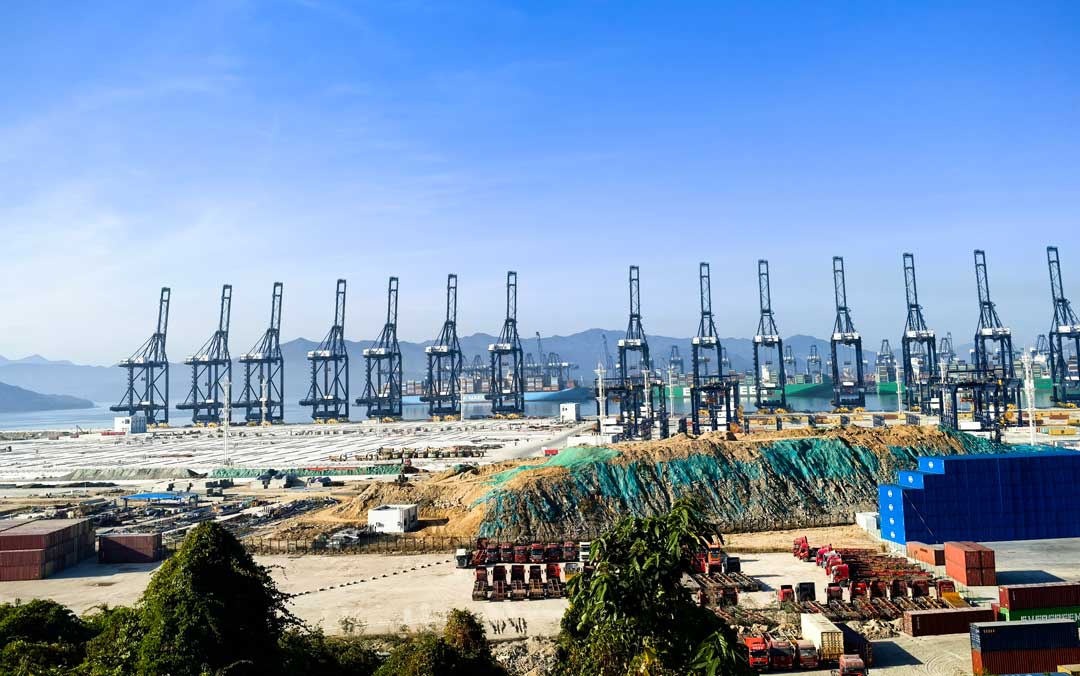
Savannah's terminals are on the river section; inbound vessels transit a stretch of river where bridge clearance is the main limit. The Talmadge Memorial Bridge's current clearance restricts some large vessels; the Georgia Department of Transportation-led lift project plans to raise the deck about 20 feet for the new generation of large container ships. Channel deepening and passing zones solve meeting and overtaking in the river; together they are the base condition for Savannah to take large vessels.
Garden City Terminal has CSX and Norfolk Southern, both Class I railroads, running directly into the terminal, with on-terminal intermodal facilities taking both railroads' trains. This lets Savannah container cargo switch between vessel and rail inside the terminal without short dray.
| Railroad | Access |
| CSX Transportation | Direct into terminal, trains depart from on-terminal intermodal facility |
| Norfolk Southern | Direct into terminal, trains depart from on-terminal intermodal facility |
| On-dock departures | 10 trains x 10,000 feet in 2025 (15 after 2030) |
| Main destinations | Chicago, Memphis, Louisville and other inland hubs |
| Inland link | Appalachian Regional Port, Gainesville Inland Port |
Rail at Savannah serves two functions: long-haul from terminal to inland hubs, and distribution to Southeast and Midwest markets. Both Class I railroads run lines in the terminal, so forwarders can pick the better-value network by destination. From Savannah, rail reaches Chicago, Memphis and Louisville, then hubs distribute to wider markets. For China exporters, dual rail access means more inland-leg choices and steadier peak-season capacity.
| Facility | Location and capacity |
| Appalachian Regional Port | Chatsworth; 2025 container volume 45,700 boxes (up 19% year on year) |
| Gainesville Inland Port | Planned opening May 4, 2026; about USD 134 million; full output 200,000 boxes a year |
| Link to Savannah | Five-day-a-week direct rail between Gainesville and Savannah |
| Main service area | Northeastern Georgia and surrounding states |
Inland ports extend part of the terminal function inland: cargo discharged at Savannah moves by rail to the inland port, where pickup and delivery are done locally, or the reverse. This cuts truck crossings of the Atlanta metro and shortens driver trips. Gainesville Inland Port is the newest link in the authority's inland network; its region has hundreds of manufacturers, with cargo including poultry, heavy equipment and forest products.
| Highway | Course and role |
| I-16 | East-west arterial; east to Savannah, west to I-75 |
| I-95 | North-south trunk, linking East Coast states |
| US-80 | Local link to the terminal area |
| Truck gates | Garden City 53 in 2025, planned 100 after 2030 |
Savannah's highway network centers on I-16 and I-95. I-16 joins I-75 west, reaching Atlanta and markets further west; I-95 links East Coast states north-south. The authority has invested in port-to-highway links, including new interchanges letting trucks enter the I-16 corridor directly and avoid neighboring street crossings. Truck-gate count is planned to rise from 53 to 100 after 2030 to absorb growing volume.
Savannah has Foreign-Trade Zone 104, with the Savannah Airport Commission as grantee, covering eight counties around Savannah; imported cargo can be stored, sorted and processed without duty paid.
| Item | Detail |
| Zone number | FTZ 104 |
| Approved | April 18, 1984 (Order 256) |
| Grantee | Savannah Airport Commission |
| Framework | Alternative Site Framework (ASF) since January 12, 2011 (Order 1736) |
| Service area | Eight counties: Bulloch, Bryan, Chatham, Effingham, Evans, Liberty, Long, Screven |
| Activation cap | 2,000 acres |
Goods in the zone are stored, sorted, labeled or re-exported without duty paid; duty payment is deferred until the goods leave the zone into the US market. Savannah's FTZ sites cover the airport and port areas, linking with air-cargo facilities, rail intermodal and the port terminals. Applicability and any rate-choice benefit need a per-shipment check against commodity and HS code.
China-export container cargo to Savannah is mainly all-water direct, entering the US East Coast via the Panama or Suez Canal. Some cargo uses ocean-to-rail, discharged at a US West Coast port then railed to Savannah.
| Route | Ocean leg | Inland leg | Door-to-door common range |
| China major ports to Savannah (all-water) | About 28 to 35 days | About 2 to 4 days | About 32 to 42 days |
| China to US West Coast, then rail to Savannah | About 13 to 20 days | About 7 to 10 days | About 24 to 34 days |
| Ocean LCL (with consolidation and devanning) | About 30 to 40 days | About 4 to 7 days | About 38 to 50 days |
| Air to Savannah or Atlanta hub | -- | -- | About 5 to 9 days |
The above ranges are the common overlap after cross-checking several forwarders' transit tables; they exclude cut-off, clearance and peak queue time and are not a delivery commitment. All-water has a longer ocean leg but shorter, fewer-step inland leg; ocean-to-rail may be faster overall but adds a transfer step and cost. Choose by cargo time need and cost budget.
Savannah-Hilton Head International Airport (SAV) is the local air port, northwest of the city. The airport has customs facilities and falls within the foreign-trade zone; a new air-cargo park gives the cargo business room to expand.
| Item | Detail |
| Airport | Savannah-Hilton Head International Airport (SAV) |
| 2025 passengers | 4,234,531 (down 2.4% year on year) |
| 2025 cargo | 11,829.10 tons |
| Runways | Two: 9,351 feet and 7,002 feet |
| Cargo park | New 36-acre air-cargo park |
| Regular cargo | FedEx and UPS |
| Intercontinental transfer | Large and palletized cargo usually via Atlanta |
SAV cargo is mainly domestic scheduled flights, with belly capacity on passenger routes. Gulfstream Aerospace has its headquarters and manufacturing inside the airport, giving steady demand for aviation parts and related equipment. International air large and palletized cargo usually transfers via Atlanta and other hubs, then trucks in. High-value cargo needing air time can clear at the hub first, then transfer.
| Metric | Condition |
| Industrial inventory | About 164.4 million square feet |
| Vacancy | About 14.07% (Q3 2025, third-party research basis) |
| Average asking rent | About USD 8.51 per square foot per year |
| Under construction | About 5.04 million square feet |
| Main submarkets | Garden City, Pooler, Rincon, Ellabell, Port Wentworth direction |
| Industry support | Includes the Hyundai EV plant and its supplier network |
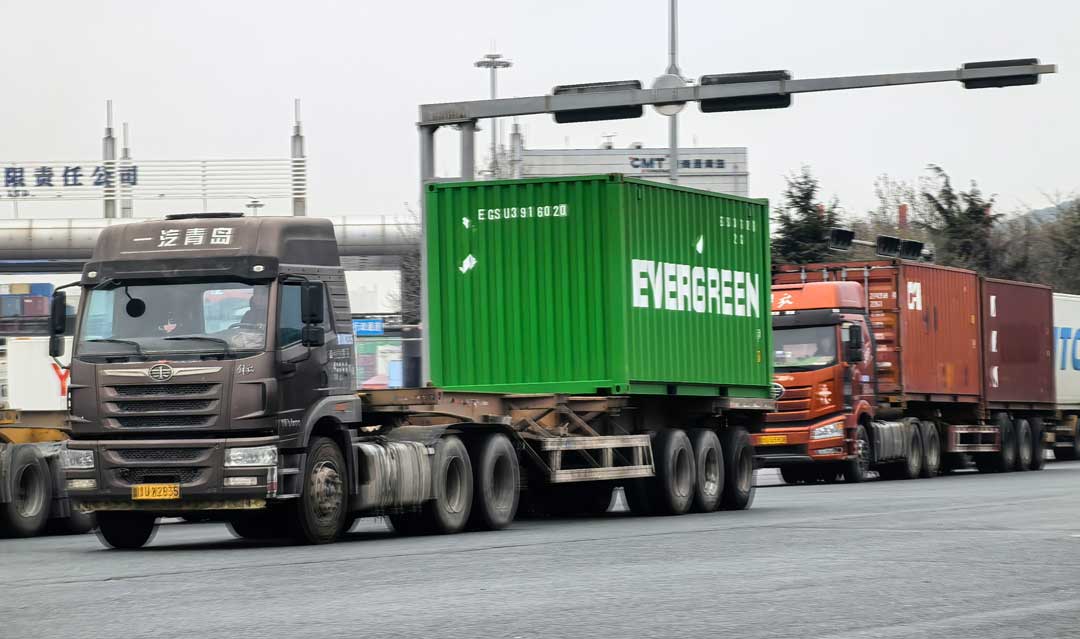
Savannah's industrial inventory has grown fast in recent years; vacancy is relatively high as new supply and demand rebalance. Rent is lower than the big East Coast coastal markets, attractive to storage-cost-sensitive cargo. Recent projects are large distribution centers and manufacturing support, with the Hyundai EV project and its suppliers driving new warehouses. Long-term tenants usually lock space months ahead.
| Step | How |
| Pickup location | Garden City Terminal yard, or carrier-designated yard |
| Gate hours | 04:00 to 18:00 |
| Documents needed | Arrival notice, released bill of lading, customs release receipt, pickup authorization |
| Chassis | Provided per carrier and yard arrangement |
| Empty return | At the carrier-designated yard |
| Overdue fees | Beyond free storage, per carrier and yard rules |
Pickup needs advance booking and the carrier's authorization documents. Garden City's gate opens at 04:00, letting truckers do multiple in-and-out trips in a day, which helps local delivery and inventory turn. Box free storage at the yard follows carrier and yard rules; overdue incurs storage. The empty-return point may differ from the pickup point; confirm per carrier instruction before handoff.
The Savannah port can file, exam and release; imported cargo can be entered and released at the port of entry then moved in, or moved in-bond sealed to this port and filed here. In-bond needs filing and bond at entry and arrival at the destination port within the set period.
| Step | Note |
| Filing method | File at port of entry, or in-bond sealed to this port then file |
| Exam site | Designated by port, using terminal, yard and bonded-warehouse conditions |
| Exam types | Document review, NII scan and physical exam, by risk rating |
| Agriculture exam | (912) 964-0832 |
| Entry section | (912) 721-4851 |
| Pickup after release | By release receipt |
Exam ratio follows risk rating; consistency of name, value and origin affects selection. Inconsistent documents between papers are a common delay; commercial invoice, packing list and bill of lading names, quantities and amounts need line-by-line check. Wood-packaged goods need IPPC fumigation marks; agricultural and food cargo must meet agriculture quarantine rules.
| Party | Hours |
| Port admin | Monday to Friday 08:00 to 16:00 |
| Operations center | 08:00 to 16:00, seven days a week |
| Garden City gate | 04:00 to 18:00 |
| After-hours contact | (912) 232-7507 (24 hours) |
| Terminal operations | Per terminal's same-day published plan |
The port's operations center runs seven days a week with a 24-hour after-hours line. US legal holidays affect office and terminal work; New Year, Independence Day, Thanksgiving and Christmas are usually full-day closures; MLK Day, Presidents Day, Memorial Day, Labor Day and Columbus Day follow federal holiday scheduling. The Friday after Thanksgiving and the days around Christmas see some warehouses and yards shorten hours or rotate; count this in year-end planning.
The import peak usually lands August to October, in sync with East Coast ports, when space and inland capacity are tight. November and December are a fall after the pre-holiday rush; January to February is low season with lower volume. March volume starts to recover; April to June is a relatively steady window. As an East Coast trunk gateway, Savannah's peak is concentrated, so space and inland rail booking need advance planning.
Peak and off-peak mainly hit space and the inland leg: ocean rate swings follow carrier capacity, while rail intermodal and truck capacity in peak prioritize full trains and block loads. In peak, submit pickup booking three to five days ahead and buffer one or two days. New warehouse delivery timing also affects peak storage choice.
Together, Savannah suits two needs: FCL import for the US Southeast and Midwest markets, and importers wanting a US East Coast base while controlling inland transport cost. Dual rail access and the inland port network give Savannah more inland-leg choices, with real meaning for peak planning and cost control.
The Port of Savannah has two deepwater terminals, Garden City Terminal and Ocean Terminal, both operated by the Georgia Ports Authority. Garden City is about 1,350 acres and handles container main business; Ocean is 208 acres and handles ro-ro, break-bulk and is expanding container capacity.
Per the cross-checked published transit tables of several forwarders, all-water ocean leg is commonly about 28 to 35 days, and door to door after adding the inland leg about 32 to 42 days; the via-West-Coast-rail route is about 24 to 34 days. Air is commonly about 5 to 9 days. Actual time follows the carrier's basis at booking.
Yes. Garden City Terminal has CSX and Norfolk Southern, both Class I railroads, running directly into the terminal, with on-terminal intermodal facilities taking both railroads' trains. In 2025 on-dock rail departure capacity is 10 trains x 10,000 feet, reaching Chicago, Memphis and Louisville.
Yes. Savannah port code 1703 has filing, exam and release capability, with the operations center running seven days a week. Cargo can be entered and released at the port of entry then moved in, or moved in-bond sealed to this port and filed here; in-bond needs filing and bond at entry.
Per the Georgia Ports Authority annual report, FY2025 Savannah handled 5.7 million TEU, its second-highest fiscal year on record. Current terminal capacity is about 5.6 million TEU, planned to 7.5 million by 2030, with the annual-report final build target 9.5 million TEU.
Pickup is at the Garden City Terminal yard or the carrier-designated yard. The trucking company books a slot with the arrival notice, released bill of lading, customs release receipt and pickup authorization; Garden City gate hours are 04:00 to 18:00, enabling multiple trips in a day.
The authority runs inland rail facilities in the state; cargo discharged at Savannah moves by rail to the inland port, where pickup and delivery are done locally, or the reverse. Appalachian Regional Port had 45,700 boxes in 2025; Gainesville Inland Port is planned to open in May 2026, with five-day-a-week direct rail to Savannah.
FTZ 104 has the Savannah Airport Commission as grantee, covering eight counties around Savannah, with a 2,000-acre activation cap. Goods in the zone can be stored, sorted and re-exported without duty paid, deferring duty to when they enter the US market. Applicability needs a case-by-case check against commodity and HS code.
Local industrial inventory is about 164.4 million square feet, vacancy about 14.07%, average asking rent about USD 8.51 per square foot per year, under construction about 5.04 million square feet. Inventory has grown fast and rent is lower than the big East Coast coastal markets, attractive to storage-cost-sensitive cargo.
The import peak is usually August to October, when space and inland capacity are tight. November and December are a fall; January to February is low season. In peak, submit pickup booking three to five days ahead and buffer one or two days; rail intermodal and truck capacity need advance planning.
Shipping from China to USA
Planning a shipment or just comparing options? Contact our freight experts to get a tailored rate within 24 hours.
