
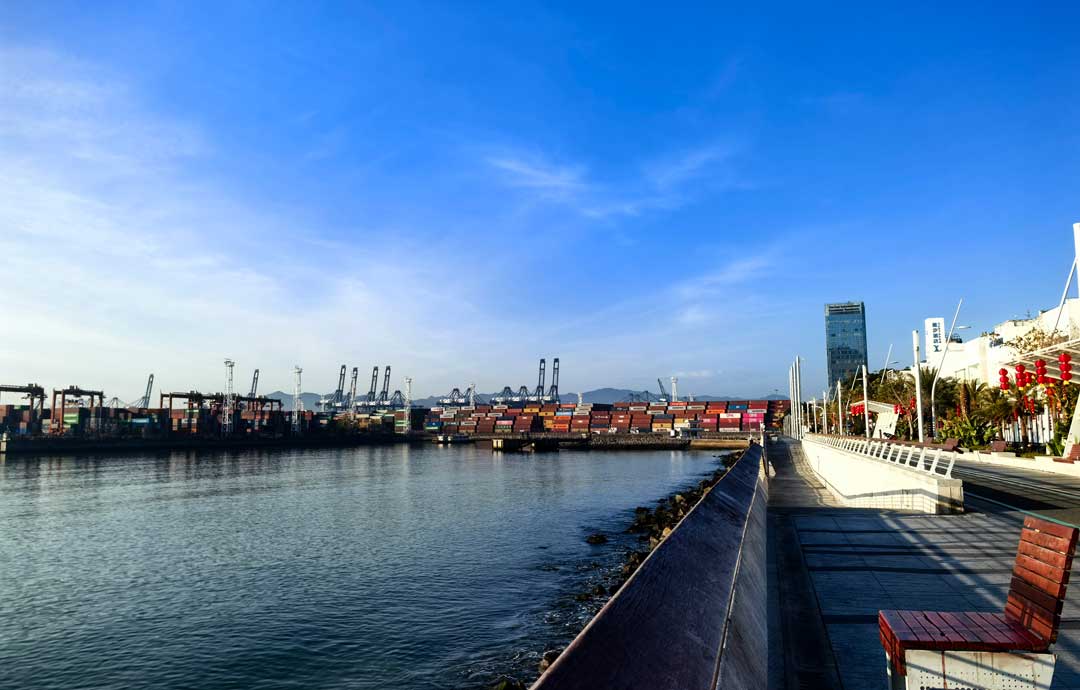
Seattle sits on the east shore of Puget Sound in Washington State, with the open Pacific reached through the Strait of Juan de Fuca. Because Seattle and Tacoma share one inbound and outbound channel, the two ports formed the Northwest Seaport Alliance in 2015 and now manage their container, breakbulk and auto terminals together. Seattle's container terminals cluster south and southwest of downtown, with freight and passenger traffic on separate corridors. For China exporters Seattle is a North Pacific gateway with an on-dock rail ramp and two Class I railroads.
| State | Washington |
| Waterway | East shore of Puget Sound, reaching the Pacific through the Strait of Juan de Fuca |
| Time zone | Pacific Time (PST / PDT) |
| Distance to Tacoma | About 50 km by road |
| Distance to Vancouver | About 200 km by road |
| Main highways | I-5, I-90, WA-99, WA-518 |
| Local port nature | North Pacific container gateway, in the seaport alliance with Tacoma |
Seattle sits on the east shore of Puget Sound, and vessels reach open water only through the Strait of Juan de Fuca. That water structure gives Seattle and Tacoma one shared channel, which is why the two ports allied on container business. The city and the terminals are linked by rail and road corridors, with container terminals set south and southwest of downtown and freight and passenger traffic on separate routes.
Seattle's customs port code is 3001, with the office on International Boulevard at Seattle-Tacoma International Airport, handling entry filing, exams and release for the area. The port reports to the Seattle Field Office, with a working day that runs into the evening.
| Port name | Seattle, Washington |
| Port code | 3001 |
| Registered address | 17801 International Blvd, Seattle, WA 98158-1201 |
| Mailing address | 7 South Nevada St Suite 100, SeaTac, WA 98134 |
| Phone | +1 206-214-2200 |
| Fax | +1 206-553-2940 |
| Port director | J. Rene Ortega |
| Supervising field office | Seattle Field Office |
| Office hours | Monday to Friday 07:00 to 22:00 |
| Deferred exam | (206) 796-1202, by appointment, Monday to Friday 08:00 to 16:00 |
The port's office hours are long by US West Coast standards, running to 22:00 on weekdays. Ocean cargo trade and exam work splits between the North Harbor and South Harbor operating areas, and air cargo is handled at the airport cargo terminal. Import cargo filed at Seattle can use the service window that matches how it actually enters.
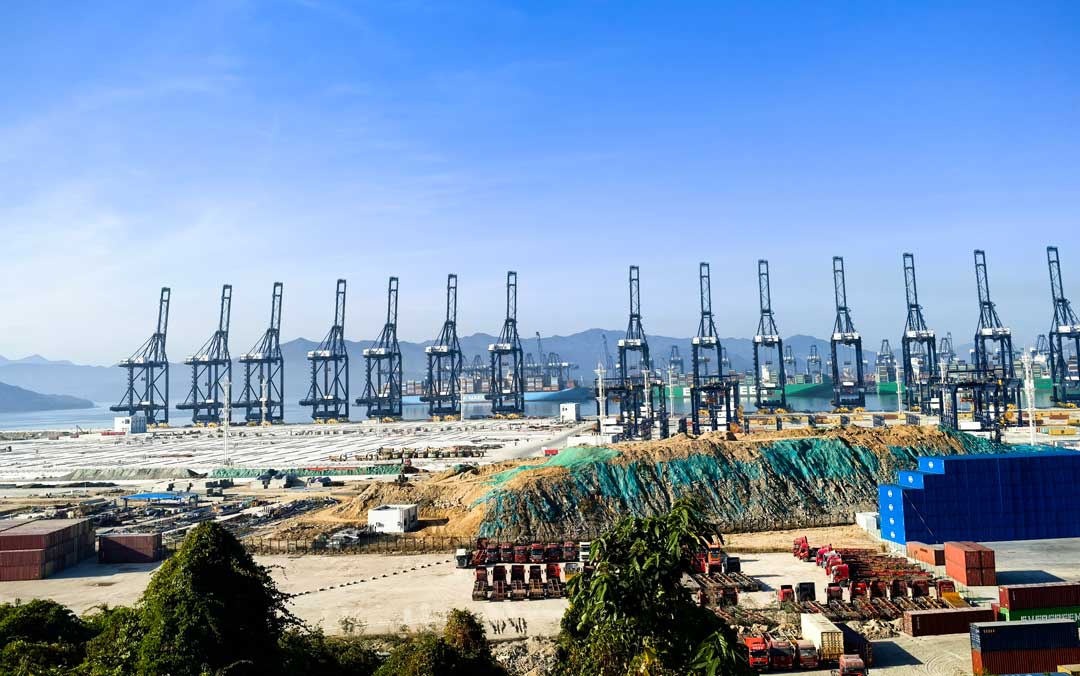
The Port of Seattle and the Port of Tacoma formed the Northwest Seaport Alliance (NWSA) in 2015 to manage the container, breakbulk, auto and some bulk terminals of both ports. The alliance merges the resources of the two ports and offers one customer service and one set of service routes.
| Founded | 2015 |
| Member ports | Port of Seattle, Port of Tacoma |
| Scope | Container, breakbulk, auto and some bulk terminals of both ports |
| 2025 combined volume | 3,156,598 TEU |
| International share | 2,418,534 TEU |
| Domestic share | 738,064 TEU, mainly Alaska and Hawaii |
| International carriers | About 13, linking more than 40 direct international ports |
The alliance works by pooling resources: services can berth on the Seattle side or the Tacoma side, dispatched by the alliance as one system. For forwarders and importers that means more berth choices and sailing frequency under a single customer service. The alliance carries a high domestic share, much of it Alaska and Hawaii traffic, a structure that differs from other US West Coast ports dominated by international cargo.
Terminal 18 is Seattle's main container terminal, operated by SSA Terminals, and the core container facility on the alliance's Seattle side. It has an on-dock intermodal yard that can work full unit trains.
| Operator | SSA Terminals |
| Berths | 3, about 2,800 feet combined |
| Depth | About 50 feet |
| Cranes | 9 post-Panamax ship-to-shore cranes |
| Capacity | More than about 1.1 million TEU |
| On-dock rail | Intermodal yard able to work full unit trains |
| Rail service | BNSF and Union Pacific |
The depth and crane set can take large container ships, and the on-dock rail lets rail departures start soon after a vessel arrives, shortening dwell time. The Terminal 18 intermodal yard connects directly to the North American rail network, reaching inland hubs such as Chicago after departure. The yard is zoned by container type and direction, with reefers in an area fitted with plugs.
Terminal 5 is Seattle's other main container terminal, operated by SSA Terminals and modernized in recent years. It has 51 feet of depth and a planned capacity of more than 1.3 million TEU.
| Operator | SSA Terminals |
| Depth | About 51 feet |
| Planned capacity | More than about 1.3 million TEU |
| Lifting equipment | Electric ship-to-shore cranes |
| Reefer plugs | More than 1,500 |
| Gate | Modern gate, about USD 14.6 million of investment |
| Project investment | More than USD 500 million in total |
The upgrade targets large vessels and reefer cargo. The new gate uses dynamic weighing so trucks do not have to stop fully to be weighed, lifting gate throughput; moving the gate inside the terminal raised the queue capacity by more than double and eased the effect on surrounding roads. Reefer plugs now exceed 1,500, supporting Washington agricultural exports such as apples, cherries, potatoes and hay. The terminal runs electric cranes, with lower emissions in operation.
Beyond the container mainstays, Seattle has terminals handling roll-on/roll-off, breakbulk and bulk. Terminal 46 is operated by Total Terminals International and took car carrier calls in 2025, handling some auto and breakbulk business.
| Terminal | Operator | Main use and configuration |
|---|---|---|
| Terminal 46 | Total Terminals International | Autos and breakbulk; 2 working berths, 1 backup berth, 426 reefer plugs, 5 cranes |
| Terminal 30 | SSA Terminals | 2 independent berths, 451 reefer plugs, less than 2 miles from the BNSF and Union Pacific ramps |
| Terminal 115 | -- | Bulk, barge and project cargo |
Together these terminals round out the port's capacity. Terminal 46 has 17 gate lanes and an intermodal yard able to load two full trains, suiting cargo that needs mixed handling. Terminal 30 sits less than 2 miles from the two Class I ramps, so drayage is short. Terminal 115 handles bulk, barge and project cargo, and its barge work ties into Alaska-direction traffic.
| Metric | Value |
|---|---|
| NWSA 2025 combined volume | 3,156,598 TEU |
| International share | 2,418,534 TEU |
| Domestic share | 738,064 TEU |
| Container cargo weight | 22.5 million metric tons |
| 2025 vessel calls | 1,753, of which 887 container ships |
| Breakbulk | 327,574 metric tons |
| Autos | 470,906 units |
On the national measure the alliance's container volume sits among the leaders in North America, with international cargo about three quarters and domestic about a quarter. Domestic cargo runs mainly to Alaska and Hawaii, whose consumer goods and building materials move largely through Seattle and Tacoma, a base that supports steady feeder schedules. International cargo is mostly Asia-direction, with additional regular services to Europe, Latin America and Oceania.
| Channel | Puget Sound, reaching the Pacific through the Strait of Juan de Fuca |
| Terminal 18 depth | About 50 feet |
| Terminal 5 depth | About 51 feet |
| Main vessel types | Large container ships, ro-ro ships, breakbulk ships, barges |
| Dredging | Channel dredging by the responsible parties keeps deep-water navigation in place |
| International services | Short North Pacific sea leg, a commonly used entry port for Asia-direction cargo |
The depth at Seattle and Tacoma can take large container ships, with the channel maintained by dredging. Puget Sound's position shortens the North Pacific sea leg, which helps transit time. For cargo from northern China ports, the Seattle route is usually shorter than an all-water path to the US East Coast; for cargo from southern China, the time difference between US West and US Southeast routes is relatively small.
Seattle's container terminals are served by two Class I railroads, BNSF and Union Pacific, and Terminal 18 has an on-dock intermodal yard whose trains reach the US Midwest and East.
| Railroad | Connection |
|---|---|
| BNSF | Northern corridor, toward Chicago and eastern markets |
| Union Pacific | Toward the US Southwest and Midwest |
| On-dock rail | Terminal 18 intermodal yard, able to work full unit trains |
| Main destinations | Chicago, Memphis, Dallas and other inland hubs |
| Transit to Chicago | About 4 days on the port's figure |
Rail plays two roles at Seattle: long-haul moves from the terminal to inland hubs, and distribution toward the US Midwest and East. Both Class I railroads have local lines, so a forwarder can pick the better value option for the destination and its network. Rail transit for a loaded container from the terminal to Chicago runs about 4 days, which helps make Seattle a route for Asia-direction cargo into the US interior. For China exporters, dual rail access means more inland options and steadier capacity in peak season.
| Highway | Course and role |
|---|---|
| I-5 | North-south trunk; north to Vancouver, south to Portland and California |
| I-90 | East-west trunk; east to Spokane and the Midwest |
| WA-99 | Local connector toward the airport and port district |
| WA-518 | Connector linking I-5 and the airport direction |
Seattle's road network runs on the I-5 and I-90 axes. I-5 links north to Vancouver and south to Portland and California, while I-90 runs east to Spokane and the US Midwest. Container terminals cluster south of downtown, with heavy vehicles on dedicated routes rather than through the urban core. From Seattle, a one-day drive covers the Puget Sound metro area and toward Portland, and a two-day drive expands the reach further.
Seattle has Foreign-Trade Zone 5, with the Port of Seattle as grantee, serving King and Snohomish counties in Washington. Import cargo can be stored, sorted and non-duty processed in the zone without duty paid.
| Zone number | FTZ 5 |
| Approved | June 27, 1949 (Grant of Authority 19) |
| Grantee | Port of Seattle |
| Operating framework | Alternative Site Framework since October 7, 2010 (Grant of Authority 1717) |
| Service area | King and Snohomish counties |
| Activation cap | 2,000 acres, about 237 acres activated |
| Main sites | Seattle Seaport (2711 Alaskan Way) and others |
Zone goods are stored, sorted, labelled or re-exported without duty paid, with duty deferred until the goods leave the zone for the US market. Seattle's zone sites cover the seaport, the airport and surrounding industrial areas, connecting to terminals and rail intermodal facilities. Whether the zone fits and whether rate-choice benefits apply needs a per-shipment check against commodity and HS code.
Container cargo from China to Seattle mostly moves direct on North Pacific services, with a shorter sea leg. After arrival, cargo can move inland by rail toward the Midwest and East, or distribute locally and across the Northwest.
| Route | Ocean leg | Inland leg | Common door-to-door range |
|---|---|---|---|
| North China to Seattle (direct) | About 15 to 19 days | About 2 to 4 days | About 20 to 28 days |
| East and South China to Seattle | About 13 to 20 days | About 2 to 4 days | About 18 to 28 days |
| Ocean LCL (with consolidation and devanning) | About 16 to 24 days | About 4 to 7 days | About 26 to 34 days |
| Air to Seattle-Tacoma International | -- | -- | About 4 to 8 days |
The ranges above are the common overlap after cross-checking several forwarders' transit tables; they exclude cut-off, clearance and peak queue time and are not a delivery commitment. The North Pacific sea leg is short, so total time is competitive among US ports. In peak season both US West Coast space and inland capacity tighten, and rail intermodal bookings should be arranged early.
Seattle-Tacoma International Airport (SEA) is the local air port and among the larger airports in the US Northwest. Air cargo is handled at the airport cargo terminal, which has a deferred exam point.
| Airport | Seattle-Tacoma International Airport (SEA / Sea-Tac) |
| 2025 passengers | 52,715,181 (a record) |
| 2025 cargo and mail | 427,971 metric tons |
| Movements | 435,896 in 2025 |
| Runways | Three parallel runways, about 2,500 acres |
| Reach | 96 domestic and about 36 international destinations |
| Deferred exam | (206) 796-1202, by appointment |
Sea-Tac's cargo and mail volume ranks among the top US airports, with reach across Asia, Europe and Oceania. The airport is a major hub for Alaska Airlines and Delta, with more Asia-direction route resources. High-value cargo needing air speed can clear at Seattle first and then move on, or move under bond sealed to a local port for filing. General aviation facilities sit north of the airport, where private aircraft and charters can be scheduled by appointment.
| Seattle/Puget Sound submarket inventory | About 247.1 million square feet |
| Vacancy | About 9.5% (Q2 2025, third-party research basis) |
| Average asking rent | About USD 12.63 per square foot per year |
| Main submarkets | Kent Valley, South Seattle, Tacoma, Everett direction |
| Industry base | Aerospace manufacturing, agricultural exports and e-commerce distribution |
Puget Sound's industrial inventory is large for the US Northwest, with a mid-level vacancy. Rents run above southern US markets and below coastal California. The Kent Valley and South Seattle hold many warehouse and distribution facilities, close to the port and airport. Washington is a major US agricultural exporting state, and goods such as apples, cherries, potatoes and hay use local storage and reefer capacity to reach Asia. Long-term tenants usually lock in space months ahead.
| Step | How |
|---|---|
| Pickup location | Container terminal yard, or a yard the carrier designates |
| Hours | Per the terminal's published gate hours; appointment required |
| Documents needed | Arrival notice, released bill of lading, customs release, pickup authorization |
| Chassis | By carrier and yard arrangement |
| Empty return | At the area the carrier designates |
| Overdue fees | Beyond free storage, per carrier and yard rules |
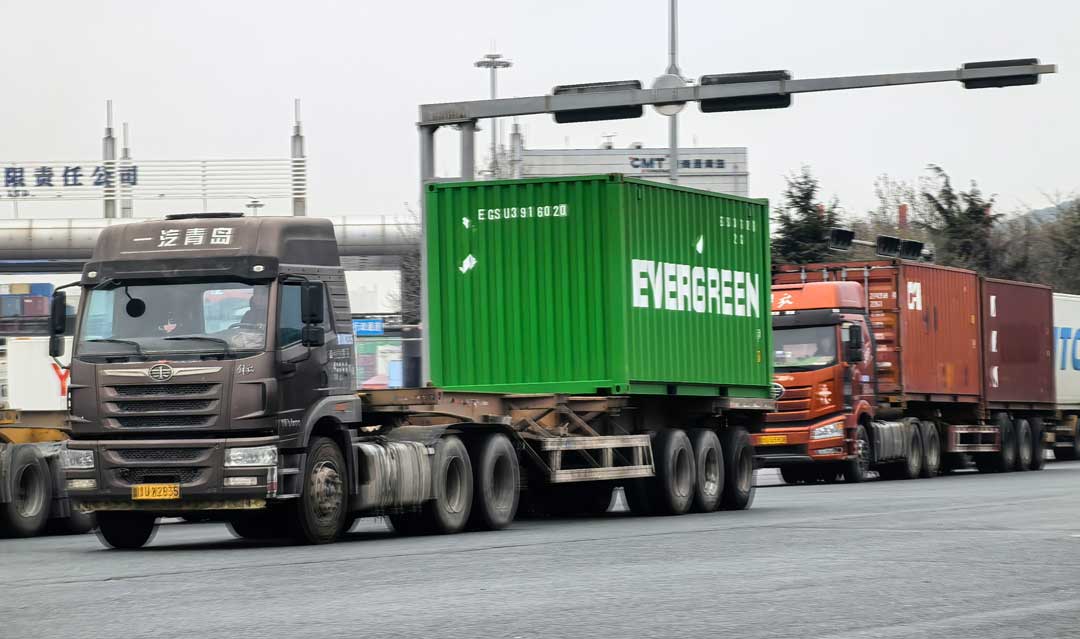
Pickup needs an advance appointment and the carrier's required authorization. Free storage in the yard runs per carrier and yard rules, with storage charges beyond that; the empty return point may differ from the pickup point, so confirm by the carrier's instruction before the handoff. Ro-ro and breakbulk cargo is collected differently from containers and needs separate confirmation against the terminal and operator's work plan.
Seattle port can file, exam and release. Ocean and air cargo are handled by North Harbor, South Harbor and the airport cargo terminal respectively. Import cargo can be entered and released at the port of entry and moved in, or moved in-bond sealed to this port and filed here.
| Filing method | File at the port of entry, or move in-bond sealed to this port and file |
| Exam site | Designated by the port, using terminal, yard and bonded warehouse conditions |
| Exam types | Document review, NII scan and physical exam, by risk rating |
| Trade advisory | Separate trade windows at the Seattle and Tacoma seaports |
| Fines and penalties | (206) 370-3705 |
| Pickup after release | By release receipt |
Exam ratio follows risk rating, and consistency of commodity name, declared value and origin affects selection. Inconsistent documents are a common delay; commercial invoice, packing list and bill of lading names, quantities and amounts need line-by-line check. Wood-packaged goods need IPPC marks, and agricultural and food cargo must also meet agricultural quarantine rules.
| Party | Hours |
|---|---|
| Port office | Monday to Friday 07:00 to 22:00 |
| Field office | Monday to Friday 08:00 to 16:00 |
| Deferred exam | Monday to Friday 08:00 to 16:00 (by appointment) |
| Terminal gates | Per the terminal's daily announcement |
| Weekends | Port office closed, arranged as needed |
The port office runs into the evening and closes on weekends, with work arranged as needed. US federal holidays affect office and terminal work; New Year, Independence Day, Thanksgiving and Christmas are usually full-day closures, while MLK Day, Presidents Day, Memorial Day, Labor Day and Columbus Day follow federal holiday scheduling. The Friday after Thanksgiving and the working days around Christmas see some warehouses and yards shorten hours or rotate staff, a factor to count in year-end planning.
The import peak usually runs August to October, in step with US West Coast ports, when space and inland capacity are both tight. November and December fall back after the pre-holiday rush, and January and February are the low season with lower volume. Volume starts rising in March, and April to June is a relatively stable window. Washington agricultural exports concentrate in autumn, so reefer and export arrangements for apples, cherries and similar cargo follow the growing season.
Peak and off-peak mainly affect space and inland legs: ocean rates move with liner capacity, while rail intermodal and truck capacity in peak season prioritizes full trains and block loads. In peak season, submit pickup appointments three to five days ahead and keep one or two days of buffer. Domestic feeder traffic to Alaska and Hawaii runs on steadier schedules and is less affected by the international peak.
Taken together, Seattle suits two needs: full-container imports for the US Northwest and Midwest, and importers who want a US West Coast position with more inland rail choices. Dual rail access and a shorter North Pacific voyage give Seattle another balance point between time and cost.
The two ports formed the Northwest Seaport Alliance in 2015 to manage their container, breakbulk, auto and some bulk terminals together, offering one customer service and one set of service routes. Their 2025 combined volume was 3,156,598 TEU. The two ports have different customs port codes and office addresses.
By the cross-checked range from several forwarder transit tables, the sea leg is commonly about 15 to 19 days from North China and about 13 to 20 days from East and South China, with a common door-to-door range of about 18 to 28 days including the inland leg. Air is commonly about 4 to 8 days. Confirm exact times with the carrier at booking.
The two container mainstays on the Seattle side are Terminal 18 and Terminal 5, both operated by SSA Terminals. Terminal 18 has about 50 feet of depth and 9 post-Panamax cranes; Terminal 5 has about 51 feet of depth and more than 1,500 reefer plugs. The alliance has further terminals on the Tacoma side.
Yes. Seattle port code 3001 can file, exam and release, with office hours Monday to Friday 07:00 to 22:00. Ocean and air cargo are handled by North Harbor, South Harbor and the airport cargo terminal respectively, and cargo can also move in-bond sealed to this port for filing.
On the Northwest Seaport Alliance annual cargo report basis, the 2025 combined volume was 3,156,598 TEU, of which 2,418,534 TEU was international and 738,064 TEU domestic. Domestic cargo runs mainly to Alaska and Hawaii, and international cargo is mostly Asia-direction.
Pickup can be done at the container terminal yard or a yard the carrier designates. The trucker books a window and enters with the arrival notice, released bill of lading, customs release and pickup authorization, with gate hours per the terminal's daily announcement. Ro-ro and breakbulk cargo collection needs separate confirmation with the terminal and operator.
Yes. The container terminals are served by two Class I railroads, BNSF and Union Pacific, and Terminal 18 has an on-dock intermodal yard able to work full unit trains. Rail reaches inland hubs such as Chicago, Memphis and Dallas, with loaded-container rail transit to Chicago of about 4 days.
Foreign-Trade Zone 5 has the Port of Seattle as grantee, serving King and Snohomish counties, with an activation cap of 2,000 acres. Zone goods can be stored, sorted and re-exported without duty paid, with duty deferred until the goods enter the US market. Whether it fits needs a per-shipment check against commodity and HS code.
The Seattle/Puget Sound submarket has about 247.1 million square feet of inventory, about 9.5% vacancy and an average asking rent of about USD 12.63 per square foot per year. Rents run above southern US markets and below coastal California. The Kent Valley and South Seattle hold many warehouse and distribution facilities.
The import peak is usually August to October, when space and inland capacity are both tight. November and December fall back, and January and February are the low season. In peak season, submit pickup appointments three to five days ahead and arrange rail intermodal and truck capacity early; domestic feeder cargo is less affected by the international peak.
Shipping from China to USA
Planning a shipment or just comparing options? Contact our freight experts to get a tailored rate within 24 hours.
