
Springfield, Missouri sits at the junction of Interstate 44 and U.S. Route 65 in the southwestern corner of the state. In the U.S. freight system it works as an inland intermodal point: it has no coastline and no ocean terminal, but it anchors the BNSF regional rail yard, more than 40 truck terminals, and a Foreign-Trade Zone spanning 23 counties to move and distribute goods across the Midwest. For importers bringing cargo from China, Springfield is the second leg of the journey — containers are discharged at a West Coast or Gulf Coast seaport, then moved here by rail or truck for customs clearance, container pickup and final delivery.
| State | Missouri, southwestern part |
| Administrative status | Third-largest city in Missouri |
| Time zone | Central Time (CST / CDT) |
| Major highways | I-44, US-65, US-60, MO-13 |
| Distance to St. Louis | About 215 miles (northeast) |
| Distance to Kansas City | About 165 miles (northwest) |
| Distance to Tulsa | About 180 miles (southwest) |
| Distance to Memphis | About 275 miles (southeast) |
| Local port type | Inland intermodal point; no seaport or container terminal |
Springfield stands at a land crossroads in the central United States. Interstate 44 runs from St. Louis southwest through Springfield toward Tulsa and Oklahoma City, one of the main east-west freight corridors in the region. U.S. Route 65 runs north-south, linking Branson, Little Rock and central Arkansas. The two routes meet in the city, putting St. Louis, Kansas City, Memphis, Little Rock, Tulsa and Dallas all within a single day's drive. Springfield is also a long-time stop on historic Route 66, so trucking is deeply embedded in the local economy.
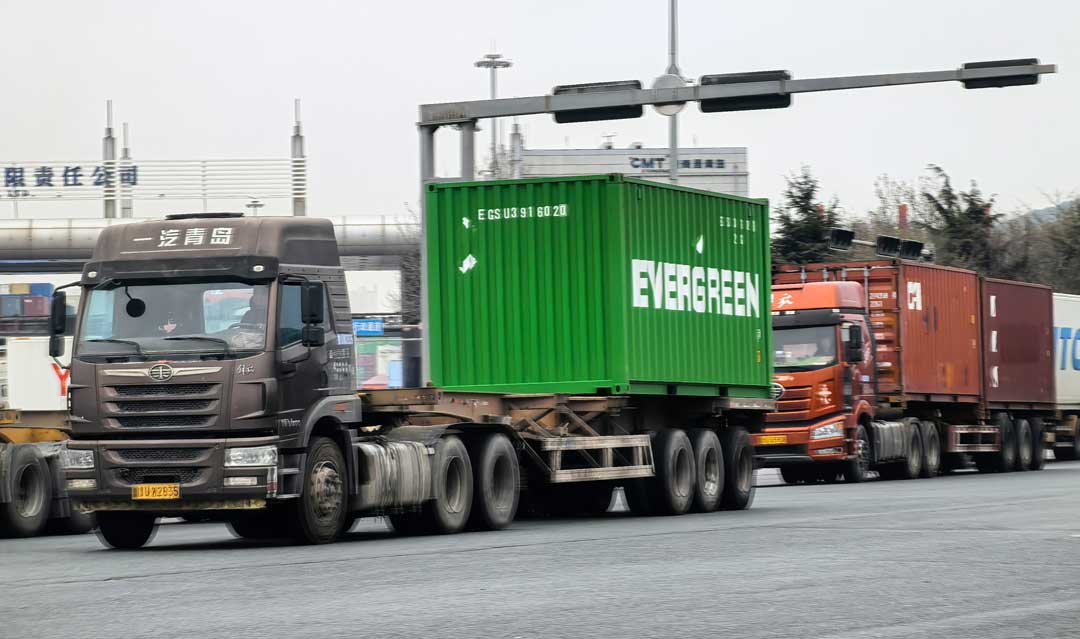
The U.S. Customs and Border Protection (CBP) port of entry code for Springfield is 4505. The office is on West Kearney Street, and it reports to the Chicago Field Office. Like most inland ports, it operates during weekday business hours only.
| Port name | Springfield, Missouri |
| Port code | 4505 |
| Address | 5000 W Kearney Suite 130, Springfield, MO 65803 |
| Phone | +1 417-868-0545 |
| Fax | +1 417-868-0546 |
| Port director | Ky Neuleib |
| Field office | Chicago Field Office |
| Office hours | Monday - Friday 08:00 to 16:00 (Central Time) |
| Saturday & Sunday | Closed |
The port notes that its officers hold multiple field duties, so call ahead to confirm someone is on site before you visit. The port can handle entry filing, inspection and release; the exact exam location is arranged using local bonded warehouses and designated sites. Other Missouri ports are Kansas City (4501), St. Louis (4503) and St. Louis Spirit of St. Louis Airport (4506); St. Louis is the federally designated service port that accepts first-time duty payment on entries filed at other ports.
Springfield does not unload cargo from ships. Its job is to receive goods already discharged at a seaport and redistribute them to surrounding markets. Its value comes from three things: rail marshaling capacity, a dense trucking network, and lower warehousing cost.
| Connecting seaports | West Coast (Los Angeles, Long Beach), Gulf Coast (Houston, New Orleans) |
| Primary transport modes | Rail and truck |
| Local container terminal | None |
| Intermodal rail terminal | Gardner, Kansas, about 140 miles away |
| Nearest river port | Tulsa Port of Catoosa, Oklahoma, about 160 miles away |
| Truck terminals | More than 40 in the region |
| Reach | One day's drive to major Midwest and South markets |
Because there is no local seaport, Springfield's containerized cargo usually arrives through an intermodal rail terminal or rail spur, then moves the final miles by truck. Rail handles the long haul, truck handles the short haul, and the two connect locally. For an importer, this means you can clear customs and pick up your container inland — away from coastal terminal congestion and storage pressure — while placing your warehouse in a lower-rent location.
BNSF Railway is the Class I railroad serving the Springfield area. It operates one hub and two yards here, extending through four subdivisions in four directions: north toward Kansas City, south toward Arkansas, and east and west into its transcontinental mainline network.
| Class I railroad | BNSF Railway |
| Local facilities | One hub and two yards |
| Track layout | Four subdivisions, four-direction connections |
| Nearest intermodal terminal | Gardner, Kansas, about 140 miles away |
| Main transit directions | Kansas City, Chicago, Memphis |
| Local transload facilities | Multiple transload sites |
Note that Springfield has no intermodal rail terminal of its own. Container lift-on and lift-off must happen at a nearby terminal such as Gardner, Kansas, or Kansas City. The local yards mainly serve bulk, carload and transload business. As a result, Springfield's containerized cargo typically arrives by "rail to a nearby terminal, then short-haul truck" — or, for larger volumes, directly through a rail spur or transload site.
| I-44 | East-west; northeast to St. Louis, southwest to Tulsa and Oklahoma City |
| US-65 | North-south; to Branson and Little Rock |
| US-60 | East-west corridor serving southern Missouri |
| MO-13 | North toward Kansas City |
| Truck terminals | More than 40 in the region, covering major national carriers |
Highway is the main distribution mode in Springfield. I-44 and US-65 cross in the city, forming a cross-shaped skeleton that puts trucks directly onto the national highway network. More than 40 truck terminals operate in the region, with the major national carriers all maintaining a presence, so both LTL and full truckload capacity are readily available. For importers, abundant local trucking means you do not have to move far after picking up a container, and short-haul drayage cost stays low.
Springfield has no public container terminal, so temporary storage, de-stuffing and re-stuffing rely on local warehouses and transload sites. The city has several warehouse facilities compliant with ISPM 15 (International Standards for Phytosanitary Measures No. 15) that can handle container de-stuffing, consolidation and re-packing.
| Container arrival | Via intermodal rail terminal or rail spur, or trucked directly from the seaport |
| De-stuffing & stuffing | Local third-party warehouses and transload sites |
| Wood packaging | Solid wood packaging must carry the ISPM 15 fumigation mark |
| Chassis | Provided by the carrier or yard per agreement |
| Empty return | Per the carrier-designated depot, mostly in nearby rail hub cities |
Because there is no terminal yard here, a container staying in Springfield incurs chassis usage and per-diem costs. Importers usually de-stuff promptly after arrival and return the empty unit right away. Empty return depots are mostly in nearby rail hub cities such as Kansas City and St. Louis, so confirm the return depot with your carrier before pickup to avoid extra drayage charges.
Springfield is home to Foreign-Trade Zone (FTZ) 225, with the Springfield Airport Board as grantee. The service area covers 23 counties in southwestern and south-central Missouri, allowing imported goods to be stored, sorted and processed without paying duty up front.
| Zone number | FTZ 225 |
| Approval date | 1997-08-01 (Order No. 911) |
| Grantee | Springfield Airport Board |
| Operating framework | Alternative Site Framework (ASF) since 2011 |
| Service area | 23 counties in southwestern and south-central Missouri |
| Activation limit | 2,000 acres |
| Activated area | 94.82 acres |
FTZ 225 operates under the Alternative Site Framework, so businesses can apply for usage-driven sites within the service area instead of concentrating in a single location. Goods inside the zone can be stored, sorted, labeled or re-exported while duties are deferred until the goods leave the zone and enter U.S. commerce. Whether a shipment qualifies — and whether you can benefit from duty-rate election — depends on the specific commodity and its HTS classification, and must be judged case by case.
Containerized cargo from China to Springfield must first reach a U.S. seaport, then move inland by rail or truck. There are two common routings: discharge at a West Coast port and connect by rail, or discharge at a Gulf Coast port and connect by rail or truck.
| Route | Ocean leg | Inland leg | Door-to-door typical range |
| China main ports to West Coast, then rail & truck | About 13 to 20 days | About 6 to 9 days | About 22 to 32 days |
| China main ports to Gulf Coast, then rail or truck | About 25 to 35 days | About 3 to 6 days | About 30 to 42 days |
| LCL ocean freight (incl. consolidation & de-stuffing) | — | — | About 30 to 45 days |
| Air freight to Springfield or via hub | — | — | About 4 to 8 days |
These ranges are cross-checked from multiple forwarders' published transit tables. They exclude customs clearance and peak-season queuing and are not a delivery commitment. The West Coast routing has a shorter ocean leg but a longer inland leg; the Gulf Coast routing is the reverse. Choose based on your time requirements, current rail and truck capacity, and budget. During peak season both rail cars and inland trucking tighten, so build in extra buffer time.
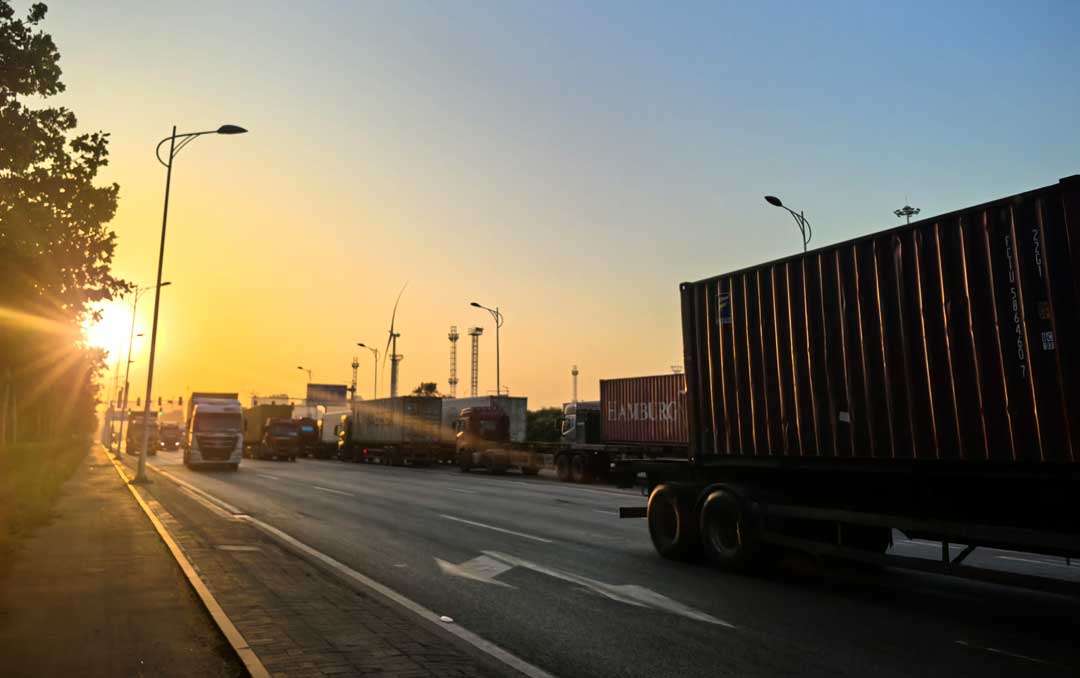
Springfield-Branson National Airport (SGF) is the local air port of entry and the main passenger and cargo airport in southwestern Missouri. It has customs facilities and can handle international arrival and clearance.
| Airport | Springfield-Branson National Airport (SGF / KSGF) |
| Address | 2300 N. Airport Blvd., Springfield, MO 65802 |
| Regular office hours | Monday - Friday 08:00 to 16:00 (Central Time) |
| Arrival & clearance | Monday - Friday 08:30 to 16:00 |
| Landing permit | Apply at least 24 hours before ETA; tolerance ±30 minutes |
| Weekend flight request | Must be filed by Friday 15:00 |
| On-site handler | Midwest Premier SGF Aviation, (417) 868-0590 |
| Air service | Four passenger carriers, 26+ daily nonstops to Atlanta, Charlotte, Chicago, Dallas, Denver and other hubs |
The airport's freight is mainly belly cargo on passenger flights plus regional freight. Large or palletized international air cargo usually transits through Chicago, Dallas or another hub before arriving. For Springfield, international air freight is best cleared at the hub airport and trucked in, or flown directly here under the landing-permit process and cleared locally. The area also has Branson Airport (BKG) and general-aviation facilities at Bolivar, Monett and downtown Springfield.
| Industrial inventory | About 45 million sq ft (third-party research) |
| Vacancy rate | Below 2% |
| Average rent | About $6.40 / sq ft / year |
| Logistics employment | About 18,400, roughly 8.2% of metro employment |
| Main cargo types | Agricultural products, food & beverage, industrial machinery, retail & e-commerce, building materials, auto parts |
| Representative tenants | Large e-commerce distribution centers, auto-parts distribution networks and outdoor-goods facilities |
Springfield's industrial inventory is mid-sized, roughly comparable to cities like South Bend and Jackson. With vacancy persistently low, ready-to-use standard facilities and warehouse space are not abundant, and new tenants usually start looking months ahead or opt for build-to-suit. Rents sit below coastal and large Midwestern cities, which is attractive for rent-sensitive cargo. The local industrial mix spans manufacturing, agriculture, food processing and retail distribution, so the freight base is diverse.
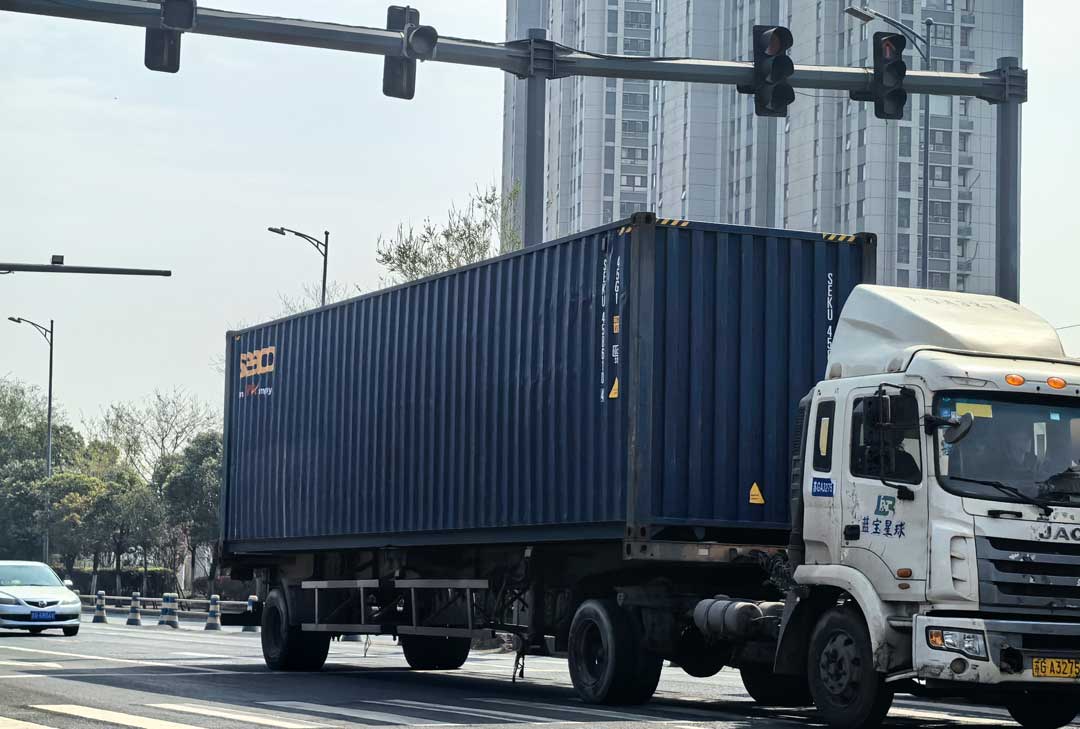
| Pickup location | Intermodal rail terminal, carrier-designated yard or local warehouse |
| Documents required | Arrival notice, released bill of lading, customs release receipt, delivery authorization |
| Chassis | Provided by the carrier and yard |
| Empty return | Per the carrier-designated depot, mostly in nearby rail hub cities |
| Overtime charges | Per carrier and yard rules beyond the free storage period |
| Operations | Warehouse and yard receiving hours follow each facility's own announcement |
Container pickup requires a prior appointment and the authorization documents your carrier requests. Because there is no terminal yard locally, the pickup point and the empty-return point can be far apart, and the round-trip drayage adds cost — so confirm the return depot with your carrier before pickup and plan de-stuffing and return order carefully. Free storage follows carrier and yard rules; inland overtime charges are sometimes higher than at coastal terminals, so factor this into your schedule.
The Springfield port can handle entry filing, inspection and release. Imported goods can be cleared at the port of first arrival and then moved in, or shipped in-bond under seal to Springfield and entered here. In-bond movement requires the entry and bond to be completed at the port of arrival, with the goods reaching the destination port within the allowed time.
| Entry filing | At the port of first arrival, or in-bond to Springfield |
| Exam location | Assigned by the port, using local bonded warehouses and designated sites |
| Exam types | Document review, X-ray scan and physical exam, set by risk rating |
| Contact | (417) 868-0545 |
| Pickup after release | With the customs release receipt |
| Note | Officers hold multiple duties; call ahead to confirm availability |
Exam rates are driven by risk rating, and consistency across your commodity description, declared value and origin information affects the chance of being flagged. Inconsistent documents are a common cause of delay — the commodity description, quantity and value on your commercial invoice, packing list and bill of lading must match line by line. Goods with wood packaging must carry the fumigation mark, and agricultural or food products must meet USDA phytosanitary requirements. Because staffing is limited, schedule clearance work early.
| Port office | Monday - Friday 08:00 to 16:00 (Central Time) |
| Airport customs service | Monday - Friday 08:30 to 16:00 |
| Weekends & holidays | No regular service |
| Airport weekend flights | Request by Friday 15:00 |
| Warehouses & yards | Follow each facility's own announcement |
U.S. federal holidays affect office and warehouse operations. New Year's Day, Independence Day, Thanksgiving and Christmas are usually full-day closures; Martin Luther King Jr. Day, Presidents' Day, Memorial Day, Labor Day and Columbus Day follow the federal holiday schedule. Because Springfield's port office only operates on weekday business hours, leave extra time for entry and inspection around holidays. For year-end planning, also expect some warehouses and carriers to shorten hours or rotate staff.
As an inland point, Springfield's seasonal rhythm is driven by seaport import volumes. The import peak usually runs from August through October, when both vessel space and inland capacity tighten, and rail cars and trucking prioritize full trains and grouped loads. November and December are the post-rush lull after holiday stocking, and January and February enter the off-peak with lower volumes. March starts to pick up again, and April through June is a relatively stable window.
Seasonality hits Springfield mainly on the inland leg. Because the city is not a seaport, cargo must first be discharged at a seaport and then moved inland, so peak-season terminal storage and rail loading queues at the coast transmit directly here. During peak, submit your pickup appointment three to five days early and keep a one- to two-day buffer. Local warehouse vacancy is low, so if you need temporary space, arrange it even earlier.
Put together, Springfield suits two kinds of importers: those running full-container shipments into the central and southern U.S. markets, and those who want a Midwest warehouse while controlling storage cost. Its main drawback is the absence of a local container terminal and intermodal rail terminal — container rail handling must happen in a nearby city, which adds short-haul cost and needs planning ahead.
No. Springfield is an inland intermodal point with no coastline, no ocean terminal and no container terminal. Import containers are first discharged at a U.S. seaport, then moved inland by rail or truck. The common routings are the West Coast ports of Los Angeles and Long Beach, or the Gulf Coast ports of Houston and New Orleans.
The port code is 4505. The office is at 5000 W Kearney Suite 130, Springfield, MO 65803, phone +1 417-868-0545. The port director is Ky Neuleib, and the port reports to the Chicago Field Office. Office hours are Monday through Friday, 08:00 to 16:00.
Based on cross-checked transit tables from multiple forwarders, door-to-door via the West Coast then rail is typically about 22 to 32 days; via the Gulf Coast then rail or truck is about 30 to 42 days; LCL ocean freight is about 30 to 45 days; and air freight is about 4 to 8 days. Confirm the exact time with your carrier at booking.
No. The nearest intermodal terminal is in Gardner, Kansas, about 140 miles away. BNSF operates one hub and two yards in Springfield with four subdivisions connecting in four directions, and the city has several transload sites for bulk and transload business.
Yes. The Springfield port can handle entry filing, inspection and release. Goods can be cleared at the port of arrival and moved in, or shipped in-bond under seal to Springfield and entered here. In-bond movement requires the entry and bond to be completed at the port of arrival, with the goods arriving within the allowed time.
The pickup point is usually an intermodal rail terminal, a carrier-designated yard or a local warehouse, and requires a prior appointment plus documents such as the arrival notice, released bill of lading and delivery authorization. Since there is no terminal yard locally, empty-return depots are mostly in nearby rail hub cities like Kansas City and St. Louis — confirm the return depot with your carrier before pickup.
FTZ 225 is granted to the Springfield Airport Board and covers 23 counties in southwestern and south-central Missouri, with an activation limit of 2,000 acres. It operates under the Alternative Site Framework, so businesses can apply for usage-driven sites. Goods inside the zone can be stored, sorted and re-exported without duty being paid; whether it applies depends on the commodity and its HTS classification.
Local industrial inventory is about 45 million square feet, with vacancy long below 2% and average rent around $6.40 per square foot per year. Inventory is mid-sized, so ready-to-use standard facilities are not abundant — new tenants usually start looking months ahead or choose build-to-suit.
Springfield-Branson National Airport (SGF) is the local air port of entry and has customs facilities open Monday through Friday, 08:30 to 16:00. Landing permits must be requested at least 24 hours before estimated arrival. Large or palletized international air cargo usually transits through hubs such as Chicago or Dallas before arriving.
The import peak usually runs from August through October, when both vessel space and inland capacity tighten. November and December are the lull, and January and February are off-peak. During peak, submit your pickup appointment three to five days early and keep a one- to two-day buffer, and arrange warehouse space ahead of time.
Shipping from China to USA
Planning a shipment or just comparing options? Contact our freight experts to get a tailored rate within 24 hours.
