
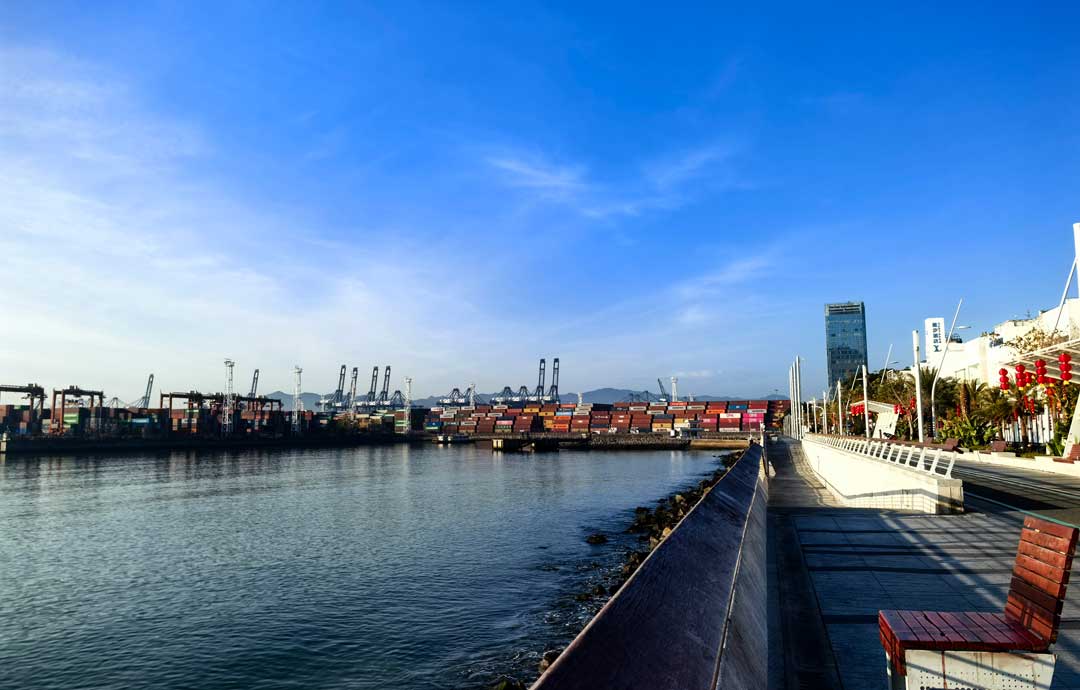
Tampa, Florida sits in west-central Florida on the east shore of Tampa Bay, opening to the Gulf of Mexico. In the US port system its identity is a comprehensive port on the east Gulf coast: per the port authority and the Florida Ports Council, Tampa Bay is the highest-tonnage port in Florida, covering containers, liquid bulk, break-bulk, ro-ro and cruise. For China exporters the value concentrates in three places: the highway link straight to the I-4 corridor, the distribution distance to the central Florida consumer market, and the support for refrigerated and food cargo.
| State | Florida, west-central |
| Water | East shore of Tampa Bay, opening to the Gulf of Mexico |
| Time zone | Eastern Time (EST / EDT) |
| Main highways | I-4, I-75, I-275, US-92, SR-618, SR-60 |
| Distance to Orlando | About 85 miles (northeast) |
| Distance to Lakeland | About 35 miles (east) |
| Distance to Miami | About 280 miles (southeast) |
| Distance to Jacksonville | About 200 miles (northeast) |
| Local port nature | Comprehensive Gulf east-coast seaport |
Tampa's position puts the port at the west end of a fast-growing population and consumer corridor. I-4 runs northeast from Tampa through Lakeland and Orlando to Daytona Beach, the main cluster of Florida retail-distribution and e-commerce fulfillment. Trucking from the port to Lakeland can do multiple round trips in a day, giving Tampa a comparative edge on delivery time. I-275, I-75 and the SR-618 toll road around the city let trucks enter the interstate network quickly.
Tampa's customs port code is 1801, an area port covering both seaport and airport passenger and cargo, classified as a Class 1 port. Its jurisdiction covers several west-central Florida counties; other in-state ports fall under different jurisdictions.
| Port name | Area Port of Tampa, Florida |
| Port code | 1801 |
| Address | 5519 W Hillsborough Ave, Tampa, FL 33634 |
| Telephone | +1 813-249-8101 |
| Port director | Radames A. Torres |
| Supervising field office | Tampa |
| Office hours | Monday to Friday 08:30 to 17:00 (Eastern Time) |
| Saturday and Sunday | Closed |
| Port class | Class 1 port, open to all aliens |
| Scope | Seaport and airport passenger, cargo and agriculture exams |
This port handles both seaport and airport passenger and cargo, with a dedicated air-cargo window and centralized exam station, both open weekdays 08:30 to 17:00. Passenger business and deferred exam have dedicated lines; seizure matters have a separate window. Other in-state ports include Jacksonville (1803), St. Petersburg (1814), Manatee (1821) and Orlando International (1808); importers file at the port where cargo actually arrives.
Tampa Bay is operated by the Tampa Bay Port Authority, a Florida state public port. The district is about 5,000 acres along the east and north shores of Tampa Bay, divided into functional areas by cargo type and business.
| Port nature | Florida state public port |
| Port land | About 5,000 acres |
| Annual cargo | Over 34 million tons |
| Main business | Containers, liquid bulk, break-bulk, ro-ro, cruise |
| Container terminal | Ports America Container Terminal (Hookers Point) |
| Liquid bulk | Petroleum about 15 million tons a year, about 43% of Florida petroleum flow |
| Cruise | Over 1.6 million passengers in FY2025 |
| Rail access | CSX direct to berth; Hookers Point has on-terminal rail ramp |
The district's functional split is clear: Hookers Point is the main container and petroleum area and the cargo core; Port Ybor takes break-bulk and project cargo with distribution storage; Pendola Point is liquid bulk and building materials; Port Redwing handles grain, cement, fertilizer and aggregate. Cruise terminals cluster on Channelside Drive downtown. Recent investment focuses on container-terminal expansion, berth deepening and rail support.
Hookers Point is Tampa Bay's container and petroleum area, on a peninsula southeast of downtown. The container terminal is run by Ports America along Channelside Drive, with yard area growing through paving expansion in recent years.
| Terminal | Ports America Container Terminal |
| Operator | Ports America |
| Location | Hookers Point, along Channelside Drive |
| Yard area | 67 acres built (Florida Ports Council basis), 30 acres under construction |
| After expansion | About 100 acres |
| Berth | New third deepwater berth on top of current; over 4,500 linear feet total |
| Ship-to-shore cranes | 3 new post-Panamax added, total 5; 6 by end of 2026 |
| Mobile cranes | 3 heavy-lift mobile cranes |
| Gate | New container gate complex |
| Reefer support | Port Logistics Refrigerated Services facility 135,000 square feet |
| Operating depth | About 43 feet |
The terminal expands fast. Yard paving added 25 acres in recent years, reaching 67 acres; the third deepwater berth under construction will let three large container ships work at once. On cranes, the port signed two with Liebherr at end of 2025, received two post-Panamax cranes in April 2026, and expects six post-Panamax cranes in service by end of 2026, lifting capacity and efficiency. The expansion targets 1 million TEU a year.
| Area | Main business |
| Port Ybor | Break-bulk and project cargo, with distribution storage |
| Pendola Point | Liquid bulk and building materials |
| Port Redwing | Grain, cement, fertilizer and aggregate |
| Port Sutton | Bulk and industrial land |
| East Port | Bulk and liquid bulk |
| Southbay | Industrial and logistics land |
| Cruise terminals | Berths 2, 3 and 6, on Channelside Drive downtown |
Splitting by cargo type keeps different cargo from interfering within one port. Break-bulk and project cargo at Port Ybor takes steel, machinery and large components; liquid bulk and building materials at Pendola Point; grain and farm products at Port Redwing. Containers and petroleum share Hookers Point but in separate zones. The meaning for importers is cargo routed by nature, with matching process and facilities.
| Metric | Value |
| FY2025 container volume | Nearly 263,000 TEU |
| Growth since 2018 | Over 300% |
| Five-year average annual growth | About 28% |
| Post-expansion capacity target | 1 million TEU |
| Largest berth to date | 11,900 TEU (Zim Canada, April 2026) |
| Operating depth | About 43 feet |
| Vessel class served | 8,600 to 9,000 TEU class |
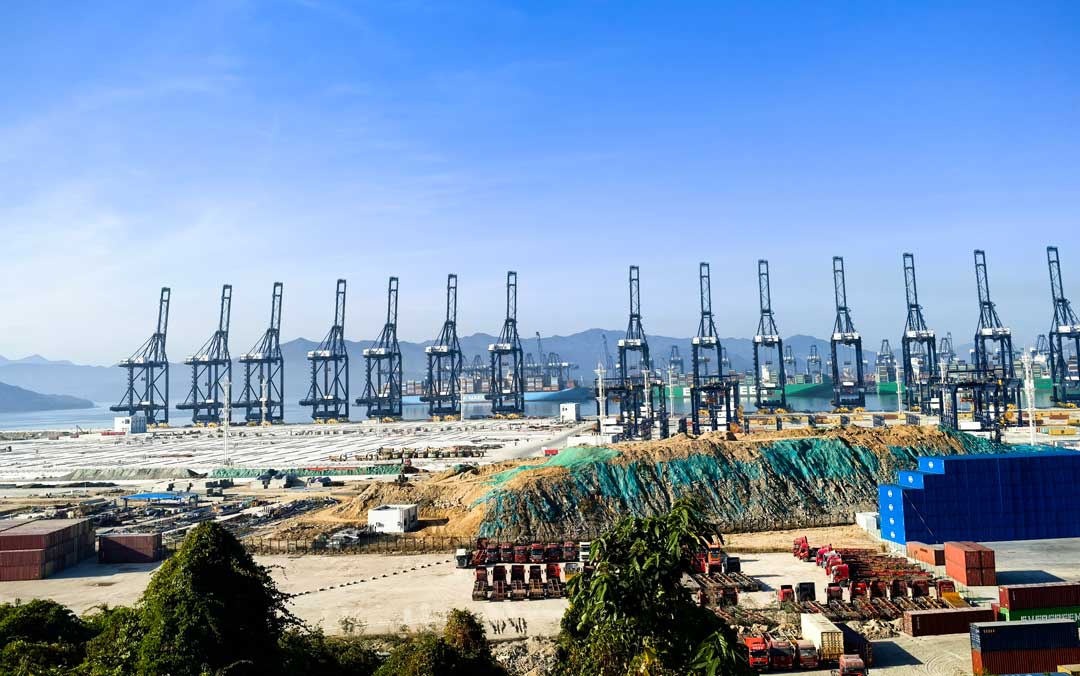
Tampa's container base is small but fast-growing. From under 100,000 TEU to nearly 263,000 TEU in FY2025, more than tripled in six years. Two drivers: central Florida population and consumption growth, and the port actively seeking new services by expanding terminals and adding cranes. The Zim Canada at 11,900 TEU berthed in April 2026 was the largest by gross tonnage ever at the port, showing real gains in vessel capability.
| Waterway | Tampa Bay, in and out via the Gulf of Mexico |
| Operating depth | About 43 feet |
| Main vessel class | 8,600 to 9,000 TEU container ships |
| Vessel target | Canal-class ships, not megamax |
| Berth condition | Third deepwater berth over 4,500 linear feet total when built |
| Entry | Piloted into port via the Tampa Bay channel |
Tampa's channel depth is about 43 feet, suited to the new generation of post-Panamax canal-class ships. The port's positioning is clear: serve 8,600 to 9,000 TEU vessels, not pursue 13,000 TEU-plus megamax. This fits the local cargo mix: central Florida imports consumer goods, where service frequency matters more than single-ship load. After the third berth, the port can work three large container ships at once, shortening berth wait.
CSX is the Class I railroad serving Tampa Bay. Its line runs direct to berth, and the Hookers Point container terminal has an on-terminal rail ramp, so containers switch between ship and rail inside the terminal. CSX also runs a nearby intermodal yard for cargo railed across the US.
| Class I railroad | CSX |
| Access | Line direct to berth |
| On-terminal facility | Hookers Point on-terminal rail ramp |
| Nearby intermodal | CSX operates an intermodal yard in the Tampa area |
| Main destinations | North to the US Southeast and Midwest markets |
| Near-dock transfer | Planned near-dock rail transfer between the two container terminals |
Rail at Tampa mainly carries north-bound long-haul. Because the port sits on Florida's west coast, its north-bound link to the Southeast and Midwest decides whether Tampa serves local and remote customers. The on-terminal ramp loads containers directly, no short dray, cutting dwell. The district is also advancing near-dock rail transfer between the two container terminals for box balancing.
| Highway | Course and role |
| I-4 connector | Port-built elevated road straight to I-4 interstate |
| I-4 | Northeast to Lakeland, Orlando and Daytona Beach |
| I-275 | Across the bay to St. Petersburg and Clearwater |
| I-75 | North-south trunk, linking Florida and Southeast states |
| SR-618 | Toll road, linking port area to I-75 |
| US-92 | Local link to the port area |
The most direct highway factor is the port-built I-4 connector. This elevated road links the port straight to I-4; trucks leave the terminal without crossing city streets. The real gain is faster turn: from Tampa Bay to Lakeland distribution centers, one truck can do multiple round trips in a day, while some competing ports manage one. For importers depending on central Florida, this connector directly affects warehouse-delivery cost.
Tampa has Foreign-Trade Zone 79, with the City of Tampa as grantee and the Tampa Bay Port Authority as operator. The service area covers the I-4 corridor between Tampa Bay and Orlando; imported cargo can be stored, sorted and non-duty-processed without duty paid.
| Zone number | FTZ 79 |
| Grantee | City of Tampa |
| Operator | Tampa Bay Port Authority |
| Service area | 1,626 acres, including 166 activated sites and subzones |
| Magnet site | Hookers Point peninsula, 295 acres |
| Coverage | 2022 expansion covered Hookers Point, Pendola Point, Port Sutton, East Port, Port Redwing and Southbay |
| Subzone firms | Flavors, food distribution, logistics and battery firms |
| Main industries | Energy, dairy and electronics |
FTZ 79's feature is wide coverage. The administrative boundary extends about 60 miles or 90 minutes from the port, covering all central Florida; Hillsborough and Polk counties are Alternative Site Framework areas, making site applications easier. In 2022 the zone expanded to cover the whole port. Goods in the zone are stored, sorted, inspected or re-exported without duty paid, deferring duty to when they leave into the US market. Applicability and any rate-choice benefit need a per-shipment check against commodity and HS code.
China-export container cargo to Tampa mainly enters the Gulf via the Panama Canal, with some via the Suez or transloaded from the US West Coast by rail and truck. Several international carriers call here, some via Caribbean transshipment.
| Route | Ocean leg | Inland leg | Door-to-door common range |
| China major ports to Tampa (all-water direct) | About 25 to 35 days | About 2 to 5 days | About 28 to 40 days |
| China major ports via Caribbean to Tampa | About 28 to 40 days | About 2 to 5 days | About 32 to 45 days |
| China to US West, then rail and truck | About 13 to 20 days | About 8 to 12 days | About 24 to 34 days |
| Ocean LCL (with consolidation and devanning) | About 30 to 40 days | About 4 to 7 days | About 34 to 48 days |
| Air to Tampa International | -- | -- | About 4 to 8 days |
The above ranges are the common overlap after cross-checking several forwarders' transit tables; they exclude cut-off, clearance and peak queue time and are not a delivery commitment. All-water direct has a longer ocean leg but shorter inland distance; West rail transload may be shorter overall but adds a transfer step and cost. Choose by cargo time need and cost budget. Also, Florida's hurricane season is June to November, when ports may close temporarily or reroute; plan buffer.
Tampa International Airport (TPA) is the local air port, west of downtown. The airport is owned by the Hillsborough County Aviation Authority, with customs facilities and a centralized exam station for international passenger and cargo.
| Item | Detail |
| Airport | Tampa International Airport (TPA / KTPA) |
| 2025 passengers | 24,811,253 |
| 2025 cargo and mail | About 239,856,759 pounds (about 108,800 tons) |
| 2025 aircraft movements | 226,398 |
| Runways | Three; longest 11,002 feet |
| Terminal | One main terminal and four concourses, 58 gates and 25 remote |
| Airlines | 21, about 100 nonstop destinations |
| Air cargo window | (813) 676-4518, 08:30 to 17:00 Monday to Friday |
| Centralized exam | (813) 241-6743, 08:30 to 17:00 Monday to Friday |
Airport cargo is mainly domestic scheduled belly and regional freight; international air large and palletized cargo usually transfers via Atlanta, Miami or Dallas hubs. The airport has a dedicated air-cargo window and centralized exam station, open weekday daytime. For time-sensitive high-value cargo, consider clearing at a hub then trucking in, or clearing at Tampa after hub transfer.
| Metric | Condition |
| Industrial inventory | About 265 million square feet (Q4 2025, research basis) |
| Vacancy | About 5.96% (same basis) |
| Average asking rent | About USD 11.32 per square foot per year (triple-net basis) |
| Under construction | About 3.37 million square feet |
| Net absorption (12 months) | About 1.39 million square feet |
| Active submarkets | East Tampa, Polk County (Lakeland direction) |
| I-4 corridor distribution | About 500 million square feet |
| Main cargo | Consumer goods, food and fresh, beverage, furniture, building materials |
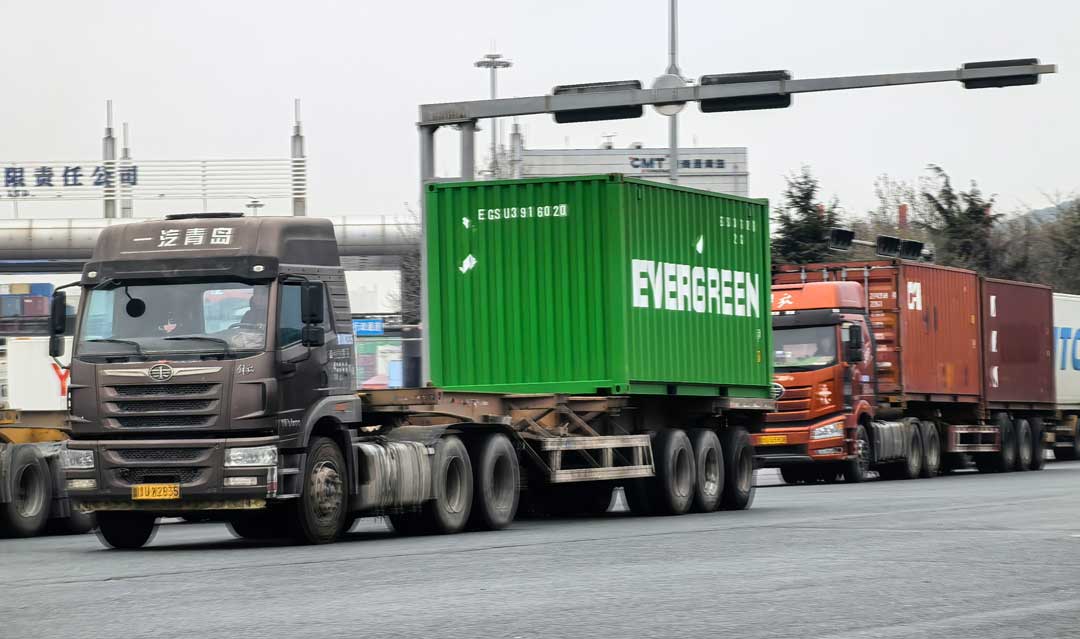
Tampa's industrial inventory is mid-size nationally, vacancy is healthy, but rent is above the Midwest and inland markets, tied to Florida land and insurance cost. The I-4 corridor is central Florida's main consumer-goods distribution cluster, about 500 million square feet. Because the port-to-Lakeland distance is short, truck turn is fast and local warehouse inventory turn is relatively high. For food, beverage and fresh cargo, Tampa also has refrigerated facilities, a point that sets it apart from most ports.
| Step | How |
| Pickup location | Hookers Point container yard, or carrier-designated yard |
| Documents needed | Arrival notice, released bill of lading, customs release receipt, pickup authorization |
| Chassis | Provided per carrier and yard arrangement |
| Empty return | At the carrier-designated yard, often in-city or nearby |
| Overdue fees | Beyond free storage, per carrier and yard rules |
| Reefer | Handled by terminal and dedicated reefer facility; plug count per day's plan |
Pickup needs advance booking and the carrier's authorization documents. Hookers Point yard area grows with expansion, and gate capacity rises with the new complex. Reefers are handled by the terminal and dedicated reefer facility; food and fresh cargo should move to temperature-controlled storage soon after pickup. Free storage follows carrier and yard rules; overdue incurs storage. The empty-return point may differ from pickup; confirm per carrier before handoff.
The Tampa port can file, exam and release, with a centralized exam station. Imported cargo can be entered and released at the port of entry then moved in, or moved in-bond sealed to this port and filed here.
| Step | Note |
| Filing method | File at port of entry, or in-bond sealed to this port then file |
| Centralized exam | (813) 241-6743, 08:30 to 17:00 Monday to Friday |
| Exam types | Document review, NII scan and physical exam, by risk rating |
| Agriculture exam | By the port's agriculture specialists |
| Deferred exam | (813) 676-4590, call ahead advised |
| Seizure matters | (813) 249-8233 |
| Pickup after release | By release receipt |
Exam ratio follows risk rating; consistency of name, value and origin affects selection. Inconsistent documents between papers are a common delay; commercial invoice, packing list and bill of lading names, quantities and amounts need line-by-line check. Wood-packaged goods need IPPC fumigation marks; agricultural and food cargo must meet agriculture quarantine rules, which Florida applies strictly to plant and food imports.
| Party | Hours |
| Port administration | Monday to Friday 08:30 to 17:00 (Eastern Time) |
| Air cargo window | Monday to Friday 08:30 to 17:00 |
| Centralized exam | Monday to Friday 08:30 to 17:00 |
| Saturday and Sunday | Port administration closed |
| Terminal operations | Per terminal's same-day published window |
| Hurricane-season response | June to November may close the port temporarily per port notice |
US federal holidays affect office and terminal work; New Year, Independence Day, Thanksgiving and Christmas are usually full-day closures; MLK Day, Presidents Day, Memorial Day, Labor Day and Columbus Day follow federal holiday scheduling. Tampa port office hours are weekday daytime; around holidays, filing and exams need more lead time. Florida's hurricane season is June to November; the port may close by plan as storms near, so importers should watch port notices.
Tampa's import peak usually lands August to October, in sync with East and Gulf Coast ports, when space and inland capacity are tight. November and December are a fall after the pre-holiday rush; January to February is low season with lower volume. March volume starts to recover; April to June is a relatively steady window.
Tampa has another season factor tied to the local market: Florida retail and tourism consumption peaks in winter, so food, beverage and building-material imports are stronger in fall and winter. Hurricane-season emergency-supply imports also form periodic demand peaks in summer and fall. In peak, submit pickup booking three to five days ahead and buffer one or two days. New berths and cranes will raise terminal capacity over time, easing peak queue pressure.
Together, Tampa suits two needs: FCL import for the central Florida consumer market, and food, fresh and refrigerated cargo. Its shortfall is a small container base and lower service density than the big East and West Coast ports, with some services via Caribbean transshipment; also, Florida's hurricane season brings periodic interruption risk. For cargo needing the highest time and service density, still compare other ports.
Hookers Point is the main container and petroleum area, with the container terminal run by Ports America. Other districts include Port Ybor (break-bulk and project), Pendola Point (liquid bulk and building), Port Redwing (grain, cement, fertilizer and aggregate), plus Port Sutton, East Port and Southbay.
Port code 1801, an area port, at 5519 W Hillsborough Ave, Tampa, FL 33634, telephone +1 813-249-8101, port director Radames A. Torres. Office hours are Monday to Friday 08:30 to 17:00; it is a Class 1 port.
Per the cross-checked published transit tables of several forwarders, all-water direct ocean leg is about 25 to 35 days, door to door about 28 to 40 days; via Caribbean about 32 to 45 days; via US West rail about 24 to 34 days. Air is about 4 to 8 days. Actual time follows the carrier's basis at booking.
Yes. CSX is the Class I railroad serving Tampa Bay, with line direct to berth and an on-terminal ramp at Hookers Point, so containers switch between ship and rail inside the terminal. CSX also runs an intermodal yard in the Tampa area for cargo railed across the US.
Yes. Tampa port 1801 can file, exam and release, with a centralized exam station open weekdays 08:30 to 17:00. Cargo can be entered and released at the port of entry then moved in, or moved in-bond sealed to this port and filed here.
Per the port, FY2025 container volume was nearly 263,000 TEU, up over 300% since 2018, about 28% average annual over five years. The expansion target is 1 million TEU. The Zim Canada at 11,900 TEU berthed April 2026 was the largest by gross tonnage ever at the port.
Pickup is at the Hookers Point container yard or the carrier-designated yard. The trucking company books a slot with the arrival notice, released bill of lading, customs release receipt and pickup authorization. Reefers are handled by the terminal and dedicated reefer facility; move to temperature-controlled storage soon after pickup.
FTZ 79 has the City of Tampa as grantee and the Tampa Bay Port Authority as operator; the 1,626-acre service area includes 166 activated sites and subzones, with the Hookers Point peninsula 295 acres as magnet site. Goods in the zone can be stored, sorted and re-exported without duty paid; applicability needs a per-commodity, per-HS-code check.
Local industrial inventory is about 265 million square feet, vacancy about 5.96%, average asking rent about USD 11.32 per square foot per year, under construction about 3.37 million square feet. The I-4 corridor has about 500 million square feet of distribution space; rent is above the Midwest and inland markets.
The import peak is usually August to October. November and December are a fall; January to February is low season. Also, Florida retail and tourism consumption peaks in winter, so food, beverage and building imports are stronger in fall and winter. Florida's hurricane season is June to November, when the port may close temporarily or reroute.
Shipping from China to USA
Planning a shipment or just comparing options? Contact our freight experts to get a tailored rate within 24 hours.
