
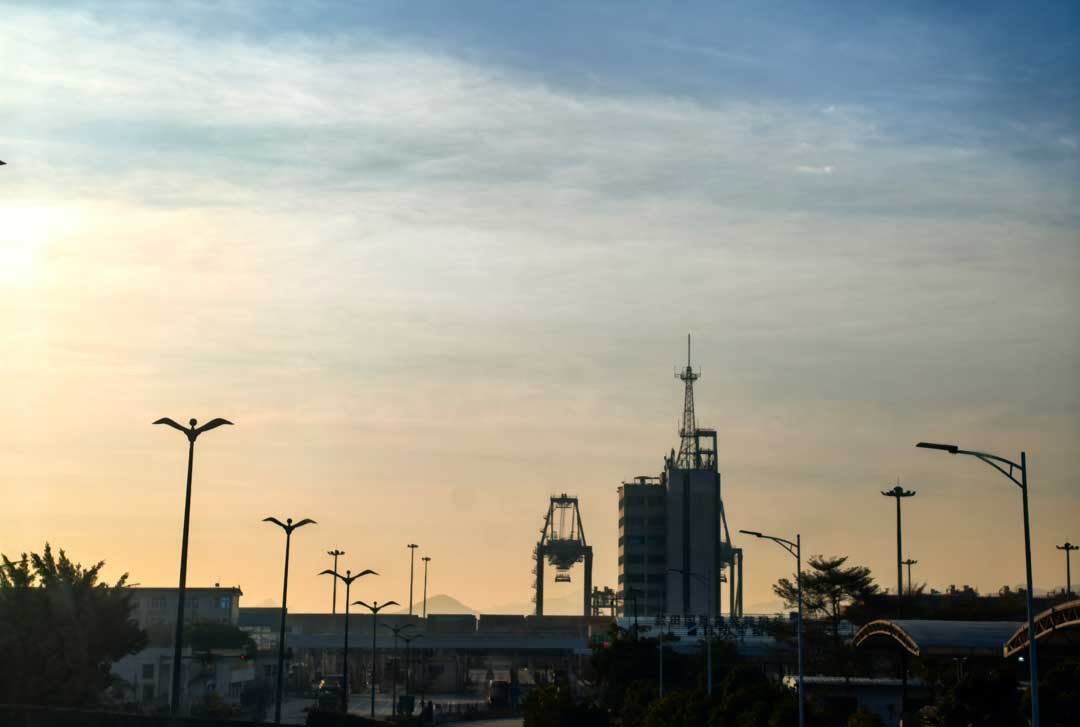
Toledo, Ohio sits in northwest Ohio, at the western end of the Maumee River's mouth into Lake Erie. Its identity in the US port system differs from coastal ports: it is a Great Lakes bulk and break-bulk port, taking no container services, mainly serving the Midwest steel, auto and farm supply chains. For China exporters the meaning splits in two: bulk and project cargo can reach the port directly via the St. Lawrence Seaway, while container cargo usually discharges at a US coastal port first, then moves by rail or truck into the area for distribution.
| State | Ohio, northwest |
| Water | Western end of the Maumee River mouth into Lake Erie |
| Time zone | Eastern Time (EST / EDT) |
| Main highways | I-75, I-80/90, I-280, I-475, US-23 |
| Distance to Detroit | About 60 miles (north) |
| Distance to Cleveland | About 115 miles (east) |
| Distance to Chicago | About 245 miles (west) |
| Distance to Columbus | About 145 miles (south) |
| Local port nature | Great Lakes bulk and break-bulk port, no container service |
Toledo's position puts the port at the heart of North America's manufacturing belt. I-75 runs about 60 miles north to Detroit and south to Dayton and Cincinnati; I-80/90, the Ohio Turnpike, runs east-west linking Chicago and Cleveland. This area concentrates auto assembly and parts, steel processing and machinery firms, and the local cargo mix matches these industries. Against East Coast and Gulf ports, Toledo is closer by sea to many European ports, a natural condition for trans-Atlantic bulk.
Toledo's customs port code is 4105, covering Toledo, Sandusky and Port Clinton, with the office at Port Clinton on Lake Erie. This port administers the lakefront ports and airports of northwest Ohio.
| Port name | Toledo-Sandusky-Port Clinton, Ohio |
| Port code | 4105 |
| Address | 709 SE Catawba Rd., Port Clinton, OH 43452 |
| Port office phone | (419) 732-4446 |
| Duty phone | (419) 656-7106, staffed daily 08:00 to 22:00 |
| Marine email | KTOL_GAP@cbp.dhs.gov |
| Other in-state ports | 4101 Cleveland, 4103 Columbus, 4104 Dayton, 4122 Ashtabula/Conneaut |
| Airport on-site | Toledo Express, seven days 08:00 to 17:00 |
The office is at Port Clinton, not Toledo city, because its jurisdiction runs along the lake, covering Sandusky and Port Clinton docks and airports. The duty phone is staffed daily 08:00 to 22:00; off-hours leave the marine email, but it is not monitored outside hours. The airport's arrival and clearance window is longer than regular office hours, seven days 08:00 to 22:00, helping business-jet and cargo flexibility.
The Toledo port is managed by the Toledo-Lucas County Port Authority, described by the port and state as Ohio's first port authority. Beyond the seaport, the authority supports regional economic development through bonds, loans and financing programs.
| Managing body | Toledo-Lucas County Port Authority |
| Established | 1955, described as Ohio's first port authority |
| Port land | About 1,000 acres |
| Indoor storage | About 1 million square feet |
| Open yards | About 1,000 acres |
| Marine terminals | 18, including a shipyard with two dry docks |
| Cargo docks | 19 |
| Main business | Bulk, break-bulk and project cargo handling, storage, intermodal |
| Financing | 2025 provided nearly USD 44 million, creating or retaining 731 jobs |
The district has many terminals, run by the authority and several private operators. Terminal operators cover agriculture, energy, building and metal-processing firms serving their own processing and transfer needs. The authority's modernization plan replaces old buildings and equipment with new facilities, including a 60,000-square-foot warehouse at the general-cargo terminal planned for Q1 2026. The district also runs a dredged-material disposal site for channel-maintenance silt.
Toledo's terminals are split by cargo type. Public terminals take many bulk and break-bulk cargoes; private terminals serve own processing. Two representative facilities follow.
| Facility | Parameters |
| Midwest Terminals Facility 1 | 123 acres; 4,100-foot dock, 4 ships; seaway draft 26 feet 6 inches |
| Facility 1 indoor storage | About 260,000 square feet |
| Facility 1 on-site rail | About 23,000 feet, CSX-served, full-train qualified |
| Facility 1 cranes | 3 mobile harbor cranes, max 144 tons |
| Ironville terminal | 70 acres, former refinery site, for steel direct-reduction project |
| Ironville unloading | Self-unloader hopper 2,000 short tons per hour |
| Ironville rail and shore | On-site rail over 28,000 feet; 2,000-foot river front, 740-foot vessels |
| Port general equipment | 154-ton mobile harbor crane, 84-ton and 16-ton cranes, switchers, loaders, conveyors |
Public terminals center on bulk and break-bulk: mobile harbor cranes lift steel, aluminum ingots and machine parts; conveyors and self-unload hoppers handle ore, aggregate and fertilizer. Indoor storage is large for rain-sensitive cargo like coil steel, pulp and bagged fertilizer. Ironville, formerly a refinery site, was rebuilt to take vessel-delivered iron ore and direct-reduced-iron feed, its self-unloader hopper handling 2,000 short tons an hour. Unlike container terminals, there are no ship-to-shore cranes or large stacks; work centers on bulk and group cargo.
Iron ore and steel cargo are the backbone of Toledo imports and exports. Per the port's published mix, imported iron ore, steel scrap and steel together are over 70% of imports and over half of exports; the rest is oilseeds, petroleum asphalt and coke products.
| Cargo | Share of imports | Share of exports |
| Iron ore, steel scrap and steel | 73.9% | 51.8% |
| Oilseeds (soybean, flaxseed, etc.) | 6.7% | 17.7% |
| Petroleum asphalt, coke, naphtha and solvents | 5.2% | 14% |
| Cement, lime and glass | 3.6% | -- |
| Non-ferrous metals and products | 3.6% | -- |
| Sulfur, clay and salt | 3.8% | -- |
| Sand, limestone and dredge material | 4.7% | -- |
This mix ties directly to local industry. Northwest Ohio clusters steel processing and auto parts makers; iron ore and DRI feed enter via the port for local mills and processors; finished steel and aluminum move in and out for auto and machinery. Grain and oilseeds export the other way, mainly to Canada and Europe. For China-linked firms, Toledo's value is bulk and break-bulk tied to steel, metal and machinery, not consumer containers.
| Waterway | Maumee River via Lake Erie to the St. Lawrence Seaway |
| Channel depth | About 7.9 meters, also managed by seaway draft basis |
| Main vessel types | Great Lakes bulk carriers, self-unloaders, seaway oceangoing break-bulk |
| Vessel limit | Limited by St. Lawrence Seaway lock dimensions |
| Container ships | Not supported; oceangoing container ships cannot enter |
| Winter navigation | Seaway closes about three months each winter |
| Dredging | From September 2026, two years, removing about 750,000 cubic yards |
Toledo's channel is bound by two factors. One, the Seaway lock dimensions cap vessel size, so oceangoing container ships cannot reach the lakes; two, winter closure, the seaway shuts about three months each winter, leaving only local lake vessels or land transport. To improve navigation, the US Army Corps of Engineers starts Maumee River federal-channel dredging from September 2026, two years, removing about 750,000 cubic yards; the authority also got over USD 30 million for a river-restoration project.
Toledo's district has several Class I railroads. Since opening, rail service has grown from one to three carriers, directly raising inland flexibility.
| Railroad | Access |
| CSX | Serves several district terminals; Midwest Terminals Facility 1 is full-train qualified |
| Norfolk Southern | Serves several district terminals, including Ironville area |
| Canadian National | New terminal access, linking to Canada |
| On-site rail | Facility 1 23,000 feet; Ironville over 28,000 feet |
| Short-line rail | District short line for on-site switching |
| Main destinations | Chicago, Detroit, Cleveland and Canada direction |
Rail at Toledo carries cargo from port to Midwest plants and inland hubs. Because the district has many terminals spread along the river, rail branches are spread too, and most public terminals have dedicated sidings. Three Class I railroads serving one Great Lakes port is uncommon, meaning shippers have more inland choices and can switch railroads in peak to ease capacity. For import steel, machinery or export grain, rail access directly affects logistics cost.
| Highway | Course and role |
| I-75 | North-south trunk; north to Detroit, south to Dayton and Cincinnati |
| I-80/90 | Ohio Turnpike, east-west across, linking Chicago and Cleveland |
| I-280 | Bypass, linking port area to I-80/90 |
| I-475 | Bypass, serving city and industrial areas |
| US-23 | To Michigan direction |
Toledo's highway base is I-75 and the Ohio Turnpike. I-75 is a key North American north-south freight corridor, north to Detroit and the Canadian border, south to Dayton, Cincinnati and southern states. The turnpike runs east-west, linking Chicago and Cleveland. Bypasses connect the port to these two trunks, so trucks enter the interstate quickly. As a highway crossroads, truck capacity is ample and pickup and short-haul are flexible.
Toledo has Foreign-Trade Zone 8, linked to the port district and surrounding industrial land. Goods in the zone can be stored, sorted and non-duty-processed without duty paid.
| Zone number | FTZ 8 |
| Linked body | Toledo-Lucas County Port Authority |
| Coverage | Port district and surrounding industrial and storage land |
| Main use | Bulk and break-bulk storage, processing and re-export |
| Duty treatment | Goods held and processed without duty paid |
| Storage | Bonded warehouse and indoor storage in the district |
Goods in the zone are stored, sorted, labeled, inspected or re-exported without duty paid, deferring duty to when they leave into the US market. For firms importing raw material then processing, this cuts capital tied up. Toledo's FTZ sites pair with the steel, metal-processing and auto-parts chain; applicability and any rate-choice benefit need a per-shipment check against commodity and HS code.
China-export cargo to Toledo splits by nature. Containers discharge at a US coastal or Gulf port first, then rail or truck in; bulk, break-bulk and project cargo may consider direct arrival via the St. Lawrence Seaway, but are bound by lock size and winter closure.
| Route | Ocean leg | Inland leg | Door-to-door common range |
| Container: China to US East or Gulf, then rail | About 25 to 38 days | About 3 to 6 days | About 30 to 45 days |
| Container: China to US West, then rail | About 13 to 20 days | About 7 to 10 days | About 22 to 33 days |
| Container LCL (with consolidation and devanning) | -- | -- | About 34 to 50 days |
| Bulk and project: direct via St. Lawrence Seaway | About 35 to 50 days | About 2 to 5 days | About 40 to 55 days |
| Air to Toledo or via hub | -- | -- | About 4 to 8 days |
The above ranges are the common overlap after cross-checking several forwarders' transit tables; they exclude cut-off, clearance and peak queue time and are not a delivery commitment. The seaway bulk path has the longest ocean leg but the lowest unit rate, suited to bulk, non-time-sensitive cargo; containers via coastal ports and land are more routine. Note the Seaway closes about three months each winter and lake ice also affects local sailing, so cross-year bulk planning should avoid this window.
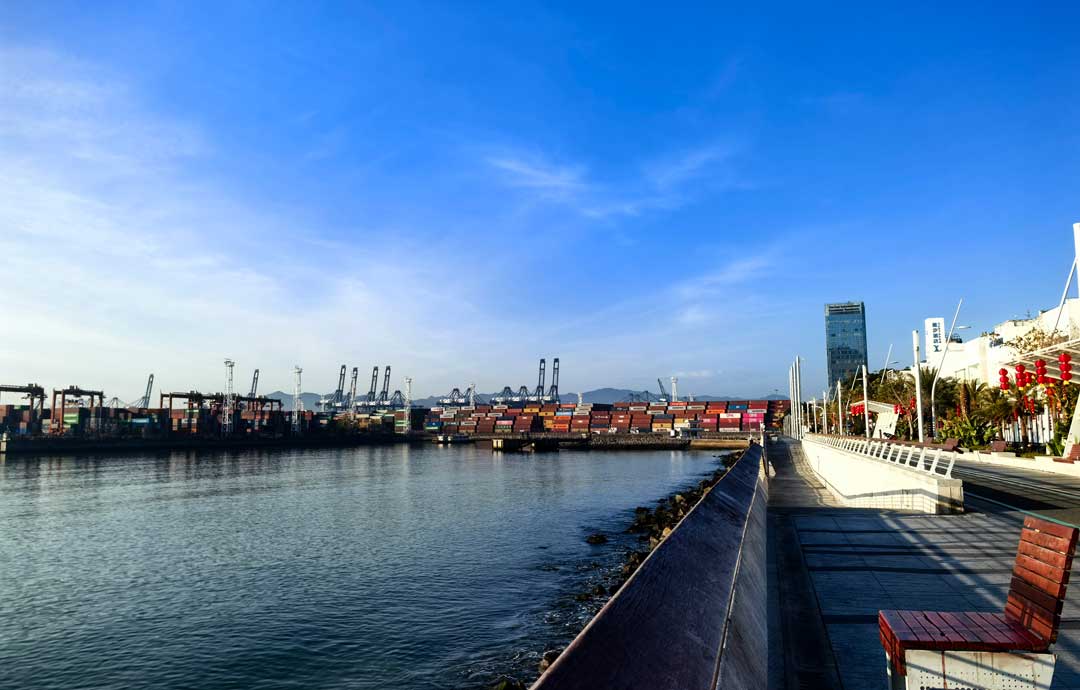
Toledo Express Airport (TOL) is the local air port, in Swanton west of downtown. The airport has been managed by the port authority since 1973, with air-cargo facilities and an e-commerce regional gateway.
| Item | Detail |
| Airport | Eugene F. Kranz Toledo Express Airport (TOL / KTOL) |
| Address | 11013 Airport Hwy, Swanton, OH 43558 |
| Opened and managed | Opened 1955; port authority since 1973 |
| Regular office hours | Seven days 08:00 to 17:00 (Eastern Time) |
| Arrival and clearance | Seven days 08:00 to 22:00 |
| Landing permit | At least 2 hours before departure within office hours |
| Weekend and holiday filing | By Friday 16:00 |
| 2022 cargo and mail | About 255 million pounds (about 115,700 tons), an airport record |
| Runways | Two: 10,600 feet and 5,599 feet |
| Other facility | Also manages Toledo Executive (TDZ), an FAA-designated alternate |
Airport cargo centers on express and auto-industry support. An international e-commerce firm opened an air-cargo gateway here from March 2021 with daily flights, handled by a ground service. Several cargo and charter operators carry auto parts, heavy equipment and general cargo. The airport also hosts the Ohio Air National Guard's 180th Fighter Wing, keeping runway and airspace standards high. The authority also manages Erie-Ottawa International Airport for Port Clinton-area general aviation.
| Metric | Condition |
| Industrial inventory | About 154.2 million square feet (Q2 2025, research basis) |
| Vacancy | About 3.2% (same basis) |
| Average asking rent | About USD 4.94 per square foot per year |
| Under construction | About 1.4 million square feet |
| Market feature | Small-unit vacancy among the lowest nationally |
| Local basis | Local research shows vacancy in a low band per its own survey |
| Main industries | Auto assembly and parts, steel and metal processing, glass and building, agriculture |
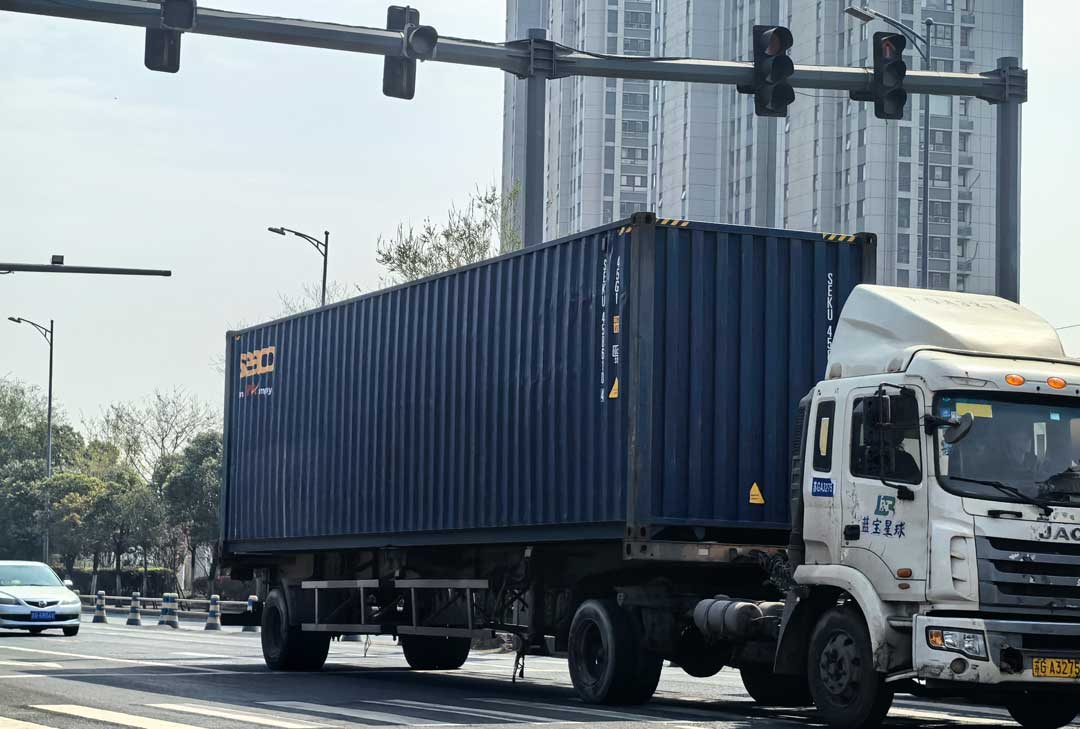
Toledo's industrial inventory is small-to-mid nationally, vacancy is low, and rent is among the lowest of major markets, tied to low local land and construction cost. A market feature is little quality space available to buy or lease; tenants sometimes trade rent for the right size and delivery timing. Recent builds are mostly build-to-suit, with little speculative development. Local industry centers on auto and steel; data-center land demand is also growing.
| Step | How |
| Bulk and break-bulk pickup | By dock receipt at the designated terminal, per terminal booking |
| Container pickup | Via rail intermodal yard or coastal port; see that port's notes |
| Chassis | By carrier and yard arrangement |
| Container empty return | At the carrier-designated yard; no local container terminal |
| Overdue fees | Beyond free storage, per carrier and yard rules |
| Warehouse and yard hours | Per their published schedule |
Toledo pickup is mainly bulk and break-bulk, by dock receipt at the designated terminal, per terminal booking. With no local container terminal or yard, container pickup and return are at a rail intermodal yard or coastal port; local only does transfer and storage. Bulk pickup usually involves scale, sampling and quality check, on a different rhythm from containers; allow time per the terminal's published process.
The Toledo port can file, exam and release. Imported cargo can be entered and released at the port of entry then moved in, or moved in-bond sealed to this port and filed here.
| Step | Note |
| Filing method | File at port of entry, or in-bond sealed to this port then file |
| Exam site | Designated by port, using terminal and local sites |
| Exam types | Document review, NII scan and physical exam, by risk rating |
| Business contact | (419) 732-4446; duty phone (419) 656-7106 |
| Off-hours | Duty phone staffed daily 08:00 to 22:00 |
| Pickup after release | By release receipt |
Exam ratio follows risk rating; consistency of name, value and origin affects selection. Inconsistent documents between papers are a common delay; commercial invoice, packing list and bill of lading names, quantities and amounts need line-by-line check. Bulk cargo often needs weight certificates and quality reports, to check against the arrival notice at filing. Wood-packaged goods need IPPC fumigation marks; agricultural and food cargo must meet agriculture quarantine rules.
| Party | Hours |
| Port administration | Per weekday schedule, per port notice |
| Airport customs service | Seven days 08:00 to 22:00 |
| Airport regular office | Seven days 08:00 to 17:00 |
| Duty phone | (419) 656-7106, staffed daily 08:00 to 22:00 |
| Terminal operations | Per terminal's same-day published window |
| Winter navigation | Seaway closes about three months each winter |
US federal holidays affect office and terminal work; New Year, Independence Day, Thanksgiving and Christmas are usually full-day closures; MLK Day, Presidents Day, Memorial Day, Labor Day and Columbus Day follow federal holiday scheduling. Toledo's airport customs window is long, into the night, helping business-jet and cargo flexibility; landing permits on weekdays and holidays follow the advance-filing rule. Terminal scheduling around holidays adjusts; bulk planning should confirm with the terminal ahead.
Toledo's seasonality comes from two factors: the crop harvest cycle and the Great Lakes navigation season. Grain and oilseed exports concentrate after the second-half harvest; iron ore imports follow the lake shipping season, usually rising after spring opening.
Winter is the local shipping low. The Seaway closes about three months each year and lake ice affects local sailing, so cargo relies on rail and truck. May to November is the active window, with September to November busier on grain export. Container cargo peak and off-peak follow the coastal import peak, usually tightest August to October. Cross-year planning should count the Seaway closure and avoid window-dependent waterborne bulk in that period.
Together, Toledo suits two needs: bulk and break-bulk tied to steel, metal and machinery, and low-cost warehouse area for Midwest distribution. Its shortfall is clear: no local container service, so containers must transship via coastal ports, and the Seaway winter closure of about three months limits the direct-water window. For time-sensitive or consumer-container cargo, Toledo fits better as a distribution landing than an entry port.
No. Toledo is mainly bulk and break-bulk, taking no container service. Terminal operators have stated publicly that container expansion would need USD 7 million to 10 million in capital, and the Seaway closes about three months each winter with locks too small for oceangoing container ships; the Great Lakes region handles about 700 to 1,000 loaded import containers a year.
Port code 4105, covering Toledo, Sandusky and Port Clinton, at 709 SE Catawba Rd., Port Clinton, OH 43452, port office (419) 732-4446, duty phone (419) 656-7106. Other Ohio ports are Cleveland (4101), Columbus (4103), Dayton (4104) and Ashtabula/Conneaut (4122).
By cargo nature. Containers discharge at a US coastal or Gulf port first, then rail or truck in, door to door about 22 to 45 days; bulk, break-bulk and project cargo may arrive directly via the St. Lawrence Seaway, about 40 to 55 days, but bound by lock size and winter closure.
Per the port, 2023 tonnage was 11,715,814 short tons, highest since 2007; the Ohio Department of Transportation basis is over 11 million short tons a year. Cargo is mainly iron ore and steel, plus grain, salt, cement, sand and project cargo.
Yes. CSX, Norfolk Southern and Canadian National, three Class I railroads, serve the district; rail service has grown from one to three since opening. Midwest Terminals Facility 1 has about 23,000 feet of on-site rail and full-train qualification; Ironville has over 28,000 feet.
Yes. Toledo port 4105 can file, exam and release. Cargo can be entered and released at the port of entry then moved in, or moved in-bond sealed to this port and filed here; in-bond needs filing and bond at entry. The duty phone is staffed daily 08:00 to 22:00.
Mainly iron ore, steel scrap and steel, 73.9% of imports and 51.8% of exports; next oilseeds (soybean, flaxseed, etc.) at 6.7% import and 17.7% export; also petroleum asphalt, coke, naphtha and solvents, plus cement, lime, glass, non-ferrous metal, salt and sand. Export destinations are mainly Canada and Europe.
The Seaway closes about three months each winter, during which Toledo cannot receive seaway oceangoing vessels; cargo relies on rail and truck. Lake ice also affects local sailing. Waterborne bulk should avoid this window; cross-year planning needs alternatives.
Local industrial inventory is about 154.2 million square feet, vacancy about 3.2%, average asking rent about USD 4.94 per square foot per year, under construction about 1.4 million square feet. Rent is among the lowest of major markets, but little quality space is immediately available; tenants sometimes trade rent for the right size and timing.
May to November is the active window, with September to November busier on grain export. Winter is the shipping low, with the Seaway closed about three months. Container cargo follows coastal ports, tightest August to October, low January to February.
Shipping from China to USA
Planning a shipment or just comparing options? Contact our freight experts to get a tailored rate within 24 hours.
