
Tucson, Arizona sits in southern Arizona, at the junction of Interstate 10 and Interstate 19. Heading south on I-19 about 70 miles reaches Nogales on the Mexico border. In the US logistics system Tucson is an inland port: there is no ocean terminal locally, but the Port of Tucson covers about 700 acres, with over 13 miles of private rail and a Foreign-Trade Zone site, and connects California and Texas directions through the Union Pacific mainline. For China exporters the value concentrates in three points: a rail gateway into the US Southwest after discharge at a West Coast port, a location next to the Mexico border, and air-cargo capability as an international airport.
| State | Arizona, south, Pima County |
| Time zone | Mountain Time, no daylight saving all year |
| Main highways | I-10, I-19, SR-86 |
| Distance to Phoenix | About 115 miles (northwest) |
| Distance to Nogales border | About 70 miles (south, via I-19) |
| Distance to Los Angeles | About 490 miles (northwest) |
| Distance to El Paso | About 315 miles (east) |
| Local port nature | Inland port, no seaport or ocean terminal |
Tucson sits at the crossing of two corridors. The east-west I-10 runs across the US South, linking California and the Los Angeles-Long Beach ports to the west and New Mexico and El Paso, Texas to the east; the north-south I-19 runs from Tucson straight to the Nogales border. The Union Pacific mainline passes near the city, roughly parallel to I-10, forming part of the southern transcontinental rail line. This layout gives Tucson two functions at once: connecting west to Pacific Coast ports and south to Mexico's manufacturing belt.
Note there are two different port identities locally. Tucson (code 2609) covers the city area, focused on air entry and inland exams; Nogales, 70 miles south (code 2604), is the land border crossing with Mexico, focused on truck clearance and border exams. The two have different port codes and different scopes; importers choose the matching port by how the cargo actually enters.
Tucson's customs port code is 2609, with the office inside Tucson International Airport. The port handles air passenger, air cargo and inland exam duties, under the Tucson Field Office.
| Port name | Tucson, Arizona |
| Port code | 2609 |
| Address | 7081 South Plumer Ave, Tucson, AZ 85756 |
| Freight window phone | (520) 799-8348 |
| Fax | (520) 799-8388 |
| Freight window hours | Monday to Friday 09:30 to 13:30 (Mountain Time) |
| Passenger processing | Daily 07:00 to 21:00 |
| Supervising office | Tucson Field Office |
| Airport on-site office | Daily 08:00 to 21:00 |
| Duty convenience | Federal-designated alternate port that can accept initial duty payment on entry summaries |
One feature of Tucson port is the wide gap between passenger and freight hours. Passenger processing runs 14 hours a day from 07:00 to 21:00, while the freight window is only four hours on weekdays, 09:30 to 13:30, matching the local reality of air-passenger-led volume and smaller freight flow. The port is a federal-designated alternate port that can accept the initial duty payment on entry summaries, convenient for importers with several arrival ports. The Tucson Field Office coordinates local field operations, open weekdays 08:00 to 16:00.
Tucson's role is not to unload cargo from ships, but to take in cargo already discharged at seaports, or consolidate cargo bound for export. Its value comes from private rail facilities, sizable industrial land and trade-zone status.
| Seaports linked | Los Angeles and Long Beach on the US West, plus Mexico West Coast ports |
| Main modes | Rail, road, air |
| Local container terminal | None |
| Rail | Union Pacific mainline, plus 13 miles of private rail with on-site switching |
| Border distance | About 70 miles to Nogales, Mexico via I-19 |
| Foreign-Trade Zone | FTZ 174 Site 2 (Century Park) |
| Special status | Arizona Enterprise Zone; Class 2 bonded storage |
The inland port area offers on-site switching, unlike most inland points: most only provide land and warehouses, with rail switching done by the railroad; Tucson's port area owns its own locomotives and track and can build cuts to tenant needs, with higher flexibility. The area also has bonded and temperature-controlled storage for uncleared cargo and temperature-sensitive goods. This combination suits Tucson as a regional distribution landing for the US Southwest and for two-way flow with Mexico.
The Port of Tucson sits southeast of the city, next to the Union Pacific mainline and I-10, a privately run inland intermodal facility. It offers rail load-transfer, transload, storage and industrial land.
| Area | About 700 acres, city and county designated "shovel-ready" |
| Building stock | About 2.2 million square feet of manufacturing, warehouse and distribution |
| Private rail | About 13 miles, with on-site switching |
| Rail access | Adjacent to Union Pacific mainline |
| Highway access | Adjacent to I-10, about 1 mile from I-10 |
| Cargo types handled | Containers, boxcars, hopper cars and tank cars |
| Main cargo | Lumber, gypsum board, steel, grain, military vehicles and large components |
| Storage types | Public, bonded and temperature-controlled warehouse |
| Development | Lease or purchase options, build-to-suit available |
The yard handles many car types. Beyond containers, boxcars, hopper cars and tank cars can load and unload on site, so it serves not just container cargo but also bulk grain, steel and liquid goods. Concrete platforms suit cross-dock and transload. A dedicated yard stores large components like wind-tower sections, pipe and heavy equipment. Being next to I-10, trucks enter the interstate within minutes, a common inland-port consideration.
Union Pacific is the main railroad serving Tucson, its mainline running from California through Arizona to Texas, with Tucson in the middle. This line links the US Southwest to Pacific Coast ports and is a key rail corridor for trans-Pacific cargo into the southern US interior.
| Class I railroad | Union Pacific |
| Line nature | Southern transcontinental mainline, linking California and Texas |
| Port rail | About 13 miles of private rail, on-site switching |
| Switching | Provided by the port area, built to tenant needs |
| Westbound | To Los Angeles, Long Beach and other Pacific Coast ports |
| Eastbound | To New Mexico and El Paso, Texas |
| South link | Via border port to the Mexico rail network |
Tucson's rail strength is the port's own track and switching. This means cuts are not fully dependent on railroad dispatching; tenants can schedule car movements to their own inbound and outbound rhythm, convenient for multi-batch, small-lot work. On the mainline, Union Pacific links west to Pacific Coast ports and east to Texas, so shippers choose the direction to connect from. South, there is potential to link the Mexico rail network via the border port, serving two-way flow with Mexico.
| Highway | Course and role |
| I-10 | East-west trunk; west to Phoenix and Los Angeles, east to El Paso |
| I-19 | North-south trunk; south to Nogales border, Mexico |
| SR-86 | West to western Arizona |
| Distance to I-10 | Port area about 1 mile from I-10 |
| Distance to airport | Airport about 8 miles south of downtown |
| Note | Summer heat; manage temperature control and scheduling for cargo and equipment |
Tucson's highway network centers on I-10 and I-19. I-10 is the main southern east-west freight corridor, west to Phoenix, California and Los Angeles ports, east to New Mexico and West Texas. I-19 runs south to the Mexico border. The port area is only about a mile from I-10, so trucks enter the trunk quickly. The local climate factor is summer heat; daytime temperatures around July are high, so temperature-sensitive cargo should avoid midday handling, and scheduling should account for driver and equipment windows.
Tucson has Foreign-Trade Zone 174; Century Park in the Port of Tucson is its Site 2. Goods in the zone can be stored, sorted and non-duty-processed without duty paid.
| Zone number | FTZ 174 |
| Linked site | Century Park, Site 2 |
| Site location | In the Port of Tucson, next to Union Pacific mainline and I-10 |
| Existing buildings | About 1.8 million square feet of warehouse, distribution and manufacturing available |
| Development | Lease or purchase, build-to-suit available |
| Extra status | Arizona Enterprise Zone; Class 2 bonded storage |
| Duty treatment | Goods stored and processed without duty paid |
Goods in the zone are stored, sorted, labeled, inspected or re-exported without duty paid, deferring duty to when they leave into the US market. Beyond the federal FTZ status, the site also carries Arizona Enterprise Zone status, with state-level tax benefits for qualifying firms. Because the site is inside the port area, cargo moves between rail and warehouse without a dray. Whether it applies and whether rate-choice benefits are available needs a per-shipment check against commodity and HS code.
Heading south from Tucson on I-19 about 70 miles is Nogales on the Mexico border. The two have different identities in the customs system and different scopes; importers choose the matching port by how the cargo actually enters.
| Item | Tucson (2609) | Nogales (2604) |
| Port nature | Air port and inland exam | US-Mexico land border port |
| Location | Inside Tucson International Airport | Nogales, Arizona |
| Main business | Air passenger/cargo, inland filing and exam | Truck clearance, border exam and freight handling |
| Freight hours | Monday to Friday 09:30 to 13:30 | Border freight facility weekdays 08:00 to 18:00 |
| Passenger hours | Daily 07:00 to 21:00 | Border passenger lane daily 06:00 to 22:00 |
| Contact | (520) 799-8348 | (520) 287-1410 |
The two ports differ by business type. Nogales is a land port handling cross-border trucks and travelers, with dedicated border freight facilities open longer on weekdays; Tucson is an inland and air port with a short freight window, mainly serving air cargo and inland filing. For China exporters, if cargo is sea-discharged and shipped to southern Arizona, the entry happens at a US seaport, and Tucson or Nogales handle post-arrival processing; if Mexico-direction transshipment is involved, the border port's crossing arrangement should be considered.
Container cargo from China to Tucson must first reach a Pacific Coast seaport, then move inland by rail or truck. Because Tucson sits next to the Union Pacific mainline, rail after West Coast discharge is the usual way.
| Route | Ocean leg | Inland leg | Door-to-door common range |
| China major ports to US West, then rail | About 13 to 20 days | About 4 to 7 days | About 20 to 30 days |
| China major ports to US West, then truck | About 13 to 20 days | About 4 to 6 days | About 20 to 29 days |
| China via Mexico West Coast transship | About 20 to 30 days | About 4 to 8 days | About 26 to 40 days |
| Ocean LCL (with consolidation and devanning) | -- | -- | About 28 to 42 days |
| Air to Tucson International | -- | -- | About 4 to 8 days |
The above ranges are the common overlap after cross-checking several forwarders' transit tables; they exclude cut-off, clearance and peak queue time and are not a delivery commitment. The West Coast plus rail path balances ocean and inland distance and is the routine choice into Arizona; the Mexico West Coast transship path is longer but can avoid US port queues in specific cases. Which to choose needs the cargo's time requirement, current rail capacity and cost budget together.
Tucson International Airport (TUS) is the local air port, about 8 miles south of downtown. The airport opened in 1919, among the earliest municipal airports in the US, and is now Arizona's second-busiest airport.
| Airport | Tucson International Airport (TUS / KTUS) |
| Address | 7250 South Tucson Blvd, Tucson, AZ 85756 |
| FY2025 passengers | 3,919,007 |
| FY2025 operations | 126,534 |
| Runways | Two, 10,996 feet and 7,000 feet; a parallel runway under construction |
| Elevation | About 2,643 feet |
| Customs office | Daily 08:00 to 21:00, phone (520) 799-8348 |
| Cargo window | Monday to Friday 08:30 to 16:30 (except federal holidays) |
| Landing permit | File no later than 1 hour before departure from the foreign port |
| Special declaration | Hunting firearms, animal specimens, game meat or live animals: 24 hours advance notice |
Airport cargo centers on domestic scheduled belly and regional freight, with a daytime weekday cargo window. Several air-cargo firms keep offices at the airport for small-piece and pallet handling. Large and full-pallet international air cargo usually routes through hubs like Los Angeles, Phoenix or Dallas first. Note Arizona keeps Mountain Standard Time all year with no daylight saving, so when coordinating flight times with other states, check the time difference to avoid mistakes.
| Metric | Condition |
| Industrial inventory | About 28.9 million square feet (Q2 2025, research basis) |
| Vacancy | About 6.7% (same basis) |
| Average asking rent | About USD 8.66 per square foot per year |
| Under construction | About 1.4 million square feet, much speculative |
| Main submarkets | Airport area, northwest and southeast |
| Main industries | Mining, optics and photonics, logistics, data centers, biotech, aerospace and defense |
| Representative tenant | A large e-commerce firm's about 857,000-square-foot custom facility built in 2019 |
Tucson's industrial inventory is small, a mid-to-small market nationally, with a mid-level vacancy. The airport area, close to air cargo and I-10, is the tightest submarket with limited contiguous developable land, so some demand spills to surrounding areas. Local industry centers on mining, optics and photonics, aerospace and defense; their warehouse and manufacturing needs differ from general consumer-goods distribution, with higher requirements on building specs and power capacity. Data-center land demand is also growing.
| Step | How |
| Pickup location | Port yard, carrier-designated area or local warehouse |
| Documents needed | Arrival notice, released bill of lading, customs release, pickup authorization |
| Chassis | By carrier and yard arrangement |
| Empty return | At carrier-designated yard, mostly US West or regional yard |
| Overdue fees | Beyond free storage, per carrier and yard rules |
| Bonded storage | Class 2 bonded storage in the port area for uncleared cargo |
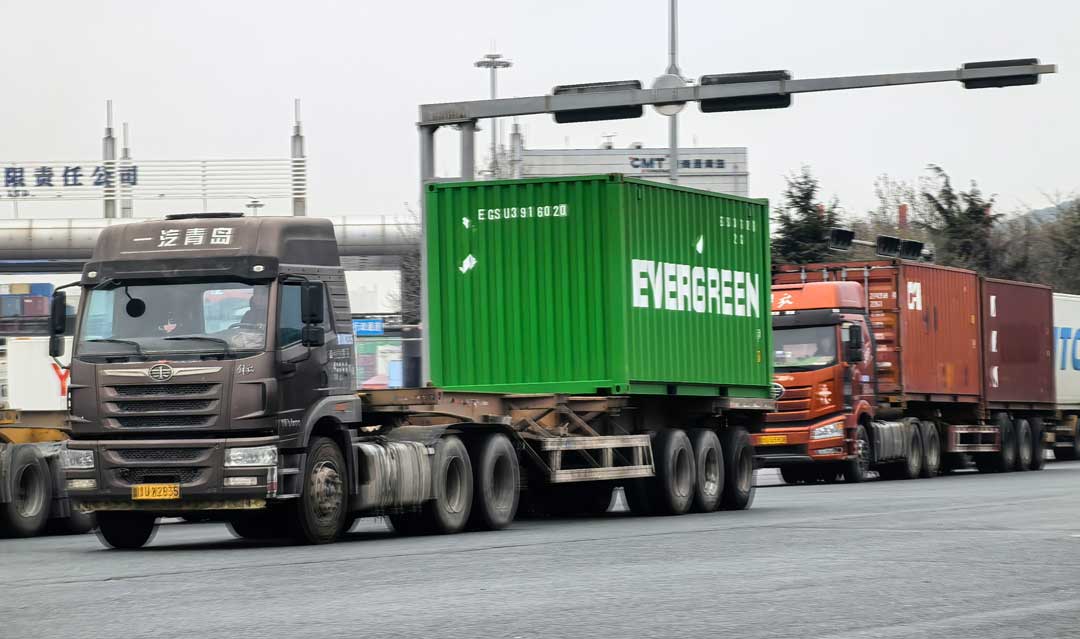
Pickup needs advance booking and the carrier's required authorization. With no local container terminal, pickup is usually at the port yard or carrier-designated area; importers arrange truck entry by release receipt and pickup authorization. Empty return is usually at a US West or regional rail yard; confirm the return yard with the carrier before pickup to avoid extra dray cost. The port-area bonded storage holds uncleared cargo, convenient for split-entry shipments.
Tucson port can file, exam and release. Imported cargo can be entered and released at the port of entry then moved in, or moved in-bond sealed to this port and filed here.
| Step | Note |
| Filing method | File at port of entry, or in-bond sealed to this port then file |
| Duty arrangement | Federal-designated alternate port that can accept initial duty payment on entry summaries |
| Exam site | Designated by port, using port-area and local sites |
| Exam types | Document review, NII scan and physical exam, by risk rating |
| Freight window | Monday to Friday 09:30 to 13:30 |
| Field coordination | (520) 407-2336 |
| Pickup after release | By release receipt |
Exam ratio follows risk rating; consistency of name, declared value and origin affects selection. Inconsistent documents between papers are a common delay; commercial invoice, packing list and bill of lading names, quantities and amounts need line-by-line check. Tucson's freight window is short, weekdays 09:30 to 13:30, so filing and exam should count this window in scheduling. Wood-packaged goods need IPPC marks; agricultural and food cargo must meet agriculture quarantine rules.
| Party | Hours |
| Port freight window | Monday to Friday 09:30 to 13:30 (Mountain Time) |
| Port passenger processing | Daily 07:00 to 21:00 |
| Airport customs office | Daily 08:00 to 21:00 |
| Airport cargo handling | Monday to Friday 08:30 to 16:30 (except federal holidays) |
| Field office | Weekdays 08:00 to 16:00 |
| Port operations | Per port-area and tenant schedule |
US federal holidays affect office and warehouse work; New Year, Independence Day, Thanksgiving and Christmas are usually full-day closures; MLK Day, Presidents Day, Memorial Day, Labor Day and Columbus Day follow federal holiday scheduling. Tucson's freight window is itself short, so allow more time around holidays for filing and exam. Also, Arizona keeps Mountain Standard Time all year with no daylight saving; when coordinating with other states or with China, check the time difference to avoid scheduling mistakes.
As an inland point, Tucson's seasonality is driven mainly by the US West Coast import rhythm. The import peak usually comes August to October, when capacity and inland rail are tight and railcars and trucks prioritize full trains and block loads. November and December fall after the pre-holiday rush; January and February are the low season with lower volume. Volume starts rising in March; April to June is a relatively stable window.
Tucson has a climate-related factor too. Daytime heat in July affects open handling and long-haul trucking, and some warehouses and yards shift hours to avoid midday. This is noticeable from late June to September, so pickup and delivery should consider morning or evening slots. The peak and heat seasons overlap partly, so both factors should be counted in scheduling.
Together, Tucson suits two needs: full-container import for the US Southwest market, and transshipment tied to Mexico-direction flow. Its shortfall is the small local market and limited industrial inventory, with little ready warehouse space; also the port's freight window is short, with limited flexibility for filing and exam. For large volume or tight timing, compare with Phoenix or Los Angeles options.
No. Tucson is an inland port, not on the coast, with no ocean or container terminal. Import containers must first discharge at a US Pacific Coast seaport, then move in by rail or truck, usually Los Angeles and Long Beach. The Port of Tucson is a local private inland intermodal facility.
Port code 2609, at 7081 South Plumer Ave, Tucson, AZ 85756, freight window phone (520) 799-8348, under the Tucson Field Office. Freight window is Monday to Friday 09:30 to 13:30; passenger processing is daily 07:00 to 21:00.
No. Tucson (2609) is an air port and inland exam point, with the office inside Tucson International Airport; Nogales (2604) is the US-Mexico land border port, with freight facilities open weekdays 08:00 to 18:00. The two have different port codes and scopes; importers choose the matching port by how cargo actually enters.
By cross-checked forwarder tables, door to door via US West plus rail is about 20 to 30 days, via truck about 20 to 29 days, via Mexico West Coast transship about 26 to 40 days, ocean LCL about 28 to 42 days, and air about 4 to 8 days. Exact time follows the carrier at booking.
Yes. The Union Pacific mainline runs from California through Arizona to Texas, with Tucson in the middle, and the port area sits next to this line. The port also has about 13 miles of private rail with on-site switching, so car building is not fully dependent on railroad dispatching.
Yes. Tucson port 2609 can file, exam and release, and is a federal-designated alternate port that can accept initial duty payment on entry summaries. Cargo can be entered and released at the port of entry then moved in, or moved in-bond sealed to this port and filed here; in-bond needs filing and bond at entry.
FTZ 174 has Site 2 at Century Park in the Port of Tucson, with about 1.8 million square feet of warehouse, distribution and manufacturing available, for lease or purchase and build-to-suit. Goods can be stored, sorted and re-exported without duty paid, and the site also carries Arizona Enterprise Zone status.
The port handles containers, boxcars, hopper cars and tank cars, with cargo including lumber, gypsum board, steel, grain, military vehicles and large components like wind-tower sections. Beyond general storage, the port offers bonded and temperature-controlled storage for uncleared and temperature-sensitive cargo.
Local industrial inventory is about 28.9 million square feet, vacancy about 6.7%, average asking rent about USD 8.66 per square foot per year, under construction about 1.4 million square feet. The airport area, close to air cargo and I-10, is the tightest submarket with limited contiguous land.
The freight window is short, Monday to Friday 09:30 to 13:30, so filing and exam should count this window in scheduling. Also Arizona keeps Mountain Standard Time all year with no daylight saving, so check the time difference when coordinating with other states or with China. Summer July heat also affects open handling and long-haul windows.
Shipping from China to USA
Planning a shipment or just comparing options? Contact our freight experts to get a tailored rate within 24 hours.
