Since 2012 NVOCC GD20230925153335 24h Response
+86 13392162503 sales8015@goodhopefreight.com Login
Goodhope Freight
Air export clearance · Import clearance · Bonded truck transit

Ningbo Lishe Airport Export & Import Customs Clearance

Ningbo moves 160,100 metric tons of cargo a year, but only 29% of it leaves or arrives on a direct international flight. The rest of the value sits in two things: bonded truck transit to twenty domestic airports, and three perishable import premises in a single cargo zone. We file the China-side declaration at Lishe for both directions, then keep the shipment moving through the smart gate, screening and uplift.

40,000 sqm cargo zone Three-in-one smart gate Perishable premises Advance filing 24-hour booking Transit sealing
160,100 t2025 cargo throughput, 27th in China
20 airportsReached by bonded truck from Ningbo
3 premisesChilled seafood, live aquatic, fresh fruit
Plan my Lishe clearance See the 8-step flow
46,700 tInternational route cargo in 2025
29% of the airport total
10 routesInternational and regional freighters
East, South, Europe, North America
5,390 tTransit imports Jan–Sep 2026
more than double the year before
290 tPerishables inspected in one month
lobster, cherries, live eel
Why Ningbo

One Cargo Zone, One Runway, Three Fresh-Food Permits —
The Constraint Is Not the Counter

Ningbo Lishe (IATA: NGB) sits 12 km southwest of the city center in Haishu District. It opened in 1990, became a national first-class air port in 1992, and handled 160,100 metric tons of cargo and 16.13 million passengers in 2025. The runway is single, 3,200 meters, and the international cargo operation is concentrated in one 40,000 sqm zone that opened in July 2020.

That concentration is the whole story for an exporter. Acceptance, inspection, sealing and build-up happen in the same fenced area, so nothing is lost between sites — and in peak weeks there is exactly one queue. Released is not loaded; on a single runway, a shipment that misses its slot waits for the next freighter.

  • 1
    Every international movement goes through one zoneRoughly 30,000 sqm is air-transport supervision premises for general cargo; 10,000 sqm is express premises for courier and e-commerce. Dangerous goods, cold storage, fumigation and the sealing yard are all inside. Multiple terminals would give you options; one terminal gives you a hard cutoff.
  • 2
    Transit is where Ningbo actually competesBonded truck flights connect Lishe with twenty domestic airports, including Dalian, Xi'an, Zhengzhou and Chengdu, and Ningbo is a mutual off-airport cargo station with Zhoushan and Yiwu. Transit imports ran 5,390 tonnes in the first nine months of 2026, up 110%; transit exports 1,251 tonnes, up 64%.
  • 3
    Three perishable permits, and a closed listChilled seafood, live aquatic animals and fresh fruit are all approved import premises here, handling lobster, cherries, live eel, durian, tuna and king crab. Meat and plant propagation material are not approved at Lishe. Check the commodity against the list before quoting a rate.
  • 4
    The second runway is a plan, not capacityA 280,000 sqm Terminal 3, a second runway and a ground transport center form the phase-four expansion, budgeted around RMB 49.7 billion. The pre-feasibility study has cleared the civil aviation regulator; construction has not started. Plan against the runway you have.
Who actually files? On FOB, CFR or CIF terms the China export declaration is the seller's obligation — but the cut-off that decides whether your cargo flies still lands on your delivery date. On EXW it is yours. Either way, the sequence below is what decides whether the shipment makes the booked flight or the one after it.
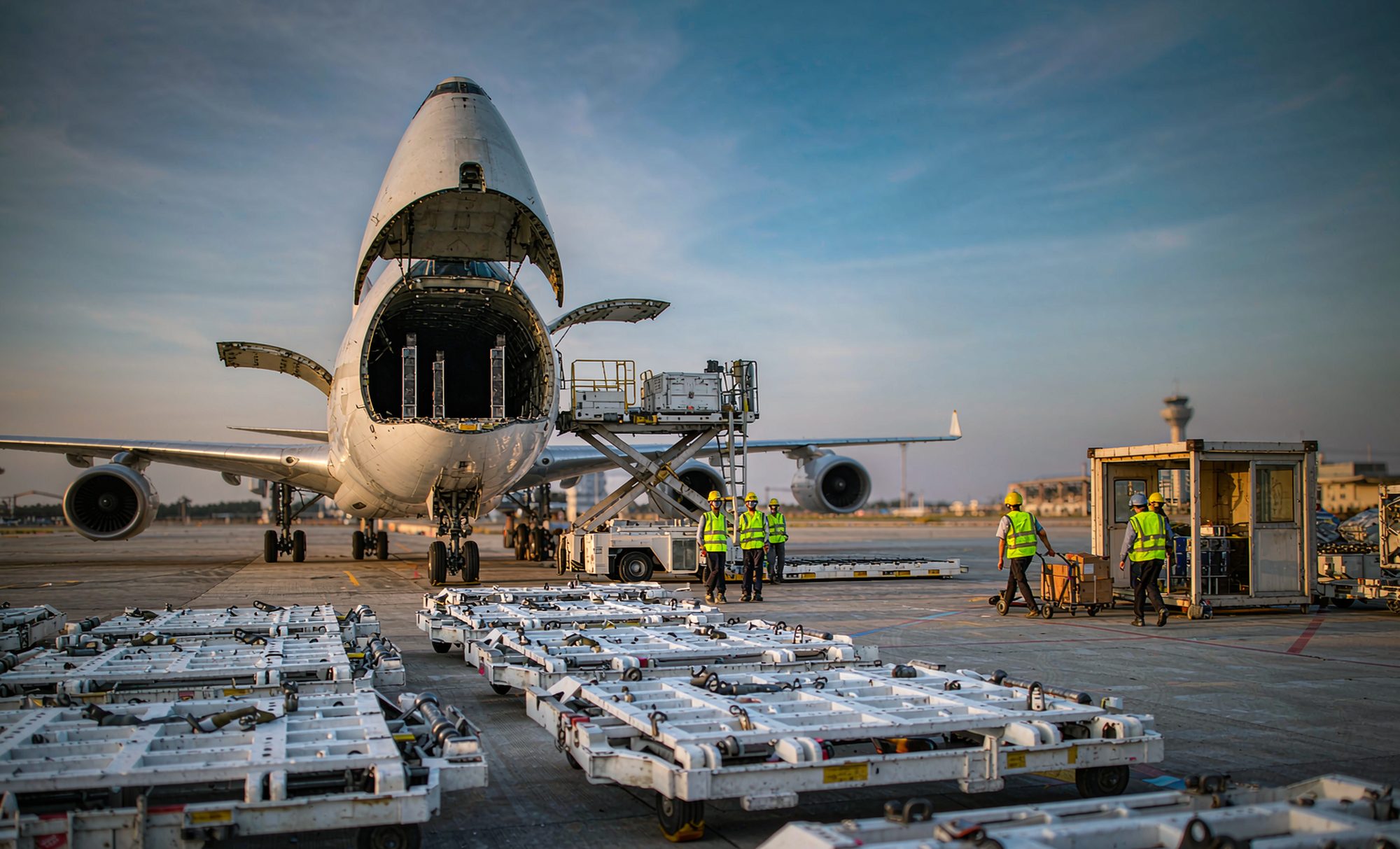
A freighter with its nose cargo door open on the apron, surrounded by aircraft pallets waiting to be loaded
On the ground Arrival — release — gate — build-up Manifest first · cut-off back-planning · transit sealing

In short

Customs clearance at Ningbo Lishe is the China-side filing that turns a booked air waybill into a legally released export or a duty-paid import: classification, entry or list preparation, single-window filing, inspection attendance, transit sealing where the cargo continues inland, and closure. Ningbo runs it across separate supervised premises inside one cargo zone — air-transport premises for general trade, express premises for courier and 9610 e-commerce, cold storage for the three perishable categories, and a sealing yard for bonded truck transit. Goodhope Freight acts as the licensed broker for that filing and coordinates pickup, gate booking and the refund documents that follow.

Note: cargo, passenger and movement figures come from the Civil Aviation Administration of China 2025 production statistics; the supervised premises layout, the three-in-one smart gate and the CT screening equipment come from China Customs and Ningbo Customs releases; the office structure and contact points come from Ningbo Airport Customs public information; transit volumes and the twenty-airport network come from Ningbo Customs releases in October 2026; the fruit import premise is listed in Ningbo Customs guidance. Actual flight schedules, cut-offs and yard arrangements are set by the carrier and the terminal operator for the week in question.

Supervised premises

Four Working Channels in One Zone — Wrong One Means Refiling

An airport does not divide into terminals the way a seaport divides into berths, but its customs supervision premises are separate. General cargo, parcels, perishables and inland transit each have their own filing logic and their own working rhythm.

Ningbo Airport Customs · area 3102

Air Transport Premises

International Cargo Zone · airside

Handles
General trade export and import cargo on freighters and belly hold
Size
About 30,000 sqm, including DG, cold and fumigation stores
Workflow
Acceptance, screening, build-up in one building; release pushes straight to the terminal
Regime
Advance filing, release on arrival, inspection inside the zone
Best for: general merchandise, appliances and machinery, textiles and apparel, auto parts and molds, solar modules

Clearance counter is on the ground floor of the airport clearance center, weekday office hours; outside those hours the 24-hour booking channel applies.

9610 / 9710 / 9810

Express & E-commerce Premises

Courier center · second floor

Handles
Courier shipments, cross-border e-commerce parcels, platform consolidation
Size
About 10,000 sqm, with automated sorting replacing manual lines
Control
Three CT scanners with image analysis; suspect parcels drop out automatically
Mode
9610 list release then consolidated declaration; 9710 and 9810 on their own rules
Best for: small-parcel exports, overseas-warehouse replenishment, courier and personal effects

Inspectors can review the three-dimensional image in the background, so fewer parcels have to be opened by hand.

Premise code CNNGB310207

Perishable Import Premises

Cold chain · designated sites

Approved
Chilled seafood, live aquatic animals, fresh fruit
Location
Inside the same international cargo zone; operator is the airport group
Regime
Advance filing plus two-stage admission; release after risk screening
Hours
Round-the-clock perishable desk since 2019
Best for: live lobster, chilled salmon, live eel, cherries, durian, mangosteen, king crab

Meat and plant propagation material are not approved here. A permits desk inside the zone handles the import animal and plant quarantine approvals.

Logistics control section

Transit & Sealing Yard

Bonded truck transit · gate control

Handles
Cargo entering or leaving Ningbo under bond for another airport
Network
Truck flights to Dalian, Xi'an, Zhengzhou, Chengdu and 16 more airports
Workflow
Transit entry, sealing, seal check and gate release, all paperless
Gate
Vehicle-to-cargo binding at a shared smart gate; plate recognition opens the barrier in about six seconds
Best for: cargo originating inland, imports moving on to a domestic airport, air-to-air and air-to-truck combinations

Manifest amendments and transit formalities are both handled by the logistics control section, which sits on the second floor of the express center.

What differsExport, local originImport, arrival clearance
SequenceCargo to zone → file → release → gate → screening → build-up → upliftManifest in → advance filing → arrival → inspection and release → collection or transit
Critical momentCarrier and terminal cut-off; the legal filing deadline is 24 hours before loadingWhen manifest data lands — earlier filing means earlier release
Usual jamGate queue, screening rejection, manifest that disagrees with the entryNo quarantine approval, goods that do not match the permit, missing Chinese labeling
What speeds it upAdvance filing plus a booked gate and build-up slotTwo-stage admission plus a pre-booked inspection
Local factorSingle runway means tight departure slots; daytime is the busiest windowBonded truck transit can hand the cargo to any of twenty airports

The differences above follow current practice at Ningbo Lishe and published trade facilitation measures. The operative version is always the terminal's arrangement and the carrier's cut-off for that week.

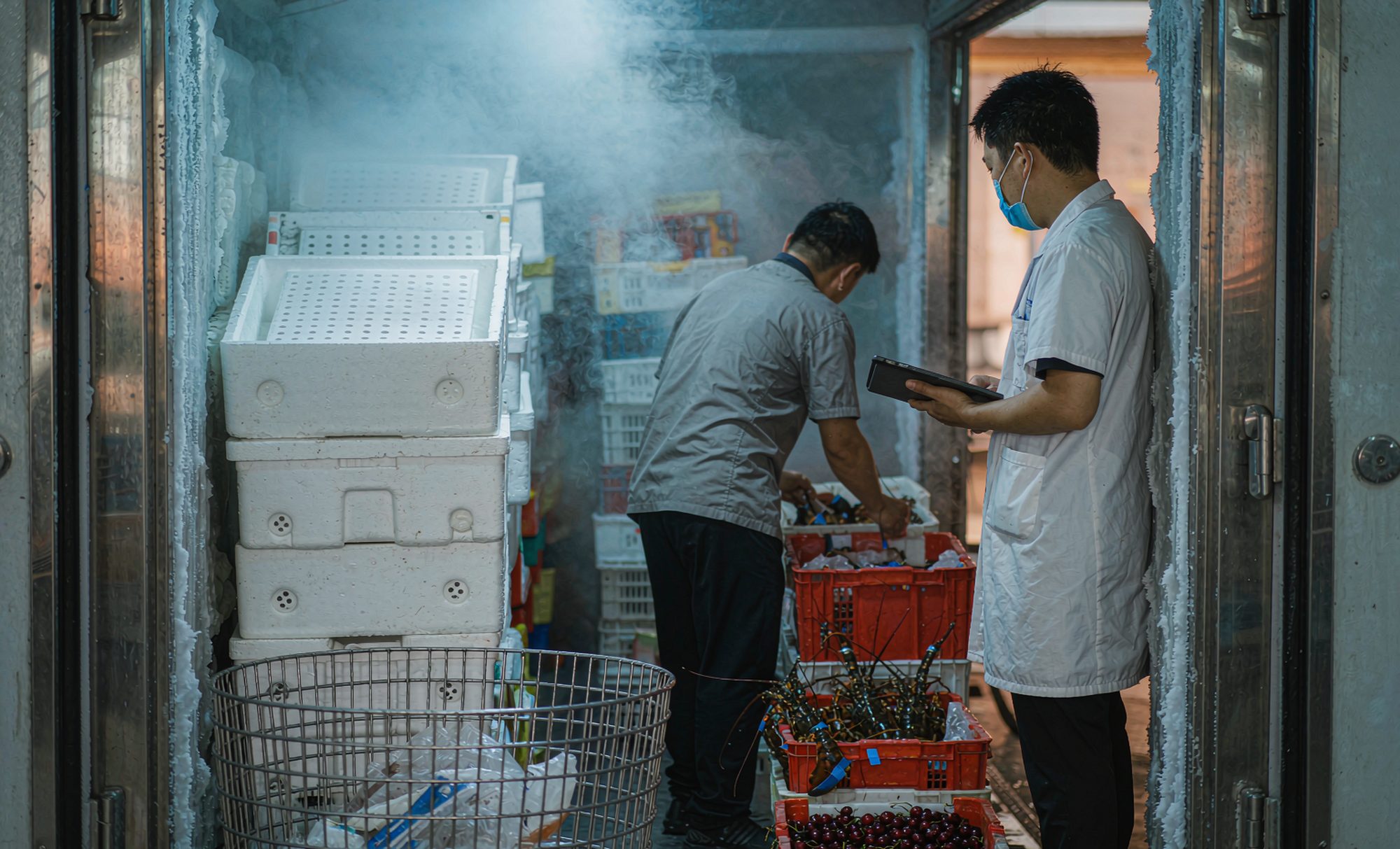
Stacked white insulated fish boxes, crates of live lobster and cartons of cherries at the door of a cold store
Ningbo earns its perishable business on a counter and a permit — not on a promise to be fast Chilled seafood, live aquatic animals and fresh fruit all clear inside the same fenced zone, and a round-the-clock perishable counter has been running since 2019, which is why lobster landing at 2 a.m. can be inspected and collected the same morning. The list itself is closed, though: meat and plant propagation material have no designated premises at Lishe, so routing those categories here ends in redirection or re-export. The first question in any perishable quote should be whether the commodity is on the list, not what the freight rate is.
What we handle

Eight Clearance Workflows, Split by Cargo and Channel

Air freight is a business where the commodity decides the route: general cargo goes through air-transport premises, parcels through the express channel, perishables through the designated sites, inland cargo through sealing and gate release. One template for all of them fails at the first exception.

SERVICE 01

General trade export declaration

Terms-of-trade review (FOB, CIF, EXW, DDP), contract, invoice, packing list and air waybill checked against each other, then filed through single window and followed to release, gate and closure.

General cargoElements checkedClosure
SERVICE 02

Import clearance & perishable release

Filing starts the moment manifest data lands, then two-stage admission drives inspection and collection. Fruit, chilled seafood and live aquatic animals are handled against the designated premises and the quarantine permit.

Two-stage admissionQuarantineCollection
SERVICE 03

9610 e-commerce list filing

List release and consolidated declaration for 9610, with 9710 and 9810 handled on their own rules: three-way data matching, category checks, and separation of returns before sorting.

9610Three-way matchConsolidation
SERVICE 04

Bonded truck transit & air-to-air

The strongest line at this airport. Transit entry and sealing at the origin end, bonded truck or connecting flight into Ningbo, seal check and gate release, then write-off at the far end — or the reverse, importing at Ningbo and trucking under bond to twenty airports.

Truck flightSealingWrite-off
SERVICE 05

Lithium batteries & powered goods

UN3480 and UN3481 shipments, power banks, devices with installed cells and aerosols: UN number, DG packing certificate, UN38.3 test summary, MSDS and DGD checked against the model actually shipped.

UN38.3DG packing certDGD
SERVICE 06

Chemicals, liquids & powders

Hazard determination by composition and CAS number. Non-hazardous goods need a transport condition assessment; hazardous ones move through the DGR process, with carrier acceptance confirmed before the entry is filed.

Hazard callAssessmentDGR
SERVICE 07

Cold chain, live seafood & pharma

Reefer units, cool packs and temperature logs checked against the flight plan; dry ice declared on its own conditions. For live product, oxygen supply, transit time and the collection window are planned as one schedule.

TemperatureLive productPriority uplift
SERVICE 08

Refund documents & compliance review

After closure, the refund copy of the entry and the filing record go back to you, checked against the invoice and the foreign-exchange receipt. Agency and name-lending arrangements are flagged before you choose a route, not after.

VAT refundThree-way matchCompliance
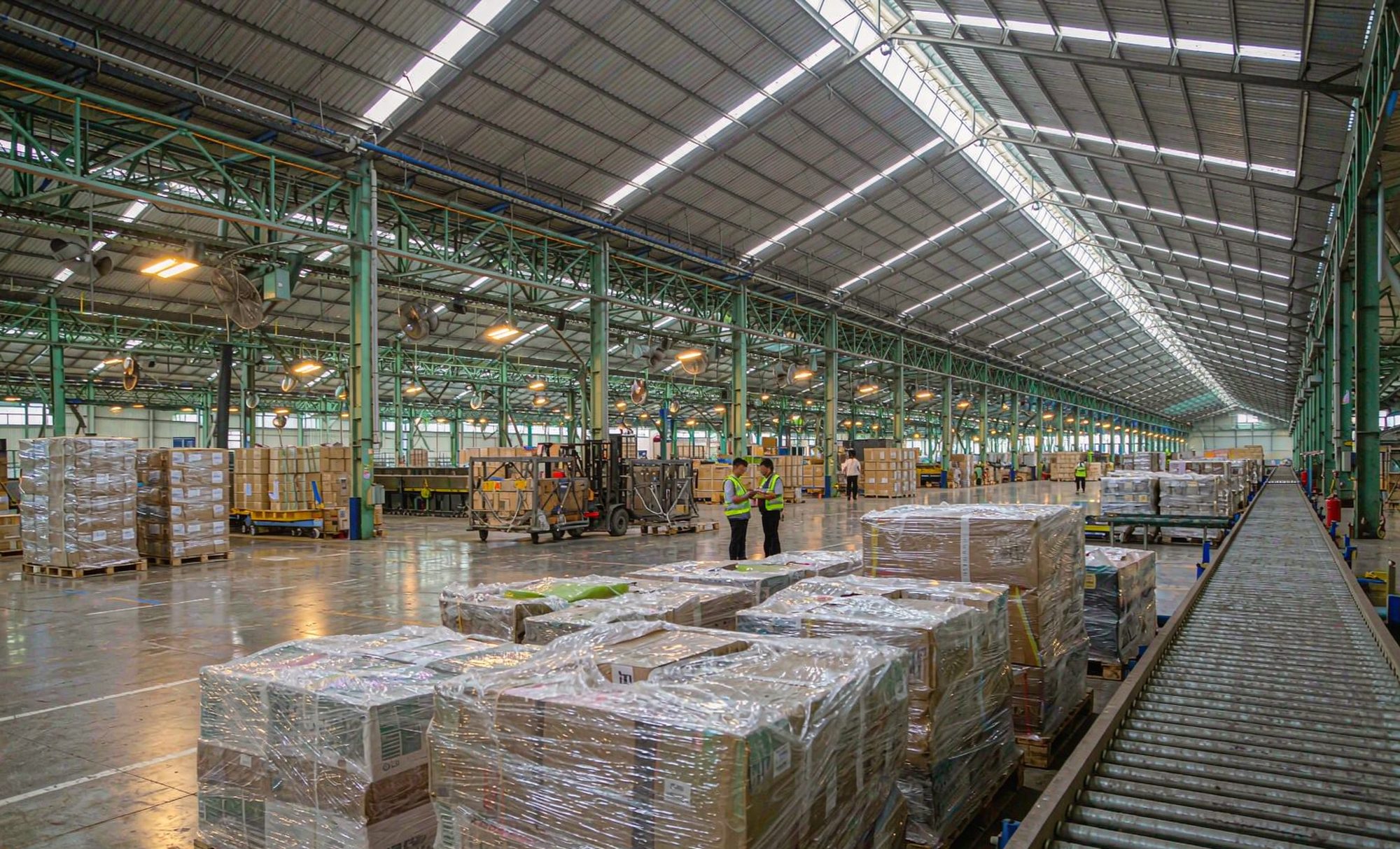
Shrink-wrapped pallets, a roller conveyor line and a build-up area inside an air cargo terminal
Two stages after release that most schedules forget: the gate and the build-up Air export planning cannot stop at "released". After release the cargo passes the smart gate, queues for acceptance, goes through screening and is built up or containerized. There is one international cargo zone at Ningbo, so in peak weeks those steps absorb half a day without anyone doing anything wrong. We plan backwards from the carrier cut-off across three milestones — filing, release, gate — instead of filing first and hoping.
Process

How Export Clearance Runs at Ningbo Lishe, Step by Step

Eight steps. Steps two and three decide whether you have to amend anything later; step six decides whether the shipment makes this flight. Time is the one thing on this line that cannot be recovered.

1

Booking & documents

Fix the flight, destination and terms; collect the customs power of attorney, contract, invoice, packing list, master or house airway bill and the declaration elements behind the code.

2

Classification & elements

Settle the HS code on material, function and principle, then check every element. Appliances, machinery and solar equipment need spec sheets and, where relevant, test reports on file before questions arrive.

3

Booking data & three-way check

Match description, pieces, gross weight and volume across the manifest, the entry and the packing list. Changing manifest data after confirmation needs carrier consent, in both time and money; amendments are handled by the logistics control section.

4

Single-window filing

File as soon as manifest data is available, or within the legal window: after arrival at the supervised premises and at least 24 hours before loading.

5

Review & inspection

Released directly, or flagged for inspection. Air inspection usually happens inside the zone: open, count, photograph. A packing list that matches the goods clears in one pass.

6

Gate, acceptance & screening

Cargo passes the three-in-one smart gate and is accepted, screened and built up. Release time plus queue time is what matters, which is why we finish filing early rather than at the cut-off.

7

Uplift & manifest closure

Load against the flight; verify master and house bills, pieces, weight and volume against what actually went on board. On a single-runway airport slots are tight, so load-plan changes have to be raised early.

8

Refund documents & archive

After closure, the refund copy of the entry, the release message and manifest data go back to you and into the archive for the VAT refund and later verification.

Three clocks, not one. Under Article 24 of the Customs Law, export cargo must be declared after it reaches the customs supervised premises and at least 24 hours before loading. Advance filing lets you file once manifest data exists, but everything on the entry must arrive within the prescribed window or the declaration is canceled — transit cargo gets five days. The third clock is the carrier and terminal cut-off: not a legal deadline, but the one that decides whether your cargo flies. On a transit job there is a fourth: the truck flight's departure, which cannot be planned backwards from "released".
Documents

What Your Paperwork Needs to Look Like for Ningbo Air Export

A mistake in air freight costs more than in ocean freight: a container amendment may still catch the vessel, an air amendment usually costs a flight. Base set first, then what the commodity adds.

Base set — every shipment

  • ✓
    Export declaration entryFiled in single-window format by the broker; must describe the goods that actually fly.
  • ✓
    Contract or purchase orderClear on terms of trade, currency and payment conditions.
  • ✓
    Commercial invoice & packing listDescription, quantity, packages, gross and net weight, volume and marks corroborating each other.
  • ✓
    Customs power of attorneyElectronic authorization accepted, valid at filing and issued to the broker who actually files.
  • ✓
    Master and house airway billNumber, flight, destination station, pieces and weight, matching the manifest.
  • ✓
    Declaration elementsBrand type, export preference, composition and model, item by item for the code being used.

Added by commodity

  • ✓
    Export licenses & permitsDual-use items and licensed goods: the license code has to match the declared code, and its validity has to outlast the flight.
  • ✓
    Certificate of originCO, Form E and others, chosen against the destination's tariff preference; issued before departure, not after.
  • ✓
    Dangerous goods fileDGD, DG packing certificate, UN38.3 test summary and MSDS, all matching the model actually shipped.
  • ✓
    Non-hazardous assessmentThe basis for treating a chemical, liquid or powder as general cargo instead of DG.
  • ✓
    Quarantine approval & certificatesImport animal or plant quarantine permit, official phytosanitary or health certificate, and an IPPC mark on wooden packaging.
  • ✓
    Brand authorization & ATA carnetAuthorization chain for OEM and branded goods; carnet for samples and temporary exports.
What Ningbo has streamlined. The cargo zone runs a three-in-one smart gate shared by general cargo, express and e-commerce, using vehicle-to-cargo binding: the plate is read and the barrier lifts without a manual check. Express parcels pass three CT scanners with image analysis, and suspect items are sorted off the line automatically. What this simplifies is how goods enter and how paper is submitted, not the data itself. One mismatch between manifest, entry and packing list still stops the shipment — which is why every file gets a consistency check before it is submitted.
Clearance modes

Four Ways to Clear at Lishe — Match the Mode to the Cargo and the Flight

General cargo, e-commerce parcels, inland transit freight and perishable imports do not enter through the same door. Choose wrong and the time goes into a queue.

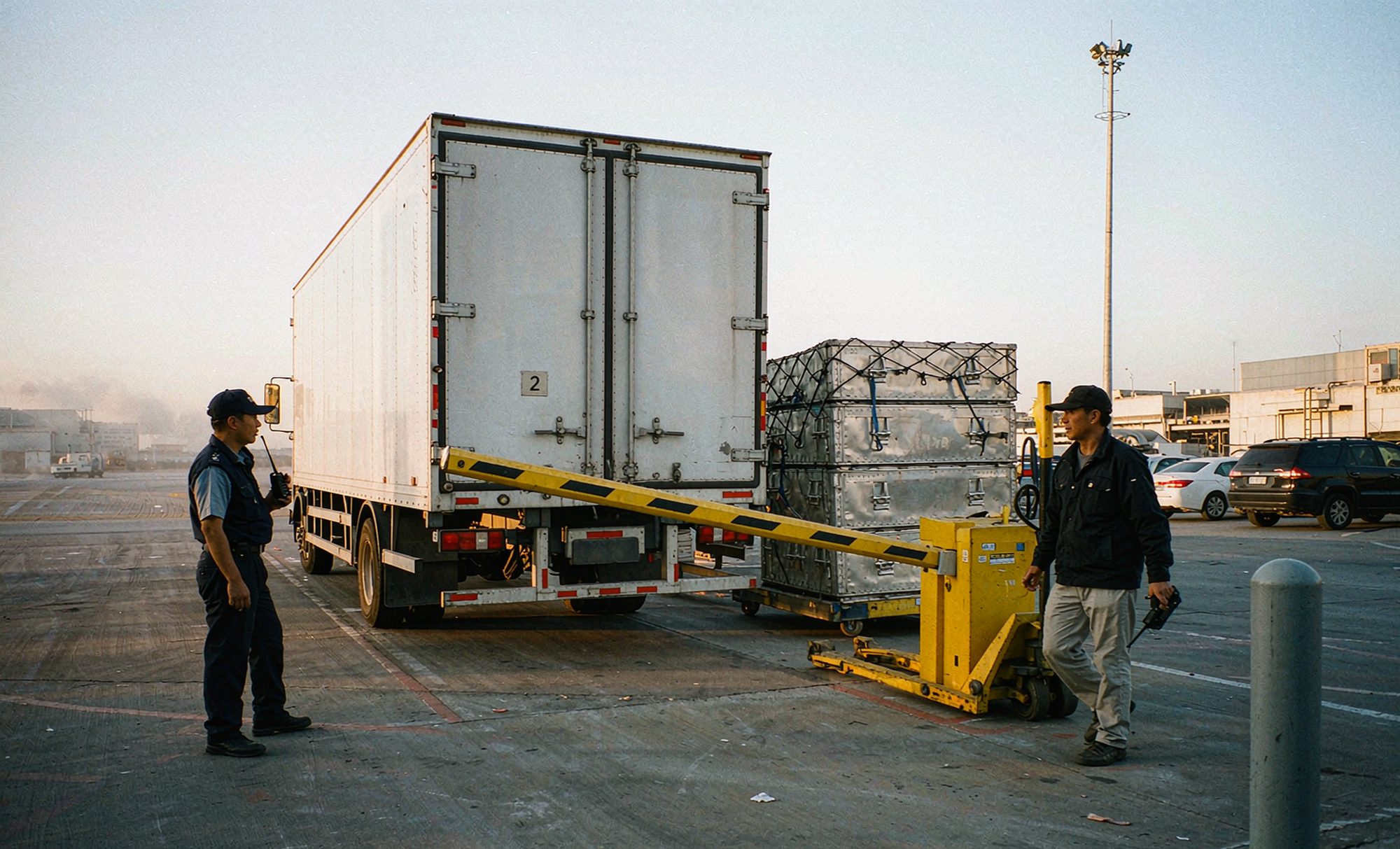
A truck backed up to a gate barrier at a customs zone while an officer checks the seal, with a pallet on a dolly alongside
Bonded truck transit: the seal, the vehicle and the cargo have to agree before the barrier lifts.

Advance filing

With manifest data in hand and cargo ready, file before arrival so the shipment goes straight into inspection or release. The most valuable window when chasing a flight — but everything on the entry must arrive in time or the declaration is voided and refiled.

Bonded truck transit

The mode Ningbo is built around. Clear and seal at the origin end, move the cargo by bonded truck flight or connecting flight, check the seal at the gate, and write the transit off at the far end. Importers use the reverse: arrive at Lishe, seal, and truck to Dalian, Xi'an, Zhengzhou, Chengdu or sixteen other airports. On a recent 30-tonne consignment routed this way, total freight ran about 10% below the direct option.

9610 list release

Parcels declare on a list, release in bulk and are summarised afterwards — cleared on arrival, sorted on site, with CT image analysis pulling suspect items off the line. Built for high-frequency, low-value, multi-category shipments, and entirely dependent on clean three-way data.

Two-stage admission

The standard for perishable imports: a summary declaration clears the cargo for collection once customs has excluded major risk by sampling, and the full declaration follows within the prescribed period. Sales and laboratory testing run in parallel instead of in sequence, which is what makes a 2 a.m. lobster landing workable.

By cargo type

Every Cargo Type Carries Its Own Clearance Logic

Ningbo's air export mix is consumer goods plus light manufacturing: appliances, textiles and apparel, auto parts and molds, solar and storage, stationery. Imports concentrate on perishables. Each one fails differently.

Appliances & small electrics

The Cixi and Yuyao belt supplies most of this. Function, principle and use have to be spelled out, and units with lithium cells or refrigerants need a hazard call before booking. Knock-down kits do not classify like finished units.

Textiles, apparel & footwear

Brand, composition and weave draw the most questions. OEM goods need the authorization chain, an unbranded item cannot be given a brand, and a composition that disagrees with testing is a common rejection.

Auto parts & molds

Brand, model and vehicle compatibility are the review points, and mold weight and material have to be declared honestly. Knock-down sets and aftermarket parts follow different codes.

Solar modules & storage

Storage batteries are dangerous goods: UN38.3, DG packing certificate and MSDS all required. Modules themselves are general cargo, but brackets and inverters are often bundled under one description and have to be split out.

E-commerce parcels

List release depends on three-way data and honest categories. Understated value, vague descriptions and returns mixed with new stock are the three stopping points, with battery and liquid items to be pulled before entry.

Live & chilled seafood

Two things decide it: the designated premises and the quarantine permit. Lobster hinges on oxygen supply and transit time; chilled fish on temperature logs and the health certificate. Permit details must match the shipment.

Fruit — cherries, durian

Check the approved-variety list first: a variety or origin country outside it cannot enter at any price. Then packing-house registration, the phytosanitary certificate and carton marks. A missing registration number stops the batch.

Chemicals & coatings

Composition and CAS number decide the route. Non-hazardous needs an assessment report; hazardous goes through DGR with carrier acceptance confirmed before filing. Vague descriptions on coatings and adhesives are the usual failure.

Three lines that get crossed most often at this airport

Treating the cut-off as the filing deadline. There is one international cargo zone at Lishe, and after release the cargo still has to clear the gate, be accepted, screened and built up. In peak weeks and on night departures those steps take longer than the declaration did.

Routing a commodity to a port that has no premises for it. Lishe holds three perishable approvals: chilled seafood, live aquatic animals and fresh fruit. It does not hold meat or plant propagation material. No amount of broker experience fixes a missing approval — the cargo is redirected or re-exported.

Planning transit cargo like general cargo. Whether a shipment can move as a bonded truck flight depends on the origin formalities, the vehicle's registration and the yard's sealing arrangement, all confirmed in advance. It is not something to negotiate at the gate.

Working scenarios

Six Real Jobs, Six Places Where Clearance Nearly Broke

At Ningbo the failure is rarely "nobody knows how to declare". It is manifest data that arrives late, paper that does not match the goods, or transit and peak-season queues nobody counted into the plan.

Appliances · Freighter01

Two shipments of small appliances, declared as "home appliances"

Cargo & lane
Two consignments from a Cixi manufacturer, 3.6 tonnes in total, booked on a North America freighter, filed under one generic description out of habit.
Where it jammed
The cartons contained cordless vacuums with lithium cells and a small refrigerator using a refrigerant — one a dangerous goods question, the other an ozone-depleting substance question. A generic description failed the element review, and amending meant missing the flight.
What we did
Split the shipment into three codes by model, obtained UN38.3 and a DG packing certificate for the powered units, checked the refrigerant type and its licensing requirement for the refrigerator, and reissued the manifest with the actual piece count so the house bills matched the entries one for one.
How it ended
On the original flight. The step appliance shippers most often skip is describing the model properly — it saves the broker an hour and costs the shipper a flight.
Import · Live seafood02

Live eel from Manila lands at 3 a.m., permit quantity does not match

Cargo & lane
A consignment of live eel arriving from Manila in the small hours, over ten tonnes, for same-day distribution to local and regional markets.
Where it jammed
The import animal quarantine permit stated a round tonnage; the actual landed weight ran slightly over once the boxes were weighed. On paper the goods did not match the permit, and every hour in the zone costs live product.
What we did
Used a summary declaration to move the cargo into cold storage first, explained the overage to the inspection desk and regularized the paperwork to the actual quantity, then completed the full declaration within the prescribed period with the description and unit aligned to the permit.
How it ended
Inspected and collected the same shift, with loss inside tolerance. For live product, the permit quantity needs headroom for overage — that is a supplier conversation, not a broker one.
Transit · Bonded truck03

Direct flight too expensive, so the cargo arrived at Ningbo and trucked to Chengdu

Cargo & lane
Thirty tonnes of electrical fittings and precision equipment, originally booked to fly direct to the destination airport, where rates and capacity were both poor.
Where it jammed
Transit is not a different flight number: it needs an import transit entry at Ningbo, sealing inside the zone, a registered vehicle, and a booked write-off with the destination customs office. Any one of those missing and the cargo sits.
What we did
Filed the import transit entry at Ningbo, sealed the cargo in the yard, bound the vehicle to the cargo at the smart gate, and released the truck flight against a booked departure slot. The transit number, seal number and ETA went to the destination broker in advance so the write-off could start on arrival.
How it ended
About 10% below the direct option on total freight. Transit saves money only when the two ends are planned as one job.
Import · Fruit04

A cherry consignment where the carton mark was incomplete

Cargo & lane
Chilean cherries on a transcontinental freighter into Ningbo, 72 hours from orchard to apron, destined for the East China market.
Where it jammed
The carton marks were missing the orchard and packing-house registration numbers, so the goods did not match the phytosanitary certificate. On a documentary mismatch the batch cannot be released as filed.
What we did
Moved the cargo into cold storage under two-stage admission to protect the cold chain, obtained photographs and a statement from the origin covering the registration numbers, and had the inspection desk reconcile the file. The next order carried the marking requirement in the purchase contract.
How it ended
Collected the following day with no material loss. The most expensive lesson in fruit importing is always printed in small type on the carton.
E-commerce · 961005

Lists released, then the scanner pulled the whole batch

Cargo & lane
Platform consolidation of cross-border parcels leaving on a Europe-bound freighter, mostly household goods and small appliances.
Where it jammed
The lists carried a generic category, but the cartons held cordless power tools and alcohol-based cleaning spray. CT image analysis dropped them off the sorting line, and the rest of the batch queued behind them.
What we did
Pulled every powered and alcohol-based item into a separate channel with its own filing, rewrote the categories down to actual product names, corrected prices to real transaction values, and kept returns out of the batch entirely.
How it ended
The remaining parcels flew as planned and the exceptions went the next day. 9610 throughput comes from clean data before entry.
Peak season · Single runway06

Promotion week, and the cargo jammed between the gate and the build-up

Cargo & lane
Multiple e-commerce consignments released within the same afternoon, all booked on the same night departure, ranging from a few hundred kilos to several tonnes each.
Where it jammed
Releases converged on the same window, so the gate queued, acceptance queued, screening queued and build-up positions ran out. With one runway, a missed slot is the next day, not the next hour.
What we did
Filed everything a day earlier and held the release messages, staged the trucks against the carrier cut-off instead of sending them all at once, and booked build-up positions and screening slots for the priority consignments in advance.
How it ended
All consignments made the flight. In peak season the win is not filing speed — it is cutting the ground segment into controllable pieces.

These are sanitized working scenarios: client names, flight numbers and some piece weights have been replaced or rounded. The sequence of work and the point where each shipment jammed reflect how they were actually handled. Cut-off times and documentary requirements for your terminal and carrier for the week in question always govern.

FAQ

Ningbo Lishe Customs Clearance: 10 Questions Shippers Ask

The questions importers and suppliers raise most often when shipping through Ningbo, answered the way we actually work.

How far in advance should I start export clearance at Ningbo Lishe?
For general cargo, get the documents to the broker three to five working days before departure, which leaves room for classification checks and advance filing. For batteries, chemicals, cold chain and transit shipments, allow five to seven working days: UN38.3 summaries, transport condition assessments and transit booking all take longer. If the flight is tight, file in advance and let the shipment go straight into inspection or release when it reaches the zone.
Which international freighter routes serve Ningbo?
Ten international and regional freighter routes cover East Asia, South Asia, Europe and North America. Miami, Liege and Moscow were opened or restored in 2025, alongside earlier Dallas, Bangkok, Manila and Santiago services. Schedules shift with the market, so confirm the current rotation with the carrier. Where there is no direct flight, the bonded truck and air-to-air transit network is the alternative — that is what it exists for.
Which perishable commodities can be imported at Ningbo Lishe?
Three designated premises are approved: chilled seafood, live aquatic animals and fresh fruit. In practice that covers live lobster, chilled salmon, live eel, cherries, durian, mangosteen, tuna and king crab. Meat and plant propagation material have no designated premises here and must use another port. Fruit also has to be on the approved-variety list for its variety and origin before any booking is worth making.
Once customs releases my cargo, is it guaranteed to fly?
No. Release ends the customs step; the smart gate, terminal acceptance, screening, build-up and carrier weight and balance follow. There is one international cargo zone at Ningbo, and in peak weeks or on night departures those steps take a long time. On a single runway a missed slot costs a day, so we plan around release time plus gate and acceptance time.
What is bonded truck transit, and why does Ningbo use it so much?
It means clearing customs at one airport and moving the cargo under bond by a registered vehicle to another airport, where the transit is written off. Ningbo's truck flights reach twenty domestic airports including Dalian, Xi'an, Zhengzhou and Chengdu, and the airport is a mutual off-airport cargo station with Zhoushan and Yiwu. When a direct flight is expensive or full, arriving or departing via Ningbo and trucking the balance is often cheaper overall — transit imports more than doubled in the first nine months of 2026.
Can cargo from another province leave through Ningbo?
Yes, as transit: complete the export declaration and transit formalities at the origin, then connect at Ningbo to the international flight, where we handle sealing, gate release and uplift. Eligibility depends on the vehicle's registration, the yard's operating conditions and carrier capacity, so it has to be confirmed in advance. The formalities are not complicated; the two ends simply have to be scheduled as one job.
Where do 9610 e-commerce parcels usually get held up?
On three-way consistency and honest categorization. Vague categories, prices well below comparable goods, batteries or alcohol-based items hidden in a general consignment, and returns mixed with new stock all get pulled for manual checks, and the batch queues behind them. The express premises run three CT scanners with image analysis, so non-intrusive inspection is common — but it still depends on clean data. For large, mixed batches we split the filing by category.
Can I export from Ningbo without import-export rights?
Not in your own name. Companies without rights usually export through a licensed foreign trade service provider or an agency arrangement, and the exporter of record, the foreign-exchange receipt and the VAT refund all have to line up. Exporting under someone else's name moves the cargo but forfeits the refund and carries compliance risk.
When do I get the documents for the VAT export refund?
After the cargo has actually departed and the manifest closes, the refund copy of the entry can be returned, generally one to three working days after departure. Amendments, inspections or a late manifest closure push that out, and we tell your finance team the revised date rather than waiting to be asked. The entry, the VAT invoice and the foreign-exchange receipt are checked against each other, because a mismatch at any point delays the refund.
Do you only file customs, or can you arrange the flight and pickup too?
Filing and clearance are the core of what we do, and we also arrange pickup around Ningbo, warehousing, trucking and air booking out of Lishe, so pickup, filing, terminal and uplift sit in one plan. If you already have a nominated forwarder or carrier, we can take the customs and documents scope alone.

Why us

Why Shippers Hand Their Ningbo Clearance to Goodhope

Air freight tolerance is measured in hours. The quote sheet looks the same everywhere; the difference shows up when the manifest is late, when the gate queue is long, and when a live seafood shipment lands at three in the morning.

01

One desk in Shenzhen, people at Ningbo

Booking, documents and client communication run from Shenzhen; our Ningbo team covers the cargo zone, so acceptance, inspection and amendments get answered the same day.

02

A three-way check before anything is filed

Description, pieces, gross weight and destination are matched across manifest, entry and packing list, moving amendment risk upstream instead of paying for it at the counter.

03

Transit planned as one job across two ends

Sealing, gate release, truck departure and the far-end write-off sit on one schedule, so cargo never becomes nobody's responsibility in the middle.

04

Perishables answered on eligibility first

The first question is whether the commodity is on the permitted list, not what the rate is. Quarantine approval, two-stage admission and collection are planned on one sheet.

05

Night departures and peak weeks booked early

Gate windows, build-up positions and screening slots are reserved ahead for promotion season and small-hours arrivals, instead of competing for them on the night.

06

Itemized pricing, actual-cost settlement

Brokerage, inspection, terminal handling, trucking and storage are listed separately; what actually happens is settled against the receipts.

GET IN TOUCH

Ningbo air clearance —
hand us the flight and the paperwork

Tell us the commodity and end use, pieces and weight, destination or origin airport, planned date, and whether you need a VAT refund, a quarantine approval or bonded truck transit. We will come back with the right premises, the document list and a back-planned timeline.

Request a quote
CompanyShenzhen Weihangyunda International Freight Forwarding Co., Ltd.
BrandGoodhope Freight · Goodhope Logistics (China) Limited
Phone / WhatsApp+86 13392162503
Emailsales8015@goodhopefreight.com
CoverageShenzhen (HQ) · Ningbo airport · Shanghai
HoursMon–Sat, 9:00–18:00 (GMT+8)
call us: +86 13392162503