
Navigating Key Regulations for the Rail Transport of Consumer Lithium Batteries in China: A Guide for Global Shippers

As a global logistics expert specializing in international freight forwarding from China, it's crucial to understand the multimodal regulatory landscape, including domestic rail transport. The recent joint guidelines issued by China's National Railway Administration, Ministry of Industry and Information Technology (MIIT), and China State Railway Group Co., Ltd. establish a clear framework for shipping consumer lithium batteries via rail. This knowledge is vital for international buyers sourcing from China, as it impacts upstream logistics, cost, and compliance.
Core Regulatory Shift: Conditional Exemption from Hazardous Goods Classification
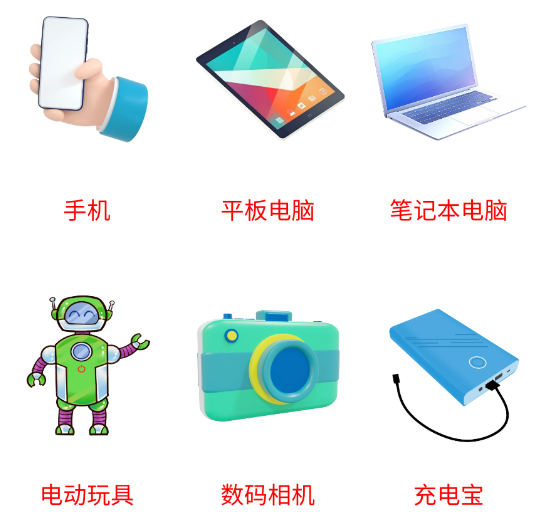
The most significant update for shippers is the formalized pathway for certain consumer lithium batteries to be transported by rail without being classified as fully regulated hazardous goods (Dangerous Goods). This applies to batteries destined for common electronic devices like smartphones, laptops, digital cameras, power banks, and electric toys.
Key Criteria for Exemption (Non-DG Transport):
To qualify for this exemption, batteries must meet the conditions specified in Special Provisions 78 and 79 of the Chinese railway standard "List of Dangerous Goods by Rail" (TB/T 30006-2022):
- Type Approval & Safety Design: Each cell and battery must have passed the UN38.3 tests and incorporate specific safety features (e.g., safety vents, protection against external short circuits).
- Size/Energy Limits: The batteries must fall below defined thresholds:
- Lithium Metal Batteries: Lithium content ≤ 1g per cell; ≤ 2g per battery.
- Lithium-ion Batteries: Watt-hour rating ≤ 20Wh per cell; ≤ 100Wh per battery. Battery packs must be marked with their Wh rating.
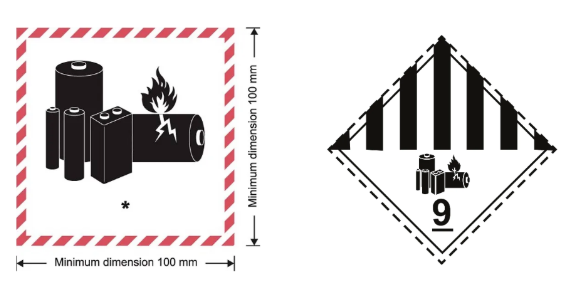
- Packaging & Marking: Even when shipped as non-hazardous, strict packaging rules apply. Batteries must be packed to prevent short circuits and damage, and most packages require the Lithium Battery Mark (per UN Model Regulations). Package weight is generally limited to 30kg.
- Documentation: The shipping documents (e.g., waybill) must include the statement: "Product Name (UN/ID Number) complies with Special Provisions 78/79, not transported as dangerous goods."
Important Prohibitions:
Conversely, Special Provision 72 explicitly prohibits the rail transport of defective, damaged, recalled, waste, or batteries shipped for recycling/disposal.
Critical Pre-Shipment Compliance Steps (Shipper's Responsibility):
For compliant rail shipments, Chinese consignors (your suppliers or forwarders) must arrange and provide:
- UN38.3 Test Report: From a qualified lab, proving the battery type passed all required tests.
- Rail Transport Condition Appraisal Report: Issued by a CMA/CNAS accredited agency. This report must confirm the battery's UN/ID number, its compliance with Special Provisions 78/79, and its eligibility for non-hazardous transport.
- Packaging Qualification Certificate: Proof that the packaging meets the performance tests (drop, stacking) per railway standards (TB/T 2687-2020).
- State of Charge (SOC) Limit: For lithium-ion batteries (UN 3480), the SOC must not exceed 30% of rated capacity at the time of shipment.
Operational & Safety Requirements for Rail Carriers:
Rail operators are mandated to verify all documentation, perform safety inspections, use serviceable equipment, and implement specific handling rules such as a "No Humping" prohibition for wagons loaded with these batteries. They must also have emergency response plans in place.
Implications for International Supply Chains:
- Cost & Efficiency: This exemption can streamline the domestic leg of your supply chain, potentially reducing costs and transit times for moving compliant batteries from Chinese factories to ports for ocean or air export.
- Compliance Verification: International buyers should ensure their suppliers or appointed forwarders in China are fully aware of and adhere to these pre-shipment testing, documentation, and packaging requirements. The Rail Transport Condition Appraisal Report is a critical document specific to Chinese rail regulations.
- Modal Integration: Understanding these rules aids in planning seamless intermodal shipments (e.g., rail-truck to port, rail-air).
Conclusion
China's updated guidelines provide a structured, safety-focused process for the efficient rail transport of common, small-format lithium batteries. For global procurement and logistics teams, the key takeaway is to validate that your supply chain partners in China are executing the mandatory pre-shipment compliance trifecta: UN38.3 testing, official railway appraisal, and certified packaging. This ensures smooth domestic movement, aligns with international dangerous goods transport principles (e.g., UN Model Regulations), and mitigates the risk of delays or rejections by rail carriers.