
Ocean Shipping Guide: Compliant and Safe Transport of "UN 1044 Fire Extinguishers" – Your Cargo's Safety Asset
—— A Focus on Shipping Fire Extinguishers from China
To Our Valued Buyers and Partners,
As a professional international freight forwarder, we understand that the safe transportation of every product is fundamental to a resilient supply chain. Fire extinguishers, as critical firefighting equipment, are common items procured from China. However, because they contain compressed or liquefied gases, they are classified as dangerous goods for international sea transport and must be shipped in strict compliance with the globally recognized International Maritime Dangerous Goods (IMDG) Code.
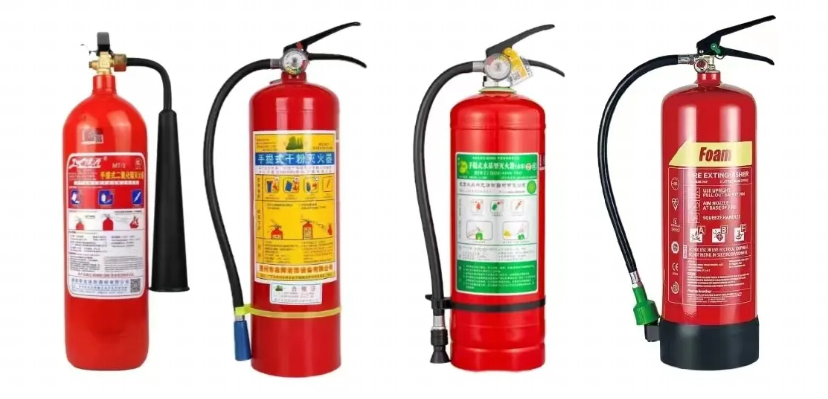
Types of Fire Extinguishers
This article provides a clear guide to the ocean shipping compliance requirements for fire extinguishers, explaining why proper handling is vital for the safety of the entire vessel, its crew, and other cargo.
1. Identity in Ocean Shipping: UN 1044, Class 2.2
Under the IMDG Code, fire extinguishers containing compressed or liquefied gases are uniformly identified as: UN Number 1044, Class 2.2 (Non-flammable, non-toxic gases). This classification acknowledges that while the contents are typically non-flammable and non-toxic, the physical hazard posed by the pressurized container (e.g., pressure release) requires professional management during transport.

Figure: Hazard Labels & Marks (Class 2.2)
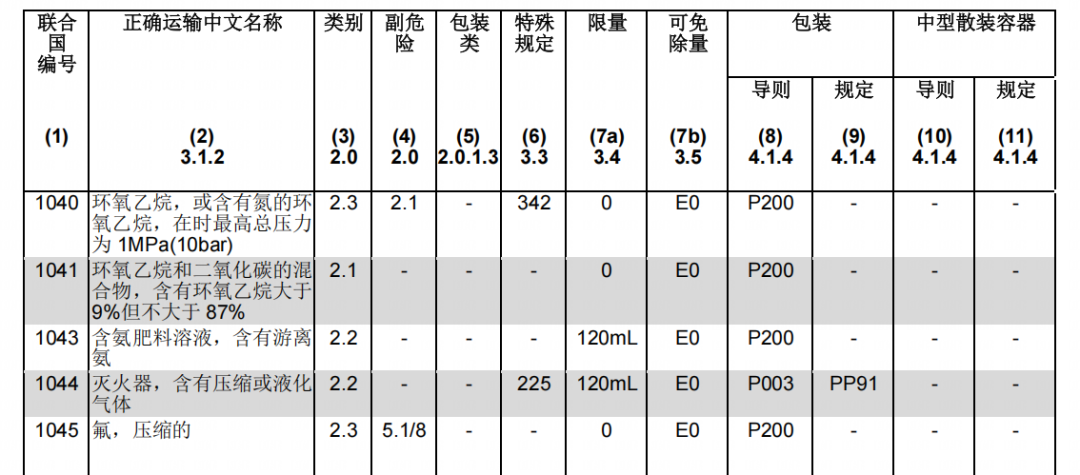
Fire Extinguisher Classification
2. Key Transport Requirements Explained
Packaging and Container Specifications
- All extinguishers must be transported in packaging that meets the design and strength requirements of the IMDG Code to prevent accidental leakage under normal conditions of transport.
- Large fire extinguishers (e.g., wheeled, trolley-mounted, or those handled by forklift) may be transported without an outer package only under stringent, approved conditions (e.g., valve protection, protection against accidental activation) and with competent authority approval.
Wheeled Fire Extinguisher
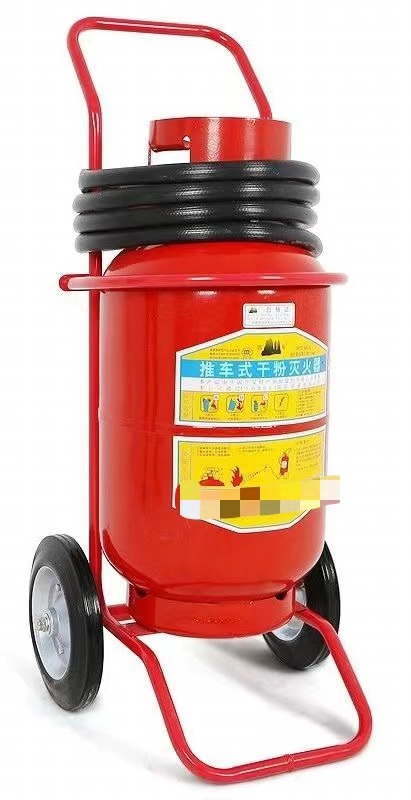
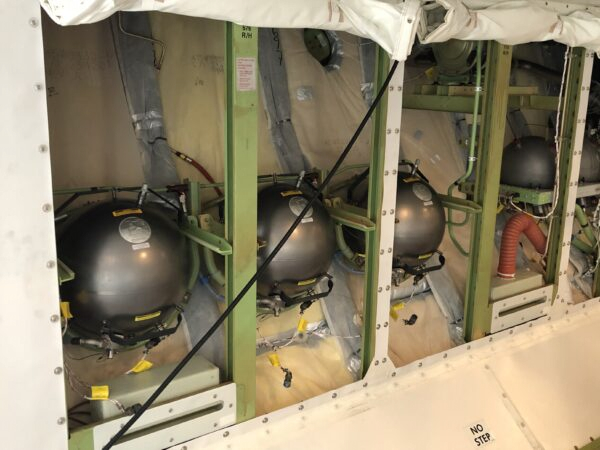
Trolley-Mounted Unit
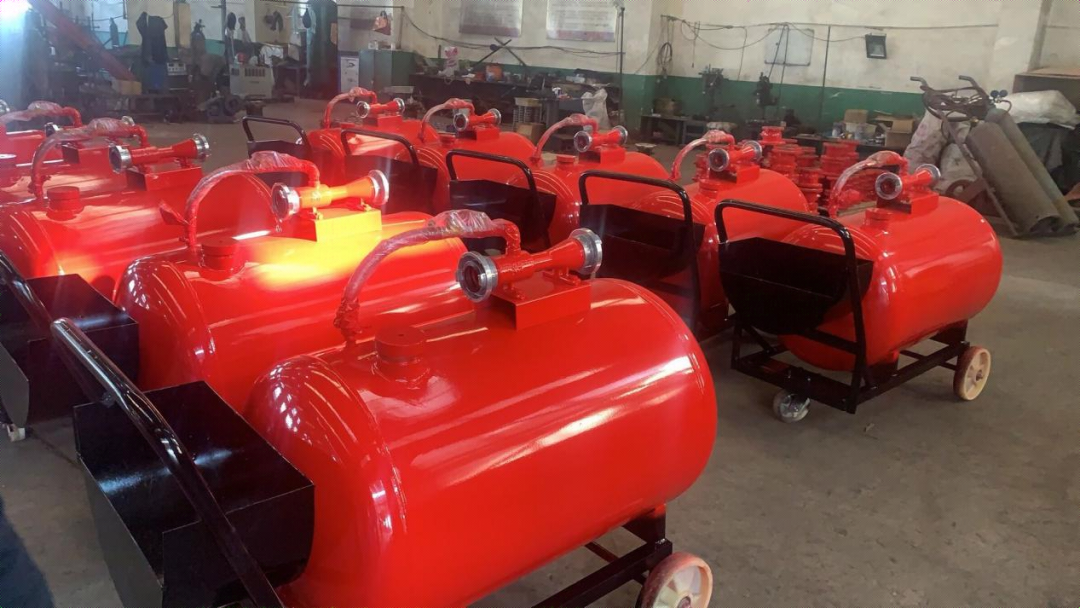
Forklift-Handled Device
- The pressure vessels of all extinguishers must be manufactured, tested, and certified according to the regulations of the country of manufacture or use.
Stowage and Segregation
- Fire extinguishers typically fall under Stowage Category A. This permits stowage both in the cargo hold ('under deck') and on deck, offering flexibility for vessel planning.
- Regarding segregation, UN 1044 fire extinguishers have no specific segregation requirements from other classes of dangerous goods, simplifying stowage planning with compatible cargo.
Emergency Response Contingency
The IMDG Code provides Emergency Response Schedules: Fire (F-C) and Spillage (S-V).
- Fire (Code F-C): The primary action is to use copious quantities of water to cool the fire area and adjacent cargo. Do not extinguish burning leaking gas. Cylinders exposed to fire may rupture; jettison them if possible, or otherwise keep them cooled with water jets from a distance.
- Spillage (Code S-V): Personnel must wear Self-Contained Breathing Apparatus (SCBA) and appropriate protective clothing to prevent gas accumulation in confined spaces. For deck spills, use water spray to disperse gas (avoid direct jet on the leak). For hold spills, ensure vigorous forced ventilation. Do not enter the space without SCBA until the atmosphere is verified safe.
3. Practical Advice for Buyers and Exporters
- Timely Declaration: When booking cargo space, accurately declare the goods as "UN 1044, Fire extinguishers, Class 2.2" to your forwarder or shipping line. Provide the corresponding Material Safety Data Sheet (MSDS) and the Certificate for Use of Dangerous Goods Packaging (a mandatory document for exports from China).
- Professional Handling: Engage warehouses and personnel certified for dangerous goods operations for stuffing, securing, and documentation. Never misdeclare or fail to declare.
- Identify Exceptions: Note that fire extinguishers installed solely to fulfill the functional or safety requirements of vehicles, machinery, or equipment are generally not considered dangerous goods for transport.
Conclusion
Complying with regulations for shipping UN 1044 fire extinguishers is not only a legal obligation but a commitment to the safety of your cargo, the vessel, and the marine environment. Partnering with an experienced international logistics provider ensures end-to-end professional management—from documentation and packaging to declaration and emergency preparedness—guaranteeing that the "safety assets" you procure arrive at their destination safely and on time.