
Technical Briefing: IMDG Code Amendment 42-24 Compliance
As a professional international freight forwarding agent based in Shenzhen, I have outlined the upcoming regulatory changes regarding the transport of dangerous goods. The International Maritime Organization (IMO) has adopted Amendment 42-24 to the International Maritime Dangerous Goods (IMDG) Code, which will become mandatory for all shipments from China starting January 1, 2026.
Below is a professional technical briefing for international buyers and logistics partners to ensure your supply chain remains compliant.
1. Regulatory Timeline
The IMDG Code operates on a biennial revision cycle. Amendment 42-24 entered a voluntary transition period in 2025 and will move into the mandatory enforcement phase on January 1, 2026. All hazardous cargo originating from Chinese ports must adhere to these updated standards to pass customs and carrier acceptance.
2. Key Revisions in Classification
The update introduces significant changes to UN numbers and Proper Shipping Names (PSN), particularly for the evolving battery and electric vehicle (EV) sectors:
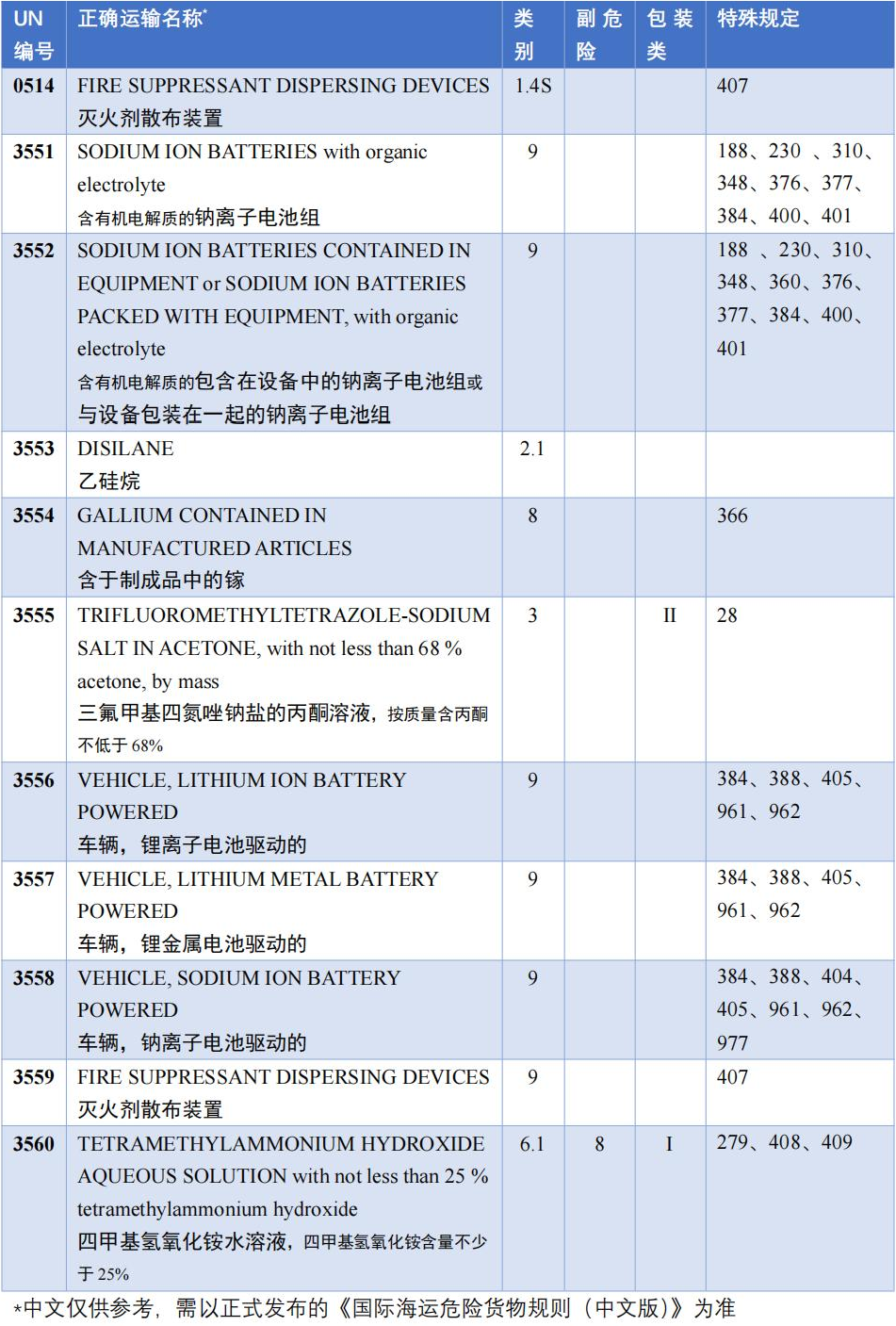
- New UN Entries: Eleven new entries have been added, including specific classifications for Sodium-Ion Batteries (UN 3551, UN 3552), Disilane (UN 3553), and various Battery-Powered Vehicles (UN 3556, UN 3557, UN 3558).
- Reclassification of Electric Vehicles: The previous catch-all classification (UN 3171) has been refined. Vehicles powered by Lithium-ion, Lithium-metal, or Sodium-ion batteries must now be declared under their respective new codes (UN 3556, 3557, or 3558).
- Carbon Exemptions: Testing exemption requirements for "Carbon, animal or vegetable origin" have been clarified to streamline the declaration process for non-hazardous variants.
3. Updated Packing Instructions
Packing requirements have been tightened to enhance maritime safety:
- Battery Consolidations: Under Packing Instruction LP903, large packaging units are now explicitly permitted to hold multiple large-format lithium or sodium-ion batteries.
- Prototype Batteries: Stricter vibration-protection and security measures are now required for "pre-production prototype lithium-ion batteries".
- Vehicle Securing: A new Packing Instruction, P912, has been introduced for UN 3556, 3557, and 3558. Shippers must ensure vehicles are loaded and secured according to these specific mechanical stability requirements.
4. Documentation, Marking, and Stowage
- Certificate Submission: If a shipment is exempted under a Special Provision (SP) that requires certification, that certificate must now be submitted to the carrier alongside the standard shipping instructions.
- Marking and Labeling: For vehicle categories (UN 3166, 3556, 3557, 3558), if the vehicle is fully enclosed or not easily identifiable within a transport unit, the exterior must be marked and labeled with the appropriate dangerous goods placards.
- Stowage and Segregation: Lithium batteries installed in cargo transport units (UN 3536) are now reclassified as Stowage Category D. This change imposes stricter limitations on where these units can be positioned on various vessel types.
Expert Recommendations for Importers
As your logistics partner in China, we recommend auditing your current product classifications and packaging protocols immediately. Failure to align with Amendment 42-24 by the 2026 deadline may result in shipment delays, fines, or carrier rejections.
If you are sourcing lithium batteries or electric vehicles from China, please ensure your suppliers are aware of the new UN 38.3 testing and Dangerous Goods Packaging Performance Certificate requirements tied to these updated UN numbers.