
Key Updates in UN GHS Revision 11 (2025): Critical Implications for International Logistics of Chemicals
Publication Date: September 16, 2025
In the realm of international chemical logistics, compliance with the United Nations' Globally Harmonized System of Classification and Labelling of Chemicals (GHS) is foundational. It governs hazard communication, directly impacting safety data sheets (SDS), packaging labels, and ultimately, the proper declaration and handling of goods for sea and air freight.
The recent publication of GHS Revision 11 (2025) introduces significant changes. To ensure seamless supply chain operations and preempt potential customs or compliance delays, we highlight the most critical updates for international shipping:
1. Expanded Hazard Classes: New "Hazardous by Contributing to Global Warming"
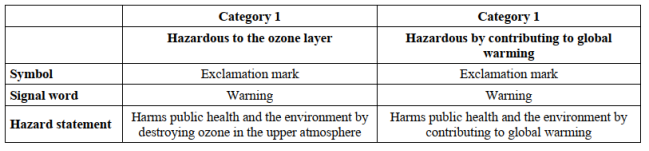
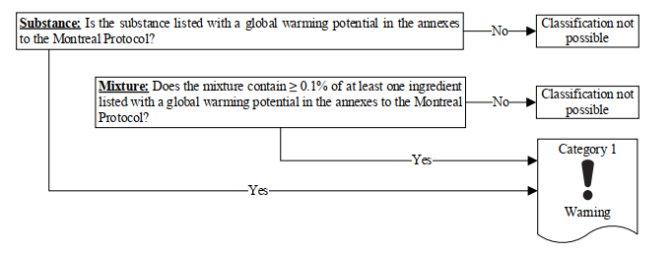
A pivotal change is the formal introduction of the "Global Warming Potential" definition. Chapter 4.2 is renamed from "Hazardous to the Ozone Layer" to "Hazardous to the Atmospheric System," establishing a new distinct hazard class: "Hazardous by contributing to global warming."
Logistics Impact: Substances or mixtures containing at least 0.1% of any controlled substance with a listed global warming potential in the Montreal Protocol annexes (e.g., certain HFCs) must now be classified under this new category. This mandates the inclusion of corresponding pictograms, signal words ("Warning"), and hazard statements on the SDS, transport labels, and dangerous goods declaration documents. All shipping documentation must be updated accordingly.
2. Clarified Scope: "Aerosols" and "Chemicals Under Pressure"
The revision provides crucial clarity on the classification scope of aerosols and chemicals under pressure within the GHS framework.
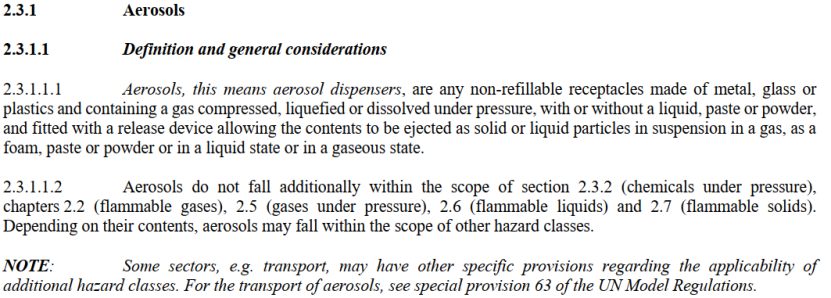
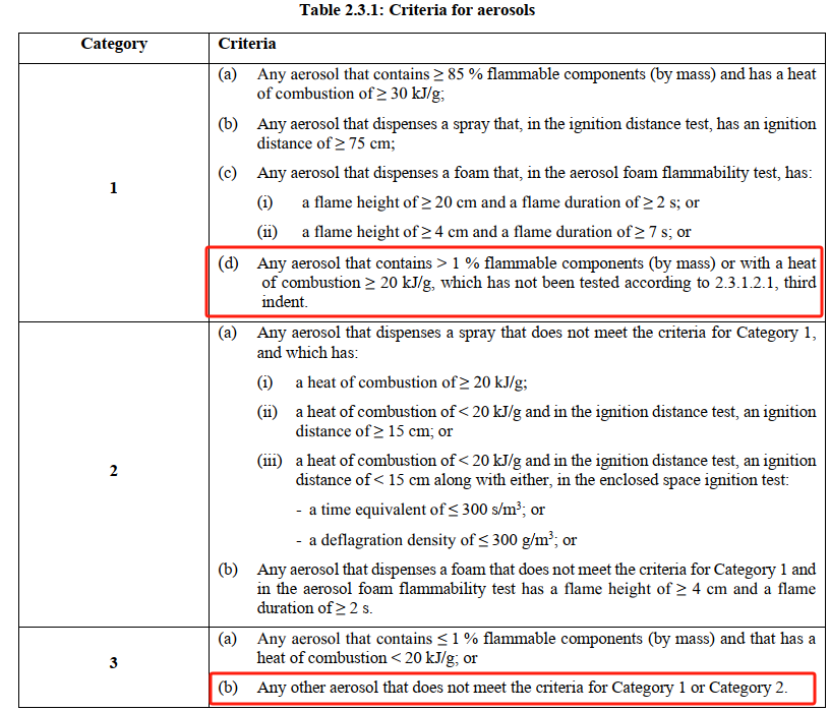
Key Change: It is now explicitly stated that an "aerosol" product does not additionally fall within the GHS hazard classes for flammable gases, gases under pressure, flammable liquids, or flammable solids solely by virtue of being an aerosol. A parallel clarification is made for "chemicals under pressure."
Logistics Impact: This change primarily refines GHS classification for labeling and SDS purposes. It does not automatically alter their transport classification under modal regulations like the IMDG Code or IATA DGR. However, it resolves previous ambiguities. Note that transport regulations may still impose additional requirements based on their own criteria (referenced in new notes for aerosols/chemicals under pressure).
3. Major Updates to SDS and Precautionary Statements (Annex 3)
Revisions to precautionary statements in Annex 3 are critical for operational safety and emergency response.
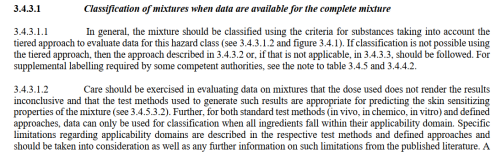
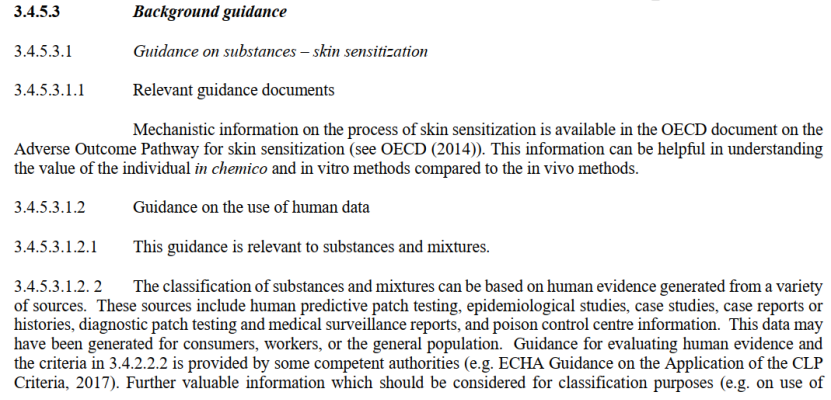
Key Updates:
- New Response Statements P322/P323: For high-hazard categories like acute toxicity, new statements P322 ("Specific treatment is urgent (see SDS)") and P323 ("Specific treatment (see SDS)") are introduced. The core requirement is that manufacturers must provide substance-specific, detailed treatment instructions and any necessary training protocols within the SDS.
- Reassignment of Multiple Statements: Significant rationalization has been applied to statements for acute toxicity (inhalation, dermal, etc.), including reassigning P260 to replace P261 for certain classes and allocating P340/P352 to Category 5. This enhances clarity and logical consistency in protective and first-aid advice.
Operational Impact:
- Documentation Review: Buyers and logistics operators must scrutinize new SDSs compliant with Rev.11 to ensure they contain the detailed treatment information mandated by P322/P323.
- On-site Safety: This information is vital for emergency response during transport, warehousing, or handling. Its absence constitutes a compliance gap and a safety risk.
4. New Guidance on Simple Asphyxiants (Annex 11)
A new section (A11.3) provides guidance for identifying "simple asphyxiants" – gases that are odorless, colorless, and hazardous primarily by displacing oxygen in confined spaces.

Logistics Impact: Raises awareness of this insidious hazard. Operations involving storage or handling in confined spaces (e.g., containers, ship holds) must account for proper labeling and procedures for such goods.
Proactive Steps for Your Supply Chain
- Supplier Engagement: Communicate these updates to your suppliers in China immediately. Request confirmation that product classifications and documentation (SDS, labels) will be updated to Rev.11.
- Documentation Preparedness: Plan to obtain Rev.11-compliant documentation for shipments from 2025 onward. Outdated documents may face delays during customs clearance at destination ports.
- Expert Consultation: For complex mixtures or uncertain classifications, engage a professional agency for GHS classification and transport condition testing to ensure full compliance from origin to port.
Regulatory evolution is a step towards a safer, more standardized global industry. We are committed to monitoring implementation details and providing timely guidance to ensure the resilience and compliance of your supply chain.