
Important Updates for Shipping Battery-Powered Goods by Air: IATA DGR 67th Edition Takes Effect
To Our Valued Customers and Partners,
As a leading international freight forwarder based in Shenzhen, China, staying abreast of the latest global regulations is fundamental to ensuring the safety, compliance, and efficiency of your supply chain. We are writing to inform you of critical updates to the International Air Transport Association Dangerous Goods Regulations (IATA DGR) concerning the transportation of batteries and battery-powered equipment.
Key Change: The 67th Edition is Now in Force
The IATA DGR, the globally recognized standard for shipping dangerous goods by air, is updated annually. As of January 1, 2026, the 67th Edition has replaced the 66th Edition (valid throughout 2025). All air shipments containing lithium batteries, lithium-ion batteries, sodium-ion batteries, or equipment/vehicles powered by them must now comply with the new edition.
What's New for Battery Shipments? A Summary of Key Updates
Based on the newly effective regulations, here are the most significant changes that may impact your shipments from China:
1. Packaging Instructions (PI) – Stricter & Clearer Requirements
- Removal of Transitional SOC Limits: The 2025 transitional provisions for State of Charge (SOC) limits have been removed from PI 952 (vehicles) and PI 966 (lithium-ion batteries packed with equipment). This makes the 30% SOC limit a permanent, non-negotiable requirement for applicable shipments, removing previous conditional allowances.
- Exemption for Large Equipment: A new provision has been added to PI 967 and 970 (batteries contained in equipment). Large equipment shipped unpackaged or on pallets is now exempt from the 3-meter stacking test requirement, simplifying logistics for oversized items.
- Consolidated Requirements Table: The regulations now provide a clearer matrix summarizing SOC and stacking test requirements by UN Number and Packaging Instruction, reducing ambiguity for shippers and forwarders.
2. Marks and Labels – Revised Placement Rules
A new clause (7.1.5.5.4) specifies the placement of the Lithium Battery Handling Mark. When a package requires both this mark and other hazard labels (e.g., for corrosive substances, flammable liquids – but excluding the Class 9 Lithium Battery label), the marks must be placed on the same surface of the package, space permitting. This change standardizes package marking for mixed-hazard shipments.
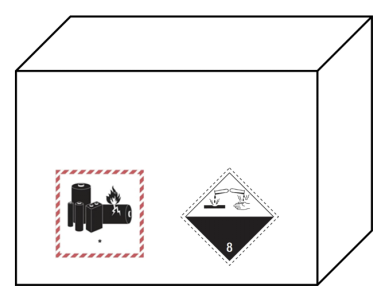
Class 8 – Corrosive Substance
Why This Matters for Your Business
Non-compliance with IATA DGR is not an option. It can lead to:
- Rejection at Origin: Airlines and ground handlers will refuse improperly declared or packaged shipments.
- Costly Delays: Re-packaging, re-labeling, and missed flights disrupt your supply chain.
- Safety Risks & Penalties: Incorrectly shipped batteries pose severe safety risks and can result in significant fines and legal liability.
Our Commitment to You
Our expert team in Shenzhen is fully trained on the 67th Edition DGR. We are here to ensure your battery-powered products—from consumer electronics to electric vehicles—are correctly classified, documented, packaged, and labeled for seamless and compliant air (or ocean) transport from China to your destination.
Contact Us for a pre-shipment consultation to review your specific commodities and ensure a smooth, compliant shipping process.
This advisory is based on the IATA Dangerous Goods Regulations, 67th Edition (2026). The information provided is for guidance purposes. Specific shipment compliance is the responsibility of the shipper, and we recommend consulting the full regulations or your designated dangerous goods expert for final determination.