
Ensuring Compliance & Safety: Key Certifications and Shipping Preparations for Lithium Battery Products Exported from China
Within the global supply chain, sourcing electronic products containing or powered by lithium-ion batteries—such as mobile phones, laptops, and portable power banks—from China is standard practice. However, the international transportation of these products, particularly by air or ocean freight, is strictly governed by Dangerous Goods regulations set forth by the International Air Transport Association (IATA) and the International Maritime Organization (IMO). Lithium batteries are explicitly classified as Class 9 Dangerous Goods due to their potential transportation hazards.
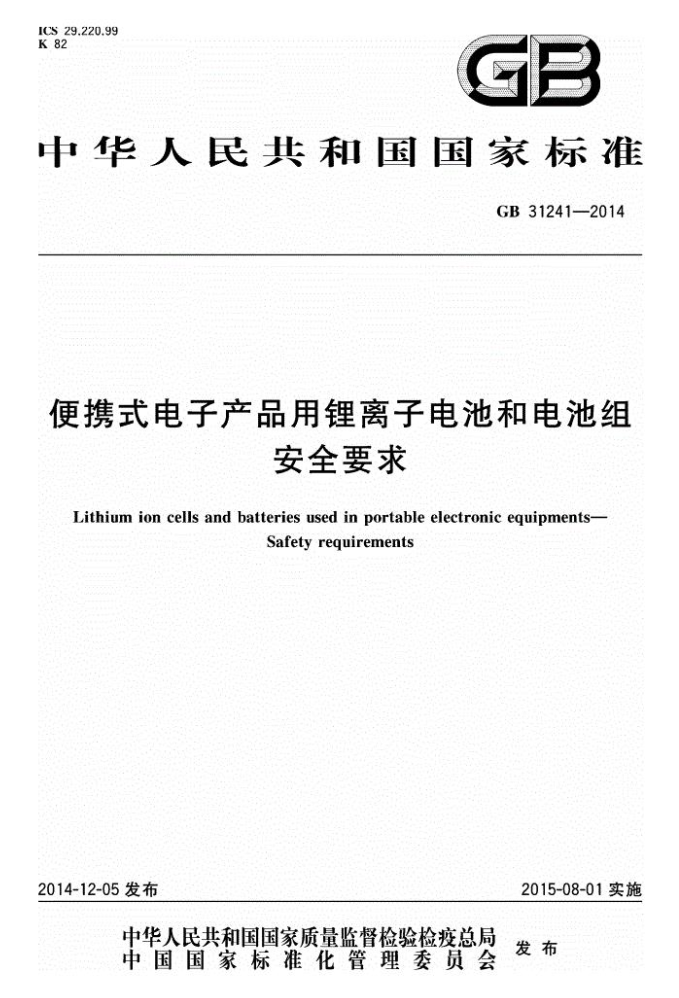
As your logistics partner in China, our core responsibility extends beyond booking cargo space and arranging transportation. It is to ensure your shipments are compliant, safe, and unimpeded throughout the entire journey from the factory floor to the destination port. In this process, a key document obtained by the manufacturer—CQC certification based on the Chinese national standard GB 31241-2014—serves as the cornerstone for smoothly initiating the international shipping logistics chain.
Why is CQC Certification Critical for International Shipping?
Meeting Mandatory Safety Thresholds:
GB 31241-2014 is China's mandatory safety standard for lithium batteries used in portable electronic products. This standard encompasses a series of rigorous tests, such as overcharge, short circuit, thermal abuse, crush, and vibration, designed to ensure battery safety under normal and foreseeable misuse conditions. A valid CQC certificate is the most robust proof that the batteries themselves meet this fundamental safety benchmark.
Supporting the Required UN38.3 Test Summary:
IATA and IMDG Code regulations mandate that all lithium batteries must pass the test series outlined in Section 38.3 of the UN Manual of Tests and Criteria (UN38.3) prior to shipment. It is important to note that the technical requirements of the GB 31241-2014 standard are highly aligned with, and in many aspects more comprehensive than, the UN38.3 tests. Typically, battery products that already possess CQC certification experience a more streamlined process in completing UN38.3 testing and obtaining the required Test Summary, as their safety design has already been validated against a rigorous national authority standard.
Mitigating Customs Clearance and Market Access Risks:
While CQC is a voluntary certification in China, it represents internationally recognized safety principles. Customs authorities, port authorities, and market surveillance agencies in many countries may reference or require evidence of compliance with the safety standards of the country of origin. Possessing CQC certification can significantly reduce the risk of delays, seizures, or even rejection of cargo at export customs or during destination port inspections due to product safety concerns. It lays a solid foundation for subsequent entry into target markets (which may require CE, FCC, etc.).
Implications for Purchasers and Logistics Planning:
- Supplier Qualification: Before issuing a purchase order, it is imperative to verify that your Chinese supplier has obtained valid CQC certificates for the lithium batteries/battery packs used in the products they supply. This is a key indicator for assessing a supplier's quality control capability and risk awareness.
- Shipping Documentation Preparation: When you engage us to arrange shipment, we require the manufacturer to provide a suite of dangerous goods transport documents. Among these, the CQC certificate is a core technical document that demonstrates product safety compliance. It forms an integral part of the complete shipping dossier, alongside the UN38.3 Test Summary, Material Safety Data Sheet (MSDS/SDS), and Declaration of Conformity.
- Mode of Transport Selection: Whether opting for the speed of air freight or the economy of ocean freight, complete and compliant documentation is a prerequisite for booking cargo space. Carriers (airlines and shipping lines) have the right to refuse shipments of lithium batteries with incomplete or non-compliant documentation.
💡 Our Recommendation: When initiating a logistics project for products containing lithium batteries sourced from China, make "verifying CQC certification" a prerequisite step in your supply chain management. This is not only a matter of shipping compliance but also a responsibility towards your brand reputation and end-consumer safety.