
Two Cases of Undeclared Dangerous Goods Seized by Chinese Customs – A Compliance Alert
Case 1: Seizure of Undeclared Dangerous Goods – Electronic Mosquito Swatters
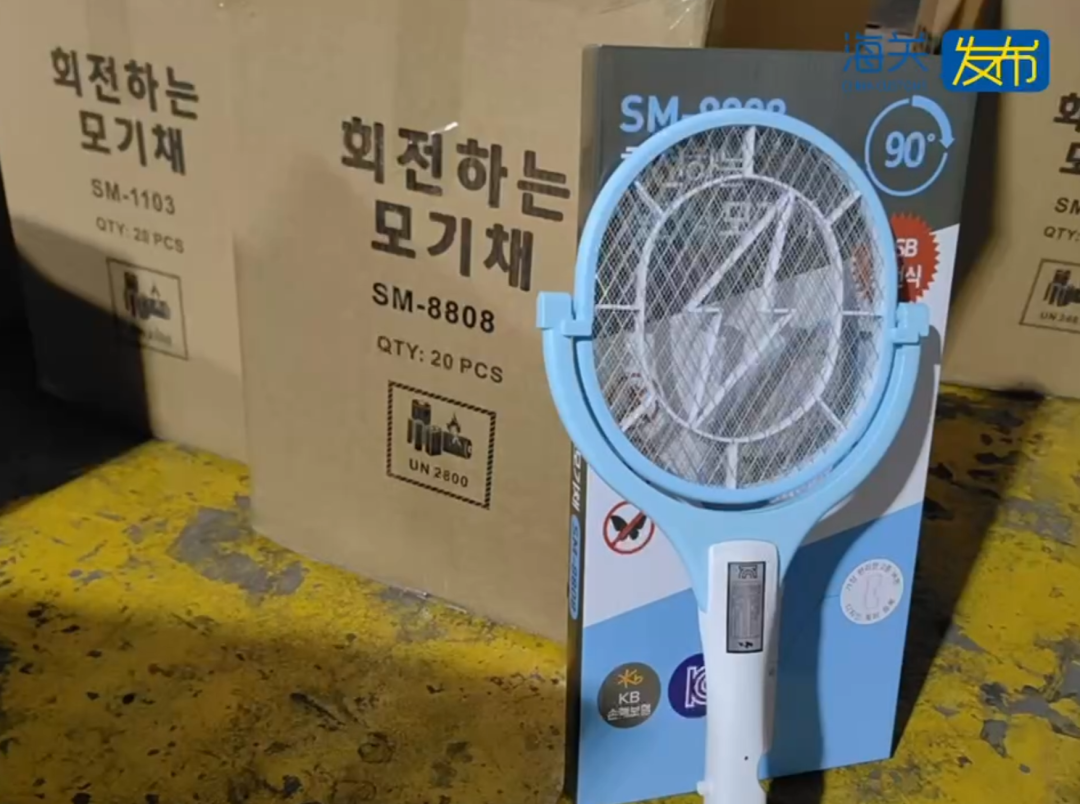
Recently, Guang'ao Customs, under Shantou Customs, during a physical inspection of a shipment declared for export as "electronic mosquito swatters," discovered that the outer packaging was marked with the dangerous goods labels "UN 3481" and "UN 2800," indicating potential hazardous materials.
Upon professional identification, models SM-8808 and SM-9909 within the shipment, totaling 6,500 units, were confirmed as dangerous goods. The case, involving the failure to declare dangerous goods, has been transferred for further legal action.
Key Compliance Point: If mosquito swatters contain built-in lithium batteries or accumulators, it is mandatory to determine if they qualify as dangerous goods and to declare them truthfully. According to relevant regulations, enterprises exporting dangerous goods must make accurate declarations and ensure full compliance with all national regulations concerning the transportation and storage of flammable and explosive hazardous materials.
Case 2: Seizure of Undeclared Dangerous Chemicals – "Processing Agent"
Recently, officers at Dayaowan Customs, while inspecting a batch of goods declared as "processing agent," found that the packages bore a "Class 3 Flammable Liquid" transport label, yet the enterprise had not declared them as dangerous chemicals. The total weight of the seized cargo was 1,920 kilograms.
Professional appraisal confirmed that the goods are chemicals listed in the China Catalog of Hazardous Chemicals (2015), with a United Nations Number (UN No.) of 1993, classifying them as Class 3 Dangerous Goods. Handling, transporting, or storing such goods as general cargo poses significant safety risks.
Regulatory Basis: In accordance with the Commodity Inspection Law of the People's Republic of China and its implementation regulations, as well as the General Administration of Customs Announcement on Issues Concerning the Inspection and Supervision of Import and Export Hazardous Chemicals and Their Packaging, import and export hazardous chemicals listed in the catalog are subject to statutory inspection. The consignors or consignees of import/export hazardous chemicals, or their agents, are obligated to declare them truthfully to Customs.
Key Takeaways for International Buyers & Shippers
- Always verify dangerous goods status: Even common products like mosquito swatters may contain lithium batteries requiring proper declaration under UN 3481 or UN 2800.
- Do not rely on generic descriptions: Terms like "processing agent" do not exempt shippers from accurately declaring hazardous properties.
- Understand mandatory regulations: The China Catalog of Hazardous Chemicals (2015) and relevant customs announcements impose statutory inspection requirements for listed substances.
- Partner with compliant forwarders: Work with experienced logistics providers who ensure proper classification, documentation, and declaration for all shipments.
Quick Reference: Case Summary
| Case | Declared As | Actual Hazard | UN Number | Class | Quantity |
|---|---|---|---|---|---|
| Case 1 | Electronic Mosquito Swatters | Lithium batteries / Accumulators | UN 3481 / UN 2800 | Class 9 / Dangerous Goods | 6,500 units |
| Case 2 | Processing Agent | Flammable Liquid | UN 1993 | Class 3 | 1,920 kg |
Compliance Checklist for Exporters
- ☐ Identify if your product contains lithium batteries (UN 3480, UN 3481, UN 3090, UN 3091)
- ☐ Check if your chemical is listed in the China Catalog of Hazardous Chemicals (2015)
- ☐ Obtain professional classification and identification reports before shipment
- ☐ Ensure proper dangerous goods packaging, marking, and labeling
- ☐ Complete accurate Dangerous Goods Declaration (DGD)
- ☐ Submit all required documentation to Customs and carriers
Disclaimer: This alert is for informational purposes based on published customs enforcement actions. Regulations are subject to change. Always consult with certified dangerous goods professionals for specific cargo requirements.