
⚠️ CRITICAL WARNING
Subject: Severe Risks of Undeclared and Improperly Packed Dangerous Goods in Maritime Transport – Case Study and Expert Analysis
Critical Warning: Severe Risks of Undeclared and Improperly Packed Dangerous Goods in Maritime Transport – Case Study and Expert Analysis
Introduction: A Hidden Threat in Global Supply Chains
As international logistics experts, we are issuing this critical advisory to all stakeholders—especially international buyers sourcing from China and the public involved in global trade. Recent enforcement actions have uncovered egregious violations of dangerous goods regulations that pose severe risks to safety, supply chain integrity, and regulatory compliance. The following analysis, based on a real case from Haikou Port, highlights the catastrophic consequences of undeclared and improperly handled hazardous materials, with a focus on hydrogen peroxide solution.
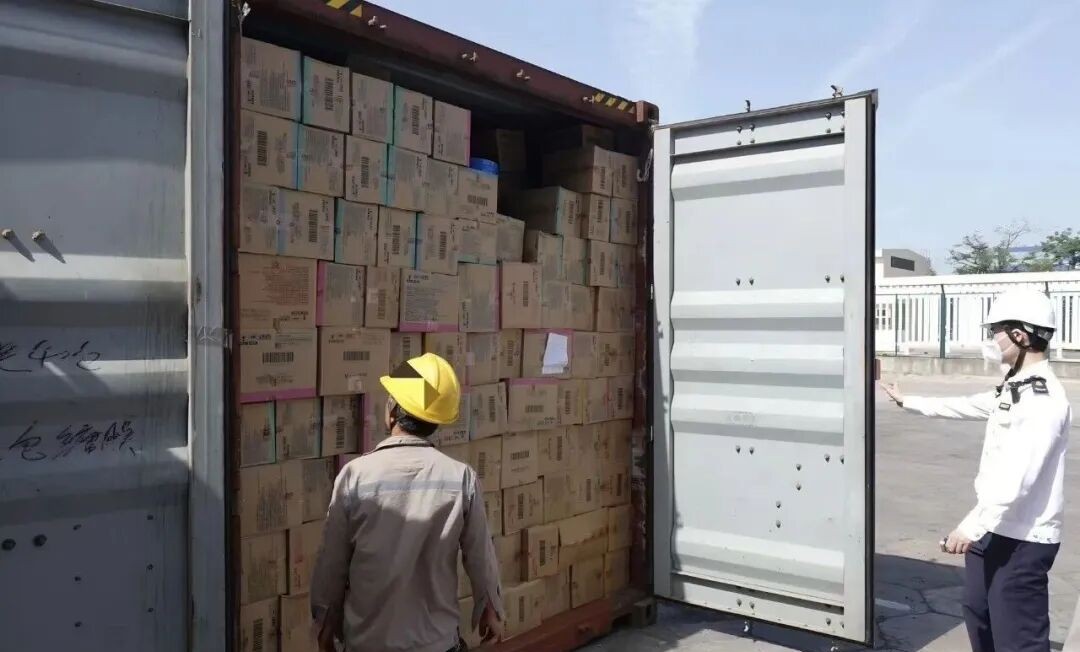
1. Case Study: Undeclared and Commingled Dangerous Goods at Haikou Port
In April 2025, Chinese port authorities at Haikou Port's Xiuying Terminal interdicted a container falsely declared as "sanitary napkins." Upon inspection, only a minimal quantity of sanitary napkins was found at the door, while the rest of the container was loaded with multiple classes of undeclared dangerous goods, including:
- Class 2: Gases
- Class 3: Flammable Liquids
- Class 5.1: Oxidizing Substances & Class 5.2: Organic Peroxides
- Class 6: Toxic and Infectious Substances
- Class 8: Corrosive Substances
- Class 9: Miscellaneous Dangerous Goods & Lithium Batteries
Critical Finding: Approximately 3 metric tons of hydrogen peroxide solution (30–40% concentration) was discovered. This substance is classified as a UN2014 (Class 5.1 Oxidizer with a Class 8 Corrosive subsidiary risk) and is also regulated as a security-sensitive explosive precursor under Chinese public security regulations.
All dangerous goods in this container lacked compliant packaging and were stowed without segregation, amplifying the risk profile exponentially.
2. Hydrogen Peroxide: Regulatory Overview and Hazards
Hydrogen peroxide (H₂O₂), commonly known as "dual-oxygen water," is widely used as a disinfectant. Its classification under the International Maritime Dangerous Goods (IMDG) Code depends on concentration:
- UN2015: 60% H₂O₂, Packing Group (PG) I, requires pressure relief and ≥10% ullage.
- UN2014: 20–60% H₂O₂, PG II, requires vented packaging.
- UN2984: 8–20% H₂O₂, PG II.
- UN3149: Mixtures with peroxyacetic acid.
- Solutions <8% H₂O₂ are not classified as dangerous goods (per IMDG Code Special Provision 65).
Key Regulatory Requirements:
Packaging: Must be oxidation-resistant, corrosion-proof, and vented to prevent pressure buildup from oxygen release during decomposition.
Segregation: As a strong oxidizer (Class 5.1), H₂O₂ must be strictly isolated from flammables, reductants, organic materials, and self-reactive substances. The Haikou case involved direct commingling with incompatible hazards—a severe violation.
In This Case: The hydrogen peroxide was packed in non-compliant industrial drums without pressure relief. Under high ambient temperatures, several drums had already bulged abnormally, indicating imminent risk of rupture.
3. Consequences of Non-Compliance: Quantified Risks
Port authorities commissioned a technical risk assessment, which confirmed:
- Hydrogen peroxide can react violently with other goods in the container (e.g., ethanol, acetonitrile, triethanolamine, sodium hydroxide), leading to thermal runaway, fire, or explosion.
- Modeling indicates that 3 metric tons of H₂O₂ mixed with ethanol could yield a blast equivalent to 1,500 kg of TNT.
- In a port environment, such an event could cause fatalities within a 170-meter radius and severe structural damage beyond 500 meters—potentially encompassing entire terminal operating zones.
Historical Precedents:
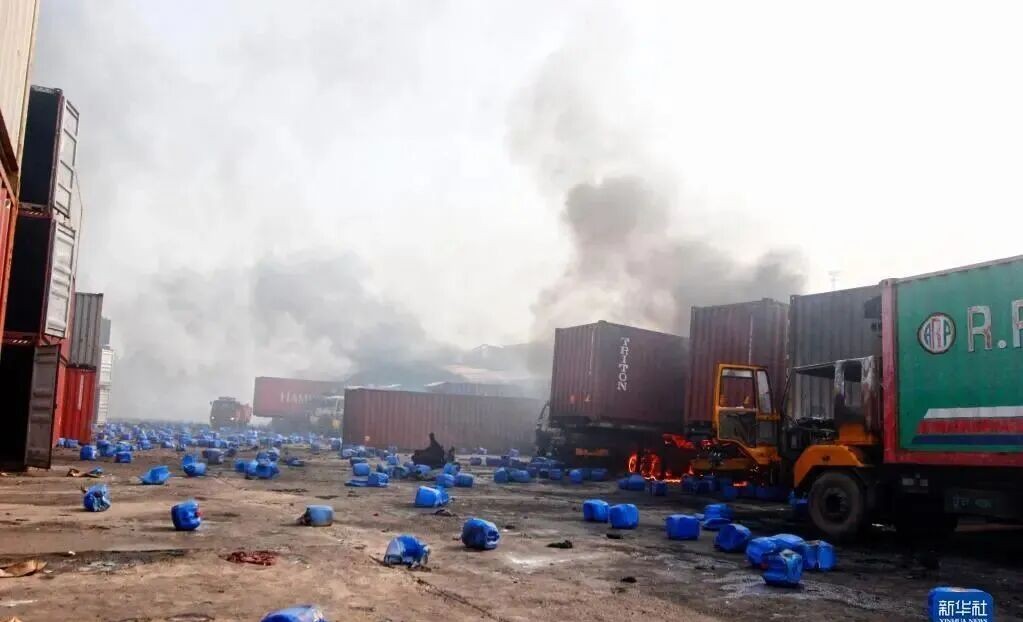
- Chittagong, Bangladesh (2022): A hydrogen peroxide container fire triggered secondary explosions across a container yard, killing 49, injuring 300+, and causing over USD 110 million in losses. The incident affected air quality within a 10-kilometer radius.
- Linyi, China (2013): Explosion caused by packing H₂O₂ in residual hydrochloric acid drums (with Fe³⁺ contamination), resulting in 3 fatalities.
- Liaocheng, China (2023): Accidental transfer of 70% H₂O₂ into a reactor containing catalysts triggered a decomposition explosion, killing 10.
4. Compliance and Best Practices for International Shippers & Buyers
- Verify Declarations: Ensure all goods are truthfully declared, with proper Safety Data Sheets (SDS) and IMDG-compliant documentation.
- Engage Certified Packers: Use only certified dangerous goods packers for hazardous materials.
- Validate Packaging: Confirm that packaging meets IMDG specifications (e.g., vented drums for H₂O₂).
- Implement Segregation: Ensure proper segregation as per IMDG Code segregation rules.
- Conduct Audits: Regularly audit supply chain partners for compliance with dangerous goods regulations.
5. Legal and Operational Implications
The violators in the Haikou case are facing penalties under China's Maritime Traffic Safety Law, with further legal proceedings underway. Non-compliance can result in:
- Severe fines and criminal liability.
- Container seizures, port blacklisting, and supply chain disruptions.
- Catastrophic safety incidents with cross-border liability.
Conclusion: A Shared Responsibility for Safety
The Haikou case is not an isolated incident but a stark reminder of systemic risks in global logistics. For international buyers, due diligence in your supply chain is not merely a regulatory obligation—it is a critical safeguard against operational, financial, and reputational damage.
Proactive Steps:
- Demand Transparency: Insist on complete dangerous goods declarations from suppliers.
- Use Reputable Logistics Partners: Work with freight forwarders and carriers that adhere to IMDG and IATA regulations.
- Educate Your Teams: Ensure procurement and logistics staff are trained in dangerous goods awareness.
Global trade depends on trust and compliance. Let's work together to eliminate undeclared hazardous shipments and protect our ports, people, and planet.