
Ensuring Safety and Compliance: A Guide to Marking, Labeling, and Placarding for Dangerous Goods Shipments
Introduction
At the heart of global supply chains, the transportation of dangerous goods (also known as hazardous materials or hazmat) is a critical yet high-stakes operation. Chemicals, batteries, flammable liquids, and other regulated articles are essential to countless industries, but their inherent hazards—such as flammability, toxicity, corrosivity, or reactivity—demand meticulous handling. A fundamental pillar of safe transport is a visible, unambiguous, and compliant identification system. This system, comprised of marks, labels, and placards, acts as the universal "language" of dangerous goods, communicating vital information to handlers, carriers, and emergency responders at every stage of the logistics journey.
For international shipments, particularly by sea and air, the standards are governed by regulations like the International Maritime Dangerous Goods (IMDG) Code for ocean freight and the International Air Transport Association (IATA) Dangerous Goods Regulations (DGR) for air cargo. Non-compliance is not merely a regulatory issue; it poses significant safety risks, can cause severe supply chain disruptions, and may result in substantial fines, shipment rejection, or delays.
This guide, written from the perspective of logistics compliance specialists, explains the common pitfalls in applying these identifiers and outlines the correct practices to ensure your shipments move safely and smoothly from China to their global ports of entry.
Part 1: Common Non-Compliances and Correct Practices
Based on frequent audit findings and industry observations, here are the most prevalent errors in marking, labeling, and placarding dangerous goods shipments.
1 Package Marking: The Missing "Name Tag"
The Error: A package (e.g., a steel drum containing a flammable liquid) displays only the hazard class label (e.g., a "Flammable Liquid" label) but is missing the required markings: the Proper Shipping Name and the UN number prefixed with "UN".
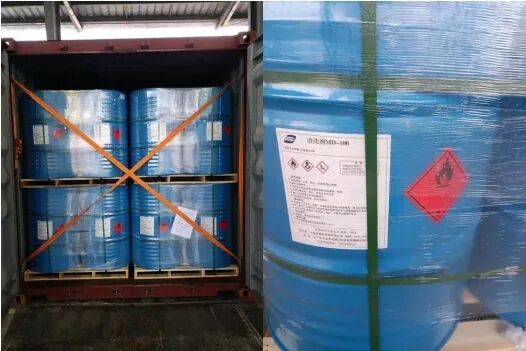
The Rule & Best Practice: According to the IMDG Code and IATA DGR, every package must be durably marked with its full Proper Shipping Name and UN Number (e.g., "UN 1993, Flammable liquid, n.o.s."). This is the package's primary identifier.
- The letters "UN" and the number must be at least 12 mm high for most packages, and 6 mm high for smaller packages (≤30L or 30kg).
- Markings must be legible, durable, and able to withstand at least three months of immersion in seawater. They must contrast sharply with the background color of the package.
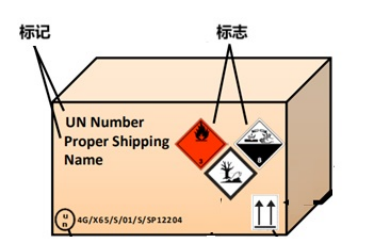
2 Package Labeling: Peeling Off the Warning
The Error: Hazard labels (e.g., for Class 9 Miscellaneous Dangerous Goods or Marine Pollutants) are insecurely attached to packages, such as polyethylene bags, and are prone to falling off.
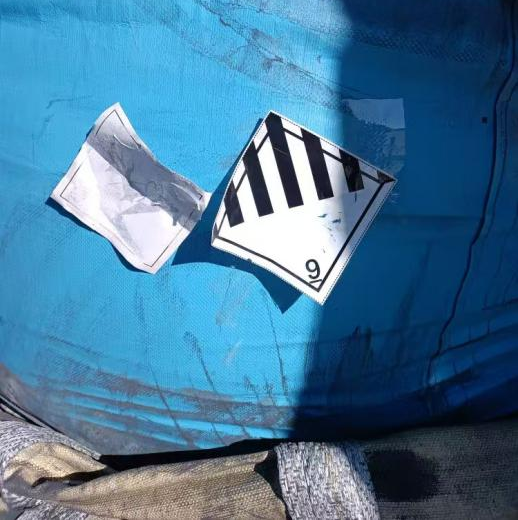
The Rule & Best Practice: Hazard labels (diamond-shaped, minimum 100 x 100 mm) must be affixed securely and adjacent to the Proper Shipping Name marking. The method of affixation must ensure the labels remain legible after at least three months in seawater. Both primary and subsidiary risk labels, if required, must be displayed next to each other.
3 Cargo Transport Unit (CTU) Marking: Undersized Identification
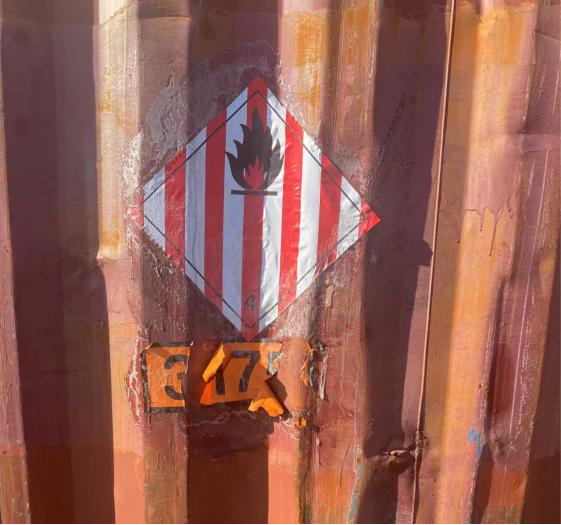
The Error: The orange rectangle displaying the UN number on the side of a container is undersized (e.g., 290 mm wide x 110 mm high).
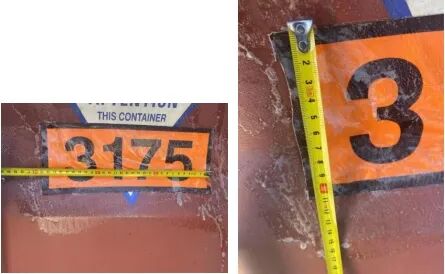
The Rule & Best Practice: For CTUs like containers, the UN number marking must be displayed on an orange rectangular panel with a black border. The minimum dimensions for this panel are 300 mm in width and 120 mm in height. The UN numbers themselves must be in black, at least 65 mm high.
4 CTU Placarding: Incomplete or Missing Visual Warnings
The Error (Missing Placards): A container holding Class 3 Flammable Liquids has hazard placards on its two long sides but is missing them on the doors (ends).
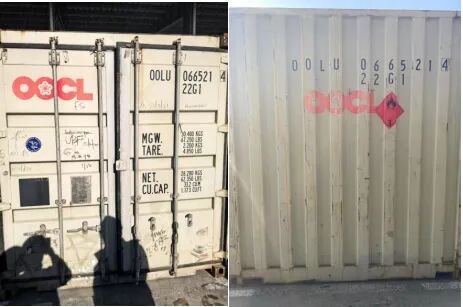
The Rule & Best Practice: Hazard placards, which are larger versions of package labels, must be displayed on the exterior of CTUs. For a freight container, this means one placard on each side and one on each end. This ensures visibility from all angles during handling and storage.
5 Limited Quantity (LQ) Shipments: Misapplication of Marks
The Error: A container holds a mix of fully regulated dangerous goods and goods shipped under the "Limited Quantity" (LQ) exemptions. The container is marked only with the "Limited Quantity" mark, incorrectly replacing the required hazard placards for the fully regulated goods.
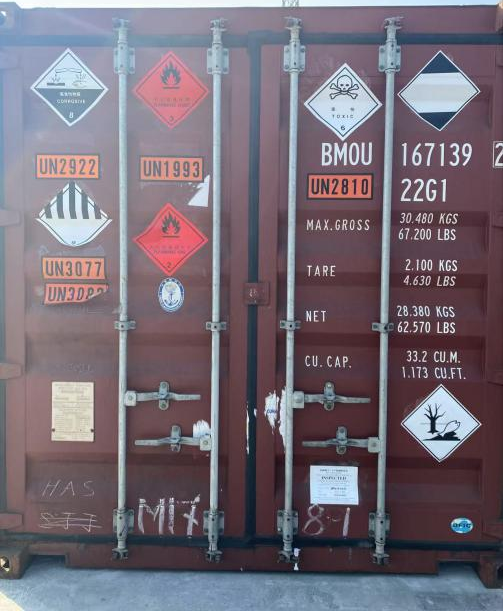
The Rule & Best Practice:
- A CTU containing only LQ dangerous goods may use the LQ mark instead of full placards.
- However, a CTU containing both fully regulated dangerous goods and LQ goods must be fully placarded according to the rules for the non-LQ (fully regulated) goods. The LQ mark is not sufficient in this mixed scenario.
Part 2: Why Correct Identification is Non-Negotiable
Correct marks, labels, and placards are the first and most critical line of defense in dangerous goods logistics. They serve three vital functions:
- Safety: They provide immediate visual warnings to dockworkers, truck drivers, vessel crew, and emergency services about the hazards present, enabling them to take appropriate precautions and response actions.
- Compliance: They are a legal requirement under international and national transport regulations. Non-compliant shipments will be refused by carriers, held at ports, or result in penalties.
- Efficiency: Clear, correct identification prevents mis-handling, delays at terminals, and customs holds, ensuring predictable and reliable transit times for your supply chain.
Conclusion: Partnering for Safe Passage
As an international freight forwarder based in Shenzhen, a global logistics hub, we manage the complexities of dangerous goods documentation, packaging, and declaration daily. Ensuring your products bear the correct, durable, and compliant "identification" is a shared responsibility between the shipper (consignor) and the logistics provider.
We strongly recommend that international buyers and procurement specialists:
- Specify Compliance: Explicitly require your suppliers in China to adhere to IMDG/IATA marking, labeling, and placarding standards as part of your purchase order terms.
- Request Proof: Ask for photos of prepared shipments as a pre-shipment check.
- Work with Experts: Engage with freight forwarders and packaging suppliers who specialize in dangerous goods logistics. They can provide pre-shipment audits and guidance to navigate these complex regulations seamlessly.
Conclusion: By prioritizing these details, we collectively ensure that the vital flow of chemical and hazardous materials across the globe is conducted safely, compliantly, and efficiently, protecting people, property, and the environment.
Critical Reminder for Global Buyers: Before shipping any dangerous goods from China, always verify that your supplier has applied correct UN markings, hazard labels, and placards according to IMDG or IATA regulations. Request pre-shipment photos and consult your freight forwarder to avoid costly delays, fines, or cargo rejection at destination ports.