
Navigating Compliance: Understanding Key Packaging Documents for Dangerous Goods Exports from China
Introduction
For international buyers and partners sourcing chemicals or dangerous goods from China, ensuring safe and compliant transport is paramount. Two critical documents often surface in the shipping process: the Dangerous Goods Packaging Performance Test Report (Test Report) and the Exit-Entry Packaging Performance Inspection Result Note (Result Note). While interrelated, they serve distinct purposes within China's export regulatory framework. A clear understanding of their relationship is essential for smooth logistics operations and supply chain security.
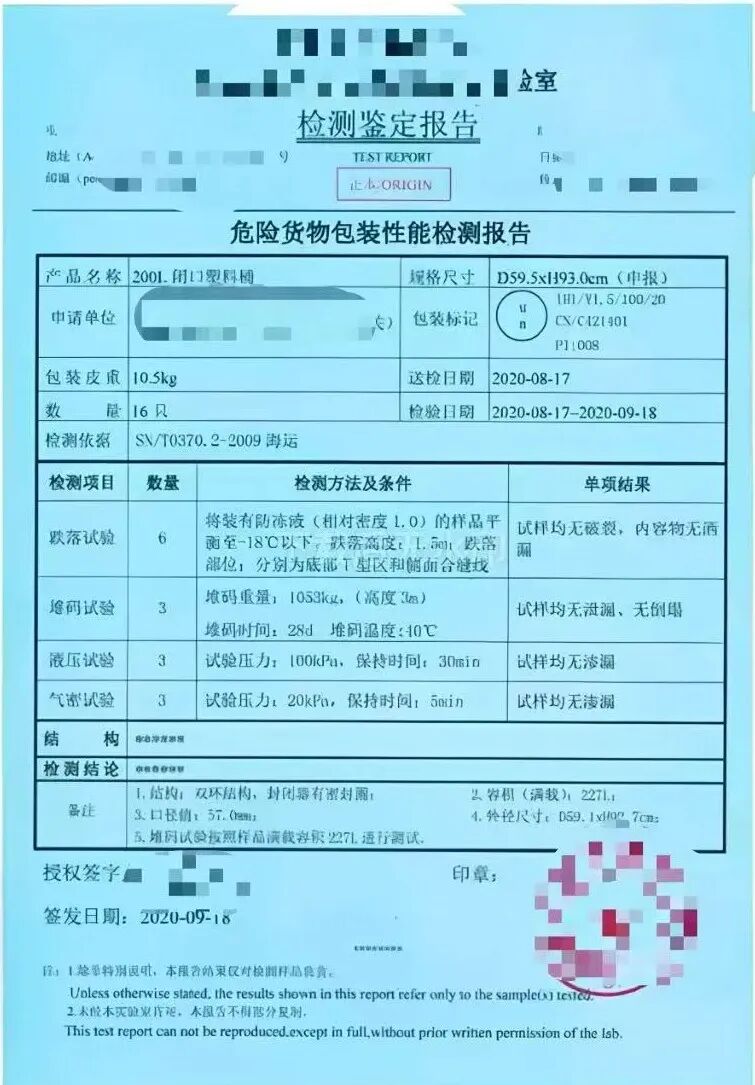
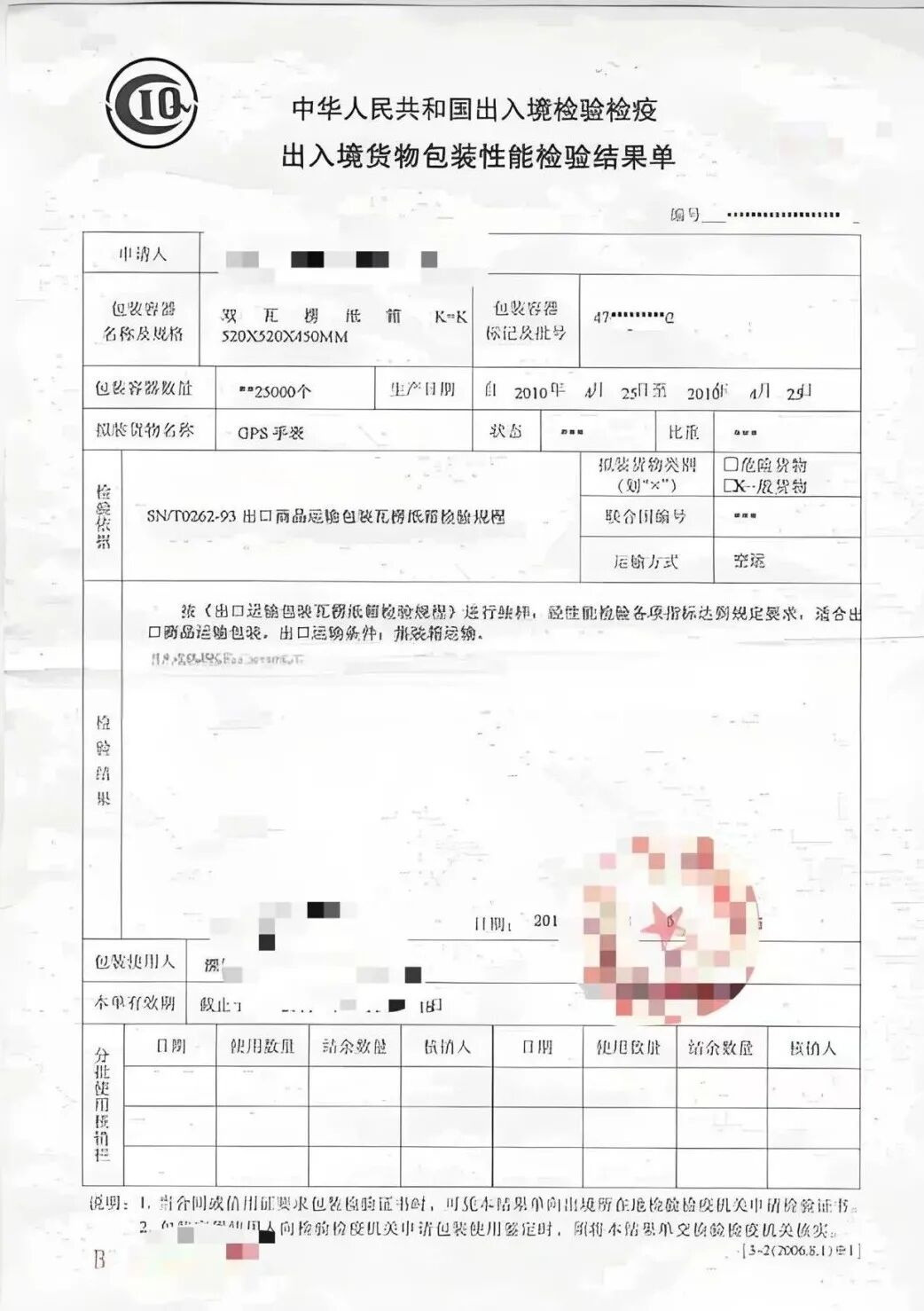
1. Core Connection: The Shared Foundation
Both documents are built upon the same technical bedrock, ensuring consistency in safety standards:
- Unified Standards: Both align with SN/T0370.2-2021 (the Chinese standard for classification and test methods) and the relevant provisions of the IMDG Code (for sea transport) or IATA DGR (for air transport), guaranteeing that packaging performance tests meet international norms.
- Overlapping Key Data: They contain identical core information about the packaging itself, including:
- Packaging type (e.g., drum, box, jerrican)
- UN marking and packaging code
- Packaging dimensions
2. Key Distinctions: A Comparative Analysis
Despite their shared basis, the documents differ significantly in nature, origin, and application.
| Aspect | Dangerous Goods Packaging Performance Test Report | Exit-Entry Packaging Performance Inspection Result Note |
|---|---|---|
| Document Nature | Technical Test Report | Mandatory Administrative Certificate |
| Issuing Authority | Accredited third-party testing laboratory | Chinese Customs or authorized inspection agency |
| Legal Basis | UN Model Regulations (TDG), IMDG Code, IATA DGR | Administrative Measures for Inspection of Export Goods Transport Packaging (Chinese regulation) |
| Content & Detail | Contains full test data, conditions, and itemized results (e.g., drop test height, stacking weight, pressure test results, pass/fail for each test). | Uses a fixed administrative format. Focuses on regulatory elements and a comprehensive conclusion on transport suitability. |
| Primary Function | Provides technical verification that a specific packaging design/type has passed required performance tests. | Serves as the official administrative proof for customs declaration, verifying that the packaging batch is approved for export shipment. |
3. The Compliance Workflow: "Test First, Certify After"
The process integrates technical validation with administrative oversight, forming a robust compliance chain:
- Testing Phase: A manufacturer or exporter engages an accredited lab to test the packaging prototype/sample according to the applicable standards. The lab issues the detailed Test Report.
- Verification & Certification Phase: The exporter submits the Test Report (and other required documents) to the competent inspection authority (e.g., Customs). The authority reviews the data.
- If satisfied, it issues the Result Note for the corresponding production batch.
- Some authorities with in-house testing capabilities may perform tests directly and issue the Result Note.
This "Test-Validate-Certify" sequence ensures that the administrative approval (Result Note) is backed by verifiable technical evidence (Test Report), fulfilling both international safety rules and Chinese export control requirements.
4. Practical Implications for International Buyers
- For Sourcing & Supplier Qualification: When auditing Chinese suppliers of dangerous goods, request to see the Test Report for the specific packaging used. This confirms the packaging's fundamental design compliance.
- For Shipment Execution: The Result Note is the critical document your freight forwarder or supplier will need to book cargo, prepare the Dangerous Goods Declaration, and clear Chinese export customs. Ensure it is valid and matches the shipment details.
- Risk Management: Understanding this dual-document system helps you verify the compliance integrity of your supply chain. The Test Report is the "proof of design," while the Result Note is the "license to ship" a specific batch.
Conclusion
Successfully shipping dangerous goods from China requires navigating both technical and administrative checkpoints. The Dangerous Goods Packaging Performance Test Report and the Exit-Entry Packaging Performance Inspection Result Note are two sides of the same coin: one proves the packaging's inherent safety, the other authorizes its use in export logistics. By distinguishing their roles and ensuring both are in order, international buyers and logistics partners can ensure safer, more reliable, and fully compliant global shipments.
(Note: Specific regulatory procedures may be subject to updates. Always consult with your freight forwarder or the latest official guidelines for the most current requirements.)