
A Freight Forwarder's Guide: The Safe International Transport of Hydrogen Peroxide Solutions
—— A Focus on Shipping Hydrogen Peroxide from China
To Our Valued International Clients and Partners,
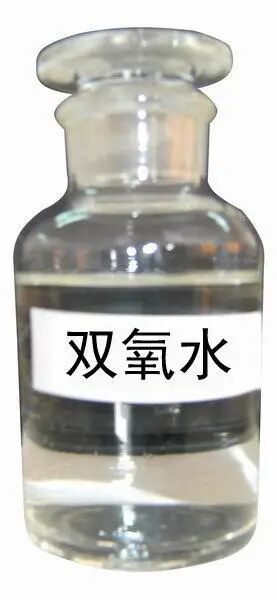
Hydrogen peroxide solution, commonly known as "hydrogen peroxide" or "H₂O₂ solution," is a frequently shipped chemical originating from China, with applications spanning medical, industrial, and consumer sectors. While valued as a disinfectant, it is critical to understand that for international logistics—be it ocean freight or air cargo—most commercial concentrations of hydrogen peroxide are classified and regulated as Dangerous Goods.
As your professional freight forwarder, ensuring safety and regulatory compliance throughout the supply chain is our paramount duty. This document outlines the key hazards, classifications, and operational requirements for shipping hydrogen peroxide, explaining why specialized handling procedures are mandatory.
1. Core Hazard: It's an Oxidizing Liquid, Not Just a Disinfectant
While not flammable itself, hydrogen peroxide's chemical properties pose significant risks during transport:
- Decomposition and Oxidation: It decomposes when exposed to heat, light, or alkaline substances, releasing oxygen gas. This released oxygen can vigorously intensify the combustion of other flammable materials, creating a fire or explosion hazard.
- Corrosivity: Solutions at higher concentrations are corrosive to skin, eyes, and many metals.
Consequently, its primary hazard for transport is classified as "Oxidizing Liquid." This classification is strictly defined and regulated under the UN Model Regulations, the International Maritime Dangerous Goods (IMDG) Code for sea transport, and the International Air Transport Association (IATA) Dangerous Goods Regulations (DGR) for air cargo.

2. The Foundation of Compliance: Accurate Dangerous Goods Classification
Correct classification is the non-negotiable starting point. For hydrogen peroxide solutions, the classification is exclusively determined by the concentration (by weight) of H₂O₂:
| Concentration | Classification | UN Number | Packing Group |
|---|---|---|---|
| Concentration ≥ 60% | Oxidizing Liquid, Category 1 (Highest Hazard) | UN 2015 | PG I |
| Concentration ≥ 20% but < 60% | Oxidizing Liquid, Category 2 | UN 2014 | PG II |
| Concentration ≥ 8% but < 20% | Oxidizing Liquid, Category 3 | UN 2984 | PG III |
| Medical Grade (typically ≤ 3%) | May be exempt from full Dangerous Goods regulations under specific, limited conditions | N/A | N/A |
Each classification corresponds to specific UN Numbers (e.g., UN 2014, UN 2015, UN 2984) and a Packing Group (I, II, or III). This dictates the permissible packaging types (which must be UN-certified), segregation and stowage requirements, and emergency response procedures.
3. Critical Requirements for Safe Transport: Our Shared Responsibilities
To ensure the safety of personnel, assets, and the environment, your cooperation on the following points is essential:
Provide Accurate and Complete Product Information
Prior to shipment booking, you must supply a manufacturer's or supplier's Safety Data Sheet that clearly states the exact concentration (by weight) of hydrogen peroxide, the net quantity, and full composition. This is the legal basis for proper classification and declaration.
Use Certified, Compliant Packaging
The product must be packed in UN-specification packaging that has been tested and certified for its assigned Packing Group. The packaging must be compatible with the product's corrosive and oxidizing nature, securely closed, and capable of withstanding the normal rigors of transport without leakage.
Adhere to Storage and Loading Rules
- Store and transport away from heat sources and direct sunlight.
- Strictly prohibit co-loading or stowage adjacent to incompatible materials such as organic substances, flammable liquids, or reducing agents.
- Ensure containers or cargo holds are well-ventilated and properly placarded with danger labels.
Professional Documentation and Marking/Labeling
We will prepare the full suite of dangerous goods transport documents, including the Dangerous Goods Declaration, packaging certification, and Shipper's Declaration for Dangerous Goods. Every package must be correctly marked and labeled with the proper UN number, proper shipping name, hazard labels (oxidizer, corrosive), and other required information.
Conclusion
The safe and compliant transport of chemicals is a shared responsibility. The utility of hydrogen peroxide is matched by its potential risks in the logistics chain. By recognizing its core hazard as an oxidizing liquid and rigorously adhering to the concentration-based classification and handling rules, we can jointly ensure a secure and reliable international supply chain.
If you are planning to ship commodities containing hydrogen peroxide, please engage with our dedicated Dangerous Goods specialists at the earliest inquiry or booking stage. We are here to provide expert pre-shipment guidance and an end-to-end compliant logistics solution.