
A Professional Guide to the Transportation of Lighters as Dangerous Goods in International Logistics (Sea & Air)
—— A Focus on Shipping Lighters from China
Introduction
For international buyers sourcing products from China, particularly those involving commodities like lighters, a clear understanding of dangerous goods regulations is paramount for safe, compliant, and efficient logistics. Lighters, due to their flammable contents or battery components, are unequivocally classified as dangerous goods for transport. Non-compliance with international codes can lead to severe consequences, including shipment rejection, substantial fines, delays, and serious safety incidents.
This guide, crafted from the perspective of international logistics specialists, provides a comprehensive overview of classifying, packaging, and transporting lighters via sea and air freight. It synthesizes key international regulations, including the UN Model Regulations (TDG), the International Maritime Dangerous Goods (IMDG) Code, and the International Air Transport Association (IATA) Dangerous Goods Regulations (DGR), to offer clear guidance for global supply chain stakeholders.
Part 1: Core Classification & Packaging Requirements for Lighters
The classification of lighters for transport is based on their fuel type, pressure characteristics, and power source. Correct classification dictates the UN Number, Proper Shipping Name, and specific packaging instructions that must be followed.
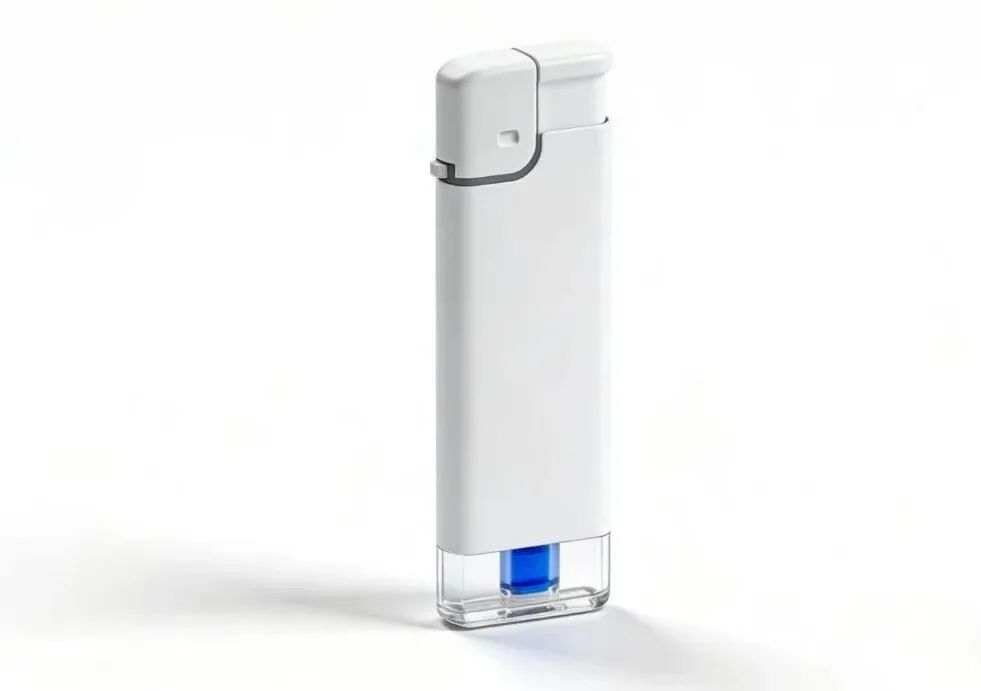
1. Gas Lighters (Commonly UN 1057)
Classification: Contains liquefied butane or similar gases under pressure. Classified under Class 2.1 (Flammable Gases). They must comply with Special Provision SP 201 of the IMDG Code/IATA DGR, which sets strict construction, testing, and filling criteria for the lighter itself.
Packaging Group & Requirements: Typically assigned to Packing Group II (Medium Danger). Packaging must be specially designed to withstand the internal pressure and prevent accidental release. Key requirements include:
- Each lighter must be individually secured to prevent activation or leakage.
- Inner packaging or cushioning must prevent movement and protect the ignition device.
- Outer packaging must be strong, resistant to pressure changes, and clearly marked.
2. Liquid Fuel (e.g., Zippo-type) Lighters
Important Distinction: The lighter itself is often transported without fuel and may be treated as non-regulated. However, the liquid fuel (e.g., lighter fluid) is always regulated.
Fuel Classification: The fuel is classified based on its flash point, typically under Class 3 (Flammable Liquids), often Packing Group II or III.
Packaging for Fuel: Must be in UN-approved packaging that is leak-proof and resistant to the liquid. For small volumes, "Limited Quantity" exemptions may apply, simplifying packaging and labeling but requiring proper carton marking.
3. Battery-Powered (Lithium Battery) Lighters
Classification: The hazard stems from the lithium battery. They are classified under:
- UN 3481: Lithium ion battery contained in equipment.
- UN 3091: Lithium metal battery contained in equipment.
Packaging Group & Requirements: The packaging performance is tied to the battery. Packaging must be designed to prevent short circuits and damage:
- Each lighter must be packed to prevent accidental activation.
- Batteries must be protected against short circuit (e.g., by insulating terminals).
- Strong outer packaging that can withstand the shocks of transport is required.
- Strict state-of-charge limits for lithium-ion batteries (often not exceeding 30% for air transport) apply.
Part 2: Key Compliance Considerations for Sea & Air Transport
Sea Freight (Governed by IMDG Code)
- Accurate Declaration: The Shipper's Declaration for Dangerous Goods is mandatory and must be perfectly accurate, stating the correct UN number, class, packing group, and proper shipping name (e.g., "Lighters, cigarette").
- Packaging & Marking: All packages must be UN-certified, correctly assembled, and marked with the proper labels (hazard labels, UN number). Gross weight per package must be within the tested limit.
- Container Stowage: Lighters have specific stowage categories (e.g., away from sources of heat, "protected from sources of ignition"). Class 2.1 gases and Class 3 liquids often have segregation requirements from other dangerous classes (like oxidizers). The container must be properly placarded.
- Documentation: The Container/Vehicle Packing Certificate is required, confirming the container was packed clean, dry, and according to rules. The dangerous goods information must also be reflected on the Bill of Lading.
Air Freight (Governed by IATA DGR)
- Stricter Rules: Air transport regulations are generally more restrictive than sea freight. Many types of lighters, especially gas lighters, are forbidden on passenger aircraft and restricted to cargo aircraft only. Some may be completely forbidden.
- Operator Variations: Airline Variations are critical. Each airline publishes its own specific rules (IATA Variations) which can be more restrictive than the general DGR. Prior approval from the airline is almost always required before booking and tendering a shipment.
- Packaging & Quantity Limits: Packaging must meet IATA-specified performance standards. There are often very low net quantity per package limits for dangerous goods on aircraft. Lithium battery lighters must comply with the detailed packaging instructions (e.g., Packing Instruction 965 or 968).
- Documentation: The Shipper's Declaration for Air Transport is a specialized, multi-copy form that must be completed flawlessly. Crew and loadmaster notifications are also part of the process.
Conclusion and Best Practices for Buyers
- Supplier Qualification: Work with suppliers who have proven expertise in dangerous goods compliance. They should provide the necessary test reports (e.g., UN 38.3 for batteries, SP 201 test report for gas lighters).
- Early Engagement: Involve your freight forwarder or logistics provider at the procurement stage, not after production. Provide complete product specifications.
- Choose the Right Partner: Select a freight forwarder with certified Dangerous Goods Safety Advisors (DGSA) and proven experience in handling Class 2, Class 3, and lithium battery shipments from China.
- Complete Documentation: Ensure all required documentation—test reports, declarations, MSDS—is complete, accurate, and prepared well in advance of cargo arrival at the port or airport.
Transporting lighters is a highly regulated but manageable process. Success hinges on precise classification, strict adherence to packaging codes, and partnering with knowledgeable logistics experts. By understanding these fundamentals, international buyers can mitigate risks, ensure regulatory compliance, and maintain a smooth supply chain for these common yet potentially hazardous items.