
Limited Quantity Guide: Streamlining Dangerous Goods Shipments
For global buyers sourcing chemical products, raw materials, laboratory reagents, or consumer goods containing hazardous components from China, navigating international transport regulations is critical. Many such items are classified as "Dangerous Goods" (DG), subjecting their air or sea transport to stringent rules under the International Air Transport Association Dangerous Goods Regulations (IATA DGR) and the International Maritime Dangerous Goods Code (IMDG Code). This often entails complex packaging, documentation, declarations, and higher freight costs.
However, a frequently underutilized solution exists for smaller shipment volumes: transport under "Limited Quantity" (LQ) provisions. Understanding and applying LQ rules can significantly simplify logistics, reduce costs, and improve supply chain efficiency for eligible products.
What is "Limited Quantity" Transport?
"Limited Quantity" is a recognized exemption mechanism built into the UN Model Regulations and adopted by global transport modal rules (IATA, IMDG, etc.). Its core principle is risk-based: when dangerous goods are transported in very small, strictly limited quantities within packaging that meets specific high-performance standards, the overall hazard during transport is sufficiently reduced. Consequently, shipments meeting LQ criteria are exempt from many of the more stringent technical requirements applied to fully regulated DG shipments (e.g., the mandatory use of UN-certified specification packaging, certain labeling, and documentation), making the process more akin to shipping general cargo.
Key Benefits for Shippers and Buyers:
- Cost Reduction: Potentially lower packaging costs and the application of more favorable "Limited Quantity" freight rates.
- Process Simplification: Reduced declaration and documentation requirements lead to greater operational flexibility.
- Enhanced Efficiency: Facilitates faster turnaround for small-batch, multi-consignment orders.
Is Your Product Eligible for LQ Shipment?
Crucially, LQ is not permitted for all dangerous goods. Eligibility is determined by the specific UN Number and Packing Group (PG) of the substance. For instance, under IATA DGR (Air Transport), common categories permitted for LQ transport include:
- Flammable Liquids (Class 3) of Packing Group II and III.
- Solids such as Flammable Solids (Division 4.1), Oxidizers (Division 5.1), Toxic Substances (Division 6.1), and Corrosives (Class 8) of Packing Group II and III.
- Specific items in Class 2, Class 9, and others as listed.
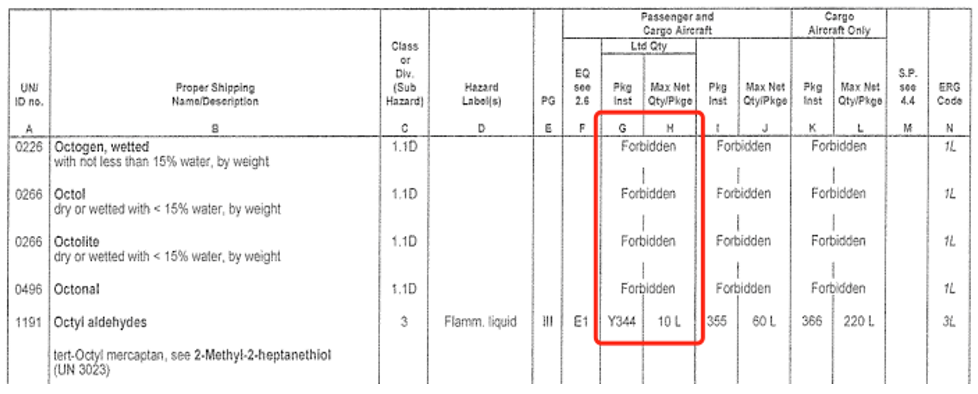
The authoritative method for determination is to consult the Dangerous Goods List in Section 4.2 of the IATA DGR (or the corresponding list in the IMDG Code for sea transport) using the product's UN Number. If the "Ltd Qty" column for that entry specifies a packaging instruction code (e.g., Y304) and a maximum net quantity per inner package (e.g., 1 L), the product is eligible. An entry marked "Forbidden" prohibits LQ transport.
Core Compliance Requirements for LQ Shipments:
Stringent Packaging Specifications:
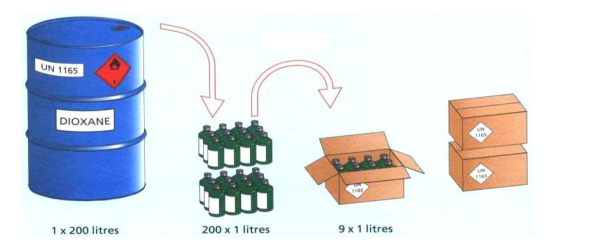
Combination packaging is mandatory (inner receptacles inside a robust outer packaging). Single packaging is not allowed. Inner receptacles have strict maximum capacity limits (e.g., typically not exceeding 1 liter for liquids or 1 kg for solids per inner receptacle). Multiple inner receptacles must be securely packed within a strong, leak-proof outer packaging with sufficient cushioning and absorbent material. Packaging must conform precisely to the relevant "Y-prefix" packaging instruction (e.g., Y304) specified in the Dangerous Goods List.
Mandatory Package Marking:
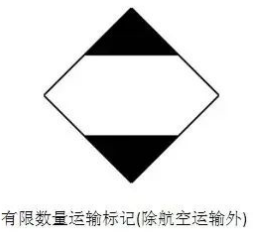
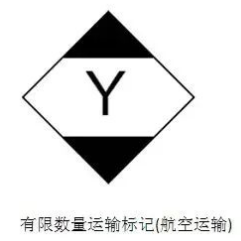
The outer package must display a diamond-shaped "Limited Quantity" mark (black border with a white or contrasting background). This mark must be durable, clearly visible, and of a minimum size (usually 100mm x 100mm, reducible to 100mm x 100mm on small packages). It is the key identifier for carriers and inspectors.
Non-Exempt Performance Testing:
Even under LQ provisions, the completed package must pass rigorous performance tests to prove it can withstand distribution hazards:
- Drop Test: The package must survive a drop from 1.2 meters onto a hard, unyielding surface without leakage from inner receptacles or damage to the outer packaging that would compromise safety.
- Stacking Test: The package must support an identical stack of packages to a height of 3 meters for 24 hours without failure that would allow leakage or impair package strength.
Practical Advice for International Buyers:
- Proactive Communication: Provide the product's Safety Data Sheet (SDS) to your freight forwarder early in the process. Jointly verify the UN Number and confirm LQ eligibility for your intended mode of transport (air/sea).
- Select Compliant Partners: Ensure your Chinese supplier or logistics provider has proven expertise in preparing fully compliant LQ shipments—correct packaging, marking, and testing. Packaging integrity is the foundation of a compliant shipment.
- Request Verification: Consider requiring documentation, such as a Package Test Report from a competent testing laboratory, to verify that the packaging system has passed the required performance tests.