
Professional Article: Hazardous Goods Shipping - Is Your Liquid Density Truly "Compliant"? A Deep Dive Beyond the Package Marking
In the international ocean transport of chemicals and hazardous materials, compliance with the International Maritime Dangerous Goods (IMDG) Code is fundamental for successful export. A prevalent misconception, however, is that the actual density of a packed liquid must never exceed the maximum allowable density marked on the packaging. This article, based on a real case and a detailed analysis of IMDG Code technical provisions, clarifies this critical issue to help shippers and consignors avoid shipment delays and costs arising from regulatory misunderstandings.
Case in Point: When "Exceeding Density" Halts Export
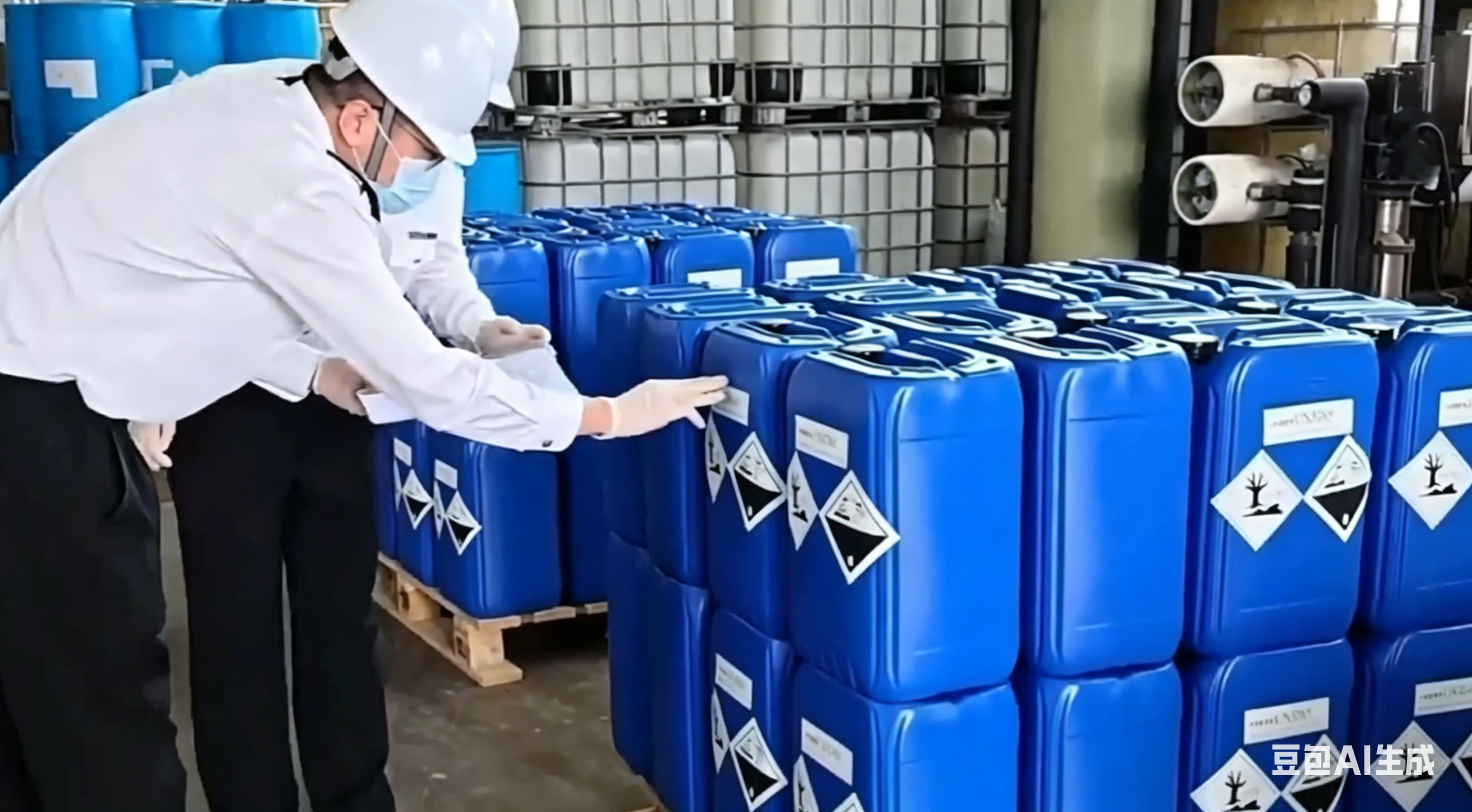
Recently, during a packaging use inspection for a declared export shipment of "Stannous Methanesulfonate, 50%" (UN 3265, Class 8 Corrosive liquid, Packing Group II), Chinese customs authorities identified an actual product density of 1.55 g/cm³. Although the product's Packing Group (PG II) matched the performance level "Y" marked on the tight-head plastic drums (suitable for PG II and III substances), the drums were clearly marked with a maximum relative density of 1.4. Because the actual density (1.55) exceeded the marked value (1.4), customs determined a potential leakage risk, rendering the packaging non-compliant with China's Export Dangerous Goods Packaging Inspection Regulations - Part 3: Use Appraisal (SN/T 0370.3—2021). Consequently, the shipment was denied export.
This case clearly illustrates the fundamental rule: When the Packing Group of the substance being shipped exactly matches the performance level marked on the packaging (e.g., X, Y, Z), the actual substance density must NOT exceed the marked density value. This is a basic compliance boundary.
The Deeper Question: When Can Density "Exceed" the Marking?
The compliance logic for dangerous goods packaging is more nuanced. A critical, yet often overlooked, technical question is: If the actual substance to be packed is less hazardous (i.e., has a higher Packing Group number, like PG III), can its density exceed the marked density value on the package?
The answer is: Yes, but only according to a specific calculation method prescribed by the IMDG Code.
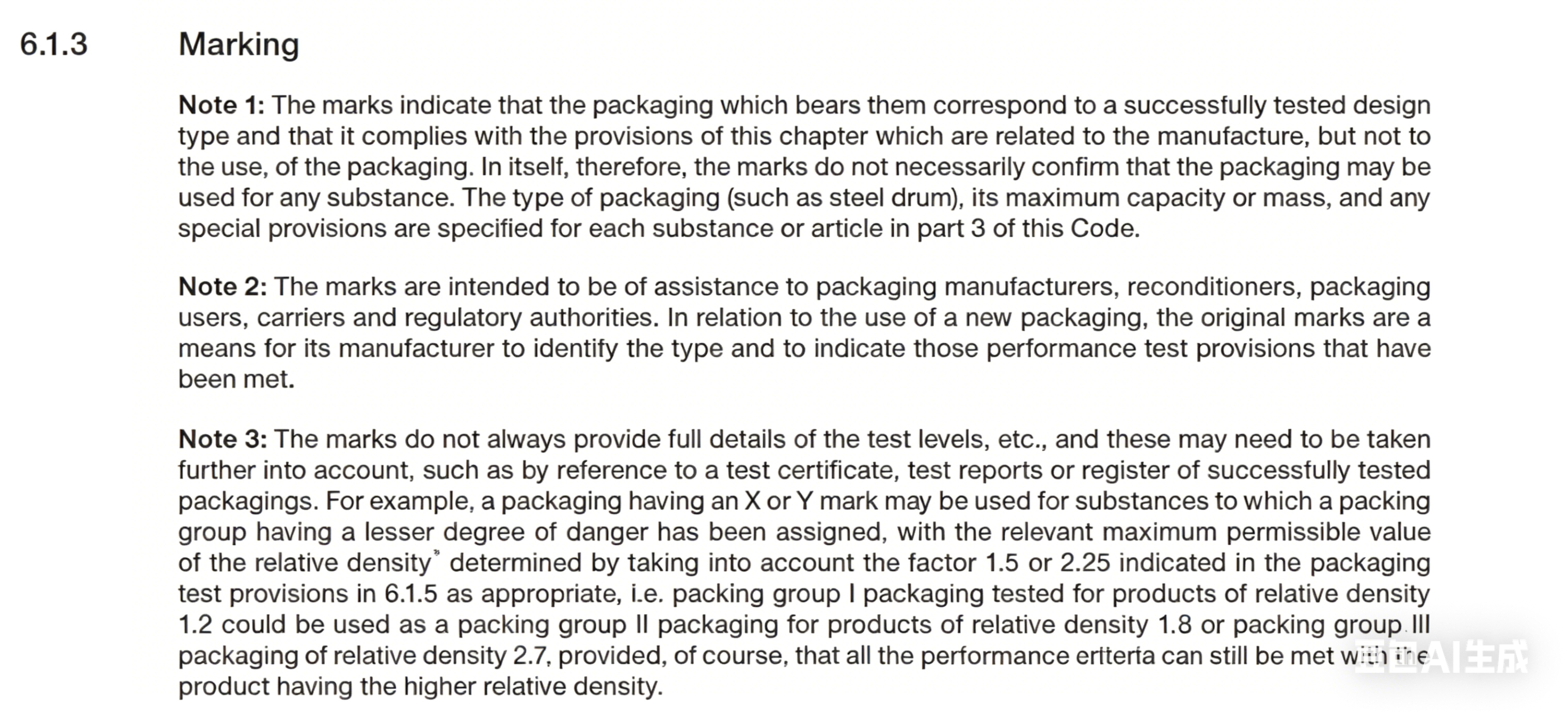
The core authority for this is Note 3 to IMDG Code Section 6.1.3 (Marking). It states that:
- A packaging marked with "X" or "Y" may be used for substances assigned to a less stringent packing group.
- The maximum permissible relative density for such use is determined by applying a factor. This factor is derived from the ratio of drop test heights for different packing groups.
The Technical Basis: Linking Density, Packing Group, and Drop Tests
IMDG Code 6.1.5.3.5 specifies the drop test heights for different packing groups:
| Packing Group | Hazard Level | Drop Test Height |
|---|---|---|
| PG I | Most dangerous | 1.8 m |
| PG II | Medium dangerous | 1.2 m |
| PG III | Least dangerous | 0.8 m |
The ratio among these heights is: 1.8: 1.2: 0.8 = 2.25: 1.5: 1.
Based on this mechanical performance ratio, the allowable density limit for a package increases proportionally when used for a less hazardous substance:
- Factor 1.5: Applied when moving from PG I to PG II, or from PG II to PG III.
- Factor 2.25: Applied when moving directly from PG I to PG III.
Practical Calculation Guide
Use the following to assess compliance:
Step 1: Understand the Marking
A marking of "X1.4" means the packaging design was tested for Packing Group I substances with a relative density of 1.4.
Step 2: Calculate the Allowable Density Dynamically:
- For use with a PG II substance, the maximum allowable density = 1.4 × 1.5 = 2.1
- For use with a PG III substance, the maximum allowable density = 1.4 × 2.25 = 3.15
Similarly: For a drum marked "Y1.4" (suitable for PG II/III, tested at density 1.4), when used for a PG III substance, its maximum allowable density becomes 1.4 × 1.5 = 2.1.
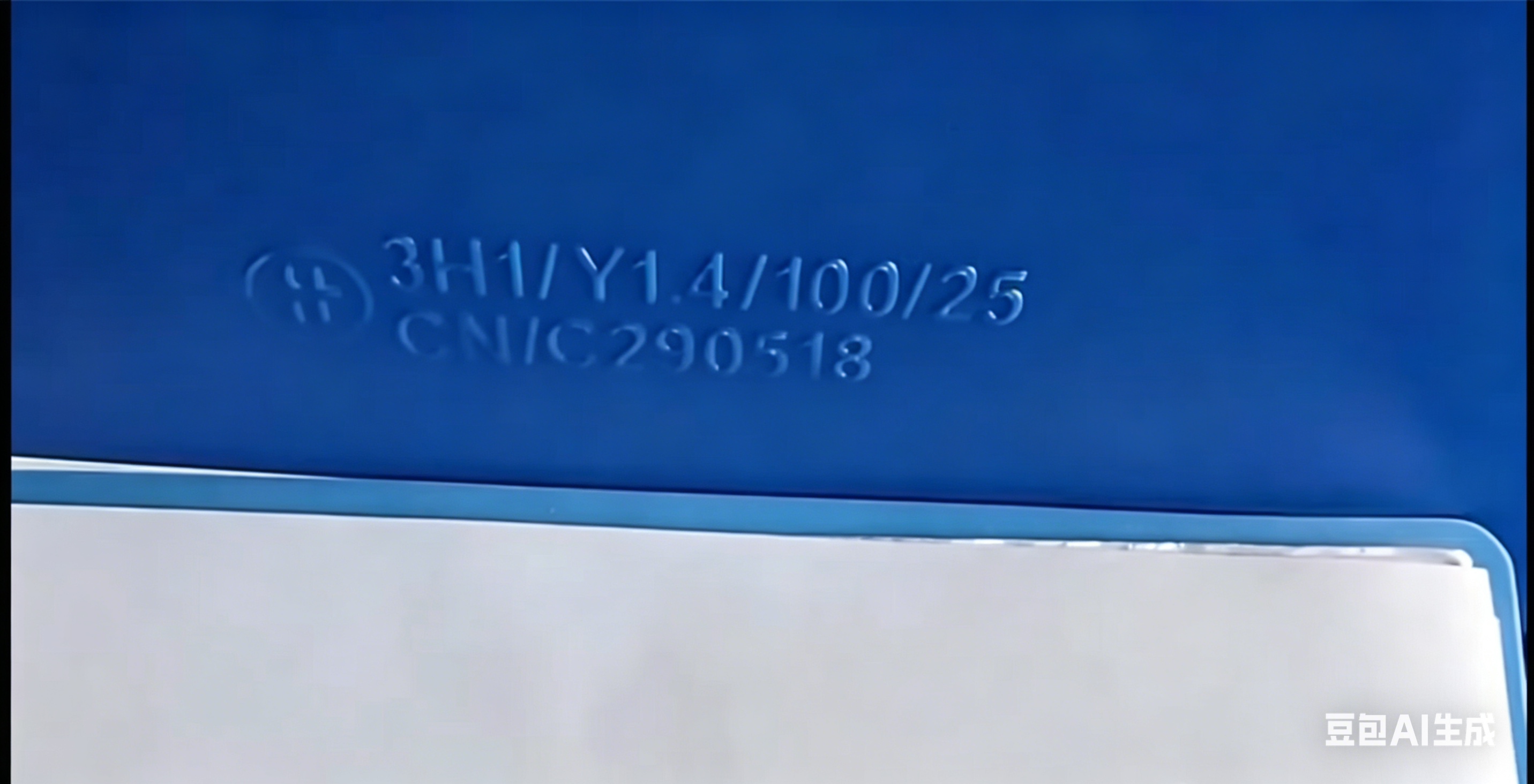
Revisiting the initial case: Had the "Stannous Methanesulfonate, 50%" been correctly classified as PG III (instead of PG II), its actual density of 1.55 would have been fully compliant in a Y1.4 marked drum, as the allowable limit would be 2.1. This underscores the vital importance of accurate classification and a thorough understanding of the rules.
Key Recommendations for International Buyers and Shippers
- Look Beyond the Mark: Do not treat the marked density value as an isolated, absolute prohibition. It must be interpreted in conjunction with the specific Packing Group (PG) of your shipment.
- Ensure Accurate Classification: The correct UN number, proper shipping name, and most importantly, the Packing Group, are the cornerstone of all compliance activities. Misclassification is the root cause of subsequent failures.
- Partner with Experts: International dangerous goods transport involves complex, multi-layered regulations. Collaborating with a freight forwarder or consultant proficient in the IMDG Code, Chinese GB standards, and customs inspection procedures is the most effective way to mitigate risk and ensure supply chain fluidity. They can guide you towards compliance throughout the entire process—from package selection and documentation to final declaration.
- Communicate Proactively and Verify: Prior to shipment, especially for high-density liquid chemicals, proactively provide your logistics provider or packaging supplier with the accurate Safety Data Sheet (SDS) and density data for validation of packaging suitability. This preemptive step can prevent unexpected delays and rejections at the customs inspection stage.
Understanding and applying these rules not only helps avoid compliance pitfalls but also enables the optimization of packaging solutions, ensuring both safety and supply chain efficiency and reliability.