
The Critical Element in Chemical Transportation: Understanding MSDS/SDS and the Shipper's Legal Obligations
Insights from Maersk's Latest Advisory on Core Responsibilities in International Logistics
Introduction
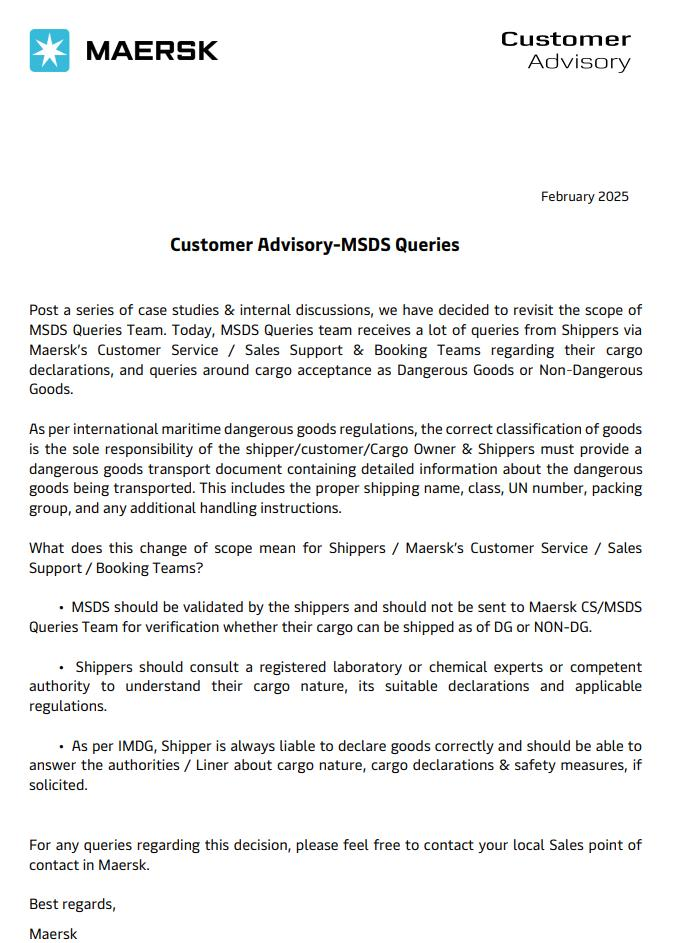
In the global supply chain for chemical and dangerous goods transportation via ocean or air freight, ensuring safety and regulatory compliance is paramount. A recent advisory from A.P. Møller – Maersk, a global leader in container logistics, has refocused industry attention on the central role of the Material Safety Data Sheet and unequivocally clarified the legal responsibilities within the supply chain.
1. The Core Update: The Shipper's Sole and Absolute Responsibility
In alignment with international regulations such as the International Maritime Dangerous Goods Code and the IATA Dangerous Goods Regulations, Maersk's announcement reinforces that the sole and absolute responsibility for the correct classification of goods lies with the shipper. Key implications include:
- Responsible Party: The exporter, cargo owner, or entity holding title to the goods is the legally accountable party.
- Documentation Mandate: The shipper must provide a complete Dangerous Goods Declaration or Transport Document, containing the accurate Proper Shipping Name, Class/Division, UN Number, Packing Group, and any necessary special handling instructions.
- Process Shift: The role of the carrier is to verify the compliance of the provided information, not to determine if a cargo is dangerous or not. Shippers should not submit MSDS to carriers for a "DG/Non-DG" determination. Instead, they must self-classify their goods or consult a registered laboratory, chemical expert, or competent authority.
2. What is an MSDS/SDS? – The International "Passport" for Chemicals
The Material Safety Data Sheet, often referred to as Safety Data Sheet in regions following the Globally Harmonized System, is a comprehensive technical document provided by the chemical manufacturer or supplier. It details the chemical's physicochemical properties, health hazards, ecological information, safe handling and storage procedures, emergency measures, and critically, transport information.
3. Why is the MSDS/SDS Indispensable for International Shipping?
- Foundation of Safety: It provides clear hazard identification and protective guidance for personnel involved in packing, handling, warehousing, and transportation.
- Emergency Response Guide: In the event of a spill, fire, or other emergency, first responders rely on its procedures for immediate and effective action.
- Mandatory Compliance Document: An accurate and complete MSDS/SDS is a legally required document for booking with carriers and for declarations to customs and port authorities. Misdeclaration, non-declaration, or false classification can lead to severe legal repercussions, including substantial fines, cargo seizure, rejection, and even criminal liability.
4. Professional Advice for International Buyers and Cargo Owners
Ensuring transportation compliance is a critical component of your supply chain risk management when sourcing chemicals globally:
- Source and Scrutinize: Upon order confirmation, promptly request the latest GHS-compliant SDS from your supplier. Pay particular attention to Section 14: Transport Information, verifying the accuracy of the UN Number, Proper Shipping Name, and hazard class.
- Clarify Contractual Responsibility: Trade contracts should explicitly require the seller to provide a complete, accurate SDS meeting the regulations of both the exporting and destination countries, guaranteeing the validity of the cargo classification and description.
- Engage a Specialized Logistics Partner: Work with a freight forwarder certified and experienced in handling dangerous goods. A professional forwarder can assist with document review, selecting appropriate UN-certified packaging, applying compliant labels/markings, and filing declarations with carriers and authorities—but they do not assume your legal classification responsibility as the shipper.
- Prohibited Acts: Never conceal dangerous goods within general cargo or misdeclare them as non-hazardous. This constitutes a serious violation that jeopardizes the safety of the entire conveyance.
Quick Reference: MSDS/SDS Required Sections (GHS)
| Section | Content | Relevance to Transport |
|---|---|---|
| 1-8 | Identification, Hazards, Composition, First Aid, Firefighting, Accidental Release, Handling, Exposure Controls | Safety procedures for handlers and emergency responders |
| 9-11 | Physical/Chemical Properties, Stability, Toxicological Info | Determines transport hazard classification |
| Section 14 | TRANSPORT INFORMATION | UN Number, Proper Shipping Name, Class, Packing Group, Marine Pollutant, Special Provisions |
| 15-16 | Regulatory Info, Other Information | Country-specific transport regulations, SDS date |
Conclusion
Safe and seamless international chemical transportation is built upon a foundation of accurate information flow. The MSDS/SDS is the source and vehicle of this information. Understanding and fulfilling your responsibilities for dangerous goods classification and documentation is not only a requirement of global regulations but also a fundamental safeguard for personnel safety, environmental assets, and your business integrity. In the global supply chain, compliance is the most efficient passport.
Disclaimer: This guide is for informational purposes based on current regulations. Always consult with certified dangerous goods professionals for specific cargo requirements. Maersk's policies are subject to change; refer to their official announcements.