
Safe Maritime Transport of Bulk Propylene Oxide: A Technical Overview
—— A Focus on Shipping Propylene Oxide from China
Introduction
The maritime transport of bulk liquid chemicals involves numerous commodities with diverse and hazardous properties, including flammability, toxicity, and reactivity. Improper handling can lead to severe incidents. This document outlines the specific requirements for the safe seaborne carriage of Propylene Oxide (PO).
1. Product Identification
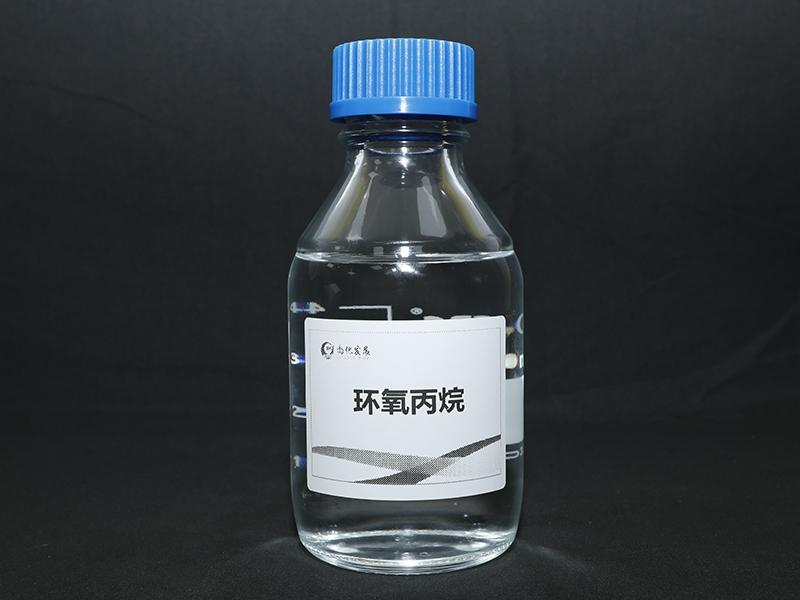
Propylene Oxide (PO), also known as 1,2-Epoxypropane or Methyloxirane (C₃H₆O), is a key organic chemical intermediate. It is primarily used in producing polyurethane foams, resins, surfactants, and lubricants.
2. Physical & Chemical Properties
- Appearance: Colorless liquid with an ether-like odor.
- Boiling Point: 34°C
- Flash Point: -37°C (closed cup)
- Specific Gravity: 0.83 (water=1)
- Vapor Density: 2.0 (air=1)
- Explosion Limits: 2.3% - 36.0% (in air)
- Solubility: Miscible with water and most organic solvents.
3. Hazard Classification
PO is an extremely flammable liquid and vapor. It is harmful if swallowed, inhaled, or upon skin contact. Its vapor is heavier than air and can accumulate in low-lying areas. PO can polymerize exothermically upon contact with water, acids, or alkalis, requiring strict temperature and moisture control.
4. Transport Requirements
4.1 Certification & Documentation
- PO is listed under both the International Bulk Chemical (IBC) Code and the International Gas Carrier (IGC) Code.
- The vessel must possess a CCS-approved Procedures and Arrangements (P&A) Manual. An approved Cargo Loading Plan, detailing the entire piping system and locations of blind flanges for segregation, must be retained on board and referenced in the International Certificate of Fitness for the Carriage of Dangerous Chemicals in Bulk.
- A Pipeline Segregation Certificate issued by the port authority is required prior to the initial loading or after carrying other cargoes. Blind flanges must be wired and sealed.
4.2 Vessel Construction & Equipment
- Ship type must be at least 2G. Cargo tank venting must be controlled. Tank atmosphere must be inerted (typically with nitrogen). Gauging must be closed, and detection for flammable/toxic vapors is required. Firefighting requires alcohol-resistant foam or water spray.
- Cargo tanks and piping must be of steel/stainless steel. A remotely operated emergency shutdown valve must be fitted at each hose connection.
- Valves, flanges, and fittings must be steel/stainless. Valve trim must be stainless steel (min. 11% chromium). Gaskets must have a PTFE or equivalent inert facing.
- Tanks with a design pressure <0.06 MPa require a refrigeration system to maintain cargo temperature below its reference temperature. CCS may grant exemptions for vessels on restricted routes with insulated tanks.
- Cargo piping must be segregated from all other tank piping. This is achieved using removable spools with blinded flanges.
- An automatic nitrogen blanketing system is mandatory to maintain tank pressure 0.007 MPa(g). A sufficient supply of industrial-grade nitrogen (purity ≥99.9%) must be available.
- A fixed water spray system with a capacity of 10 l/m²/min must protect the manifold, cargo piping on deck, and tank tops. Fire hoses must be readily connected.
4.3 Cargo Handling Procedures
(1) Pre-Loading
Tanks and lines must be cleaned to remove all traces of previous cargo (except PO or PO/EO mixtures). The cleaning must be verified to ensure no acidic/alkaline residues remain. For first-time loading, a tank inspection is required. Subsequent inspections are needed at least biennially. Tank atmosphere must be tested for oxygen content (≤2% by volume) before and after loading.
(2) During Transfer
The cargo tank must remain a closed system. If vapor return to shore is used, its connection must be independent. During discharge, tank pressure must be maintained above 0.007 MPa(g). Only deep-well pumps, hydraulic submerged pumps, or inert gas displacement are permitted for discharge. Cargo hoses must be marked "FOR EPOXIDE TRANSFER ONLY." Before disconnecting shore lines, pressure must be vented via valves on the manifold. Cargo must not be vented to the atmosphere.
(3) During the Voyage
Cargo tank venting must be independent. Closed sampling equipment must be used. Spaces adjacent to integral gravity tanks must contain compatible cargo or be inerted. The oxygen content in these spaces must be monitored and kept below 2%. Portable sampling devices must meet safety standards. Air ingress into cargo pumps or lines is prohibited. Refrigeration systems must maintain cargo temperature below its boiling point at the holding pressure. Systems requiring cargo compression are prohibited.
Disclaimer
- This guidance applies to pure Propylene Oxide and mixtures with not more than 30% by weight Ethylene Oxide. Other mixtures require a separate assessment.
- In case of discrepancy, the latest amendments of the IMO IBC Code and IGC Code (English versions) shall prevail.
Quick Reference: Propylene Oxide Key Data
| Parameter | Value |
|---|---|
| Chemical Formula | C₃H₆O |
| CAS Number | 75-56-9 |
| UN Number | UN 1280 |
| IMO Class | 3 (Flammable Liquid) |
| Boiling Point | 34°C |
| Flash Point | -37°C |
| Explosion Limits | 2.3% - 36.0% |
| Ship Type Required | At least 2G |
| Inerting Requirement | Nitrogen blanketing (O₂ ≤2%) |
Disclaimer: This technical overview is for informational purposes based on IBC Code and IGC Code regulations. Always consult with certified dangerous goods professionals for specific cargo requirements.