
Navigating the Shipping of Self-Heating Hotpots: A Critical Classification Analysis
—— A Focus on Shipping Self-Heating Hotpots from China
Introduction
For global importers and logistics professionals sourcing goods from China, understanding the precise regulatory classification of products is paramount to ensuring safe, compliant, and efficient transportation. A prime example of a product that poses a common classification challenge is the increasingly popular self-heating hotpot. This article, from the perspective of an international freight forwarder, provides a clear, professional analysis of how these items are classified for sea and air transport, demystifying the regulations for shippers and buyers alike.
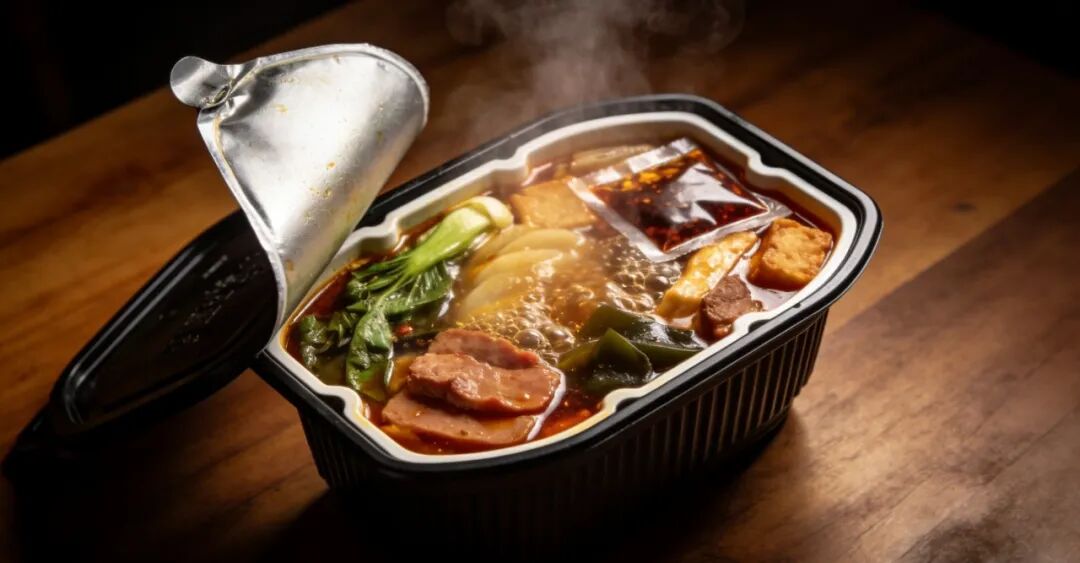
The Core Issue: Article or Packaging?
The fundamental question in shipping self-heating hotpots is whether the entire unit is classified as an "article" or if the heating element itself dictates the classification, treating the outer container as mere "packaging." This distinction is not semantic; it directly determines the correct UN number, Proper Shipping Name (PSN), and hazard class, which in turn dictates packaging, labeling, documentation, and stowage requirements.
Let's examine the two potential classification paths:
Path 1: Classified as an "Article" containing dangerous goods.
Basis: If the self-heating hotpot is viewed as a functional unit (a meal kit) where the non-removable heating element is integral to its purpose.
Classification (under IMDG Code/IATA DGR): UN 3363, DANGEROUS GOODS IN MACHINERY or DANGEROUS GOODS IN APPARATUS, Class 9. This classification is typically applied to items like fire extinguishers or airbag modules, where the hazard is contained within a device.
Path 2: Classified based on the hazardous substance within.
Basis: If the unit is viewed as a combination of food (non-hazardous) and a separate, primary hazardous component (the heating pack).
Classification (under IMDG Code/IATA DGR): The heating pack usually contains substances (e.g., aluminum powder, quicklime) that react with water. Therefore, it falls under UN 2813, WATER-REACTIVE SOLID, N.O.S. (aluminum powder), Class 4.3, Packaging Group II (subject to applicable weight limits, typically under 500g per package for Limited Quantity transport).
Regulatory Interpretation: Defining an "Article"
The International Maritime Dangerous Goods (IMDG) Code provides a definition for an "article" in section 2.0.6.1. It specifies that an article is machinery, apparatus, or a device where the dangerous goods are integral, necessary for function, and cannot be removed for transport. Crucially, it states that "an inner packaging shall not be an article."
This last point is key. The heating element in a self-heating hotpot is, in essence, a sealed inner pack (often a sachet or pouch) containing the reactive solid. It is functionally and physically distinct from the food components. Its sole purpose is to generate heat; it does not give the hotpot meal its primary function (being edible food). The meal's function is determined by its physical form and ingredients, not the chemical reaction of the heater.
For further clarity, we can reference the REACH Regulation (EC 1907/2006), Article 3, which defines an "article" as "an object which during production is given a special shape, surface or design which determines its function to a greater degree than does its chemical composition." The self-heating hotpot's function as a meal is defined by its shape (container) and contents (noodles, vegetables, etc.), not by the chemistry of the heat pack.
Professional Consensus and Practical Implications
While both classifications (UN 3363, Class 9 and UN 2813, Class 4.3) may allow for transport under Limited Quantity provisions—which simplify some requirements—the prevailing and more precise interpretation within professional logistics and regulatory circles is to classify based on the hazardous substance.
Conclusion: Recommended Classification
Therefore, for the purposes of international transport (both sea and air), a self-heating hotpot should be classified and declared as:
UN 2813, WATER-REACTIVE SOLID, N.O.S. (aluminum powder), Class 4.3, PG II (or the specific entry matching the exact composition), shipped as a Limited Quantity.
Why This Matters for Importers
- Compliance & Safety: Using the correct UN 2813 classification accurately reflects the primary physical hazard (water reaction, hydrogen gas generation), ensuring carriers and vessel crews apply the correct safety precautions.
- Avoiding Delays: Misdeclaring goods as UN 3363 (Class 9) can lead to inspections, rejections, or re-packing at ports if authorities dispute the "article" claim, causing costly delays.
- Transparent Communication: Understanding this classification allows buyers to have informed discussions with their suppliers in China regarding the mandatory pre-shipment testing, certification, and documentation (e.g., the Dangerous Goods Declaration, Material Safety Data Sheet (MSDS)) required for a smooth shipment.
Final Advice
When sourcing self-heating hotpots or similar products containing integrated heat sources, engage with your freight forwarder early. Provide a sample or the exact specification of the heating element to obtain a definitive classification. Working with a forwarder experienced in DG logistics from China is crucial to navigate these regulations seamlessly, ensuring your innovative products reach global markets safely and without incident.